Section Modulus calculation and optimization
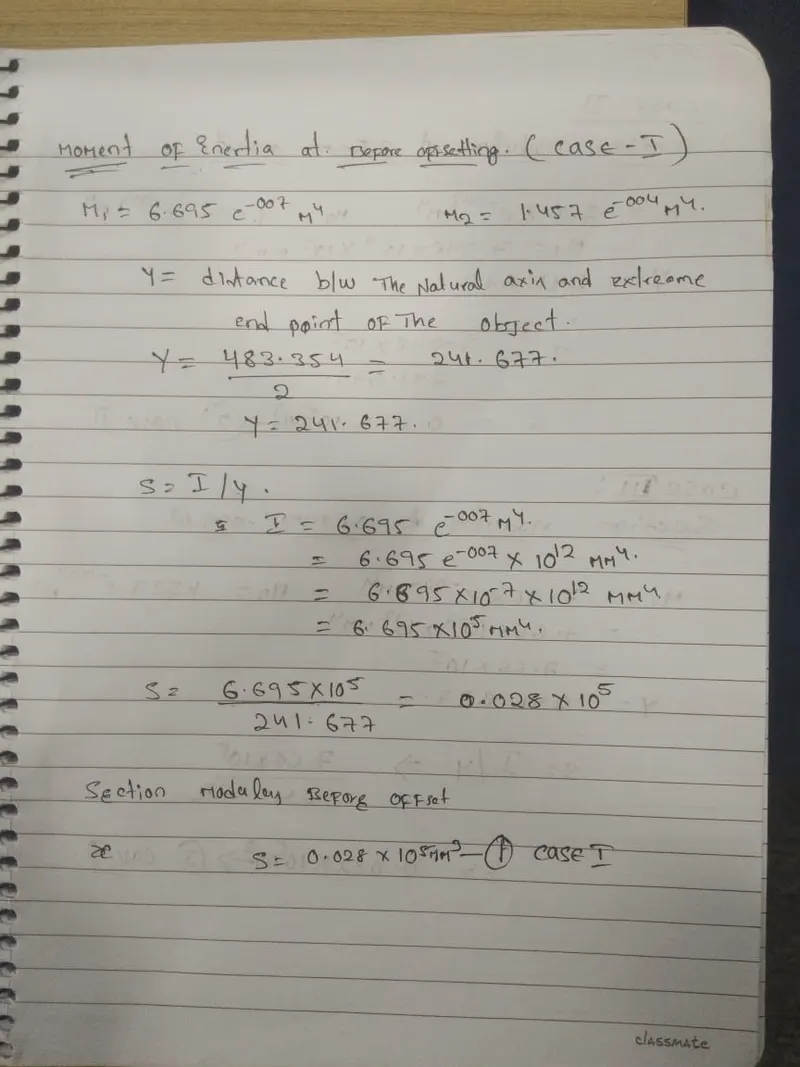
AIM: calculate the section modulus using the formula S = I/y. Use the Section from your Hood design.
Use the Section from your Hood design and calculate the section modulus using the formula S = I/y
S = Section Modulus
I = Moment of Inertia
y = distance between the neutral axis and the extreme end of the object
INTRODUCTION:
SECTION MODULUS:
Section modulus is a geometric property for a given cross-section used in the design of beams or flexural members. Other geometric properties used in the design include an area for tension and shear, the radius of gyration for compression, and moment of inertia, and polar moment of inertia for stiffness. Any relationship between these properties is highly dependent on the shape in question.
calculate the section modulus using the formula S = I/y
There are two types of section moduli, the elastic section modulus, and the plastic section modulus.
For general design, the elastic section modulus is used, applying up to the yield point for most metals and other common materials. The elastic section modulus is defined as S = I / y
The plastic section modulus is used for materials where elastic yielding is acceptable and plastic behavior is assumed to be an acceptable limit. Designs generally strive to ultimately remain below the plastic limit to avoid permanent deformations, often comparing the plastic capacity against amplified forces or stresses.
MOMENT OF INERTIA:
The moment of inertia is defined as the quantity expressed by the body resisting angular acceleration which is the sum of the product of the mass of every particle with its square of a distance from the axis of rotation. The moment of inertia is also known as the angular mass or rotational inertia.
PROCEDURE:
- Create an intersection of the hood model.
- Extract the Ritter sections of outer hood outer side and inner panel outer side.
- create points on outer panel intersection with respect to endpoints of inner panel extracted intersection line.
- then split with points and fill the gaps by creating lines and join together.
- create fill and measure the moment of inertia with measure inertia tool.
- then modify the model with increase the distance and calculate MOI
Distance between the neutral axis and the extreme end of the object
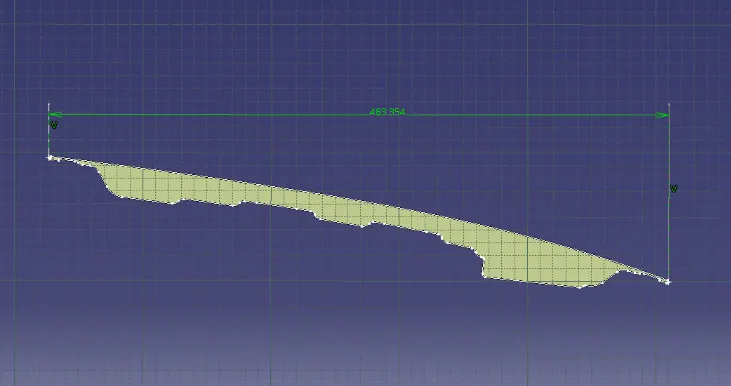
MOMENT OF INERTIA MAXIMUM AND MINIMUM VALUES
CASE 1:
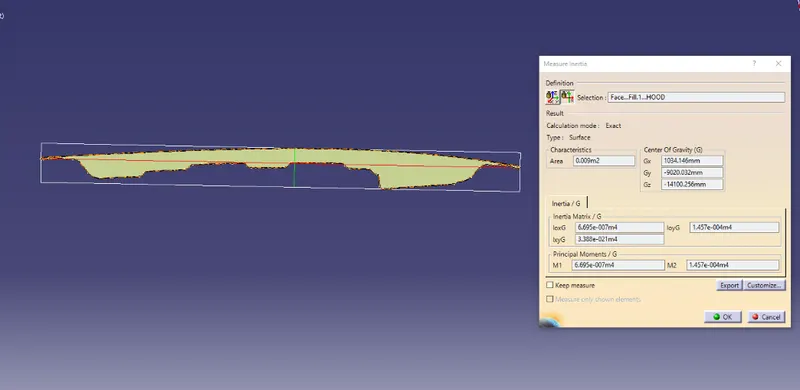
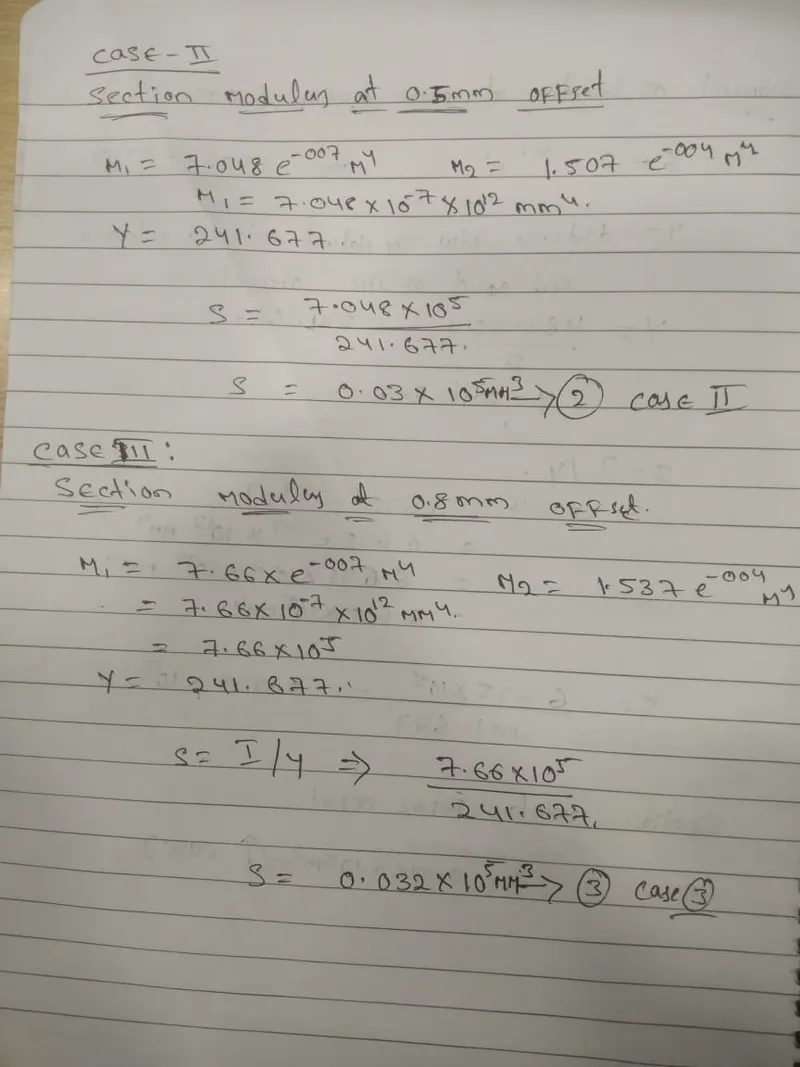
CASE 2:MODIFYING THE MODEL
AT OFFSET O.5mm TO THE INNER PANEL INTERSECTION:
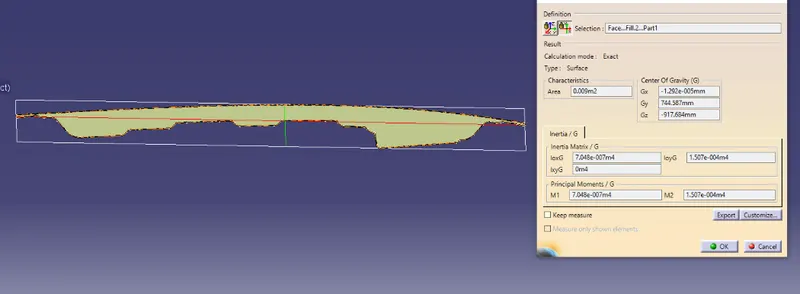
CASE 3 : MODIFYING THE MODEL
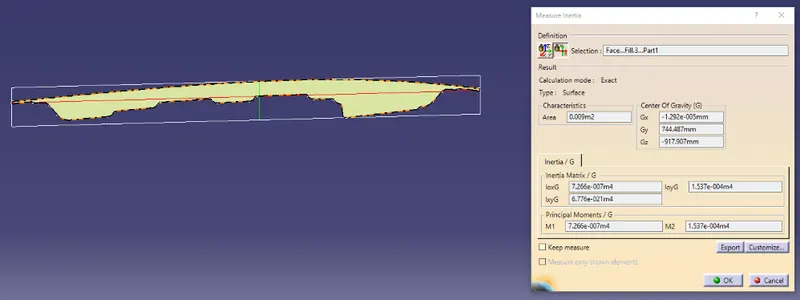
AT OFFSET O.8mm TO THE INNER PANEL INTERSECTION:
CONCLUSION:
In this hood design
the distance between the inner and outer hood is increased by 0.8mm the minimum moment of inertia is 7.66*10^5mm^4
so as the MOI increases the section modulus increases.
A modification in the distance leads to an increase in sectional area. results to variation of section modulus between parent and a new hood. therefore is an improvement to resist bending of the hood.