Roof Design
OBJECTIVE:
- Create an assembly by developing the essential flanges for the outer roof and creating the reinforcements for the given roof styling.
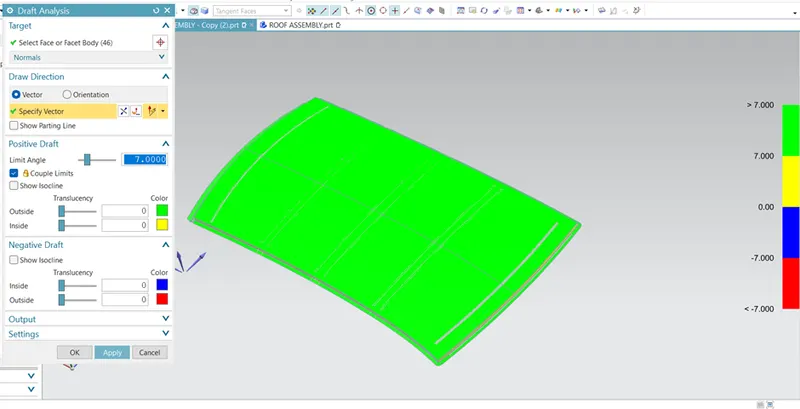
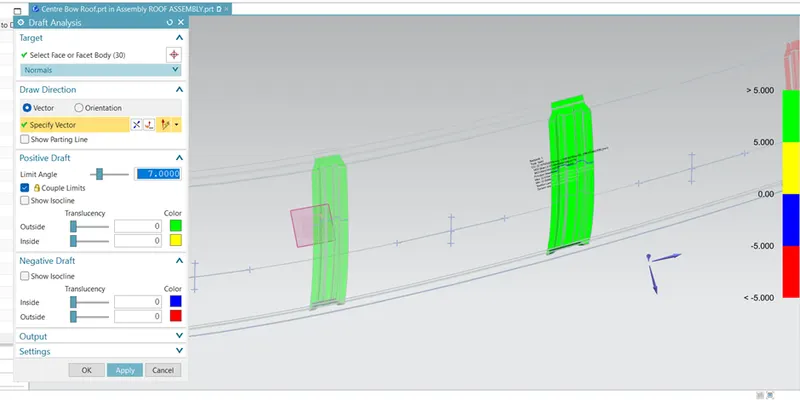
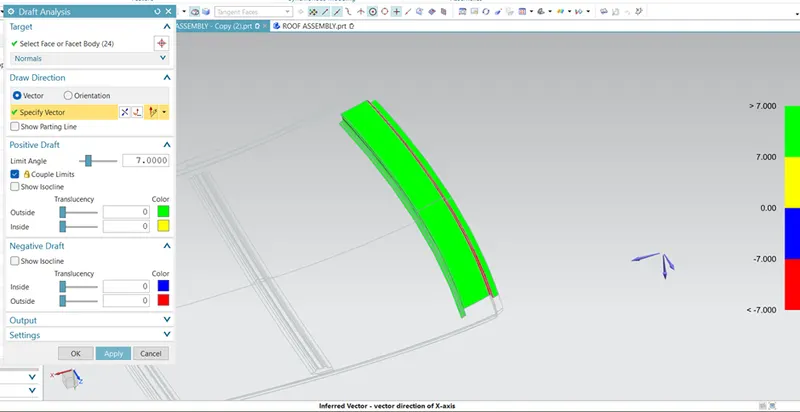
- Provide appropriate dimensions and check for Draft analysis with a tool opening angle of 7 degrees.
- Do a curvature study on the roof and perform calculations to determine the position of the Bow-roofs.
ROOF:
A roof in a car is the uppermost part of the car that provides protection and cover to the passengers and the driver.
- It is typically made of metal or other sturdy materials and is designed to withstand the forces of wind, rain, and other weather elements.
- In addition to providing protection from the weather, the roof also contributes to the overall structural integrity of the car and helps to keep the occupants safe in the event of an accident.
- The roof of a car can take many different shapes and forms, depending on the design of the vehicle, and may be fixed or retractable, depending on the model.
- Its main functionality are
- Protection from the elements: The roof provides shelter from rain, snow, sun, and other weather conditions, allowing passengers to stay dry and comfortable inside the car.
- Structural support: The roof plays an important role in the structural integrity of the car, helping to distribute weight and maintain stability.
- Safety: In the event of a collision or rollover, the roof provides protection to the occupants by preventing them from being ejected from the car or crushed by the weight of the vehicle.
- Aerodynamics: The shape of the roof can impact the aerodynamics of the car, affecting its speed, fuel efficiency, and handling.
- Style: The roof is a prominent feature of a car's exterior design, and can be customized to enhance the vehicle's appearance and appeal.
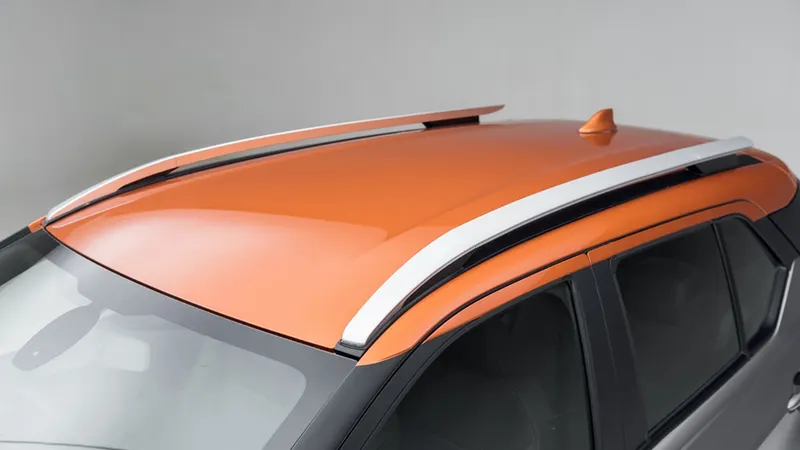
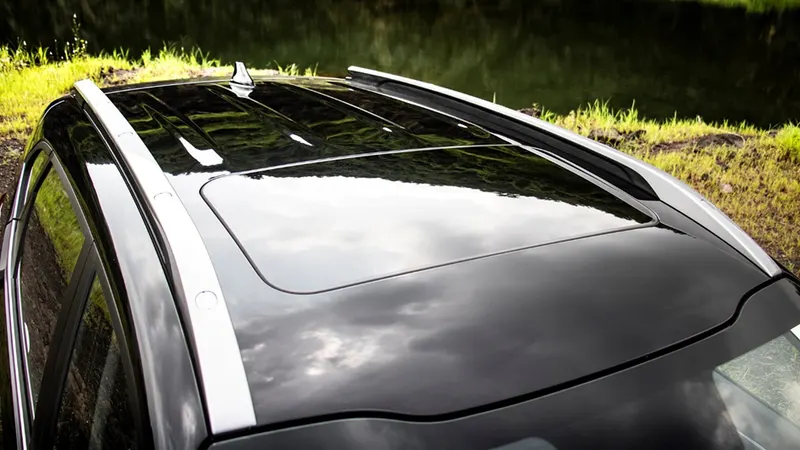
Software Using: NX CAD
Class A Styling Input
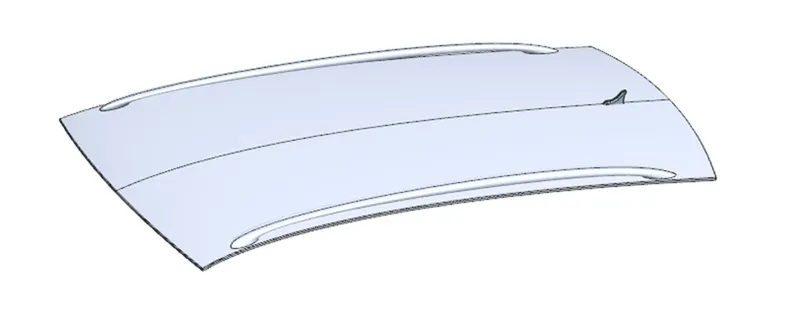
Components of roof:
- Front roof rail
- Rear roof rail
- Bow roof
- Centre roof rail
- Ditch area
Front roof rail:
It is created using Given reference master section.
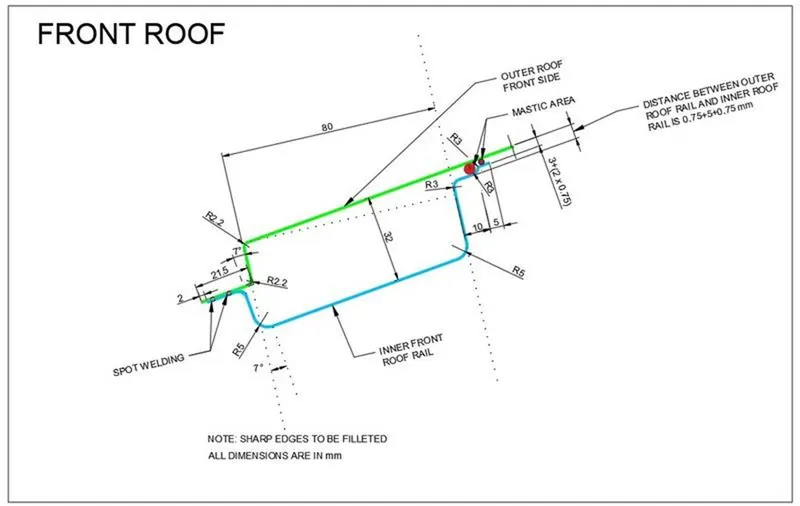
Front roof rail is used to provide strength to the roof panel front and it also acts as link between windshield glass, roof panel and headliner. Spot welds are applied at wind shield end of the rail and the other end is joined with roof using mastic sealant which also increases the strength.
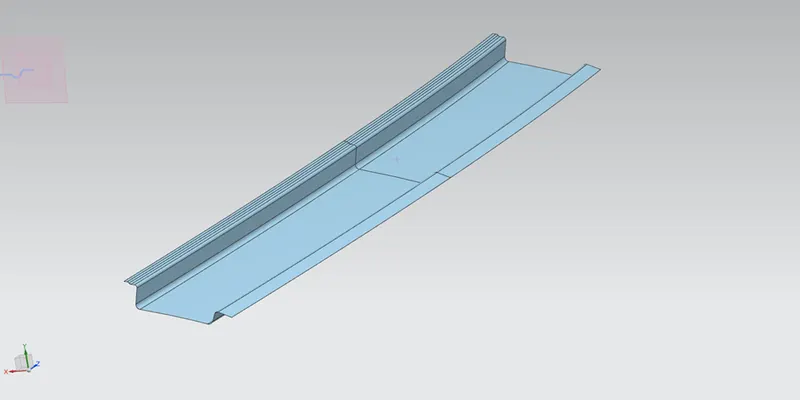
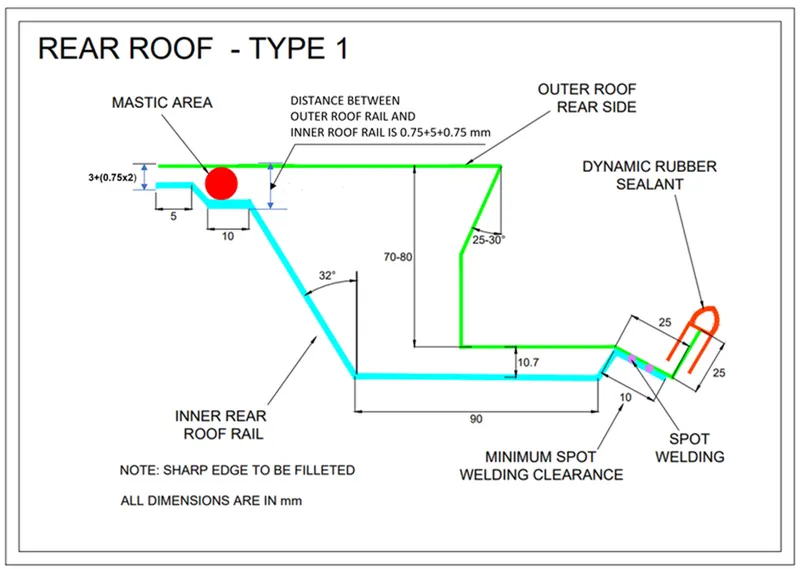
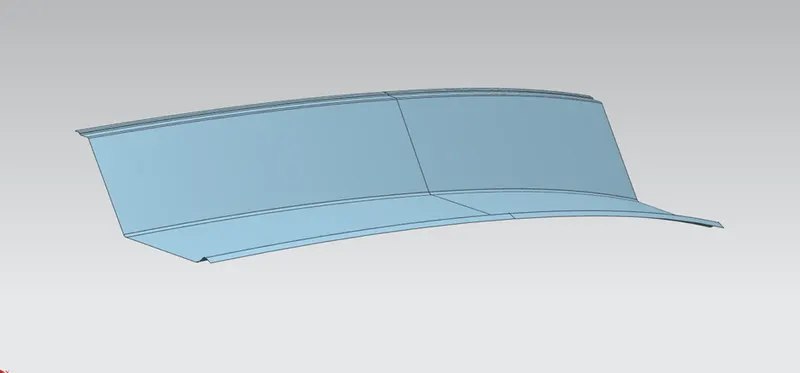
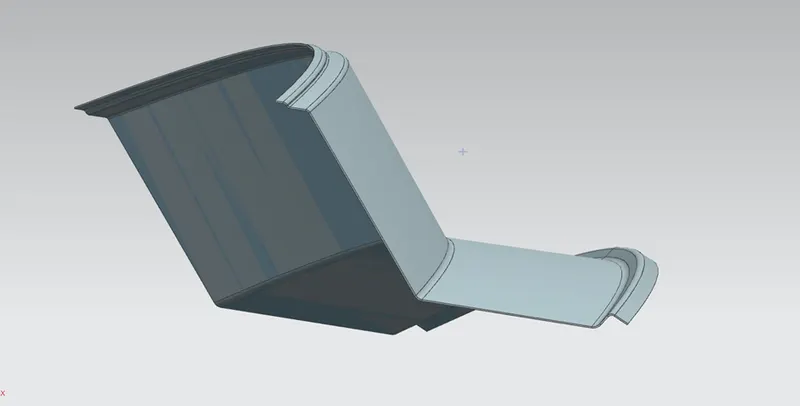
Rear roof rail is again used to strengthen the roof and it acts as a link between back glass and roof which connected to the backdoor of the car. Spot welds are applied at back door end of the rail and the other end is joined with roof using mastic sealant.
Center Roof rail and Bow roof rails:
Center roof rail will be at the centre of the roof to provide strength and stability to the roof. Here the centre roof rail is joint with the roof through mastic sealant.
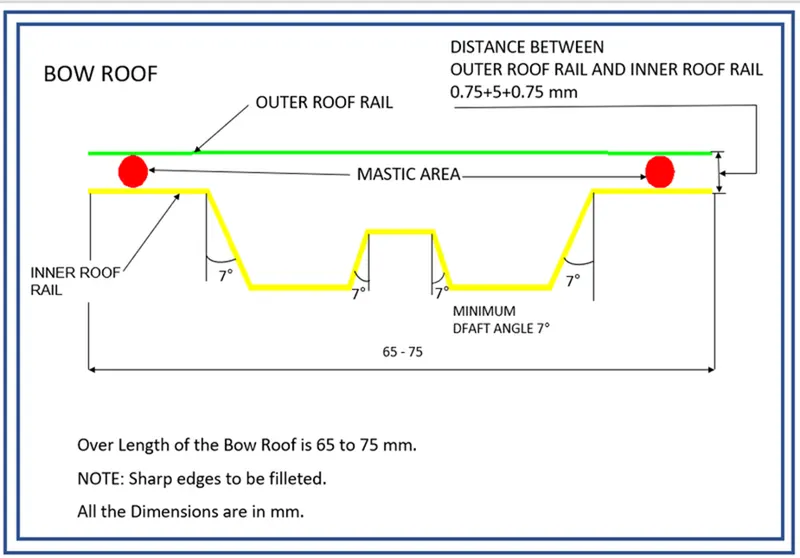
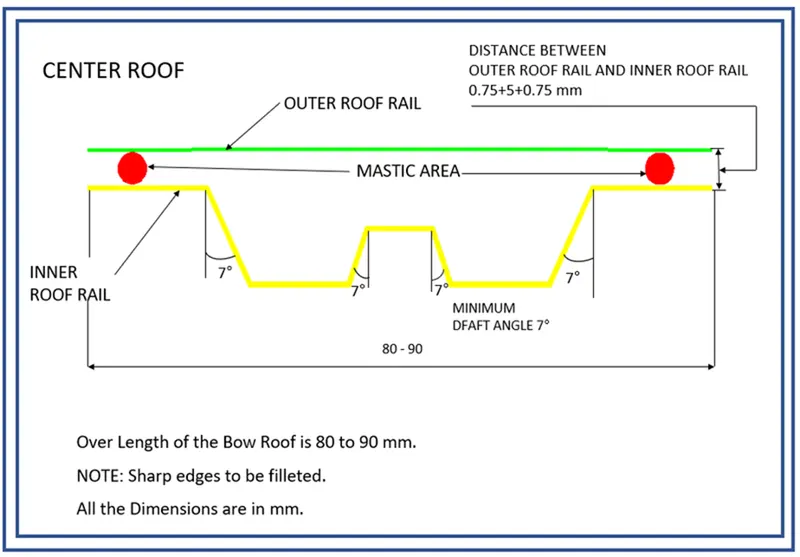
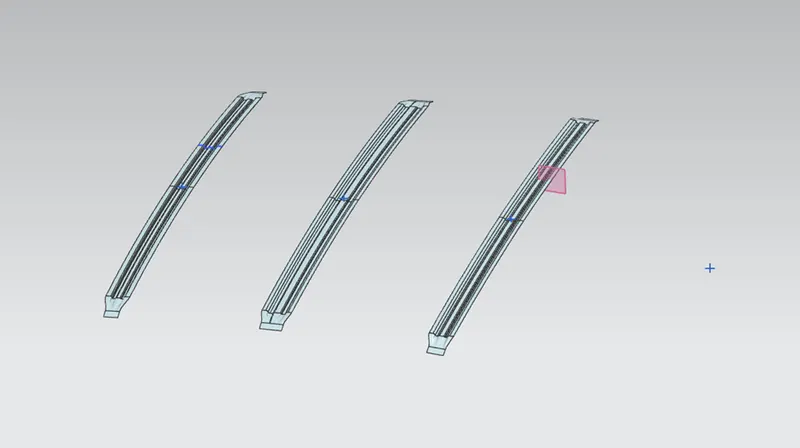
Bow roof is used for strengthening purpose and also attached to the upper roof surface with mastic sealants.
Complete Model
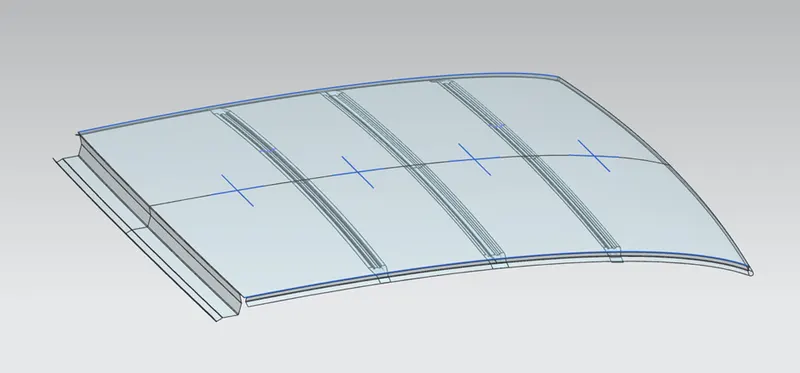
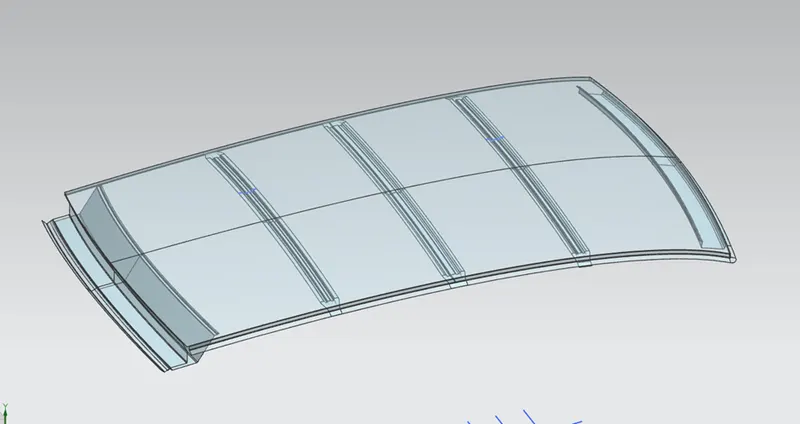
Curvature study on the Roof:
After getting the final body it has to be checked and justify that it passes the standards.
Analysis:
It is done to justify the position of the bow roofs.
1.Heat distortion criteria
2.Snow load test.
Heat distortion criteria:
Heat distortion temperature is a temperature at which the metal softens and deform under a specific load. This study is done to check the ability of the roof to withstand high temperature with respect to the position of the reinforcement which contribute to the increase strength.
- To calculate the heat distortion criteria by the bow roof position formula,
- We need to create a sketch, draw a line on the center of the roof on OY axis (mid horizontal axis)
- Next draw a line from the center line by a 300mm distance
- After that draw a line from 100mm distance on both sides of the 300mm line
- Then draw a line between the center of roof rails and draw the lines from the center line by the distance of 100mm on both sides.
- At last make an intersection on these lines from a coincident line to get points.
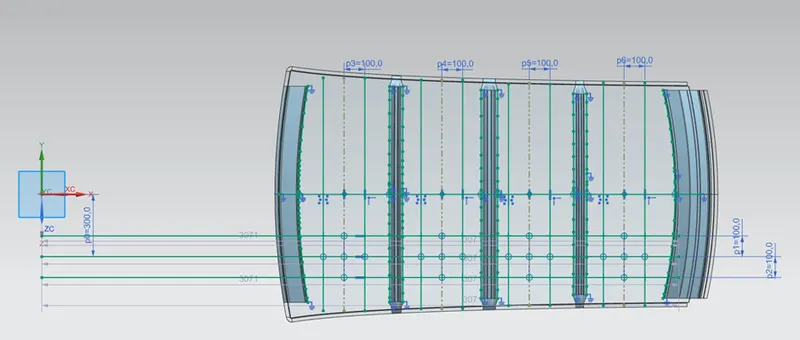
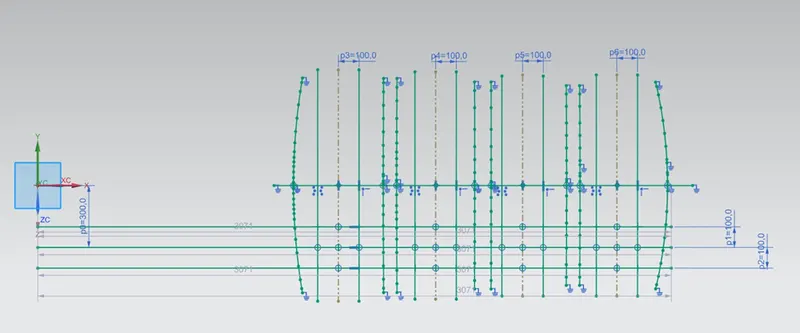
- Roof curvature (Rx & Ry) radius is measured by creating a 'Three point arc'
Prediction formula: W=[1.73×10⁻³×L] + [1.85× 10⁻⁸×R2/t]+[1.10×10-3×l]-2.68
Judgemental condition: Ok<2.7>3.1
Where,
L=Roof length in X-direction in mm (Roof dimension in O-Y)
R=Roof curvature
R=2(RX×RY)/(RX+Ry)
RX=X Curvature
Ry=Y Curvature
T =Roof plate thickness in mm
L =Bow roof span in mm

Snow Load criteria:
Snow load criteria study is done to check the ability of the to withstand snowfall and bounce back to its original shape without any permanent deformation once the load is removed.
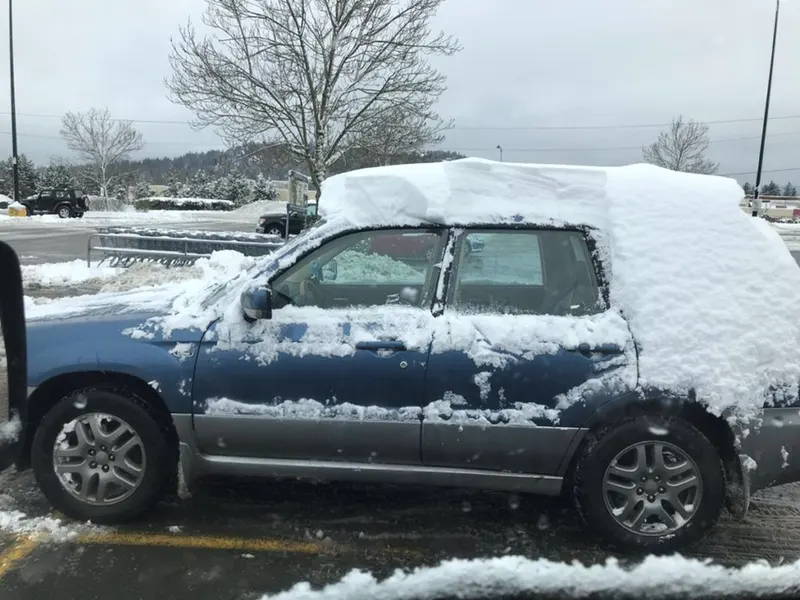
- To calculate the snow load condition, we have a snow load formula
- To measure the required values
- Created a sketch and draw a line on OY axis from the center of the roof
- From that line draw a parallel line distance of 100mm on both sides
- Then make intersection points of these lines and draw a three-point arc.
- Roof curvature (Rx & Ry) radius is measured by creating a 'Three-point arc'.
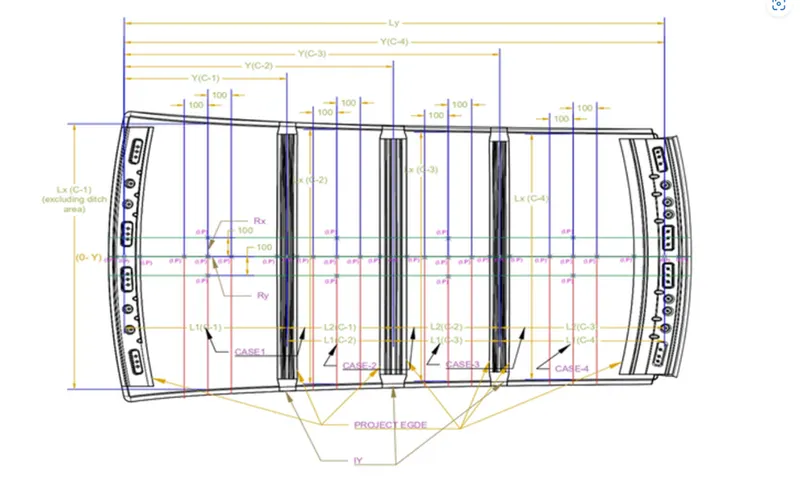
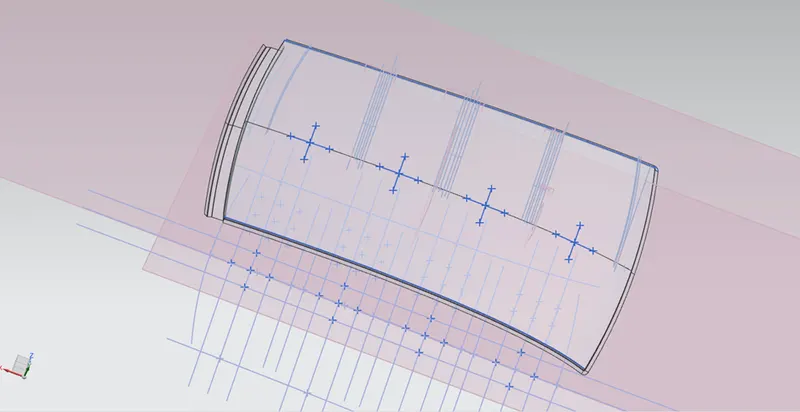
Snow load prediction formula: Qr = [(Iy × t2)/(α × s×(RX+RY/2)2 × 10-8)]
Where
α = My× Lx2× 10-12, My=Y (Ly -Y)
Judgement Condition: Qr≥3.1
t=Roof plate thickness in mm
LY =Distance between Front and rear roof rail on vehicle O-Y in mm i.e. length of the roof panel with the centre point between roof rail FR/RR as the reference point of the front and rear
Y=Distance from front roof rail centre to bow roof in mm
S = Distance for which BOW bears divided load in mm
S= L1/2+L2/2
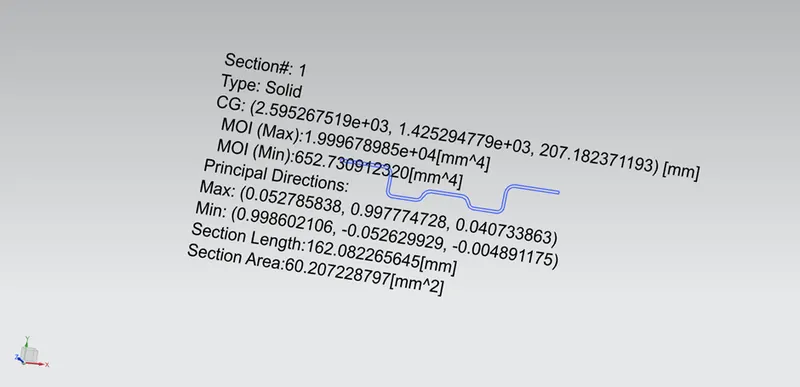
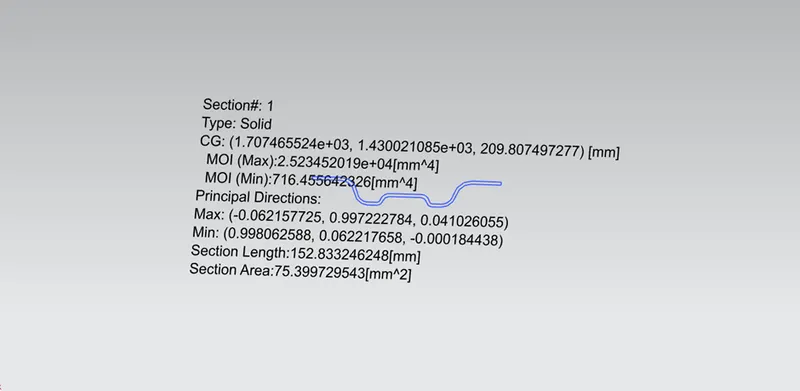
Iy= Geometrical moment of inertia of roof BOW (Cross-section) mm4
Rx= Lateral direction curvature radius of roof panel Y cross section on Roof ROW in mm
Ry = Longitudinal direction of the curvature radius of roof panel X cross section on BOW roof
Section Modulus
Section modulus is a direct measure of strength of any sectional area of an object about an reference axis (neutral axis). Strength is nothing but, capable of supporting greater loads, so higher the strength it has a highly capable of supporting greater loads.
Section modulus represented with a symbol of ‘S’
S=I/Y
S-Section modulus
I-Distance from the reference line to one of the extreme ends of the object
Section Modulus of Bow Roof 1
Section Modulus of Bow Roof 2
Section Modulus of Centre Bow Roof
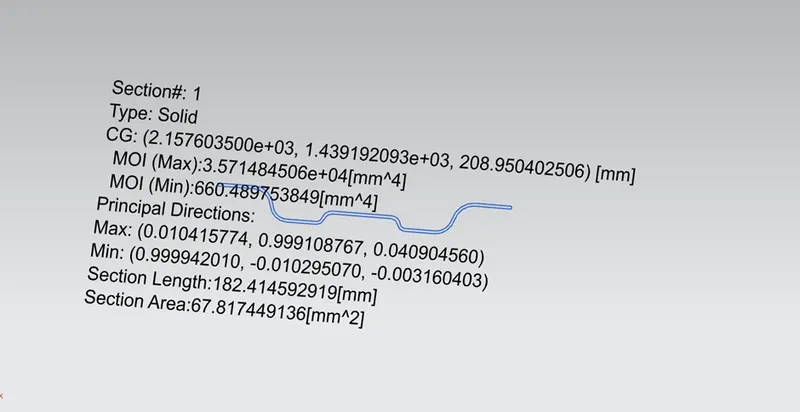
Calculation Report

Draft Analysis
Conclusion :
Here the test results of the Roof Design in the Heat Distortion and Snow load criteria is performed and it passes the Heat Distortion in all conditions and fails in the Snow load conditions . so that the Emboss are provided in the outer roof pannels to provide the adittional strength to it. The Emboss are provided in the Flat surface of the Front and Rear roof rails for the additional support.