Roof Design
AIM
To create an asembly by developing the essential flanges for the outer and creating front roof rail, rear roof rail, bow roofs, center roof rail, and to do a curvature study on the roof and perform calculation to determine the position of the bow roofs.
REASONS FOR CREATING ROOF RAILS
1. Roof has large surface area and length, if we create a inner panel it will increase the weight of the whole car by a certain percentage which is not desirable.
2. Roof is not going to get impact in most of the time. When the car toppled the roof is subjected to the impact.
3. so we do not need to give inner panel for the whole length of the hood
4. roof rails are given based on the heat distorsion criteria and snow load conditions. These are the two importance things while designing the roof rails
5. Heat distorsion criteria is to define where the bow roof is going to get placed in such a way that it will resist deformation while it is subjected to high temperature
6. Snow load condition is for the countries where the car will subjected to heavy snow on top of the roof. In this case the roof should have proper curvature to regain it's origoinal position after removing the snow from the roof. So we need to place roof rails acooding to these conditions.
TYPE OF ROOF USED IN AUTOMOBILES
1. HARD TOP:
This is the most common type of roof used in automobiles. In modern-day cars, this type of roof is made from metal or plastic. the common Toyota Corolla, Camry, and many of the cars in Nigeria are all Hardtops. However, we should say that there are different types. The one we just described is the fixed hardtop.
Other types include:
- The detachable hardtops
- The retractable hardtops
2. SUNROOFS
This type of roof is also quite popular. You might have been seeing it around. A sunroof is an operable type of roof that allows for an opening in the roof of an automobile, say a window in a roof. It can allow either light or air or both to enter the vehicle. They are either operated manually or automatically.
THERE ARE THREE TYPES AVAILABLE IN SUNROOF
a.Pop-up
b. spoiler
c. panoramic sun roof
a. pop-up
The pop-up sunroof usually tilts when you open it. It is the most basic and relatively cheaper type of sunroof. Some can even be removed so that they are kept properly, maybe in the trunk whenever you want to go sunroof mode.
b. Spoiler
Wait, this is not spoiling anything o. It just means that it can slide. So, the spoiler is a pop-up that would slide, instead of tilting upwards. The advantage of this is that it can easily be restored to its original position by sliding.
c. Panoramic sunroof
Please take the pronunciation easy. Panoramic sunroofs are distinct. While other sunroofs basically allow air and light or both into the front seats, the panoramic sunroof would allow for both the front and rear. Of course, this means the aperture would be larger than the spoiler or pop-up.
Some brands also refer to them as moonroofs and they are automatically operated with the push of a button or turning of a knob.
IN THIS CASE I CREATED A HARD TOP ROOF
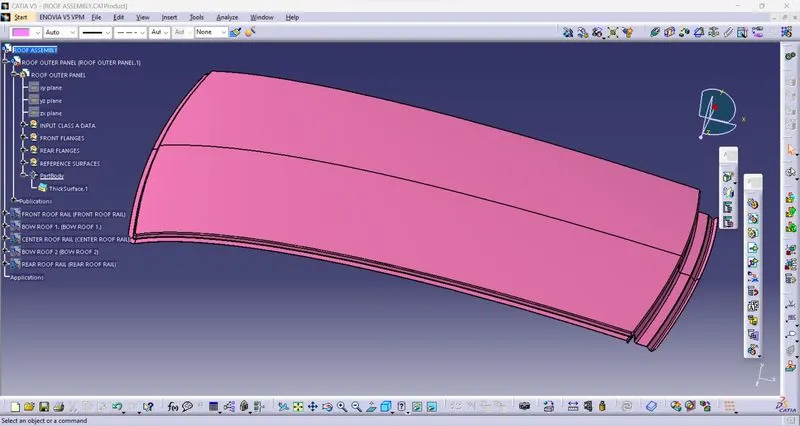
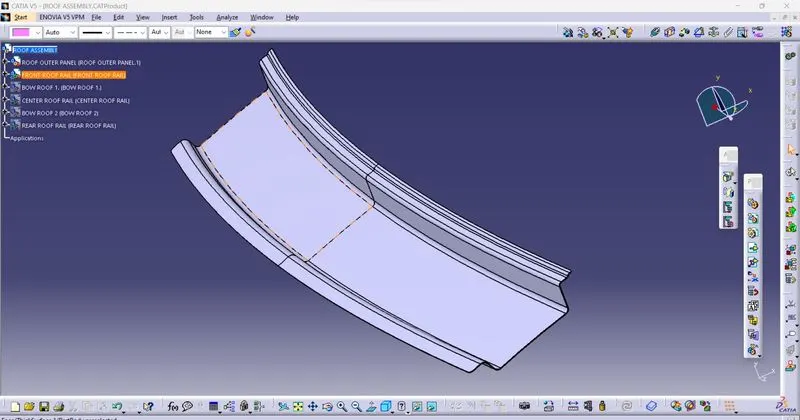
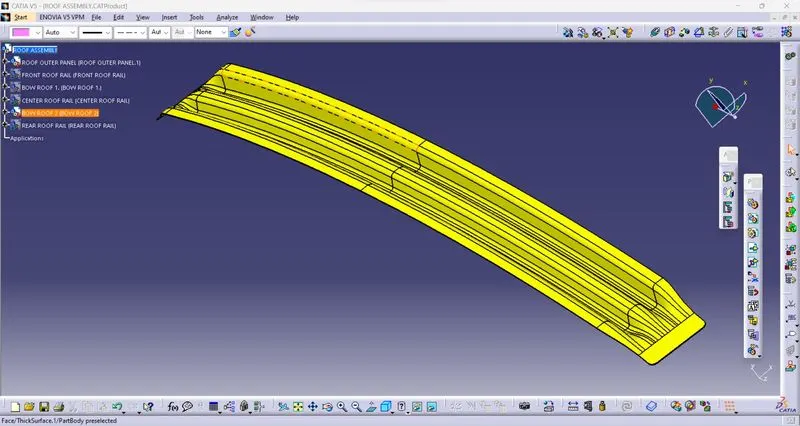
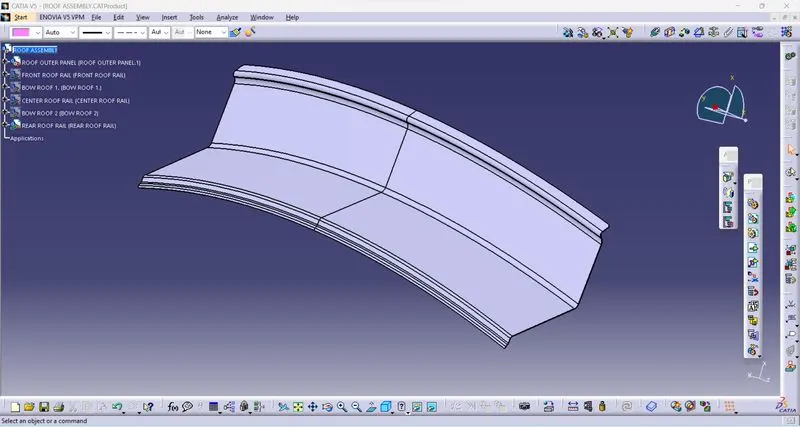
Hard top roof consist of
1. Roof outer panel
2. Front roof rail
3. bow roof 1
4. Center roof rail
5. Bow roof 2
6. Rear roof rail
1. Roof outer panel
2. Front roof rail
3. bow roof 1
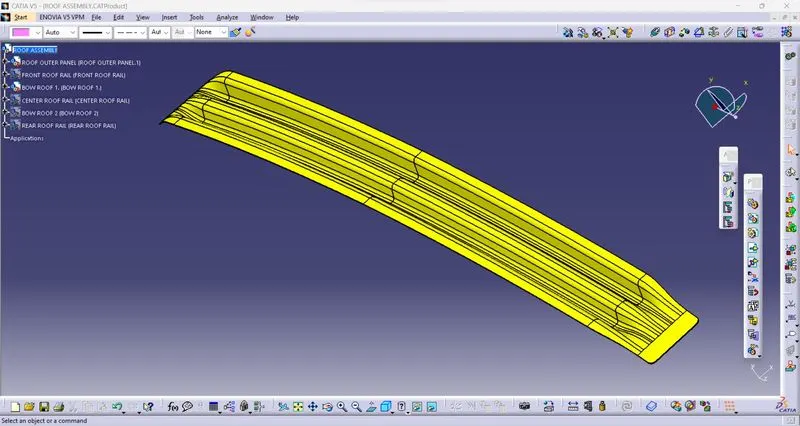
4. Center roof rail
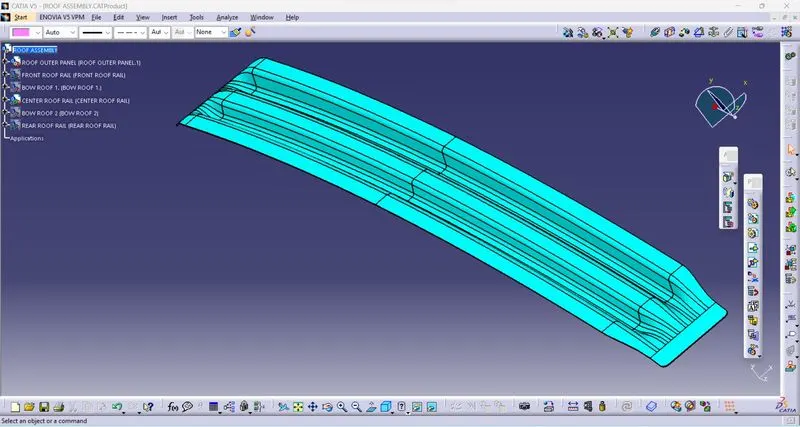
5. Bow roof 2
6. Rear roof rail
DRAFT ANALYSIS
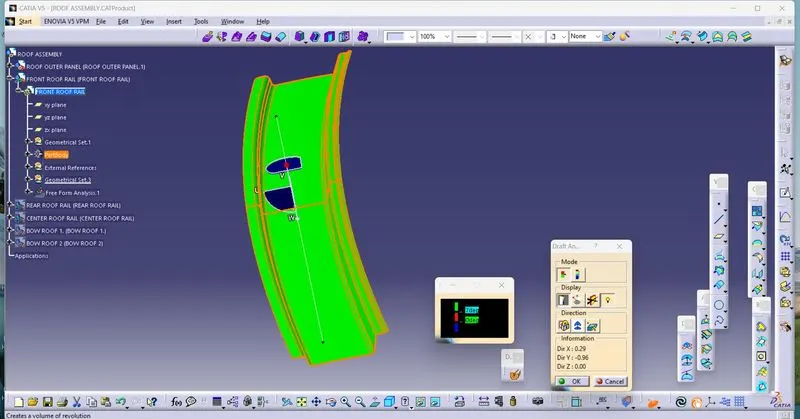
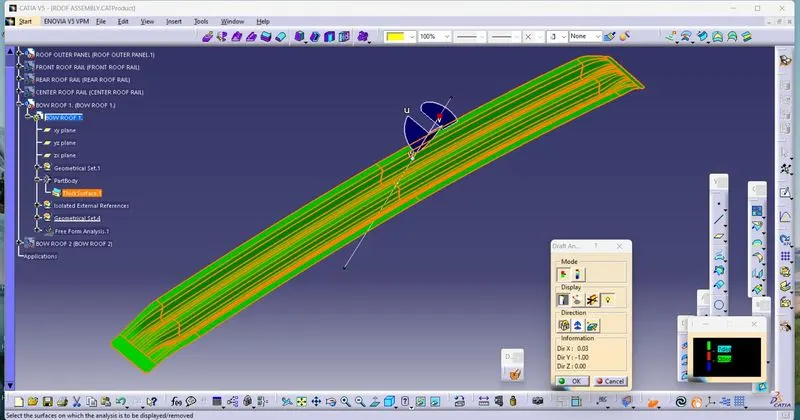
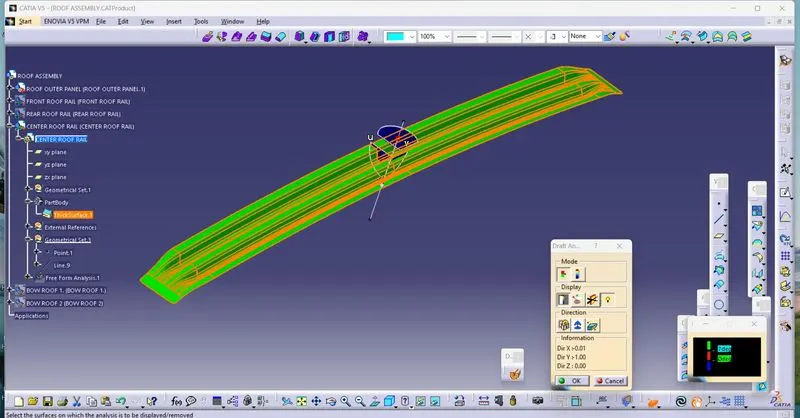
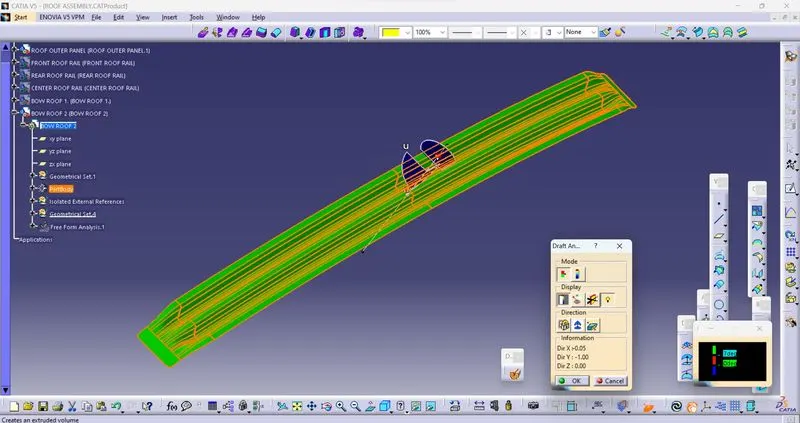
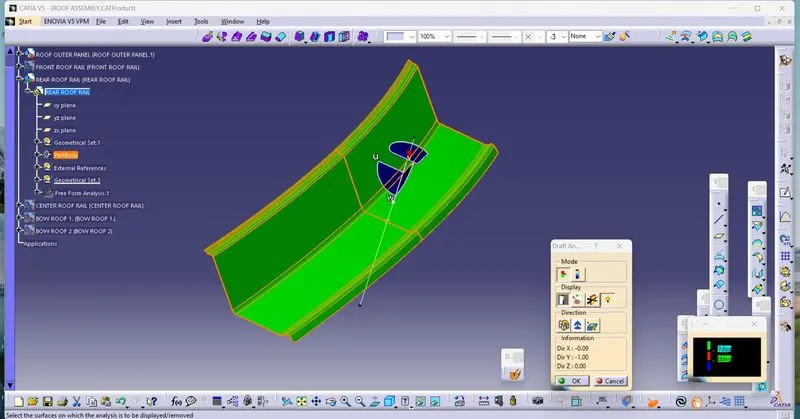
Draft angle is given to the surfaces which are parallel to the tooling axis to ensure the ease removal of tool from the part or ease removal of part from the tool.
Draft analysis is given to ensure that whether the part is produceble or not. In this case i have created the models with minimum of 7 degee of draft angle.
All the roof rails are passing the draft analysis. So all the models can be produced as a part.
FRONT ROOF RAIL
BOW ROOF1
CENTER ROOF RAIL
BOW ROOF 2
REAR ROOF RAIL
BOW ROOF PREDICTION
In countries like India car roof is subjected to more heat. Due to this roof will be subjected to thermal stresses. Due to the thermal stress roof which has no support on the bottom will get tend to sagging. To avoid sagging we need to give a proper curvature on the roof outer panel.
Heat distorsion criteria is to define where the bow roof is going to get placed in such a way that it will resist deformation while it is subjected to high temperature.
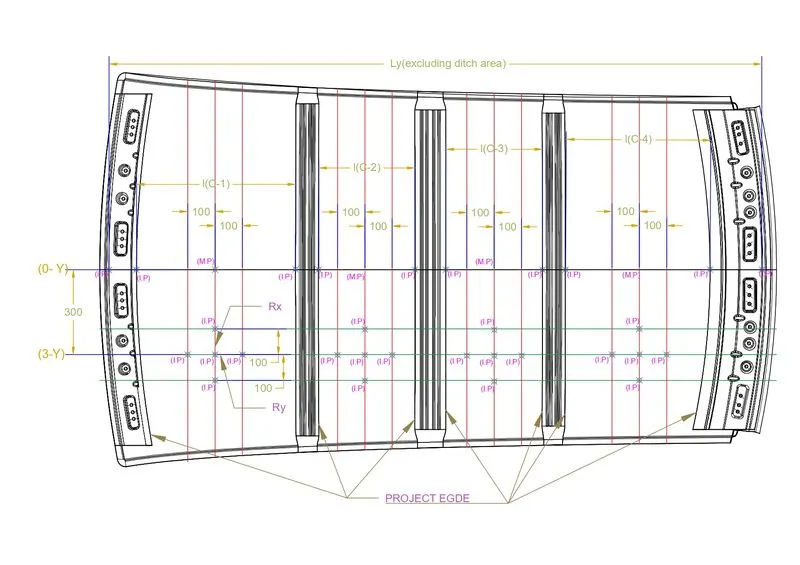
Roof Length in X-Direction, curvatures of the roof outer panel, roof plate thickness, distance between two roof rails are the parameters which deciding the position of the bow roofs.
What if our design not satisfies the bow roof prediction formula:
1. As a sheet metal design engineer we can change distance between two roof rails to satisfy the heat distorsion criteria. We can not change the thickness, because it will affect the cost of producing a part.
2. If it is not satisfied even after changing the distance between two roof rails, we can ask styling team to modify the curvature of the roof outer panel.
Bow–Roof Prediction Formula
W = [1.73 x 10^(-3) x L] + [1.85 x 10^(-8) x (R^2)/t] + [ 1.10x10^(-3) x l] - 2.68
Where,
L = Roof Length in X-Direction[mm](Roof dimension in 0-Y)
R = Roof curvature
R = 2(Rx*Ry)/(Rx+Ry)
Rx = X curvature
Ry = Y curvature
t = Roof plate thickness [mm]
l = Bow Roof Span [mm]
Judgment Condition
OK< 2.7
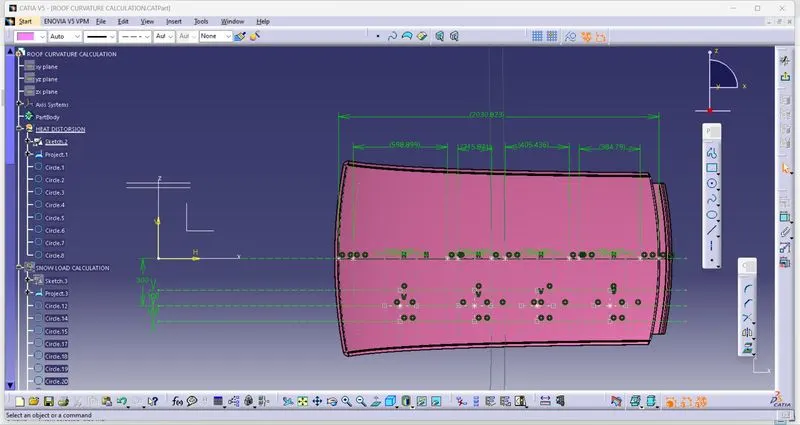
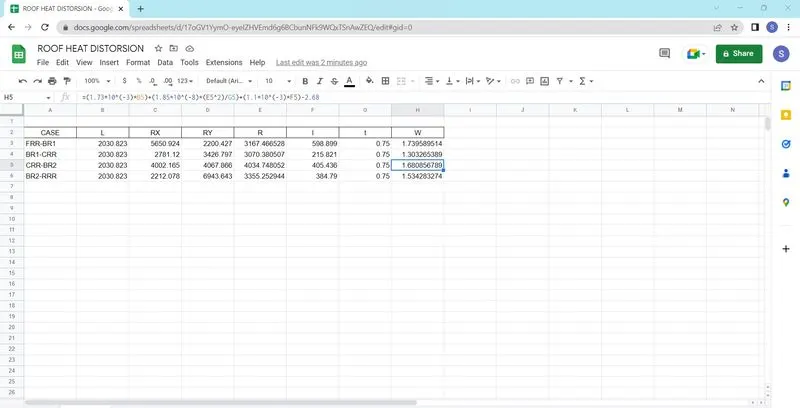
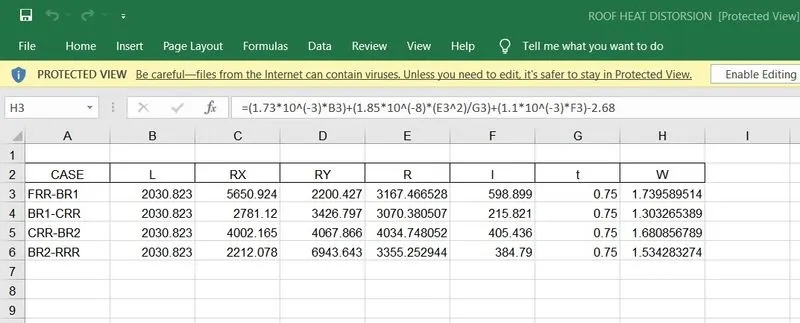
RESULT FOR BOW ROOF PREDICTION CRITERIA
For all the four cases are satisfying the bow roof prediction formula.
If it does not satisfies the bow roof prediction formula:
1. As a sheet metal design engineer we can change distance between two roof rails to satisfy the heat distorsion criteria. We can not change the thickness, because it will affect the cost of producing a part.
2. If it is not satisfied even after changing the distance between two roof rails, we can ask styling team to modify the curvature of the roof outer panel.
SNOW LOAD CACULATION
Snow load condition is for the countries where the car will subjected to heavy snow on top of the roof. In this case the roof should have proper curvature to regain it's origoinal position after removing the snow from the roof. So we need to place roof rails acooding to these conditions.
snow load prediction formula ensures roof to regain it's original position after removing the snow from the car roof.
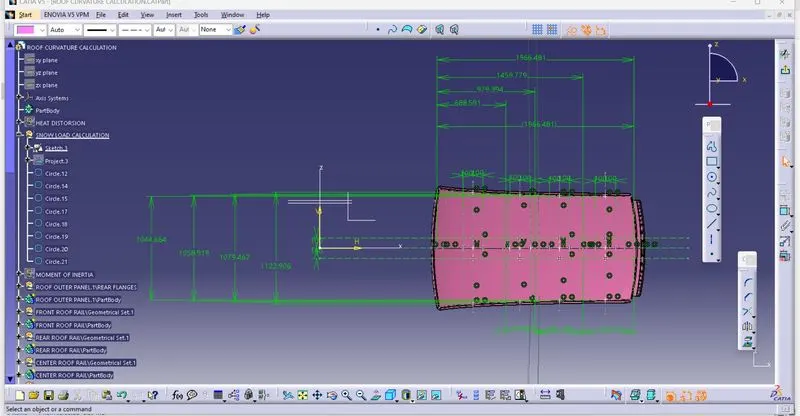
Distance between the front and rear roof Rails on the Vehicle along with 0Y, distance between the front and rear roof Rails on the Vehicle along with 0Y, Distance front Front Roof Rail to Roof BOW, Distance for which Roof BOW bears divided load, Geometrical moment of inertia of Roof BOW, roof curvatures are the parameters which is influencing the snow load prediction formula.
What if our design not satisfies the snow load prediction formula:
1. As a sheet metal design engineer we can change Distance between the front and rear roof Rails on the Vehicle along with 0Y, Distance front Front Roof Rail to Roof BOW, Distance for which Roof BOW bears divided load, Geometrical moment of inertia of Roof BOW to satisfy the criteria.
2. If it is not satisfied even after changing Distance between the front and rear roof Rails on the Vehicle along with 0Y, Distance front Front Roof Rail to Roof BOW, Distance for which Roof BOW bears divided load, Geometrical moment of inertia of Roof BOW. we can ask styling team to modify the curvature of the roof outre panel.
3. We should not drastically modify the curvature of the roof, it has to be done in a gradual manner without affecting the asthetic surface and arerodynamics of the car.
Snow Load Prediction Formula
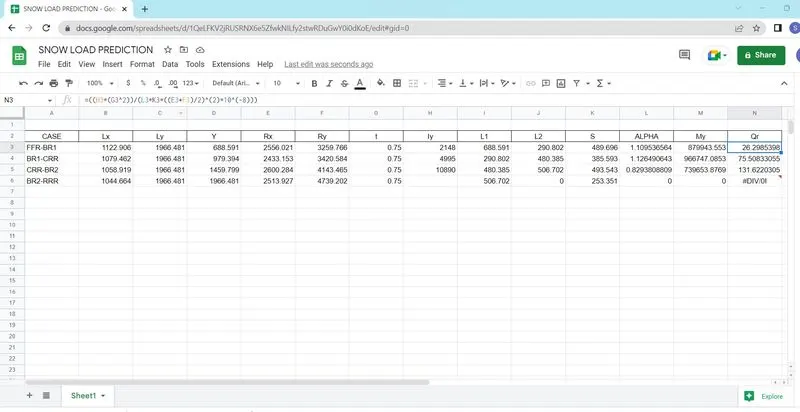
Qr = [Iy x t2] / [α x s x [(Rx + Ry)/2]2 x 10-8]
Note: The Qr value given over here is correct. There was a typo error in the formula given in the video.
Where,
α = My x Lx2 x 10-12 , My = Y(Ly-Y)
t = Roof plate thickness [mm]
Ly = Distance between the front and rear roof Rails on the Vehicle along with 0Y[mm]
Length of Roof panel with the center point between Roof rail Front /Rear as the front and rear reference point.
Lx = Distance between the front and rear roof Rails on the Vehicle along with 0Y [mm]
The width of the roof panel is exposed on the surface.
Y = Distance front Front Roof Rail to Roof BOW[mm]
s = Distance for which Roof BOW bears divided load [mm]
s = L1/2 + L2/2
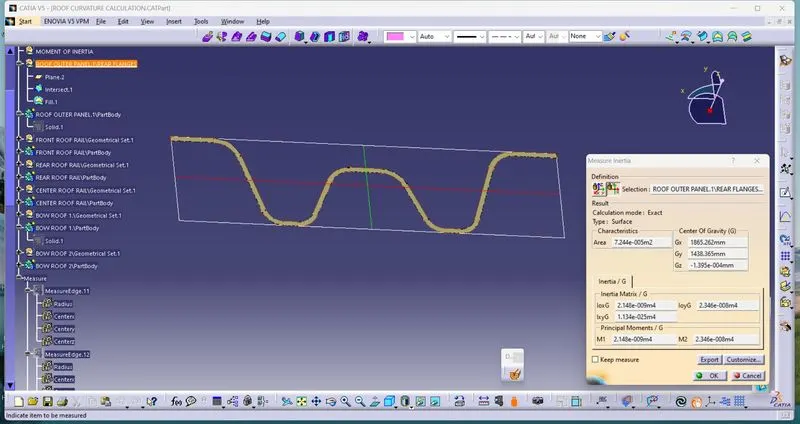
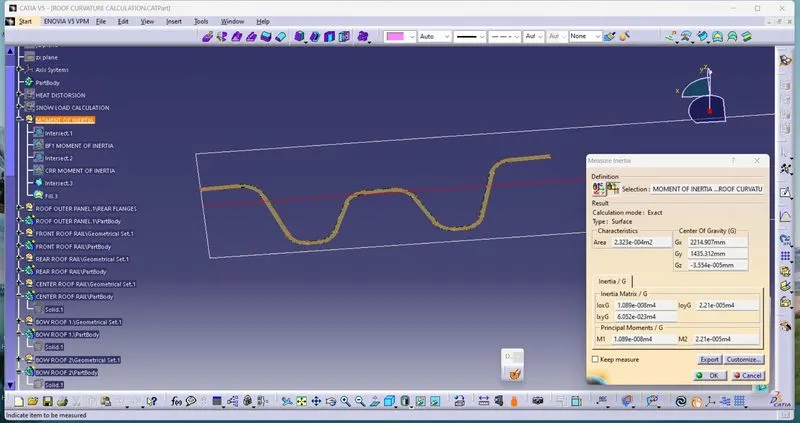
Iy = Geometrical moment of inertia of Roof BOW (Y cross-section )[mm4]
Rx = Lateral direction curvature radius of roof panel Y cross-section on Roof BOW [mm]
Roof panel curvature Radius of the Length Lx in Front view
Ry = Longitudinal Direction curvature radius of the Roof panel X cross-section on Roof BOW [mm]
Roof panel X curvature radius of length s in Side view
Judgment condition
Qr ≥ 3.1
250 ≤ s ≤ 380
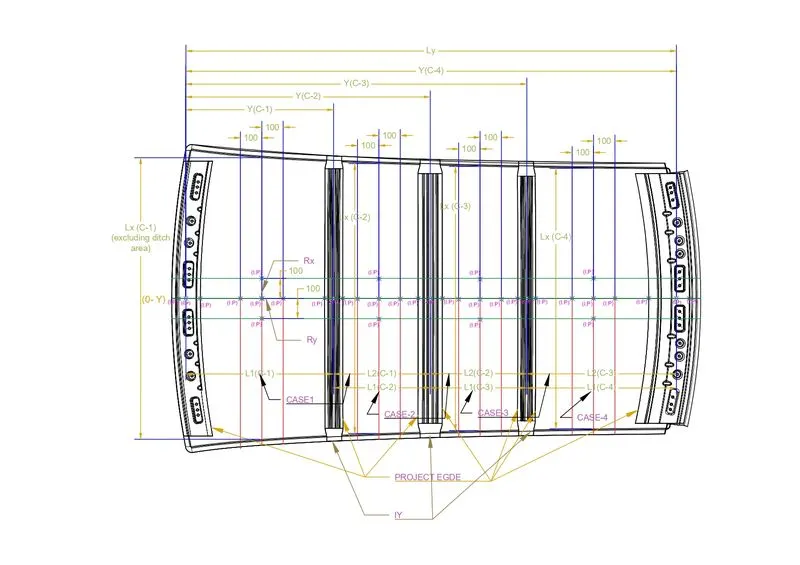
RESULT FOR SNOW LOAD CRITERIA:
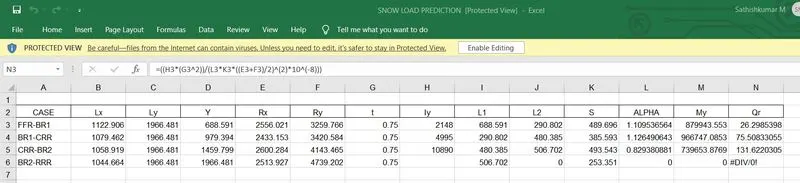
All the four cases are satifying the snow load condition criteria.
If it does not satisfy the snow load criteria
1. As a sheet metal design engineer we can change Distance between the front and rear roof Rails on the Vehicle along with 0Y, Distance front Front Roof Rail to Roof BOW, Distance for which Roof BOW bears divided load, Geometrical moment of inertia of Roof BOW to satisfy the criteria.
2. If it is not satisfied even after changing Distance between the front and rear roof Rails on the Vehicle along with 0Y, Distance front Front Roof Rail to Roof BOW, Distance for which Roof BOW bears divided load, Geometrical moment of inertia of Roof BOW. we can ask styling team to modify the curvature of the roof outre panel.
3. We should not drastically modify the curvature of the roof, it has to be done in a gradual manner without affecting the asthetic surface and arerodynamics of the car.
MOMENT OF INERTIA FOR BOW ROOFS
BOW ROOF1
BOW ROOF2
CONCLUSION
Ditch area flanges are created in the roof outer panel and front roof rail, bow roofs, center roof rail, rear roof rails are created following heat distorsion criteria and snow load perdiction formula. For the roof and roof rails which i created are satisfying the heat distorsion criteria and snow load perdiction formula. All the part are clearing the draft analysis so all the parts i created can be produced in real time.