Roof Design
AIM
Design a Roof with its components by following the master section of the front roof rail (at least 1 Front roof rail, two bow roofs, 1 center roof rail and 1 rear roof rail) with all the design parameter
Perform Draft Analysis for all the parts and include the snapshot in the report
the curvature study on the roof based on the Bow roof prediction calculation as well as the manufacturing techniques.
INTRODUCTION:
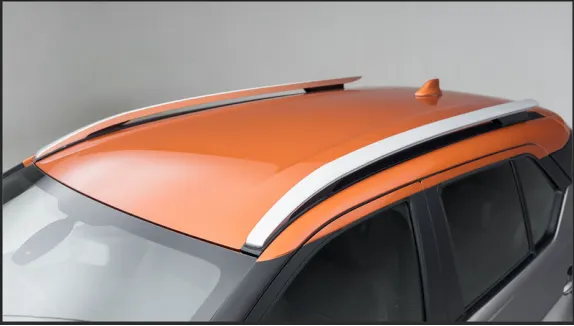
An automobile roof or car top is the portion of an automobile that sits above the passenger compartment, protecting the vehicle occupants from sun, wind, rain, and other external elements.
When it is seeing from outside of the car, it is just closing the top portion. But in design point of view, it is hard to create the design. Because of you have to create no of support rails for enough strength to withstand the load. Bow roofs are primarily fixed in flatter region to enhance strength.
Front roof and rear roof rails are fixed to the ditch area using spot weld operation. But front, rear bow roof and center roof rails are fixed to roof using mastic sealants. We don’t want so much gap between roof rails and bow roof area. So, we reducing the NVH issues.
METHODLOGY
- Develop the roof outer surface with the help of master section.
- Creating the front roof rail and rear roof rail with embosses on it.
- Creating the Bow rails ( bow roof 1, bow roof 2) with the help of master section.
- Creating reinforcement and center roof rail.
- Performing the curvature analysis (Heat distortionand Snow load calculations).
- Performing feature draft analysis on each components.
DESIGN CONSIDERATION OF ROOF:
- Visibility criteria
- Head room clearance
- Bow roof position
- Heat distortion
- Snow load criteria
- Draft analysis
- Material
- Sun roof consideration
- Joining techniques
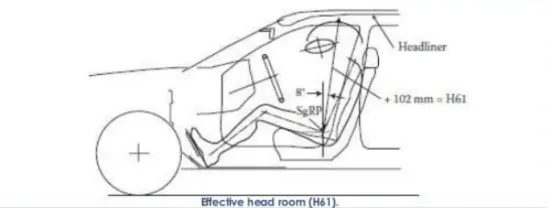
HEAD CLEARENCE
Its is measured as the distance from a car’s roof to its seat bottom. For every car the head clearance distance differs.
VISIBILITY (FRONT / REAR)
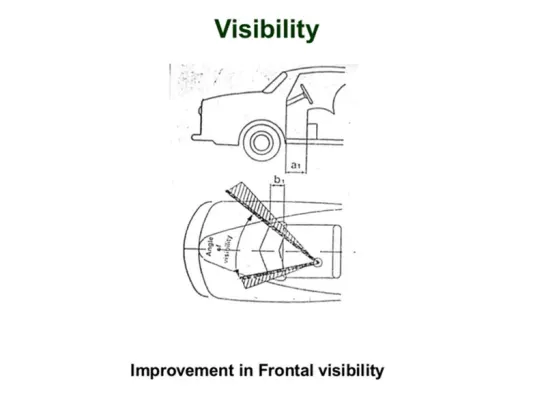
It depends on the window opening and their relative position to the occupants. If occupant is placed close to wind screen the forward visibility is considerably improved but comfortable entry is adversely affected as dimension between pillar and seat is decreased requiring suitable shaping of the door, if possible.Downward visibility can be improved by positioning the driver as high as possible in retaliation to the lower edge of wind screen. Rearward visibility is achieved by increase in glass area required to maintain rear view vertical angle with back window.
NUMBER OF BOW ROOF RAILS
The bow roof rails are provided to support the roof or in other words it provides structural strength. If the number of bows are more the more strength the roof will get.They are attached to the pillars of the car( A,B,C &D).
SUN ROOF
If the sun roof are provided then that region will become week i.e, there will not be more strength compared to other regions.So the reinforcement provided on the center roof rail to get extra support to the roof.
JOINING TECHNIQUES
The outer roof and the other components are joined using
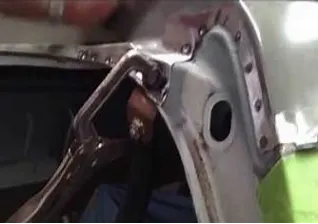
Mastic sealants can act as a protecting layer between elements. The features of this sealant and how it works makes it different from the others. It forms a smooth exterior which makes the surface flexible while maintaining a hard plastic beneath the surface. For mastic sealants the clearance should be 5 mm.

Spot welding is done on two metal sheets as they are placed them one on the other with the zero clearance distance. Its a types of resistance welding.
SHAPE
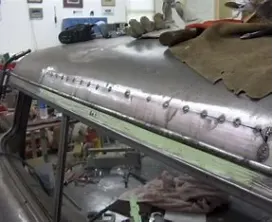
The shape of the roof plays a role while designing, where the strength depends on it. The shape of the roof decides the bow rails positions for structural strength.
CURVATURE ANALYSIS
In curvature analysis there are two analysis for calculating. Heat distortion and Snow load calculations.
Heat distortion temperature is the temperature at which materials soften and deforms under a specific load. This study is used to predict the heat distortion temperature at where the materials start to soften when exposed to a fixed load at elevated temperature. In order to avoid bending or damages on the roof, base don heat distortion temperature, this study will predict the bow roof position which help to strengthen the roof.
Snow load criteria study is done to check the ability of the to withstand snowfall and bounce back to its original shape without any permanent deformation once the load is removed.
ROOF CRUSH TEST :
Roof crush test is the design given by the IIHS ( insurance institute of highway safety ) . After analyzing the many accidents IIHS has then fixed some regulations , that how to perform the crush test .
IIHS gives the rating based up on this test . For this they consider two points while giving the rating
How fast the car can reforms to its original shape after the roll over and
How deep is the protrusion after the roll over
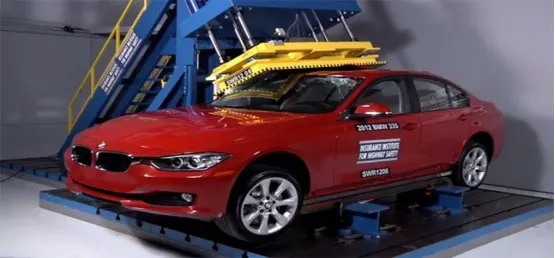
GOAL OF ROOF CRUSH TEST :
To minimize the protrusion into the occupant compartment , so that the seat belts and air bags can do there job in protecting the occupant
CONDITIONS TO FOLLOW FOR ROOF CRUSH TEST :
There are two conditions that should be followed for the roof crush test , they are
INITIAL CONDITION :
Close and lock all the doors
Close all the windows
SECOND CONDITION :
Fix the body sill or chassis frame on a hard lever surface horizontally
METHOD OF APPLYING THE FORCE :
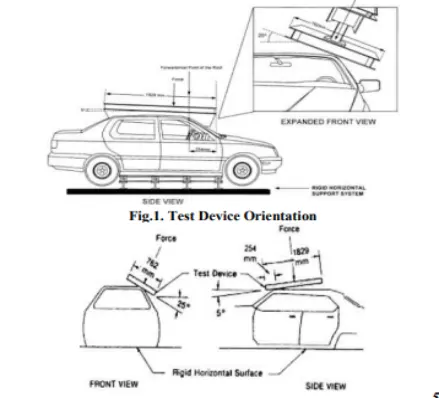
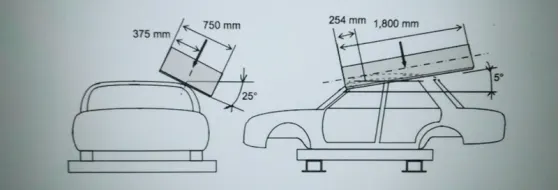
The load is applied in such a way that 50 is tilted from the front end to the rear end and the load will be in 1800 mm in length and 750 mm in width . The load is applied at the position of 250 from the flatness of the roof . The load is applied on the roof for almost 120 sec and the crush speed at which the load applied is 13 mm/sec or less than that
TESTING OF ROOF:
Roof strength evaluations are conducted on a quasi-static test system manufactured by MGA Research Corporation (Figure 3).
The system consists of an upright assembly and an attached loading head that can be fixed at varying heights from the ground as well as at pitch angles ranging from −5 to +5 degrees to accommodate testing on the driver or passenger side.
The roll angle is permanently fixed at 25 degrees. Four hydraulic actuators control the movement of the platen along two linear guides. The entire system is mounted on a T-slot bed plate anchored to the floor of the test facility.
ROOF COMPONENTS
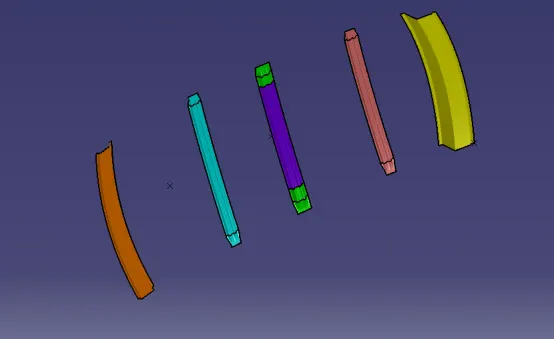
The following are the components of the roof,
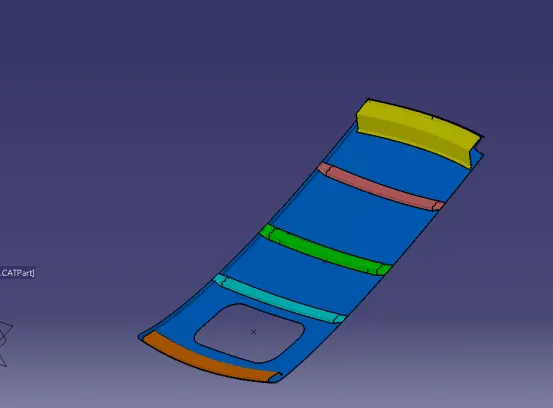
- Roof outer
- Front roof rail
- Bow roof rails
- Center roof rail
- Reinforcement
- Rear roof rail
ROOF OUTER
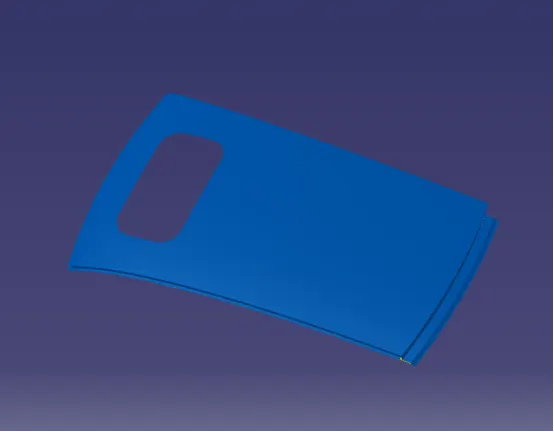
Roof outer panel mainly protects from external objects and abnormal environmental conditions. All the pillars are spot welded around the roof & roof rails. Welding on upper surface is avoided for the best aesthetic look. It is the major styling portion of the assembly made up of sheet metal.
FRONT ROOF RAIL
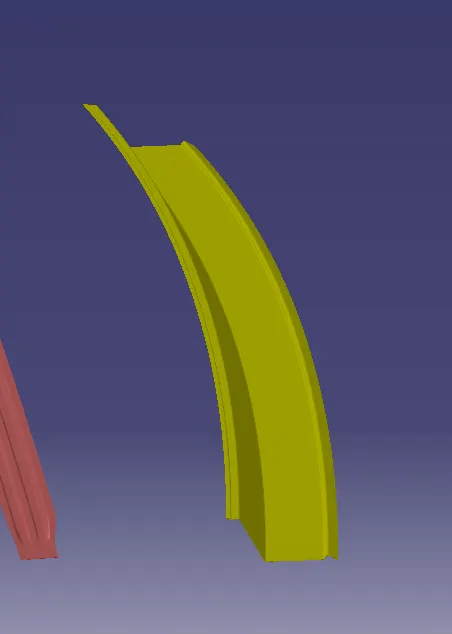
This rail acts as frontal support for the roof and joined with the frontal windshield glass. This is joined with the help of mastic sealants.
BOW ROOF RAILS
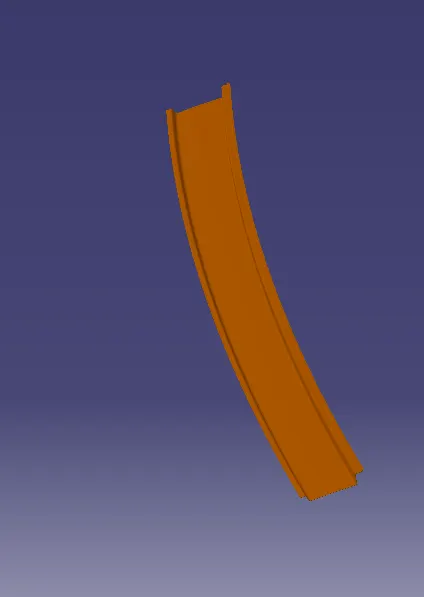
The bow roofs are made to provide support or strength to the roof. They are also joined using mastic sealants.
CENTER ROOF RAIL
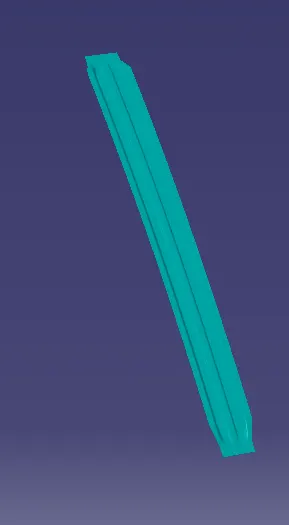
The center roof rail are made to provide the structural integrity at the center of the roof. This is also joined using mastic sealants.
REINFORCEMENT
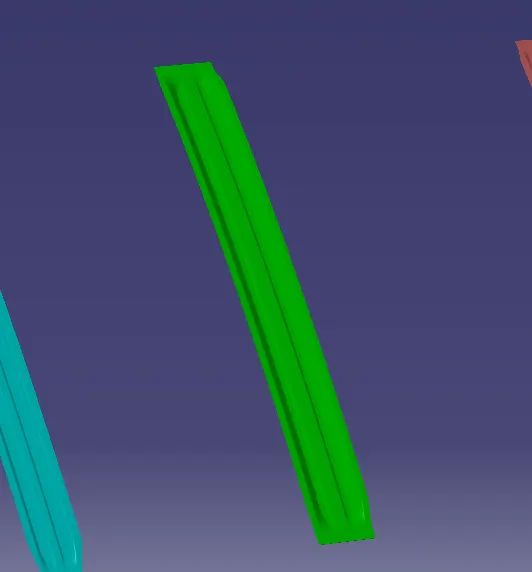
If the sun roof is provided then the reinforcement is made above the center roof rail to provide the strength.
REAR ROOF RAIL
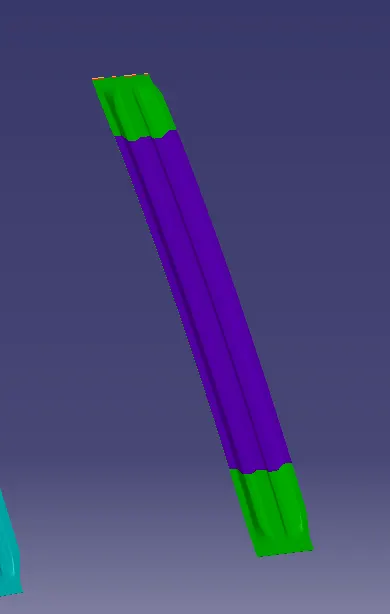
It acts as rear support for the roof and it is attached with the C or d pillar. joined used the mastic sealants with the outer roof.
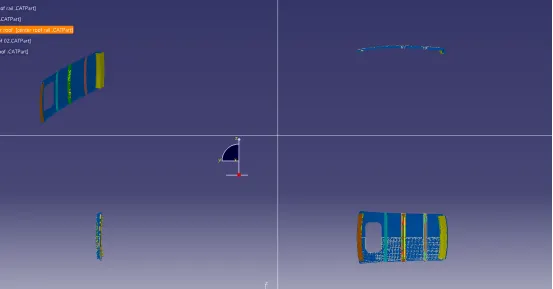
Multiple view of roof design
PERFORMING CURVATURE ANALYSIS
HEAT DISTROTION CALCULATION
The temperature at which materials soften and deforms under a specific load is known as heat distortion temperature. This study is used to predict the heat distortion temperature at where the materials start to soften when exposed to a fixed load at elevated temperature.
In order to avoid bending or damages on the roof, based on heat distortion temperature, this study will predict the bow roof position which help to strengthen the roof.
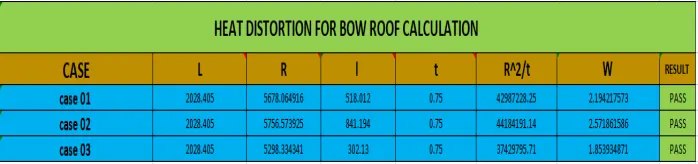
Bow–roof prediction Formula
W = [1.73 x 10^(-3) x L] + [1.85 x 10^(-8) x (R^2)/t] + [ 1.10x10^(-3) x l] - 2.68
Judgement Condition : OK< 2.7
Where,
L = Roof Length in X-Direction [mm] (Roof dimension in 0-Y)
R = Roof curvature = 2(Rx*Ry)/(Rx+Ry)
Rx = X-curvature
Ry = Y-curvature
t = Roof plate thickness [mm]
l = Bow Roof span [mm]
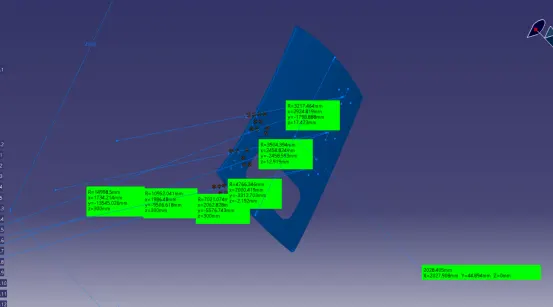
Steps for calculating heat distortion,
First, open a sketch using the top datum plane and draw a line at the center of the roof. Mark the line as 0Y.
Then, offset that line to the distance of 300 mm which is our 3Y line.
From this line offset the line to the distance of 100 mm above and below the 3Y line.
Create points between the bow roof rail 1, the center roof rail, bow roof rail 2 and rear roof rail at its center and then create lines separately passing through that points.
After that, create the lines before and after to that intersected line at the distance of 100 mm each.Then create points on the lines which are intersecting each other.
Project those points to the outer roof surface and draw a circle on those points using three point circle option.
Finally, measure all the values which are necessary to calculate the heat distortion.
SNOW LOAD CALCULATION
This test is much more important for a light commercial vehicle (LCV) because LCV has bigger roof area, more straight style and as a result of these two properties it has heavier roof panel than the other vehicle.
So the roof is designed in such a way that if the snow load on the roof then it may bend but needs to be back in its original position after the removal of snow load.
Snow load Prediction formula;
Qr = [Iy x t2] / [a x s x [(Rx + Ry)/2]2 x 10^(-8)]
Judgement condition = Qr ≥ 3.1
250 ≤ S ≤ 380
Where,
a = My x Lx2 x 10-12 , My = Y(Ly-Y)
t = Roof plate thickness (mm)
Ly = Distance between the front and rear roof Rails on the Vehicle along with 0Y (mm)
Lx = Distance between the Left and Right end of the roof on the Roof BOW (mm)
Y = Distance front Front Roof Rail to Roof BOW (mm)
s = Distance for which Roof BOW bears divided load (mm) , s = L1/2 + L2/2
Iy = Geometrical moment of inertia of Roof BOW (Y cross-section ) (mm^4)
Rx = Lateral direction curvature radius of roof panel Y cross-section on Roof BOW (mm)
Ry = Longitudinal Direction curvature radius of the Roof panel X cross-section on Roof BOW (mm)
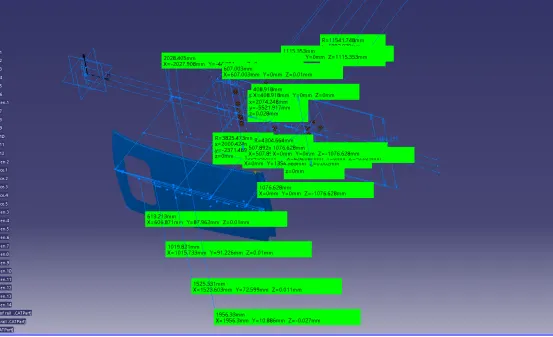
Steps for calculating the snow load,
Create a line '0Y' at the center of the roof as like we did in the heat distortion calculation.
Offset that line to 100 mm on both sides.
Create points between the rails at their center's. Now draw lines passing through those points and offset that line to 100 mm on both sides.
After that, create points at the intersection on lines and measure those for calculating the snow load.
For getting the Iy value, we need to do the section modulus for the rails.
After getting all the value, use the formula for predicting the snow load,Qr.


Draft analysis
PERFORMING FEATURE DRAFT ANALYSIS
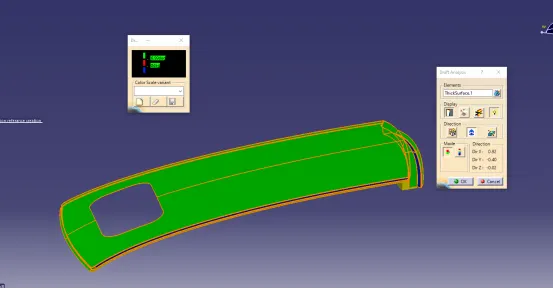
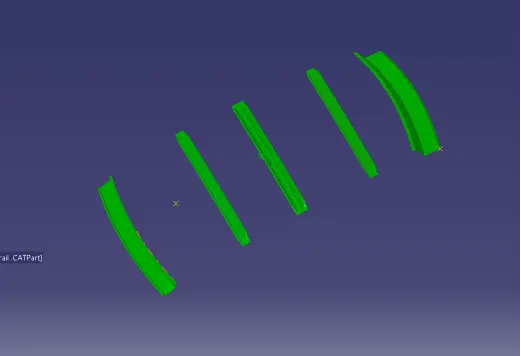
- The draft analysis was performed on each thickened surface.
- This darft anslysis is done to check the manufacturing feasibility.
Outer pannel
Front roof rail
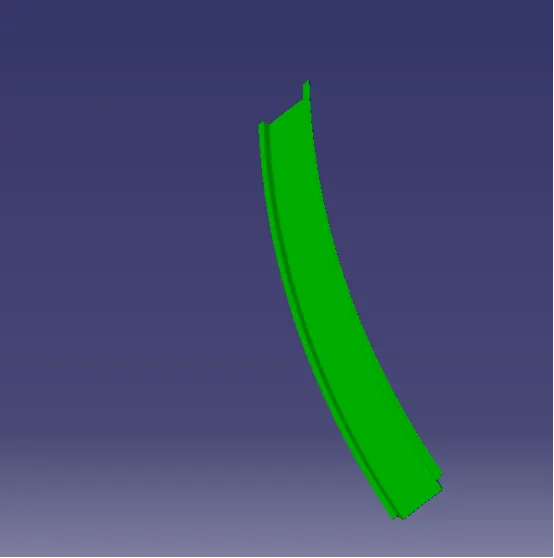
Bow roof rails
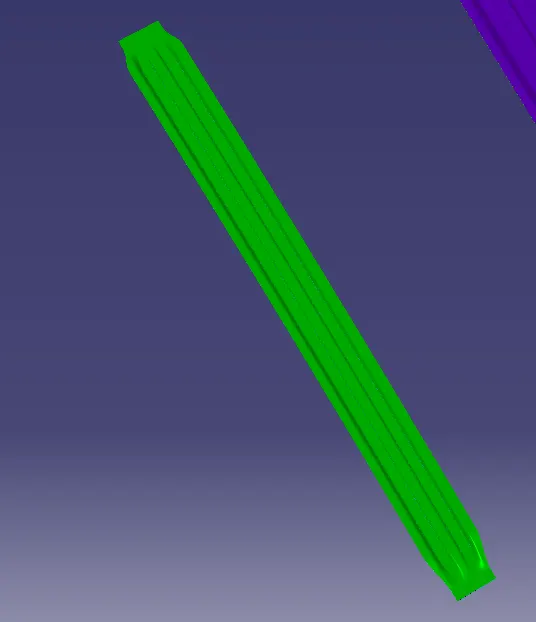
Center roof rail
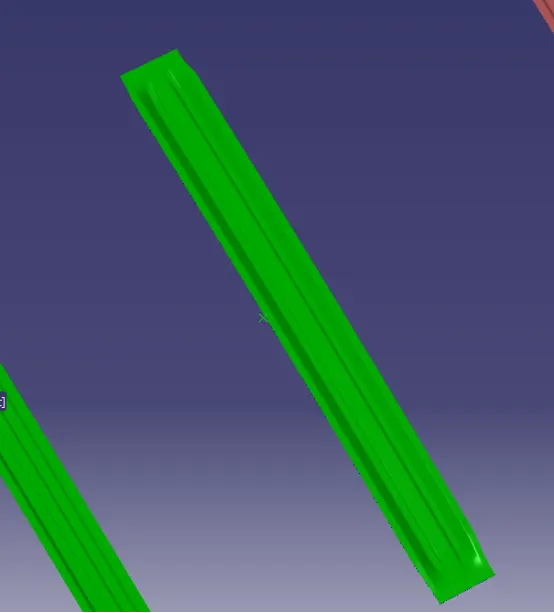
Rear roof rail
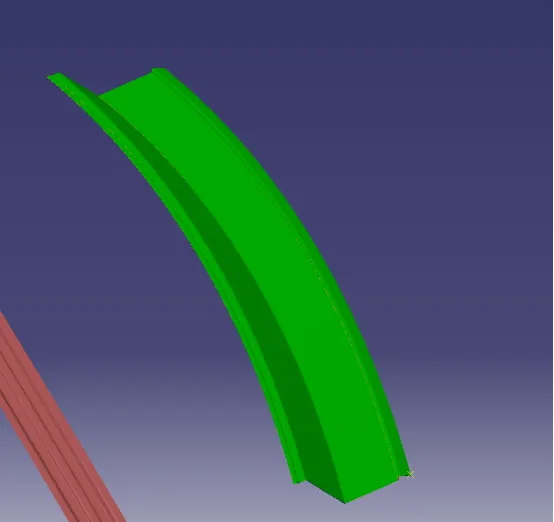
over all draft analysis view
CONCLUSION:
I did the My roof design and check heat distortion and snow load condition for bow roofs are placed at right place or not. So, after finishing my design I did the heat distortion and snow load condition.
After, finishing the curvature study. Then go to check the section modulus. And last, we check the draft analysis. Because, whether part is manufacture-able or not. That, why we doing this analysis. That’s all my design pass the all requirements for placing the roof on the car.