Roof Design
Objective:
- Design roof of a car with its components
- Perform the draft analysis
- To check the Roof for Heat distortion and snow load criteria.
What is Roof?
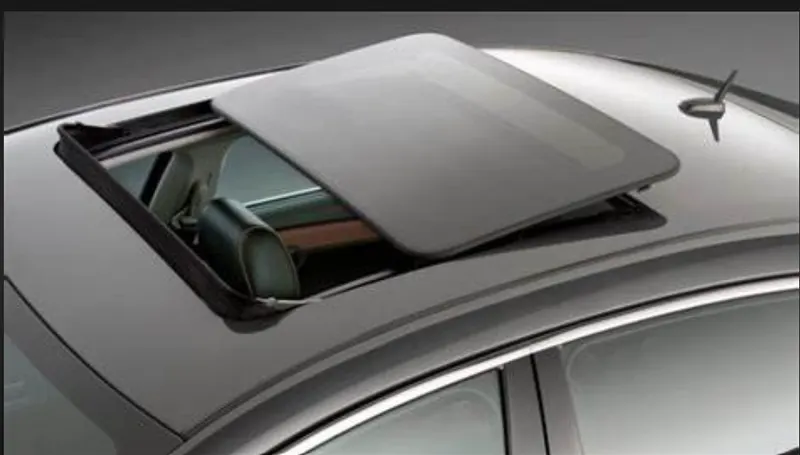
The components of an automobile that lies above passanger compartment and protects the occupants from the sun, rain, wind, and other external elements is known as the roof or car top.
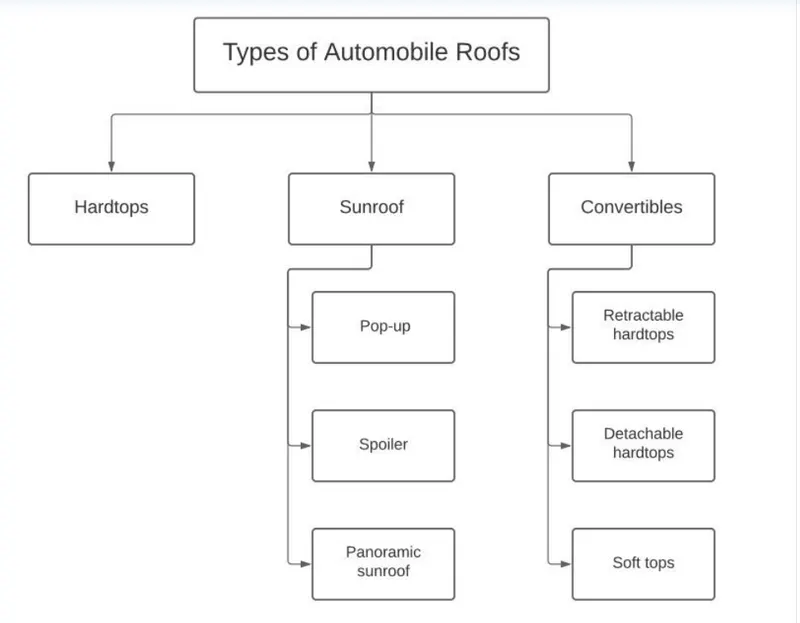
Types of Roofs:
Roof components:
- The Roof has an outer panel which is styling part.
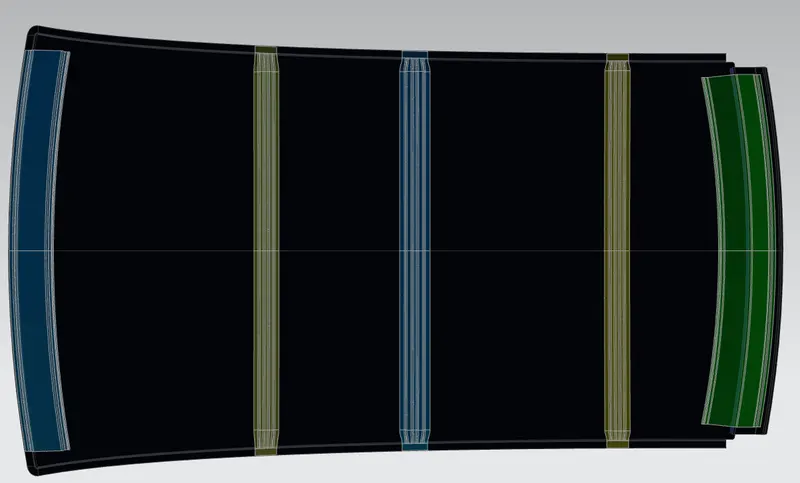
- strengthening parts are present below an outer panel of a roof,which are front roof rail, Bow roof, center roof rail and back roof rail.
- The front roof rail provides provision for the windshield glasses.Visibility criteria and headroom clearance have to be followed while designing the front roof rail.Provision for windshield mounting and inside rearview mirror is provided on the front roof rail.
- The rear roof rail has hinge mounting for the back door.it is attached at the portion whre the back door meets with roof.
- Bow roofs are provided in between the Front roof rail and center roof rail as wel as the rear roof rail and center roof rail.they are provided to enhance the localized strength of thr roof and are attached directly to the bottom of the roof with either spot welding or with the help of mastics.
- Both the front roof rail and back roof rail provided with the master section for the design
Design /Functional requirements:
- Visibility criteria
- Head clearance
- Heat distortion condition
- Snow load condition
- Roof curvature study
- Draft analysis.
Design Consideration:
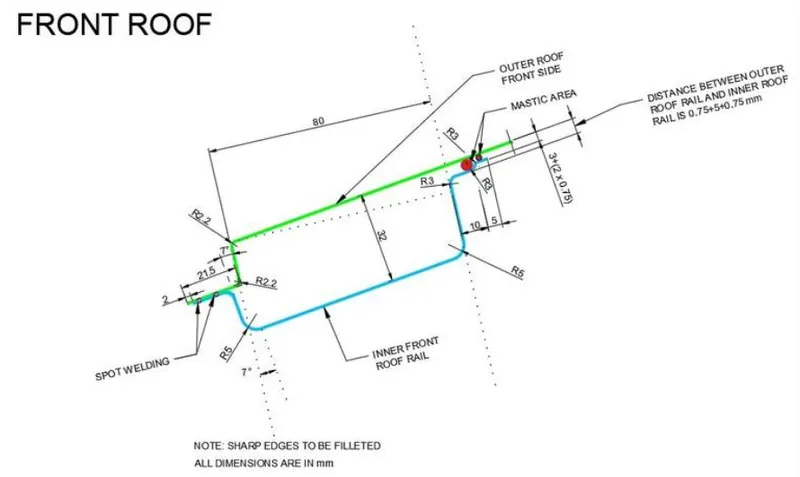
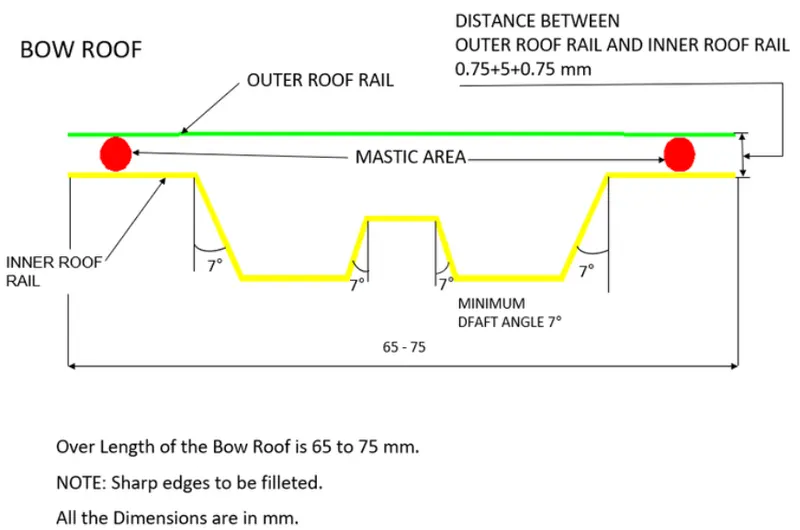
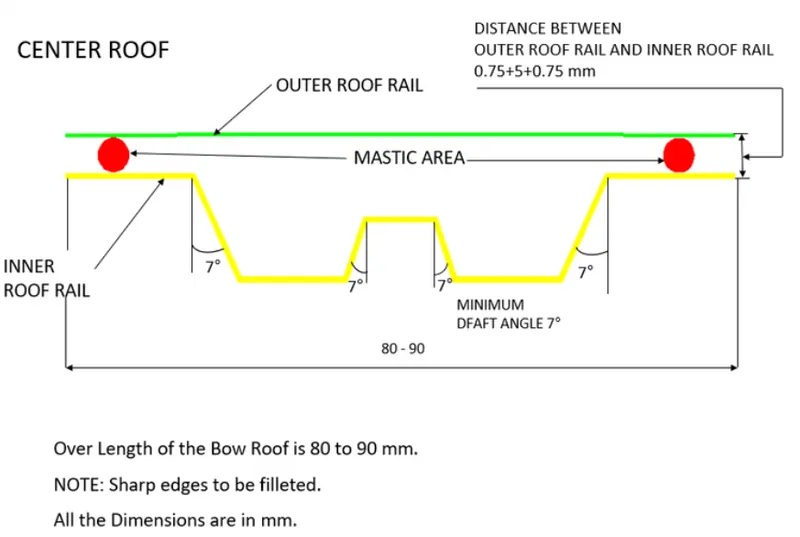
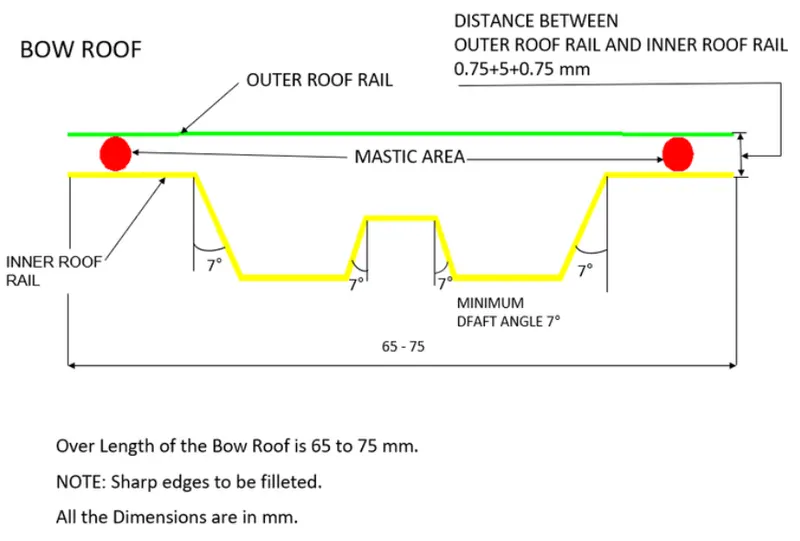
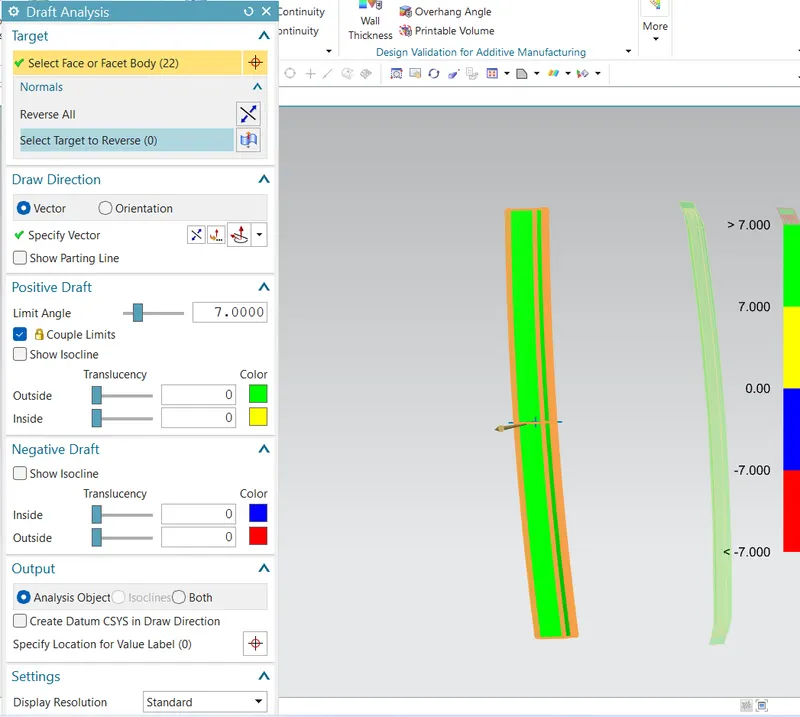
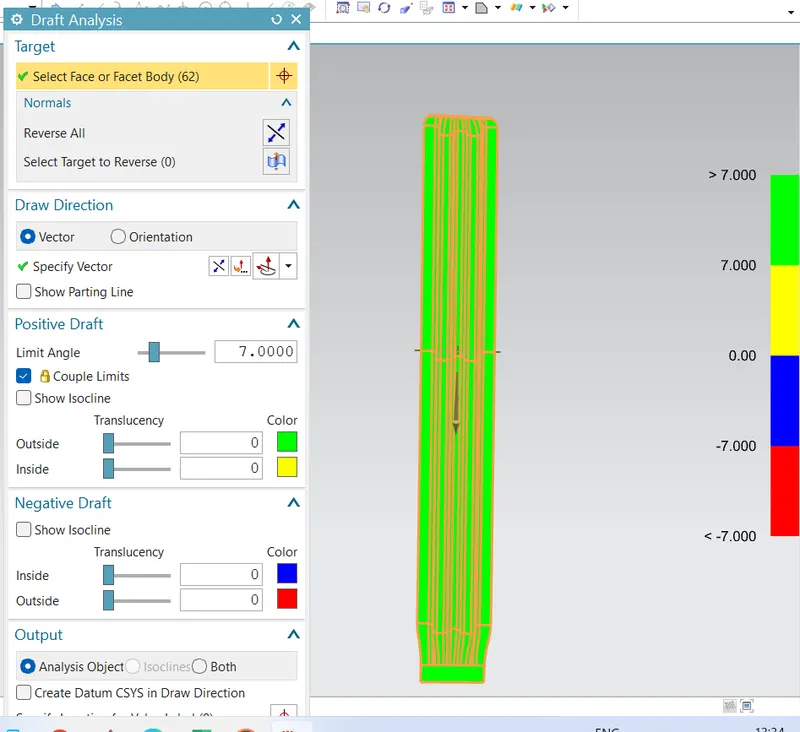
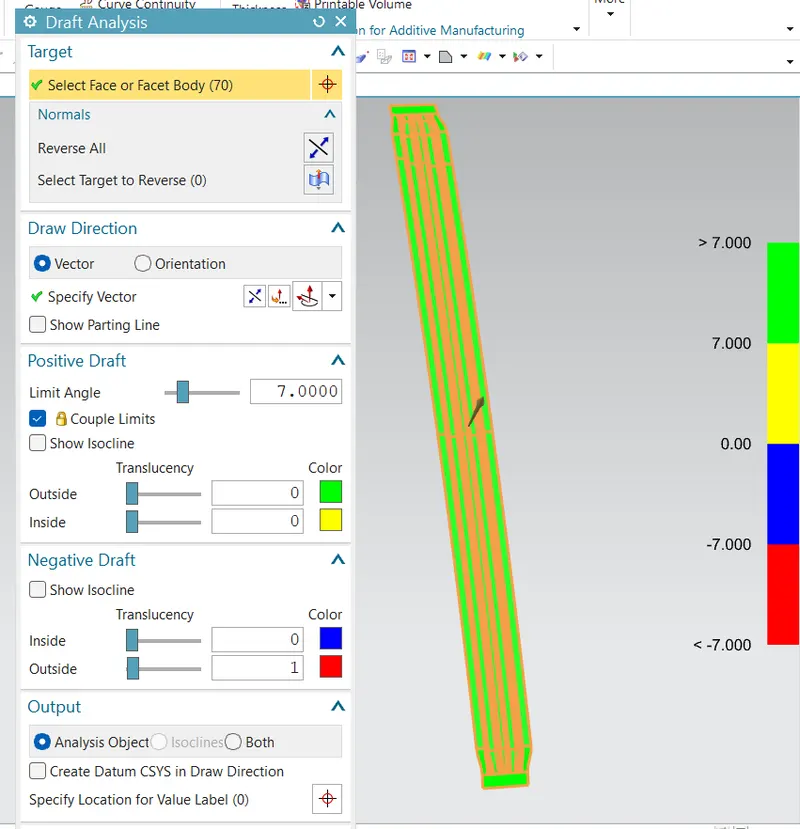
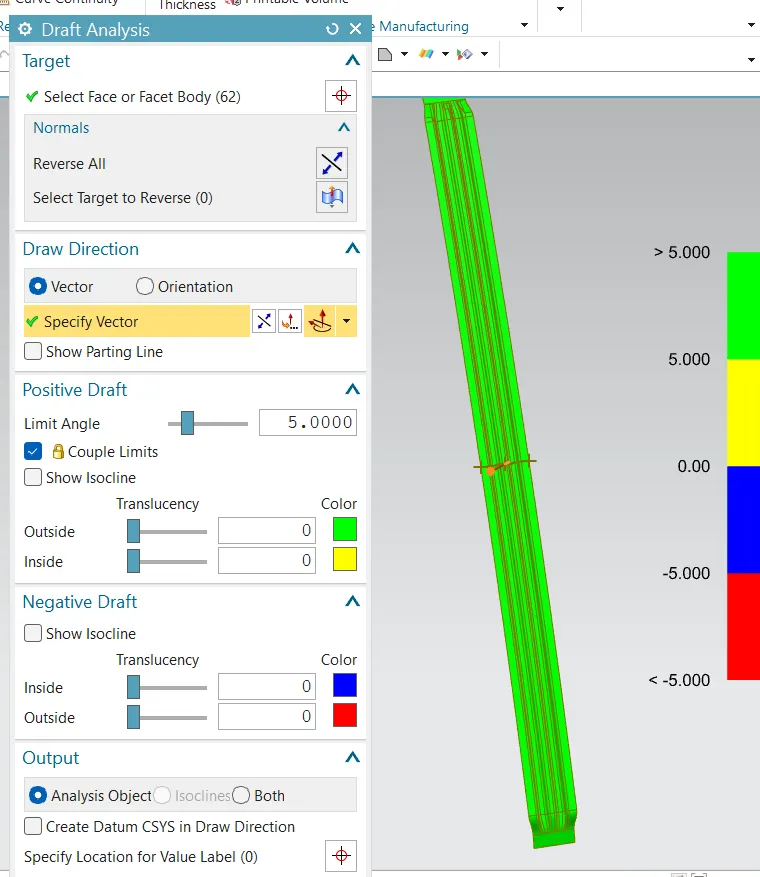
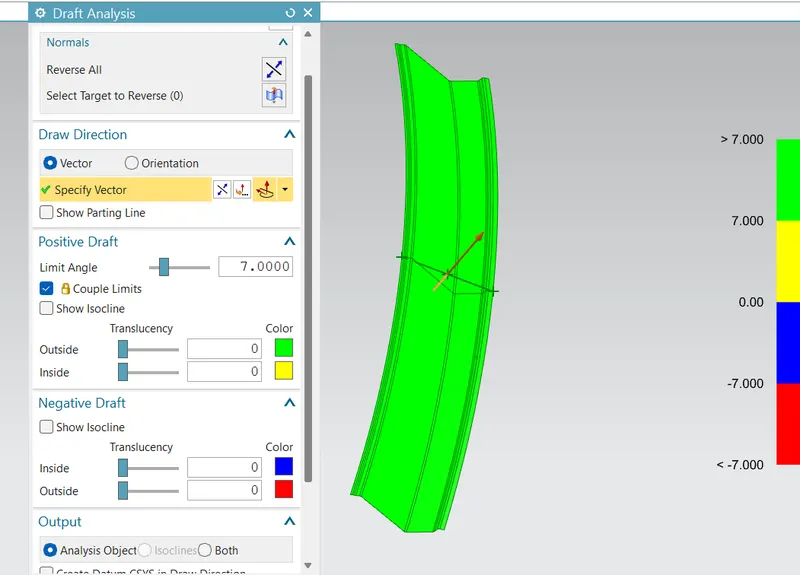
- A minimun draft of 7 degree is required for all the faces.
- Thickness of all sheet metal parts-0.75mm
- All edges should have fillets and there should not be any short edges.
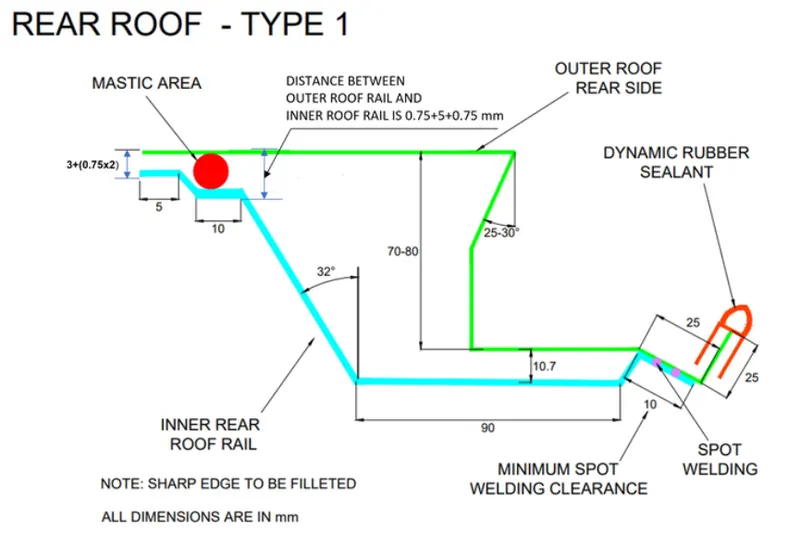
- Clearance of 5mm should be present between outer roof rail and Front roof rail, Rear roof rail and bow bow roofa where mastics are used for adhesion
Design Methodology:
Roll over Test on Roof:
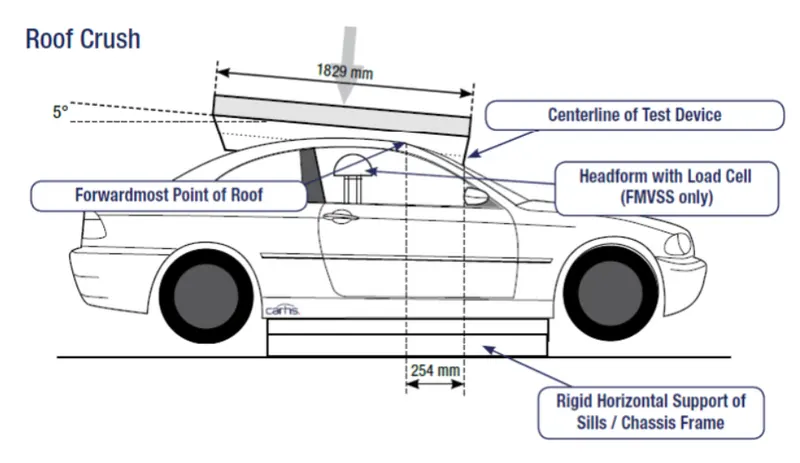
- The rollover test is given by the insurance institute of highway safety(IIHS).After analyzing many accidents IIHS has fixed some regulationa about how to perform the test.
- IIHS rating is based on the following things which are how fast a car can reform its original shape after rollover and how deep a protrusion is.
- The aim of this test is to minimize the protrusion of the roof.
- Two conditions need to be followed while performing this test. one is to loclk all the doors of the car properly and the second is to close all the windows of the car.
- Also, it is mandatory to fix the chassis on the hard lever surface horizontally.
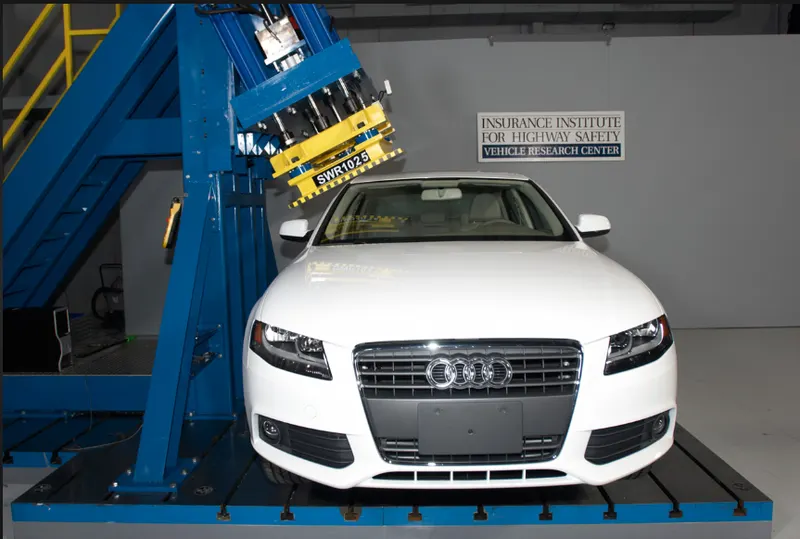
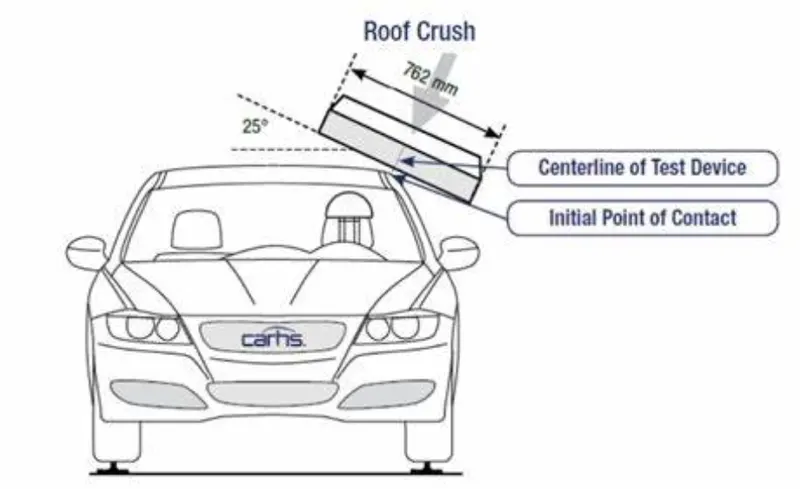
- Load is applied at 25 degree tilt when view from the front over the length of 762mm.
- Load is applied at 5 degree tilt when view from the side, over the length of 1829mm.
Design of Roof Rail and Bow Roofs.
Front Roof rail:
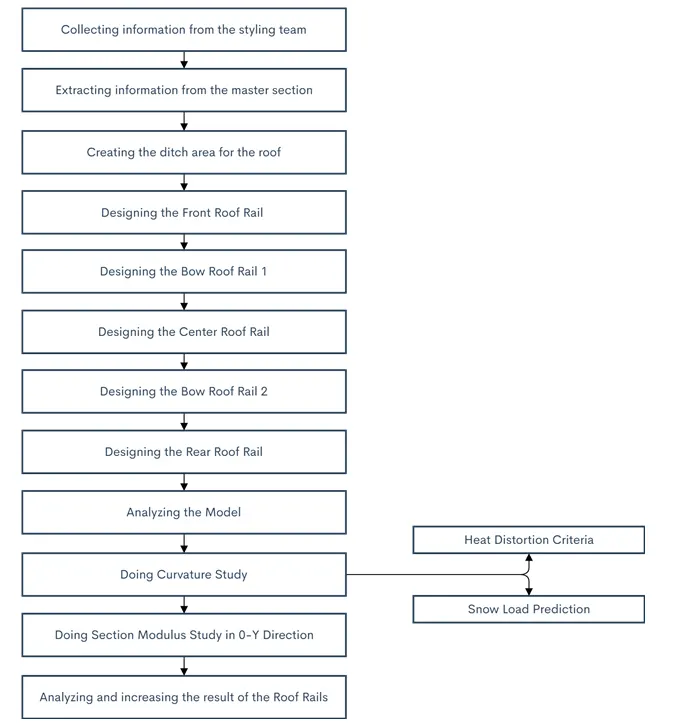
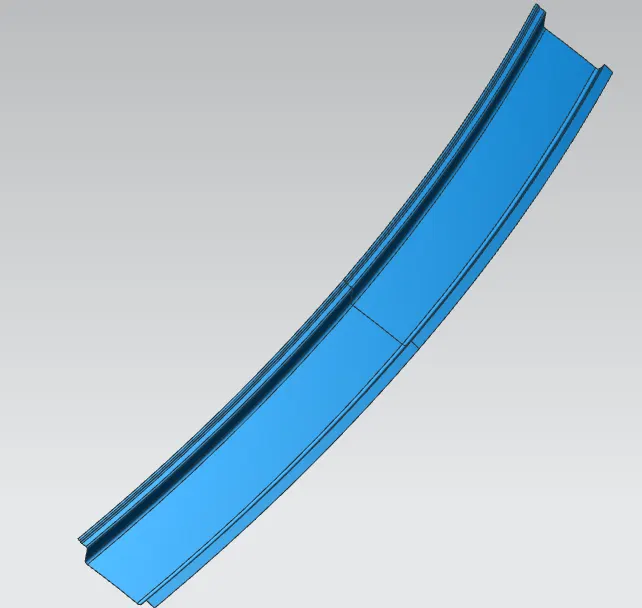
By following the given Master section and dimensions front roof rail has been designed.
Bow Roof 01:
By foolowing the given master section Bow Roof has been designed.

Center Roof :
By following the given master section center Roof has been designed

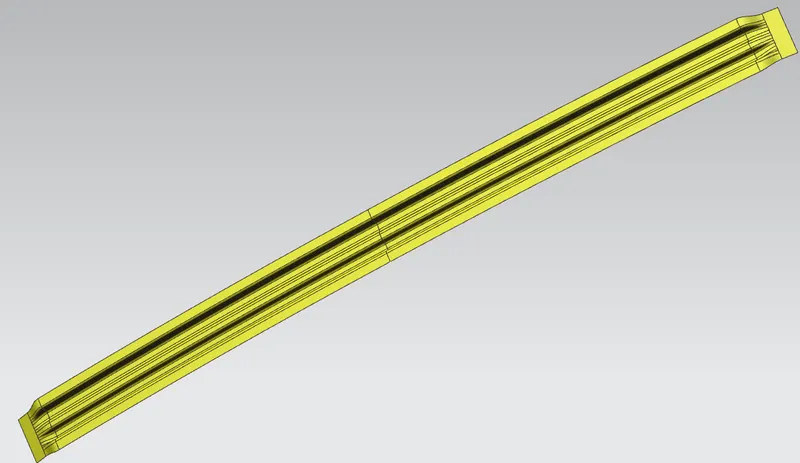
Bow Roof 2:
By following the given master section Bow Roof has been designed.
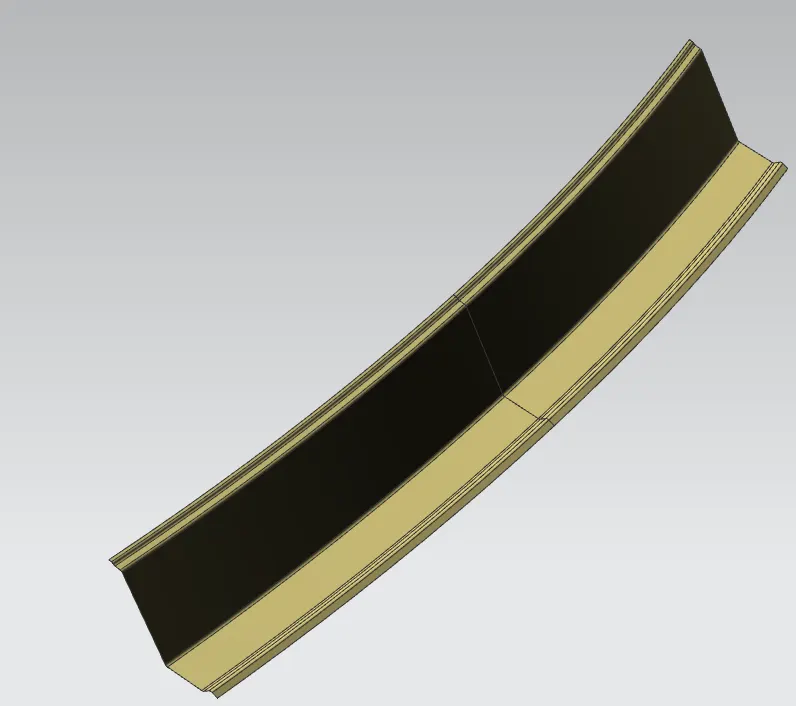
Rear Roof Rail:
By following the given master section Rear Roof Rail has been designed.
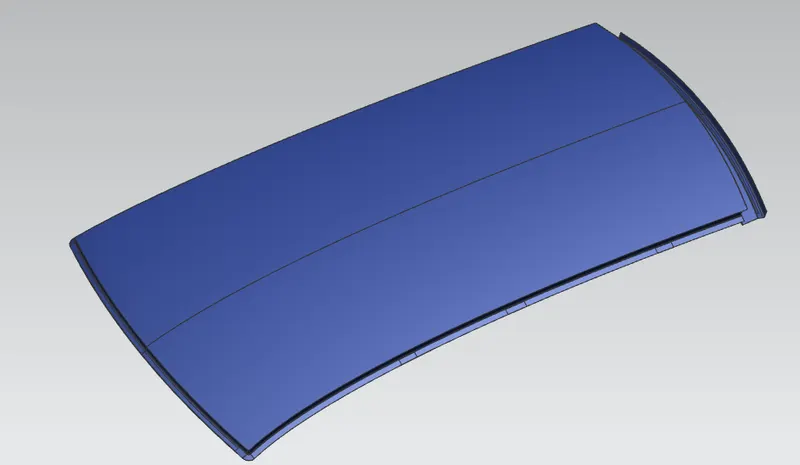
Roof Outer Panel:
Necessary flanges have been created for the roof outer panel to join a side, front and rear of the car roof with the main body
Draft Analysis:
Front Roof Rail:
All the faces of Front Roof Rail have successfully cleared the draft analysis with a minimum draft angle of 7 degree.
Bow Roof 01:
All the faces of Bow Roof 01 have successfully cleared the draft analysis with a minimum draft angle of 7 degree.
Center Roof:
All the faces of Center Roof have successfully cleared the draft analysis with a minimum draft angle of 7 degree.
Bow Roof 02:
All the faces of Bow Roof 02 have successfully cleared the draft analysis with a minimum draft angle of 7 degree.
Rear Roof Rail:
All the faces of Rear roof rail have successfully cleared the draft analysis with a minimum draft angle of 7 degree.
Section Modulus Analysis:
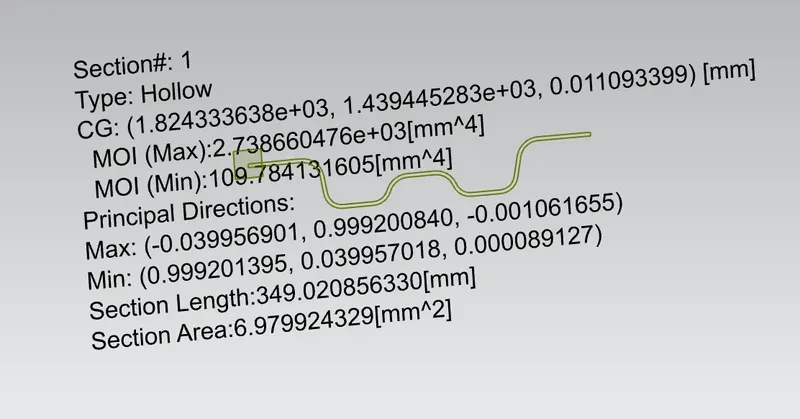
Bow Roof 01:
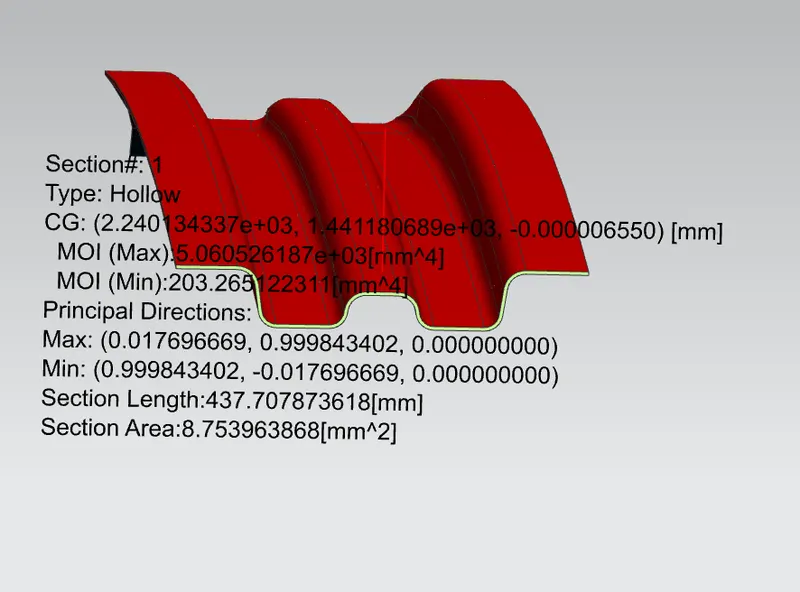
Center Roof:
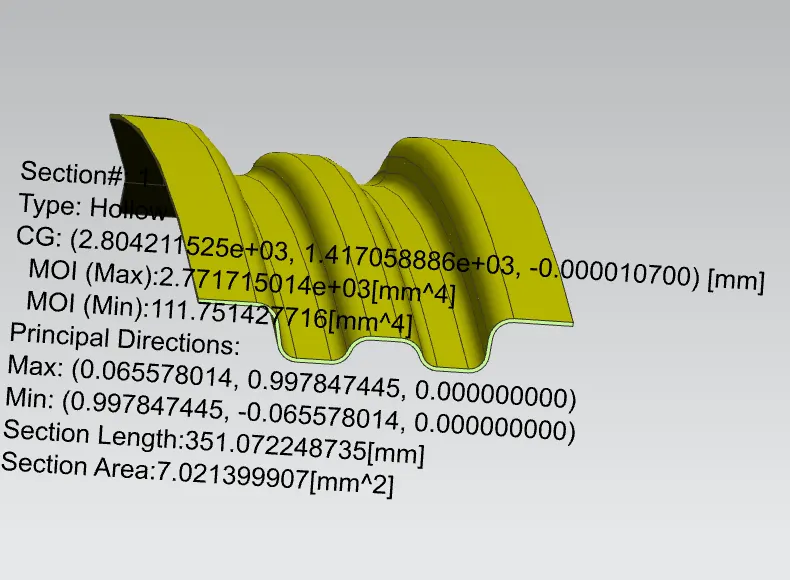
Bow Roof 2:
Heat Distortion:
Heat Distortion is the temperature at which the metal softens and deforms under a specific load. This study is done to check the ability of the roof to withstand high temperature with respect to the positioning of the reinforcements which contributes to increase the strength.
W = [1.73 x 10^(-3) x L] + [1.85 x 10^(-8) x (R^2)/t] + [ 1.10x10^(-3) x l] - 2.68
Where,
L = Roof Length in X-Direction[mm](Roof dimension in 0-Y)
R = Roof curvature
R = 2(Rx*Ry)/(Rx+Ry)
Rx = X curvature
Ry = Y curvature
t = Roof plate thickness [mm]
l = Bow Roof Span [mm]
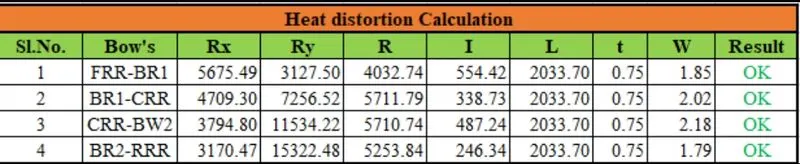
As per standards the value supposed to be lesser then the 2.7.In the Above Design,we have found the W value is lesser than 2.7 in all Components.Hence the Heat distortion criteria is satisfying.
Snow Load:
Snow Load Criteria study is done to check the withstand ability when the snow loads over the roof during winter in snow fall regions. This study will also analyze the roof that whether the permanent deformation occurs after removing the snow load. That it may bend but needs to be bounce back to its original position.
Qr = [Iy x t2] / [α x s x [(Rx + Ry)/2]2 x 10-8]
Note: The Qr value given over here is correct. There was a typo error in the formula given in the video.
Where,
α = My x Lx2 x 10-12 , My = Y(Ly-Y)
t = Roof plate thickness [mm]
Ly = Distance between the front and rear roof Rails on the Vehicle along with 0Y[mm]
Length of Roof panel with the center point between Roof rail Front /Rear as the front and rear reference point.
Lx = Distance between the Left and Right end of the roof on the Roof BOW [mm]
The width of the roof panel is exposed on the surface.
Y = Distance front Front Roof Rail to Roof BOW[mm]
s = Distance for which Roof BOW bears divided load [mm]
s = L1/2 + L2/2
Iy = Geometrical moment of inertia of Roof BOW (Y cross-section )[mm4]
Rx = Lateral direction curvature radius of roof panel Y cross-section on Roof BOW [mm]
Roof panel curvature Radius of the Length Lx in Front view
Ry = Longitudinal Direction curvature radius of the Roof panel X cross-section on Roof BOW [mm]
Roof panel X curvature radius of length s in Side view

As per standards the Qr value supposed to be greater then the 3.1.In the Above Design,we have found the Qr value is lesser than 3.1 in all Components.hence the Snowload criteria is not satisfying.
Conclusion:
The Roof has been successfully designed considering all the design Rules\parameters except Snow load criteria.
Draft Analysis has been carried out provided 7 degree in order to check the maufacture feasibilty of the components.
For better snow load criteria
- We can increase the thickness of the bow roofs.
- We can increase the mastics
- we can creat the emboses on the bow roofs.
- we can change the positions of Bow roofs.