Roof Design
AIM
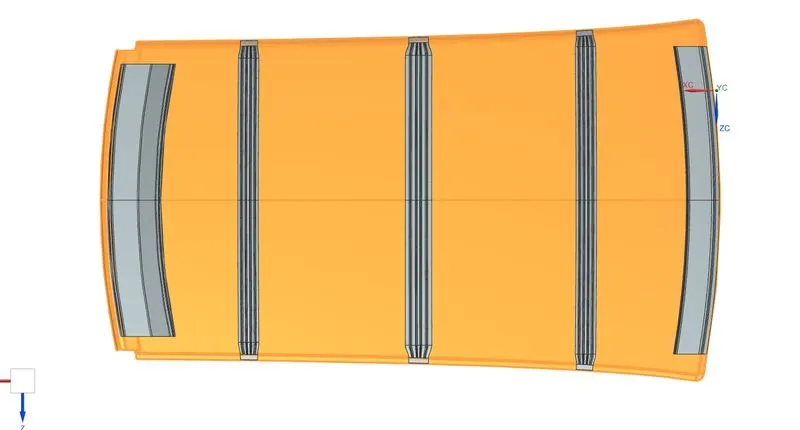
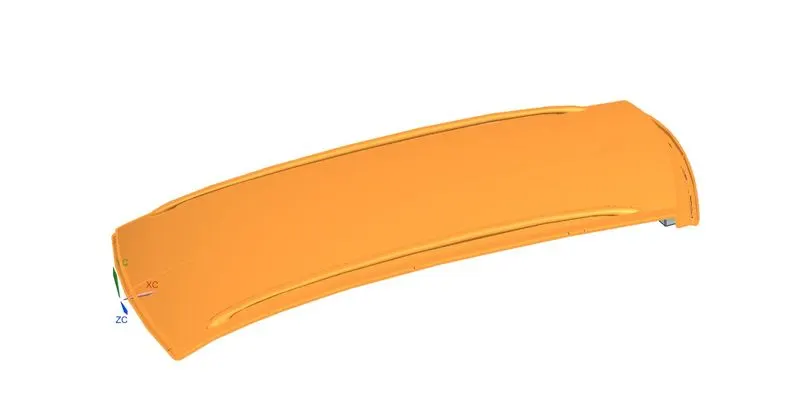
For the given roof styling, create an assembly by developing the essential flanges for the outer roof and creating the reinforcements.
OBJECTIVE
- Create an assembly by developing the essential flanges for the outer roof and creating the reinforcements.
- Provide appropriate dimensions and check for Draft analysis.
- Do a curvature study on the roof and perform calculations to determine the position of the Bow-roofs.
Theory
There are different types of car roofs available in the market such as:
1. Hard Tops
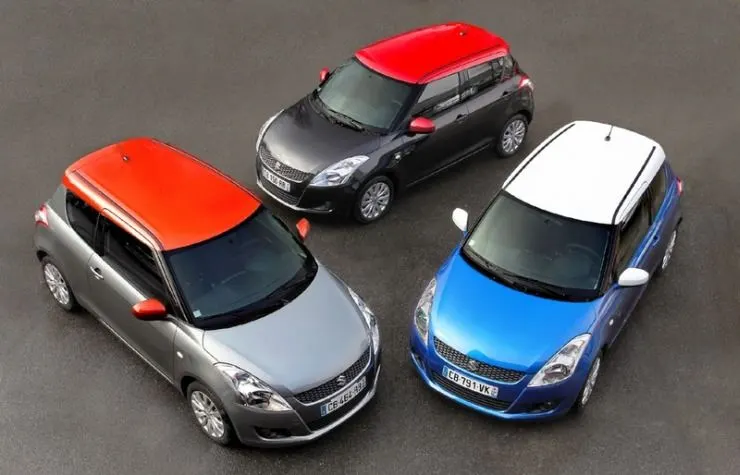
When we talk about hardtops, we are referring to the common rigid forms of automobile roofs which we see around. In modern-day cars, this type of roof is made from metal or plastic. So, the common Maruthi, Hyndai etc and many of the cars in India are all Hardtops.The fixed hardtop is your traditional car roof and is suitable for all climes and weather. It protects car occupants from the sun and wind when driving. It also offers more sense of privacy and noise-free driving. Many cars designed this way also tend to be more stable and solid than other types of roofs.
2. Sunroof
This type of roof is also quite popular. A sunroof is an operable type of roof that allows for an opening in the roof of an automobile; say a window in a roof. It can allow either light or air or both to enter the vehicle. They are either operated manually or automatically.
There are 3 popular types of sunroofs. They include:
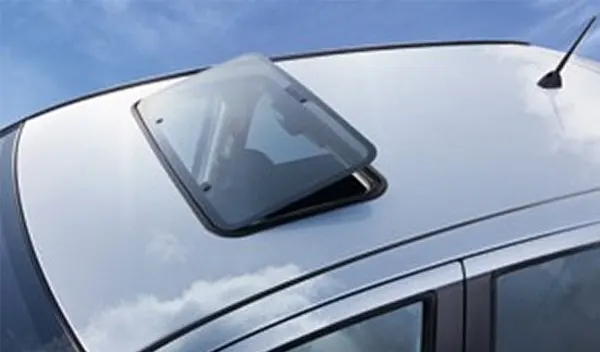
- Pop ups
The pop-up sunroof usually tilts when you open it. It is the most basic and relatively cheaper type of sunroof. Some can even be removed so that they are kept properly, maybe in the trunk whenever you want to go ‘sunroof mode.’
- Spoiler
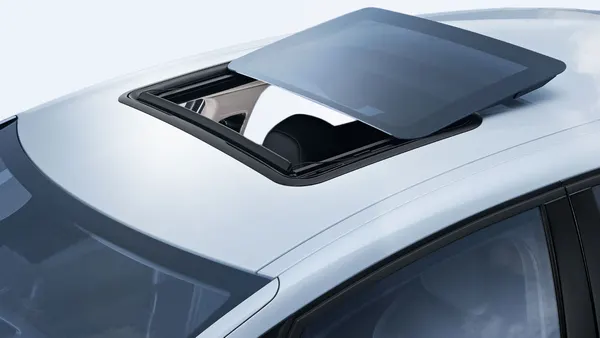
The spoiler is a pop-up that would slide, instead of tilting upwards. The advantage of this is that it can easily be restored to its original position by sliding.
- Panaromic Sunroof
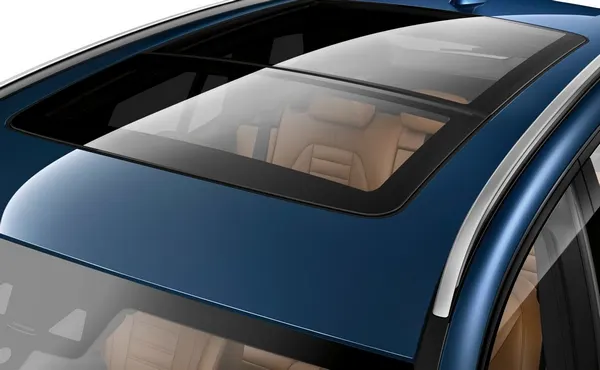
Panoramic sunroofs are distinct. While other sunroofs basically allow air and light or both into the front seats, the panoramic sunroof would allow for both the front and rear. Some brands also refer to them as moonroofs and they are automatically operated with the push of a button or turning of a knob. The sunroof allows car users to enjoy light and air without having to remove the entire roof. It also adds to the sleek design of the car and the automatically operated types just add to the features of the car/
3. Convertibles
Convertibles are passenger cars that can be driven with or without the entire roof in place. They were first introduced as open-air vehicles; no roofs, no sides. But by the end of the 19th century and the early 20th century, car engineers built more powerful engines that could power a folding roof. These were the forerunners of the convertibles that we have today. There are different types of convertibles based on the method of conversion and the materials used.
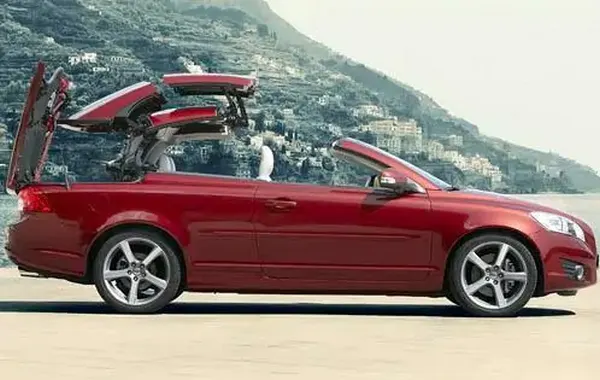
- Retractable hard tops
Made from metal or plastic and is retracted automatically.
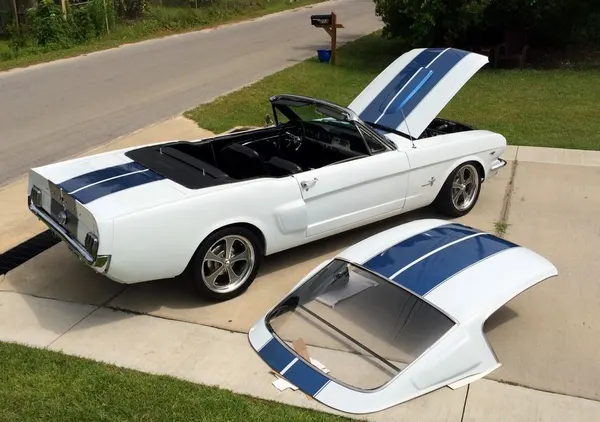
- Detachable Hard tops
This type of hardtop is manually removed from the roof and then stored usually in the trunk. They are also made from metal or plastic.
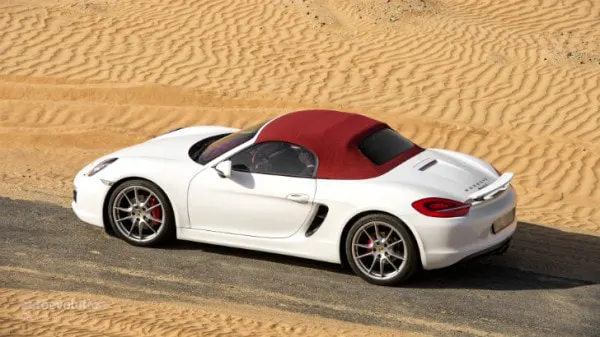
- Soft tops
This type of convertibles have roofs that are not made from metal or plastic. They are made of textile. The earliest versions of the convertible used canvas for the roofs. More recent models use cloth materials instead. Other materials used now include latex, vinyl, polyvinyl chloride. When the roof is folded, it is called a stack. Convertibles allow an open-air driving experience. But apart from all of that, there are many drawbacks. One of them is noise. You would be exposed to the wind and you might not be able to hear anything else. Others are dust and dirt. You can have your face and even the interior of the car dirty if there are a lot of dirt particles in the air. Also, convertibles are not as sturdy or solid as their covered counterparts. Although, we know most convertibles are built to be fast, sporty cars.
Manufacturing Techniques
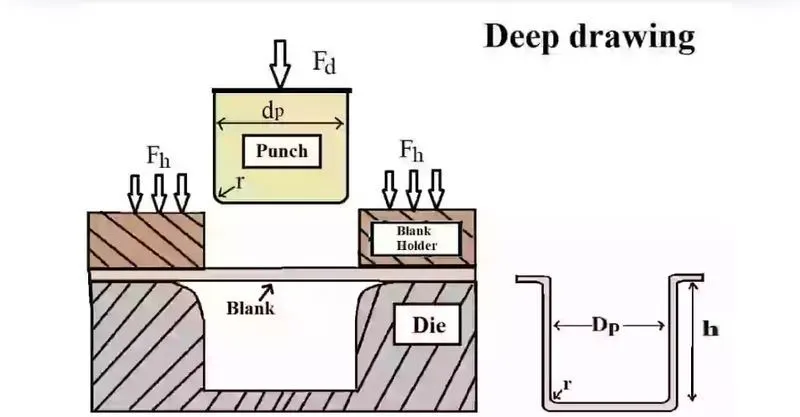
- Deep Drawing - Deep drawing (in the context of sheet metal forming) is the process by which a flat sheet of steel is transformed into a deep (often complex) shape, whereby the flat sheet is “drawn in” from the edges and “sucked in” to create a deep shape that otherwise may not be possible using normal metal forming techniques. So basically deep drawing is the process of converting blank of sheet metal into a cylindrical containers with a flat or hemispherical base. It is combination of metal forming process & sheet metal process. It basically consists of die, punch, blank holders. After the application of drawing force, the blank of material forms & takes shape of the punch or shape made onto the punch. To avoid frictional resistance between blank & die, the lubricant is used.
- Mastic data - Mastic is a form of sealant or adhesive used to fill the joints or as a bond for different materials and gaps. It is an elastic and flexible material used to create a durable bond between two different surfaces or to protect a particular surface.The main purpose of adding the sealant is to avoid the NVH issues as well as providing good aesthetic look to the outer panel. Mastic sealant is an all-purpose sealant used on a wide range of materials like aluminum, glass, marble, wood, plastics, ceramic, steel, etc. They are corrosion, temperature, water, and UV-resistant. If the assembly of inner panel and outer panel is done by welding process, it may results some spots or projections on the outer panel. So the manufacturer will not consider it. Also by directly joining the outer and inner panel, it generates some sound when vehicle is in motion resulting in NVH issues.So in order to overcome this issues a mastic sealant is applied between the gap of outer panel and inner panel because it behaves like a rubber which restricts the sound as well as providing good deforming. Initially it is in form of glue,but after the treatment in hot furnace it gets hardened and provides strength between both panels.Each spot of mastic sealant can cover and give a strength upto 80mm area diameter.
Design Considerations
- Visibility Criteria
Front roof rail should be designed with keeping in mind the maximum visibilty criteria for the driver. Front roof ditch area will be kept at minimum to attain this criteria. Similarly we follow visibilty criteria while designing the rear roof rail too.
- Head Room Clearance
While designing the front roof rail we take into consideration the head room clearance with respect to the driver position. This is achieved by keeping the length of the roof rail at about 80mm. Similarly we follow head room clearance while designing the rear roof rail too.
- Strength of the Roof
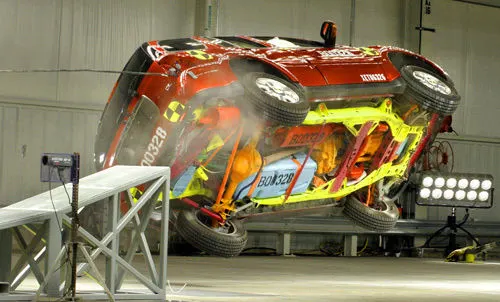
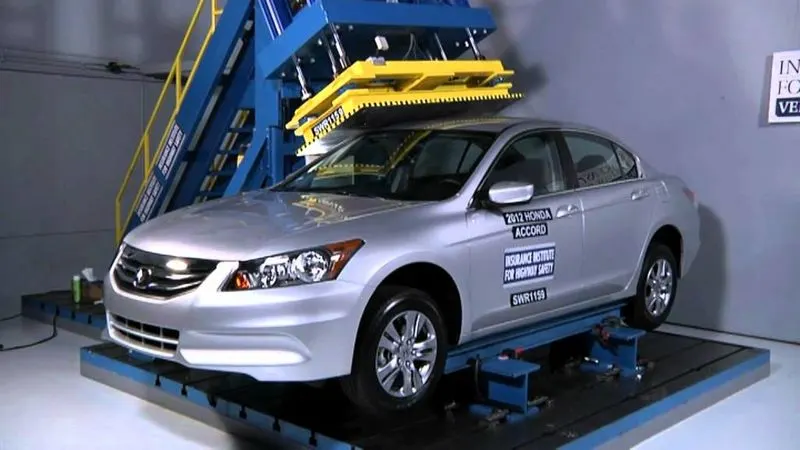
The strenth of the roof should be high inorder to withstand forces while in an accident like roll over and should protect the passengers. Also the shape of the roof should distort to a minimum. To study this various test are conducted like roll over test and roof strength test.
- Roll Over Test - Rollover crashes normally occur when a vehicle drifts off the road and is tripped by a curb, soft soil, ditch or other obstructive objects. Car speed and driver misjudgement are common denominators in such crashes. The rollover resistance test estimates the risk of vehicle rollover during a crash. Such estimations take the vehicle’s centre of gravity and track width into account to determine how heavy the car is from the top. The more top-heavy the car, the more susceptible it is to rollover. Modern car safety features like electronic stability control can reduce some risk but does not affect the resistance ratings directly.
- Roof Strength Test - Roof strength can increase your safety during a rollover. According to IIHS, the test is conducted by pneumatically forcing a metal plate onto the car roof. The roof is crushed to a certain degree; in the case of IIHS, it goes up to five inches. More force needed to deform or crush the roof to 5 inches account for increased performance of the car in a rollover.
Design
By following the given master sections for each part in the question we design different components of the roof assembly.
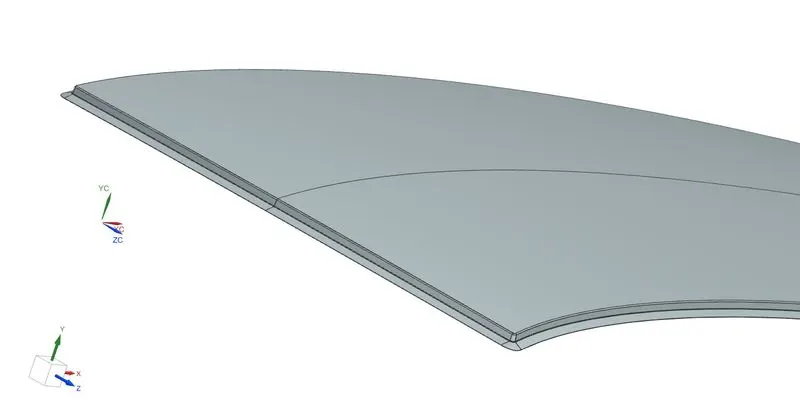
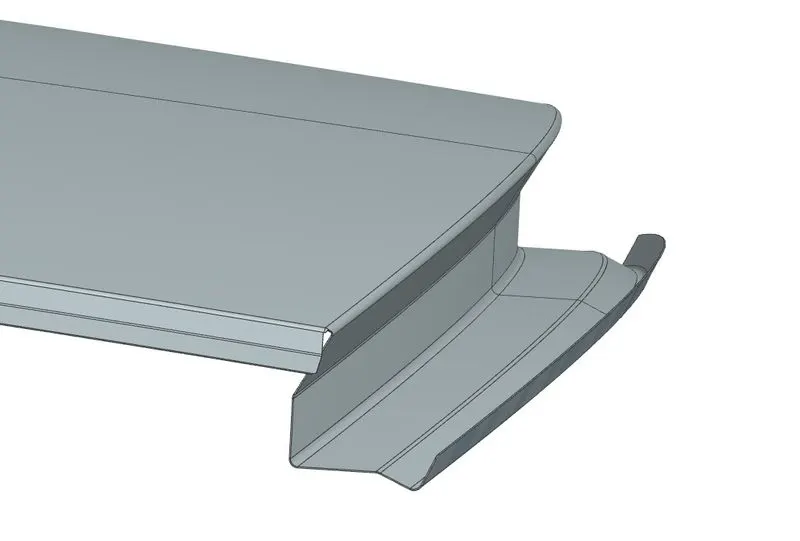
1. Design of Front ditch and rear ditch area
Front Ditch Area
Rear Ditch Area
2. Design of front roof rail
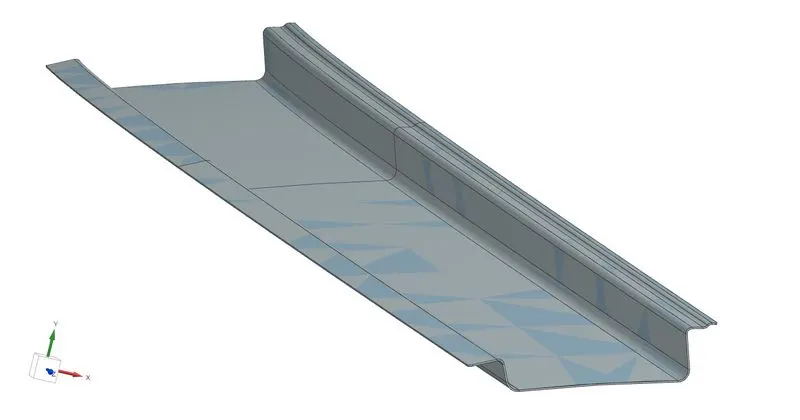
3. Design of Bow roof 1
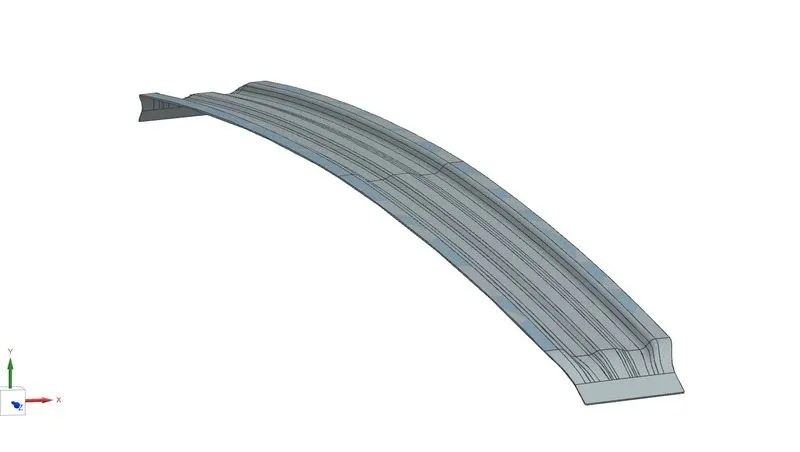
4. Design of Center roof rail
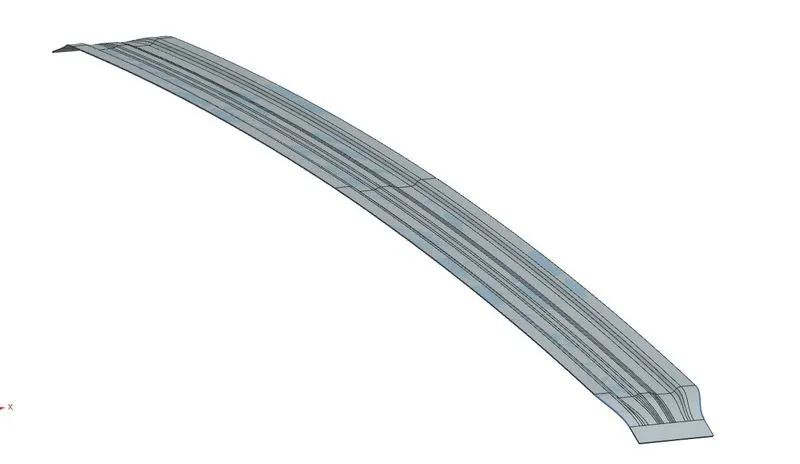
5. Design of Bow roof 2
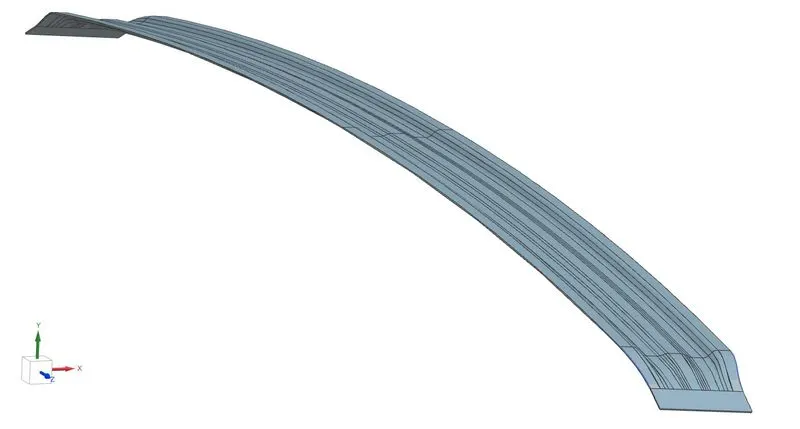
6. Design of Rear roof rail
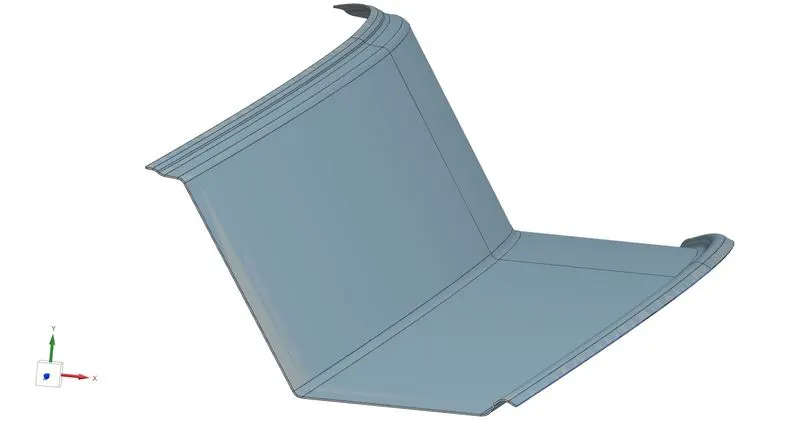
Curvature study
Heat Distortion Criteria
The heat distortion study plays an important role in sheet metal usage. Heat distortion temperature is a temperature limit above which the material cannot be used for structural applications. This study is used to predict the heat distortion temperature at where the material starts to soften when exposed to a fixed load at an elevated temperature. To avoid bending or damage on the roof, based on heat distortion temperature, this study will predict the bow roof position on the roof to strengthen the roof.
W = [1.73 x 10^(-3) x L] + [1.85 x 10^(-8) x (R^2)/t] + [ 1.10x10^(-3) x l] - 2.68
Where,
L = Roof Length in X-Direction[mm](Roof dimension in 0-Y)
R = Roof curvature
R = 2(Rx*Ry)/(Rx+Ry)
Rx = X curvature
Ry = Y curvature
t = Roof plate thickness [mm]
l = Bow Roof Span [mm]
Judgment Condition
OK< 2.7
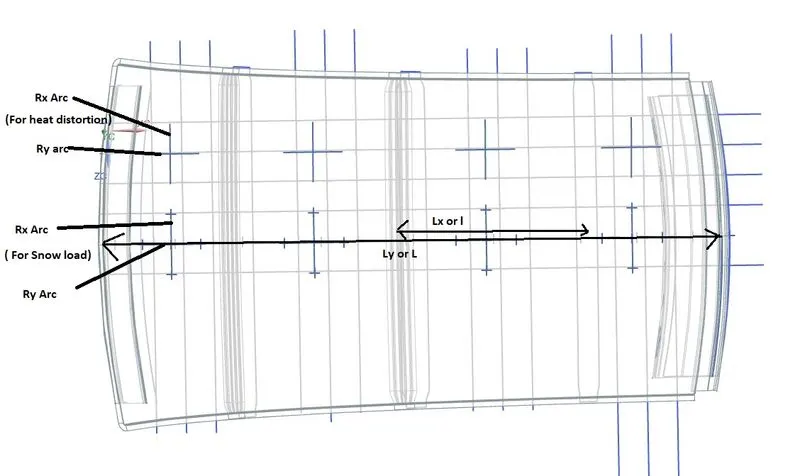
| SI No | BOWs | Rx | Ry | R | l | L | t | W | OK |
| 1 | FRR - BR1 | 5723.1 | 2200.1 | 3178 | 402 | 2035 | .75 | 1.52 | ok |
| 2 | BR1 - CR | 5046 | 5905 | 5441 | 572 | 2035 | .75 | 2.19 | ok |
| 3 | CR - BR2 | 3923.2 | 10820 | 5758 | 581.5 | 2035 | .75 | 2.28 | ok |
| 4 | BR2 - RRR | 3215 | 15031 | 5297 | 394.4 | 2035 | .75 | 1.96 | ok |
All the Roof sections meet the required criteria for heat distortion.
Snow Load Criteria
Snow load criteria study is done to check the durability of the roof to withstand force or pressure and reflex back to its original shape without any permanent deformation once the load is removed.
Qr = [Iy x t2] / [α x s x [(Rx + Ry)/2]2 x 10-8]
Where,
α = My x Lx2 x 10-12 , My = Y(Ly-Y)
t = Roof plate thickness [mm]
Ly = Distance between the front and rear roof Rails on the Vehicle along with 0Y[mm]
Length of Roof panel with the center point between Roof rail Front /Rear as the front and rear reference point.
Lx = Distance between the Left and Right end of the roof on the Roof BOW [mm]
The width of the roof panel is exposed on the surface.
Y = Distance front Front Roof Rail to Roof BOW[mm]
s = Distance for which Roof BOW bears divided load [mm]
s = L1/2 + L2/2
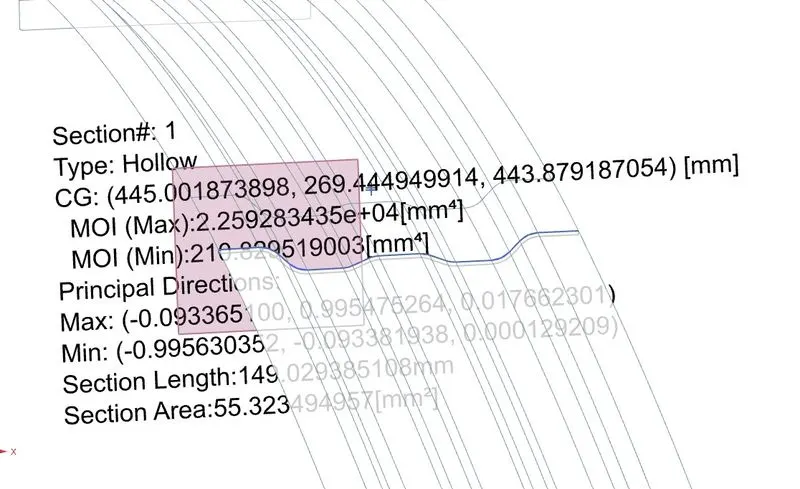
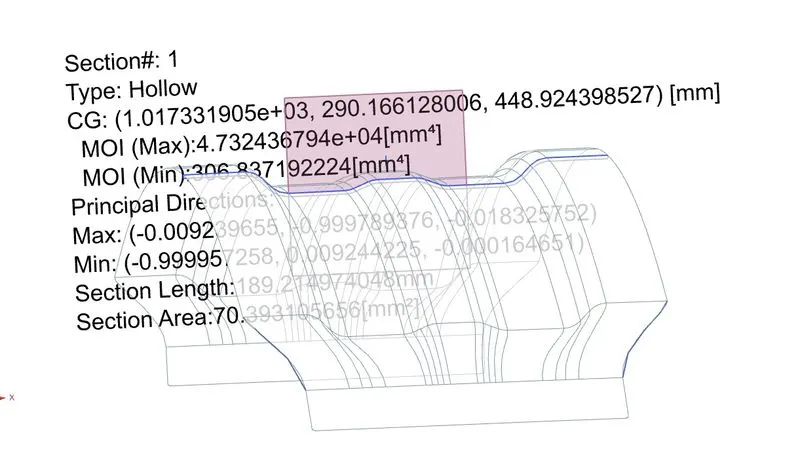
Iy = Geometrical moment of inertia of Roof BOW (Y cross-section )[mm4]
Rx = Lateral direction curvature radius of roof panel Y cross-section on Roof BOW [mm]
Roof panel curvature Radius of the Length Lx in Front view
Ry = Longitudinal Direction curvature radius of the Roof panel X cross-section on Roof BOW [mm]
Roof panel X curvature radius of length s in Side view
Judgment condition
Qr ≥ 3.1
To find Iy, geometrical moment of inertia we find it using section modulus analysis:
1. For Bow roof 1, Iy
2. For Center roof, Iy is
3. For bow roof 2, Iy is
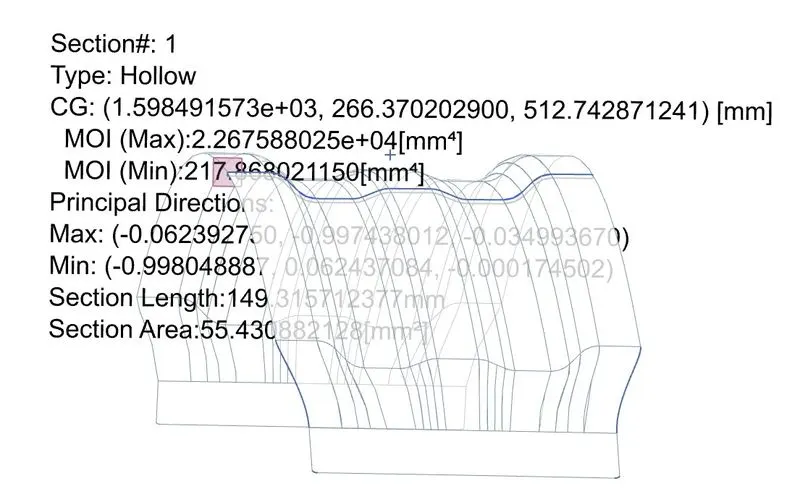
| SI No | BOWs | Iy | Alpha | Lx | Ly | s | Y | My | Rx | Ry | t | Qr | OK | |
| 1 |
|
210.82 | .106 | 402 | 2035 | 487 | 402 | 656466 | 3497.8 | 2289.8 | .75 | 27.44 | ok | |
| 2 | BR1 - CR | 306.83 | .338 | 572 | 2035 | 576.8 | 971.8 | 1033144 | 3755.8 | 5807.8 | .75 | 3.87 | ok | |
| 3 | CR - BR2 | 217.86 | .253 | 581.5 | 2035 | 487.5 | 1553.1 | 748438.1 | 4296.3 | 10416.5 | .75 | 1.82 | NG |
From the calculations we found bow roof 2 has NG, So we have to ask the styling team to modify the surface with curvature in the y-axis (Ry) using trial and error method till we get the value greater than 3.1.
Draft Analysis
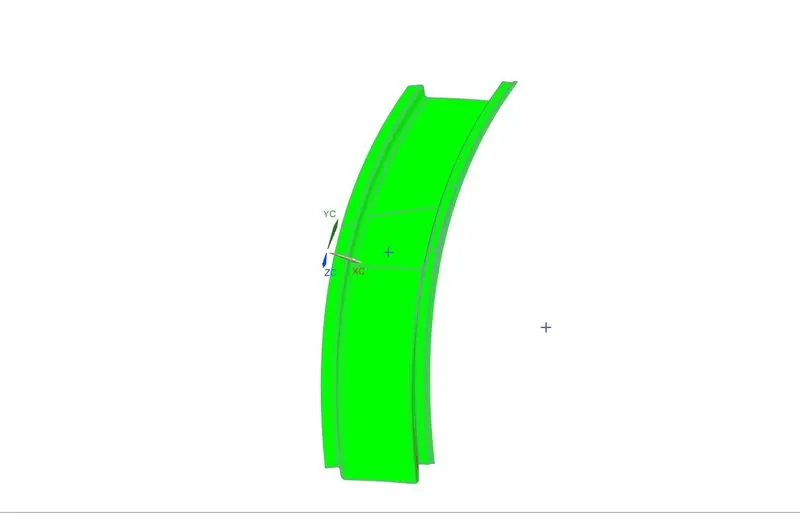
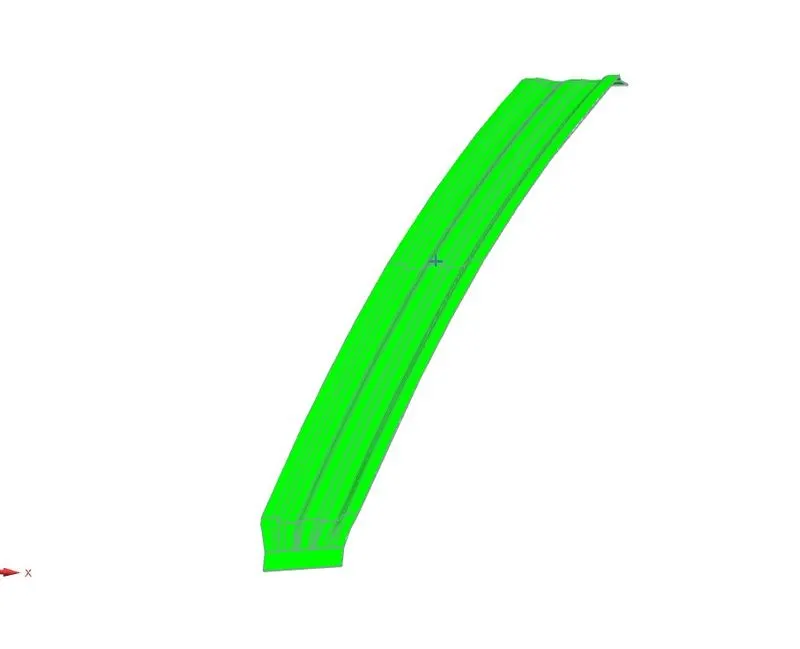
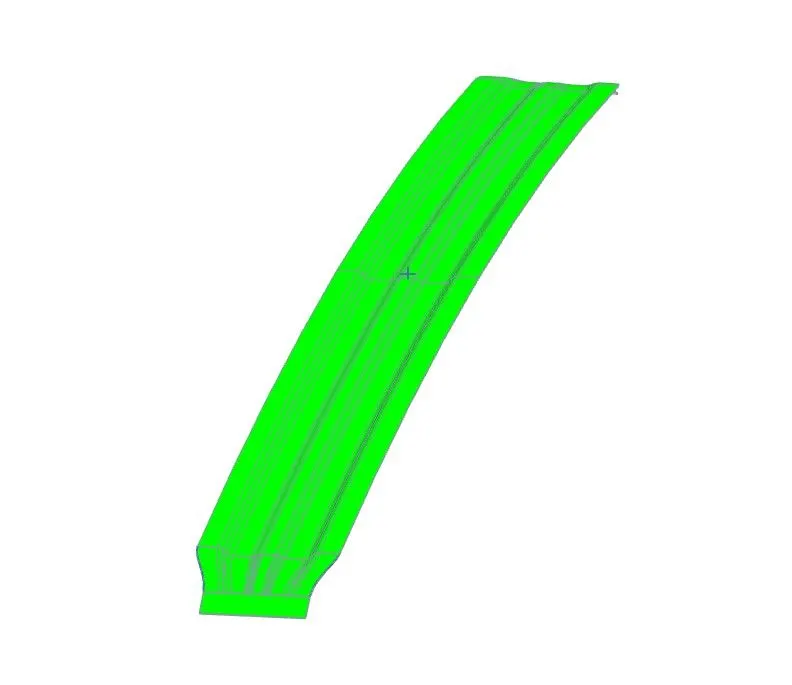
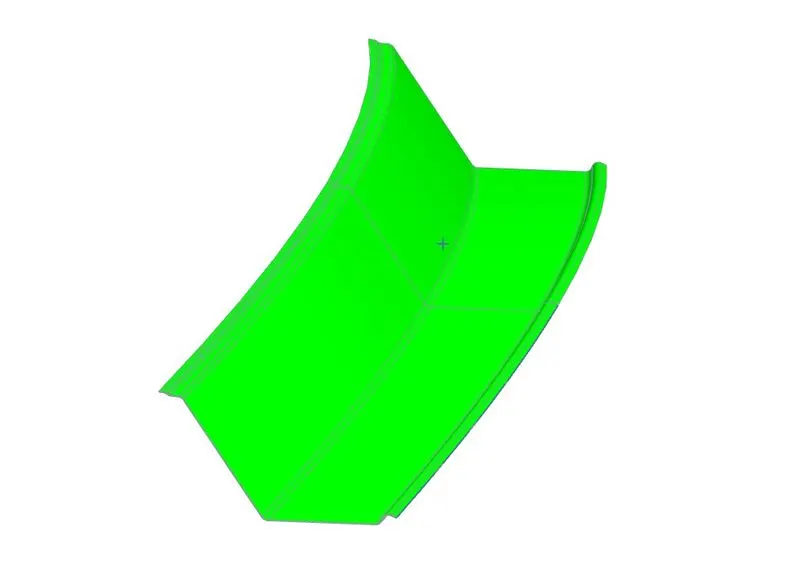
The Draft Analysis command enables you to detect if the part you drafted will be easily removed. This type of analysis is performed based on color ranges identifying zones on the analyzed element where the deviation from the draft direction at any point, corresponds to specified values. A minimum draft angle of 7° is considered for analysis. The green color infers the parts that all face along the tooling direction has a positive draft angle greater than 7° and passed in analysis.
1. Front Roof Rail
2. Bow Roof 1
3. Center Roof Rail
4. Bow Roof 2
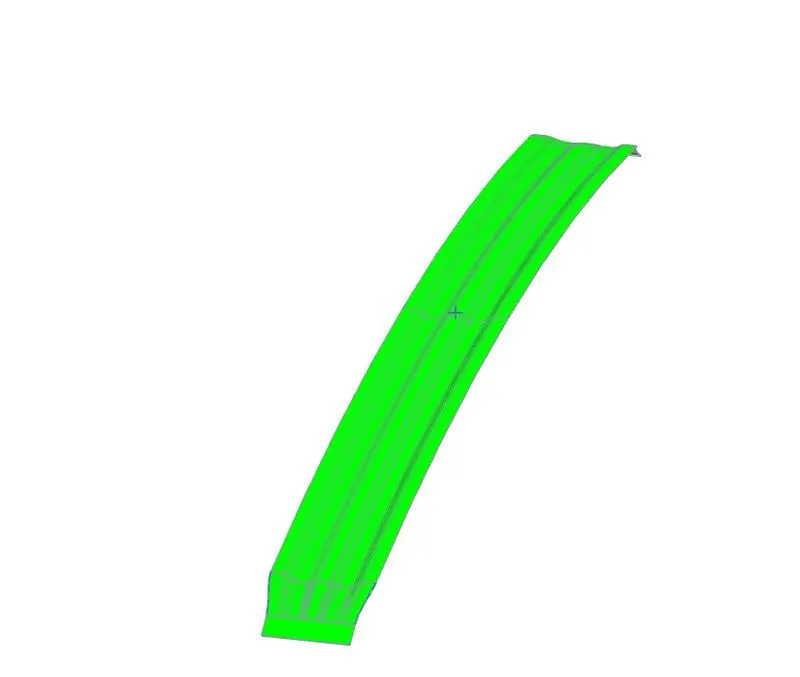
5. Rear Roof Rail
Result
Conclusion
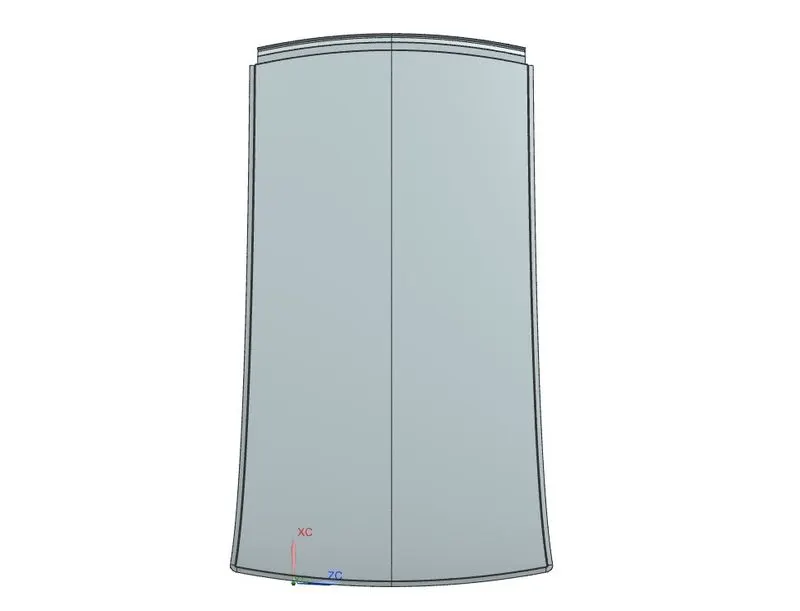
1. For the given roof styling, an assembly by developing the essential flanges for the outer roof and the necessary reinforcements has been created.
2. Draft analysis has been performed on the reinforcements.
3. Heat distortion study and Snow load criteria study has been carried out.