Roof Design
ROOF DESIGN
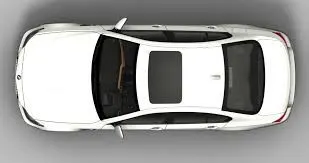
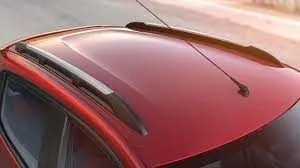
An automobile roof or car top is the portion of an automobile that sits above the passenger compartment, protecting the vehicle occupants from sun, wind, rain, and other external elements.
OBJECTIVES
- The objective of this project is to design car roof with essential flanges and reinforcements like ditch area, front roof rail, bow roofs, central roof rail and rear roof rail for the given styling surface.
-
Calculate for the heat distortion and snow load criteria to determine whether the bow roofs are at the correct positions as a design engineer, and further passing this design to simulation team.
-
Finding moment of inertia and section modulus for Bow roofs, central roof rail.
-
Design of any product starts from a requirement. The design engineer sketches the product based on the requirement. Then the 2D sketch with the proper dimensions is converted into the 3D model using the advanced CAD software’s. Another important thing in the design is that, every product that is designed should be able to manufactured. so, the role of the design engineer is to design the product that can be easily manufactured and with less cost effective and less wastage of materials.
SOFTWARE USED
While designing the cars roof I have designed this roof in Nx CAD software as it was compatible to use for me.
TYPES OF ROOF
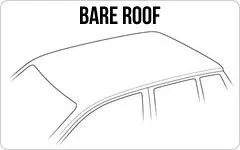
Bare Roof
The most common roof type in late model vehicles today is the bare roof and this is the case because most vehicles on the road are cars and trucks and generally those vehicles simply have a bare roof with no factory pre-installed rack.
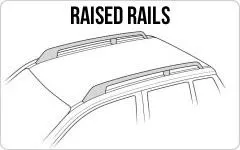
Raised Rail
The next most common roof type is the raised side rails found on the majority of SUVs, wagons and mini vans. Raised rails are the stylish factory installed roof attachment that runs from front to back on the outer edges of the vehicle's roof. Connecting a cross bar system to raised rails is quite simple and does not require a vehicle specific fit kit, just the load bars and foot pack. Raised rails offer the versatility to choose the optimum cross bar placement along the raised sections for a wide variety of loads to be carried.
1. HARDTOP
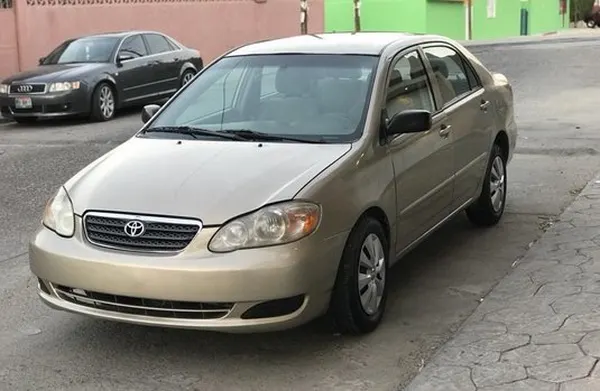
When we talk about hardtops, we are referring to the common rigid forms of automobile roofs which we see around. In modern-day cars, this type of roof is made from metal or plastic.So, the common Toyota Corolla, Camry, and many of the cars in Nigeria are all Hardtops. However, we should say that there are different types. The one we just described is the fixed hardtop. Other types include:
a.The detachable hardtops
b.The retractable hardtops
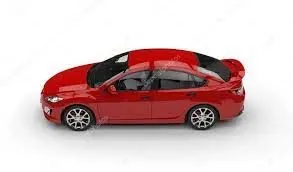
The fixed hardtop is your traditional car roof and is suitable for all climes and weather. It protects car occupants from the sun and wind when driving. It also offers more sense of privacy and noise-free driving. Many cars designed this way also tend to be more stable and solid than other types of roofs.
2. SUNROOF
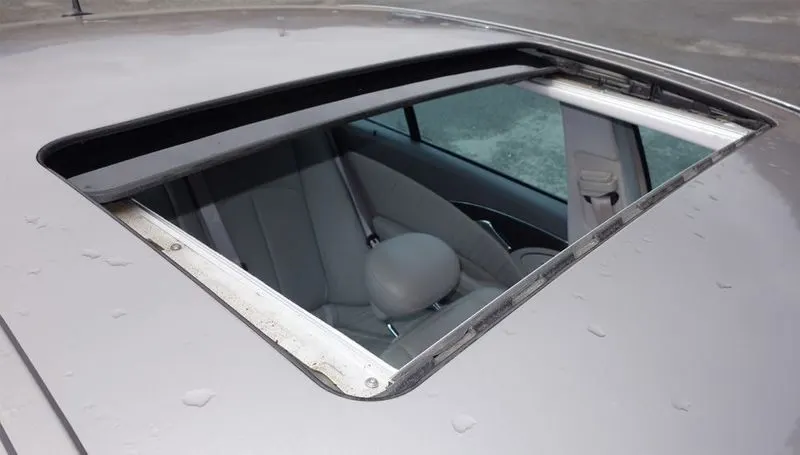
This type of roof is also quite popular. You might have been seeing it around. A sunroof is an operable type of roof that allows for an opening in the roof of an automobile; say a window in a roof. It can allow either light or air or both to enter the vehicle. They are either operated manually or automatically.
There are 3 popular types of sunroofs. They include:
a. Pop-up
The pop-up sunroof usually tilts when you open it. It is the most basic and relatively cheaper type of sunroof. Some can even be removed so that they are kept properly, maybe in the trunk whenever you want to go ‘sunroof mode.’
b. Spoiler:
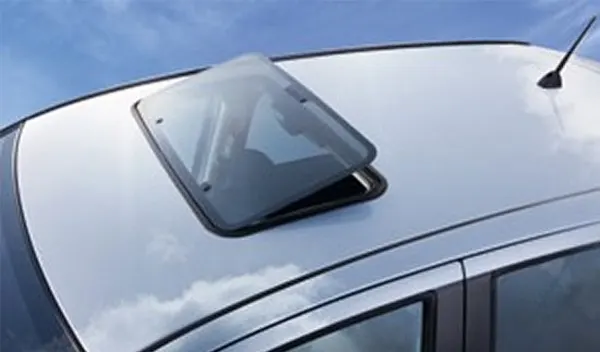
The spoiler is a pop-up that would slide, instead of tilting upwards. The advantage of this is that it can easily be restored to its original position by sliding.
c. Panoramic sunroof:
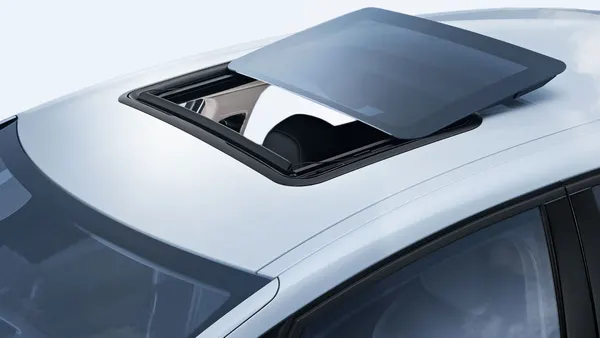
Panoramic sunroofs are distinct. While other sunroofs basically allow air and light or both into the front seats, the panoramic sunroof would allow for both the front and rear. Of course, this means the aperture would be larger than the spoiler or pop-up. This feature comes under high end cars as a luxury purpose.
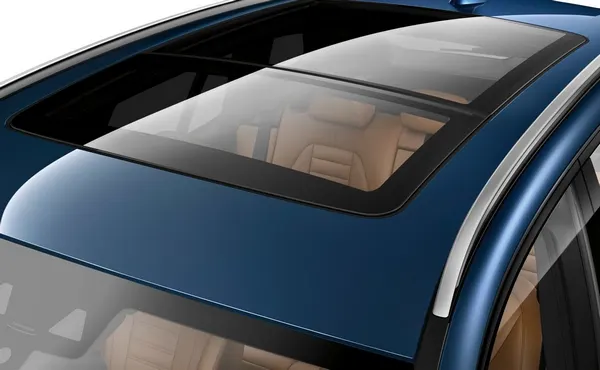
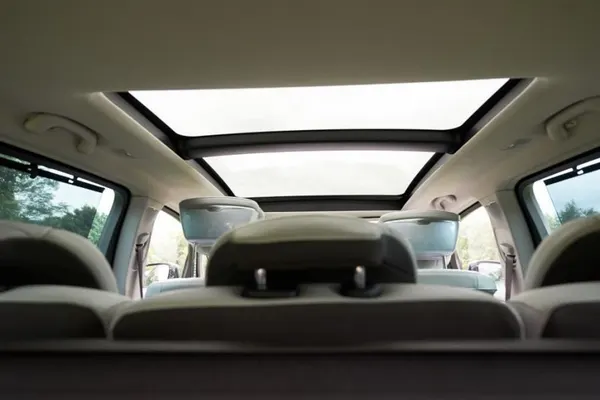
Some brands also refer to them as moonroofs and they are automatically operated with the push of a button or turning of a knob.
3. Convertibles
Convertibles are passenger cars that can be driven with or without the entire roof in place. They were first introduced as open-air vehicles, no roofs, no sides.
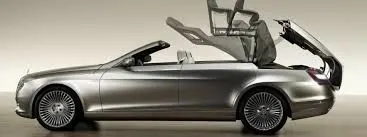
But by the end of the 19th century and the early 20th century, car engineers built more powerful engines that could power a folding roof. These were the forerunners of the convertibles that we have today.
There are different types of convertibles based on the method of conversion and the materials used.
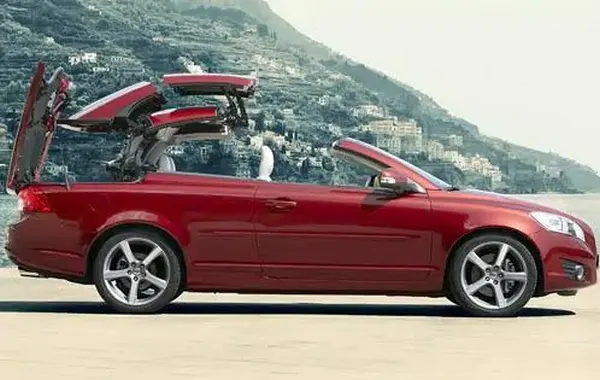
a.Retractable hardtops
Made from metal or plastic and is retracted automatically.
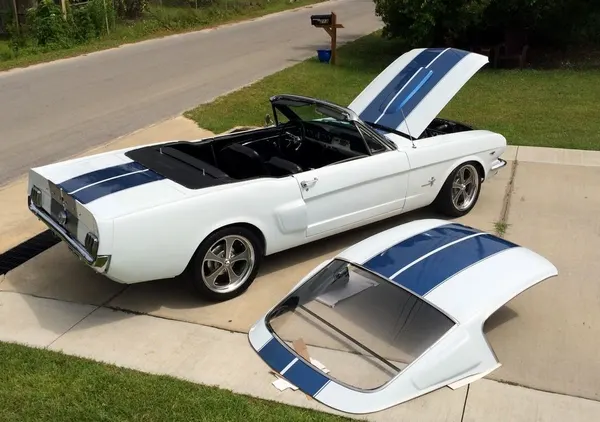
b.Detachable hardtops
This type of hardtop is manually removed from the roof and then stored usually in the trunk. They are also made from metal or plastic.
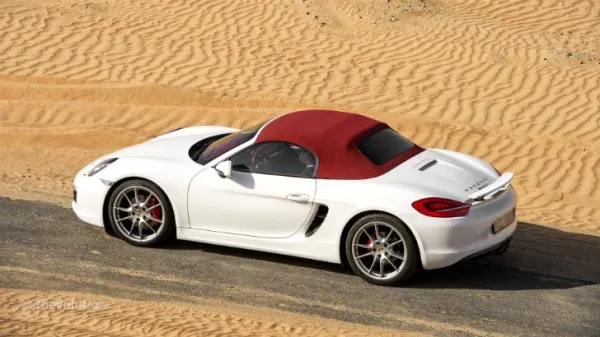
c. Soft tops
This type of convertibles has roofs that are not made from metal or plastic. They are made of textile. The earliest versions of the convertible used canvas for the roofs. More recent models use cloth materials instead. Other materials used now include latex, vinyl, polyvinyl chloride. When the roof is folded, it is called a stack.
Convertibles allow an open-air driving experience. Usually, we see this in movies when the hero and his love interest are traveling somewhere and the lady is usually standing up in the car so that her hair is flying in the wind!
Many of them are also built for speed and so you would have a nice time driving really fast, but if and only if the roads are very good. But apart from all of that, there are many drawbacks. One of them is noise. You would be exposed to the wind and you might not be able to hear anything else. Others are dust and dirt. You can have your face and even the interior of the car dirty if there are a lot of dirt particles in the air.
Also, convertibles are not as sturdy or solid as their covered counterparts. Although, we know most convertibles are built to be fast, sporty cars.
WHY REINFORCEMENTS?
Roof rails are provided to give strength to the outer panel and also provide support to other commodities present in a car. There are different rail reinforcements in a roof panel like: Front roof rail,center roof rail, bow roof rail.
If there is flat roof, it is to be considered as a weak roof and cannot able to with stand the forces while there is an accident of vehicle and this would be major considering points in vehicles build quality. It should with stand the snow load criteria as well as it is considered in European market, so in order to increase the strength of the roof these reinforcements like front roof rail, central roof rail, rear roof rail and the bow roofs are introduced and joined to the flat surface of the roof with the different joining process like spot welding and by mastic sealant application to join two surfaces.
JOINING PROCESS
Mastics sealants and spot welding are used to join the surfaces. Mastic points are introduced between the roof outer panel and the reinforcements for joining. Mastic points improve the of strength roof panel. There are few points were spot wielding technique is used for joining the two surfaces.
DESIGN CONSIDERATIONS FOR A ROOF
- Head clearance
- Curvature study
- Heat distortion and snow load criteria
- Draft analysis
- Visibility criteria
- Type of roof and their functionality. (includes sunroof, roof rails, moonroof)
- Roll Over test Regulation.
- Identification methods to increase strength of roof. (Roof bead)
- Material Identification Technique.
- Joining Techniques like Mastic, welding Processes.
- Accessory Part purpose and requirement. (Roof Rack, Roof Molding)
TYPES OF ROOF RAILS
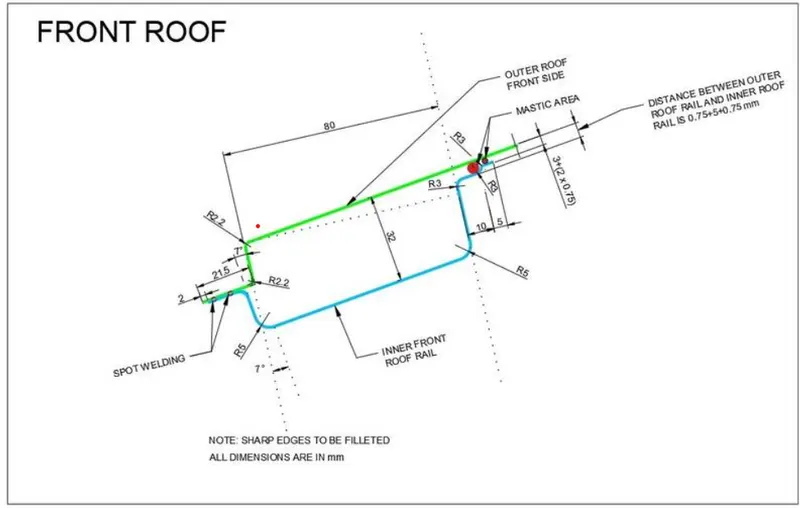
FRONT ROOF RAIL
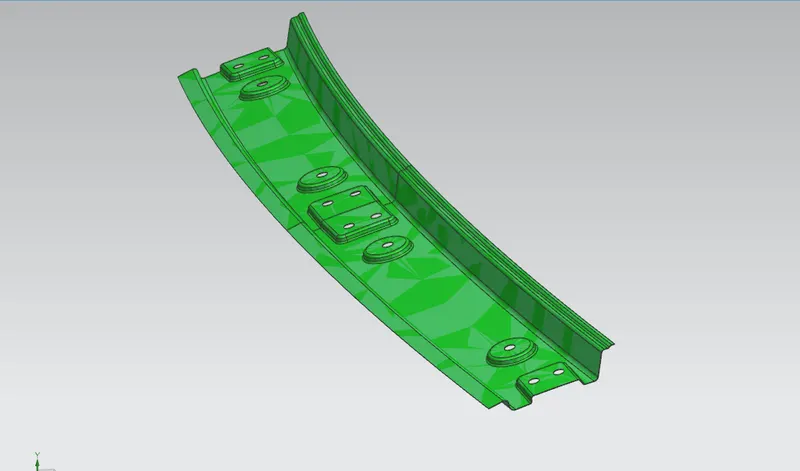
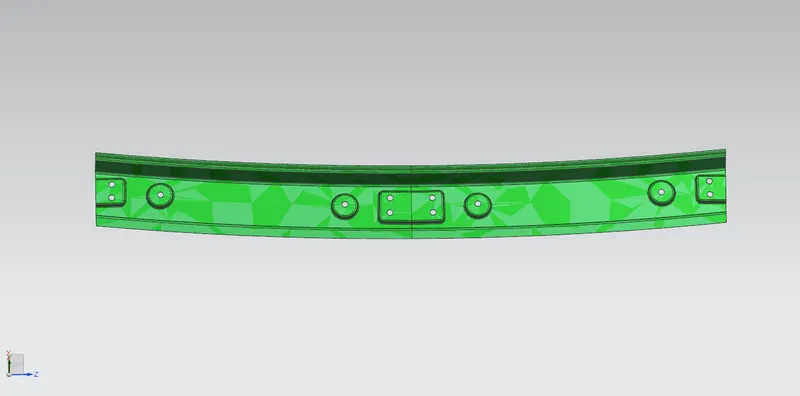
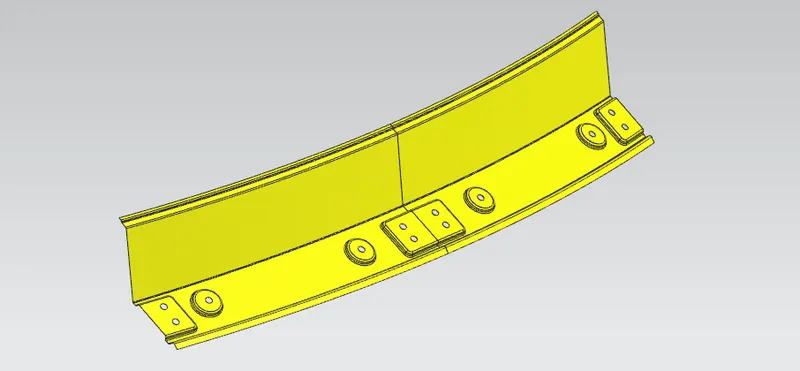
Front roof rail is the one which joins the wind shield glass, body side outer and the inner panel also. It gives strength to the cars roof from front side.
REAR ROOF RAIL
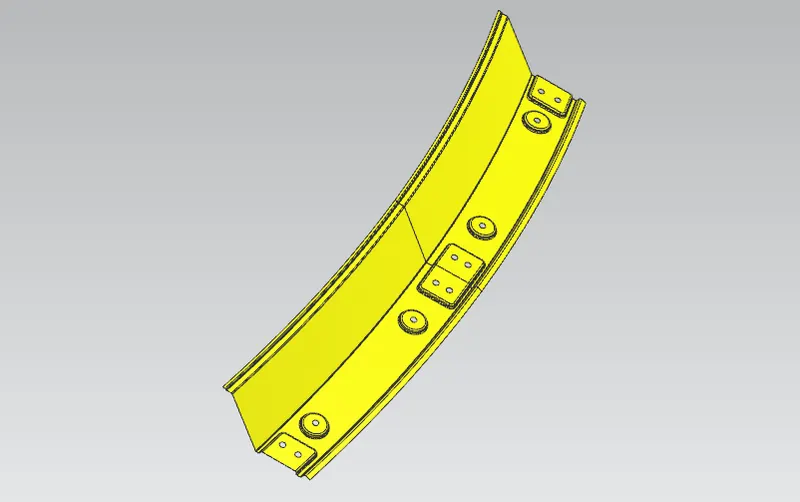
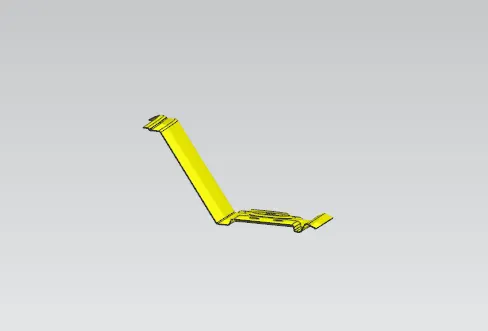
Rear roof rail is the one which joins the back door and the body side outer.
CENTER ROOF RAIL
Center roof rail helps in providing effectively support to the flat area of the roof as it is more susceptible to failure under the action of load. Generally central roof rail is placed at the center of the roof which is connected to the B-pillar support structure. This central roof rail helps in adding the strength to the roof during the roll-over test.
In modern cars if sunroof is present then, there should be center roof rail equipped in the roof structure for strengthening the roof.
BOW ROOFS
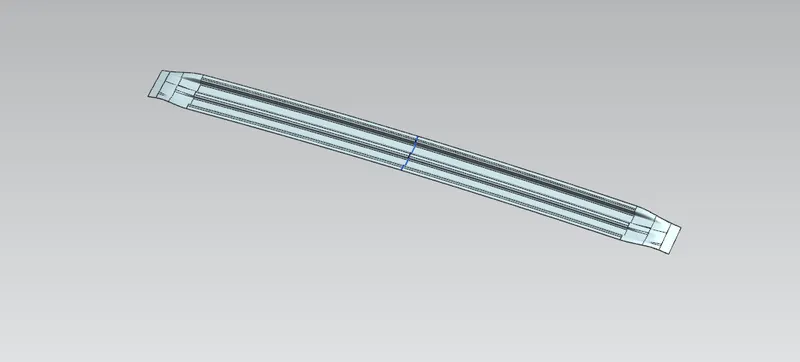
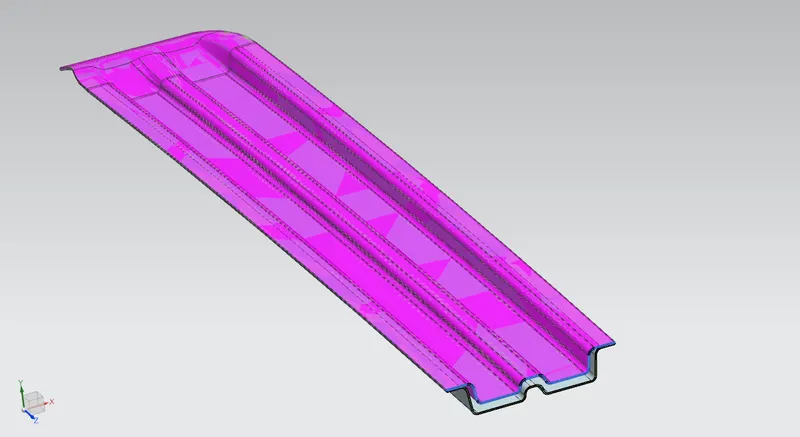
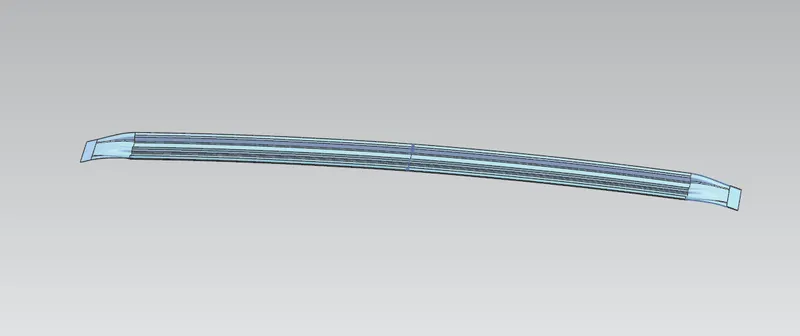
The bow roofs are given to improve the torsional stiffness and load bearing capacity of the roof structure. The number of bow roof present is depending on the overall size of the roof. We also give the Mastic area for fixing the Bow roof to the roof outer. Each mastic sealants are having 80mm circular effective area of surroundings. Thickness of the Bow roof is 0.75mm.
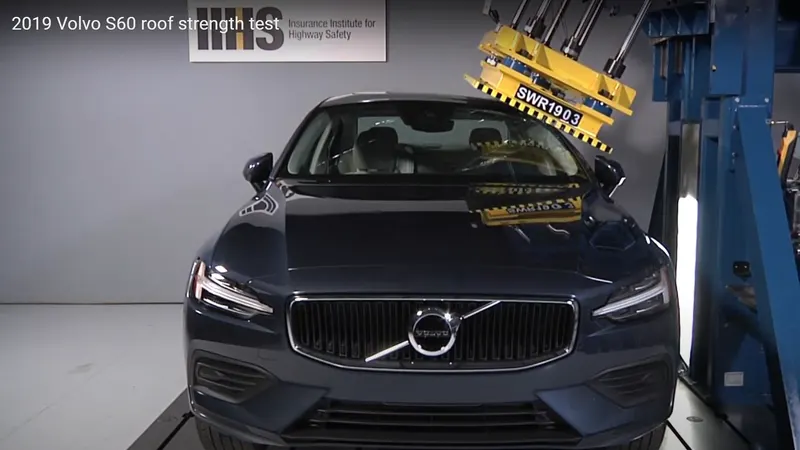
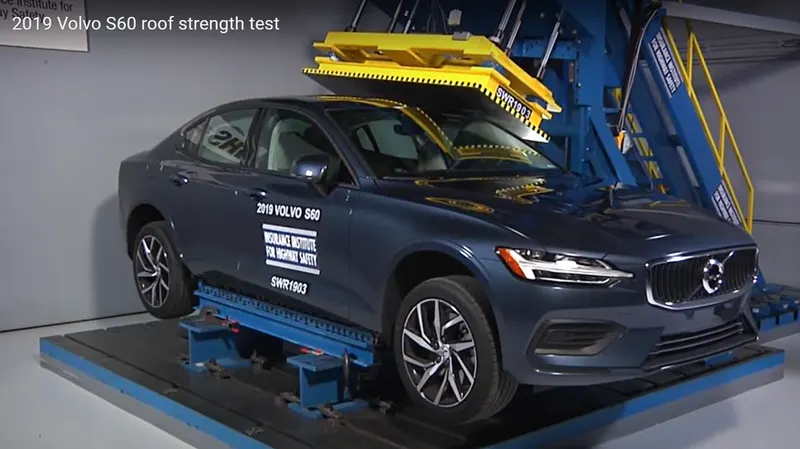
ROOF CRUSH TEST
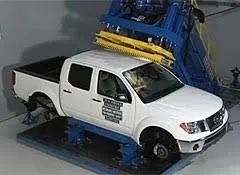
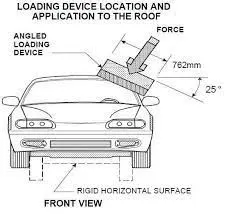
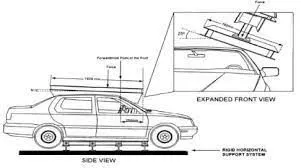
Roof crush test is the design given by the IIHS (insurance institute of highway safety). After analyzing the many accidents IIHS has then fixed some regulations, that how to perform the crush test. IIHS gives the rating based up on this test. For this they consider two points while giving the rating. How fast the car can reform to its original shape after the roll-over and how deep is the protrusion after the roll-over of car.
Aim of Roof Crash test
Is to minimize the protrusion into the occupant compartment, so that the seat belts and air bags can do their job in protecting the occupant.
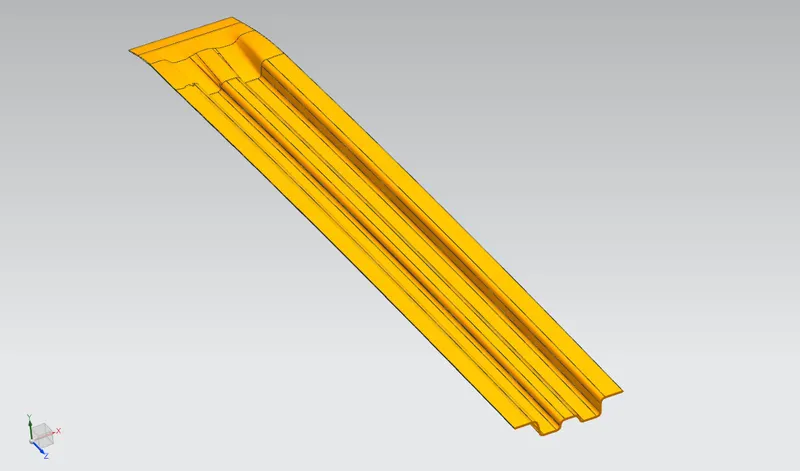
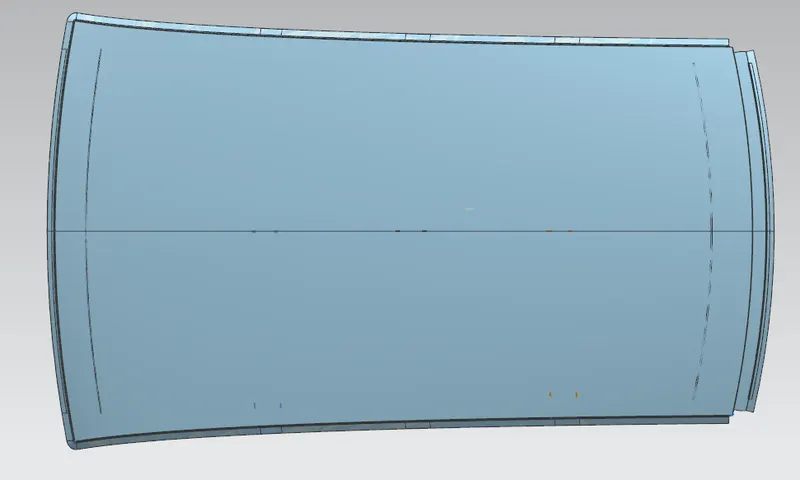
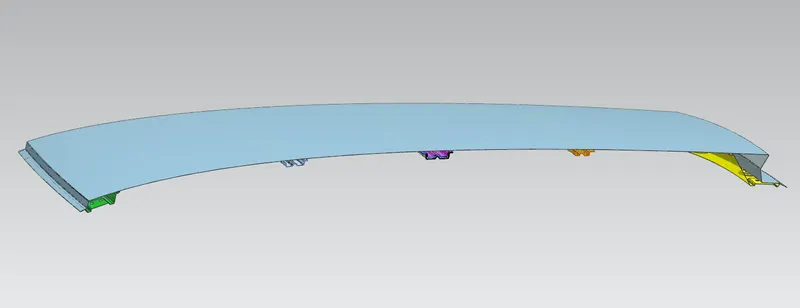
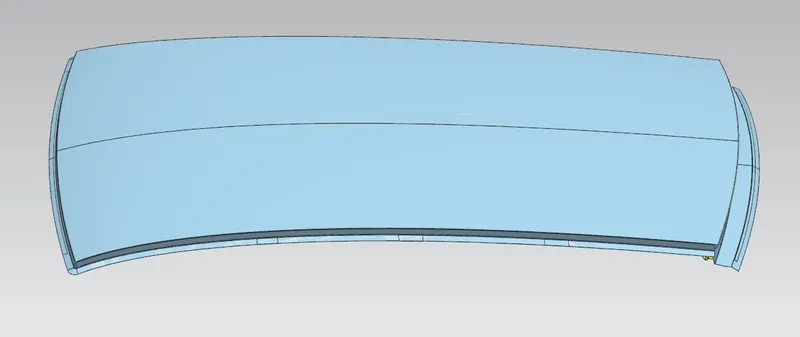
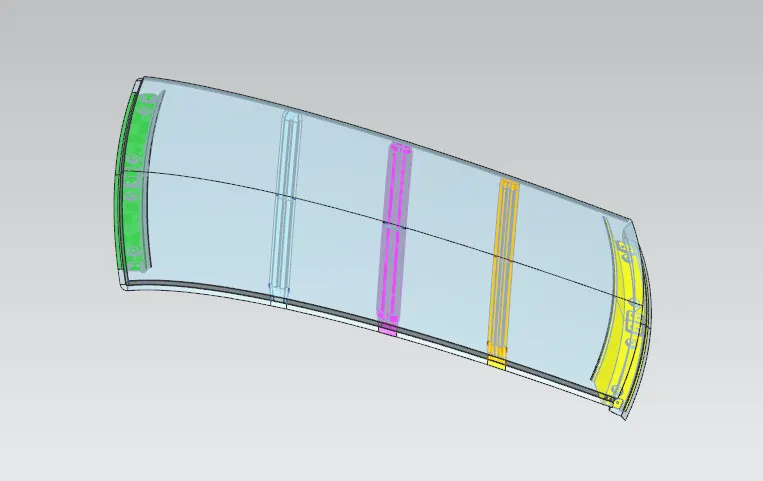
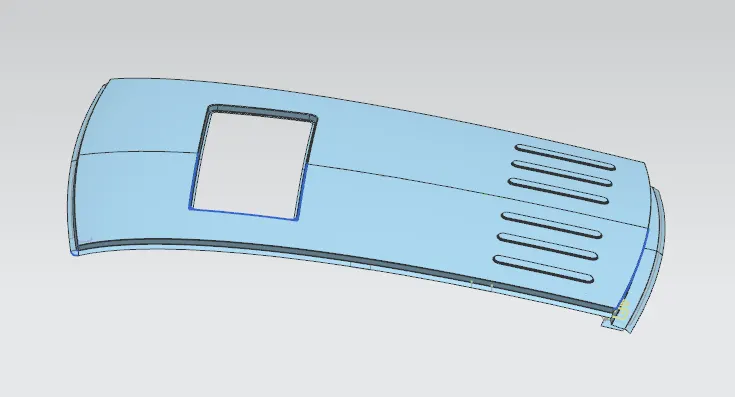
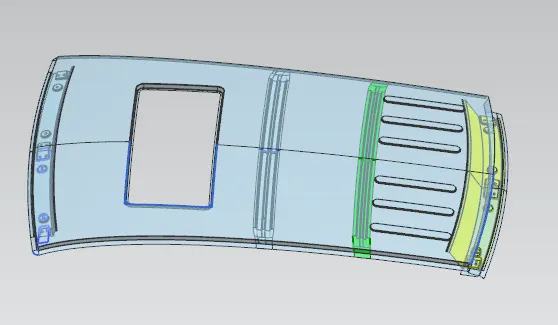
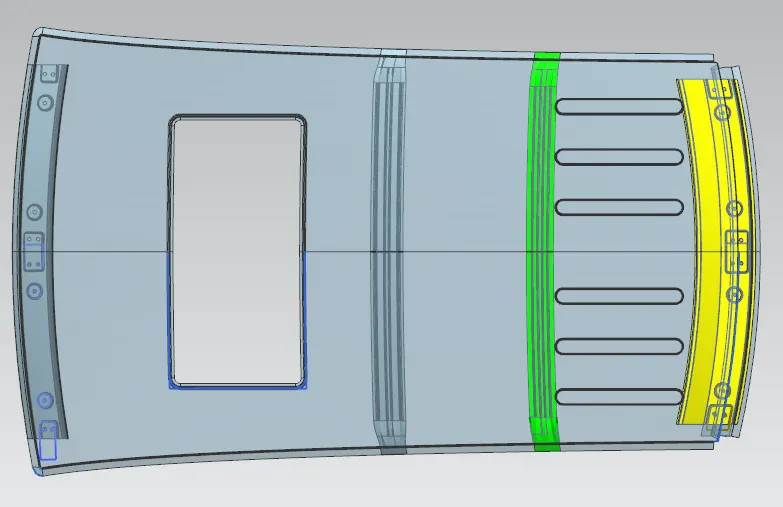
These are the following roof design images which I have personally designed on Nx CAD Software.
1. ROOF
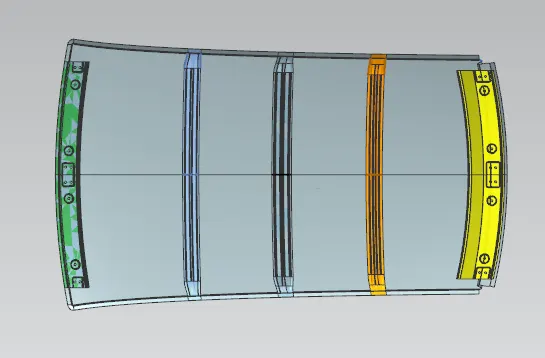
2. ROOF DESIGN WITH SUNROOF
3.FRONT ROOF RAIL
4. BOW ROOF
5. CENTER RAIL ROOF
6. REAR ROOF RAIL
HEAT DISTORTION STUDY ON ROOF DESIGN
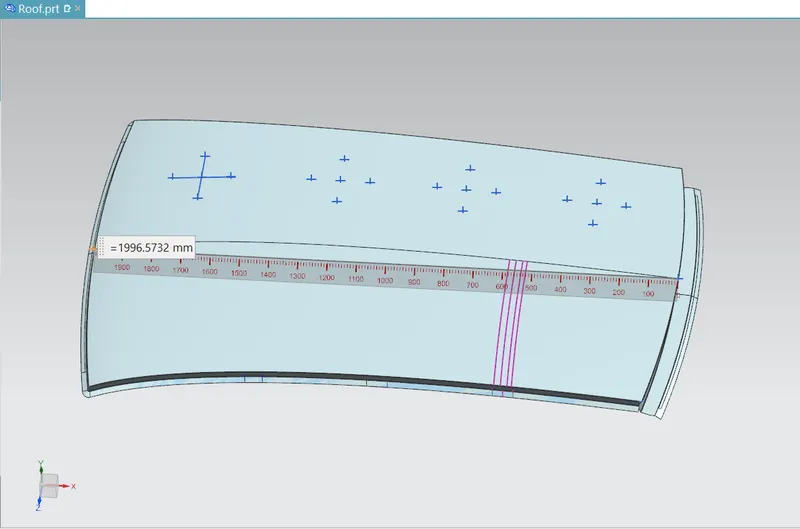
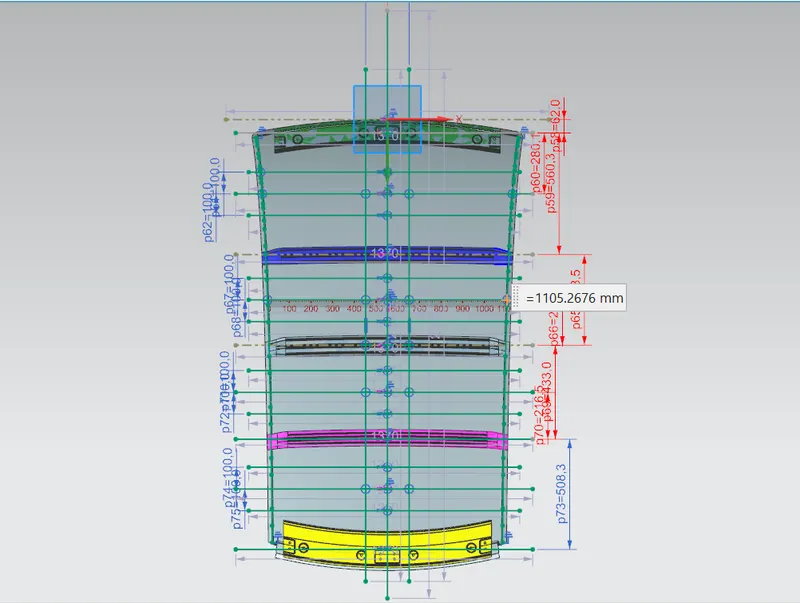
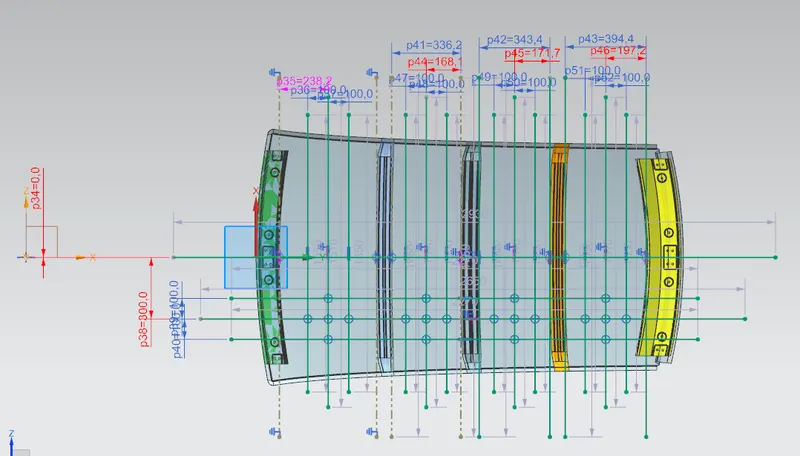
The heat distortion study plays a major role in sheet metal usage. heat distortion temperature is a temperature limit above which the material cannot be used for the structural applications. This study is used to predict the heat distortion temperature at where the material starts to soften when exposed to a fixed load at elevated temperature. In order to avoid bending or damages on the roof, based on the heat distortion temperature, this study will predict the bow roof position which helps to strengthen the roof.
W = [1.73 x 10^ (-3) x L] + [1.85 x 10^ (-8) x (R^2)/t] + [ 1.10x10^ (-3) x l] - 2.68
Where,
L = Roof Length in X-Direction[mm] (Roof dimension in 0-Y)
R = Roof curvature
R = 2(Rx*Ry)/ (Rx + Ry)
Rx = X curvature
Ry = Y curvature
t = Roof plate thickness [mm]
l = Bow Roof Span [mm]
Judgment Condition
OK< 2.7
| SR NO. | BOW'S | Rx | Ry | R | i | L | t | W | RESULTS |
| 1. | FRONT RF & BOW NO.01 | 5717.24 | 2813.81 | 3771.45 | 476.4 | 1996.57 | 0.75 | 1.648 | OK |
| 2. | BOW NO 01 & CENTER RF | 4876.02 | 6579.92 | 5601.25 | 336.24 | 1996.57 | 0.75 | 1.916 | OK |
| 3. | CENTER RF & BOW NO.02 | 4042.96 | 10245.20 | 5797.93 | 343.42 | 1996.57 | 0.75 | 1.980 | OK |
| 4. | BOW NO.02 & REAR RF | 3355.90 | 14093.97 | 5421.00 | 394.39 | 1996.57 | 0.75 | 1.931 | OK |
From the above table, it can be concluded that all values of w<2.7.Thus, current positioning of bow row and center roof are good in position and found ok in my roof design.
Snow Load Prediction Formula
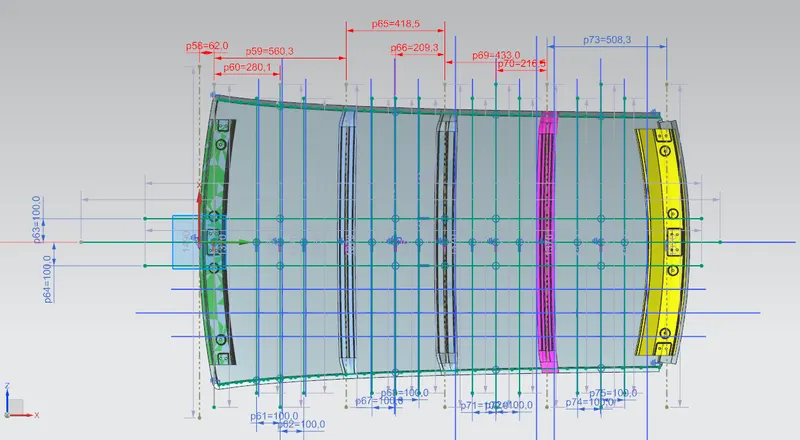
Qr = [Iy x t^2] / [α x s x [(Rx + Ry)/2]2 x 10^-8]
Where,
α = My x Lx^2 x 10^ -12, My = Y(Ly-Y)
t = Roof plate thickness [mm]
Ly = Distance between the front and rear roof Rails on the Vehicle along with 0Y[mm]
Length of Roof panel with the center point between Roof rail Front /Rear as the front and rear reference point.
Lx = Distance between the Left and Right end of the roof on the Roof BOW [mm]
The width of the roof panel is exposed on the surface.
Y = Distance front Front Roof Rail to Roof BOW [mm]
s = Distance for which Roof BOW bears divided load [mm]
s = L1/2 + L2/2
Iy = Geometrical moment of inertia of Roof BOW (Y cross-section )[mm4]
Rx = Lateral direction curvature radius of roof panel Y cross-section on Roof BOW [mm]
Roof panel curvature Radius of the Length Lx in Front view
Ry = Longitudinal Direction curvature radius of the Roof panel X cross-section on Roof BOW [mm]
Roof panel X curvature radius of length s in Side view
Judgment condition
Qr ≥ 3.1
250 ≤ s ≤ 380
| SR NO. | BOW'S | Rx | Ry | `ALPHA` | Lx | Ly | Y | s | t | iy | Qr | RESULTS |
| 1. | FRONT RF & BOW NO.01 | 4405.45 | 2788.44 | 1.02 | 1155.22 | 1934.59 | 476.64 | 489.4 | 0.75 | 203.37 | 17.73 | OK |
| 2. | BOW NO.01 & CENTER RF | 3788.89 | 6538.45 | 0.810 | 1105.26 | 1934.59 | 336.29 | 324.75 | 0.75 | 408.06 | 25.03 | OK |
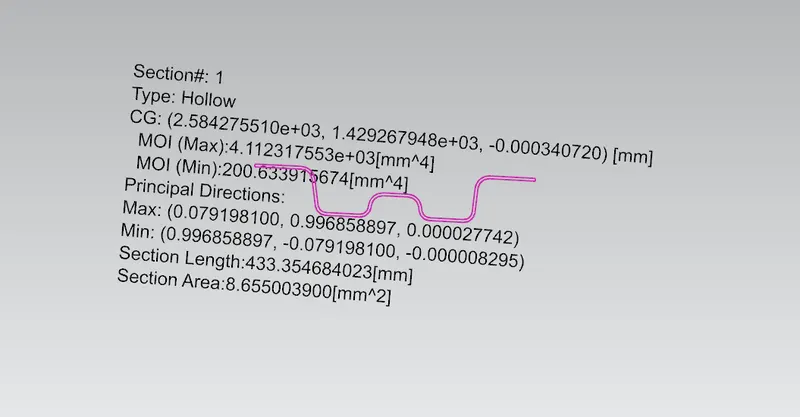
| 3. | CENTER RF & BOW NO.02 | 4241.72 | 10667.81 | 0.760 | 1081.86 | 1934.59 | 343.58 | 310.65 | 0.75 | 200.63 | 5.694 | OK |
| 4. | BOW NO.02 & REAR RF | 4112.23 | 15730.71 | 0.825 | 1067.27 | 1934.59 | 395.20 | - | 0.75 | - | - | - |
Section analysis
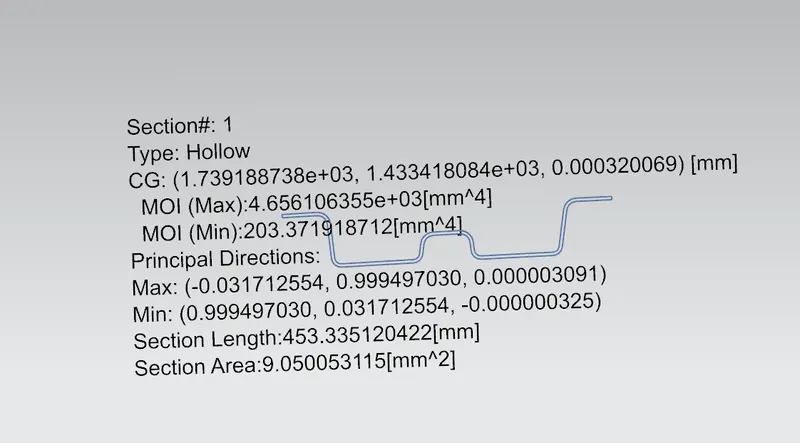
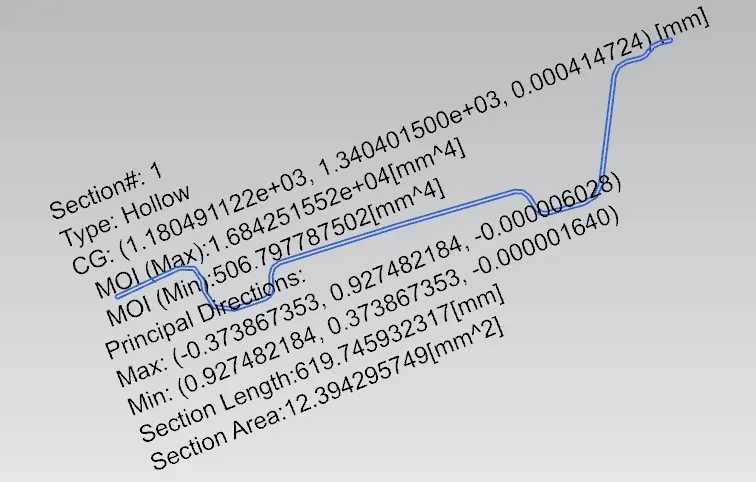
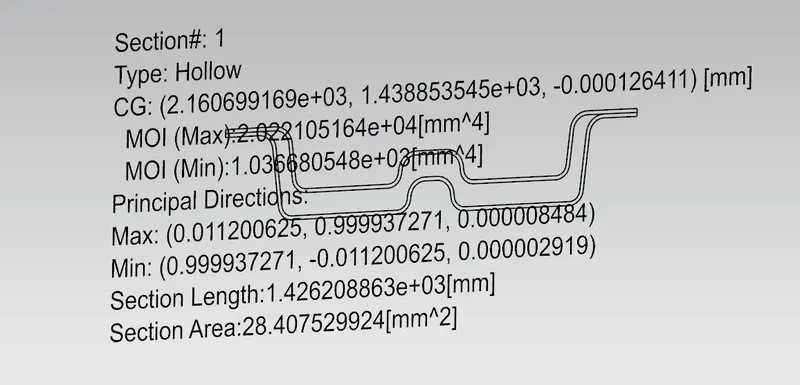
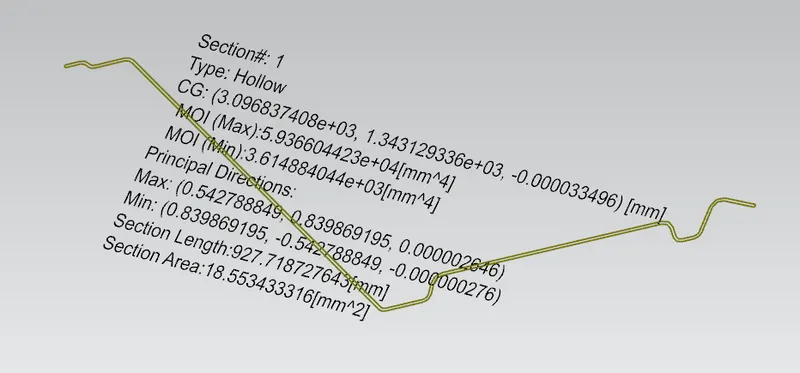
Section moment of inertia is used to predict the amount of deformation and deflection of a part. A higher moment of inertia is preferable as it reduces the amount of deflection for a given force.The thickness of the part and addition of flanges and embosses increase the section inertia of the part. Here the master sections of the roof and roof rails and their section analysis are given.
For Calculation purpose we always take Minimum Moment of inertia.
BOW ROOF RAIL
FRONT ROOF RAIL
CENTER ROOF RAIL
REAR ROOF RAIL
BOW NO 02
DRAFT ANALYSIS
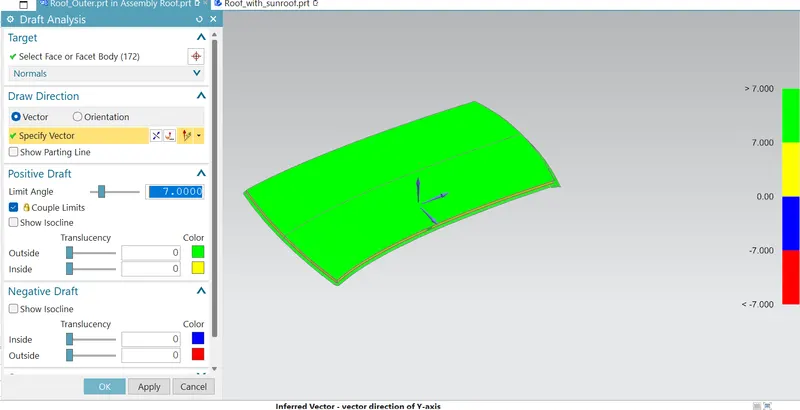
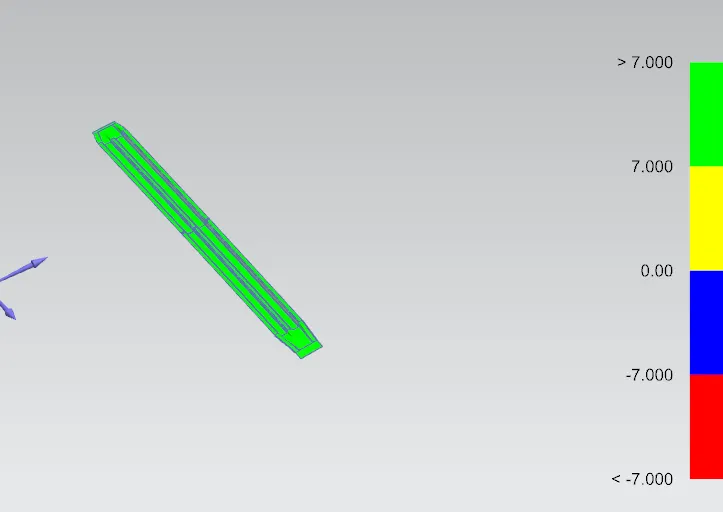
The Draft Analysis command enables you to detect if the part you drafted will be easily removed. This type of analysis is performed based on color ranges identifying zones on the analyzed element where the deviation from the draft direction at any point, corresponds to specified values.
Minimum draft angle which I have consider is 7 degree for analysis. Green color on the parts indicates that all face along the tooling direction has positive draft angle greater than 7 degree and passed in analysis process.
ROOF
BOW ROOF RAIL
CENTER ROOF RAIL
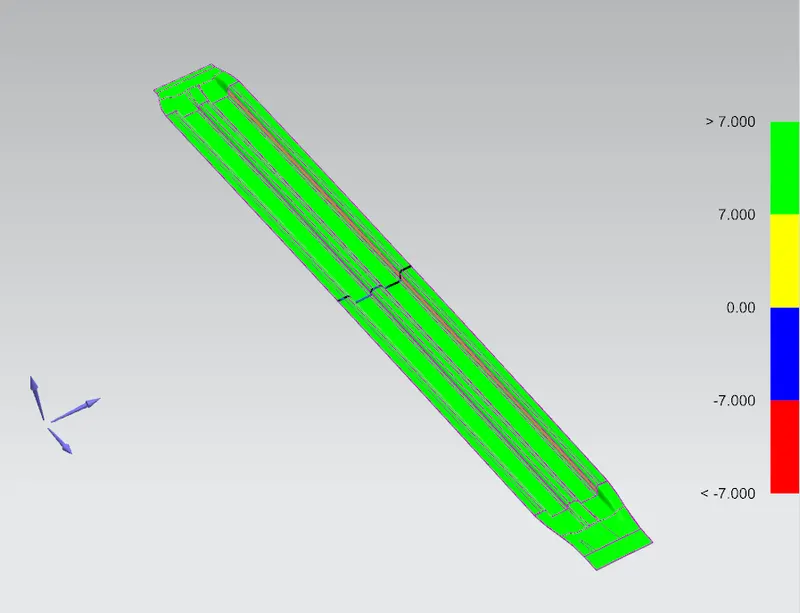
REAR ROOF RAIL
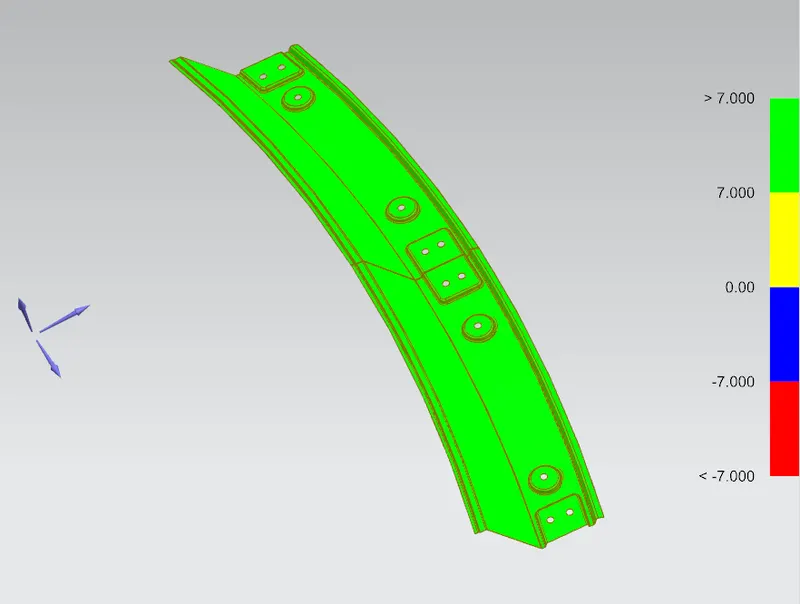
CONCLUSION
Thus, we have designed the given roof, front roof rail, bow roof rails, central roof rail and the rear roof rail by following the master sections. And also, we have studied on heat distortion, snow load criteria, moment of inertia and draft analysis are carried out to check whether the part is feasible to manufacture in the industry.