Roof Design
Objective:
To design a roof for an automobile with given master sections and satisfy the roof curvature analysis for Heat distortion and Snow Load criteria.
Design Considerations:
- Headroom clearance
- Bow roof position
- Heat distortion and Snow load criteria
- Draft analysis
Input:
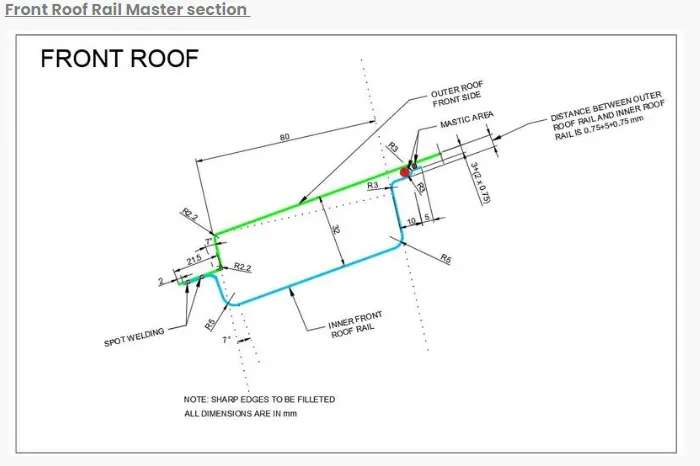
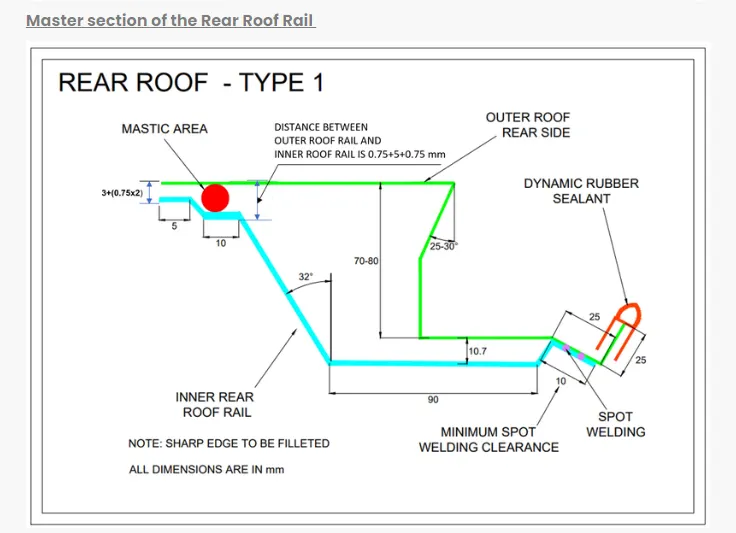
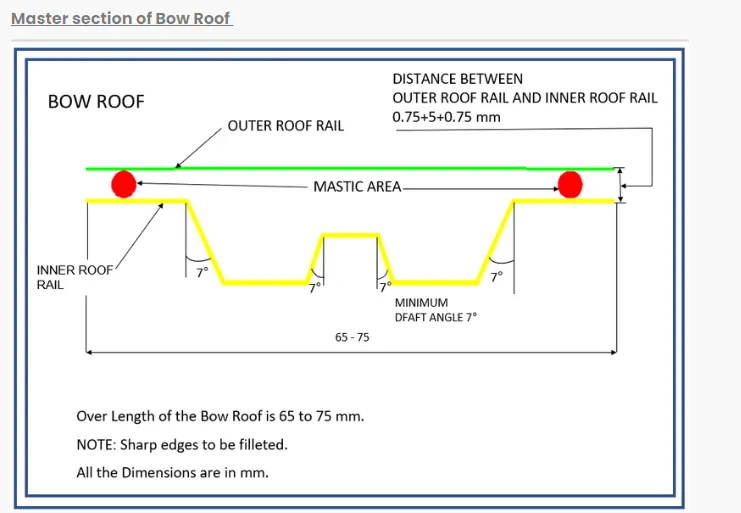
Styling:
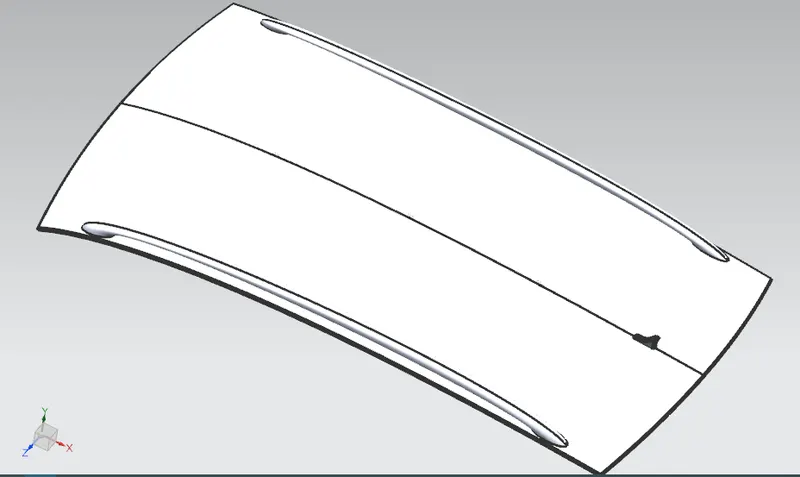
Final Design:
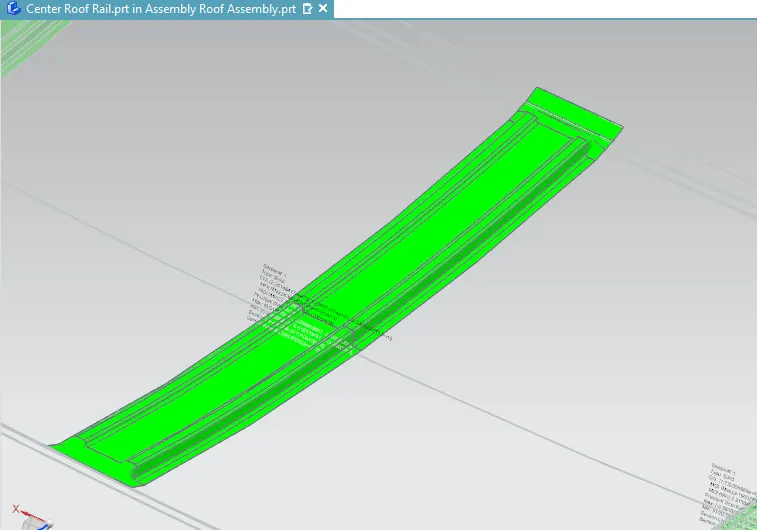
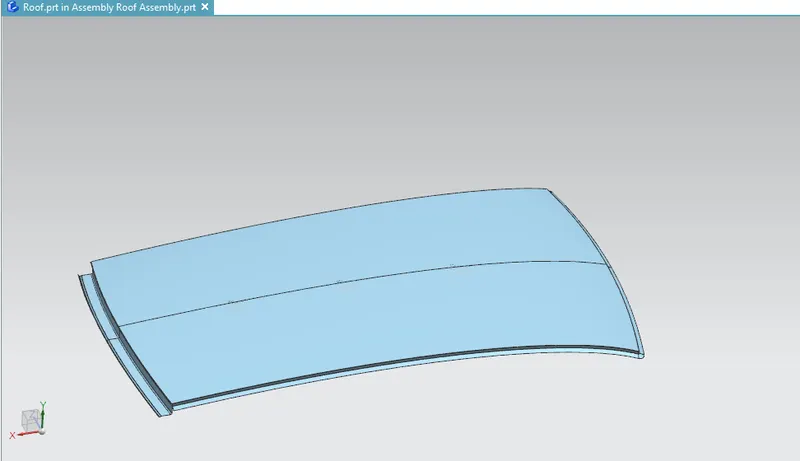
Roof Outer Panel with Ditch:
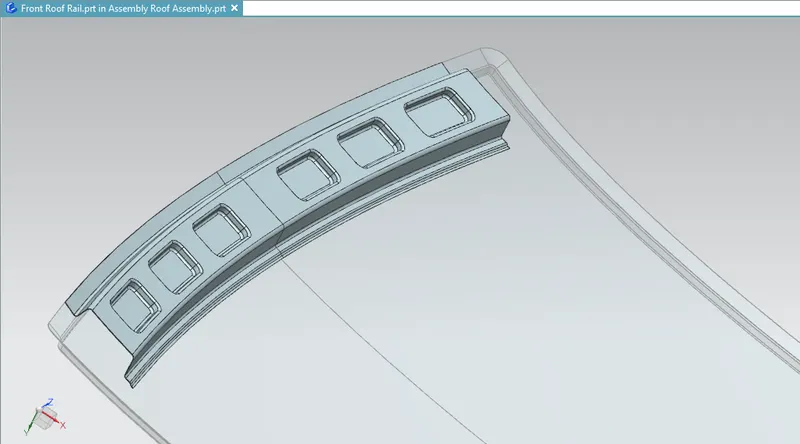
Front Roof Rail: Added Embosses for improved material properties.
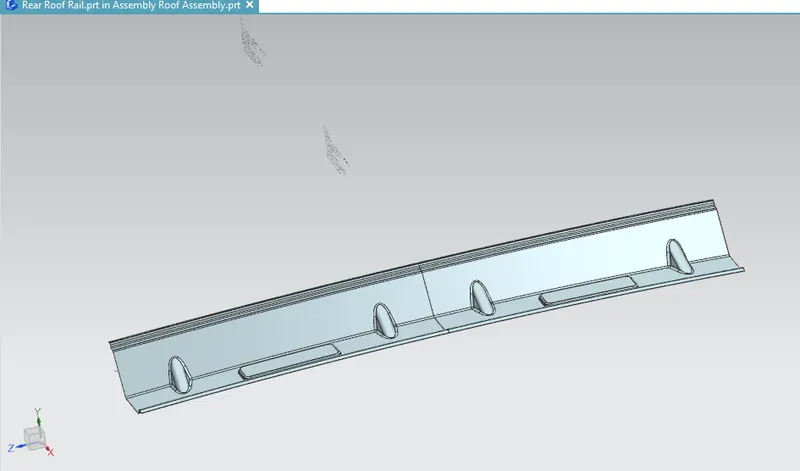
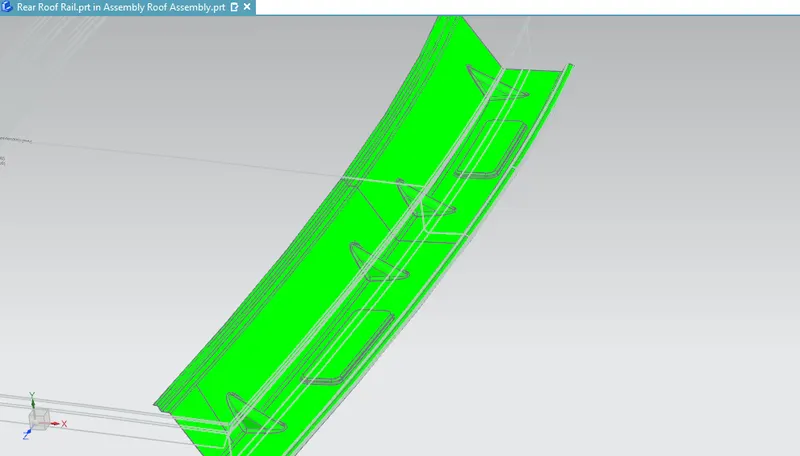
Rear Roof Rail: Added Embossing and Darts (Stiffener) fro improved material properties.
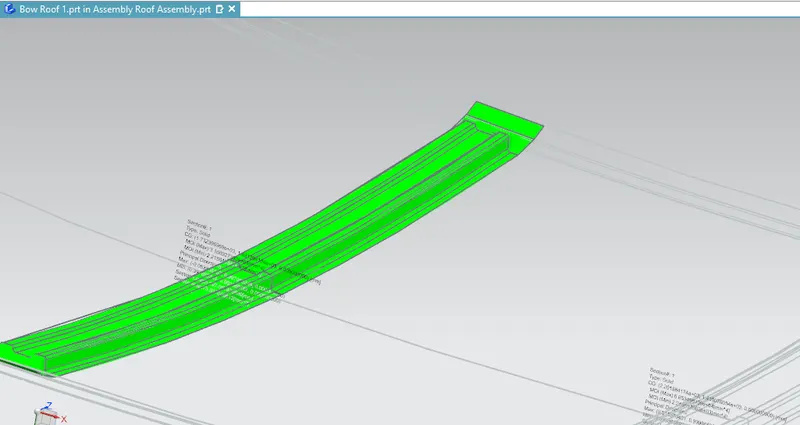
Bow Roofs on either side of the Center roof rail:
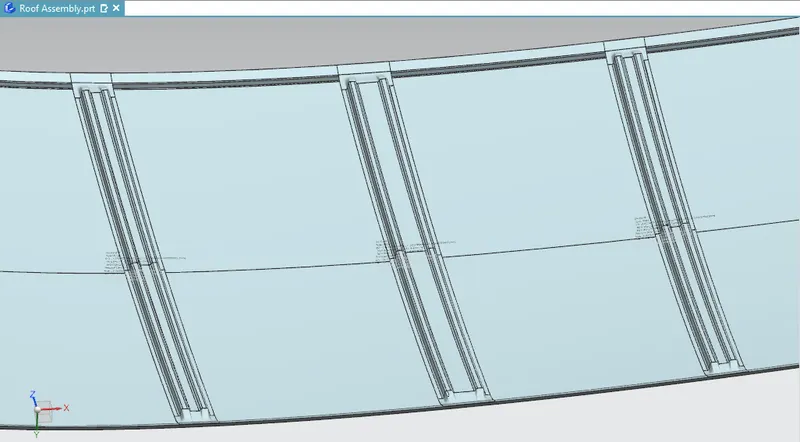
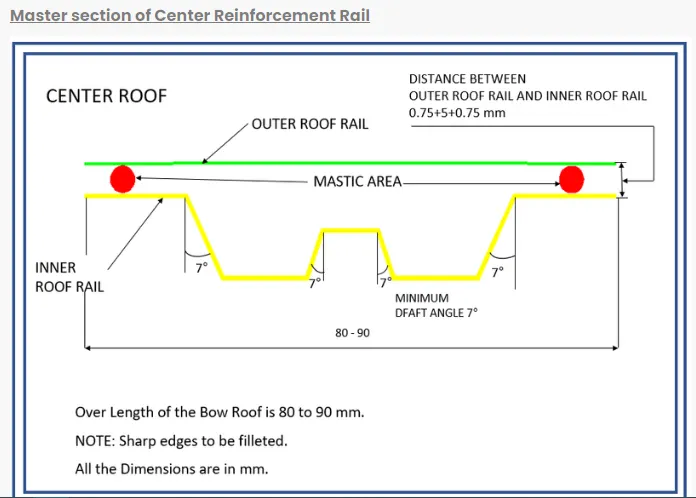
The bow roofs and the center roof rail will be spot-welded onto the side flanges and/or the pillars from the BiW, while they will be attached to the roof outer using mastics. The front and rear roof rails will also be attached to the outer roof with mastics (sealant).
Curvature Analysis:
Heat Distortion:
This analysis aims to study the deflection of roofs in high-temperature conditions. This is predicted by calculating:
W = [1.73 x 10^(-3) x L] + [1.85 x 10^(-8) x (R^2)/t] + [ 1.10x10^(-3) x l] - 2.68
Where,
L = Roof Length in X-Direction[mm](Roof dimension in 0-Y)
R = Roof curvature
R = 2(Rx*Ry)/(Rx+Ry)
Rx = X curvature
Ry = Y curvature
t = Roof plate thickness [mm]
l = Bow Roof Span [mm];
The acceptable maximum value for W is 2.7.
Results:
| HEAT DISTORTION | ||||||||||
| Roof Section | Rx | Ry | Rx*Ry | Rx+Ry | R | L | t | I | W | Status |
| Front - Bow 1 | 5726 | 2738 | 15677788 | 8464 | 3704.581 | 2029 | 0.75 | 462 | 1.676893 | OK |
| Bow 1 - Center | 4837 | 6742 | 32611054 | 11579 | 5632.793 | 2029 | 0.75 | 390 | 2.041803 | OK |
| Center - Bow 2 | 3960 | 10672 | 42261120 | 14632 | 5776.534 | 2029 | 0.75 | 370 | 2.060256 | OK |
| Bow 2 - Rear | 3260 | 14719 | 47983940 | 17979 | 5337.776 | 2029 | 0.75 | 391 | 1.963069 | OK |
Snow Load:
This analysis aims to understand the deflection of the roof when a load is applied on top of it. This is predicted by calculating:
Qr = [Iy x t2] / [α x s x [(Rx + Ry)/2]2 x 10-8]
Note: The Qr value given over here is correct. There was a typo error in the formula given in the video.
Where,
α = My x Lx2 x 10-12 , My = Y(Ly-Y)
t = Roof plate thickness [mm]
Ly = Distance between the front and rear roof Rails on the Vehicle along with 0Y[mm]
Length of Roof panel with the center point between Roof rail Front /Rear as the front and rear reference point.
Lx = Distance between the Left and Right end of the roof on the Roof BOW [mm]
The width of the roof panel is exposed on the surface.
Y = Distance front Front Roof Rail to Roof BOW[mm]
s = Distance for which Roof BOW bears divided load [mm]
s = L1/2 + L2/2
Iy = Geometrical moment of inertia of Roof BOW (Y cross-section )[mm4]
Rx = Lateral direction curvature radius of roof panel Y cross-section on Roof BOW [mm]
Roof panel curvature Radius of the Length Lx in Front view
Ry = Longitudinal Direction curvature radius of the Roof panel X cross-section on Roof BOW [mm]
Roof panel X curvature radius of length s in Side view;
The minimum acceptable Qr value is 3.1 when the value of 's' ranges between 20 and 380.
Results:
| SNOW LOAD | ||||||||||||||
| Roof Section | Iy | Lx | Ly | L1 | L2 | Rx | Ry | t | Y | S | My | α | Qr | Status |
| Front - Bow 1 | 2215.9 | 1134 | 2029 | 462 | 390 | 4415 | 2776 | 0.75 | 545 | 426 | 808780 | 1.040055 | 19.92599 | OK |
| Bow 1 - Center | 2243.6 | 1082 | 2029 | 390 | 370 | 3780 | 6677 | 0.75 | 470 | 380 | 732730 | 0.857825 | 12.80761 | OK |
| Center - Bow 2 | 2228.7 | 1058 | 2029 | 370 | 390.5 | 4284 | 11193 | 0.75 | 450 | 380.25 | 710550 | 0.795364 | 6.301672 | OK |
Draft Analysis:
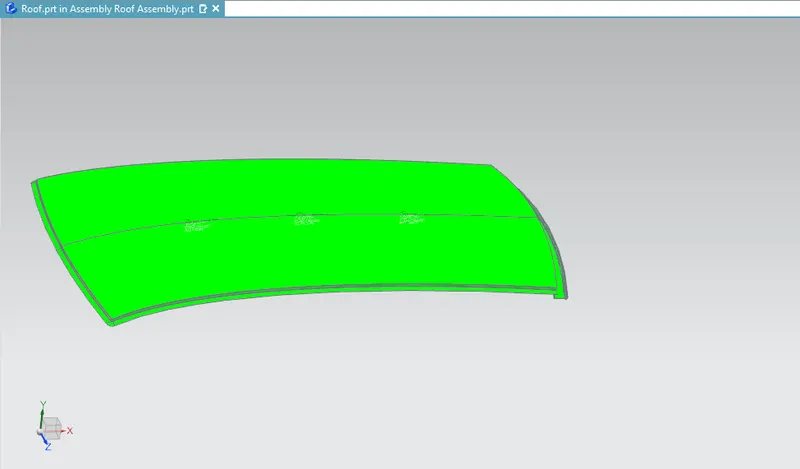
The minimum draft angle for sheet metal manufacturing is 7 degrees.
Roof :
Front roof rail:
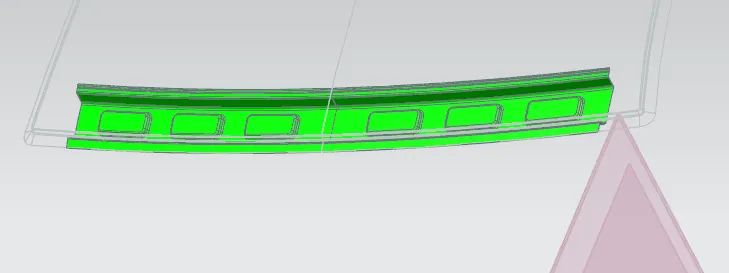
Rear roof rail:
Bow Roof 1:
Bow Roof 2:
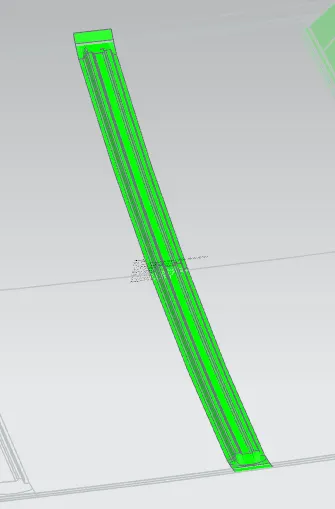
Center roof rail: