Roof Design
ROOF DESIGN
- INTRODUCTION:
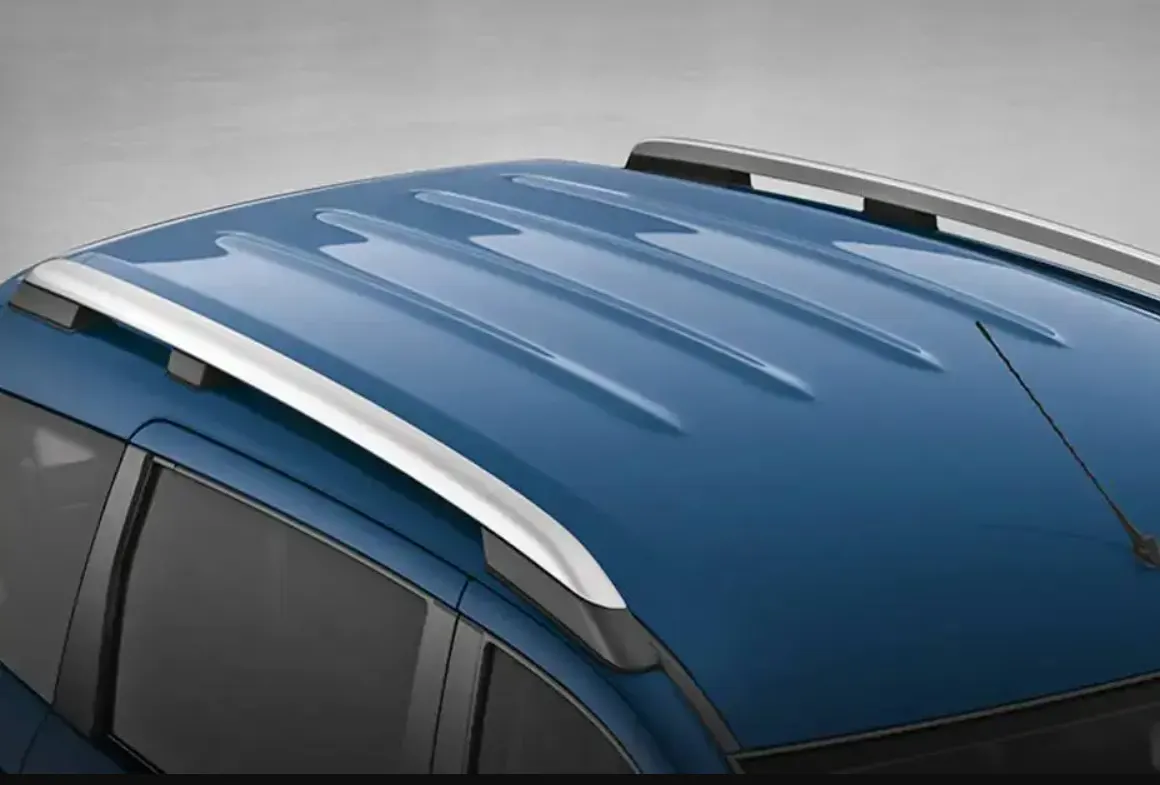
The roof of a car is the top part of the vehicle that shields the occupants from the sun, wind and rain. When designing the same, a variety of enviromental factors are taken into consideration. Although the roof serves as a surface for style, It should have the necessary reinfocrcements to keep passengers safe. Vehicle roofs are susceptible to intense heat and moderate loads in the winter. Calculations of heat load and snow load are are made in order to properly design roof rails. By doing this, the passengers safety within the car is guaranteed.
 OBJECTIVE:
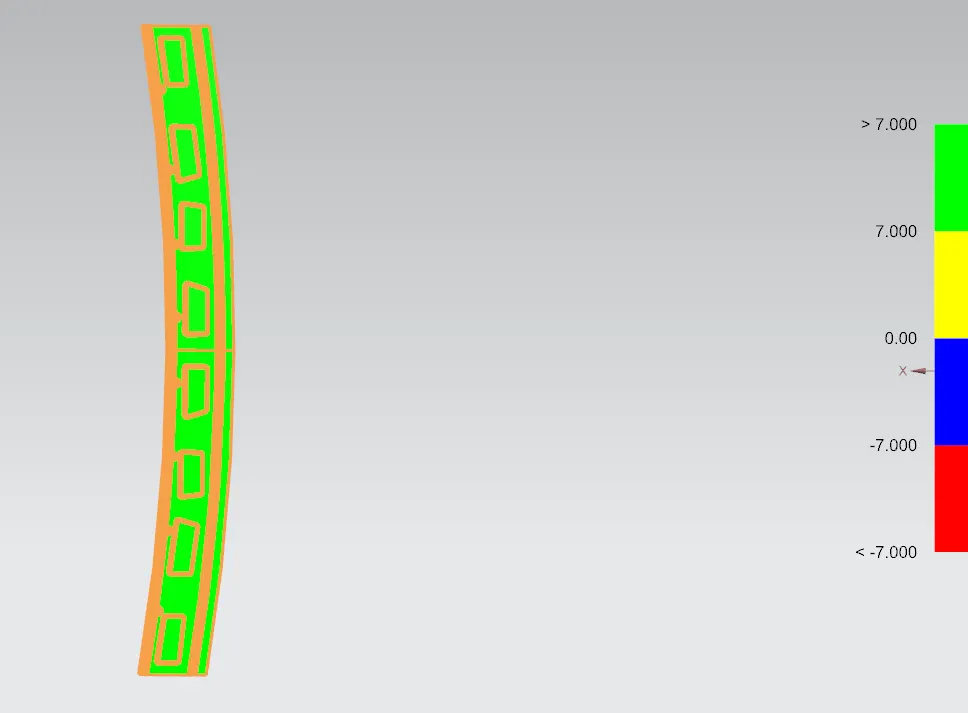
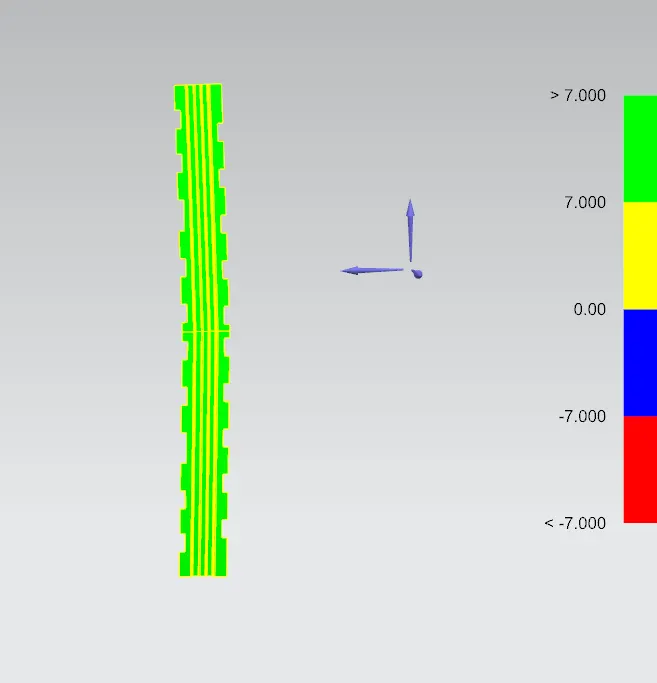
- Designing a roof and related reinforcements from the current style surface is the project's primary goal. To verify the efficacy of roof reinfocement, heat load and snow load calculations will be performed on the affected part of the roof. To evaluate the manufacturability of each reinforcement, conduct a draft analysis.
DESIGN PARAMETERS:
- When creating a roof, the number of roof rails must be created to have sufficient strength to support the weight. In order to increase strength, bow roofs are typically attached in flatter regions. Spot welding is used to secure the front and rear roof rails to the ditch. Additionally, mastic sealants are used to secure the front, rear and center roof rails to the roof. Reduce the space between the bow roof and roof rails for improved NVH. When designing roof rails, the following factors are taken into consideration.
- Visibility criteria
- Head clearance
- Curvature study
- Heat Distortion and Snow Load criteria
- Draft Analysis
MASTER SECTIONS:
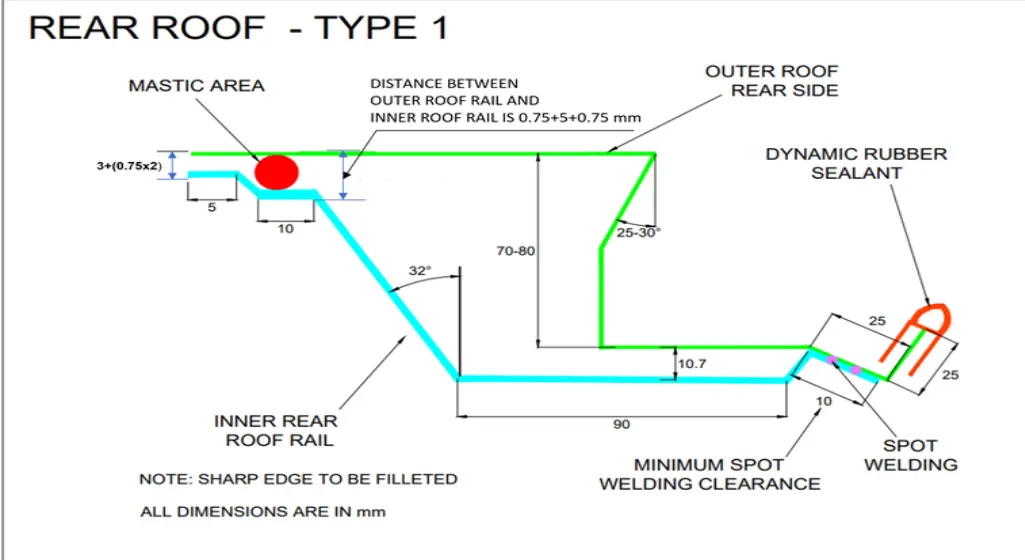
- These are the 3-D model's cross-sectional data. To communicate the functional requirements of the product to the design engineer, OEMs and the automobile industry frequently utilize these master section. It provides the dimensions that should be taken into account while creating a specific part or component, including height, breadth, length, radius and clearance.
- Front Roof Rail Master Section:
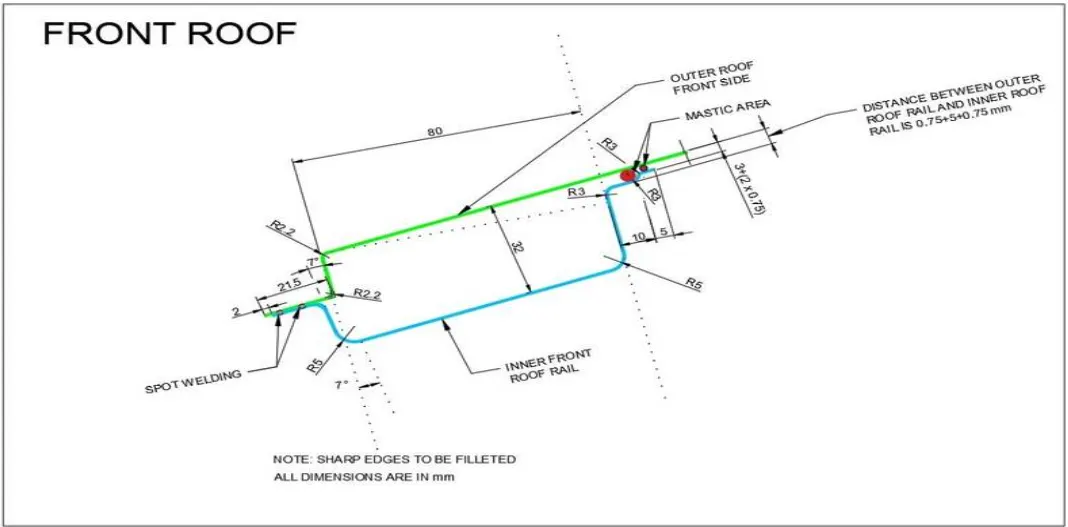
- The Front Roof Rail is used as the reinforcement to the roof surface to increase the strength and also used to mount the brackets for some features such as room lamp and rear view mirror. The width of the front roof rail is decided based on the visibility criteria. The depth of the front roof rail is decided in such a way that there should be enough headroom clearance between the head of the driver and the end surface of the roof rail to avoid clostrophobic effect to the person.
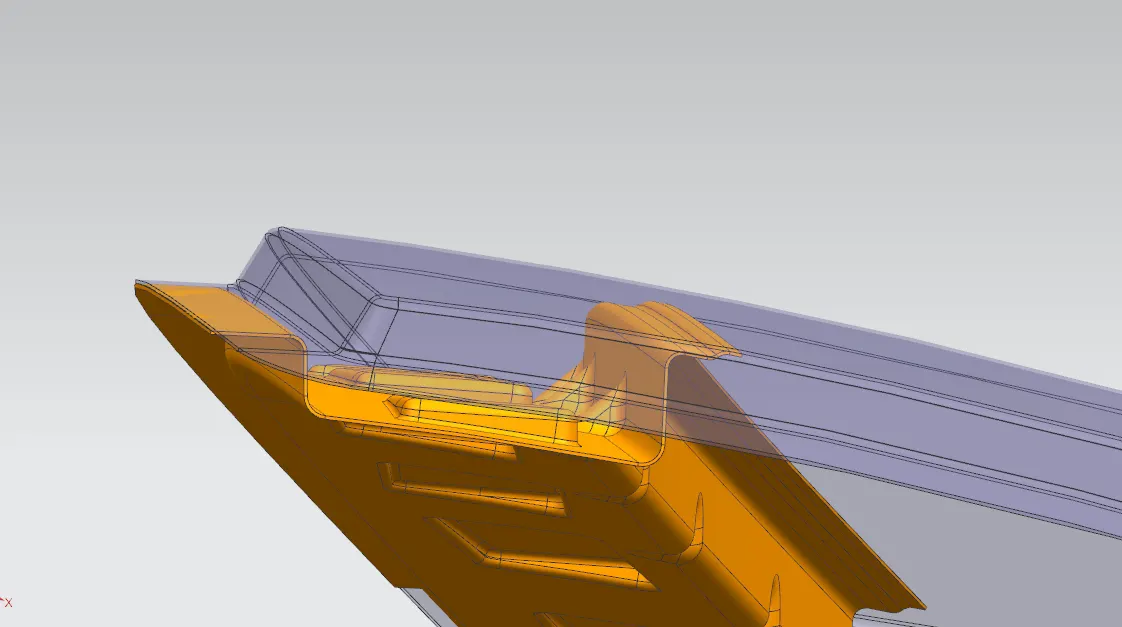
Front Roof Rail
- Center Roof Rail:
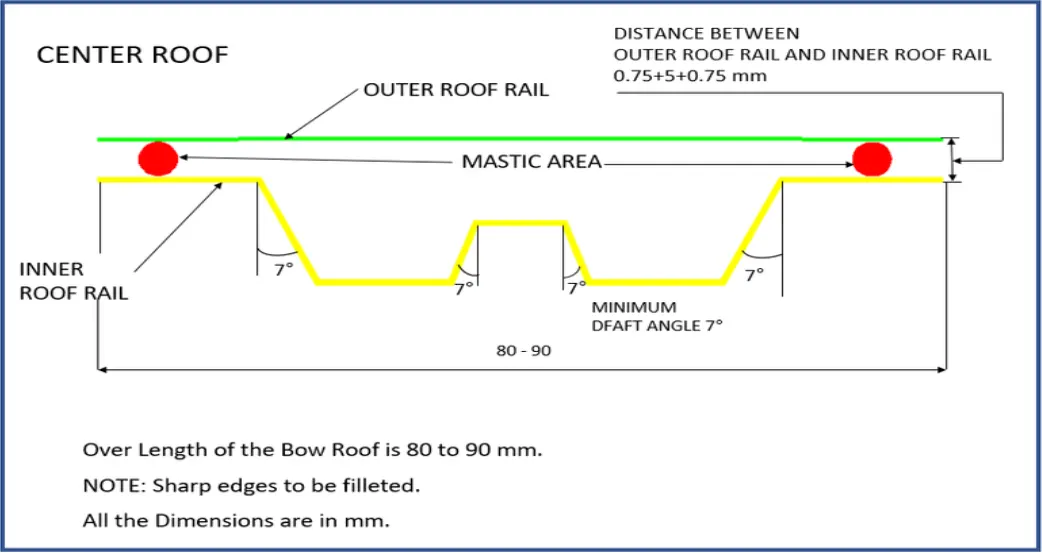
- Centre Roof Rail imparts strength for the center portion of outer roof pannel which is supported by B-Pillar at both sides.
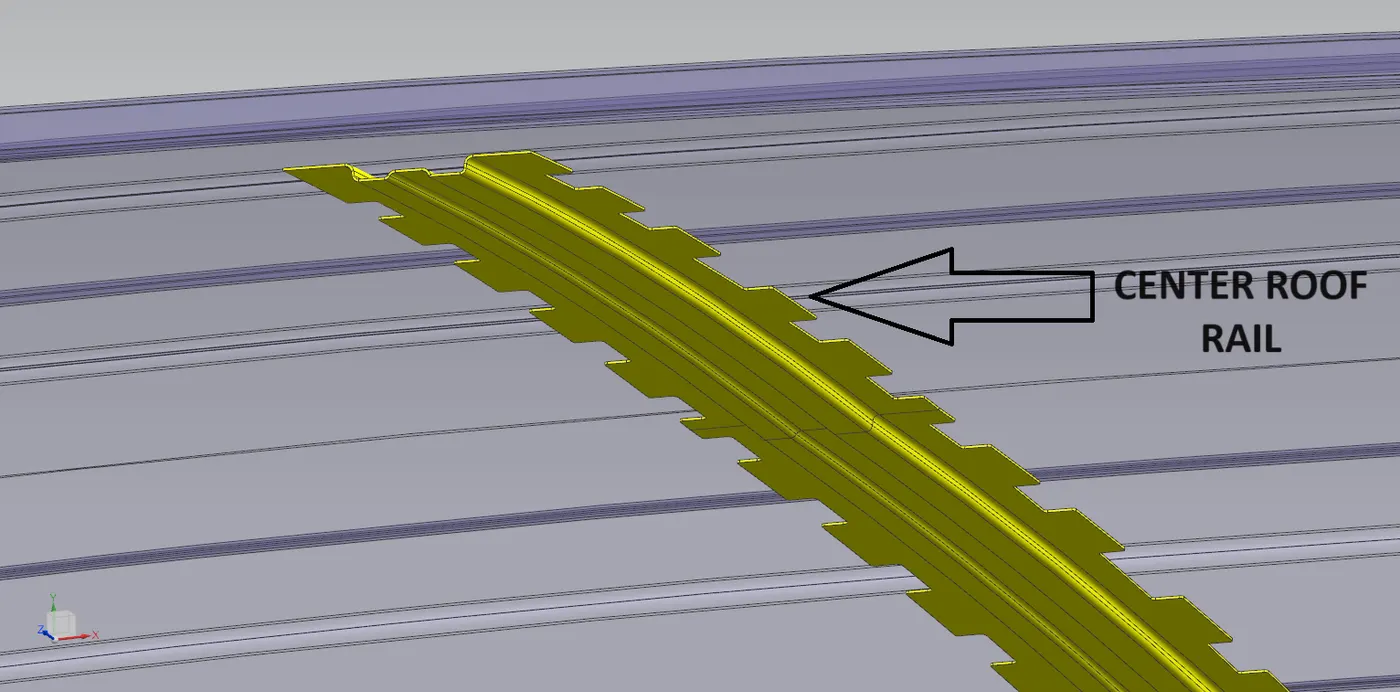
Center Roof Rail
- Centre Roof Reinforcement Rail:
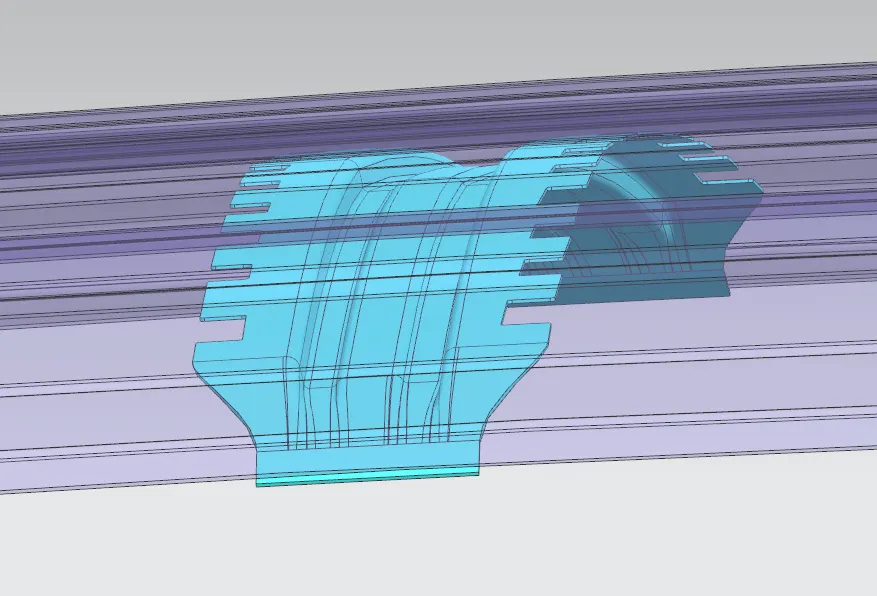
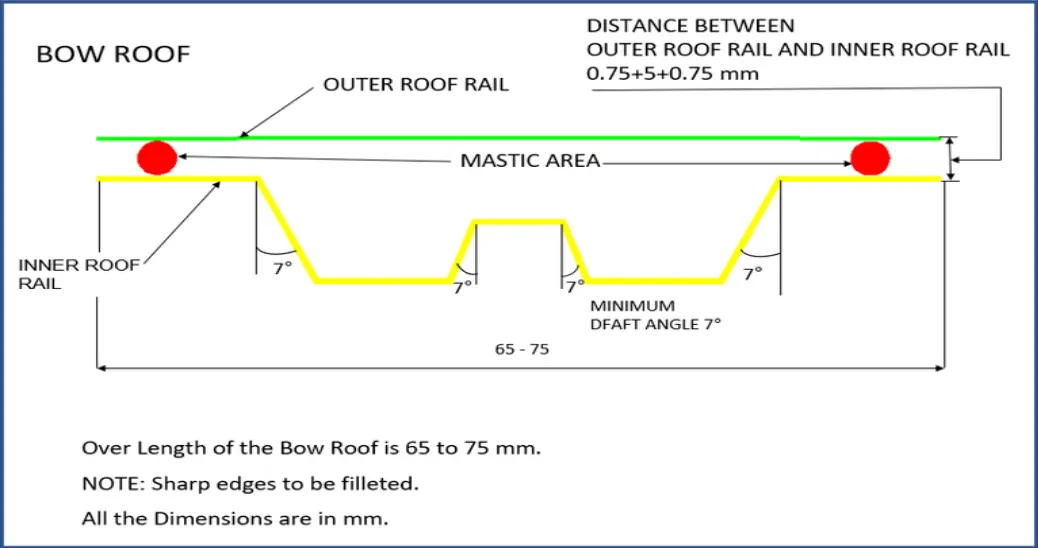
- Bow Roof Rails:
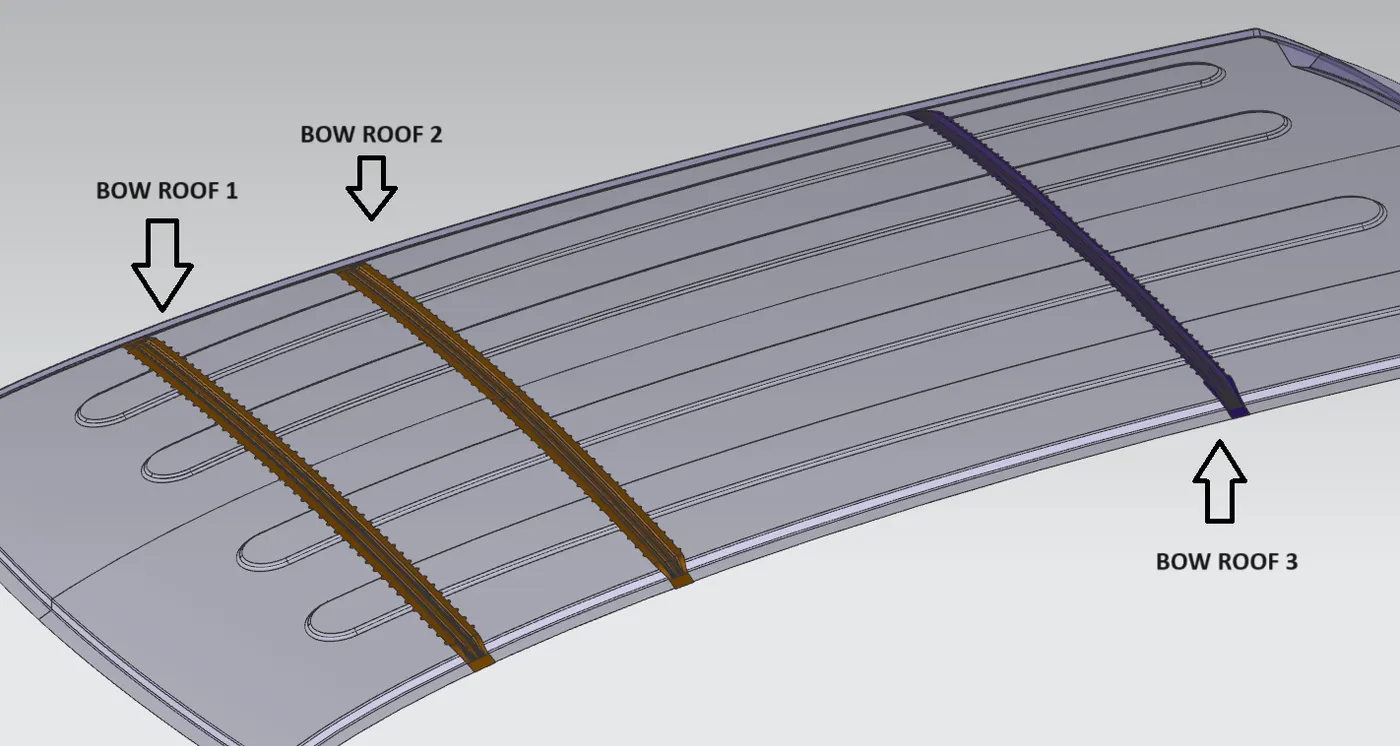
- These are used between center roof rail and front roof rail or center roof rail & rear roof rail to impart additional support. The number of bow roof rail depends on the length of roof pannel.
- Rear Roof Rail:
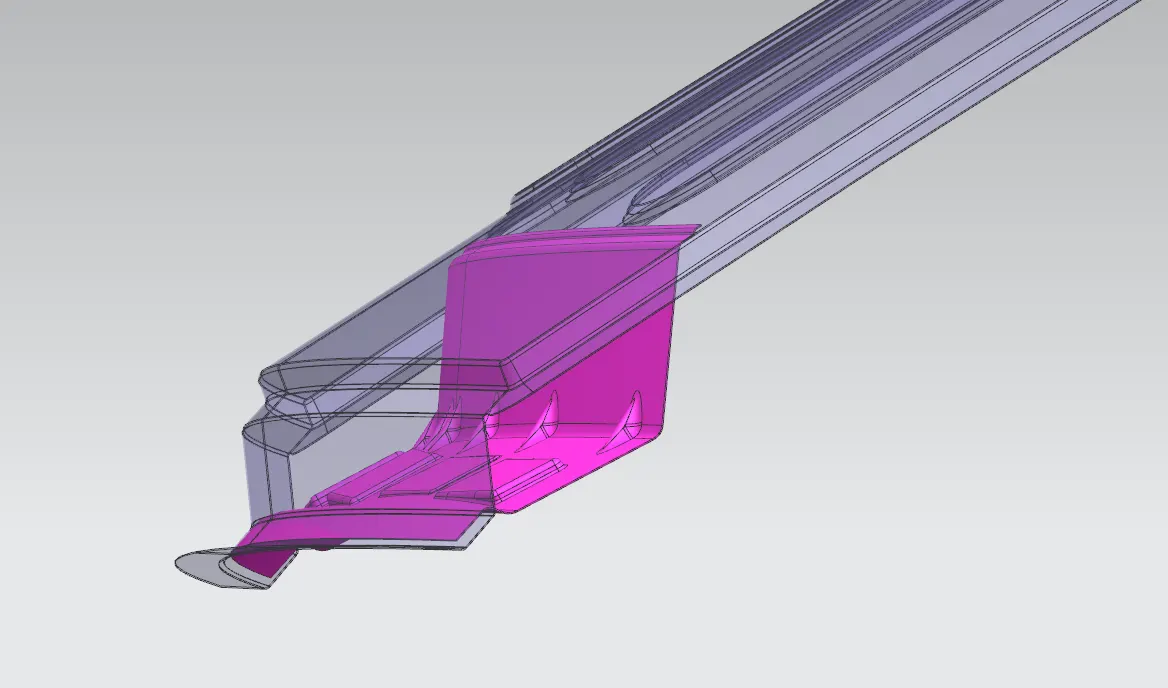
- It is the reinforcement provided at rear side of the roof panel. Backdoor and body side panels are attached with this part. Provision for back door opening is also provided on Rear Roof Roail.
DRAFT ANALYSIS:
1. FRONT ROOF RAIL:
2.CENTER ROOF RAIL:
3. BOW ROOF RAILS:
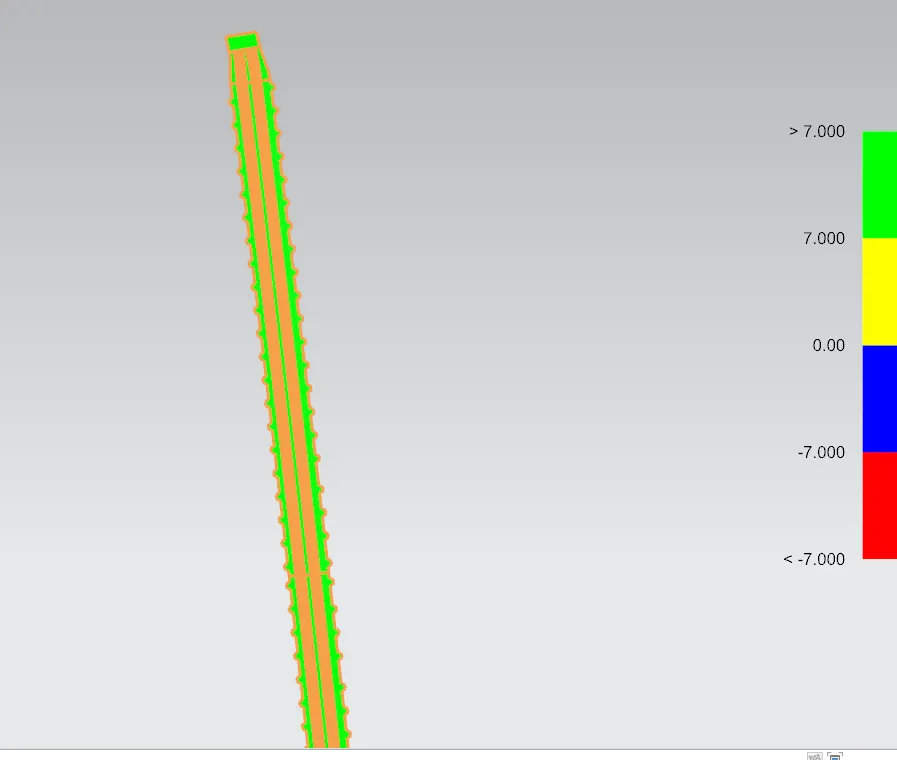
Bow Roof Rail_1
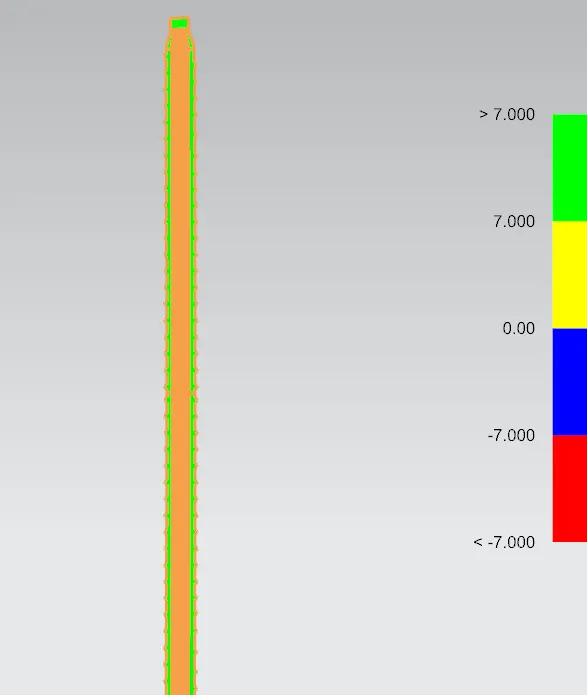
Bow Roof Rail_2
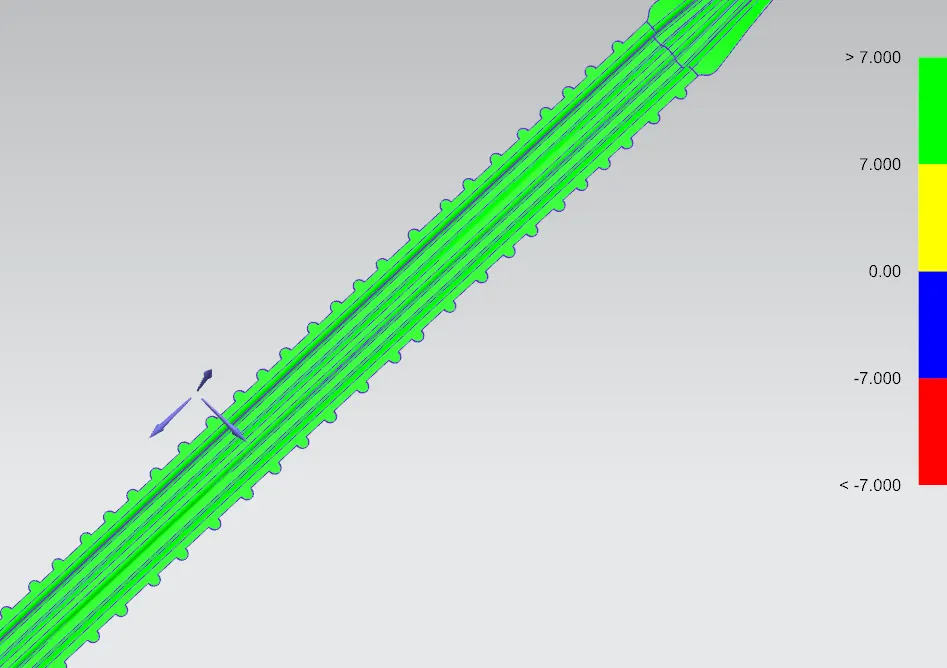
Bow Roof Rail_3
4.REAR ROOF RAIL:
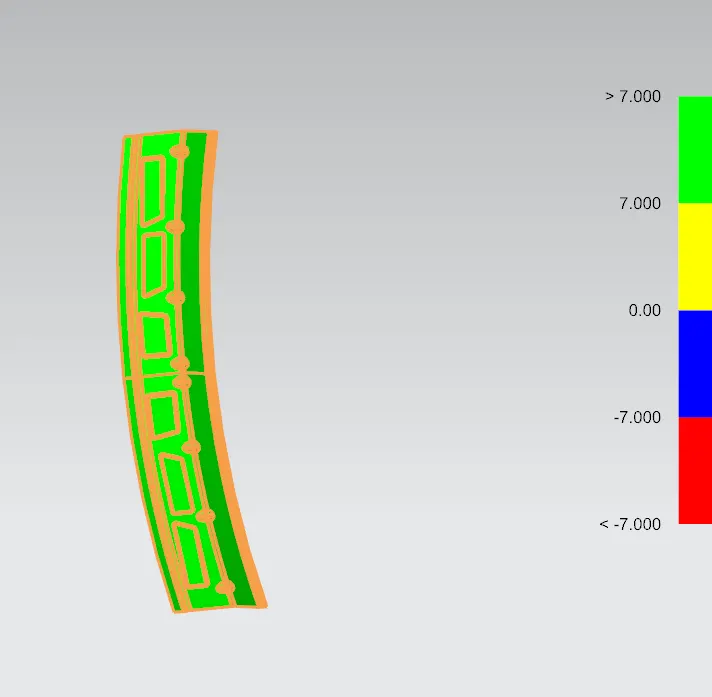
FINAL ASSEMBLY:
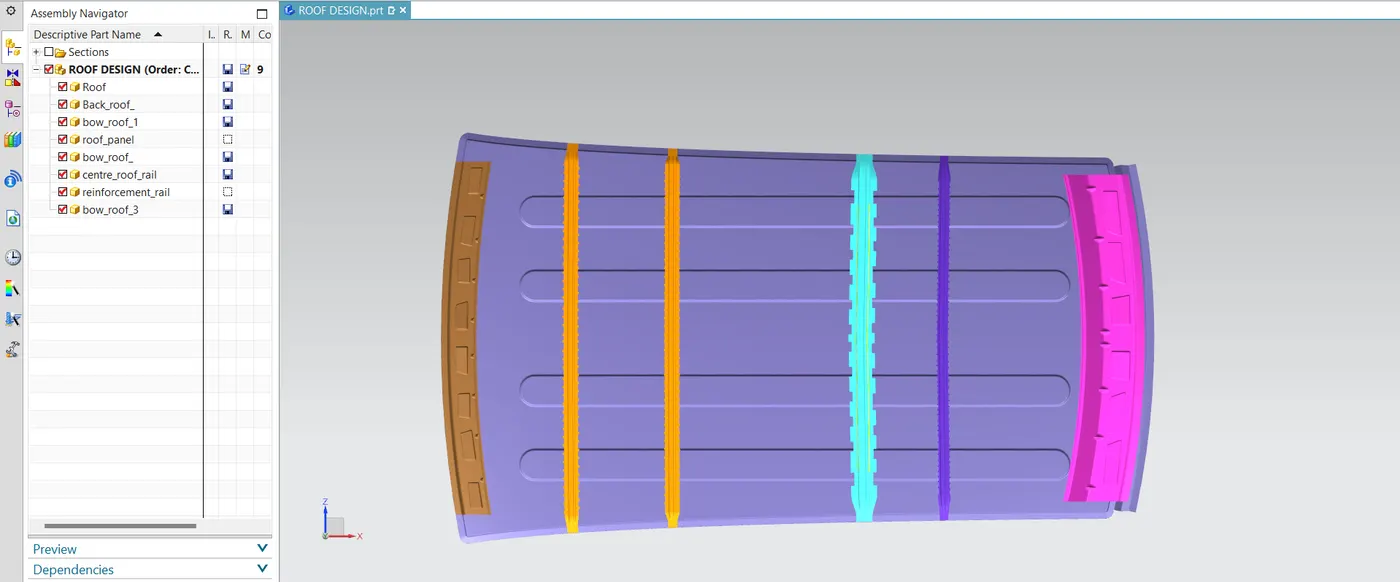
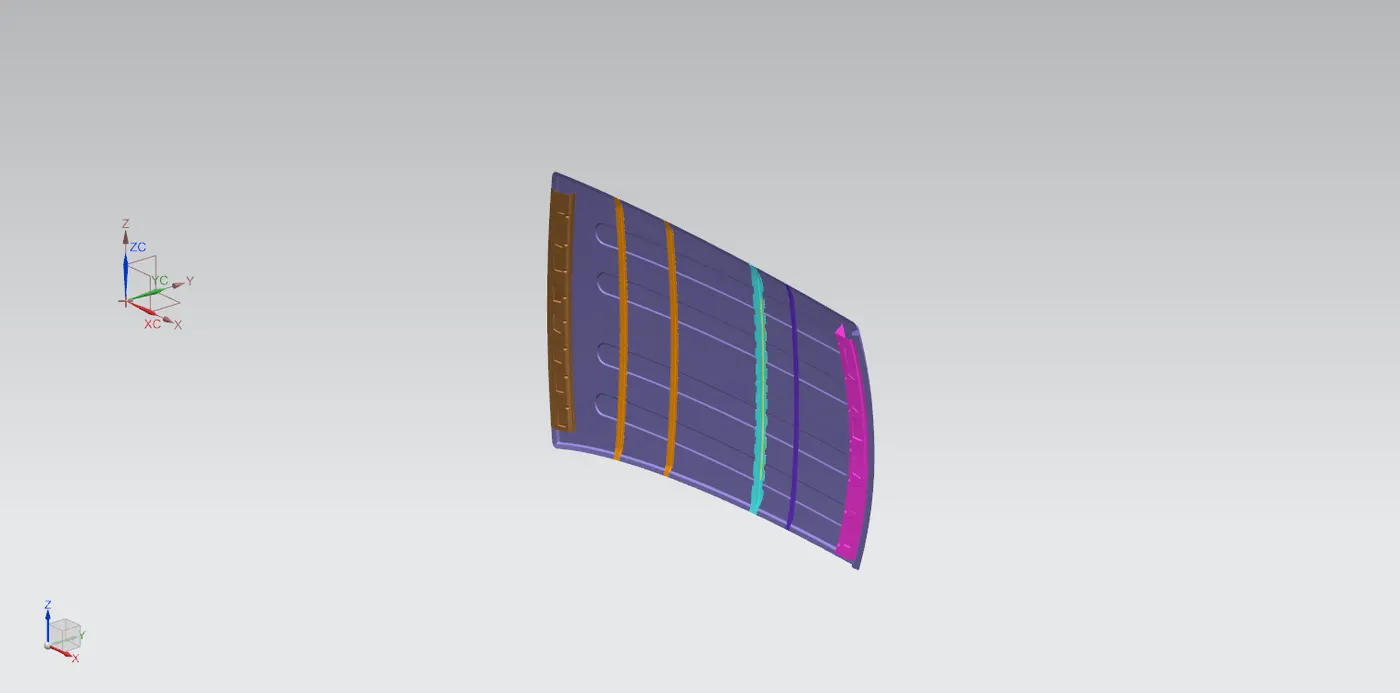
HEAT DISTORTION CALCULATIONS:
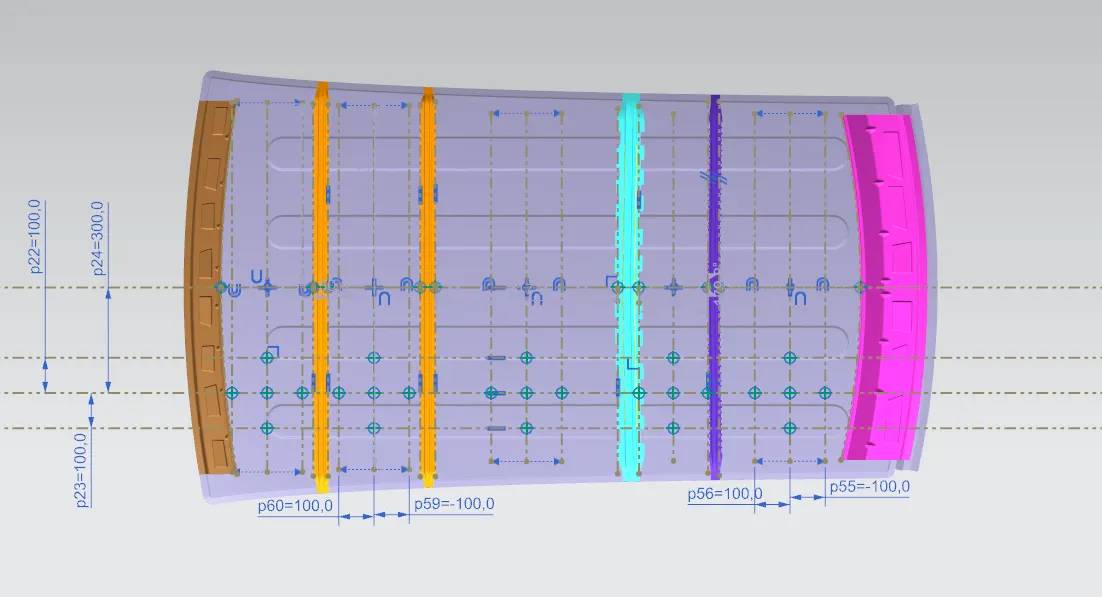
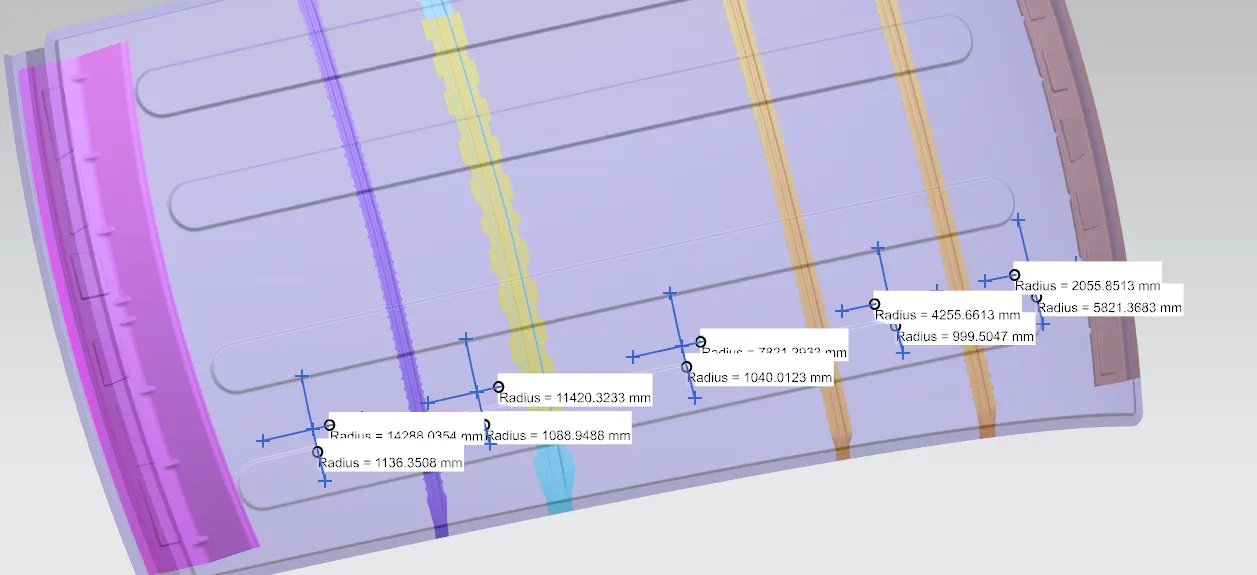
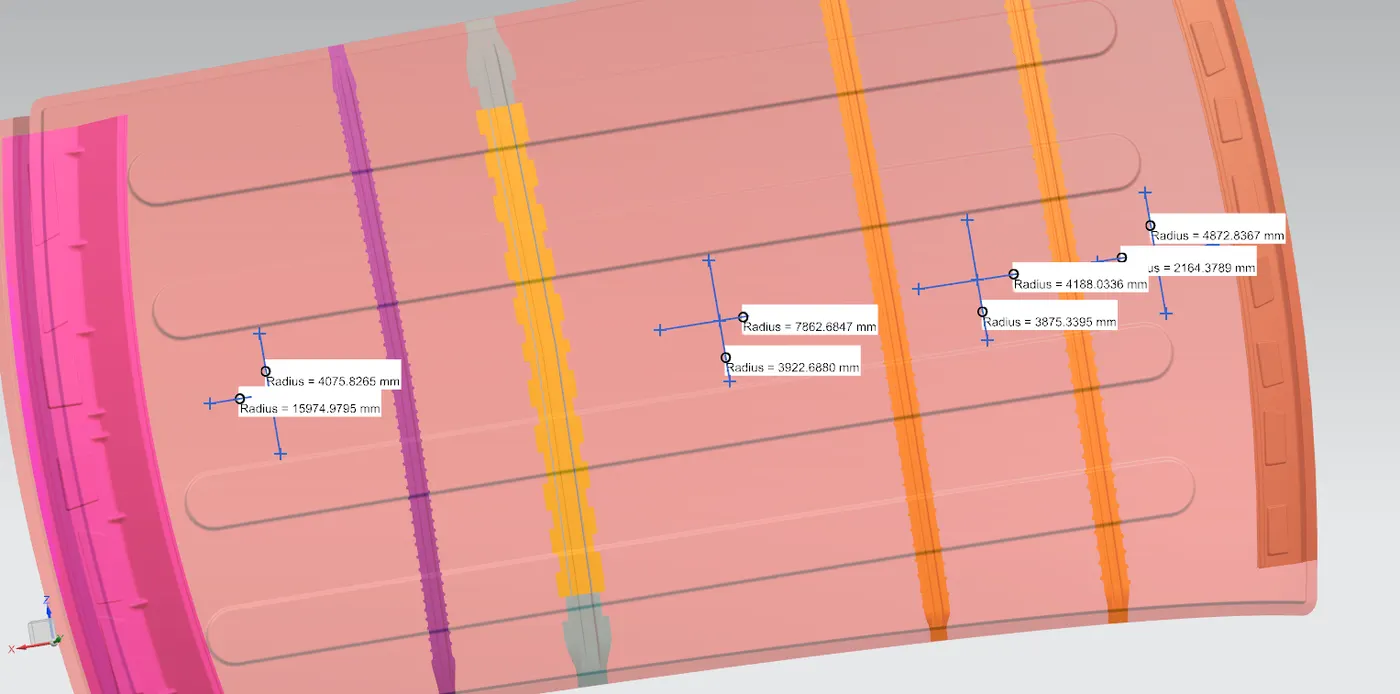
- The Heat Distortion study plays an important role in sheet metal application. Heat distortion is temperature limit above whhich material cannot be used for structural application. This study is useful to find where the material starts soften when exposed to a fixed load at elevated tempeerature. In order to avoid the bending, damage of the roof based on the heat distortion temperature. This study will help to locate the position of the bow roof rails to give enough strength.
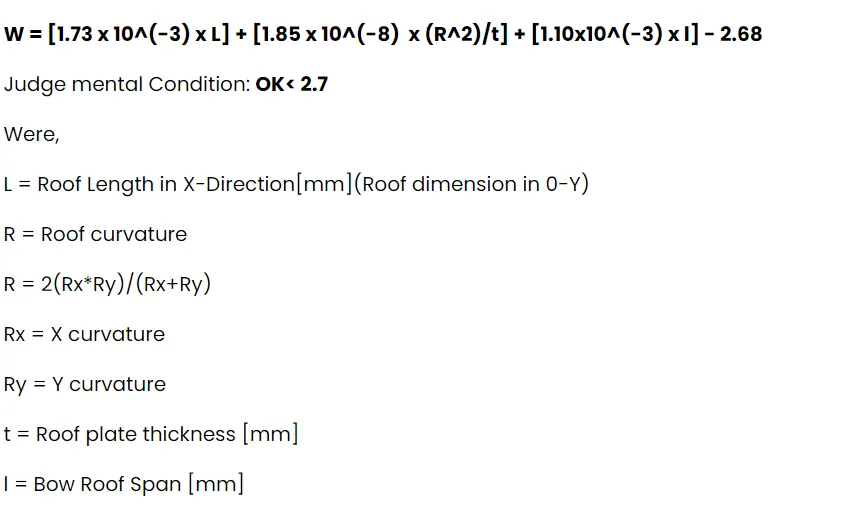
Bow-Roof Prediction Formula:
CALCULATIONS:
| SECTION | Rx(mm) | Ry(mm) | R(mm) | t(mm) | L(mm) | l(mm) | W | RESULT |
| FRR-BR1 | 5821.36 | 2055.81 | 3678.975 | 0.75 | 2034.3 | 420.8 | 1.669545 | PASS |
| BR1-BR2 | 999.50 | 4255.63 | 5394.820 | 0.75 | 2034.3 | 383.6 | 2.069785 | PASS |
| BR2-CR | 7821.29 | 2040.23 | 4236.256 | 0.75 | 2034.3 | 393.5 | 2.598756 | PASS |
| CR-BR3 | 11420.32 | 1088.94 | 6698.359 | 0.75 | 2034.3 | 569.5 | 2.598716 | PASS |
| BR3-RRR | 14288.03 | 1136.35 | 7892.355 | 0.75 | 2034.3 | 659.9 | 2.558965 | PASS |
From the above table it can be concluded taht all values of 'W' is less than 2.7, which imolies the position of roof rails are as per standard.
SNOW LOAD CALCULATION:
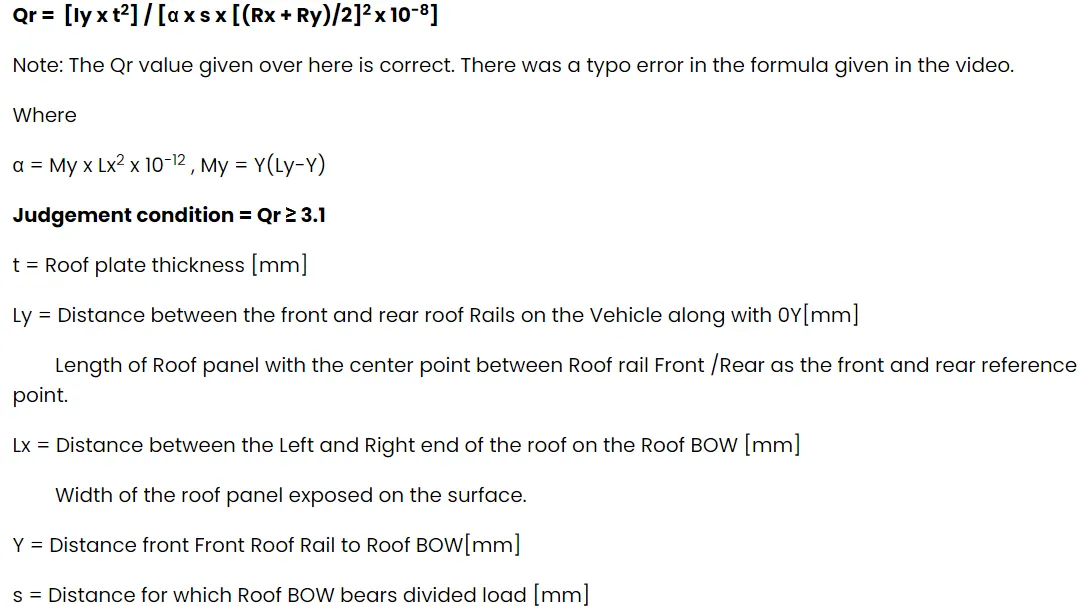
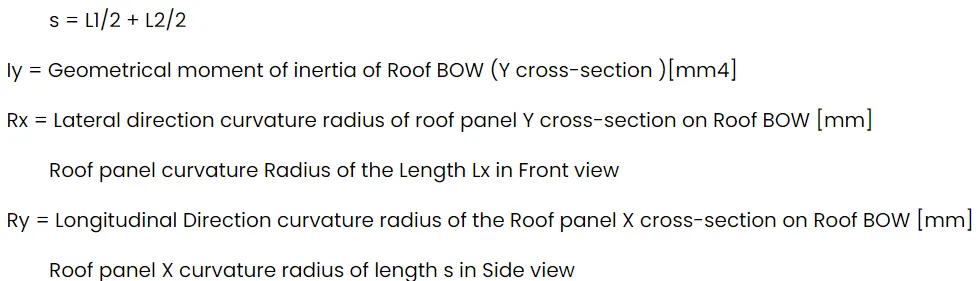
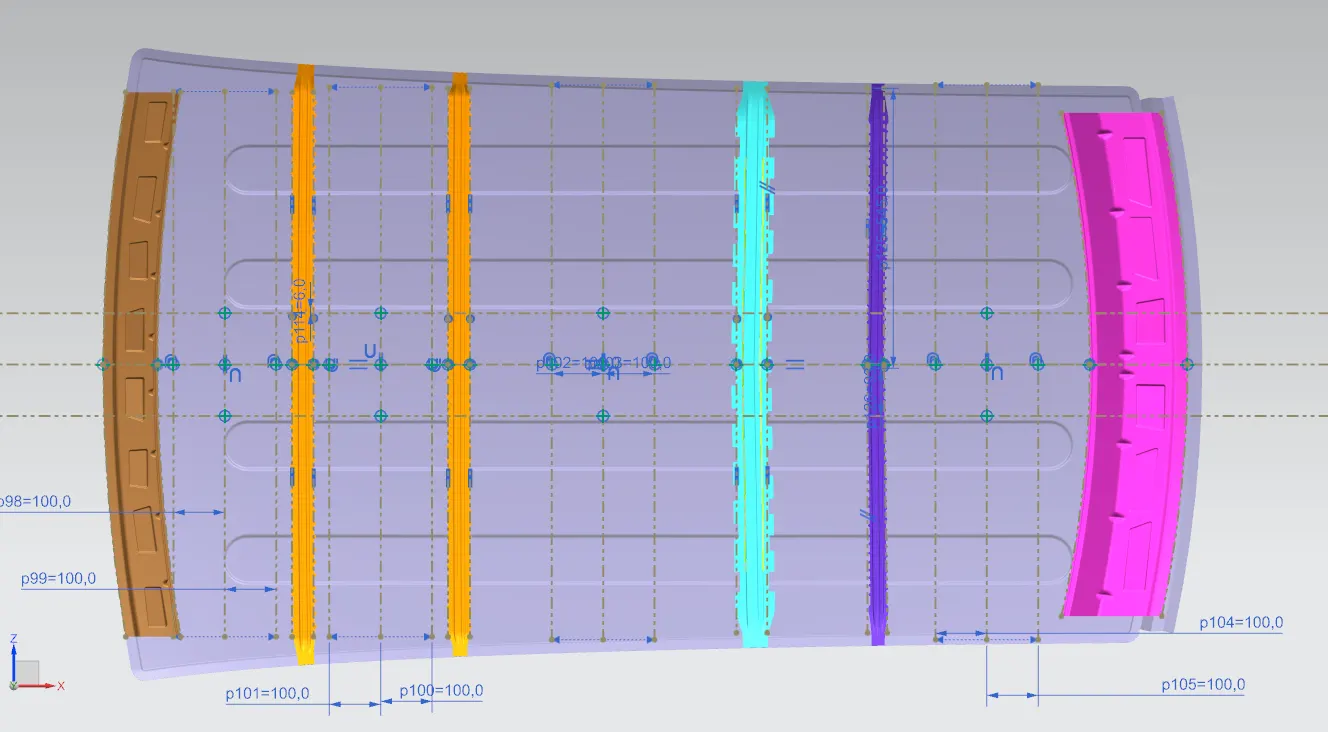
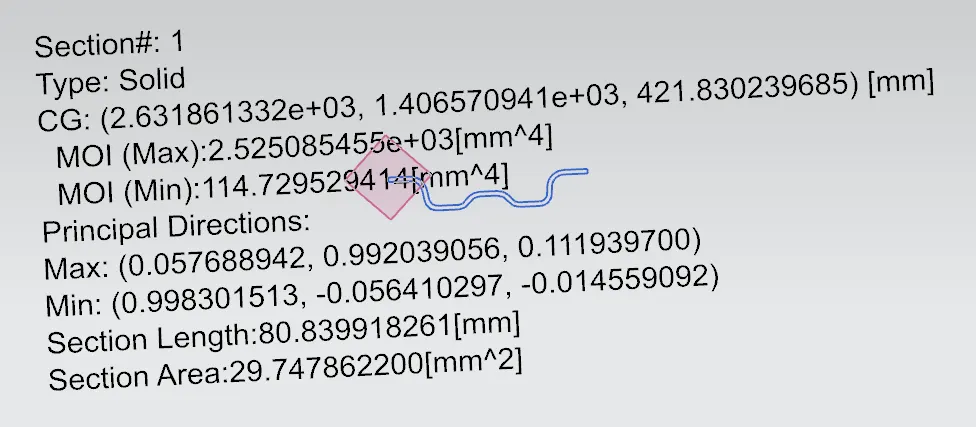
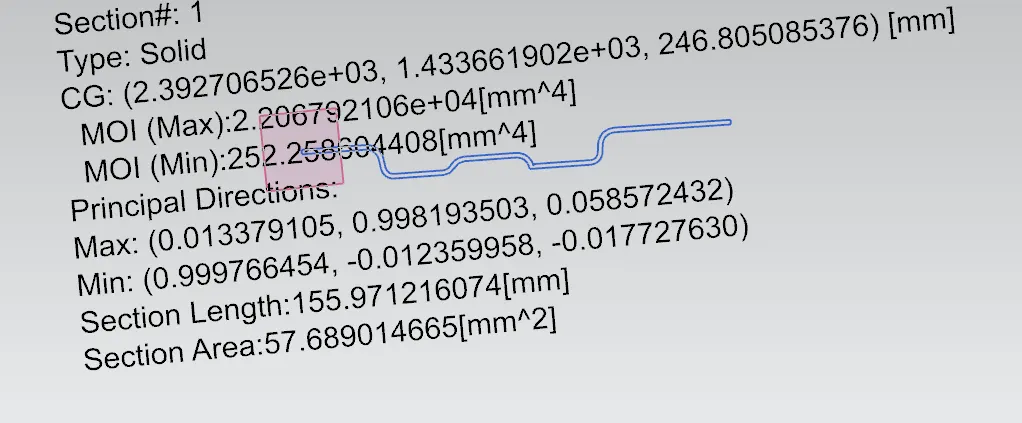
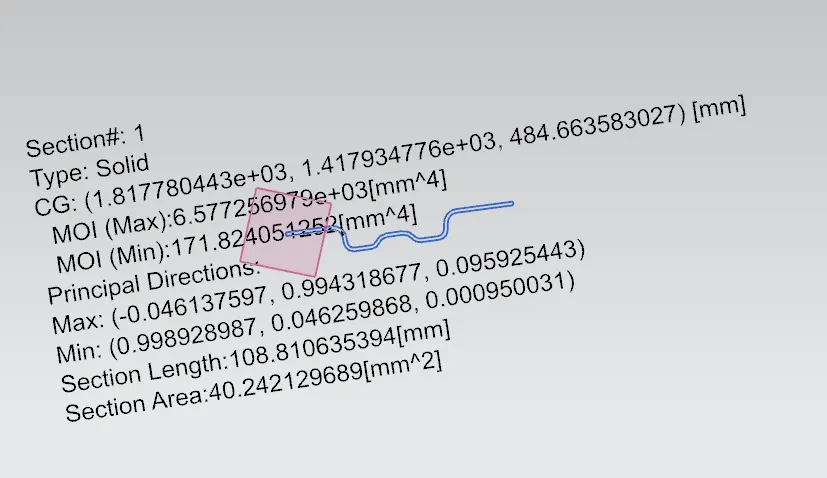
- Snow Load criteria study is used to check the durability of the roof to withstand the snow fall on the roof and reflex it is original shape without any permanent deformation after load being removed.
CALCULATIONS:

From above calculations the value of 'Q' obtained is always greater than 3.1
CONCLUSION:
- The Roof Design was successfully finished with siemens NX in accordance with the provided master sections. The Bow Roof Rail positions adhere to the specified criteria. Every component's manufacturability is guaranteed via section and draft analysis.
NOTE: File size is more than 20mb, so link is given below:
https://drive.google.com/file/d/1vDNxofs8LxOVQXLwtJlVv9ZUm0rGEBHF/view?usp=sharing