Hood design-Week 2
HOOD DESIGN
AIM:-
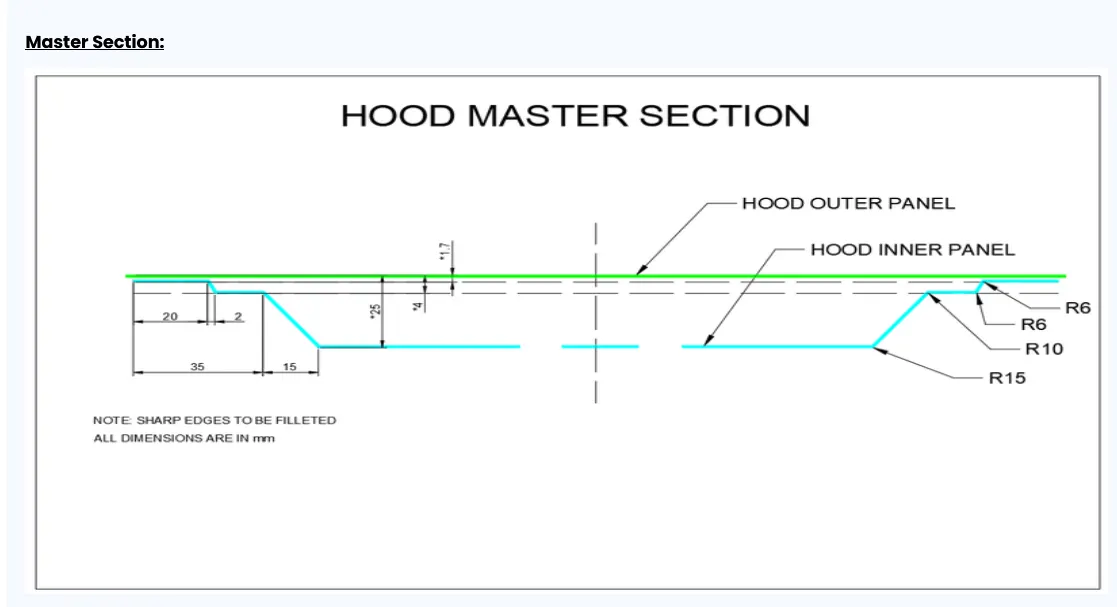
To design the hood of the car by using master section and standard procedure which is used in OEM manufacturing.
GIVEN MASTER SECTION:-
INTRODUCTION:-
HOOD :-
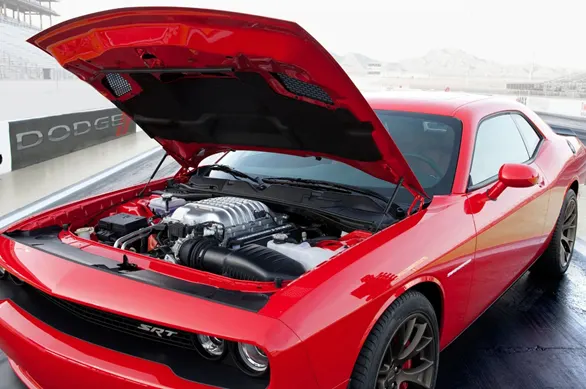
- The section that is positioned over the engine compartment called the hood. The hood design not only improves the appearance of the automobile, but it also improves the car's aerodynamics and appropriate design, ensuring passenger safety.
- The hood is used to access the engine, radiator, battery and other parts of the car for maintenance and serviceability.
- Designers have been modifying the hood design over time to reduce the risk of injury to pedestrians who collide with the hood in the event of an accident. Therefore, it relies on the hood's material, design and construction.

DESIGN METHODOLOGY:-
Car Hood has the following components:-
- Outer Panel
- Inner Panel
- Hinge & Striker
- Reinforcement
- Hood Support
- Mastic's
The following Sheet Metal Operations have been used to design the Hood:-
- Emboss
- Hemming
- Deep Drawing
- Pirecing
Car Hood components:-
- Outer Panel:-
- The outer panel of the hood plays the major role in giving the car a very nice aesthetic proportion. In order to fulfill the aesthetic requirement and ensure that the outer panel is flawlessly produced. In order to ensure that the outcome of sheet metal processes is visible on the outer panel and does not diminish the aesthetic value, those activities must strictly avoided when creating the outer panel. Therefore, rather than joining the outer and inner panel together using welding techniques,the hemming method is implemented.
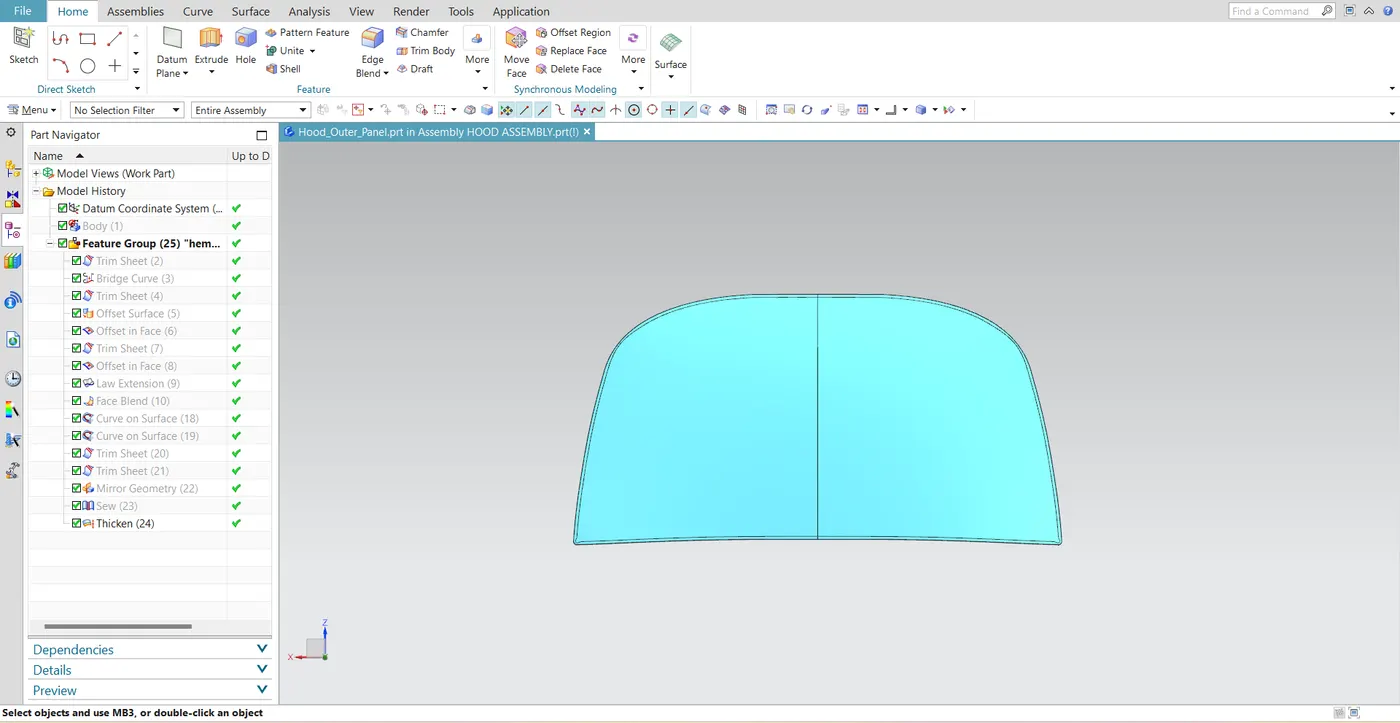
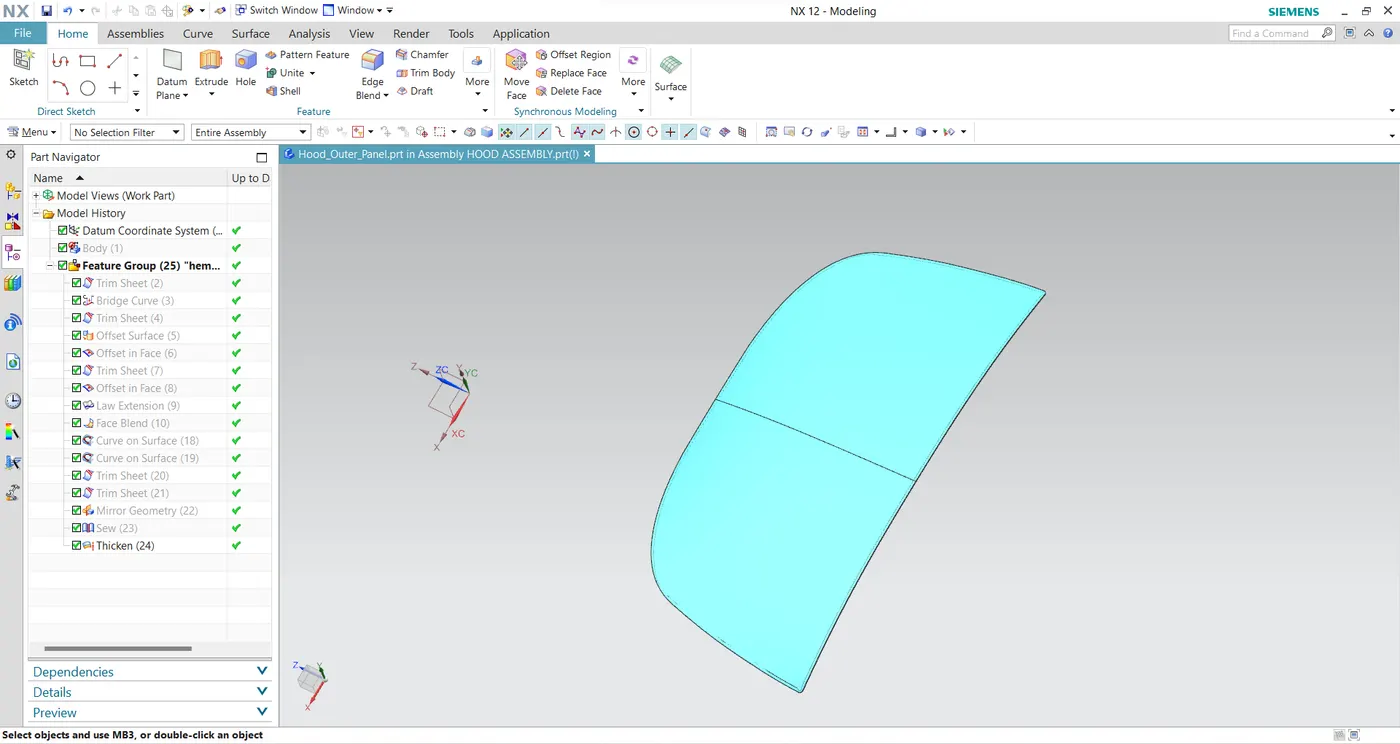
- By considering the given outer panel thickness(0.75mm) and using the outer panel styling surface outer panel has been created, shown below.
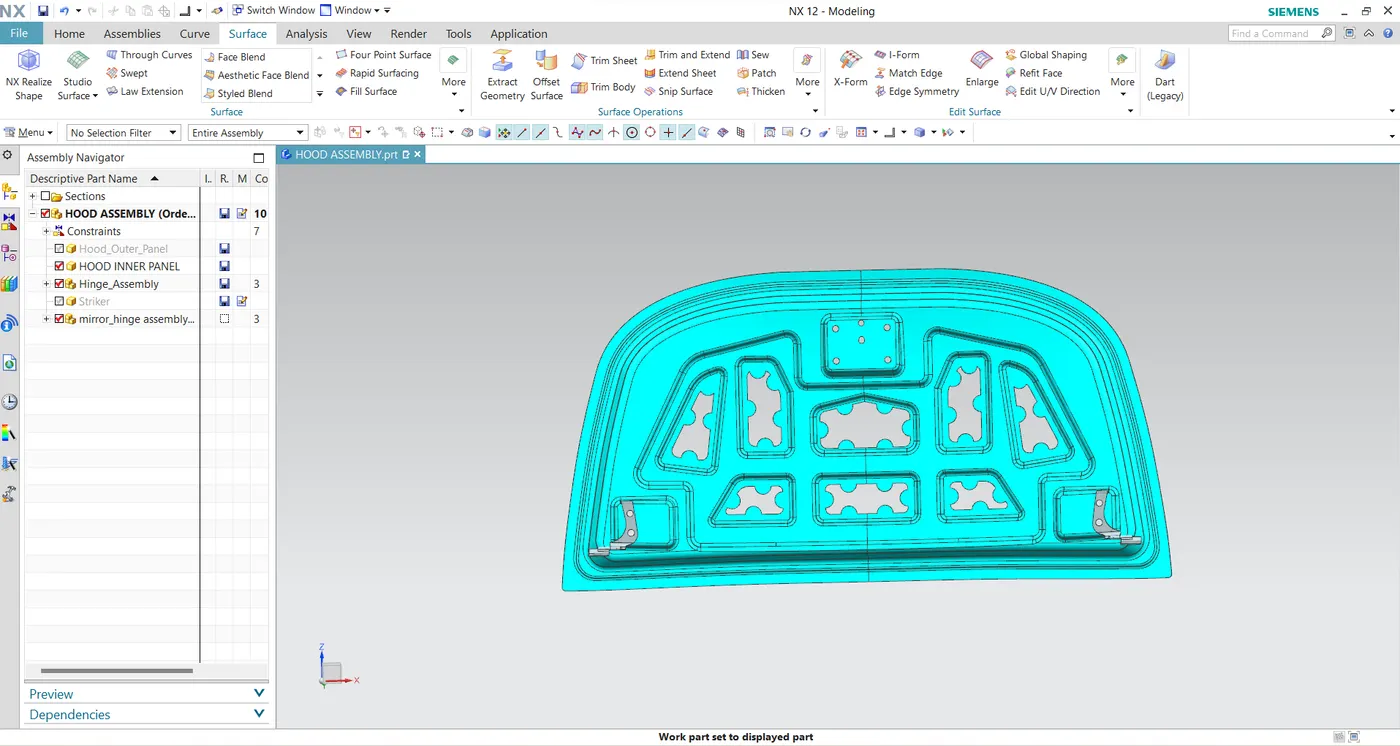
- INNER PANEL:-
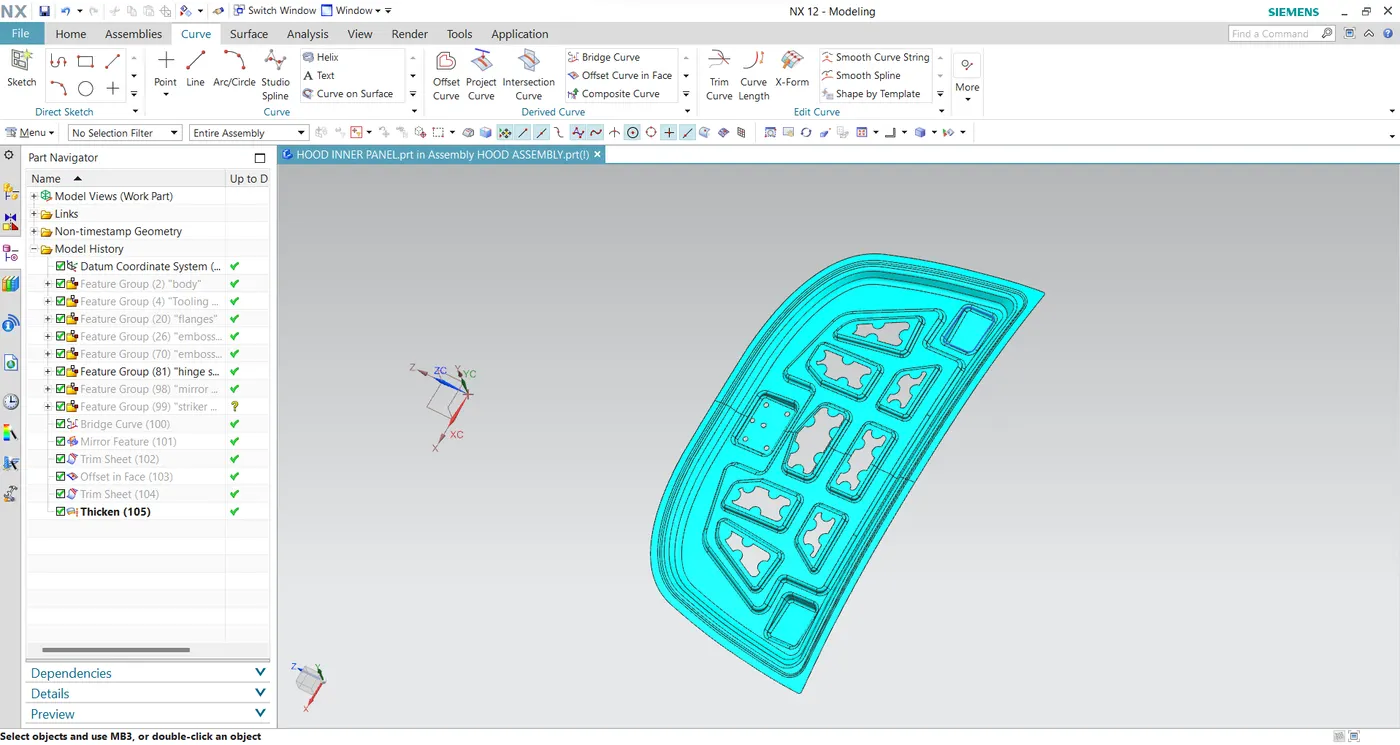
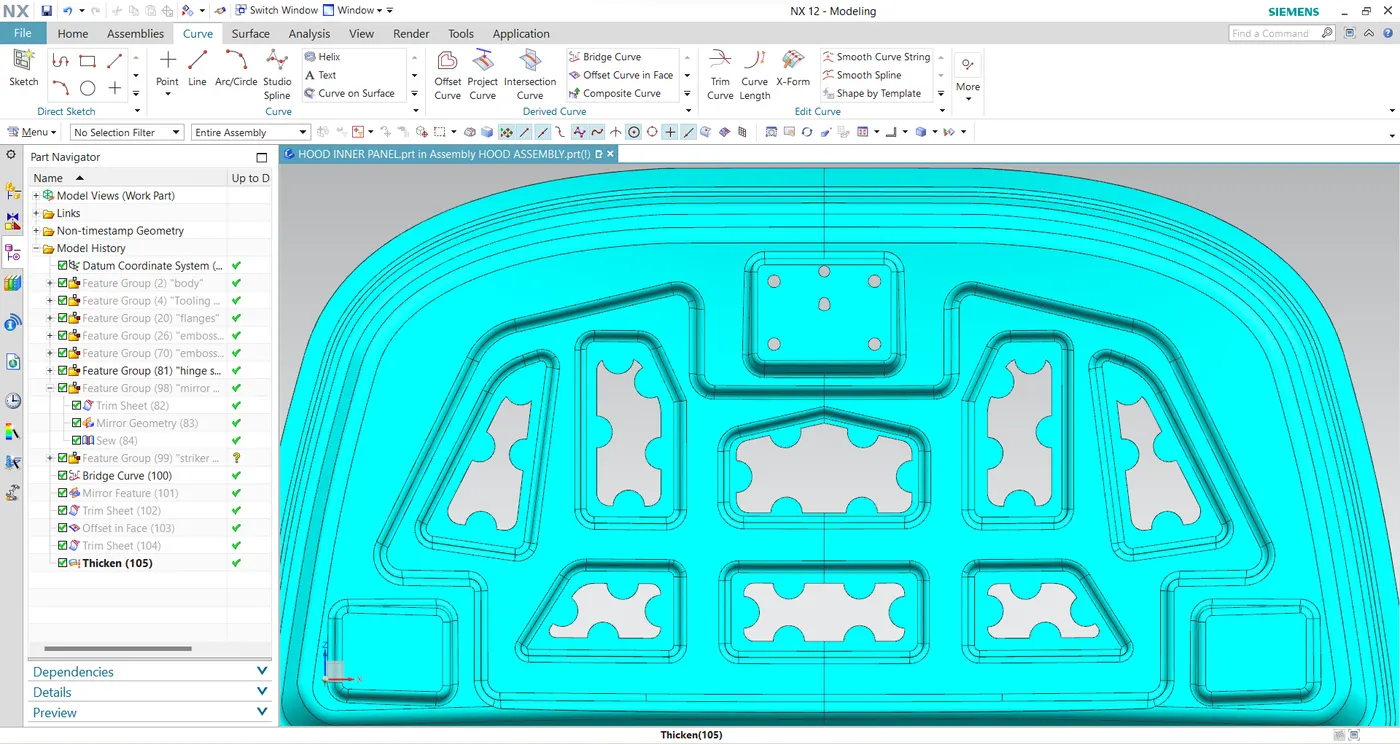
- It is main component that maintains the hood's rigidity and is used to directing impact as far out of the hood as feasible in the event of a collision. It is possible to accomplish this using well-designed interior panels and strategically placed embossments.
- In order to meet criteria for pedestrian and passenger safety, numerous design modifications and studies have been made to the inner panel.
- The necessary holes are drilled in this inner panel so that hood can be moved from one station to another and fixed in placed by using holes as budding holes. The mastic points and embosses are also present on the inner panel.
- Given the thickness of the inner panel, which is 0.75mm, and the offset data provided for the outer panel's style surface, the inner panel was constructed with the embosses and mastic points shown below.
- REINFORCEMENTS:-
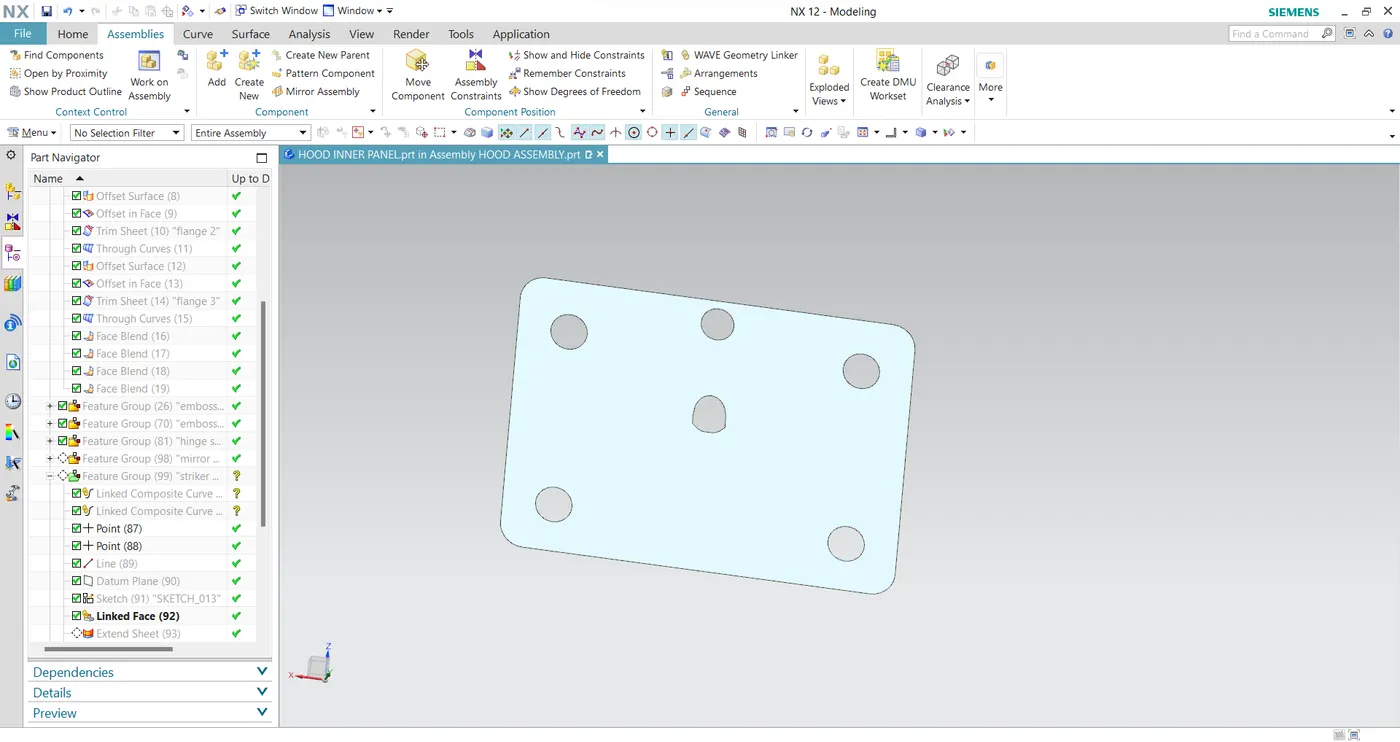
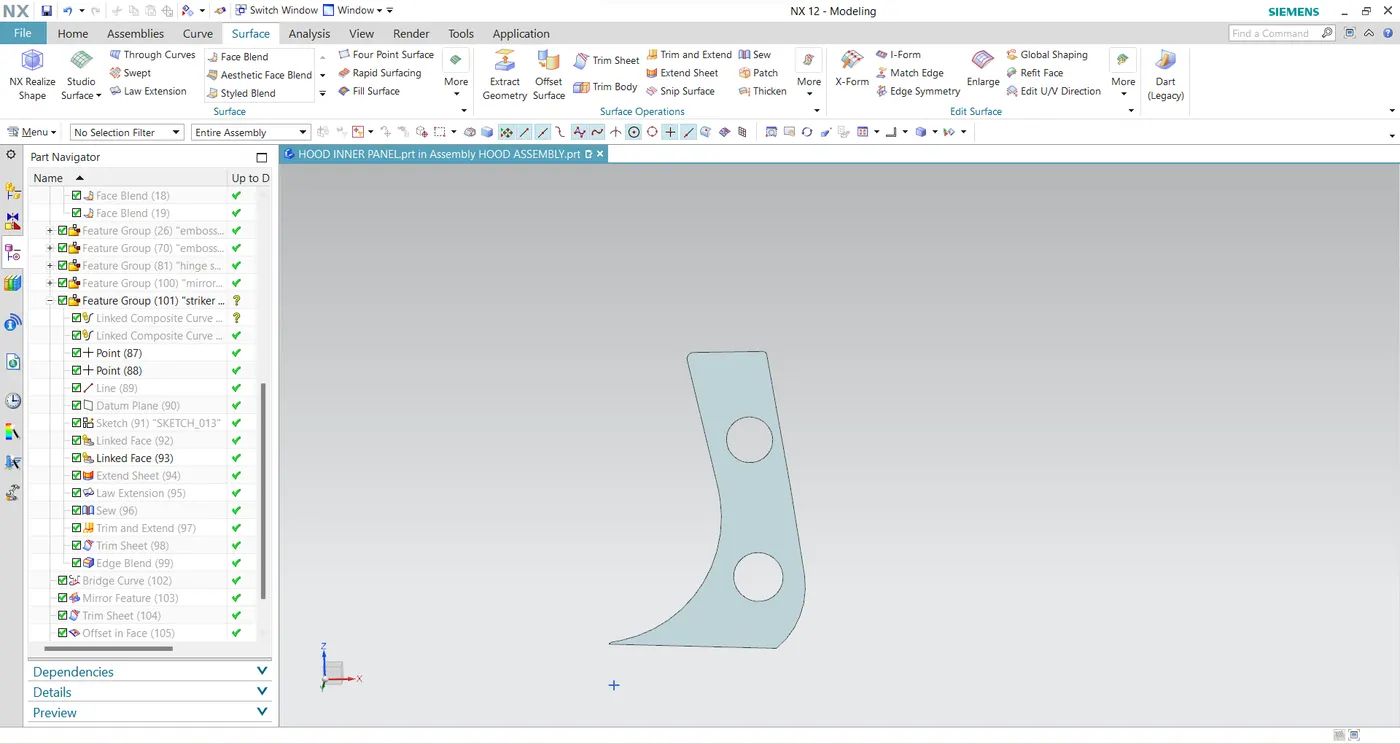
- On the bottom side of the inner panel, the Striker and Hinges are fastened. It can be done directly, then increased stress can act at that specific inner panel region, which could lead to deformation of the inner panel at that location. so the reinforcement enters and is positioned between the hinge and the hood, and the striker and the hood. It can lessen distortion and reinforce the inner panel in that specific area.
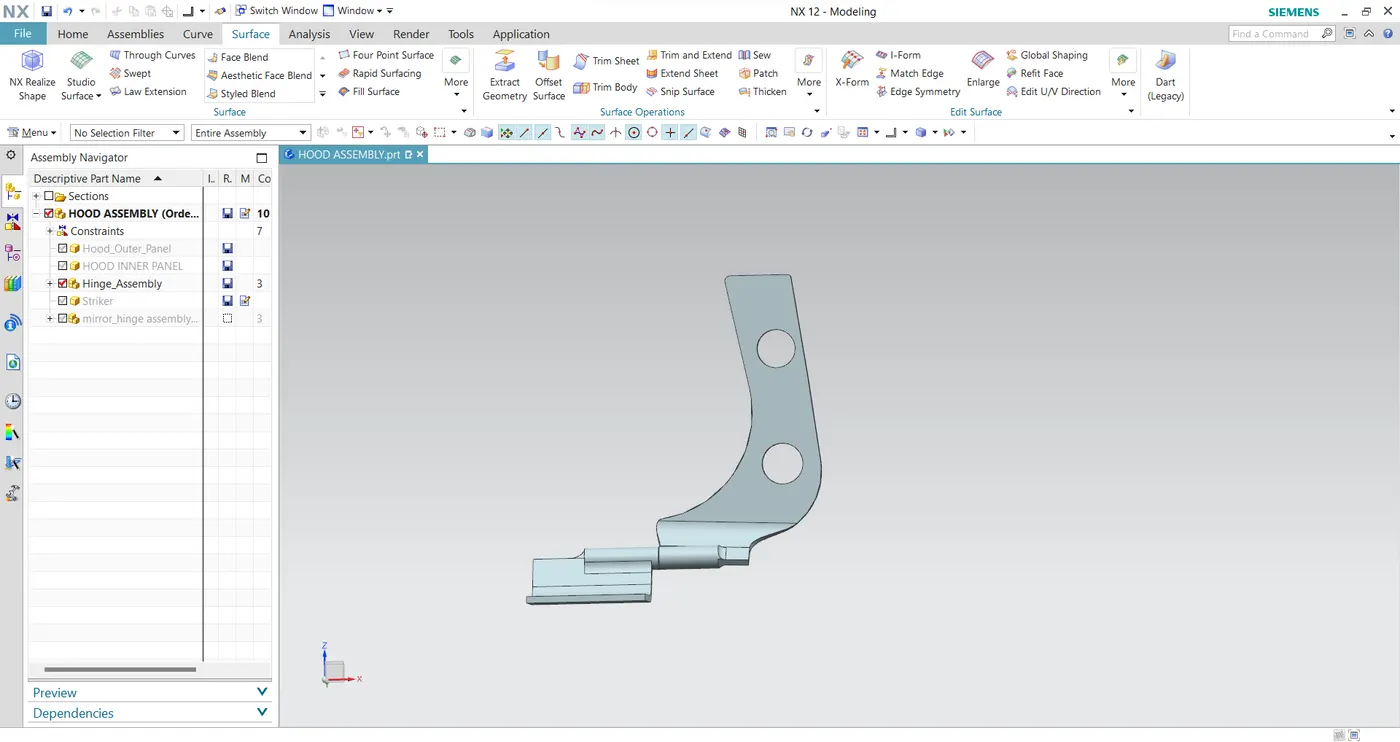
- Striker-Latch and Hinge Asm:-
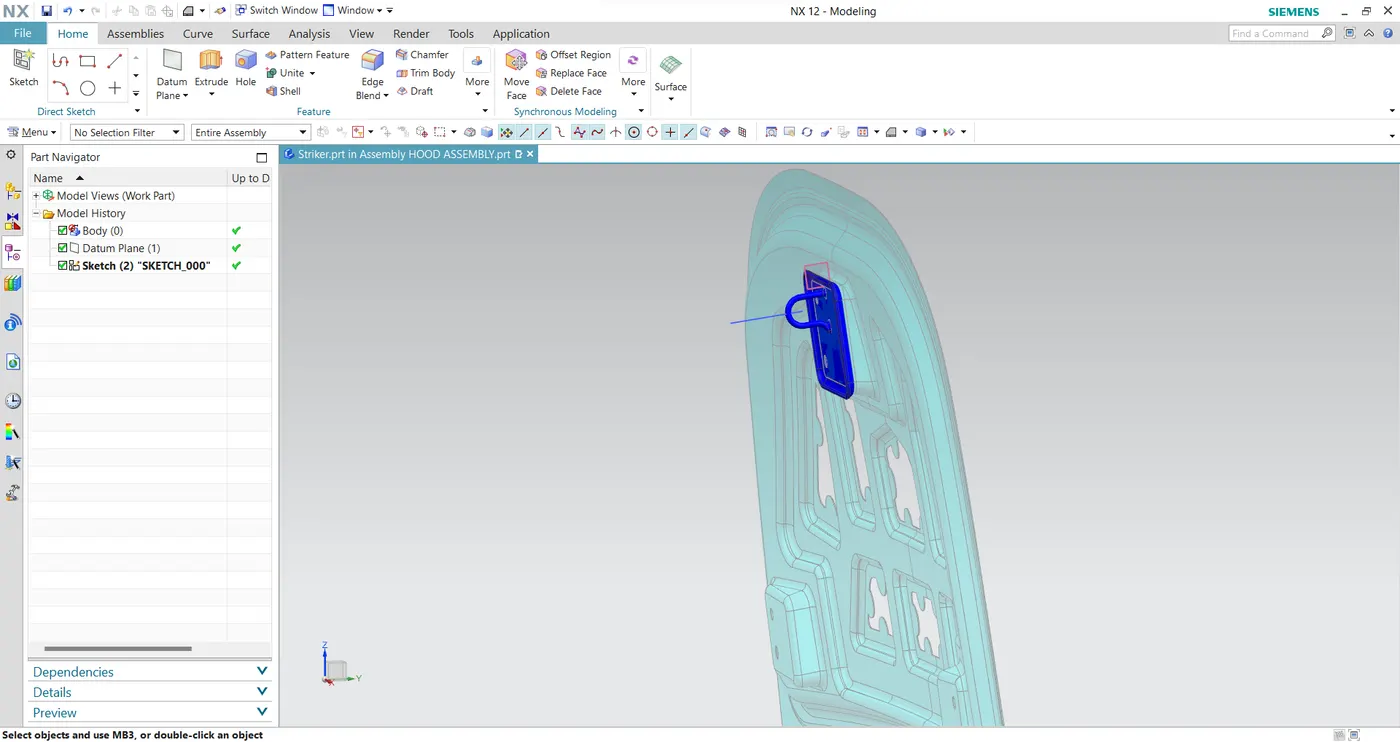
- Striker-Latch:-
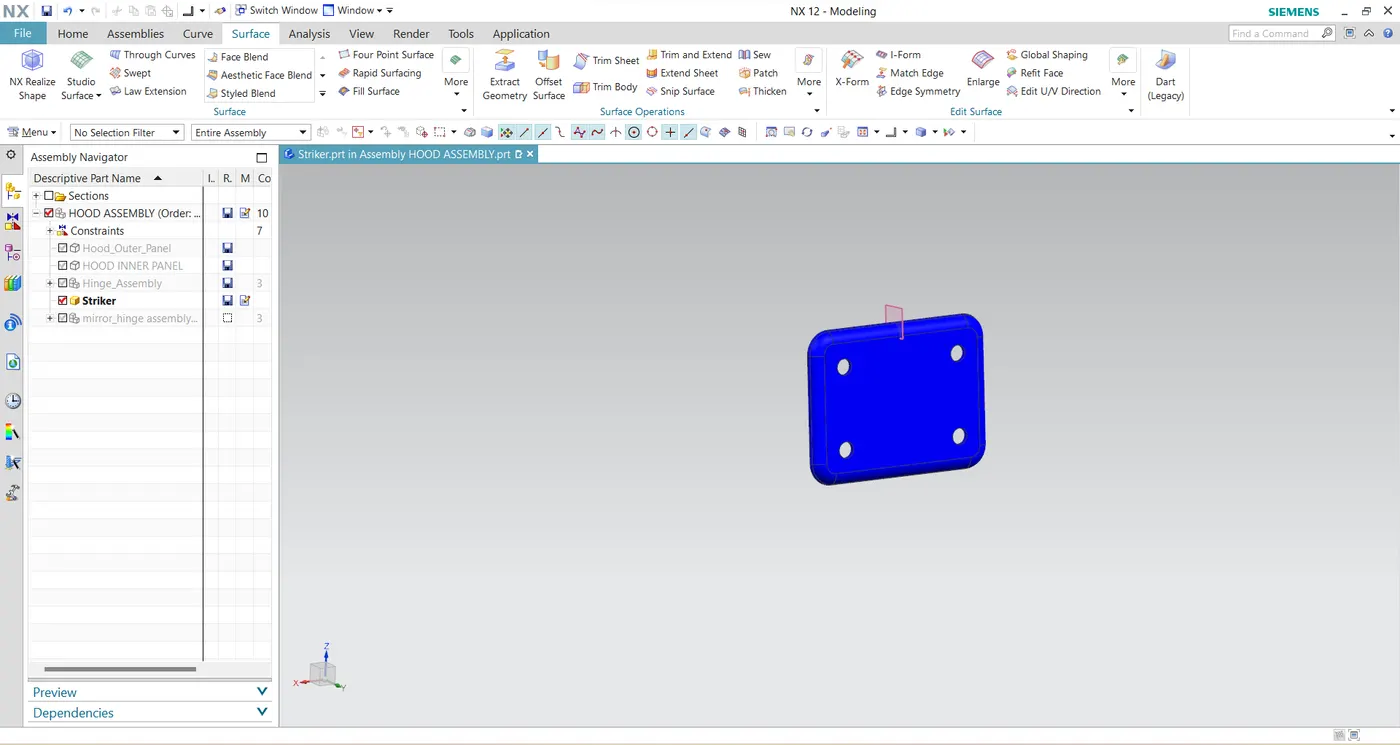
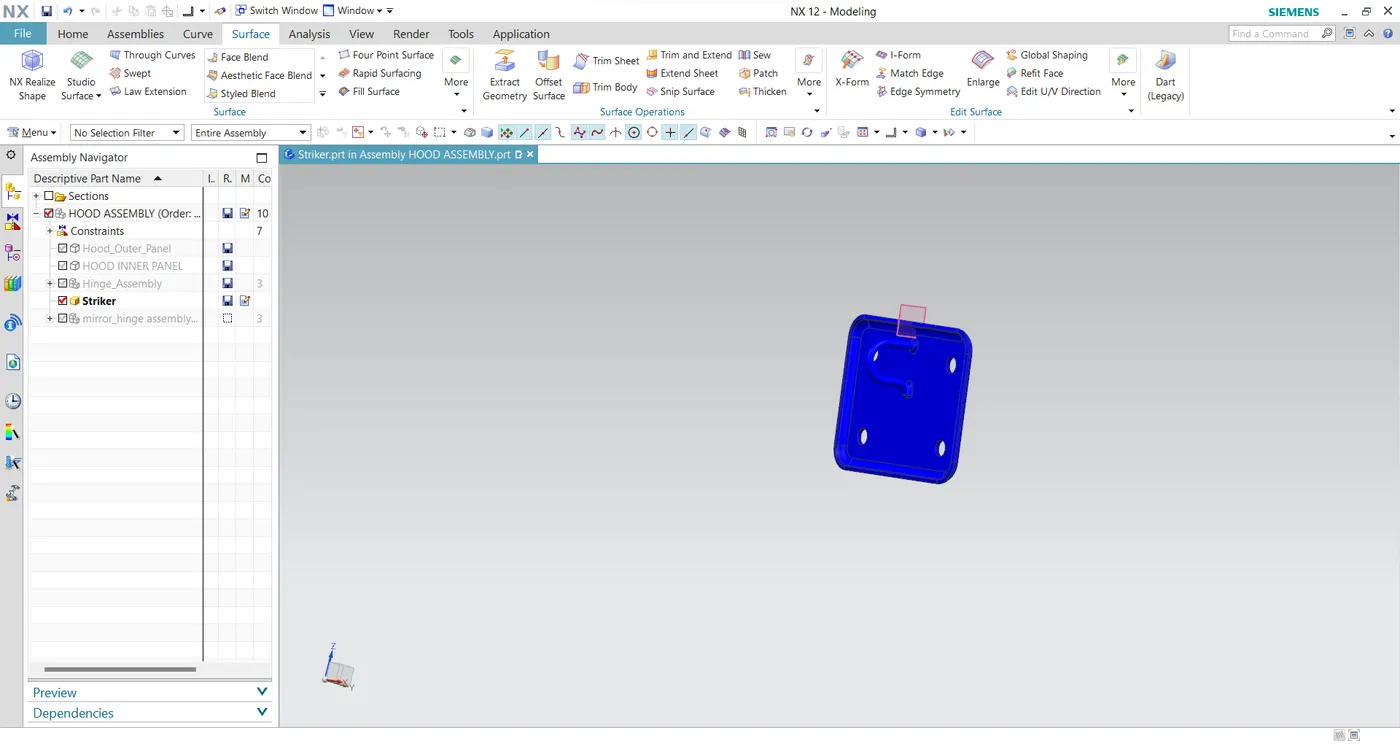
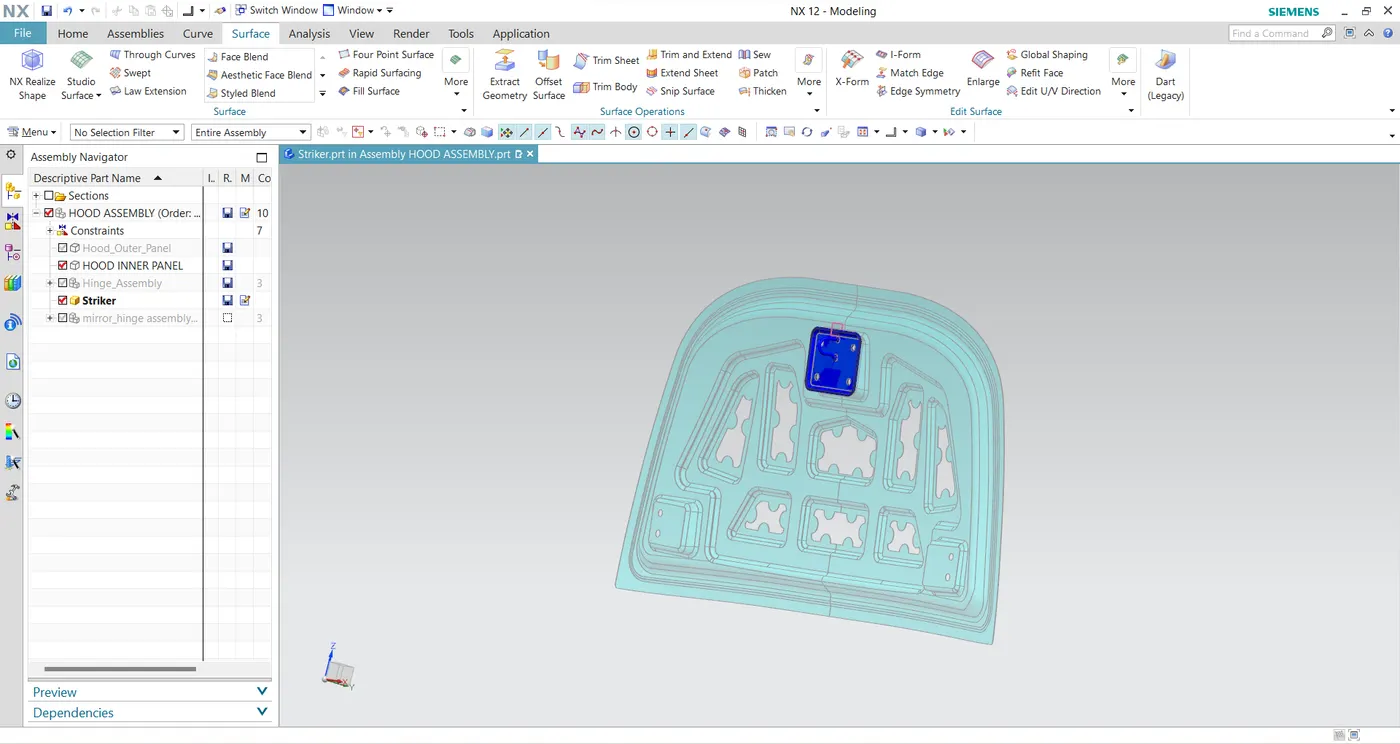
- Striker is the part which is used to hold the hood with the engine compartment by using the latch which it is attached in the engine compartment, when the hood not require to open up. The striker is attached to the bottom of the inner panel and it hits the latch and locked with it, when the hood is dropped down.
- Ther is lever which is provided inside the cabin to the driver to release the latch pressure. Once it can be done, the hood will opens up in a inch, then we can able to open the hood more.
- Hinge Assembly:-
- It is used to fix the hood to the engine comparment.
- A hinge is essential to any component that needs to open and close along an axis. It is made up of two basic elements that are assembled on a single axis: the engine compartment side hinge and the hood side hinge.
- The hinge assembly is fastened to both the engine compartment and the hood's outer ends.
- Position of Striker and Hinge Assembly:-
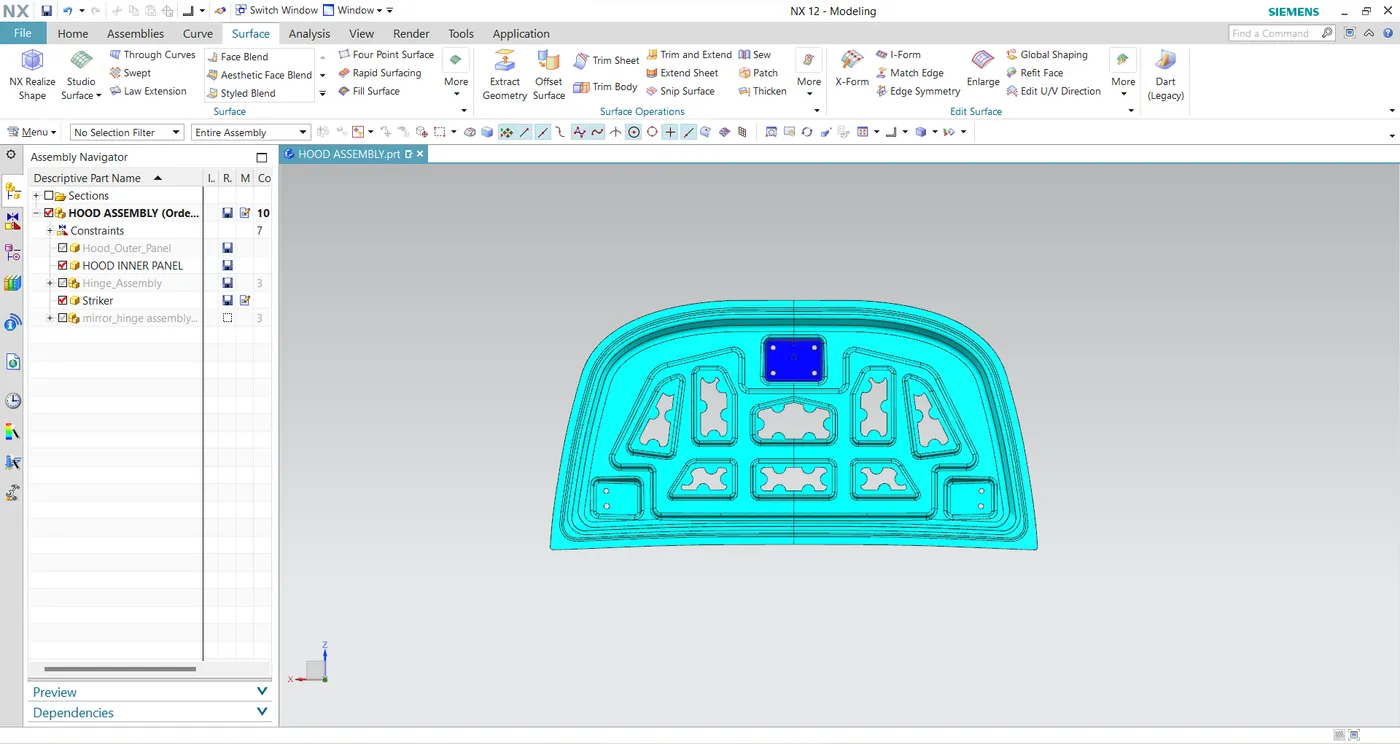
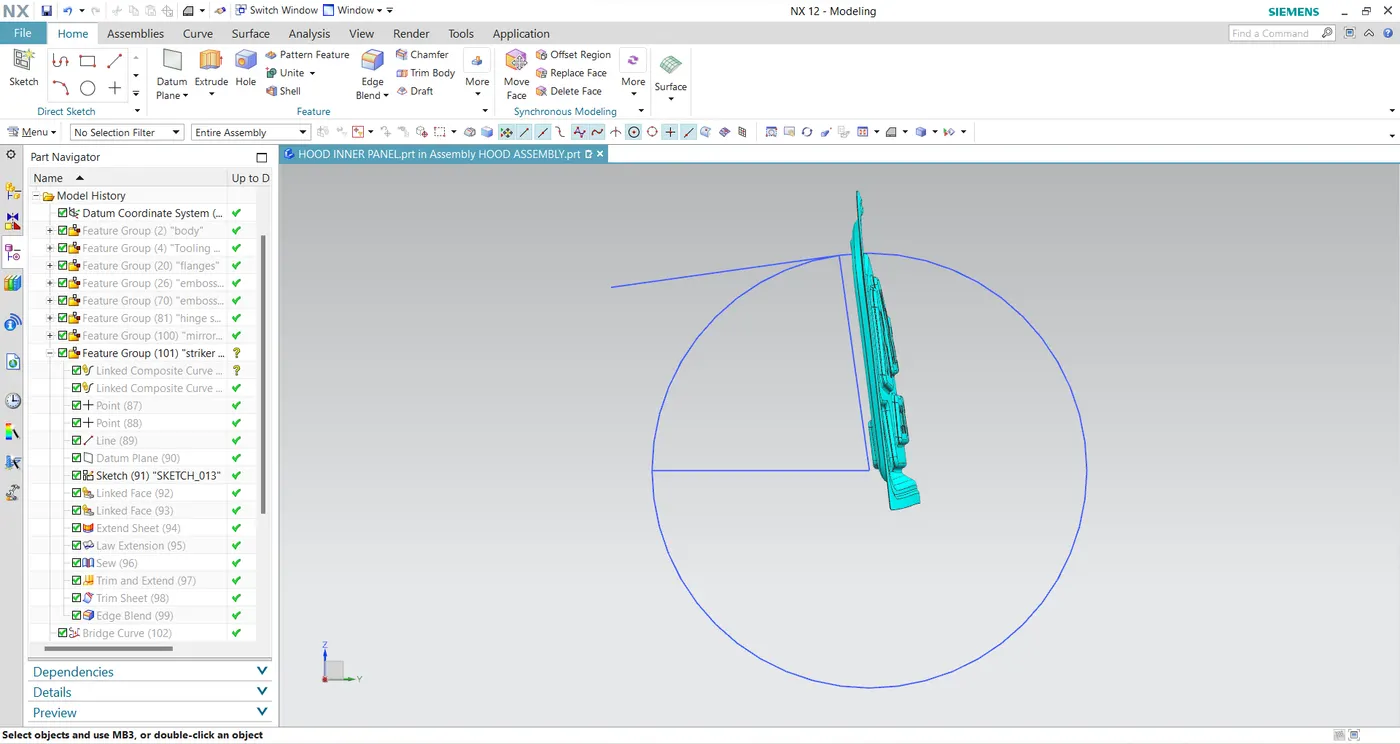
The attachment of striker to the inner panel of the hood is done by following the certain steps:
- For that, The hinge is initially firmly fastened or assembled through the hinge reinforcement to each of the inner panel's outward ends. The two hinges axis is then used to draw a line.
- A circle is created at the midpoint of that line and another line is created tangent to this circle and then the reference line has created within the circle with particular angle. After that, based on the required striker position the circle diameter and the hinge angle has been changed. Also an another line has been created parallel to the striker hook from the striking point of the striker.
- Then the assembled the both lines and striker to the inner panel through striker reinforcement using the assembly constraints.
- Hood Support:-
There are two types of hoods that are used in the automobile industry:
- Support Rod
- Gas Stay
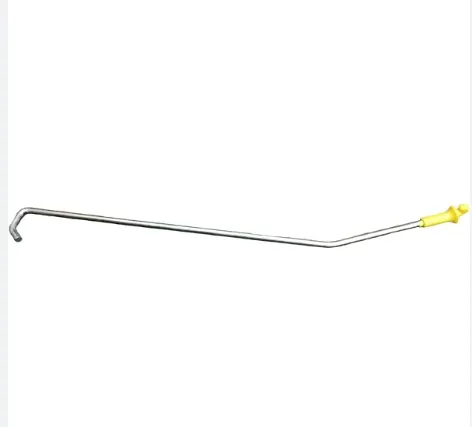
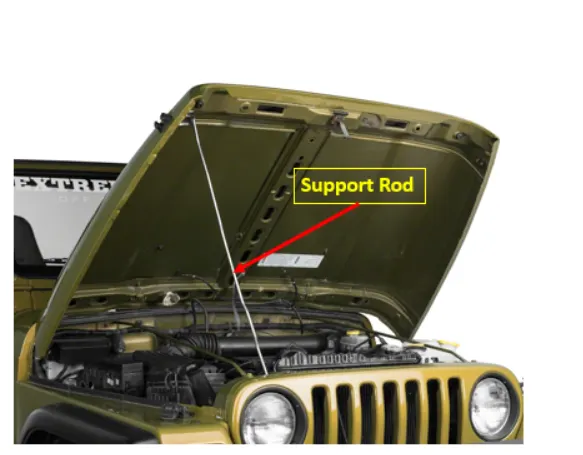
- Support Rod:- The main reason why most automakers utilize this instead of gas stays is that it's easier and less expensive. Using this procedure, we must manually raise the hood and secure the free end of the support rod to the provided spot within the engine compartment or hood. It works well with relatively small and light weight hoods.
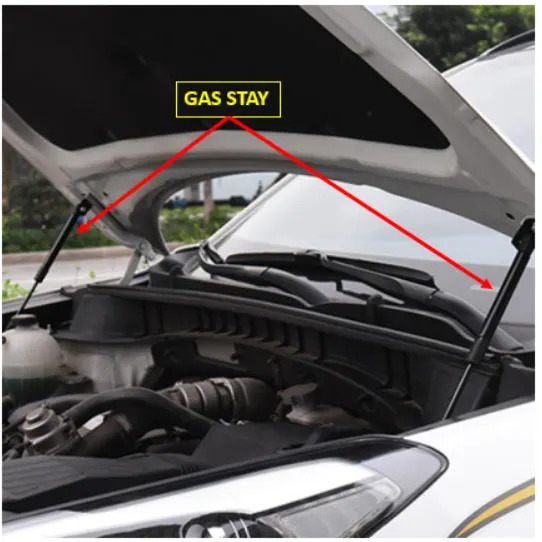
- Gas Stay:- In this method, the gas stay can raise the hood completely once we elevate it a little. the gas spring, which is located inside the gas stay, can accomplish this. This gas stay essentially makes the lifting procedure easier if the hood is longer and heavier.
- Sheet metal Operations:-
1. Hemming:-
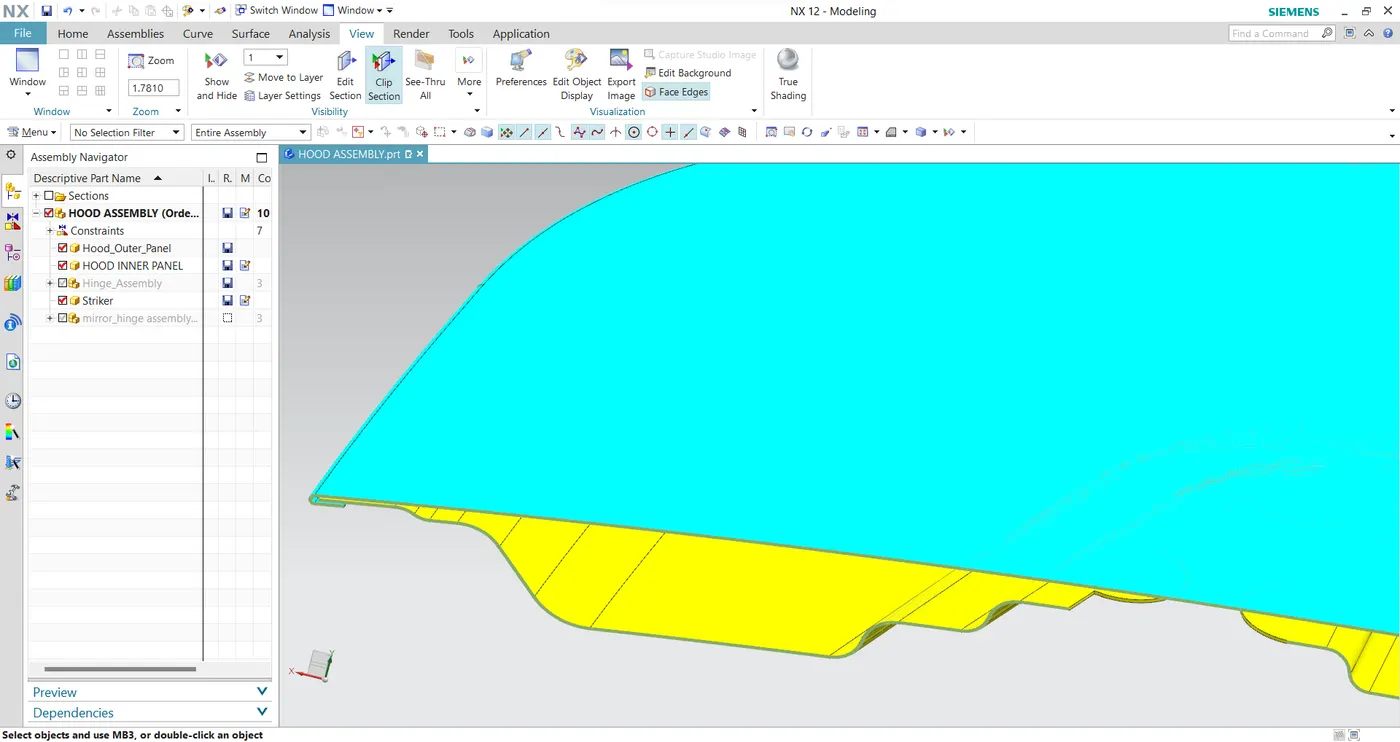
- The components are fitted together using hemming. One way to accomplish this is to fold the edges of one component over the other to secure it within. The roller is used to complete this action.
- Hoods, doors, boot lids of the automobile components are made by the hemming operation.
There are two types of hemming process are there:-
- Conventional die hemming:- This technique involves folding the sheet metal edge by its whole length using the hemming die.
- Roll hemming:- In this method, rollers are used to done the process and at the same time two or more rollers fold the sheet metal from the different location of the sheet metal edge to achieve the hemming which is close to accurate. Most of the automobile manufacturer are following the roll hemming due to its easier procedure when compare to the conventional die hemming.
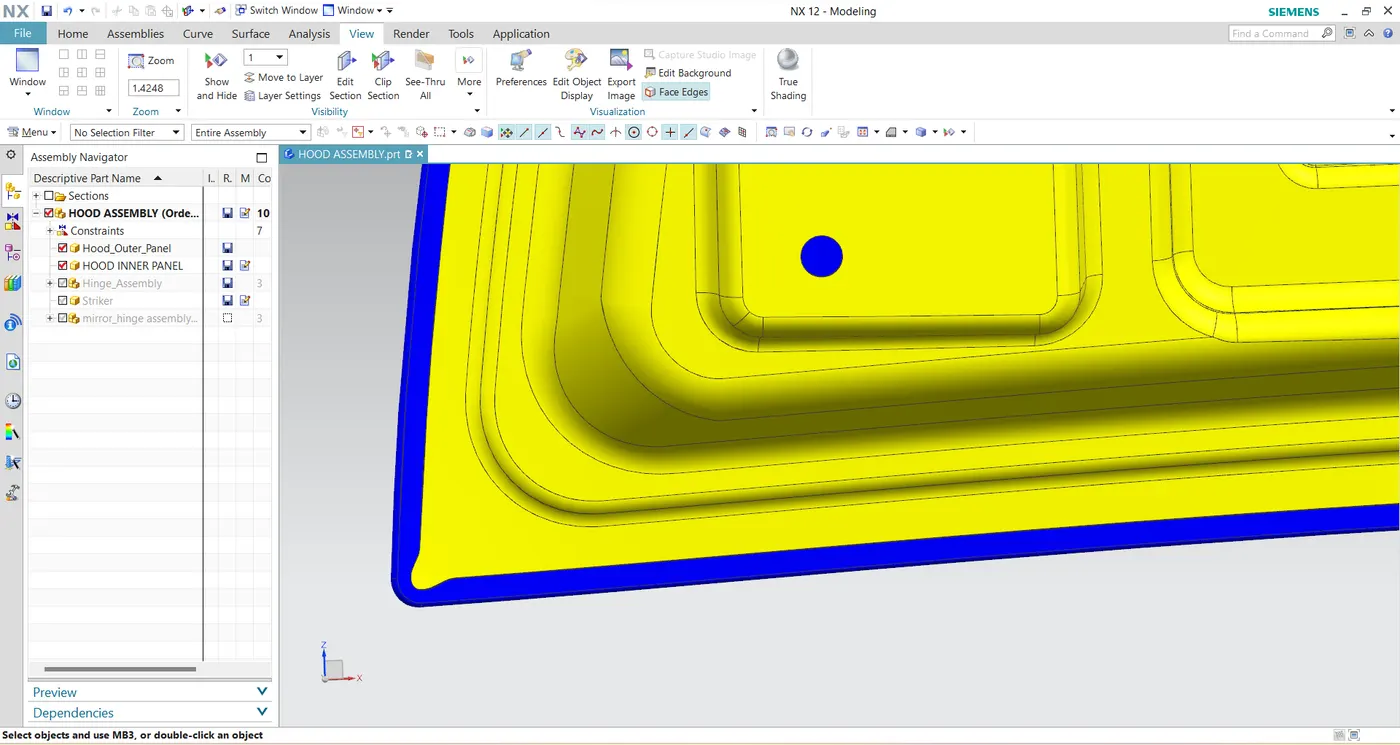
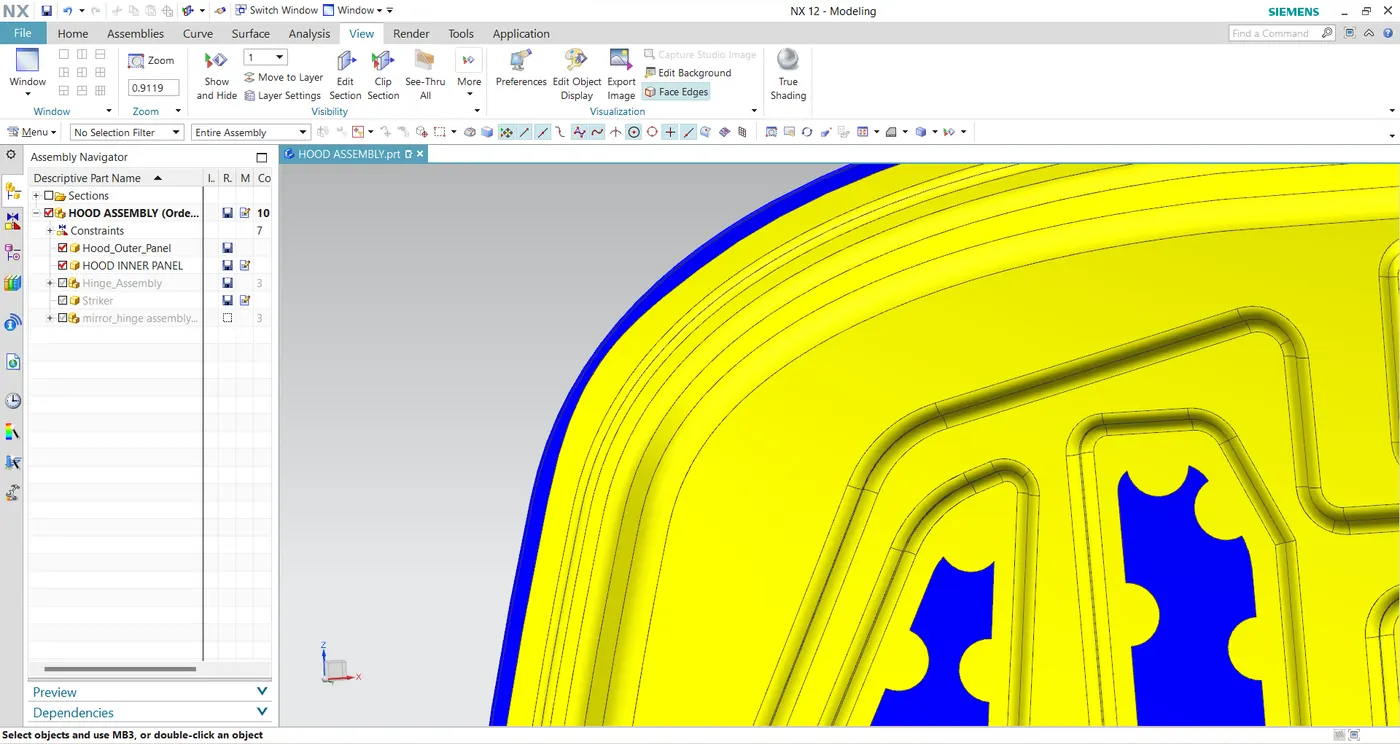
- In Hood, the outer panel is subjected to the hemming operation which means that the outer panel edges is folded and roll it back to the underneath of the inner panel. The corner of the outer panel edge has to be trimmed, because while hemming process the roller transfer pressure to the outer panel edge to fold it and roll it back, so that it may cause the problem that the sheet metal may break.
2. Deep Drawing:-
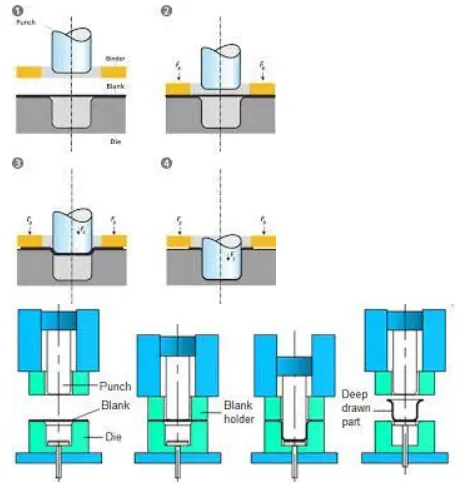
- Deep drawing is a sheet metal forming process in which a sheet metal blank is radially drawn into a forming die by the mechanical action of a punch.
- It is thus a shape transformation process with material retention.
- The process is considered "deep" drawing when the depth of the drawn part exceeds its diameter.
3. Embossing :-
- Stamping is similar to embossing. It involves using a forming tool to apply pressure to a flat sheet of metal in order to create projections on the sheet of metal.
- The inner panel of the hood is more embossed in the design of the hood to strengthen the panel. The embosses are made, or rather projected, onto the inner panel sheet metal, according to the design.
4. Piercing:-
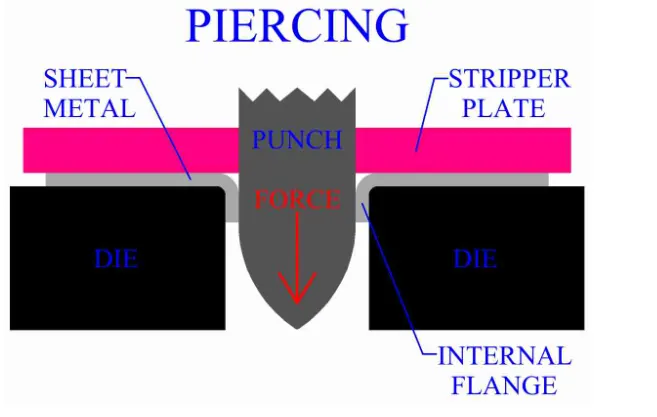
- Piercing is the kind of shearing process in which the unwanted material with a particular shapes are removed from the sheet metal by using the blanking punch and dies.
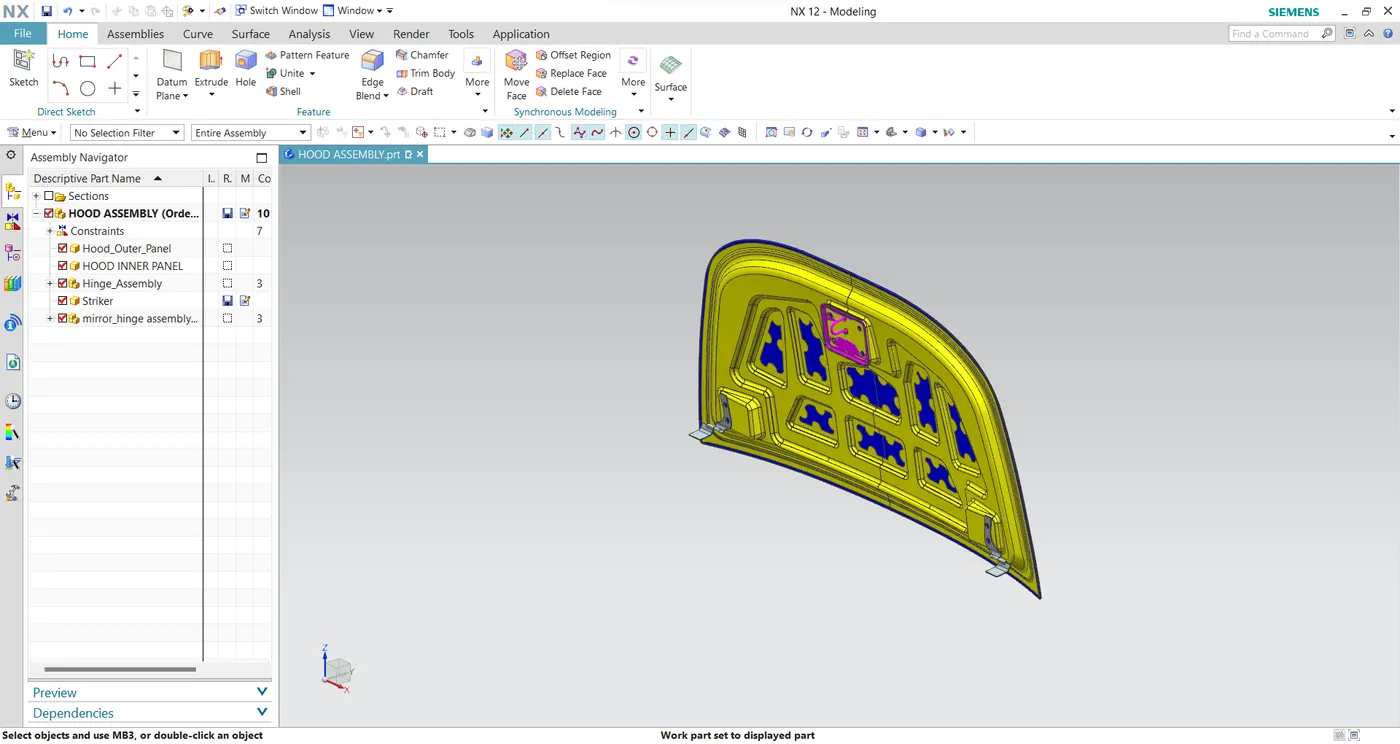
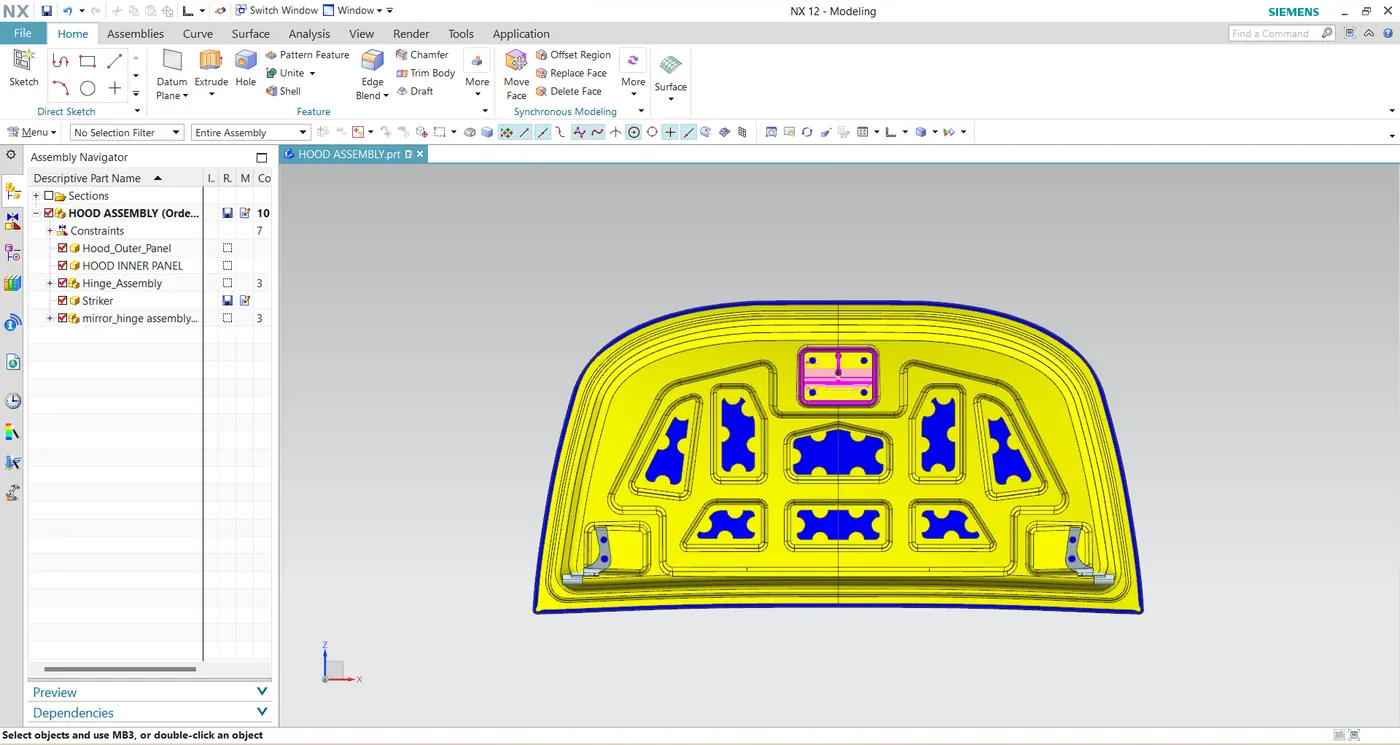
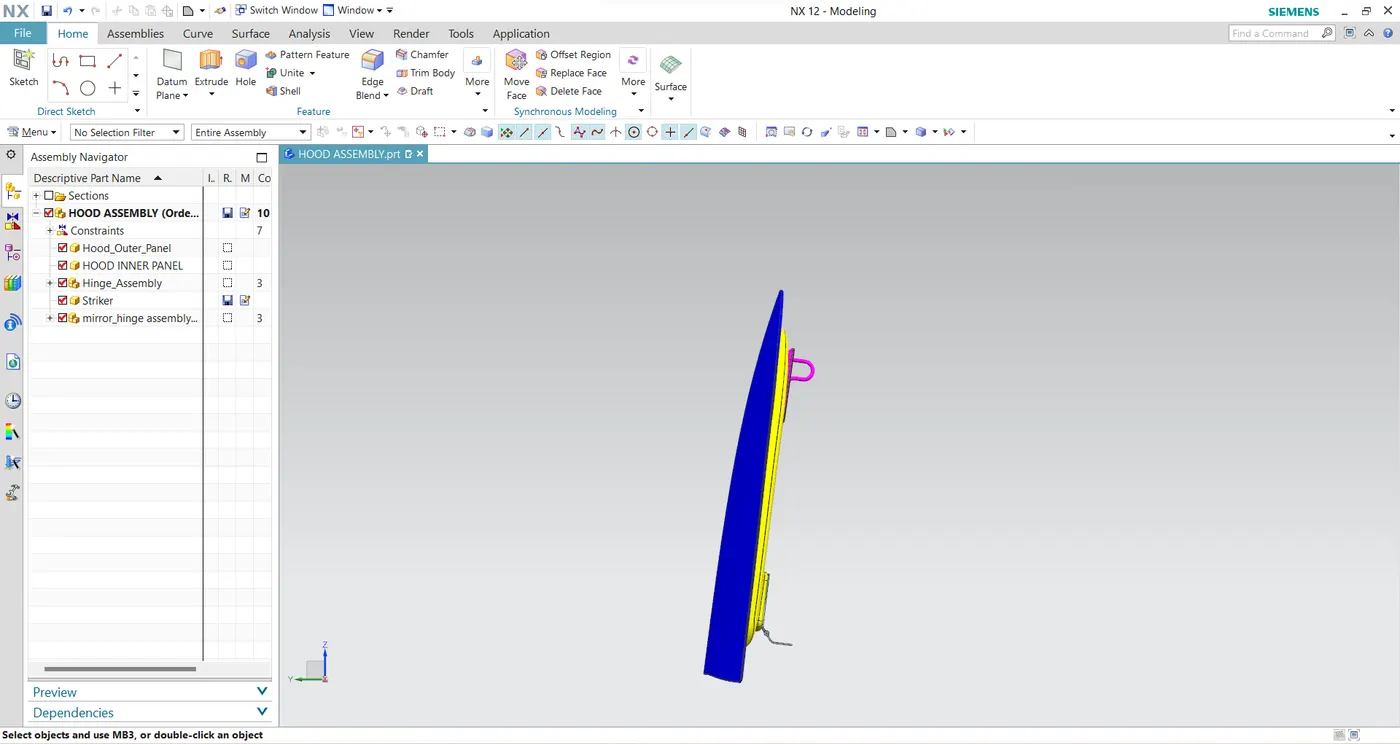
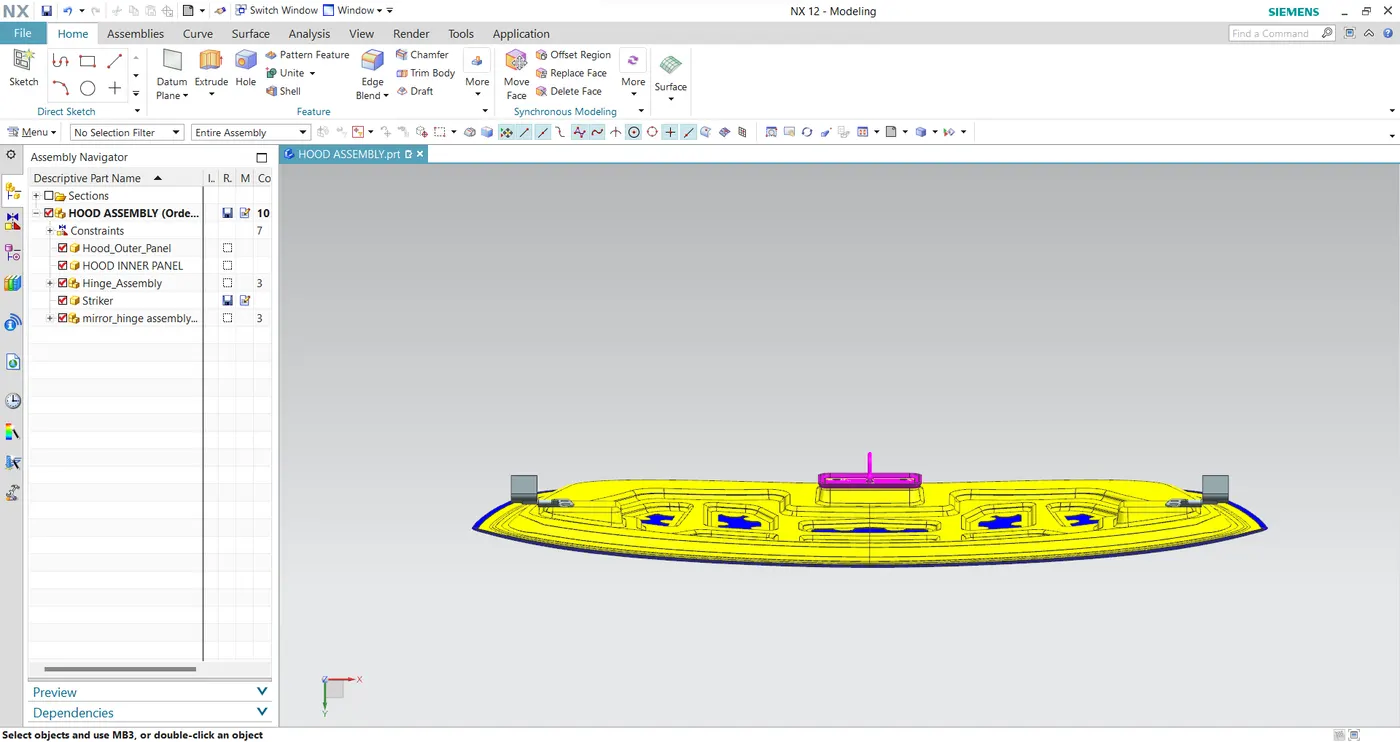
- HOOD ASSEMBLY VIEWS:-
- CONCLUSION:-
At last, the requirements, measurements, protocols and standards have all been taken into account when designing the hood. Through this design process, I have gained knowledge of Pedestrain safety and its ratings, hood mountings and sheet metal processes such as hemming, embossing, deep drawing and piercing.