Roof challenge
ROOF DESIGN AND ANALYSIS
Objective: To design the Car Roof according to the parameters with their essential components & strength and desired look.
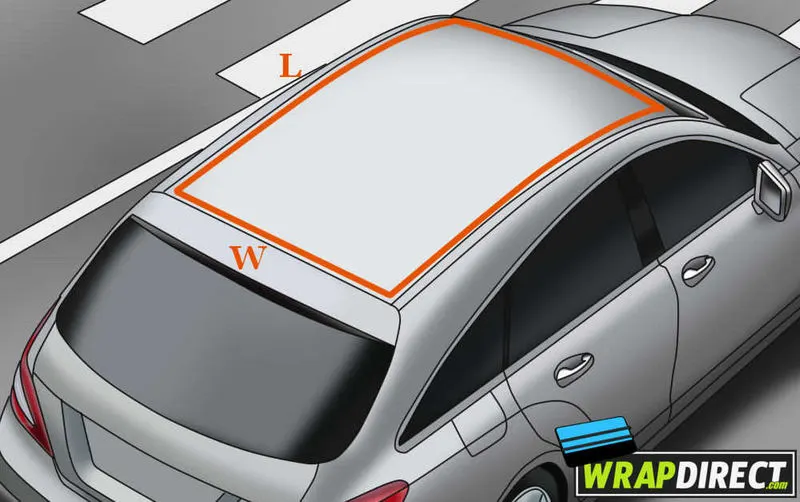
Main Criteria for roof design:
- Visibility criteria
- Draft analysis per component
- Head clearance
- Heat distortion and snow load criteria for roof design analysis
- Curvature study
Components
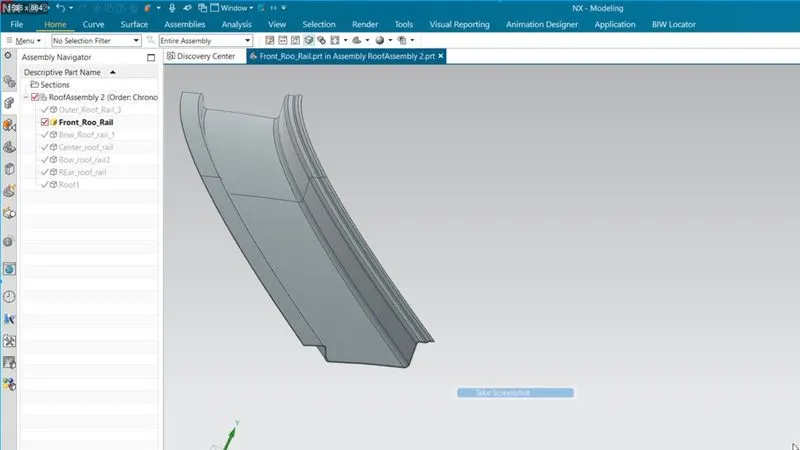
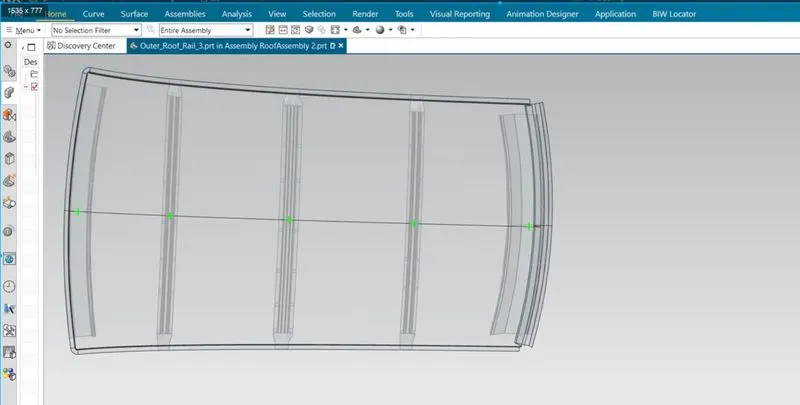
Front Roof Bow: this roof bow is used to join the front windshield glass and support & provide strength to desired the front end of the roof. This roof bow is joined with the roof from mastics.
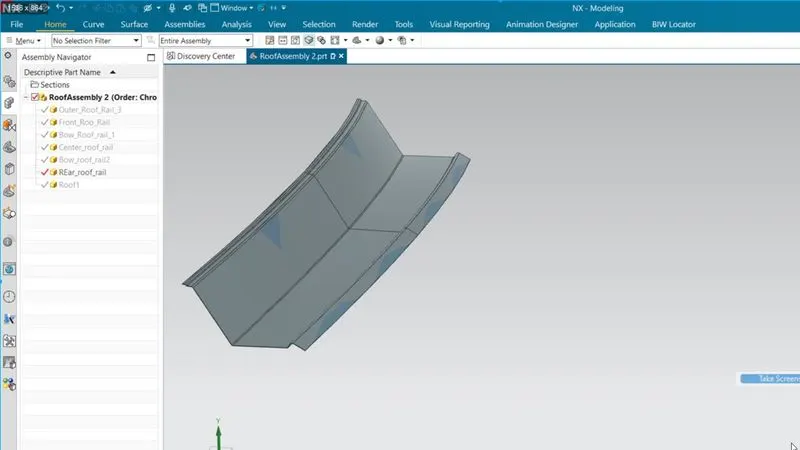
Rear Roof Bow: this bow roof is present on the very rear side of the roof where it provides strength and gives the place for hinging the Back door. For these roof rails, one end is joined by spot welding and another end is joined by mastic sealants.
Bow Roof 1 & Bow Roof 2: These one bow roof is present after the front roof rail and before the Back roof rails and provides strength to the roof to avoid any damage to the roof surface from outside accidental hit and this is also joined by the mastic sealants to the roof surface.
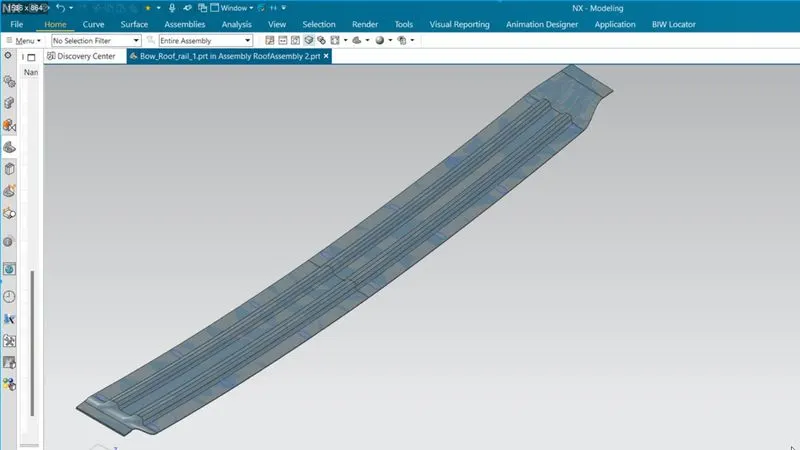
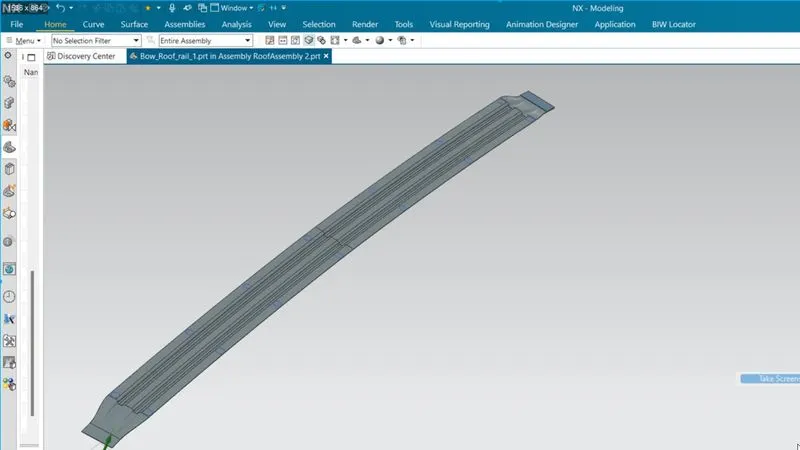
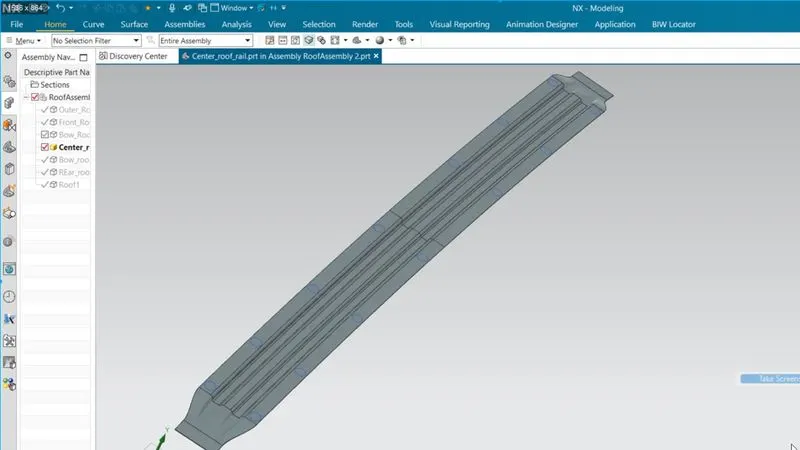
Center Bow Roof: this bow roof is also the same as the bow roof rail 1 &2 but its dimension is some larger than the above bow roof rail 1 & 2 because the maximum deflection will occur at the mid of the roof so it has to provide more strength to the roof and place mid of roof. this bow roof is also joined by mastic sealants from the roof.
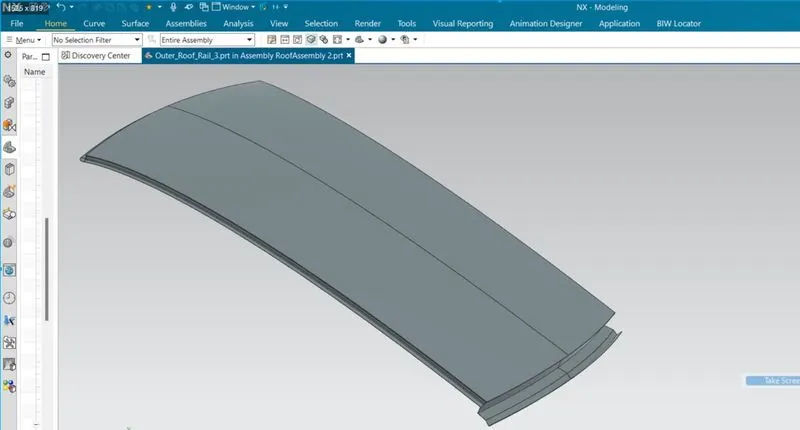
Outer Roof Rail: this roof rail is the outermost surface of the roof and is directly visible from the outside of the car and all Roof rails are attached with mastic sealants to their respective place.
Assembly:
Section Inertia and section modulus analysis for different Components:
Front Roof Rail Inertia Analysis:
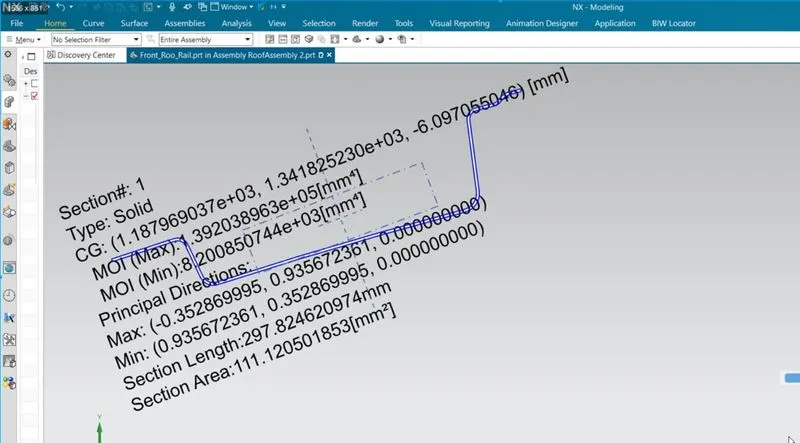
Section modulus of FRR = Imin/y
s = 8200.8507/(31.25/2) = 524.85 (mm^3)
REAR Roof Rail Inertia Analysis:
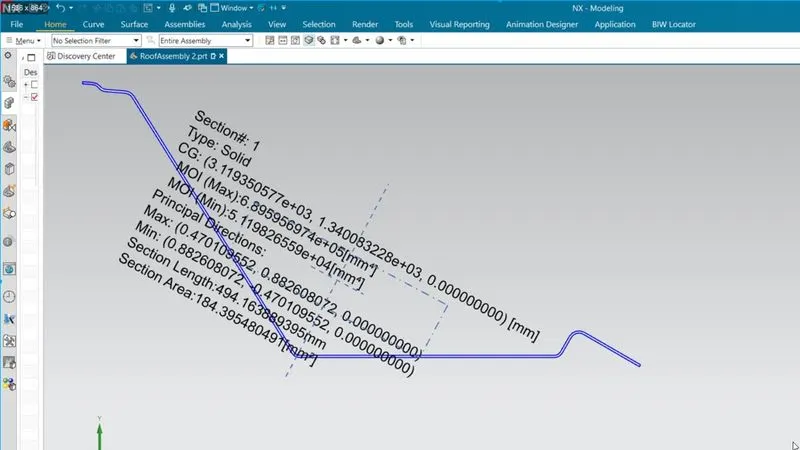
Section modulus of RRR = Imin/y
s = 51198.26/(83.32/2) = 1228.95 mm^3
Bow Roof Rail Inertia Analysis:
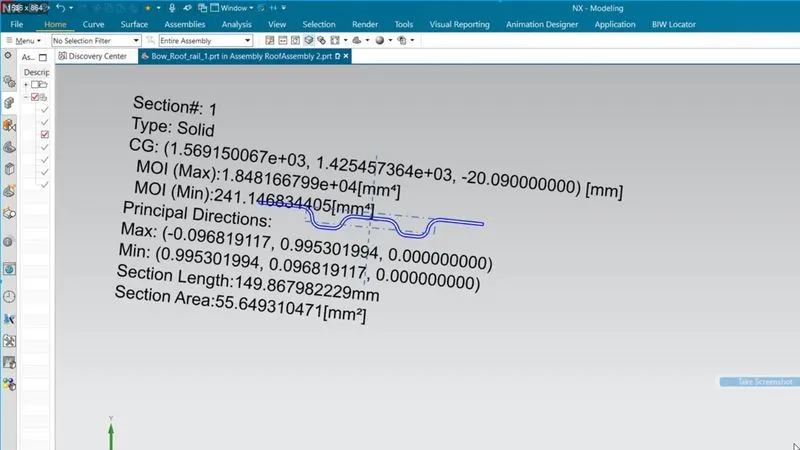
Section modulus of BRR = Imin/y
s = 241.146/(11.25/2) = 42.87 mm^3
Center Roof Rail Inertia Analysis:
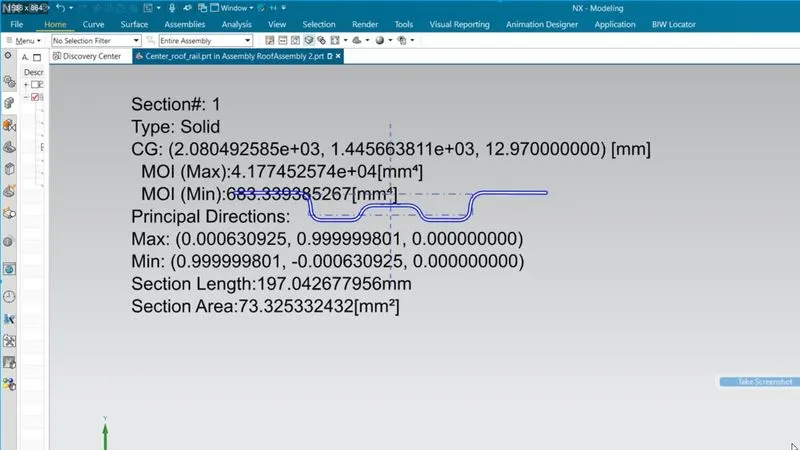
Section modulus of CRR = Imin/y
s = 683.339/(13.25/2) = 103.145 mm^3
------------------------------------------------------------------------------------------------------------------------
CURVATURE STUDY ON ROOF
Heat Distortion on the roof: In hot places or countries where the surrounding environment temperature is more than the normal temperature then the Roof metallic sheet will be expanded but the Roof sheet is hinged or locked surrounded by BIW so the sheet will deform by their desired design. So We will analyse that our Design Roof s Safe or not.
W = [1.73 x 10^(-3) x L] + [1.85 x 10^(-8) x (R^2)/t] + [ 1.10x10^(-3) x l] - 2.68
R = 2(Rx*Ry)/(Rx+Ry)
| HEAT | DISTORTION | CRITERIA | FOR | CALCULATION | ||||
| Roof Rails | Rx (mm) | Ry (mm) | R = 2(Rx*Ry)/(Rx+Ry) | L (total roof span length) mm | t (thickness) mm | l (distance b/w two bow roofs) mm | W |
Result status ( W< 2.7) |
| FR- Bow Roof 1 | 5735.35 | 2256.7 | 3238.96 | 2031.78 | 0.75 | 304.24 | 1.428 | Passed |
| Bow Roof1 - Center Bow | 5139.81 | 5518.44 | 5322.404 | 2031.78 | 0.75 | 437.14 | 1.71 | Passed |
| Center Bow Roof - Bow Roof 2 | 4081.696 | 10063.386 | 5807.768 | 2031.78 | 0.75 | 468.112 | 2.182 | Passed |
| Bow roof 2 - Rear Roof Rails | 3324.777 | 14296.318 | 5394.905 | 2031.78 | 0.75 | 377.877 | 1.968 | Passed |
Result of Heat distortion criteria = From the CAD model measurement of various parameters of components and calculation of the above formulas we have successfully proved that our designed Roof is safe from heat distortion and there is no deformation on the roof.
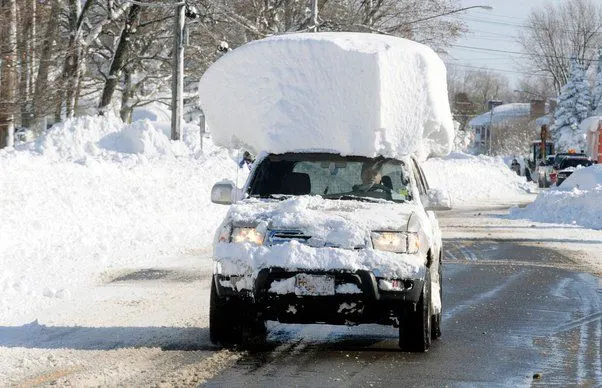
Snow Load distortion on the roof: In cooled places or countries on the north pole side where Snow falls in winter sessions where the surrounding environment temperature is very less than the normal temperature then the Roof metallic sheet will be collapse due to contraction but the Roof sheet is hinged or locked surrounded by BIW so the sheet will collapse by their desired design. So We will analyse that our Design Roof s Safe or not.
Qr = [Iy x t2] / [α x s x [(Rx + Ry)/2]2 x 10-8]
α = My x Lx2 x 10-12 , My = Y(Ly-Y)
s = L1/2 + L2/2
| SNOW | LOAD | CRITERIA | For | Calculation | ||||||||
| Roof Rails position | Rx (mm) | Ry (mm) | Lx (mm) | Ly (mm) | Y (mm) | S (mm) |
Iy (min) mm^4 |
My |
α (alpha) |
t (mm) |
Qr ≥ 3.1 |
Status |
| FR - BR1 | 4073.987 | 4724.582 | 393.268 | 1946.116 | 393.268 | 452.609 | 8200.851 | 610685.545 | 0.0944 | 0.75 | 215.75 | Passed |
| BR1 - CR | 3854.881 | 2402.072 | 511.95 | 1946.116 | 903.275 | 527.492 | 241.146 | 941972.455 | 0.246 | 0.75 | 10.68 | passed |
| CR - BR2 | 5862.00 | 4222.585 | 543.035 | 1946.116 | 1443.496 | 524.202 | 683.339 | 725530.342 | 0.213 | 0.75 | 13.47 | passed |
Result of Snow Load criteria = From the CAD model measurement of various parameters of components and calculation of the above formulas we have successfully proved that our designed Roof is safe from Snow Load distortion and there is no deformation on the roof by Roof.
-----------------------------------------------------------------------------------------------------------------------------
DRAFT ANALYSIS OF ALL SUPPORTED STRUCTURES
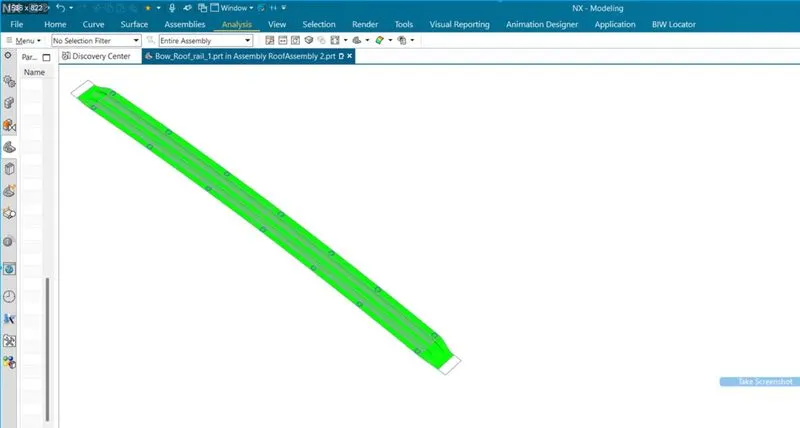
Bow Roof Rail DA :
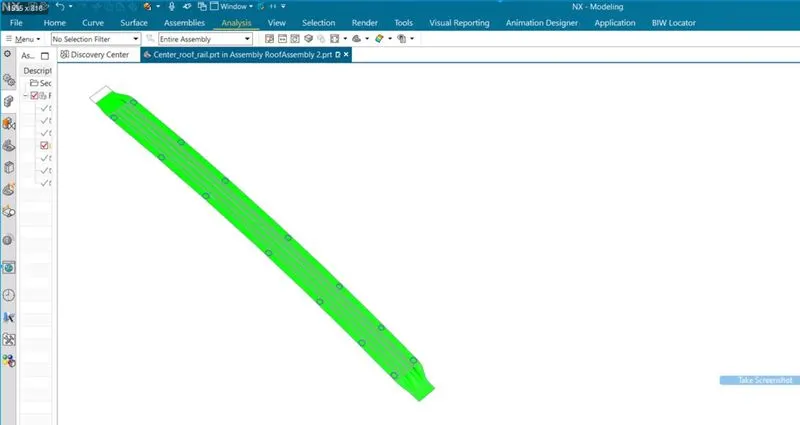
Center Bow Roof DA:
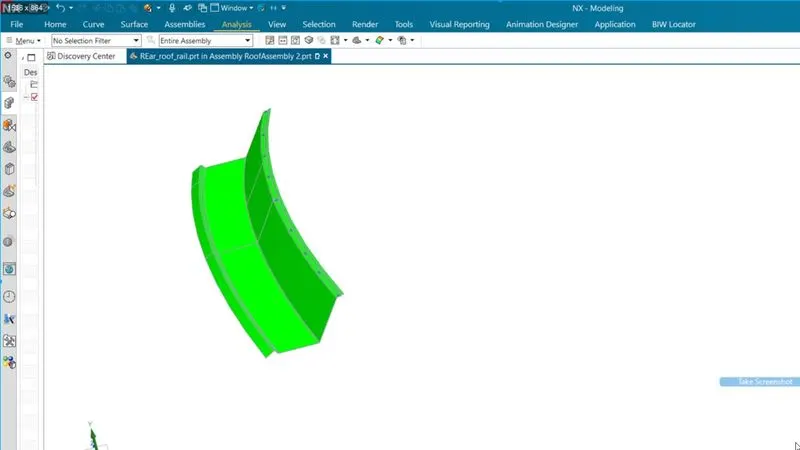
Rear Roof Rail DA:
Front Roof Rail DA:
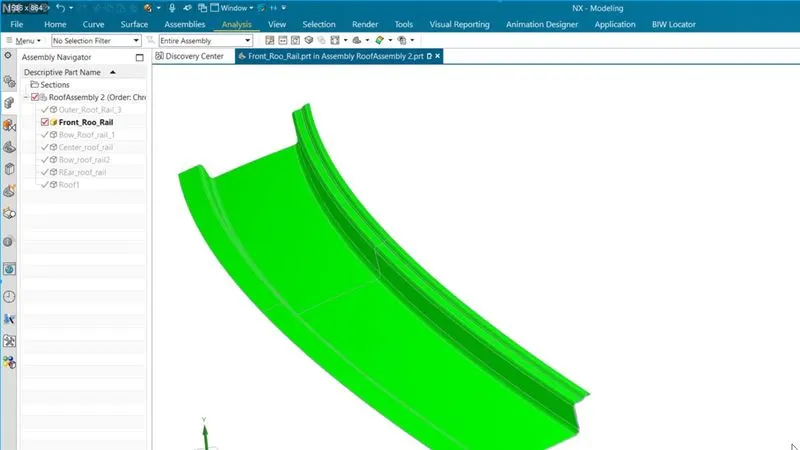
Draft analysis Results: From the above Draft Analysis (DA) Diagram we can see by the colour that the Draft is positive by the given draft angle of 7 deg and found that there is no difficulty during the manufacturing.
Conclusion: After the successful design of the roof and its components we have successfully tested the Heat distortion and snow load criteria which is showing the roof design is OK and the draft analysis shows positive results now all manufacturing processes will go through the design methodology.