Roof challenge
Aim:
- To create an assembly from Given Roof styling, by developing the essential flanges for the outer roof and creating the reinforcements.
- Perform the calculations for the heat distortion and snow load criteria to determine whether the bow roofs are at the correct positions.
- Finding moment of inertia and section modulus for Bow roof rails.
- Perform the draft analysis for each reinforcements.
Roof in Automobile:
An automobile roof or car top is the portion of an automobile that sits above the passenger compartment, protecting the vehicle occupants from sun, wind, rain, and other external elements.
Types of Roof:
There are different types of roof in automobiles, and in passenger vehicle segment ,some of the classification of are Sunroof,Moon roof and panaromic roof.
Sunroof:
Sunroofs can be opened and closed using an electronic system. Sunroofs cars allow light, fresh air, or even both to enter the car cabin.
Moonroof:
Moonroofs are actually one type of sunroofs.Moonroofs are made to allow the car driver and passengers to enjoy the outside view at night without having to get out of the car or open the car roof.
Panaromic Roof:
This type of roof is generally similar to the moonroofs, which has a large glass panel stretching across the roof, right above the first to the second rows.
Roof Tests:
Roof crush is the failure and displacement of an roof into the passenger compartment during a rollover accident as its one of the major proportion in total accident happens.
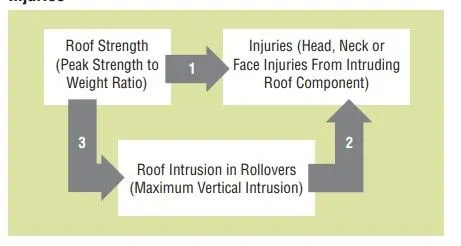
The roof test procedure is explained in brief as follows,
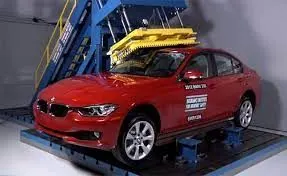
the strength of the roof structure to occupant protection in real-world rollover crashes, requires the maximum moving distance of the roof structure should be less than 127 mm (5 in.) when the induced load is 1.5 times the vehicle weight.
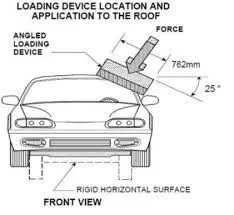
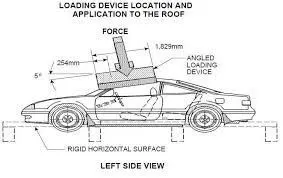
For the test, the passenger car shall be rigidly placed or positioned on a horizontal surface with the doors locked and the window closed. Furthermore, a flat, rigid block with a lower surface a rectangle measuring 30 inches wide by 72 inches long (762mm X 1829mm) shall not move more than 5 inches(127mm), measured as the distance between the original location of the lower surface of the test device and its location as the specified force level is reached, when it is used to apply a force of 1.5 times the unloaded vehicle weight (UVW) or 5000 lbs(22224N), whichever is less, to either side or forward edge of the vehicle.
This test can be conducted on either side of the roof structure, the front left or the front right side but not on both sides in one single test and still meet the requirements of the test. The rigid plate shall not move faster than 0.5 inches/second and the force applied on the plate shall not exceed the lesser of 1.5 times the unloaded vehicle weight (UVW) expressed in kilograms multiplied by 9.8 or 5000lbs (22240N).
Reinforcements for Roof:
The Roof rails and bows are created based on the master section provided,they are as follows,
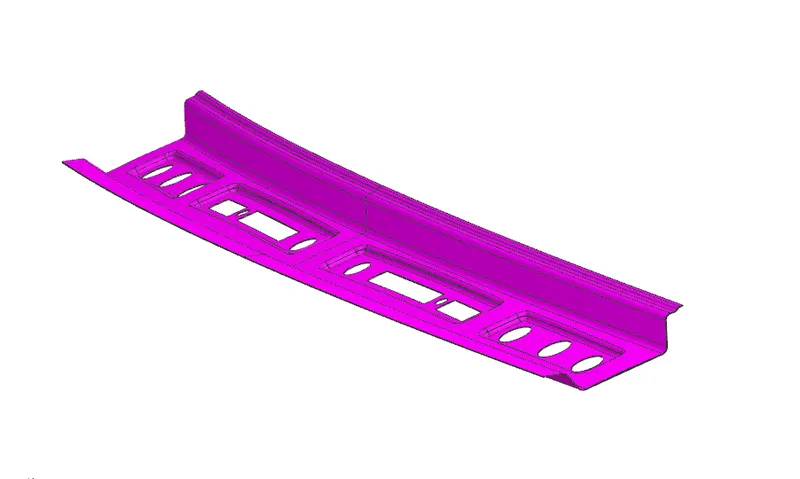
Front Roof Rail:
The Front Roof Rail is the part which is an reinforcement for front side of roof and also provides provision for fixing of windshield and inner panel.
the front roof rail is designed using the master section.
Rear Roof Rail:
Rear Roof Rail is a part which acts as a mating part with body side outer and backdoor.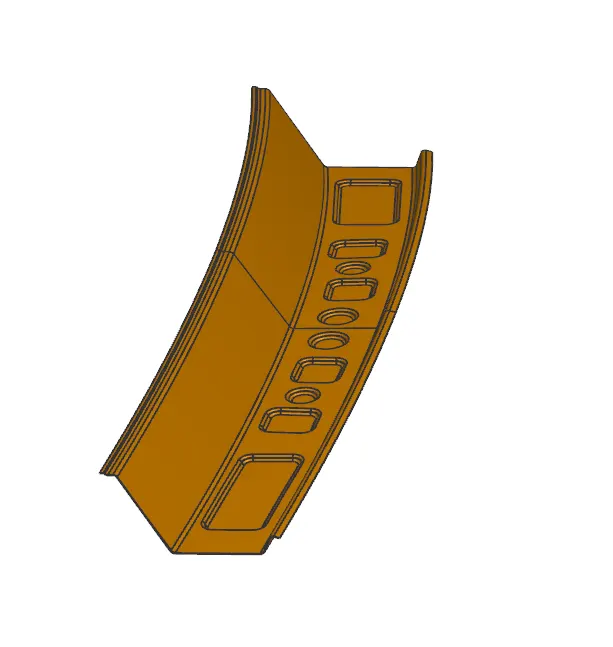
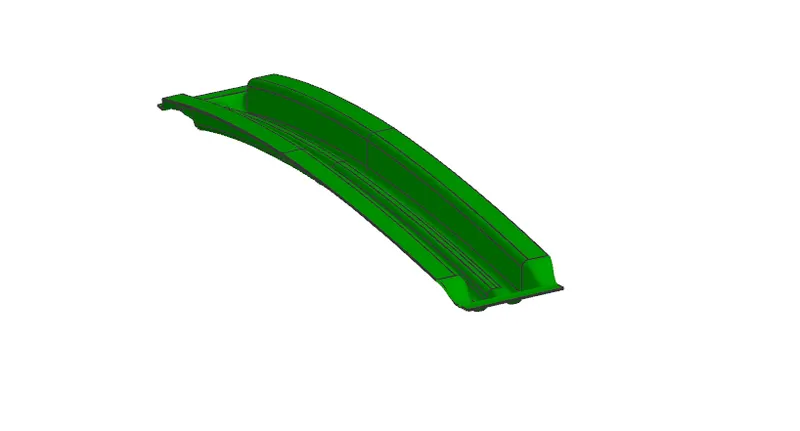
Bow Roofs:
Bow Roofs are the bars which are provided to give addtional strength to the roof, when there is a heavy snow fall or rainfall and provides additonal reinforcement for roll over failure. its provided with mastic sealants to avoid NVH.
Center Roof:
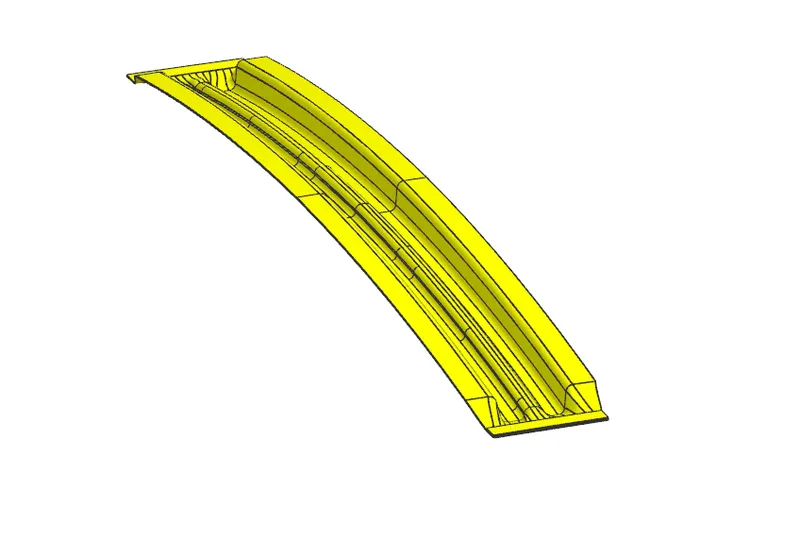
Bow Roof 2 :
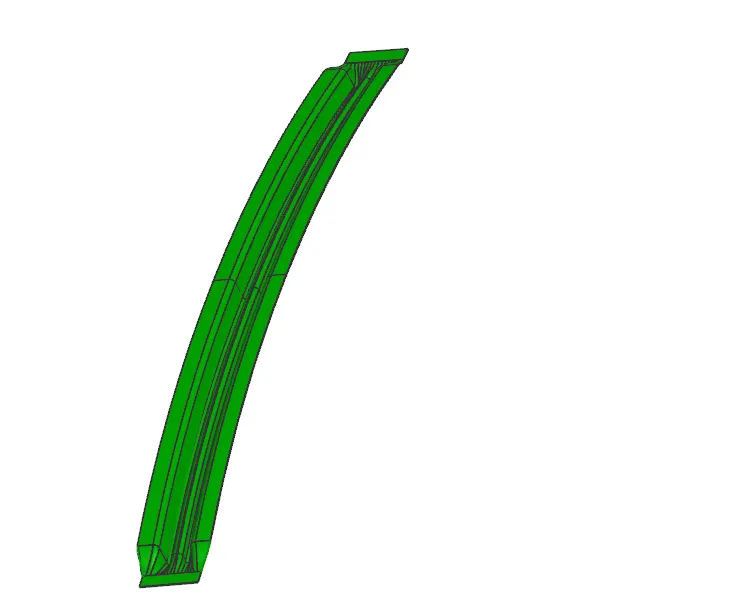
Joining Process:
The joining process used in the roof ,rails and bows are spot welded, the mastic sealant are provided between the bows and the outer panel.
Design Consideration:
- Ergonomics and safety (Head room space, visibilty)
- Manufacturiong feasibility
- Mating part consideration
- Regulation and Requirements
Bow–Roof Prediction:
W = [1.73 x 10^(-3) x L] + [1.85 x 10^(-8) x (R^2)/t] + [ 1.10x10^(-3) x l] - 2.68
Where,
L = Roof Length in X-Direction[mm](Roof dimension in 0-Y)
R = Roof curvature
R = 2(Rx*Ry)/(Rx+Ry)
Rx = X curvature
Ry = Y curvature
t = Roof plate thickness [mm]
l = Bow Roof Span [mm]
Judgment Condition
OK< 2.7
| Thickness for the Roof: |
| Roof Outer Panel, t = 0.75 mm |
|
Front Roof Rail, t = 0.75 mm
|
|
Bow Roof Rail, t = 0.75 mm
|
|
Centre Roof Rail, t = 0.75 mm
|
|
Bow Roof Rail 2, t = 0.75 mm
|
|
Rear Roof Rail, t = 0.75 mm
|
Procedure to find the Rx and Ry:
A line is made in 0-Y axis on a plane to project on the roof (say A).
From there a 300mm offset line is produced from A and from there 100mm offset line is produced on both sides (say B1 andB2) .
An axial line is produced between the bows and rails (say c) along X -axis.
an offset of 100mm is prepared and the intersection points are made.
An arc is produced from the exisiting intersection points and the corresponding radius is Rx along X -axis and Ry along the y-axis.
the l is measured that is the distance between each bows and the overall roof length is measured.
Using the above formula W is calculated:

Since W is lesser than 2.7 its okay.
Snow Load Prediction Formula
The main reasons to find the snow load is to analyse the curvature,whether its rigid enough to withstand as basic requirement. if not need to find the ways to improve it by varying the roof position
increasing the thickness
varying the cross section and improving the moment of inertia
or if there is no feasibity moment of inertia of roof is increased by varying section by
creating embosses.
let us find the Qr value and decide on curvature.
Qr = [Iy x t2] / [α x s x [(Rx + Ry)/2]2 x 10-8]
Note: The Qr value given over here is correct. There was a typo error in the formula given in the video.
Where,
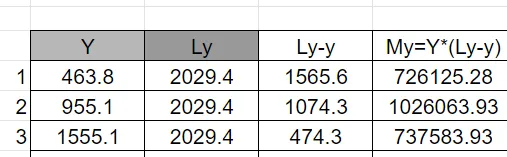
α = My x Lx2 x 10-12 , My = Y(Ly-Y)
t = Roof plate thickness [mm]
Ly = Distance between the front and rear roof Rails on the Vehicle along with 0Y[mm]
Length of Roof panel with the center point between Roof rail Front /Rear as the front and rear reference point.
Lx = Distance between the Left and Right end of the roof on the Roof BOW [mm]
The width of the roof panel is exposed on the surface.
Y = Distance front Front Roof Rail to Roof BOW[mm]
s = Distance for which Roof BOW bears divided load [mm]
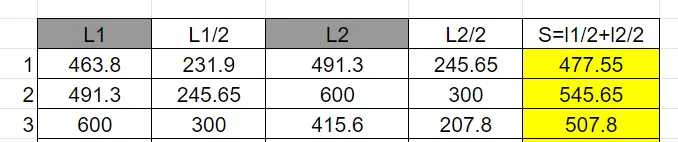
s = L1/2 + L2/2
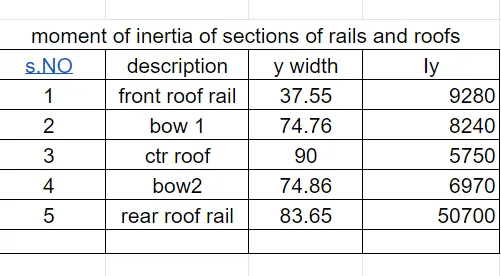
Iy = Geometrical moment of inertia of Roof BOW (Y cross-section )[mm4]
Rx = Lateral direction curvature radius of roof panel Y cross-section on Roof BOW [mm]
Roof panel curvature Radius of the Length Lx in Front view
Ry = Longitudinal Direction curvature radius of the Roof panel X cross-section on Roof BOW [mm]
Roof panel X curvature radius of length s in Side view
The same procedure is repeated to find the Rx and Ry along the Y-axis.
The L1 and L2 is meausred from the center of one bow to the center of the next bow.
from that S is calculated.
Y is similar to L1, but its cumulative when we do for next bow.
Ly and Lx is measured for overall length in X-axis and Y-axis in various positions.
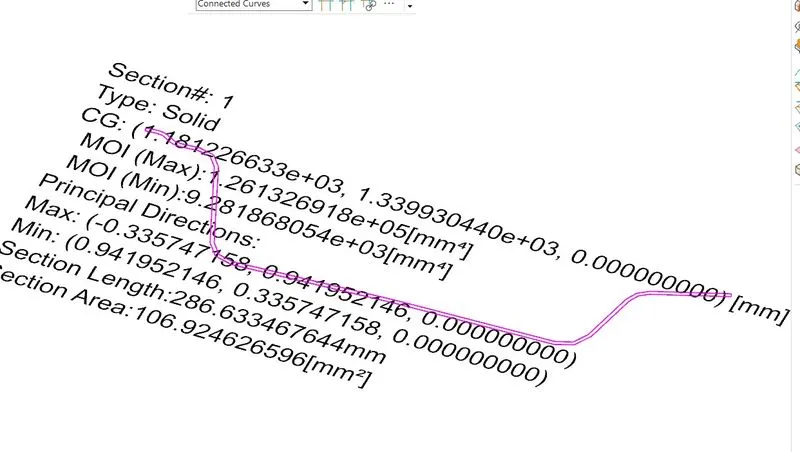
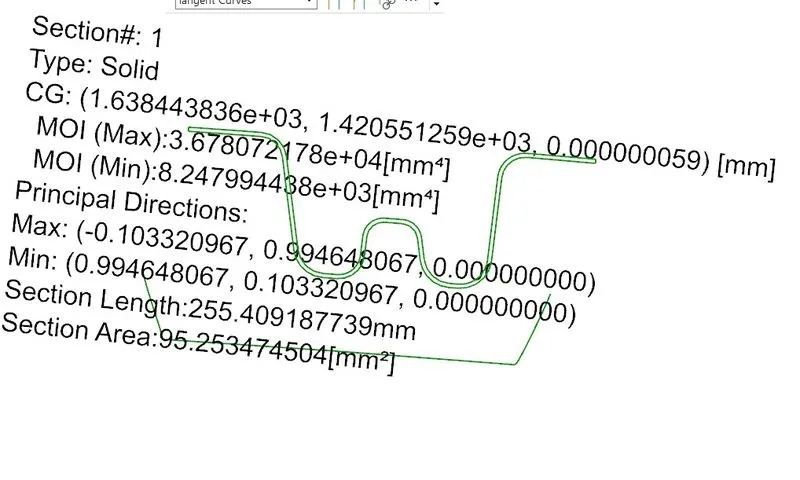
The moment of inertia is calculated for cross-section of various bow:
Front Roof Rail-M:
Bow Roof 01-M:
Center Roof 01-M:
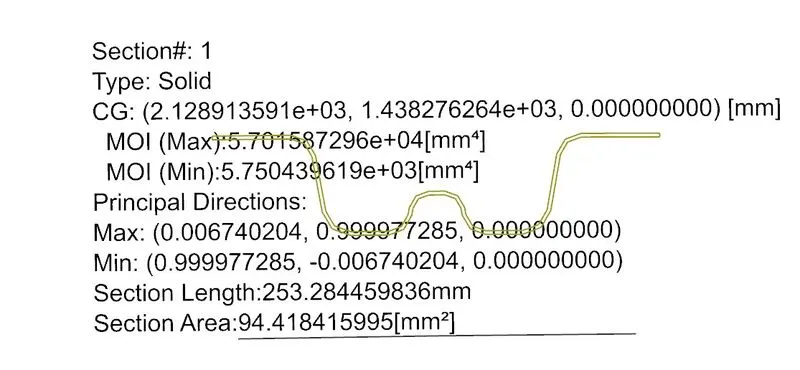
Bow Roof 02-M:
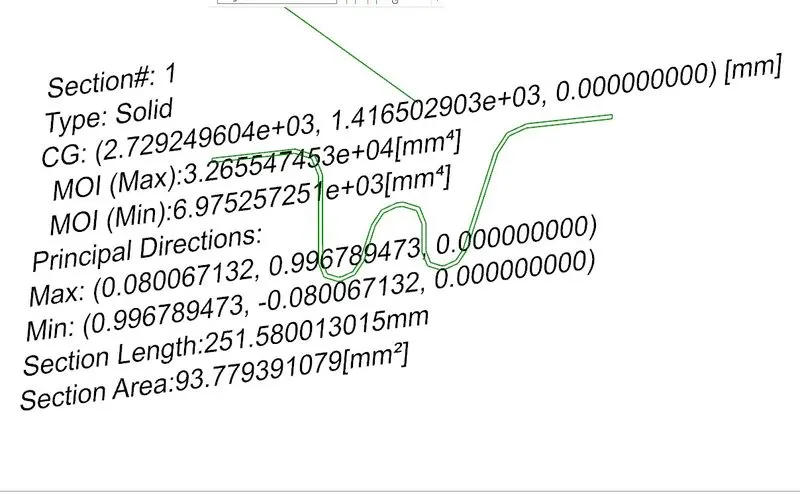
Rear Roof Rail-M:
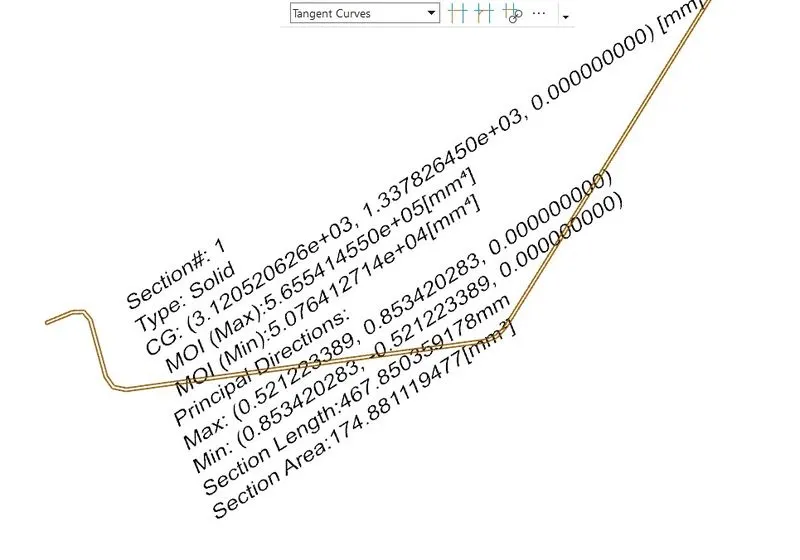 summary of moment of inertia of all bows are as follows:
using above formula My and α & S is calculated,
S:
My:
α:

Qr:

Since the Qr value is more than 3.1 the judgment is okay.
Draft analysis:
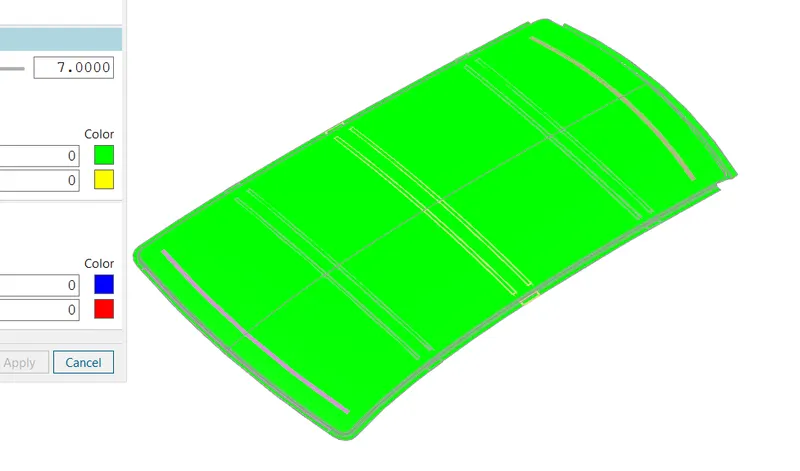
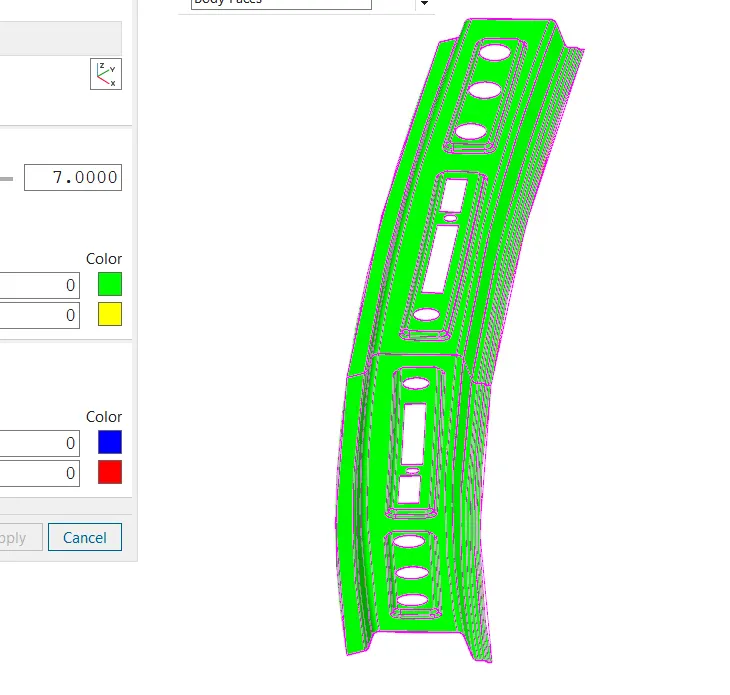
Draft analysis is performed in all the parts with minimum draft angle requirement as 7deg.
and the results are as follows
Roof:
Front Roof Rail:
Bow roof 1:
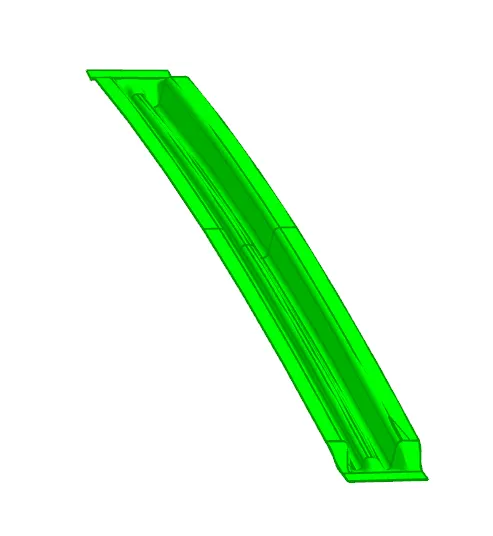
Center roof:
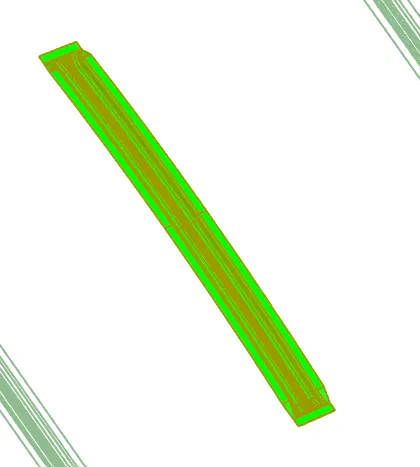
Bow roof 2:
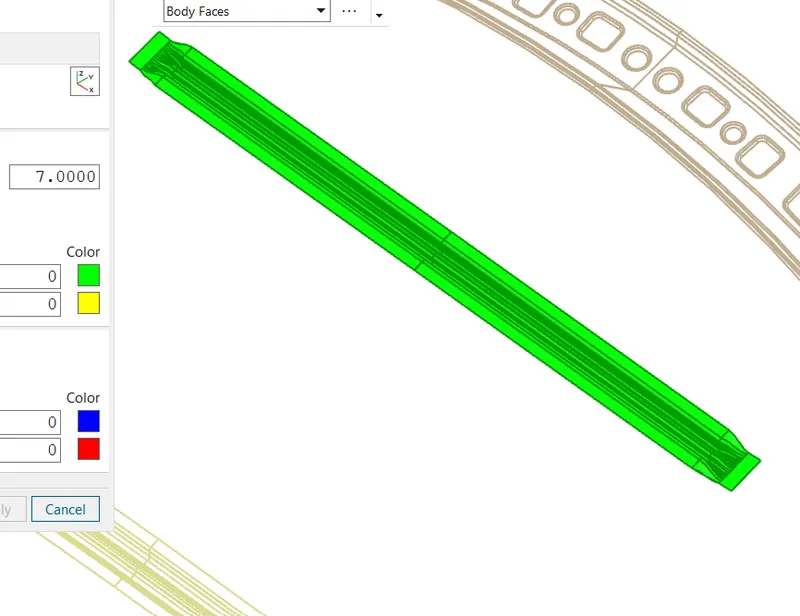
Rear Roof Rail:
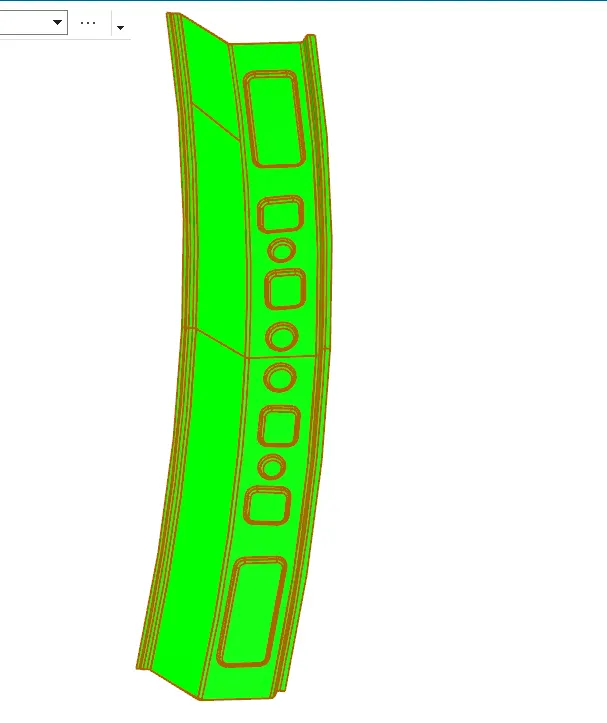
the draft analysis is completed and the results were satisfactory.
Conclusion:
The roof ditch area with the necessary draft has been created and the bows and roof rails are created as per the various master section provided.
- Made the curvature study and analysis the design for Heat distortion are found OK.
- Made the curvature study and analysis the design for Snow Load are found OK.
- Draft analyses are carried out to check the feasibility of manufacturing are found OK.
the procedure has been explained above and all the results were satisfactory.