Roof challenge
#7 SKILL LYNC
COURSE: Automotive Sheet Metal Design using Siemens NX CAD / CATIA V5
NAME: SRI RAGUL P CHALLENGE: Roof Design challenge
CAR ROOF:
A car top or automobile roof is the portion of an automobile that sits above the passenger compartment to protect the occupants from sun, wind, rain, and other external factors.
Since the first automobiles were designed in an era of horse-drawn carriages, the roofs of early automobiles used similar materials and designs.
During collisions, these components absorb energy. There are several factors that affect the energy absorption during impacts, such as the location of the spot welding, the beads, the cross-section, and the thickness of the frontal rails. Prevent people from falling by acting as a safety device.
|
TYPE OF ROOF |
IMAGE |
|
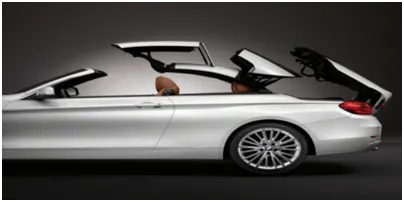
1. Convertible roofs- In addition to a sound-deadening layer over an articulated folding frame, a collapsible textile roof section may also feature an interior cosmetic lining. The folded convertible top is called the stack
|
 |
|
2. Hardtops- It is a rigid form of automobile roof constructed of sheet metal. It cannot be a removable and fixed structure.
|
 |
|
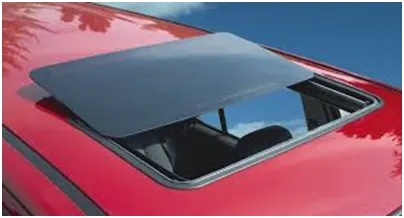
3. Sunroofs- A sunroof is a panel on the roof of a car that either slides back or can be taken out to allow light, air, or both to come into a vehicle.
|
 |
|
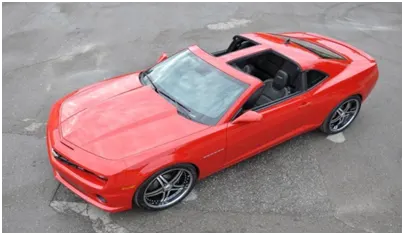
4. Targa tops- Semi-convertible car body style with a removable roof section and a full-width roll bar behind the seats.
|
 |
MAIN PART OF THE CAR ROOF:
|
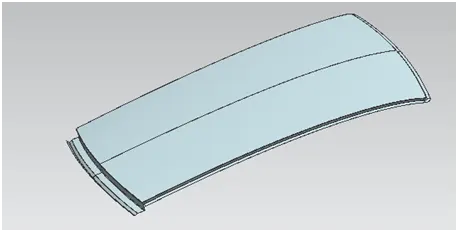
1. ROOF The roof is on top of the automobile and it protects the passenger from wind, mud, etc... |
 |
|
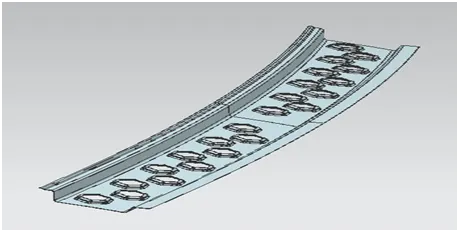
2. FRONT RAIL The main components absorb energy during a collision. The position of the spot welding, beads, the cross-section, and thickness of the frontal rails are significant facts that affect the energy absorption during impact. |
 |
|
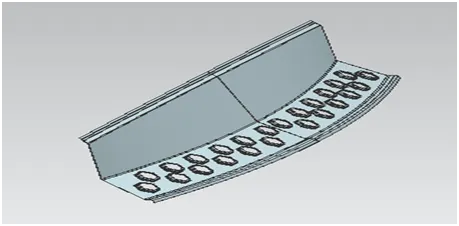
3. REAR RAIL |
 |
|
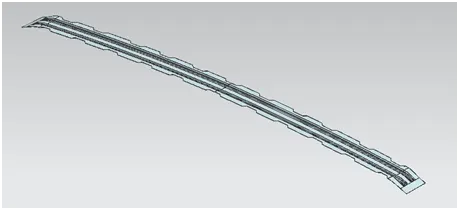
4. BOW-1 Act as a safety device to prevent people from falling. |
 |
|
5. BOW-2 |
|
|
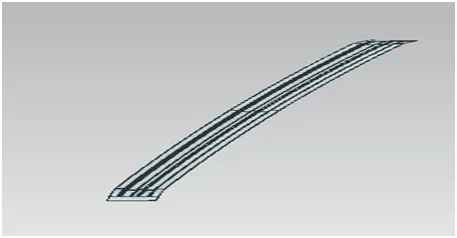
6. CENTER RAIL Act as a safety device to prevent people from falling and add reinforcement to the local area to improve strength. |
 |
DESIGN AND FUNCTIONAL REQUIREMENTS OF ROOF:
- Strength and stability-
- Resistance to weather
- Durability and freedom from maintenance
- Fire safety
- Resistance to the passage of heat
- Resistance to the passage of sound
- Resistance to air leakage
- Security
ANALYSIS:
It is therefore very important for OEMs to consider passenger safety as well. Marketing strategy is not the only reason to do it; it is also an obligation mandated by international standards and a legal requirement imposed by several countries. Therefore, strength is a very important consideration when designing a vehicle roof.
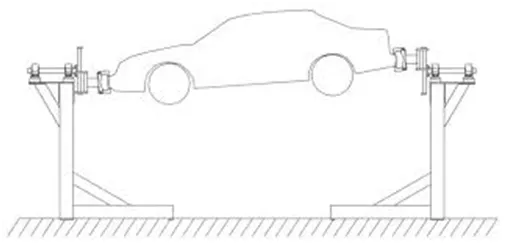
- Roll over test on roof – Analysis:
In a rollover, the far side structure of the vehicle experiences a more severe load. When a roof structure is intruded upon during a rollover, more damage is caused.
- In this test, the vehicle was placed in the rolling fixture as a buck.
- Minimum of additional weight added to balance the vehicle.
- The vehicle was placed in the fixture at a pitch and yaw of 10 degrees.
- The initial conditions were a contact angle of 145 degrees with a roll rate of 188 degrees per second, a roadway speed of 15 mph and an effective drop height of 4 inches.
- The vehicle was positioned such that the roof touched down on both sides of the roof structure.
- By giving in Insurance Institute for Highway Safety crash testing value, then check a “Good” roof strength test
- Roof crush test – Analysis:
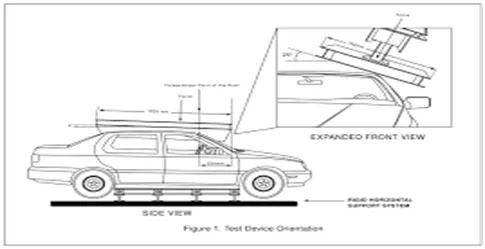
Roof crush is the failure and displacement of an automobile roof into the passenger compartment during a rollover accident.
- For the test, the passenger car shall be rigidly placed or positioned on a horizontal surface with the doors locked and the window closed.
- The longitudinal axis of the plate is pitched forward at a 5 º angle as viewed from the side of the passenger car.
- Some tests are conducted to a greater displacement to collect additional strength data for research purposes.
- Displacement data are recorded from four linear variable displacement transducers (LVDTs) (MTS Temposonics model GH) integrated into the hydraulic actuators. The locations of the load cells and LVDTs on the loading platen.
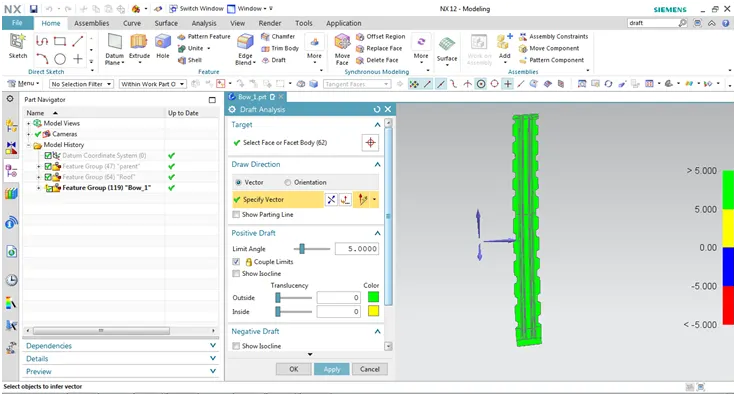
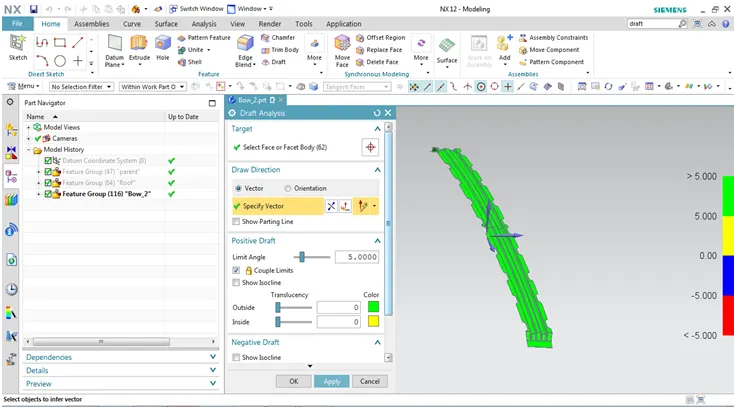
- Darft Analysis:
|
Darft Analysis |
|
|
Section#: bow-1 |
 |
|
Section#: bow-2 |
 |
| Section#: center | 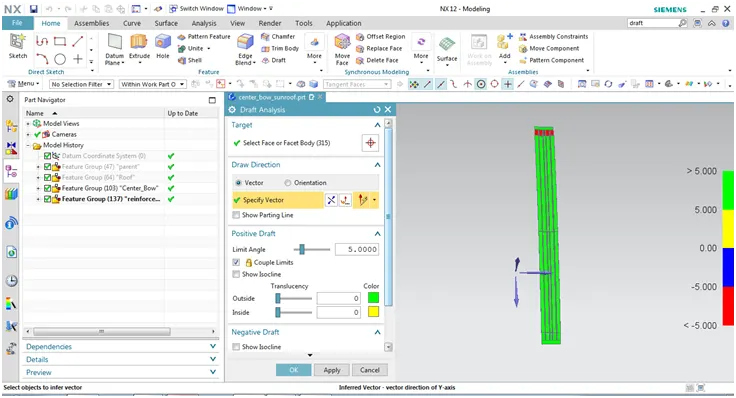 |
CURVATURE STUDY:
- HEAT DISTORTION CRITERIA:W = [1.73 x 10^(-3) x L] + [1.85 x 10^(-8) x (R^2)/t] + [ 1.10x10^(-3) x l] - 2.68
Where,
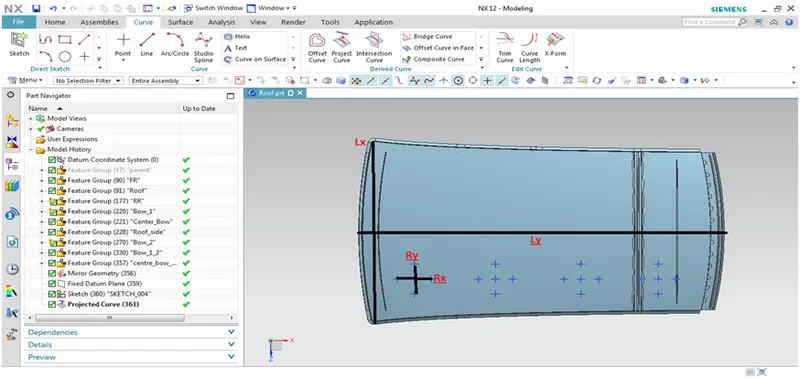
L = Roof Length in X-Direction [mm]- (Roof dimension in 0Y)
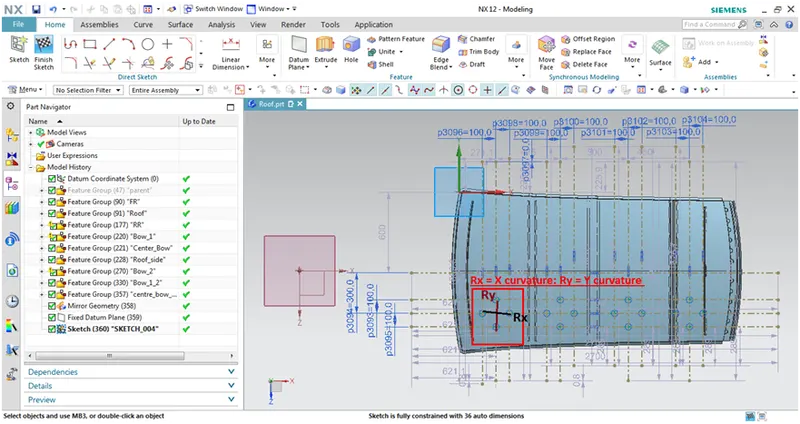
R = Roof curvature
Rx = X curvature
Ry = Y curvature
t = Roof plate thickness [mm]
l = Bow Roof Span [mm]
Judgment Condition
OK< 2.7
|
ANSWER: |

L = Roof Length in X-Direction [2026.4mm, Roof dimension in 0Y]; t = Roof plate thickness - 0.75 mm
Rx = X curvature: Ry = Y curvature- Lateral direction curvature radius of roof panel Y cross-section at -3Y
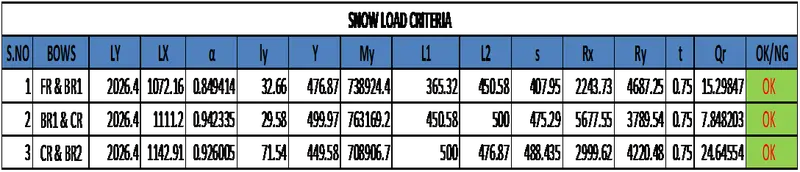
- SNOW LOAD CRITERIA:
Qr = [Iy x t2] / [α x s x [(Rx + Ry)/2]2 x 10-8]
Where,
α = My x x 10-12 ; My = Y(Ly-Y)
t = Roof plate thickness [mm]
Ly = Distance between the front and rear roof Rails on the Vehicle along with 0Y [mm]
Length of Roof panel with the center point between Roof rails Front /Rear as the front and rear reference point.
Lx = Distance between the Left and Right end of the roof on the Roof BOW [mm]
The width of the roof panel is exposed on the surface.
Y = Distance Front Roof Rail to Roof BOW [mm]
s = Distance for which Roof BOW bears divided load [mm]
s =
ly = Geometrical moment of inertia of Roof BOW (Y cross-section) [mm4]
Rx = Lateral direction curvature radius of roof panel Y cross-section on Roof BOW [mm]
Roof panel curvature Radius of the Length Lx in Front view
y = Longitudinal Direction curvature radius of the Roof panel X cross-section on Roof BOW [mm]
Roof panel X curvature radius of length s in Side view
Judgment condition
Qr<=3.1
250 ≤ S ≤ 380
|
ANSWER:
|
Rx = X curvature: Ry = Y curvature- Lateral direction curvature radius of roof panel Y cross-section at 0Y
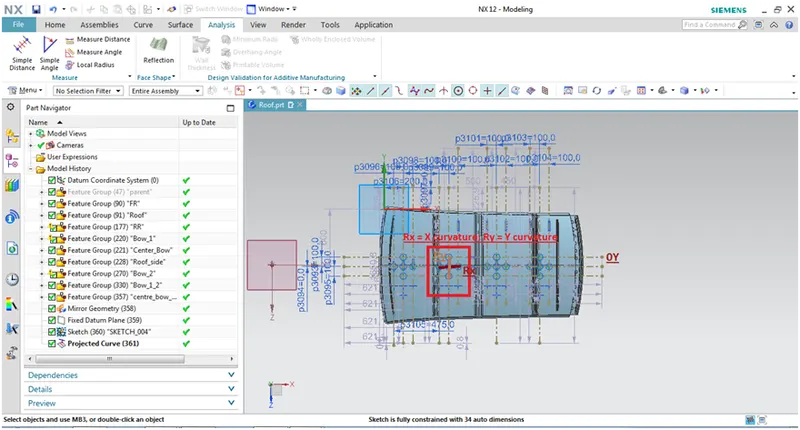
Ly = Distance between the front and rear roof Rails on the Vehicle along with 0Y [mm]
Lx = Distance between the Left and Right end of the roof on the Roof BOW [mm]
|
Geometrical moment of inertia of Roof BOW (Y cross-section) [mm4] |
ly |
|
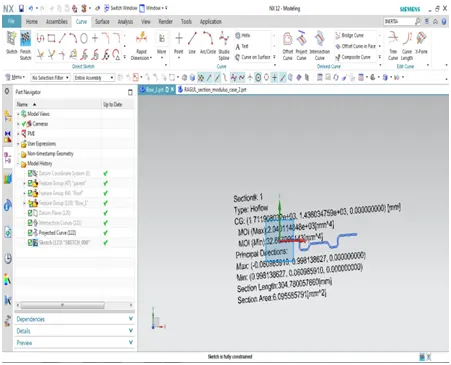
Section#: bow-1
|
MOI (Min):32.667999143[mm^4] |
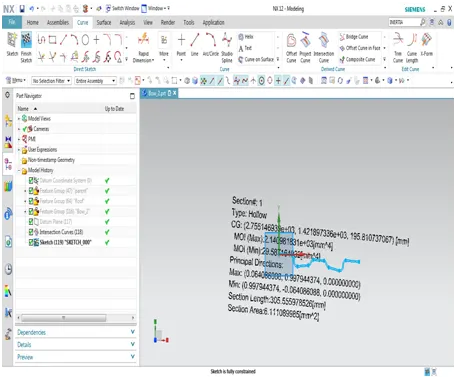
| Section#: bow-2 Type: Hollow CG: (2.755146939e+03, 1.421897336e+03,195.810737067)[mm] MOI (Max):2.140981831e+03[mm^4] MOI (Min):29.587164932[mm^4] Principal Directions: Max: (0.064086088, 0.997944374, 0.000000000) Min: (0.997944374, -0.064086088, 0.000000000) Section Length:305.555978526[mm] Section Area:6.111089985[mm^2] |
MOI (Min):29.587164932[mm^4] |
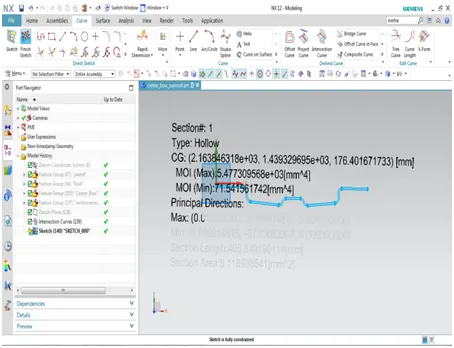
| Section#: center Type: Hollow CG: (2.163846318e+03, 1.439329695e+03,176.401671733)[mm] MOI (Max):5.477309568e+03[mm^4] MOI (Min):71.541561742[mm^4] Principal Directions: Max: (0.013052307, 0.999914815, 0.000000000) Min: (0.999914815, -0.013052307, 0.000000000) Section Length:405.849190114[mm] Section Area:8.116938541[mm^2] |
MOI (Min):71.541561742[mm^4] |
t = Roof plate thickness - 0.75 mm;
MANUFACTURING TECHNIQUE:
- Bending: The act of bending involves applying force to a sheet metal workpiece to produce a curvature. In general, bends are used to produce simple curved surfaces instead of complex ones. In a mechanical press, a punch forces sheet metal into a simple die under enough pressure to permanently change its shape. The amount of pressure is important.
- Drafting: The sheet metal is pressed against a die that has been specially shaped to take on the three-dimensional, frequently curved shape in which the sheet metal is designed to behave. In principle, the metal is molded using the die. This method can create rather intricate shapes. A hydraulically or mechanically driven punch is used to apply pressure to the workpiece once more. Although the process is entirely automated, there are a lot of risks involved, mostly for the metal itself rather than for people. It may break from excessive pressure or may wrinkle from contact with the die. The probability of wrinkling can be reduced by using lubricant to make the metal slide against the die more smoothly as an alternative, the rough edges.
- Stamping: Stamping is the process of cutting and forming metal using a stamping press and a series of dies. The material is commonly used to make auto parts like hubcaps and fenders.
- Extrusion: Extrusion is a process that is used to create long metal shapes. To make a rod, for example, the metal is pushed into a steel tube. The rod is then "extruded" through the tube to make it longer.
- Forging: This process utilizes both the force of a mechanized hammer and the surface of an anvil to forge a piece of metal. This allows the metal to be shaped, bent, and twisted into a more complex shape than could be done with the hammer alone In general, cold metal is used for the above processes. Metal that has been heated up can also be used, sometimes at a high enough temperature to allow the metal to be injected into a die.
Conclusion
As a result, To determine a roof's strength using draft analysis on the roof, as well as curvature studies using heat distortion and snow load criteria. Consider all of the conditions we generated for the automobile roof.