Hood design-Week 2
Hood:
The hood (American English) or bonnet (Commonwealth English) is the hinged cover over the engine of motor vehicles.
A car hood also referred to as a bonnet in some other countries is the hinged cover that rests over the engine of a front-engine vehicle. Its purpose is to provide access to the engine for repair and maintenance. A concealed latch is typically used to hold down the hood.
Latch trajectory:
The latch, which is often referred to as a striker, is a locking device used to close the hood. The circle is drawn with the pivotal axis of the hinge as its center determines the placement and trajectory of this striker.
The striker will move along the latch trajectory when the hood is opened or closed and rotating on the hinge axis. The hinge axis is assumed to be the center of a circle representing the latch trajectory. The striker is positioned at a 90° angle so that it is perpendicular to the circle.
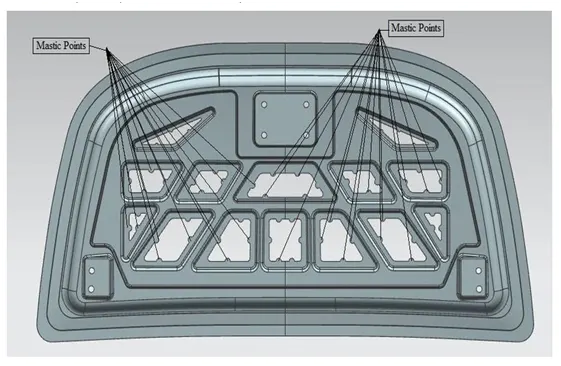
Mastic Data:
Two main components make up the hood: the inner and outer panels. The inner panel of the hood is enclosed below the outer panel, providing rigidity to the hood. The assembly of these two parts creates a small gap between them since they are both metal parts. This gap may cause noise and vibration when the vehicle is running, so it is desirable to fill this space with mastic sealant are points where glue or rubber is placed between the inner and outer panels
Hemming:
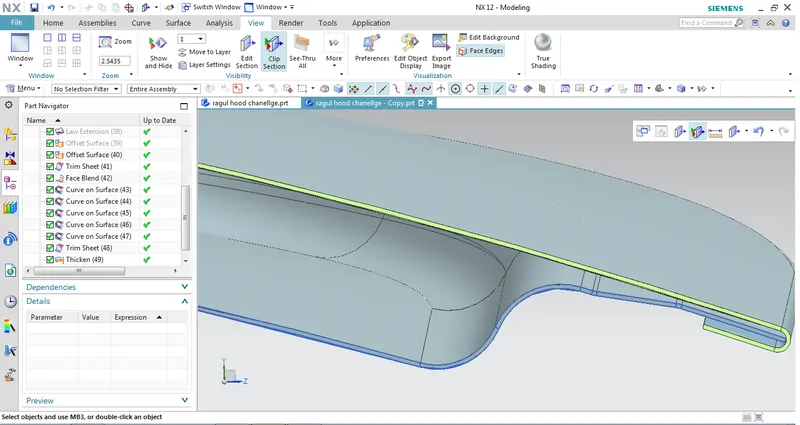
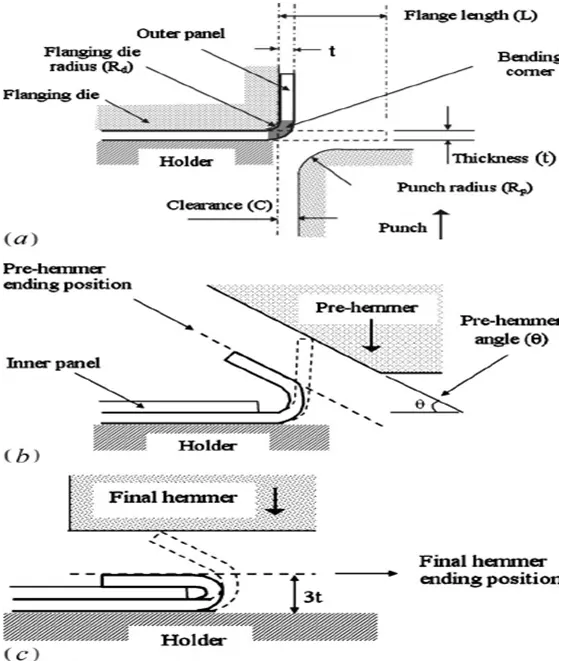
In order to hem a part, the radius, material thickness, and any features near the hem. Hemming is the process of hemming edges.
Bending a part's flange back on itself creates hems. A hemmed edge will be stronger and will be freed from deformation or damage during operation or service. It is most advantageous to use thin materials in the range of about 10 microns.
- Domestic: Press hemming technology→ Suitable for mass-production, high cost of equipment, and difficult to keep molds in the event of discontinued service
- Overseas: Roll-hemming technology → Suitable for small quantity batch production, low cost of equipment, and very slow production cycle
 |
 |
Emboss:
Embossed designs are created by stamping sheet metal with a raised or sunken pattern. Patterns can be imprinted on sheets or strips of metal by the use of matched male and female die rolls, or by passing a sheet or a strip of metal between rolls of the desired pattern.
Characteristics of embossing:
The metal embossing manufacturing process has these characteristics:
- The ability to form ductile metals.
- Use in medium to high production runs.
- The ability to maintain the same metal thickness before and after embossing.
- The ability to produce unlimited patterns, depending on the roll dies.
- The ability to reproduce the product with no variation.
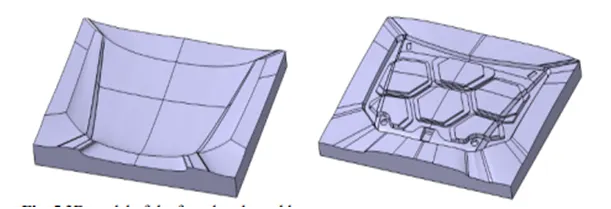 |
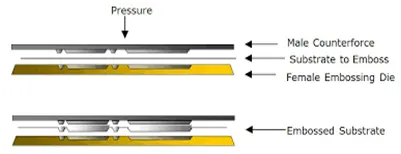 |
Using Command:
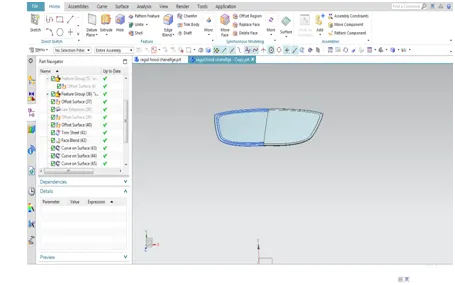 |
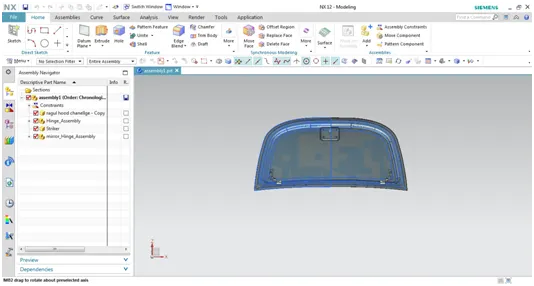 |
|
1. Sketch: to create a drawing on the datum plane |
|
|
2. Datum: To use the original plane as a template, construct a reference plane. |
|
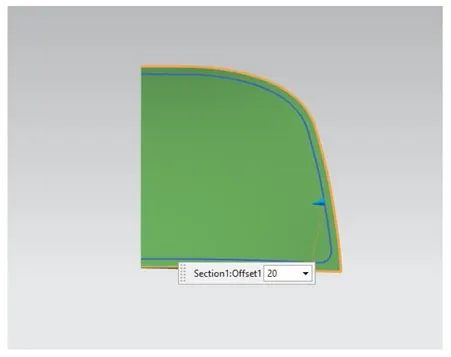 |
3. Offset curve in the face: Make curves from the face's edges by offsetting the curve. |
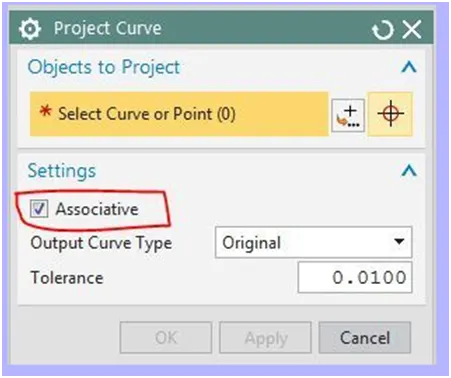 |
4. Projected curve: to create an impression of a drawing onto the surface of the workpiece. |
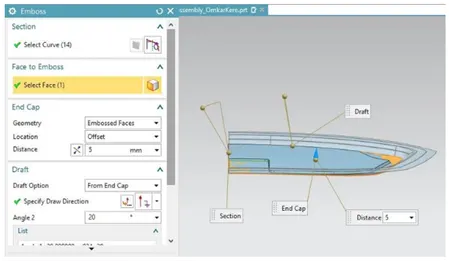 |
5. Emboss: To emboss anything is to give it a raise or a dent. |
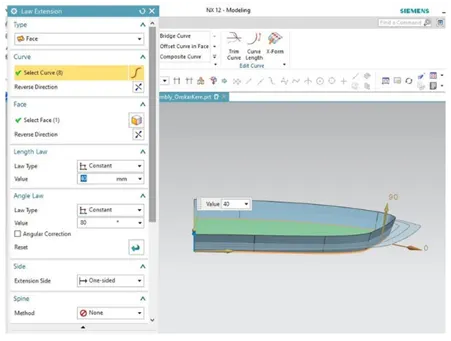 |
6. Wave geometry linker: to duplicate a curve and face through one component to another. |
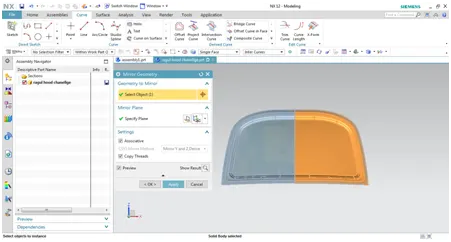 |
7. Mirror assembly: to duplicate or replicate an assembly |
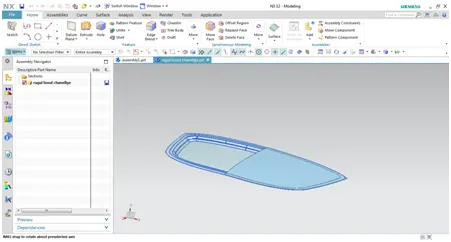 |
8. Mirror: to turn the workpiece around on a plane or axis. |
|
9. Create new: to add a new component to an assembly. |
|
|
10. Add: to include an additional component in the assembly. |
|
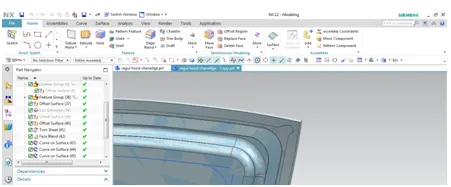 |
11. Extract body: to take a duplicate of something that already exists |
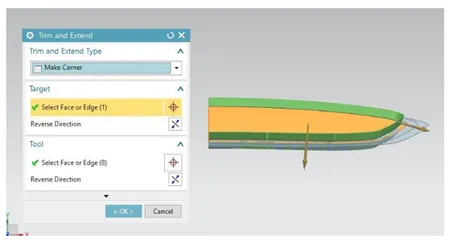 |
12. Trim sheet: Using this command, extraneous material can be removed from the work component |
| |
13. Curve on the surface: Using this command, composite curves can be added to a surface. |
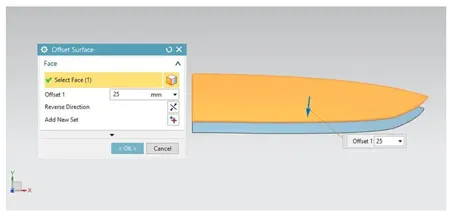 |
14. Offset surface: Use this command to move a surface that already exists. |