Roof challenge
Objective :-
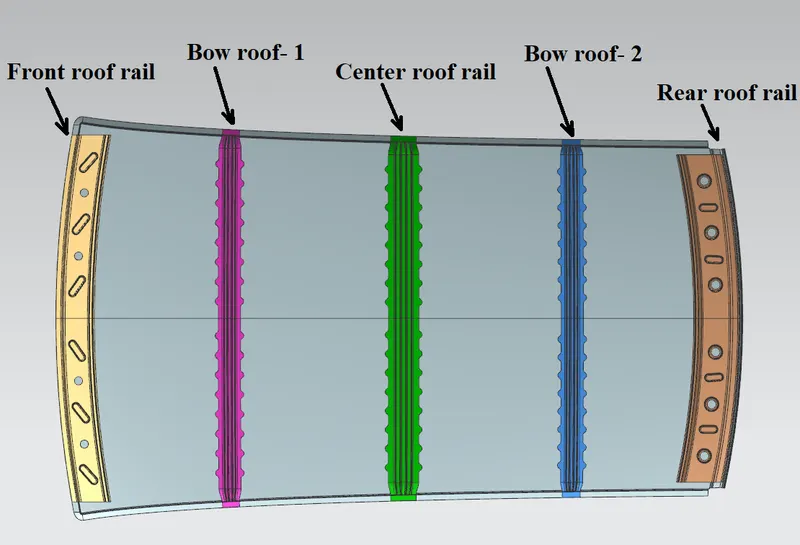
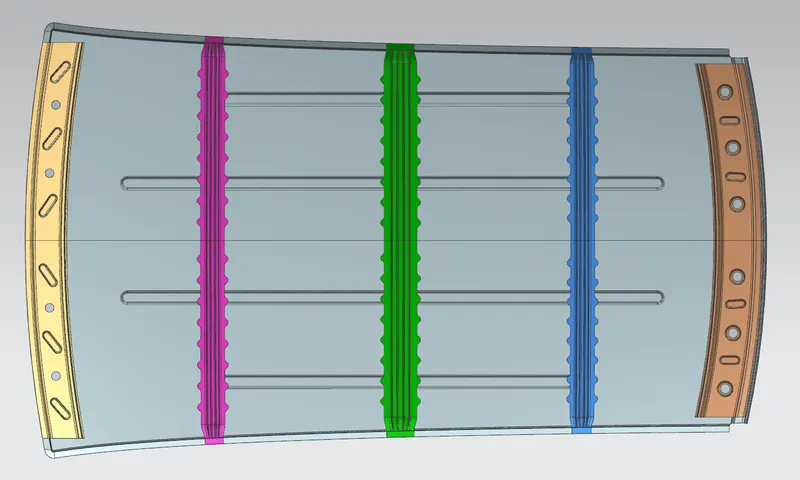
- To design a car roof with essential flanges and reinforcements like Front roof rail, Rear roof rail, Center roof rail and Bow roofs.
- To perform calculations related to the curvature study of a roof like heat distortion and snow load criteria to determine and justify the position of bow roofs.
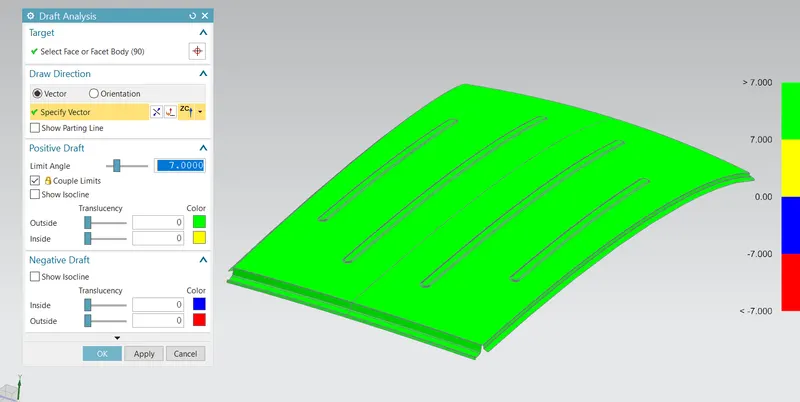
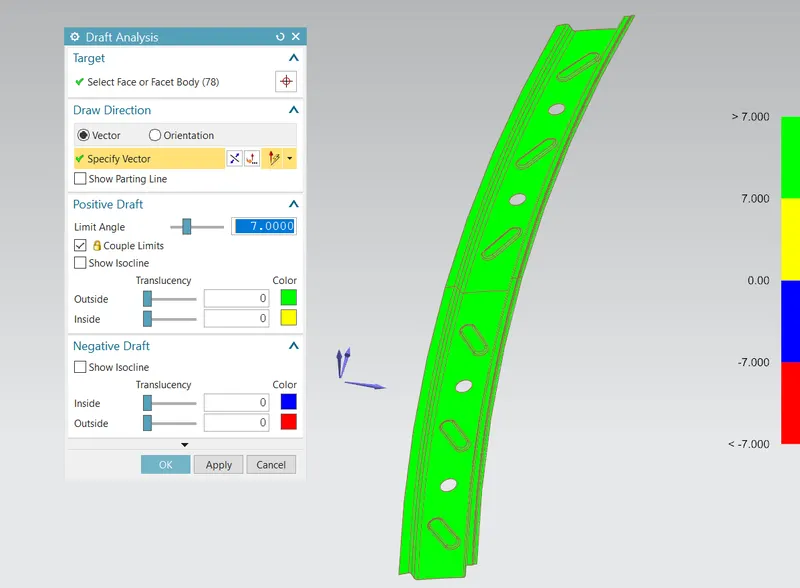
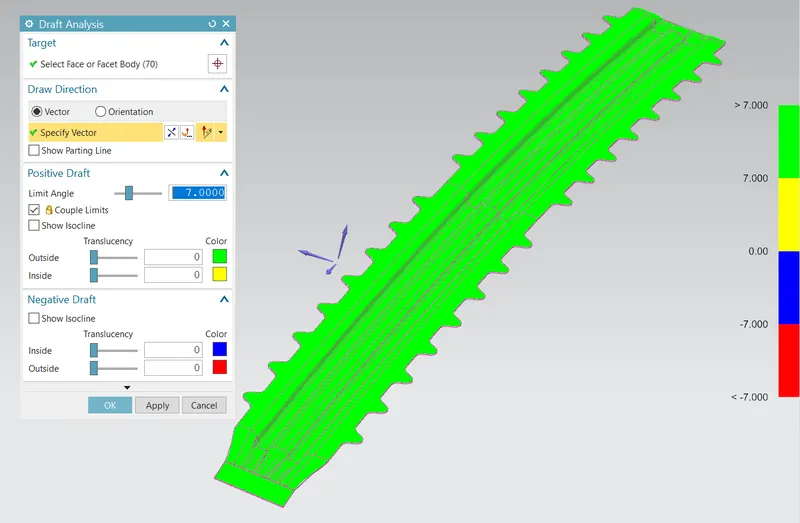
- To perform Draft analysis of each reinforcement.
Introduction :-
An automobile roof or car top is the portion of an automobile that sits above the passenger compartment, protecting the vehicle occupants from sun, wind, rain, and other external elements.
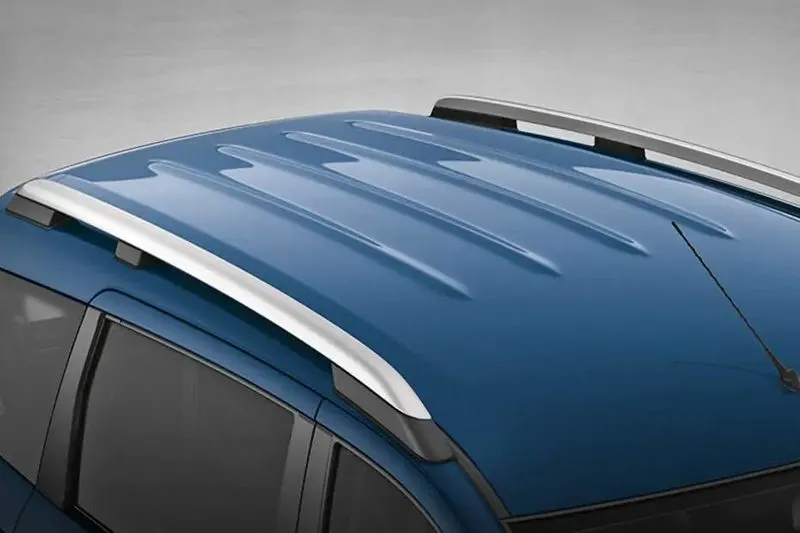
In past few years, many variations on the automobile roof developed. These include:
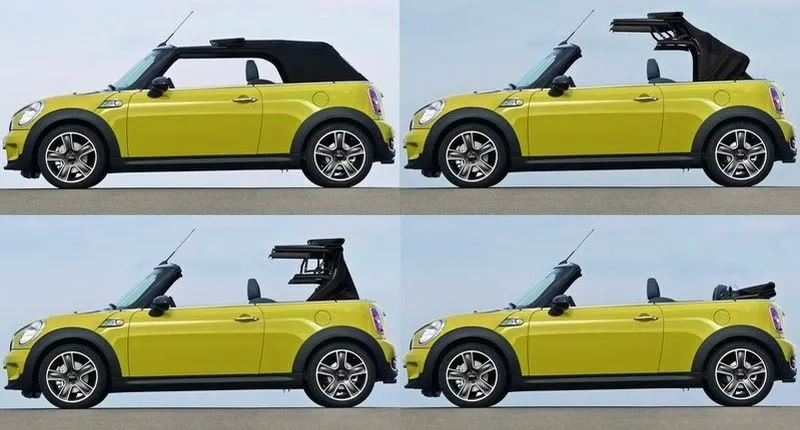
1) Convertible roofs :-
The majority of convertible roofs are of a folding construction framework with the actual top made from cloth or other fabric. Other types of convertible roofs include retractable hardtops which are often constructed from metal or plastic and detachable hardtops where a metal or plastic roof is manually removed and often stored in the trunk.
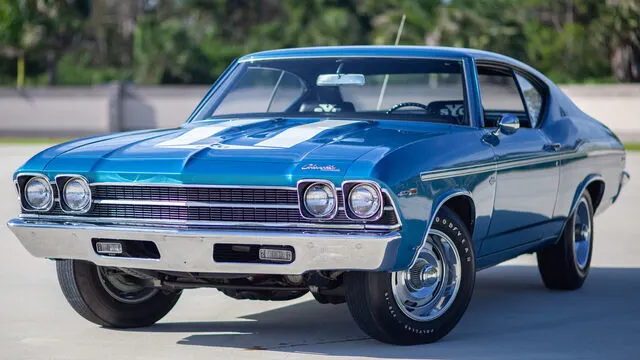
2) Hardtop :-
A hardtop is a rigid form of automobile roof, which for modern cars is typically constructed from metal. A hardtop roof can be either fixed, detachable for separate storing or retractable within the vehicle itself.
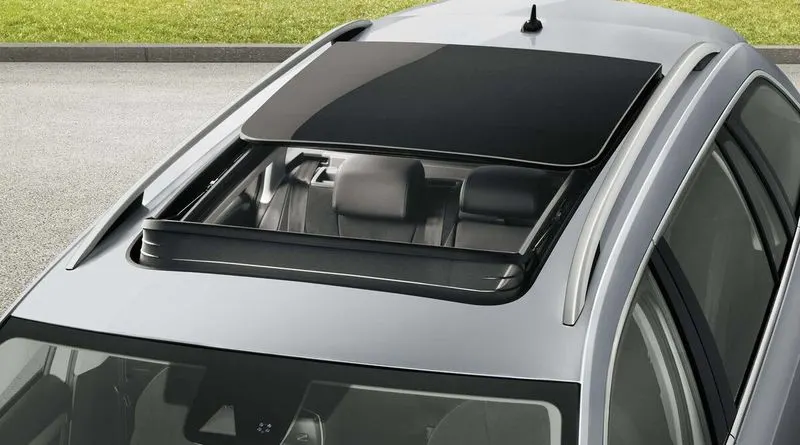
3) Sunroof :-
A sunroof is a movable panel that opens to uncover a window in an automobile roof, allowing light and fresh air to enter the passenger compartment. Sunroofs can be manually operated or motor driven, and are available in many shapes, sizes and styles. While the term sunroof is now used generically to describe any glass panel in the roof.
4) T-top :-
A T-top is an automobile roof with a removable panel on each side of a rigid bar running from the center of one structural bar between pillars to the center of the next structural bar. The panels of a traditional T-top are usually made of auto grade safety glass.
5) Targa top :-
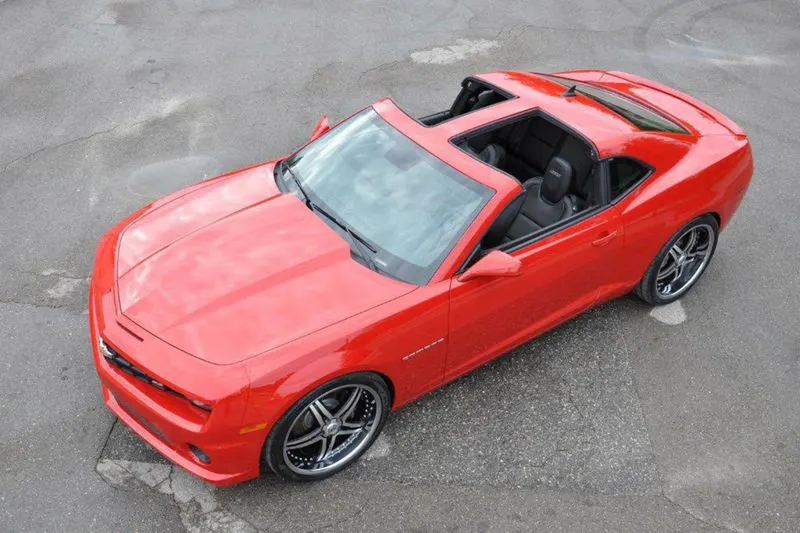
Targa top, or targa for short, is a semi-convertible car body style with a removable roof section and a full width roll bar behind the seats. The term was first used on the 1966 Porsche 911 Targa,[1] and it remains a registered trademark of Porsche AG.
6) Vinyl roof :-
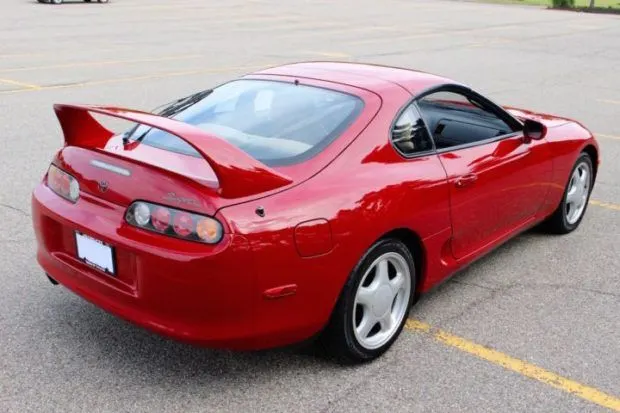
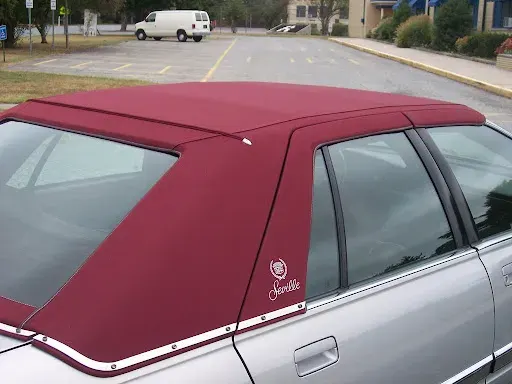
This covering was originally designed to give the appearance of a convertible to models with a fixed roof, but eventually it evolved into a styling statement in its own right. Vinyl roofs were most popular in the American market, and they are considered one of the period hallmarks of 1970s Detroit cars.
Design considerations of roof :-
- Visibility criteria
- Head clearance
- Curvature study
- Heat distortion and snow load criteria
Crash tests performed on the roof of the vehicle :-
Rollover accidents of a car are the most occurring accidents that we see in our daily lives. The passengers experience major injuries like neck, head and spine injuries. So, to reduce the injuries of a passenger from major fatalities it is important to provide safety in the car. Though safety is provided by seat belts and airbags during accidents, the passenger must have sufficient space for survival in the car during accidents. The roof of the car must have high strength to resist the crush force to avail the passenger some space for survival. Therefore roof crush test is important.
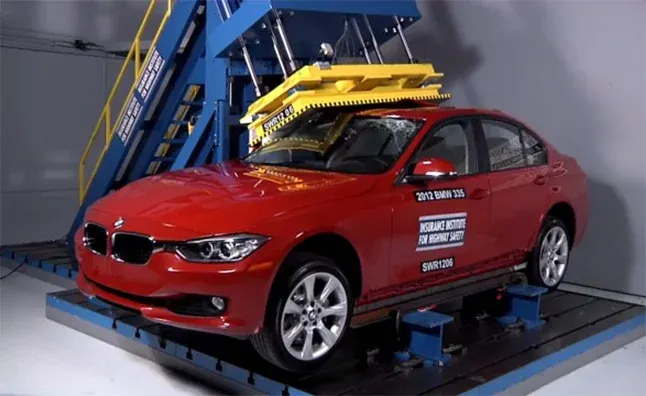
Roof strength evaluations are conducted on a quasi-static test system. The vehicle roof front corner to holds a quasi-static force more than 1.5 times of the unloaded vehicle weight, up to 127mm of displacement. This 1.5 is known as the SWR (strength to weight ratio)of the vehicle.
Main Parts of roof :-
- Roof outer panel
- Front roof rail
- Bow roof
- Center roof rail
- Rear roof rail
1) Roof outer panel :-
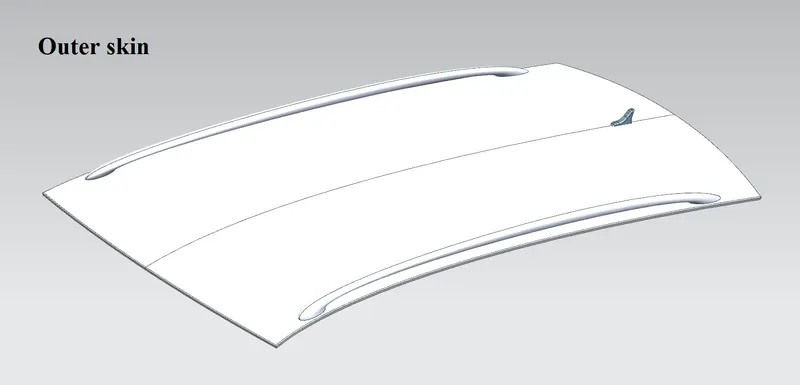
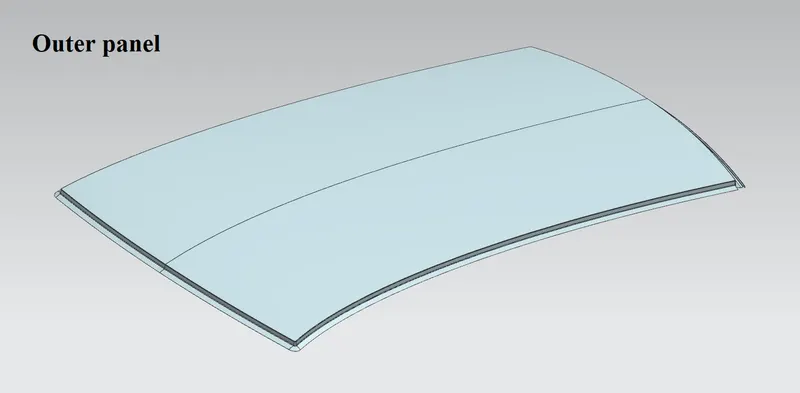
The outer skin has been provided by the styling team so that outer surface is extracted from that surface. Necessary flanges are created on the outer panel as well as front and rear ditch area are developed.
2) Front roof rail :-
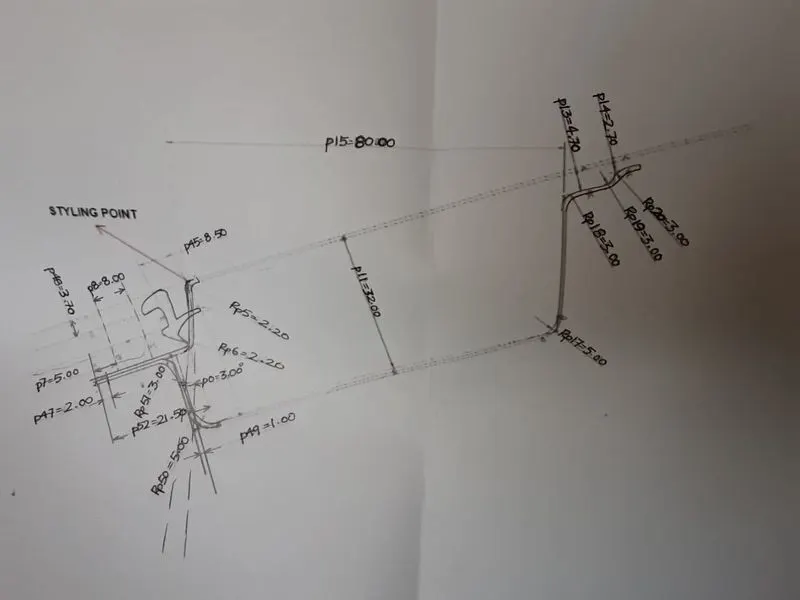
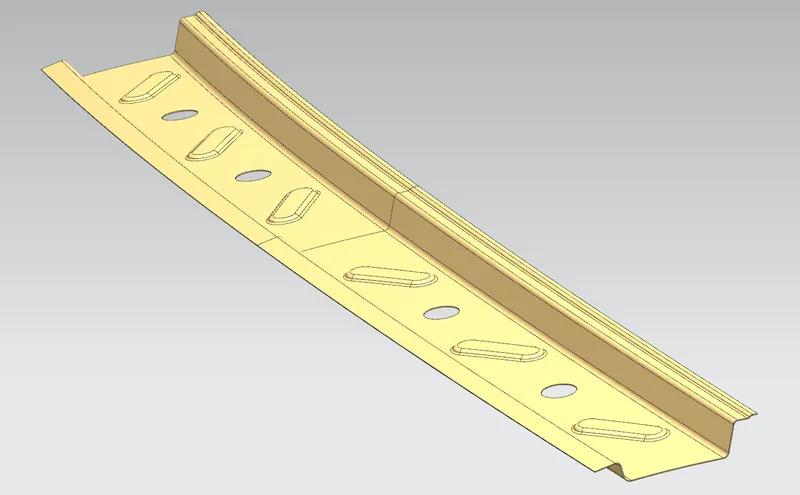
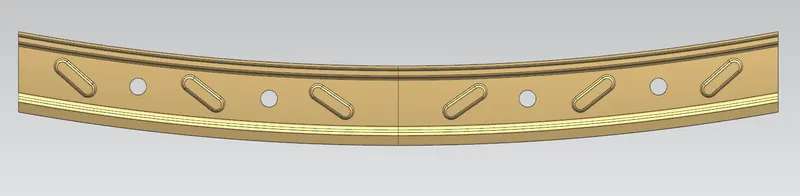
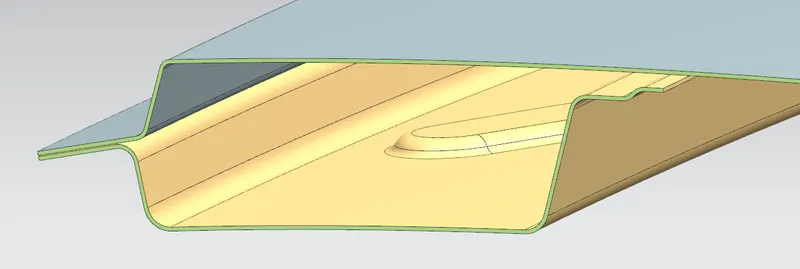
Front roof rail is created at the front side of roof. Front flange is designed according to the windshield glass position. Head room clearance is considered so it is extended to 80mm. Visibility criteria is also considered so it is drawn to the depth of 32mm. It provides strength to the roof. Front roof rail is connected to the roof outer panel with the help of mastic sealants. Embosses are created to improve the strength of front roof rail.
Master section :-
Front roof rail
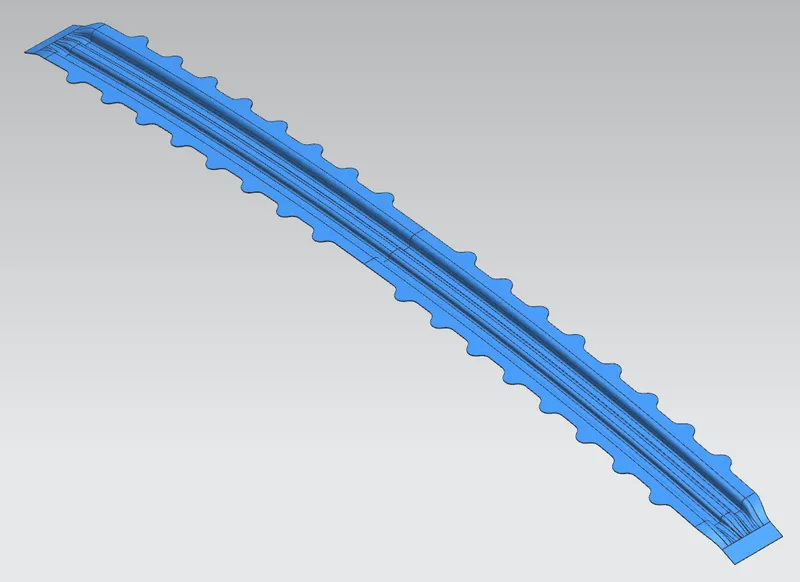
3) Bow roof :-
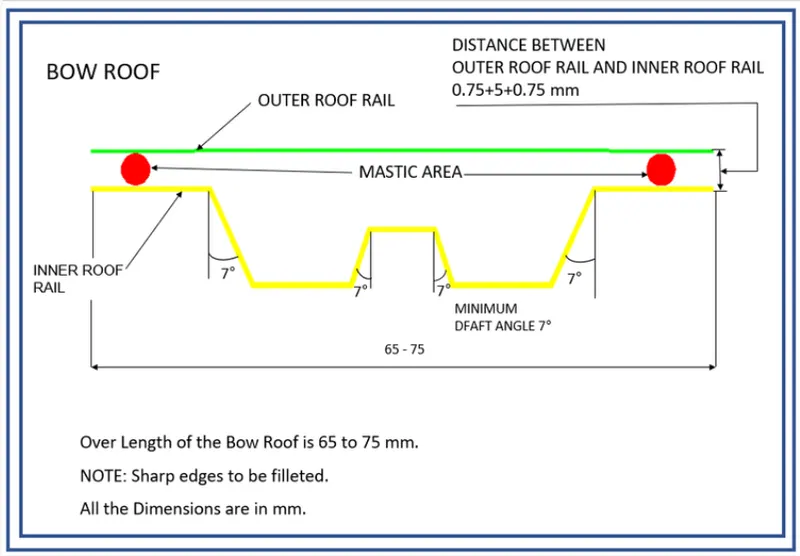
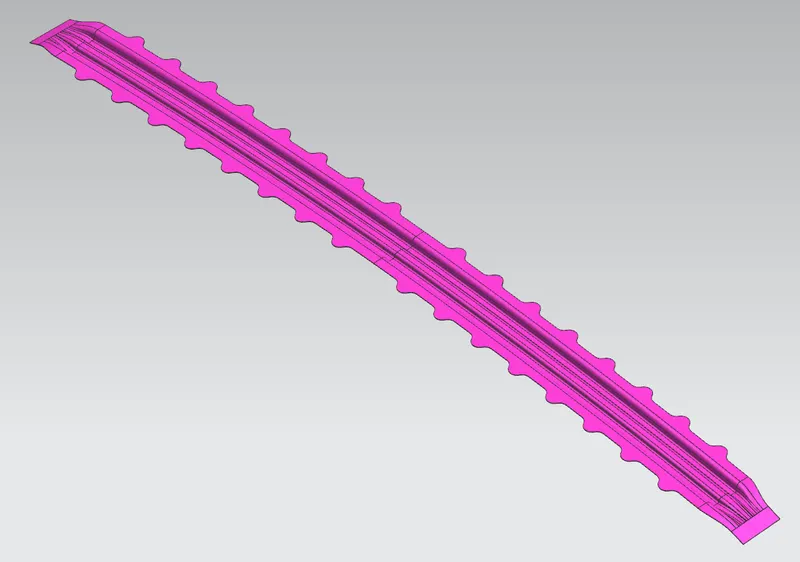
The bow roofs are provided to improve the load bearing capacity of the roof structure. the number of bow roofs provided will depend upon overall dimensions of the roof. It is majorly required where the flat regions are present on the roofs, It provides support to those regions and improves the strength of the roof. The positioning of each bow roof is done based on curvature syudy. Bow roofs are attached to the outer panel using mastic sealants. 5mm gap is provided to apply mastic sealants between bow roof and outer panel.
Master section :-
Bow roof 1 :-

Bow roof 2 :-

4) Center roof rail :-
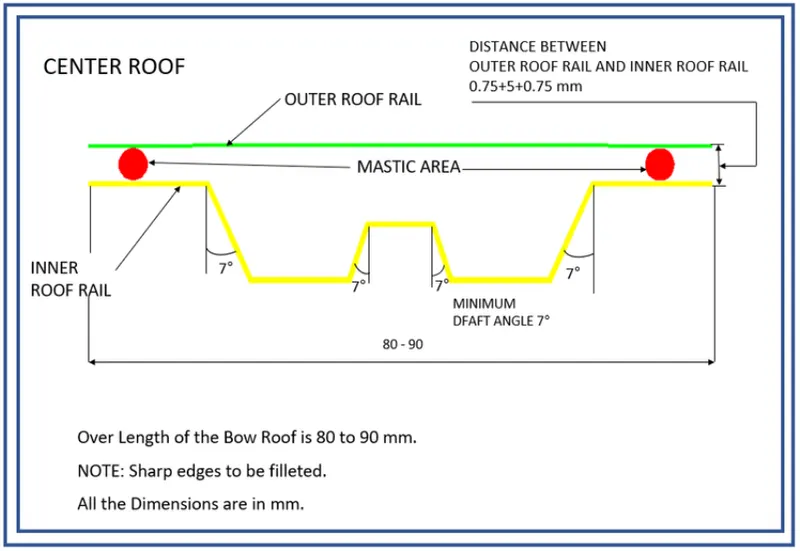
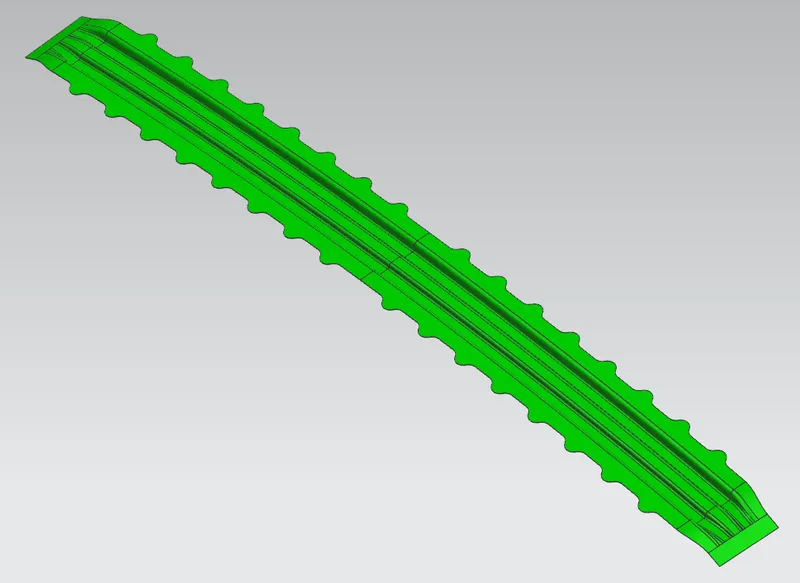
It is created at the center of the roof. It provides support to the Roof outer panel and improves the strength of the structure of the roof. It is connected to the roof by mastic sealants.
Master section :-
Center roof rail

4) Rear roof rail :-
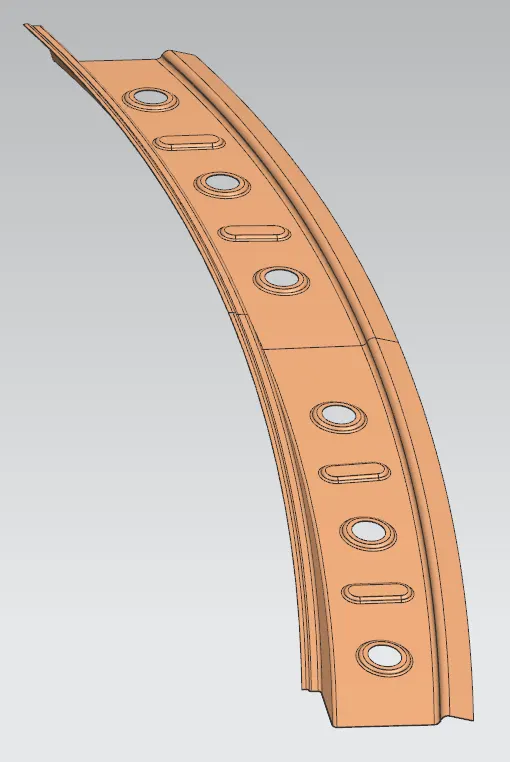
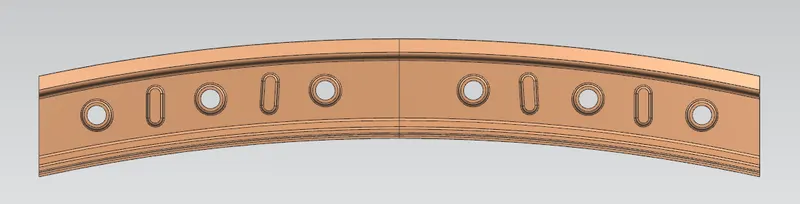
It is created at the rear end of the roof. It adjoins the back door and roof outer panel. Visibility criteria and head room clearance are considered while designing the rear roof rail. Embosses are created to improve the strength of the rear roof rail.
Assembly of the roof :-
Curvature study :-
1) Heat distortion criteria :-
Heat distortion temperature is the temperature at which metal softens and deform under a specific load. This study is used to avoid bending or damage to roof based on heat distortion temperature. This study is used to justify the position of bow roofs in order to strengthen the roof.
Bow–Roof Prediction Formula -
W = [1.73 x 10^(-3) x L] + [1.85 x 10^(-8) x (R^2)/t] + [ 1.10x10^(-3) x l] - 2.68
Where,
L = Roof Length in X-Direction[mm](Roof dimension in 0-Y)
R = Roof curvature
R = 2(Rx*Ry)/(Rx+Ry)
Rx = X curvature
Ry = Y curvature
t = Roof plate thickness [mm]
l = Bow Roof Span [mm]
Judgment Condition
OK< 2.7
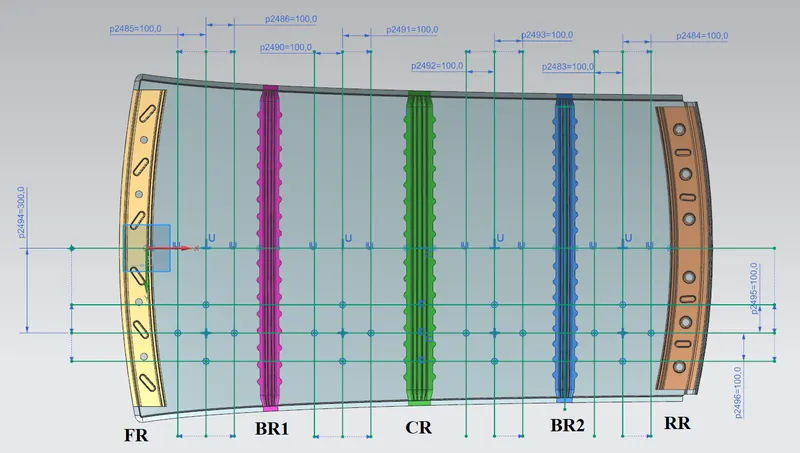
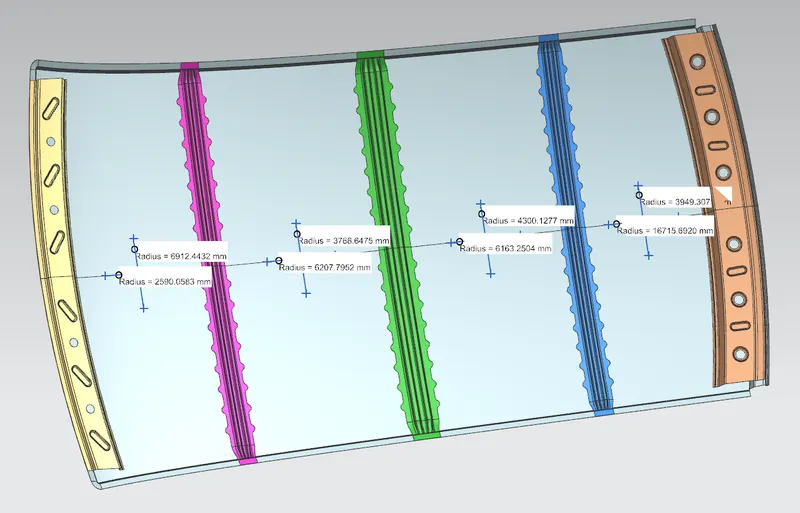
Calculation of Rx and Ry
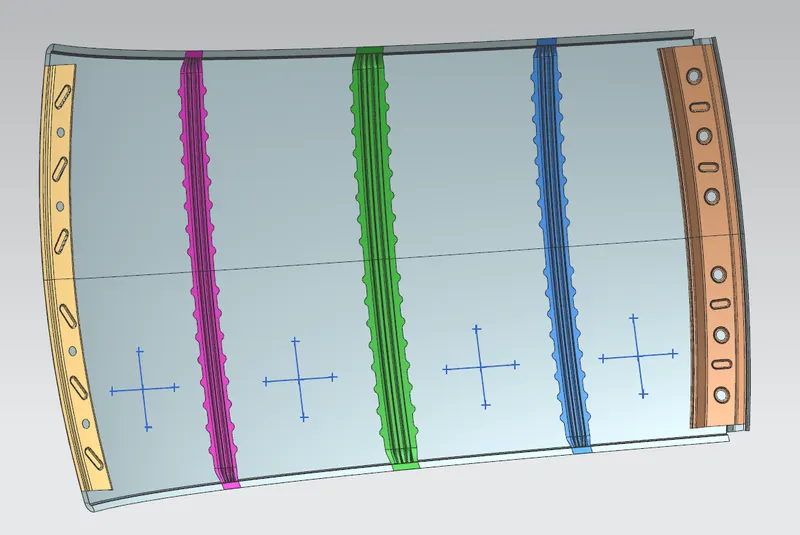
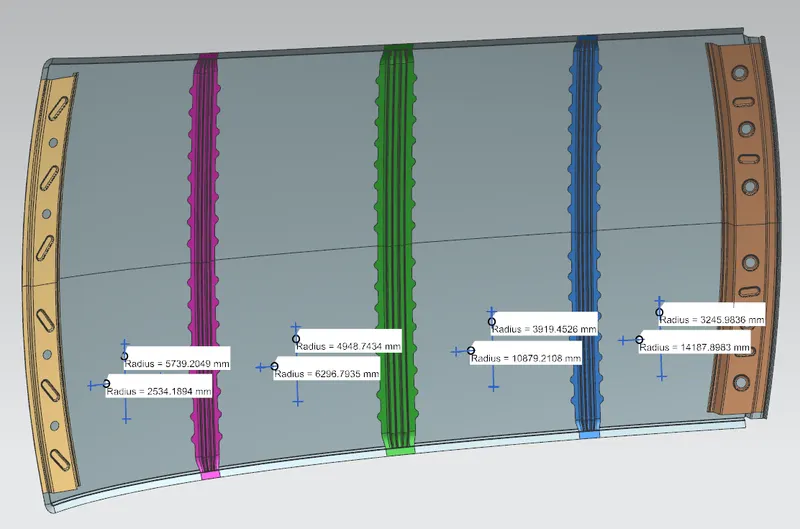
Heat Distortion Criteria Calculations :-
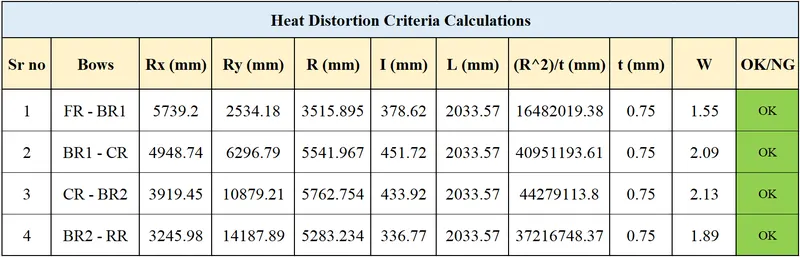
From the above table we can see that all the values of W are less than 2.7 therefore current positioning of bow roofs are found OK.
2) Snow load criteria :-
Snow load is a downward force acted on the roof. This criteria is useful to justify the bow roof position in snow fall regions. Roof must withstand the load as well as it should reflex back to its orignal position without any permanent deformation once the load is removed. The position of bow roof should be in a such a way that it should provide strength to the roof against bending.
Snow Load Prediction Formula -
Qr = [Iy x t2] / [α x s x [(Rx + Ry)/2]2 x 10-8]
Where,
α = My x Lx2 x 10-12 , My = Y(Ly-Y)
t = Roof plate thickness [mm]
Ly = Distance between the front and rear roof Rails on the Vehicle along with 0Y[mm]
Length of Roof panel with the center point between Roof rail Front /Rear as the front and rear reference point.
Lx = Distance between the Left and Right end of the roof on the Roof BOW [mm]
The width of the roof panel is exposed on the surface.
Y = Distance front Front Roof Rail to Roof BOW[mm]
s = Distance for which Roof BOW bears divided load [mm]
s = L1/2 + L2/2
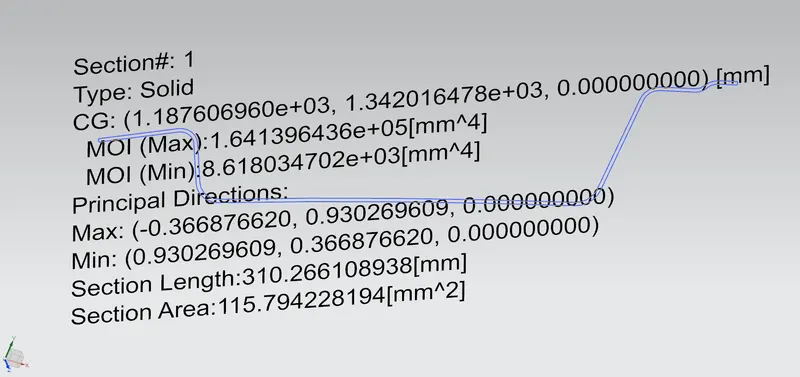
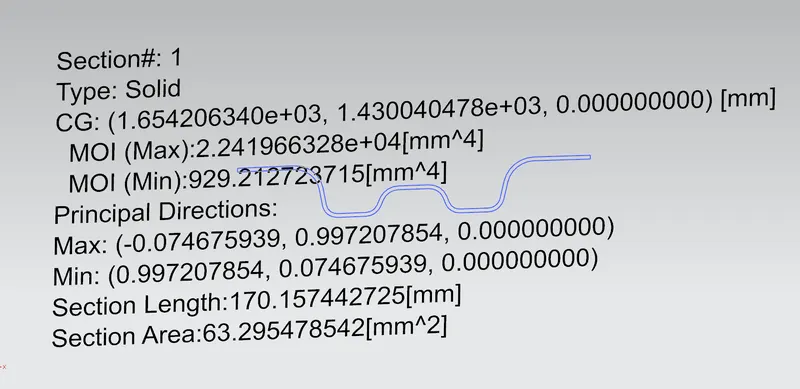
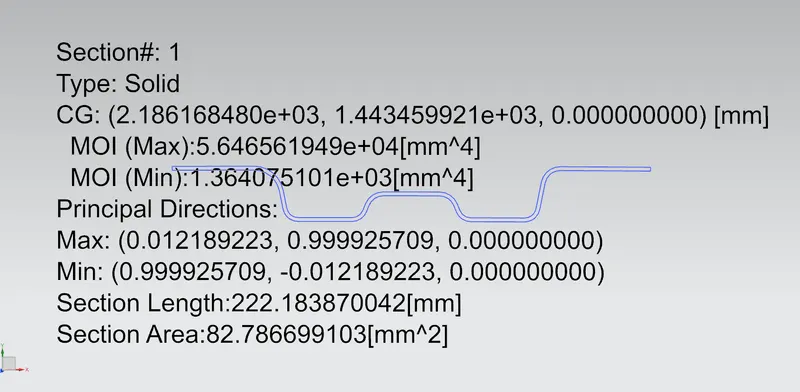
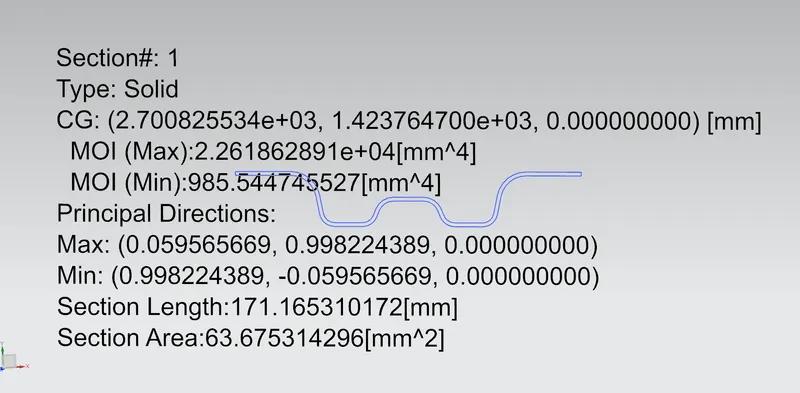
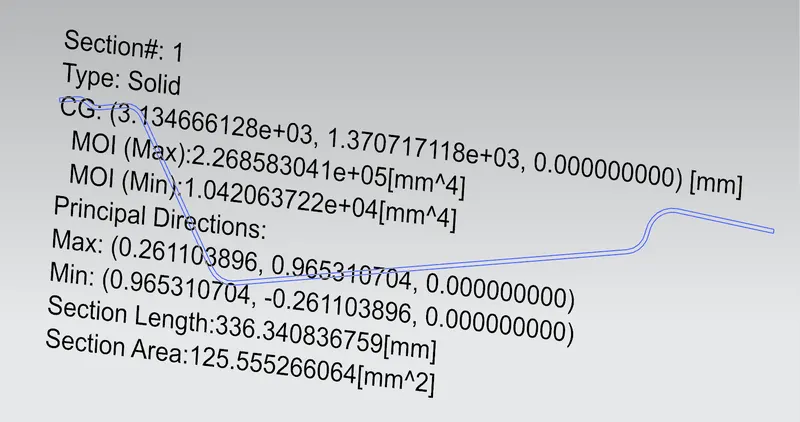
Iy = Geometrical moment of inertia of Roof BOW (Y cross-section )[mm4]
Rx = Lateral direction curvature radius of roof panel Y cross-section on Roof BOW [mm]
Roof panel curvature Radius of the Length Lx in Front view
Ry = Longitudinal Direction curvature radius of the Roof panel X cross-section on Roof BOW [mm]
Roof panel X curvature radius of length s in Side view
Judgment condition
Qr ≥ 3.1
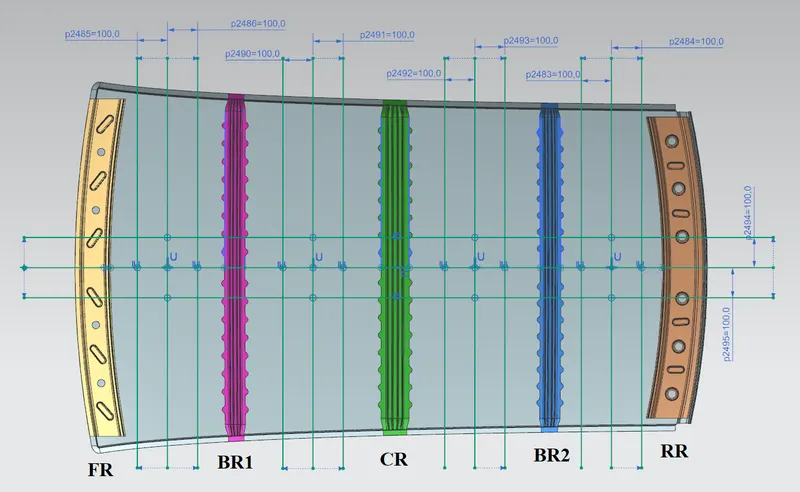
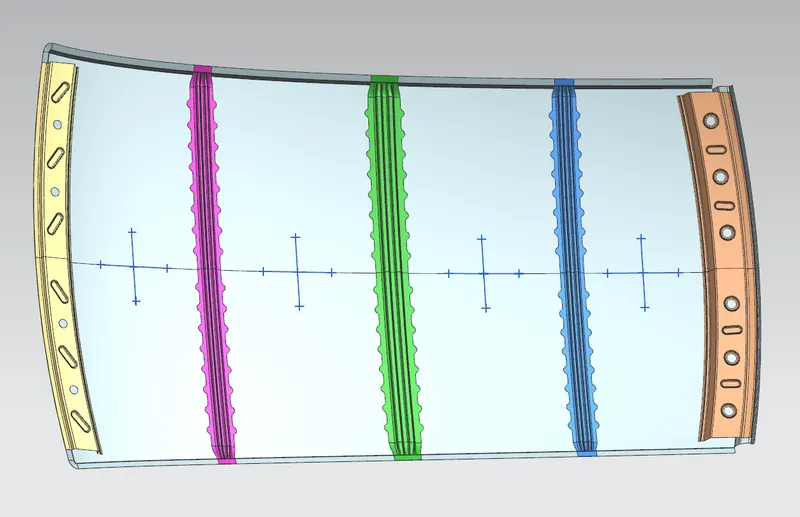
Calculation of Rx and Ry
Moment of Inertia of roof rails :-
Front roof rail
Bow roof - 1
Center roof rail
Bow roof - 2
Rear roof rail
Snow Load Criteria Calculations
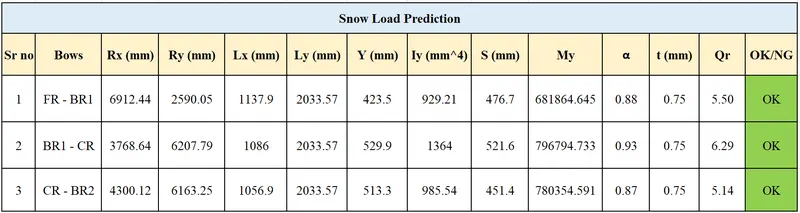
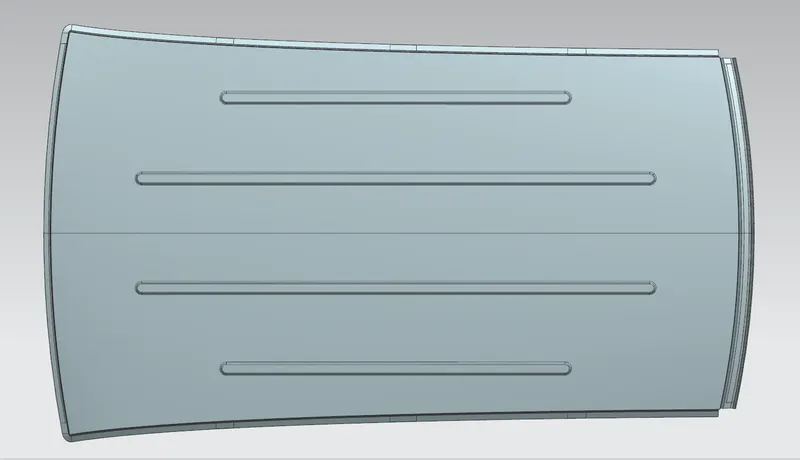
We can observe that roof is satisfying the snow load condition. If Qr value is less than 3.1 then we need to improve the placement of bow roofs. In that case we can also suggest styling team to modify the curvature of surface. If it is not possible then we can improve the strength of the roof by creating the embosses on the surface of the outer panel of the roof.
Draft Analysis :-
Draft analysis is performed based on color ranges identifying zones on the analyzed element where the deviation from the draft direction at any point, corresponds to specified values.
Roof outer panel
Front roof rail
Bow roof - 1
Center roof rail
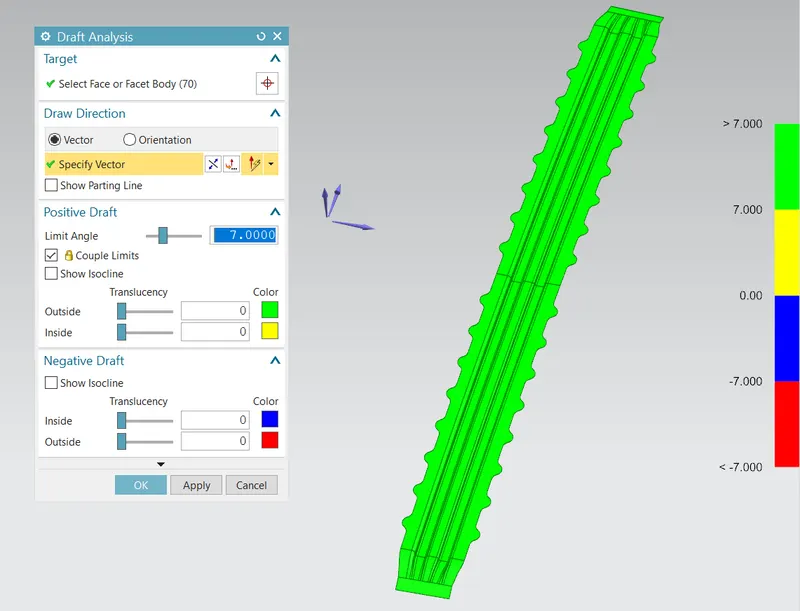
Bow roof - 2
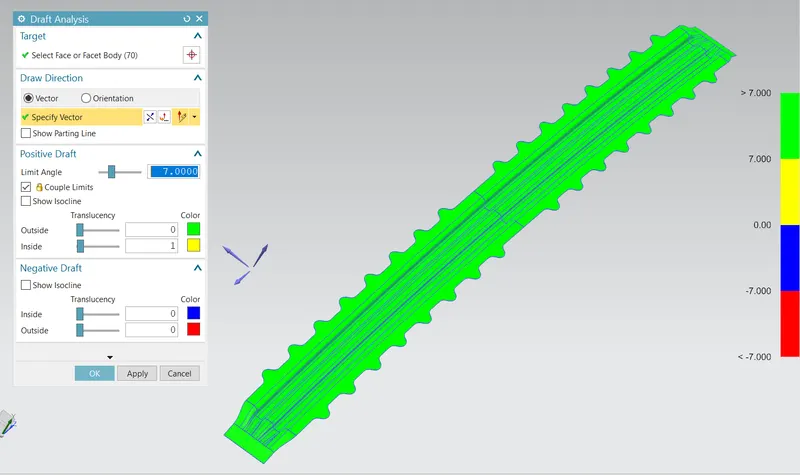
Rear roof rail
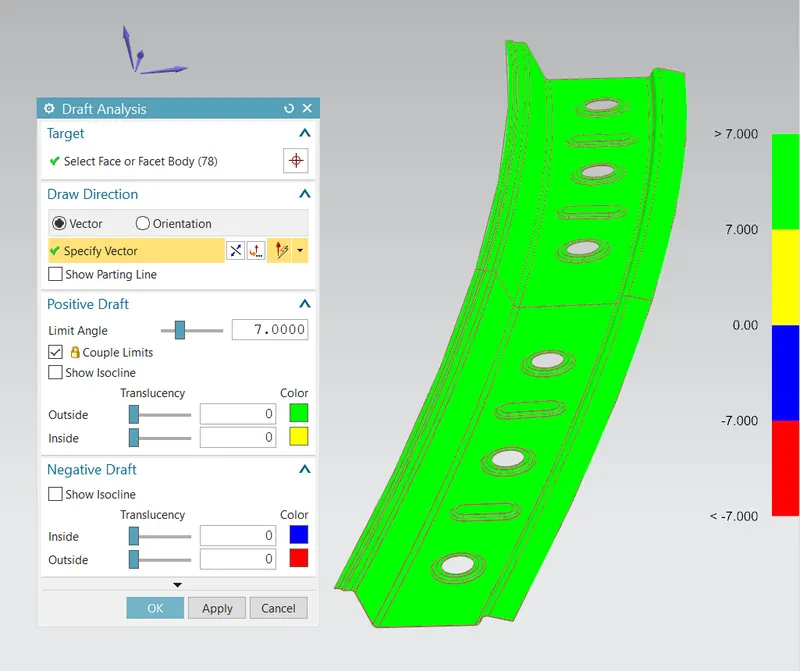
Conclusion :-
The car roof with essential reinforcements like Front roof rail, Bow roofs, Center roof rail, Rear roof rail has been designed by considering all the design parameters and the curvature study.