Roof challenge
DESIGN OF ROOF:
An automobile roof or car top is the portion of an automobile that sits above the passenger compartment of automotive vehicle which protects from sun, wind, rain and other external elements. Because the earliest automobiles were designed in this ear of horse drawn carriages, early automobile roofs used similar material and designs. It also acts as a cross member between body side of car and provide provisions for front windshield, backdoor roof, roof assembly also one among the parts which provide provisions for front windshield, backdoor roof, roof assembly also one among the parts which provide safety for roll over accidents.
OBJECTIVE:
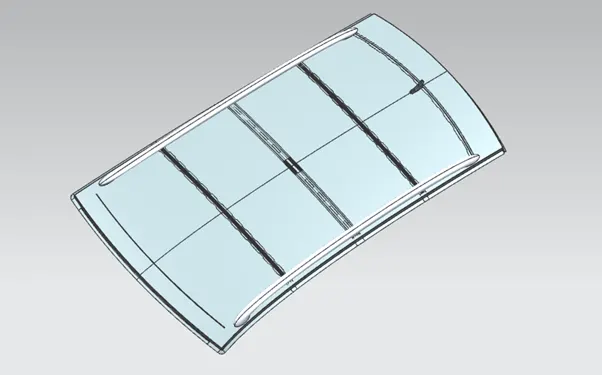
The objective of the car is to develop a BIW roof of a Car along with front roof rail, centre roof rail, two bow roof rails and rear roof rail. And analyse using draft analysis weather it satisfying the manufacturing requirements or not.
DESIGNING THE REINFORCEMENTS:
DITCH AREA:
The ditch of the roof was designed by taking the considerations. The ditch area was designed to 0.75mm thickness and have 3° of minimum draft angle. The reinforcements were attached by using spot welds and mastic sealants. The special purpose of this design is to provide a head room clearance of minimum 80mm as per the standards for a passenger sitting in the seats.
FRONT ROOF RAIL:
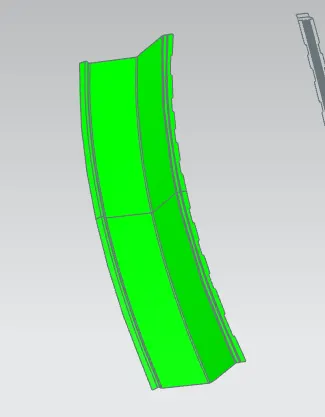
The front roof rail is located in the front of the roof. Along this wind shield made of glass are joins the roof. Wind shield glass are used for visibility and has 25 degrees of draft angle.
BOW ROOF:
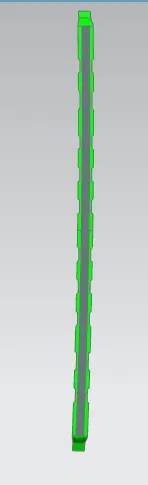
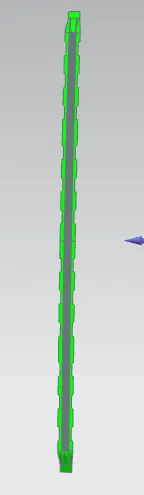
They are two bow roofs in the following design to satisfy the stiffening purpose and along with design requirements. One of the bow roofs is located in front side and another in rear side.
CENTER ROOF:
This is also known as reinforcement centre which is located at the centre of the roof. The cross section needs to be provide more strength to the roof.
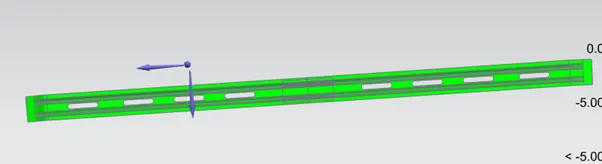
REAR ROOF RAIL:
The rear roof rail connects the backdoor and roof. The backdoor are taken into considerations for designing this roof rail.
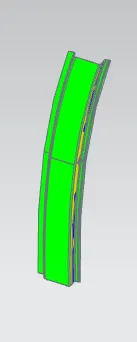
HEAT DISTORTION CRITERIA:
The study of this heat distortion is to check the availability of the roof to withstand high temperature with respect to the positioning of the reinforcement which contribute to increase strength.
Formula for heat distortion:
W=(1.73×10^-3×L)+(1.85×10^-8×R^2/t)+(1.10×10^-3×l)-2.68
Judgment condition: W<2.1≤NG
L= roof length in X-Direction(mm)
R= roof curvature= 2(Rx×Ry)/(Rx+Ry)
Rx= X curvature
Ry= Y curvature
T= thickness
l=bow roof span
The following table gives the judgement condition.
|
BOW |
L |
Rx |
Ry |
R |
L |
W |
TEST |
|
Span 1 (F)(FB) |
2091.21 |
5795.78 |
3063.80 |
4008.56 |
278.49 |
1.64 |
OK |
|
Span 2 (FB)(C) |
2091.21 |
2665.73 |
6462.13 |
3782.73 |
281.01 |
1.33 |
OK |
|
Span 3 (C)(RB) |
2091.21 |
2985.3436 |
5529.875 |
3667.48 |
137.18 |
1.317 |
OK |
|
Span 4 (RB)(R) |
2091.21 |
3416.68 |
7919.66 |
6550.74 |
43.418 |
1.31 |
OK |
SNOW LOAD CRITERIA:
This analysis is used in cold regions where snow occurs. The designed roof must pass through these calculations to ensure that it needs to have stiffness to withstand the load due to snow.
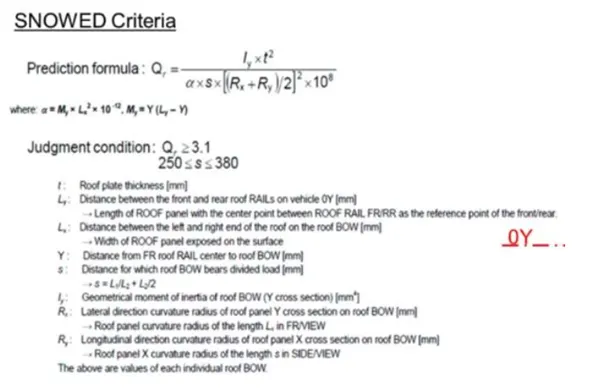
The following table shows the judgement conditions.
|
Front bow |
Centre bow |
Rear bow |
|
|
Iy |
4557.8 |
52.142 |
42.518 |
|
My |
825897.2 |
507138.99 |
734067.86 |
|
Y |
521.67 |
504.37 |
446.25 |
|
Lx |
1134.09 |
1085.73 |
1060.42 |
|
Ly |
2091.22 |
2091.22 |
2091.22 |
|
Rx |
2765.80 |
6296.28 |
5924.80 |
|
L1 |
521.67 |
504.37 |
446.25 |
|
L2 |
504.37 |
446.25 |
547.45 |
|
S |
253.219 |
224.25 |
274.540 |
|
α |
0.6522 |
0.5978 |
0.825 |
|
Qr |
7.318 |
1.69 |
0.505 |
|
Test |
OK |
NOT OK |
NOT OK |
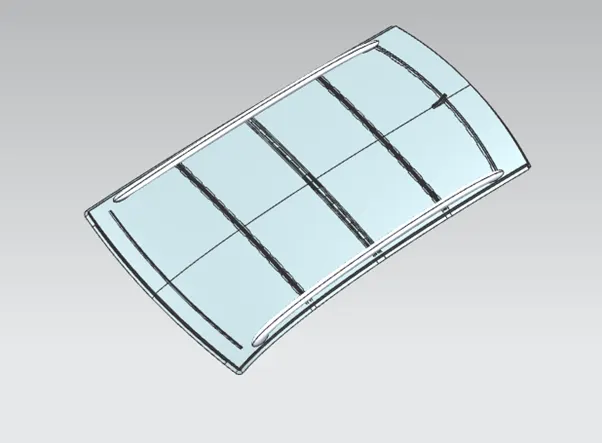
Image of Roof:
CONCLUSION:
- The roof is completely designed as per the master sketch given.
- The snow load criteria and heat distortion are calculated weather it follows the norms or not.
- The design as per the heat distortion is accepted and no styling is necessary
- The design as per snow load criteria is not accepted as per the norms and some changes are necessary to design.
- Draft analysis is successfully done by using this NX software, and finally it satisfies the manufacturing conditions.