Roof challenge
Roof design
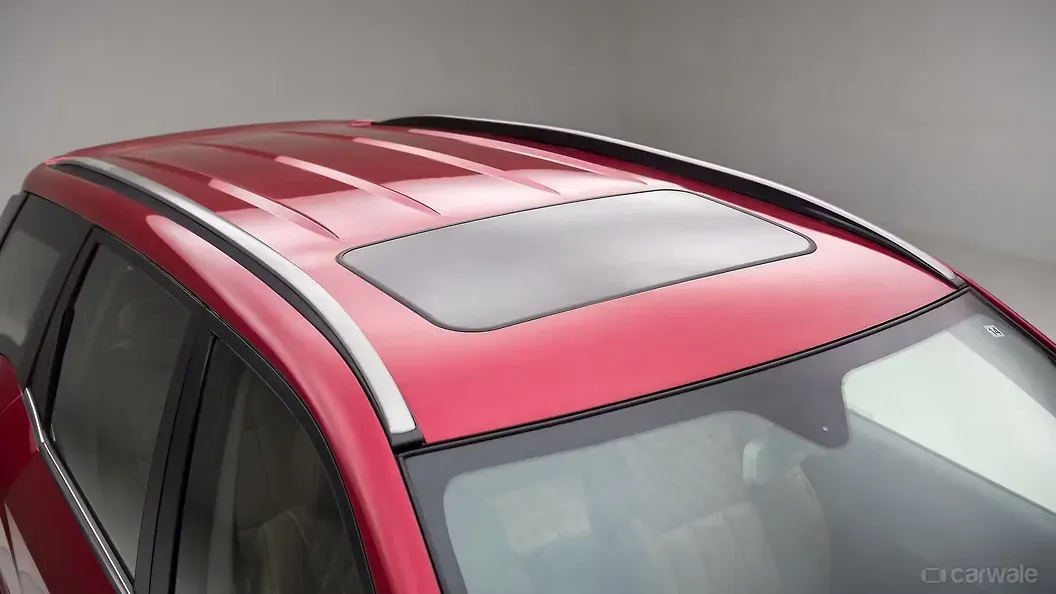
An automobile roof or car top is the portion of an automobile that sits above the passenger compartment, protecting the vehicle occupants from sun, wind, rain, and other external elements.
To design a roof we need to provide bow roof rails, reinforcements, to strengthen the roof. This should also protect the car and passengers when the car is crashed or rolled over.
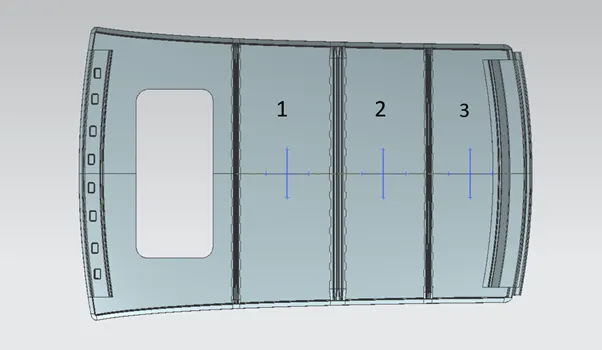
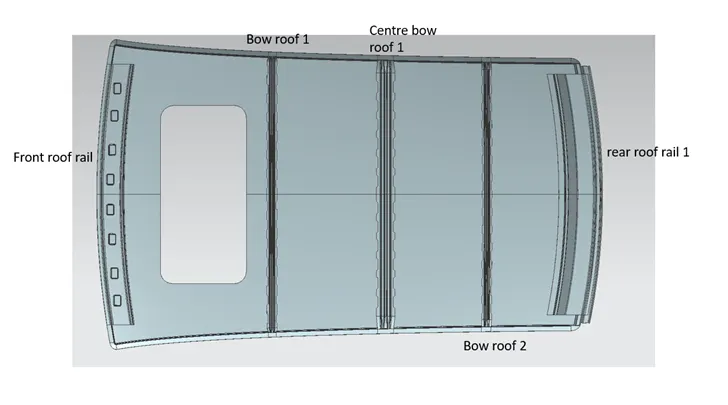
The reinforcements designed for this roof are-
- Front roof rail
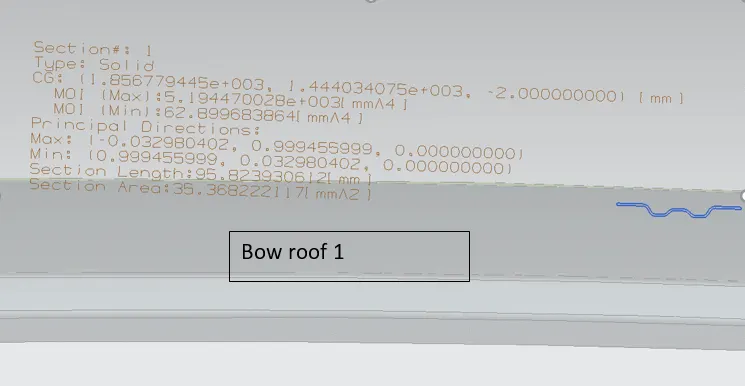
- Bow roof rail 1
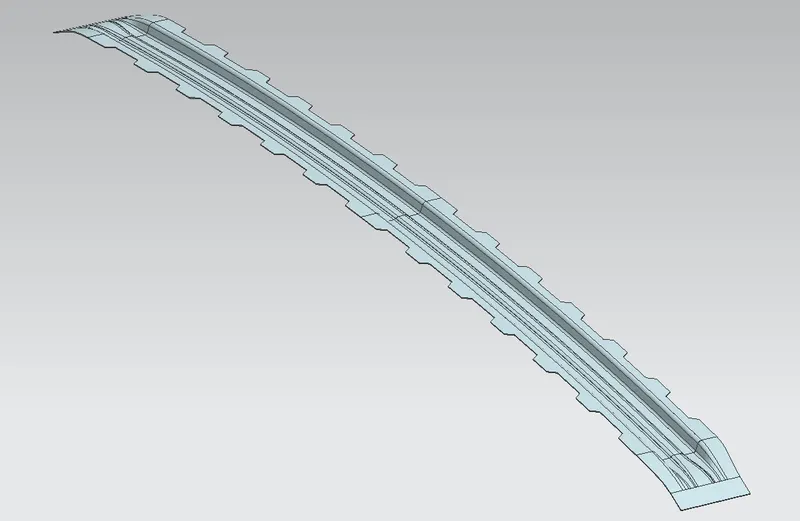
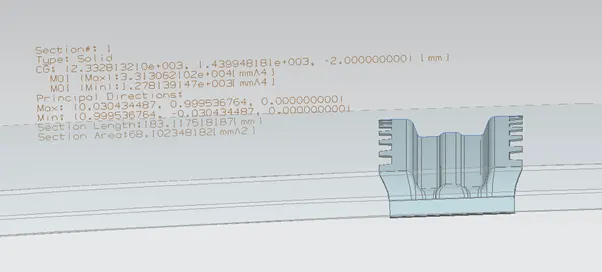
- Centre roof rail
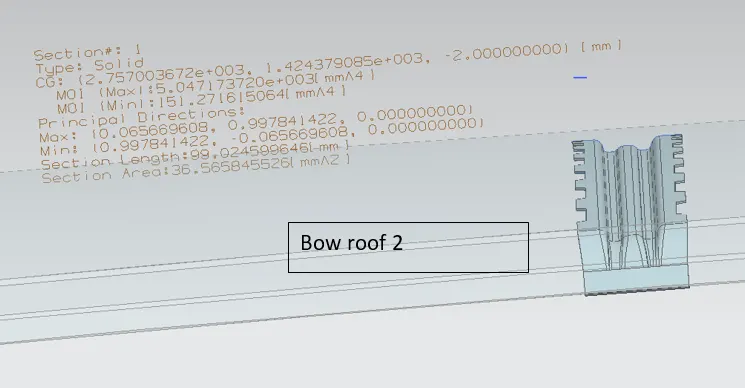
- Bow roof rail 2
- Rear roof rail
Objective-
For the Given Roof styling, developing the essential flanges and reinforcements.
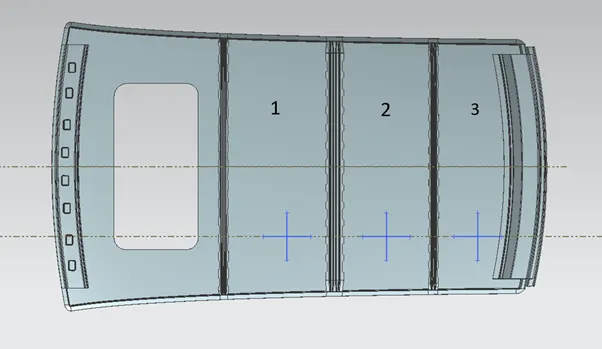
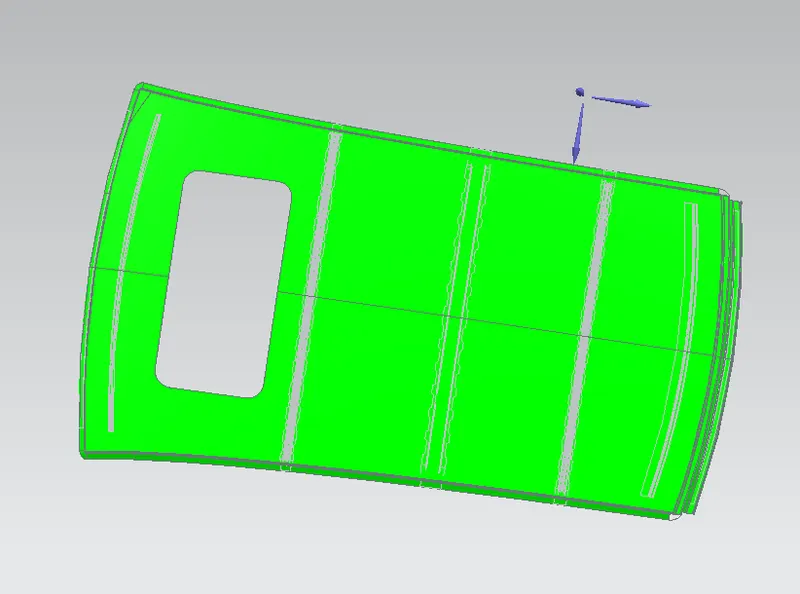
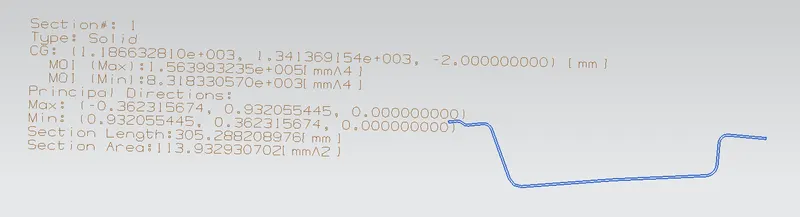
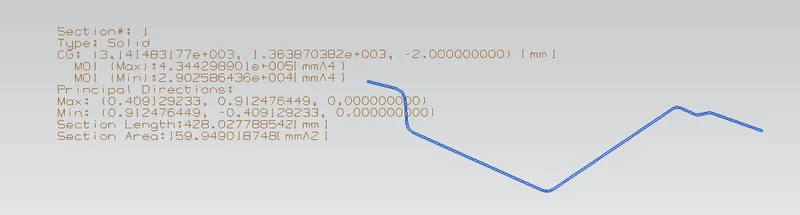
Provide appropriate dimensions and check for Draft analysis, and submit your Section Inertia report on the 0-Y section.
Perform the calculations on Heat distortion and Snow load conditions
Designing of front roof rail-
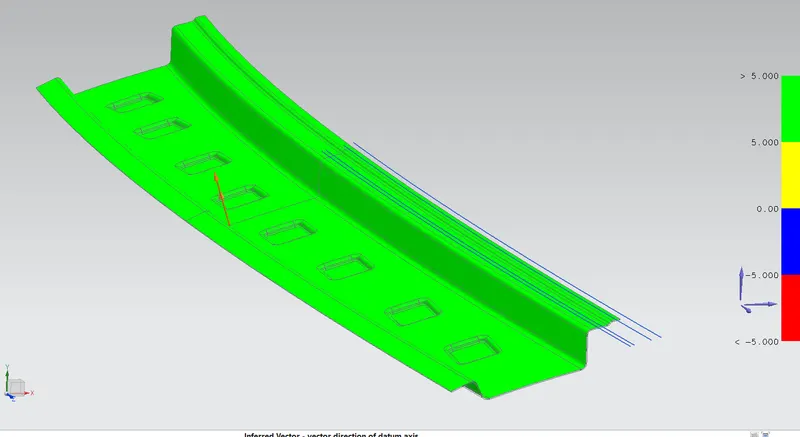
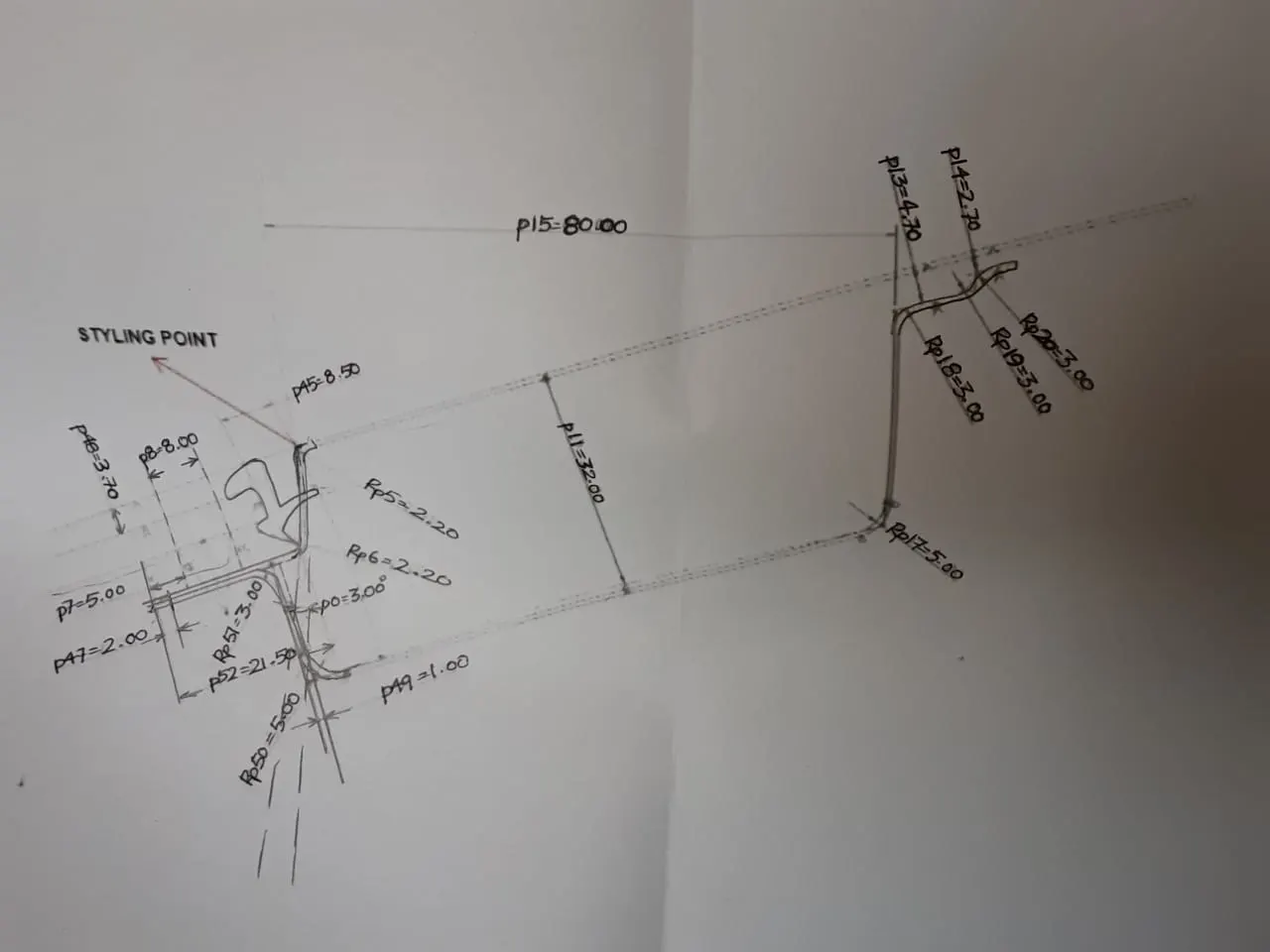
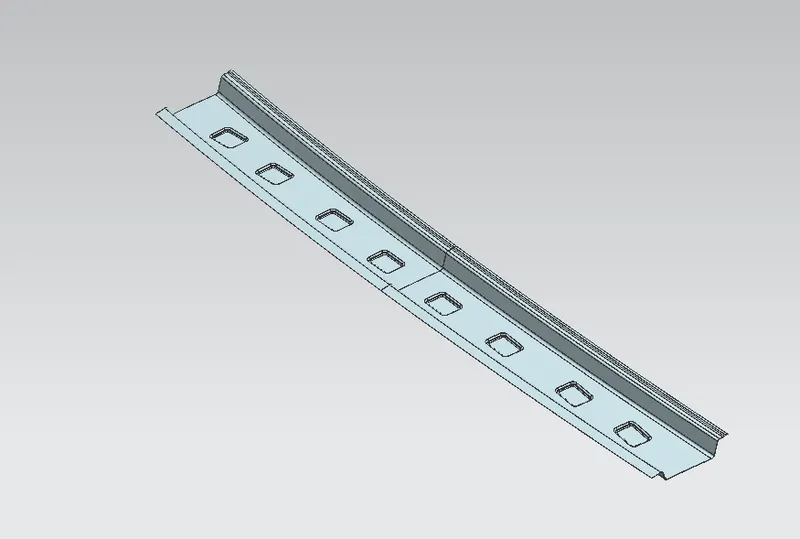
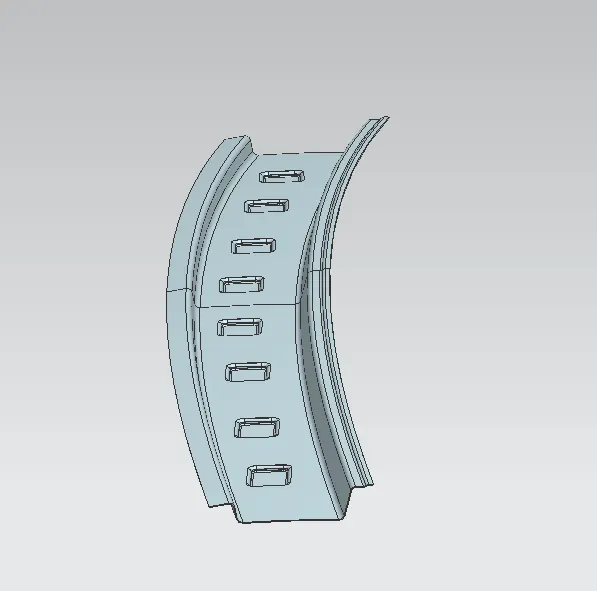
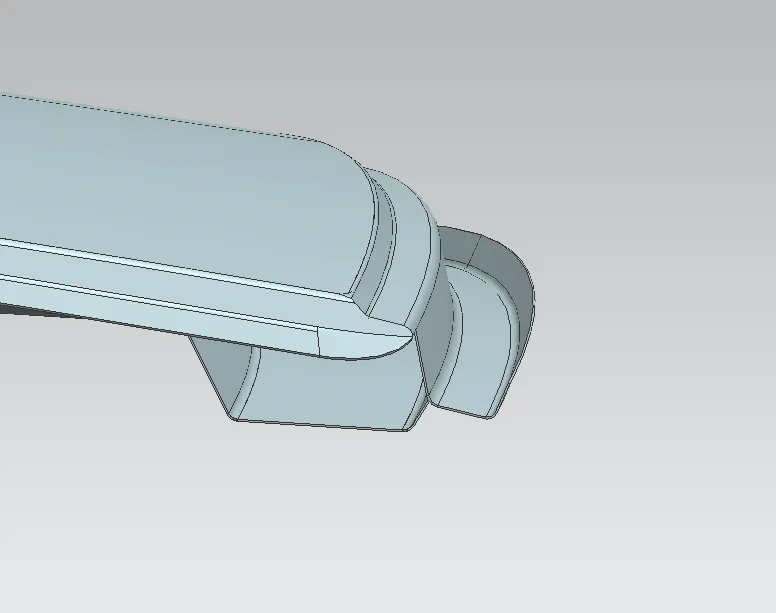
With the help of the master section, I have designed the front rail by accommodating the draft angle from 5-10 degrees. This trail joins with the front glass.
Embosses are given for this railing as well.
Rear roof rail-
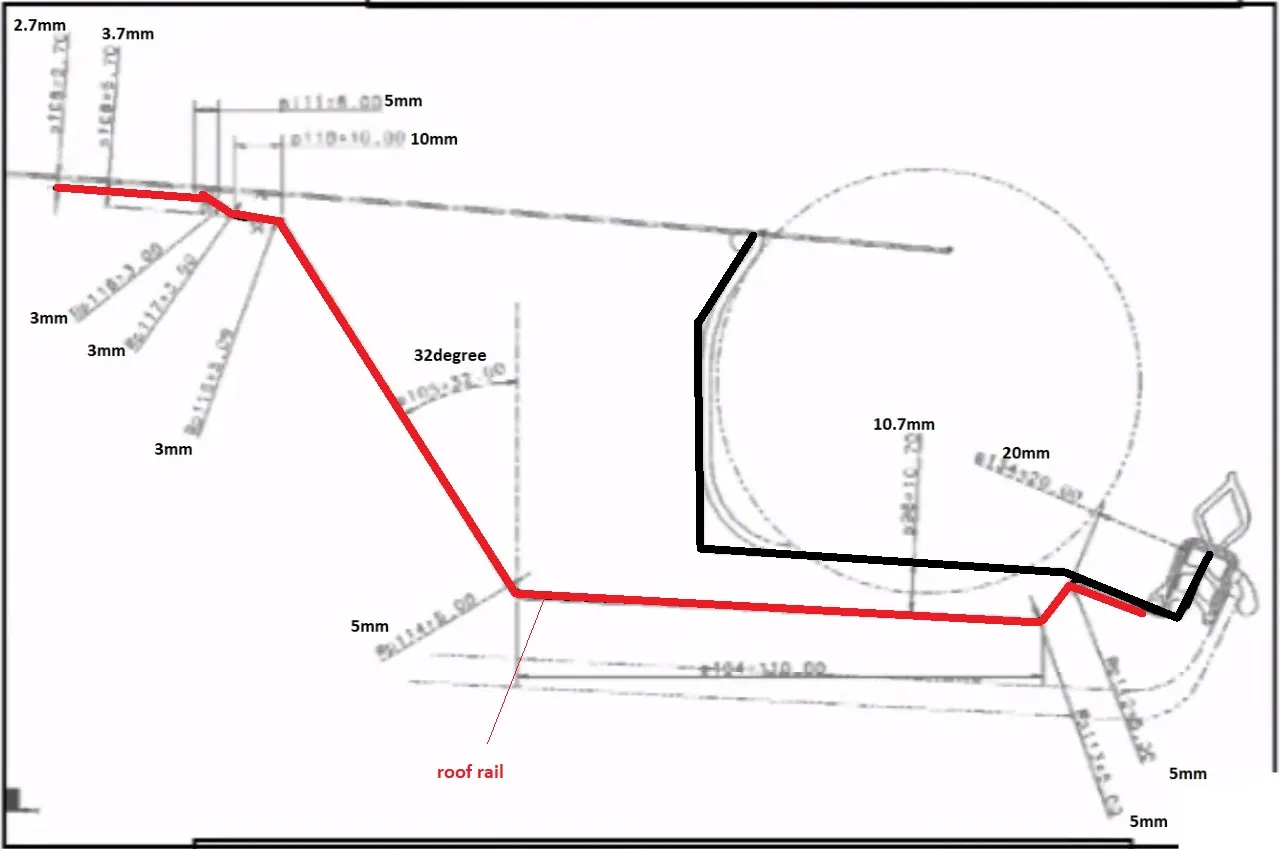
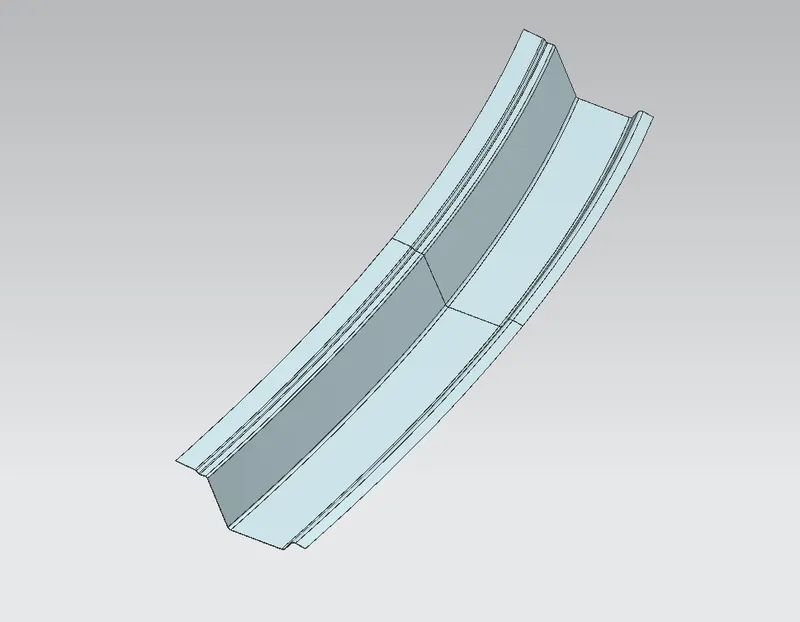
This is also designed with the help of the master section. This is a simple part to design. This connects with the back door of the car.
Bow roof rails 1 and 2-
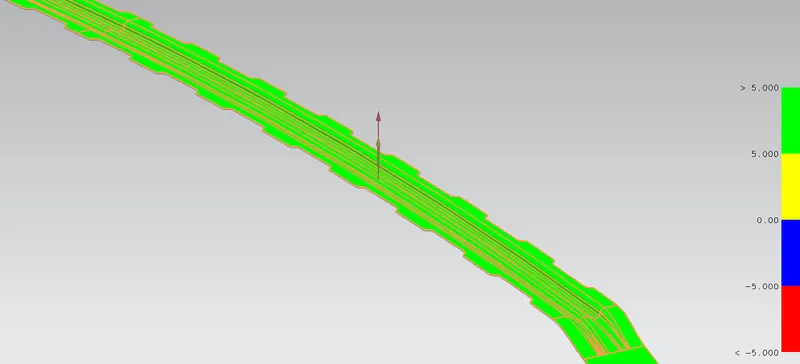
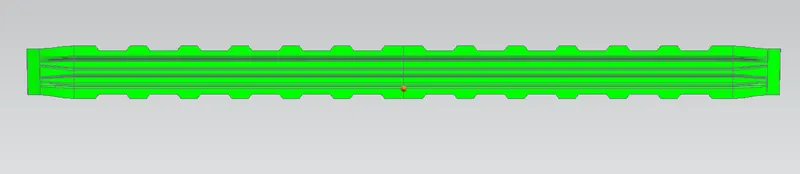
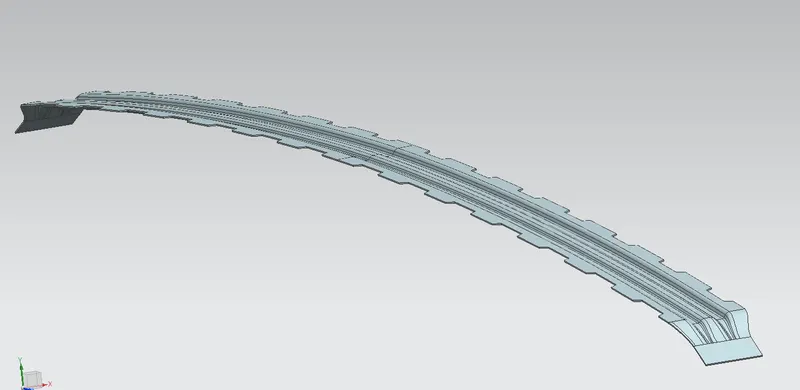
These rails actually contribute to the strength of the roof these locations also play an important role in the strength of the roof. These are just joined by Mastics. The number of bow roofs depends on the length of the roof.
Centre roof rail-
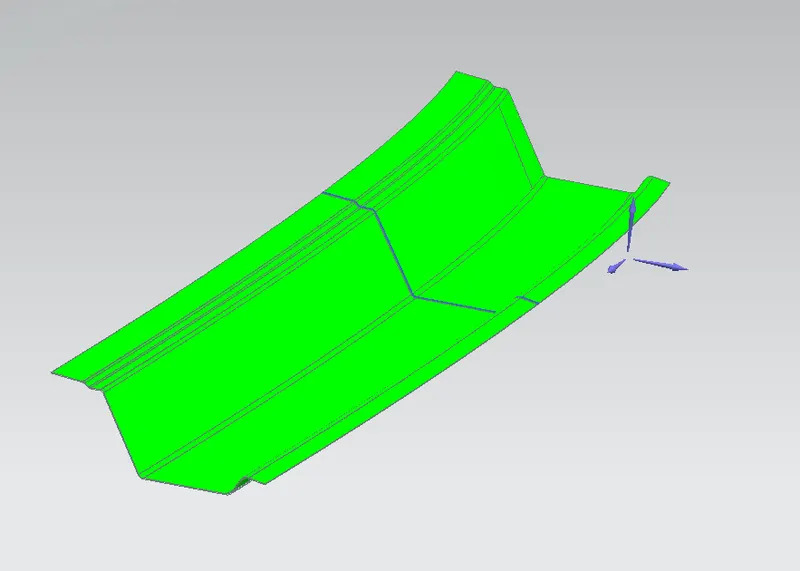
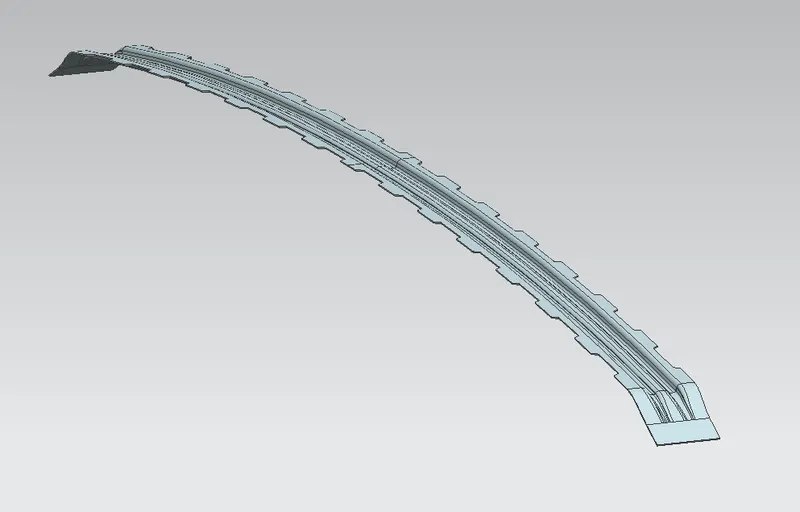
This rail Is located at the centre and is joint q with the B-pillar structure. This railing also gives more strength to the roof during rollover and crash.
Crash test of roofs-
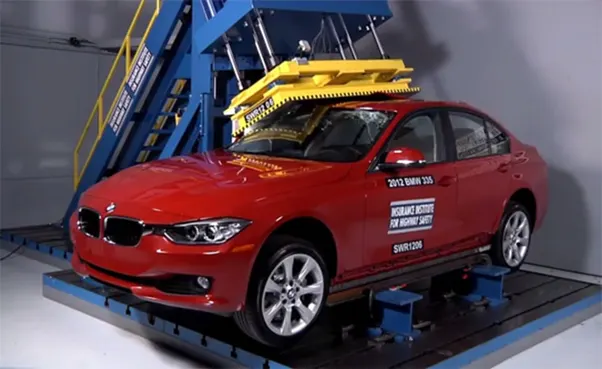
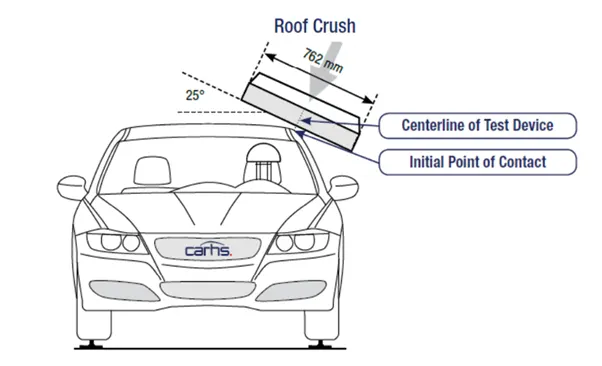
Calculations for roof test-
There are 2 conditions for the roof test namely Heat distortion and the Snow load test
Heat distortion calculation-
Heat distortion test is a type of static load test which plays an important role in maintaining roof strength. Heat distortion temperature is the temperature at which metal softens and deforms under a specified load. So this is done to see if the roof and rails contribute enough strength to withstand deformation.
Formula to check if the positions of the rails and roof design are OK or NG
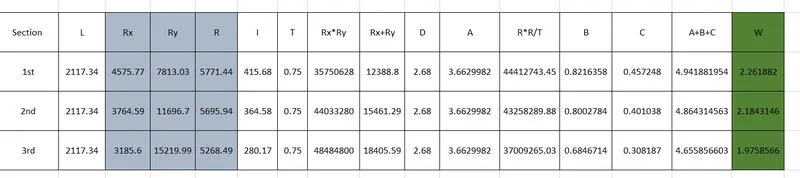
W = [1.73 x 10^(-3) x L] + [1.85 x 10^(-8) x (R^2)/t] + [ 1.10x10^(-3) x l] – 2.68
Judgement Condition : OK< 2.7 Where L = Roof Length in X-Direction[mm](Roof dimension in 0-Y) R = Roof curvature R = 2(Rx*Ry)/(Rx+Ry) Rx = X curvature Ry = Y curvature t = Roof plate thickness [mm] l = Bow Roof Span [mm] In my roof design there are 4 section but I have calculated only for 3 sections due to the presence of sun-roof Snow load Calculation- Qr = [Iy x t2] / [α x s x [(Rx + Ry)/2]2 x 10-8] Where α = My x Lx2 x 10-12 , My = Y(Ly-Y) Judgement condition = Qr ≥ 3.1 250 ≤ s ≤ 380 t = Roof plate thickness [mm] Ly = Distance between the front and rear roof Rails on the Vehicle along with 0Y[mm] Length of Roof panel with the centre point between Roof rail Front /Rear as the front and rear reference point. Lx = Distance between the Left and Right end of the roof on the Roof BOW [mm] The width of the roof panel is exposed on the surface. Y = Distance front Roof Rail to Roof BOW[mm] s = Distance for which Roof BOW bears divided load [mm] s = L1/L2 + L2/2 Iy = Geometrical moment of inertia of Roof BOW (Y cross-section )[mm4] Rx = Lateral direction curvature radius of roof panel Y cross-section on Roof BOW [mm] Ry = Longitudinal Direction curvature radius of the Roof panel X cross-section on Roof BOW [mm] Draft analysis- Roof panel Front roof rail- Bow roof rail 1 Bow roof rail 2 Centre roof rail- Rear roof rail-