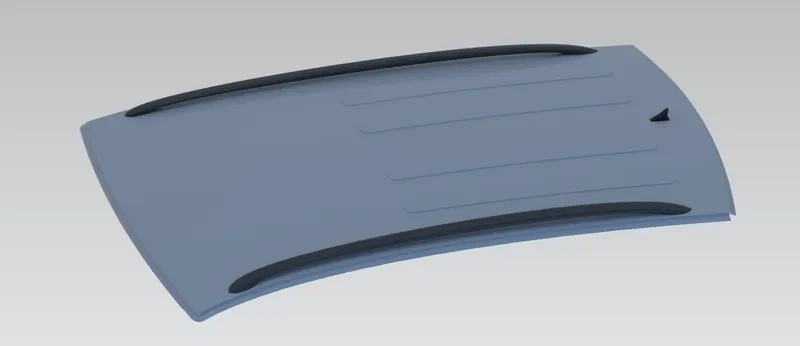
Designing a BIW Roof of a Car by with Heat Distortion and Snow load Predictions
Designing a BIW Roof of a Car by with Heat Distortion and Snow load Predictions
Objective
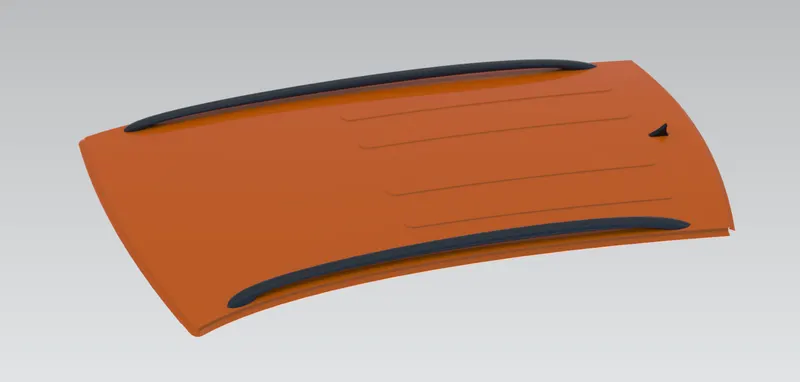
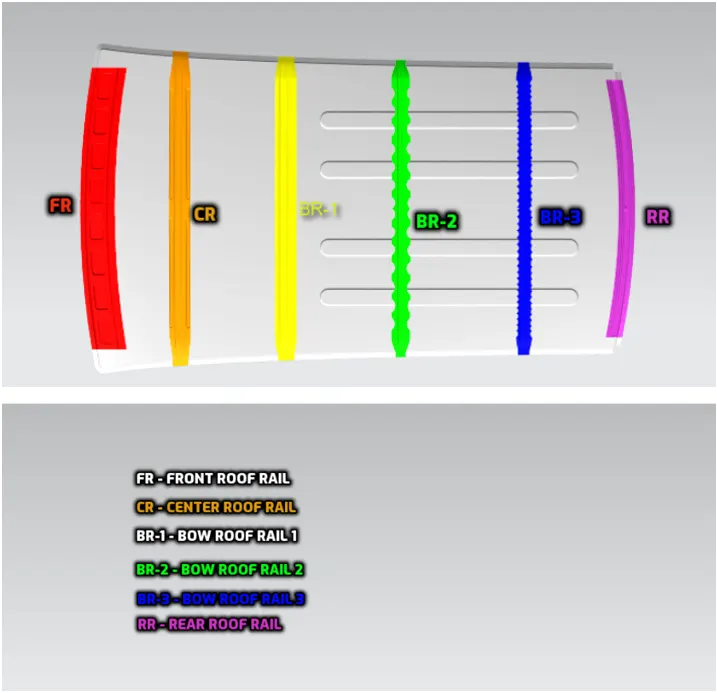
The objective of this project is to design BIW Roof of a car with required bows which includes Front Roof Rail, Center Roof Rail, Rear Roof Rail and required Bow Roofs at different positions by following engineering standards. Then Roof is subjected to Draft Analysis for Satisfying Manufacturing requirements. Further Curvature study includes Heat Distortion & snow load conditions and Section Modulus study has been carried out for designing Roof.
Introduction
An automobile roof or car top is the portion of an automobile that sits above the passenger compartment, protecting the vehicle occupants from sun, wind, rain, and other external elements. In later years, many variations on the automobile roof developed. These include:Convertible roofs,Roof modules,Hardtops,Sunroofs,T-tops,Targa tops and Vinyl roofs.
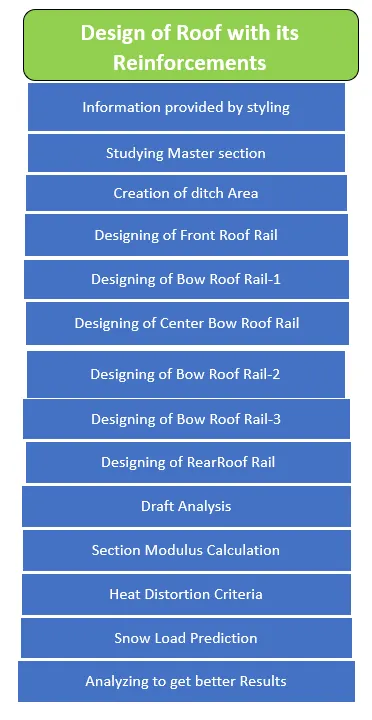
Design Methodology
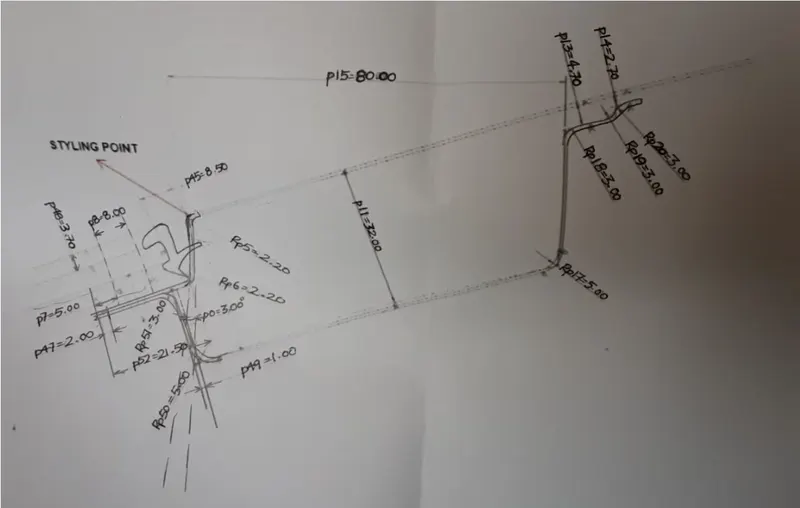
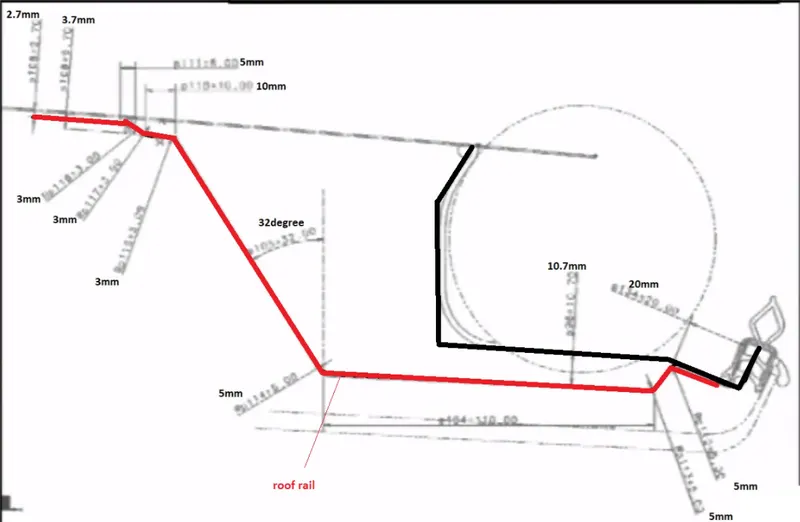
Master Section
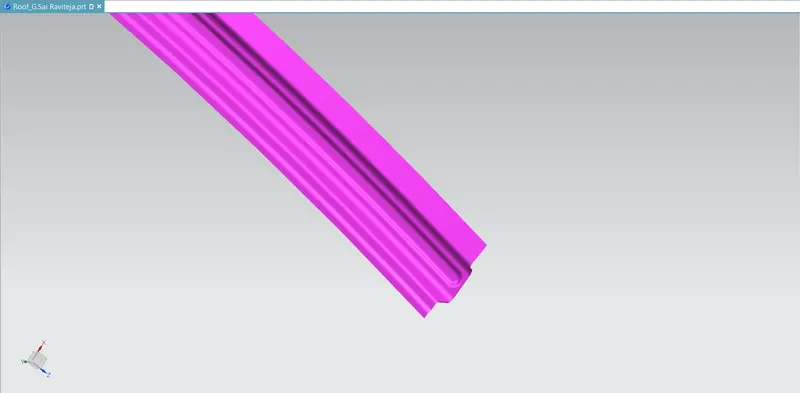
Front Roof Rail
Rear Roof Rail
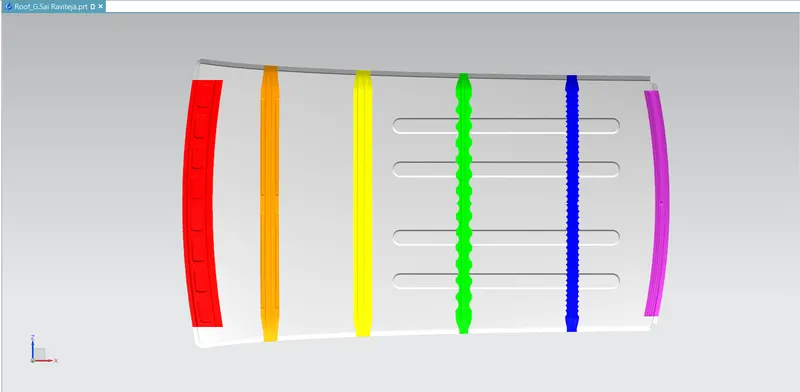
Designing the Reinforcements of Roof
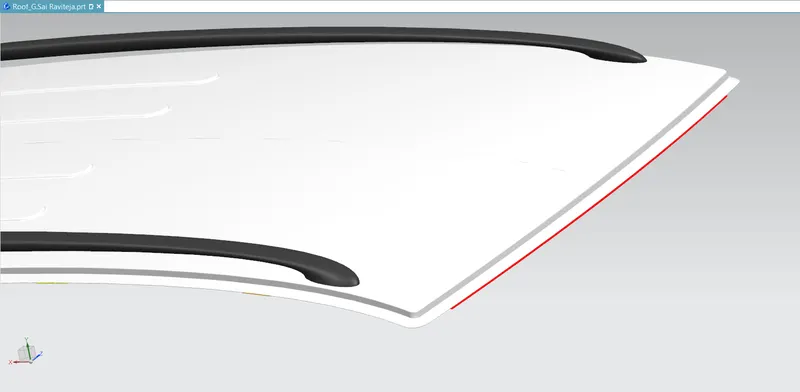
Ditch Area
- On basis of information provided by styling team Ditch area has been created.
- It includes some design considerations as only 3 degree of maximum draft angle and 0.75mm as thickness,
- The ditch area is an extended portion of main roof that similar to other BIW panels.
- These rails are attached to roof by using Mastic Sealants and Spot welding.
- For designing these roof some of the considerations like Visibility Criteria, Head Room Clearance, windshield Clearance and Backdoor clearance has been taken.
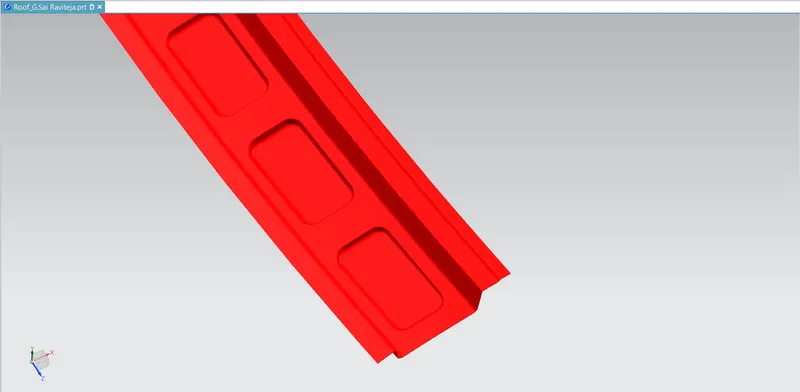
Front Roof Rail
- The front roof rails will be joining the wind shield, Body Side Inner and Outer panel, so the front roofs must be designed to have the visibility clearance for Wind Shield.
- On basis of Deep Drawing as reference the part of the front roof was designed to have the draft more than 5 degree.
- The front roof rail has the same offset surface for ditch area where both will be joined using Spot Welds.
- Some of the Embosses were provided to increase strength and stiffness of the rail.
Bow Roof Rails
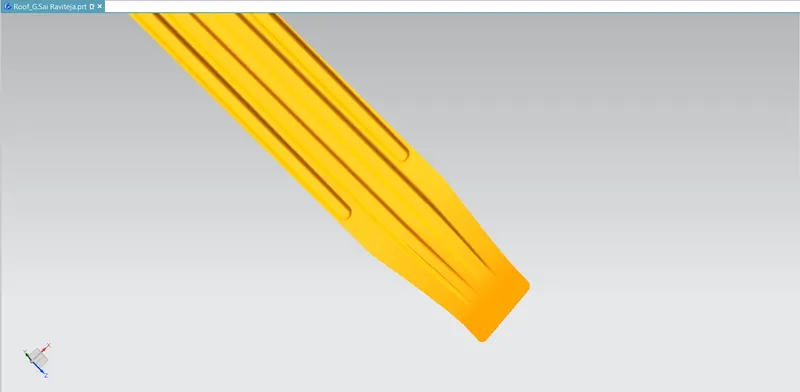
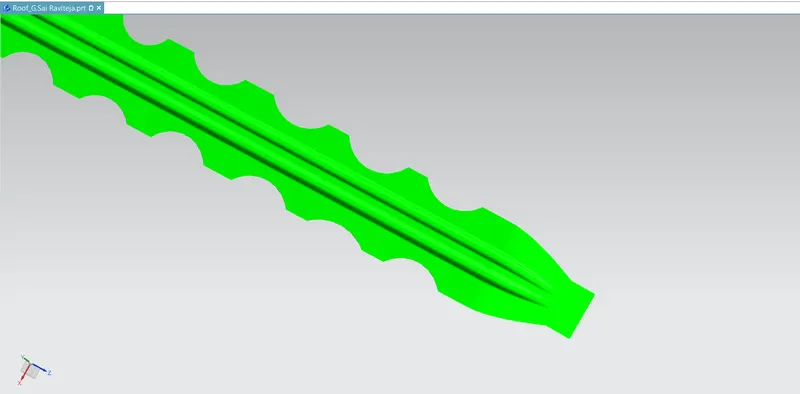
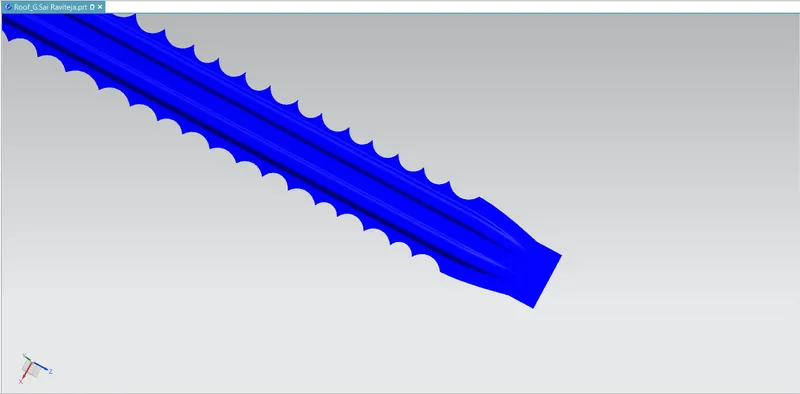
- All Bow roof rails were placed between front and rear roof rails.
- The main advantage of Bow roof rails was added to increase the stiffness of roof as it has large flat area to reduce bending Bow roof rails are used.
- The bow roof rails are placed as per standards for increasing the curvature result of roof for withstanding heat distortion and snow load criteria.
- Some mastic points are created on bow roofs for joining with roof.
- On basis of aesthetics spot welding is neglected instead mastics are used.
- All over the Bow roofs Embosses are created to increase stiffness.
- Then bow roof position needs to satisfy the head room clearance and draft analysis for Deep Drawing.
Bow Roof Rail-1
Bow Roof Rail-2
Bow Roof Rail-3
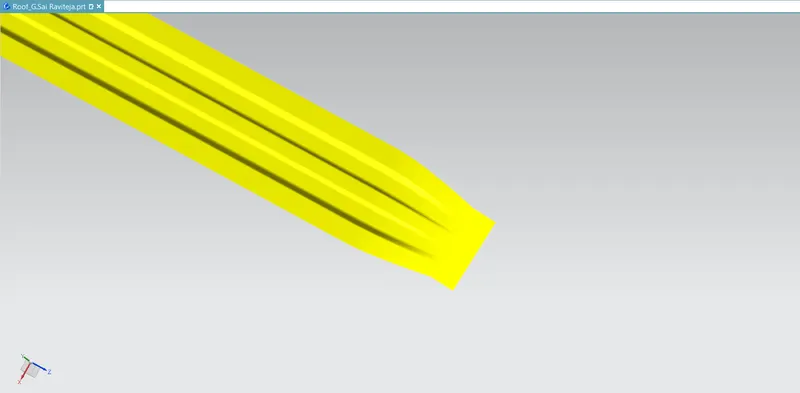
Center Roof Rail
- In this model center roof rail is placed after placing Bow roof-1 but it can be swapped at required positions in between Bow roofs but it should be placed at center of roof as much as possible.
- The center roof rail was designed to have reinforcement roof rail which helps the roof of a car to increase efficiency during Curvature study.
- The Head room clearance must be taken for creating Mastic points and Embosses on Center Bow roof rail.
- All these reinforcements provided will increase the Geometric MOI of the part drastically.
Rear Roof Rail
- The Rear roof rail was designed by taking the back-door clearance into consideration since the opening and closing of back door will affect on the roof.
- The ditch area on the roof was connected with the rear roof by using the mastic sealant or spot welding.
- Spot welding will be used for joining the hinges of Back door with the Roof.
- Embosses were added to increase the stiffness and strength of rail without affecting the head room clearance.
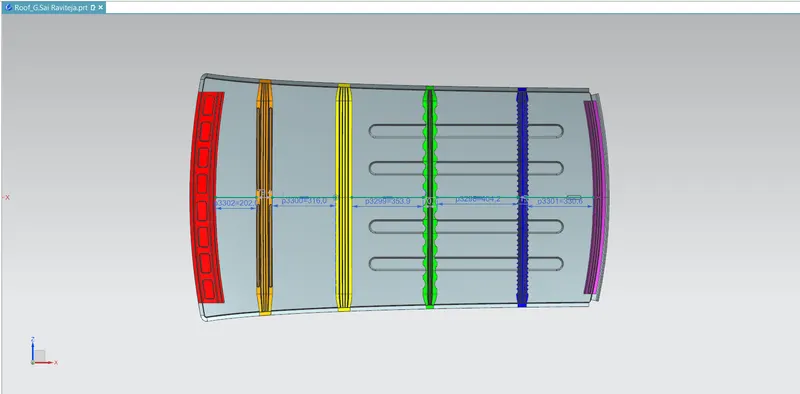
Positions of Different Roof Rails
Analysis
These are the three types of analysis were carried out to get a successful design of the BIW roof of a car which satisfies Manufacturing Standards.
- Draft Analysis
- Section Modulus
- Curvature Study (Heat Distortion Criteria & Snow Load Prediction)
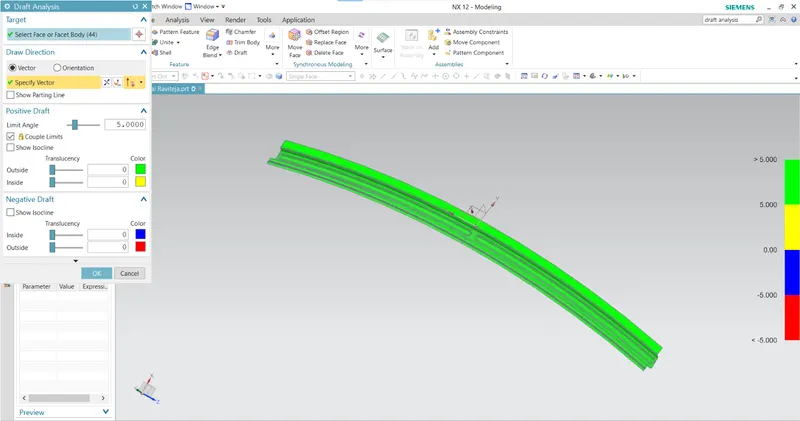
Draft Analysis
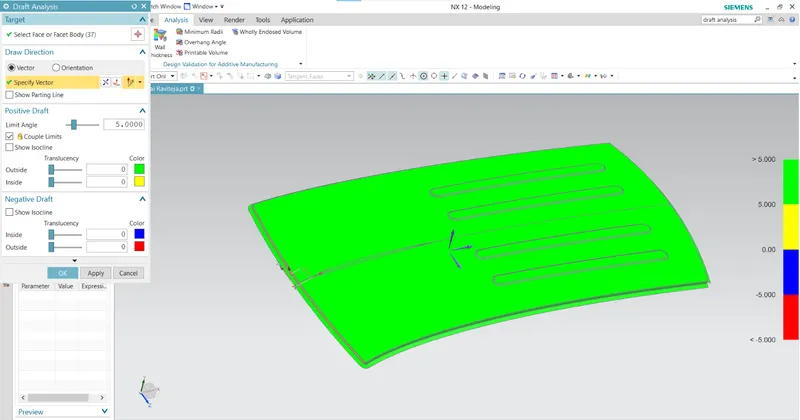
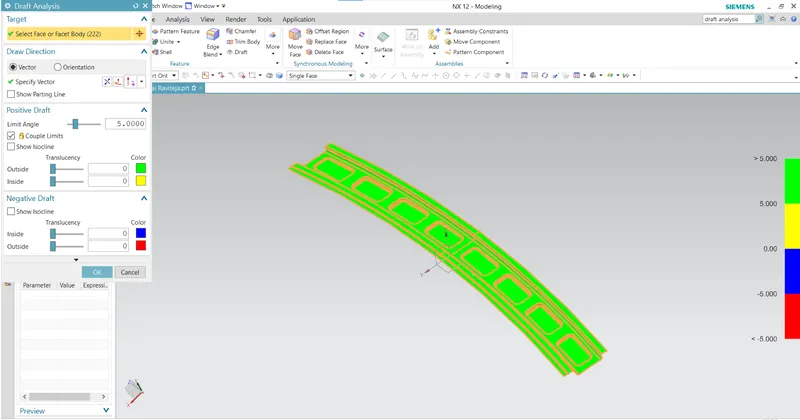
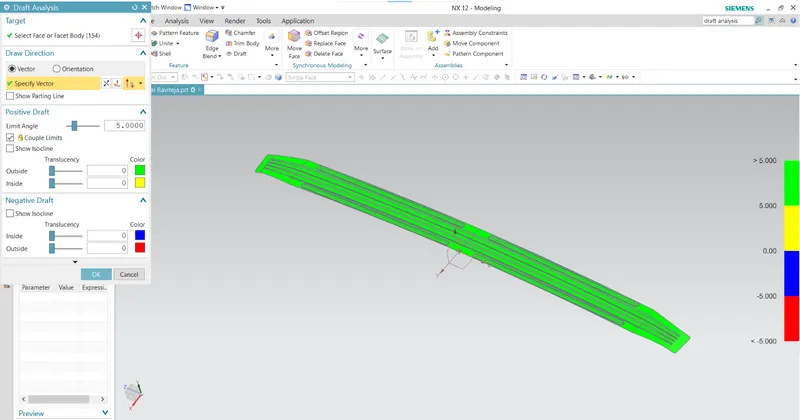
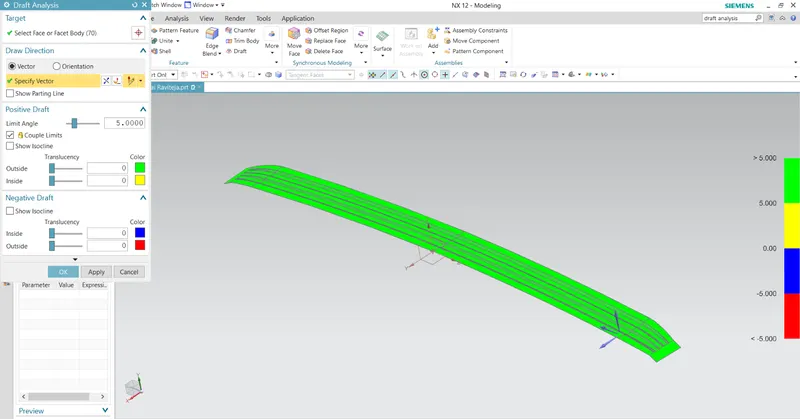
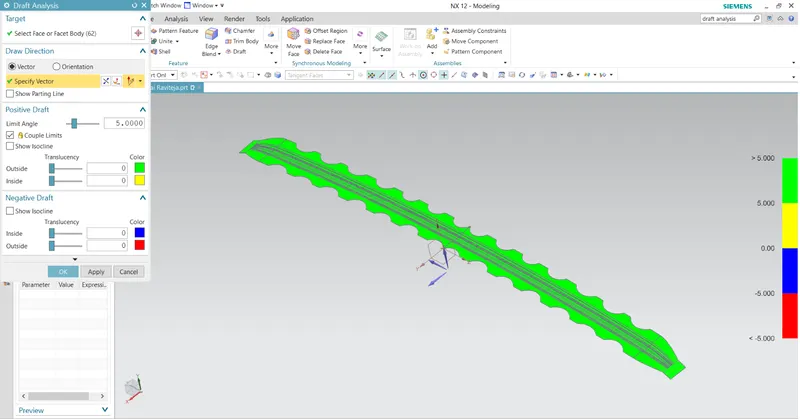
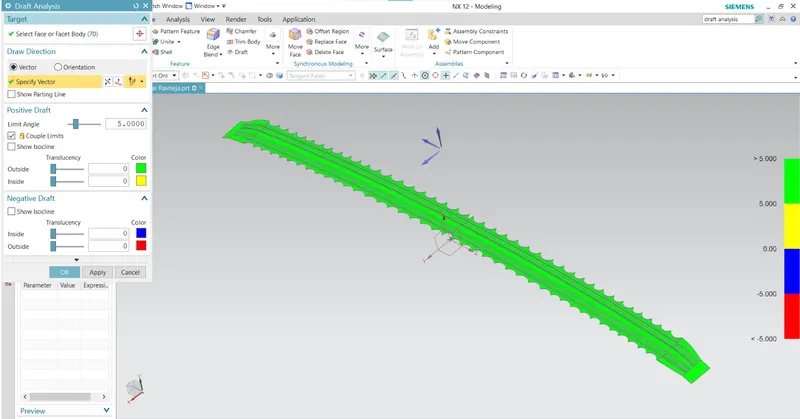
The Draft Analysis command enables you to detect if the part you drafted will be easily removed. This type of analysis is performed based on color ranges identifying zones on the analyzed element where the deviation from the draft direction at any point, corresponds to specified values.
Roof with Ditch Area and Embosses
Front Roof Rail
Bow Roof Rail – 1
Center Roof Rail
Bow Roof Rail – 2
Bow Roof Rail – 3
Rear Roof Rail
Section Modulus Analysis
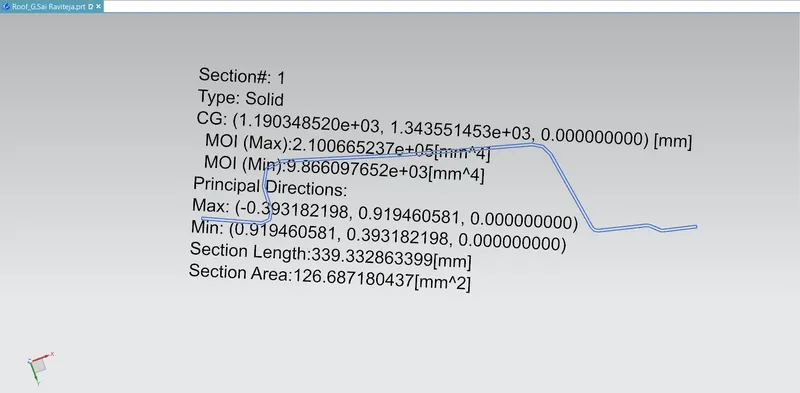
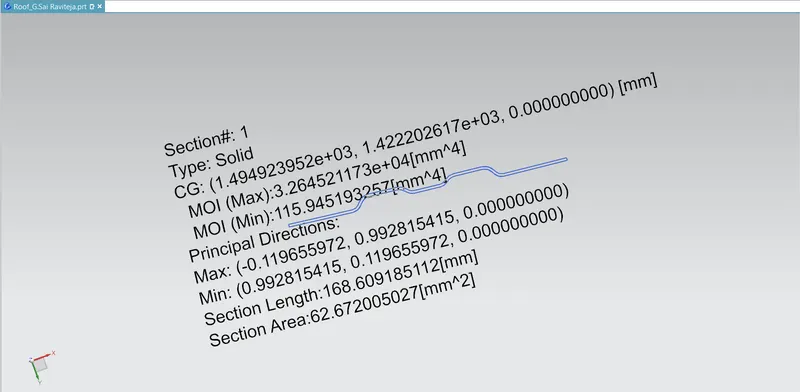
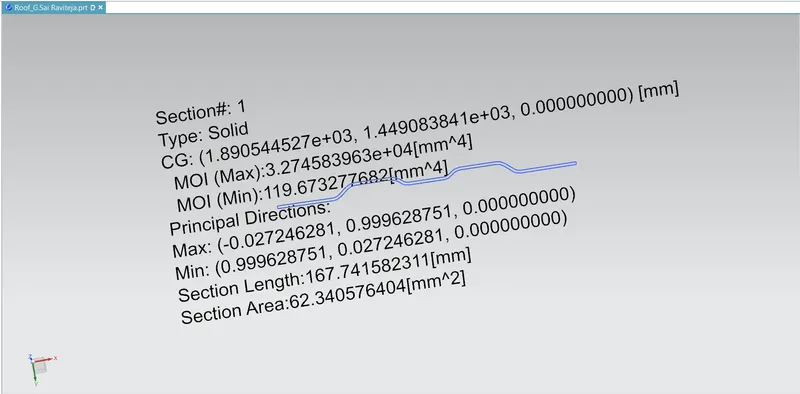
Section modulus is a geometric property for a given cross-section used in the design of beams or flexural members. Other geometric properties used in design include area for tension and shear, radius of gyration for compression, and moment of inertia and polar moment of inertia for stiffness. Any relationship between these properties is highly dependent on the shape in question.
Front Roof Rail
Bow Roof Rail – 1
Center Roof Rail
Bow Roof Rail – 2
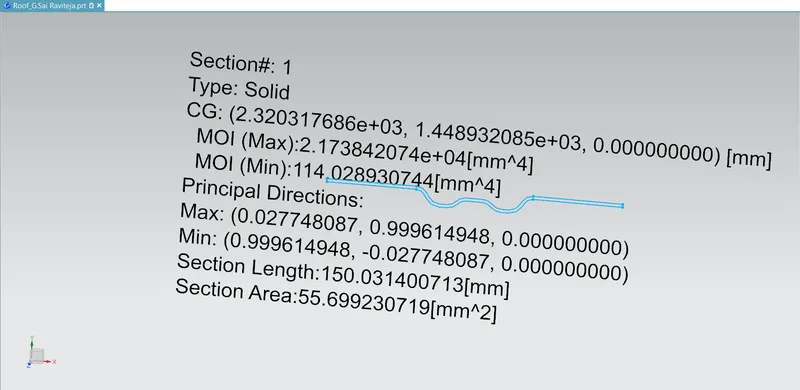
Bow Roof Rail – 3
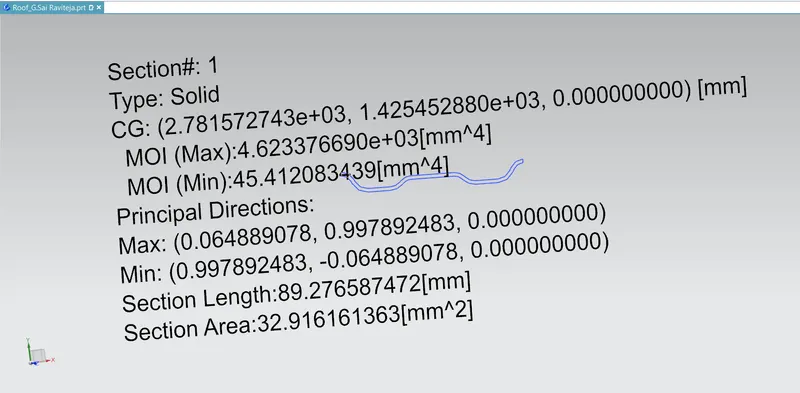
Rear Roof Rail
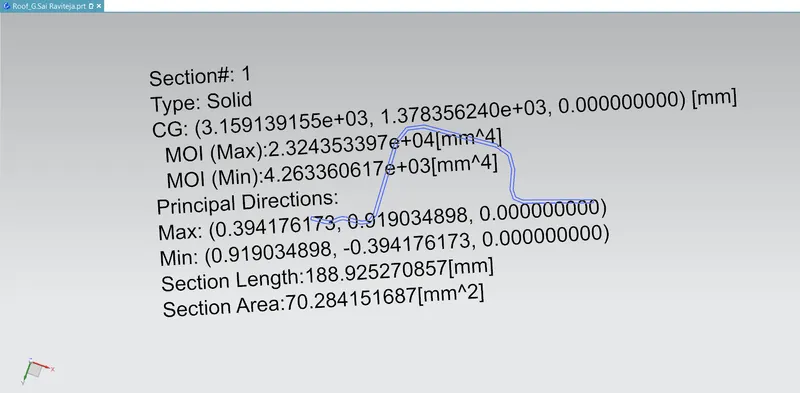
Curvature Study
Roof span
Heat Distortion Criteria
Heat distortion is the temperature at which metal softens and deforms under a specified load. From Heat distortion criteria, roof strength can be enhanced by appropriate positioning of bow roof rails. This study is done to check the ability of the roof to withstand high temperature with respect to positioning of reinforcements which contributes to increase strength.
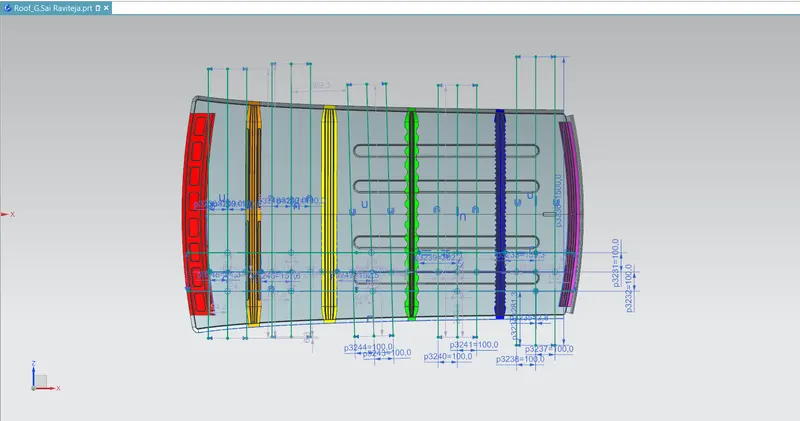
The above picture shows the standard for calculating the curvature study.
- [-3-Y] - Considered for the Heat Distortion Criteria.
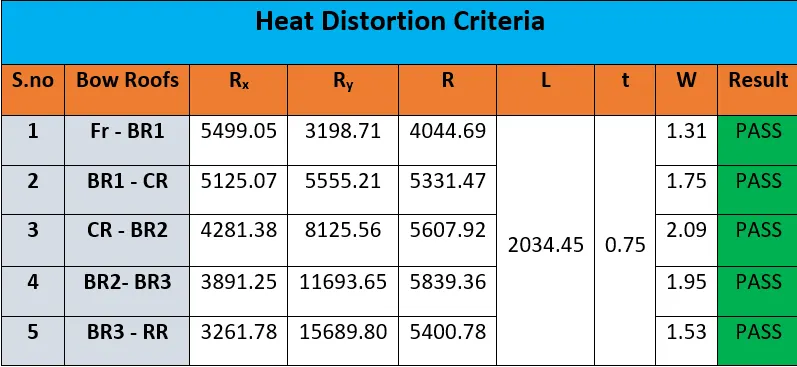
W = [1.73 x 10^(-3) x L] + [1.85 x 10^(-8) x (R^2)/t] + [ 1.10x10^(-3) x l] - 2.68
Judgement Condition : OK< 2.7> 3.1
Where
L = Roof Length in X-Direction[mm](Roof dimension in 0-Y)
R = Roof curvature
R = 2(Rx*Ry)/(Rx+Ry)
Rx = X curvature
Ry = Y curvature
t = Roof plate thickness [mm]
l = Bow Roof Span [mm]
Calculation Table:
Snow Load Prediction
Snow load criteria study is done to check the withstand ability when the snow loads over the roof during winter in snow fall regions. This study will also analyze the roof that whether the permanent deformation occurs after removing the snow load. That it may bend but needs to be bounce back to its position.
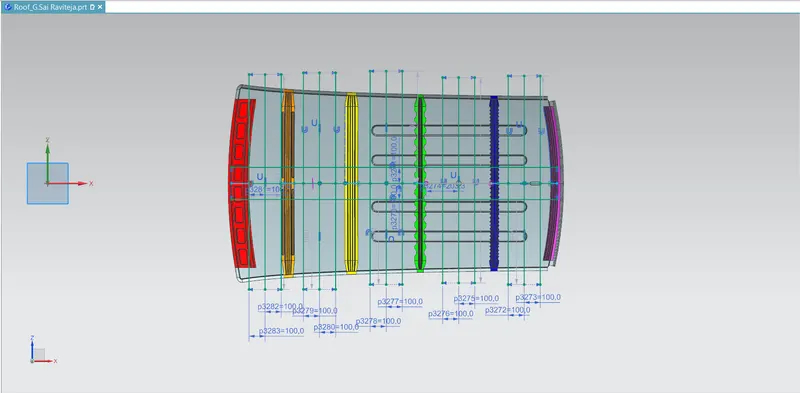
The above picture shows the standard for calculating the curvature study.
- [0-Y] - Considered for the Snow Load Prediction.
Qr = [Iy x t2] / [α x s x [(Rx + Ry)/2]2 x 10-8]
Where
α = My x Lx2 x 10-12 , My = Y(Ly-Y)
Judgement condition = Qr ≥ 3.1
250 ≤ s ≤ 380
t = Roof plate thickness [mm]
Ly = Distance between the front and rear roof Rails on the Vehicle along with 0Y[mm]
Length of Roof panel with the center point between Roof rail Front /Rear as the reference point of the front and the rear.
Lx = Distance between the Left and Right end of the roof on the Roof BOW [mm]
Width of the roof panel exposed on the surface.
Y = Distance front Front Roof Rail to Roof BOW[mm]
s = Distance for which Roof BOW bears divided load [mm]
s = L1/2 + L2/2
Iy = Geometrical moment of inertia of Roof BOW (Y cross-section )[mm4]
Rx = Lateral direction curvature radius of roof panel Y cross-section on Roof BOW [mm]
Roof panel curvature Radius of the Length Lx in Front view
Ry = Longitudinal Direction curvature radius of the Roof panel X cross-section on Roof BOW [mm]
Roof panel X curvature radius of length s in Side view
Calculation Table:
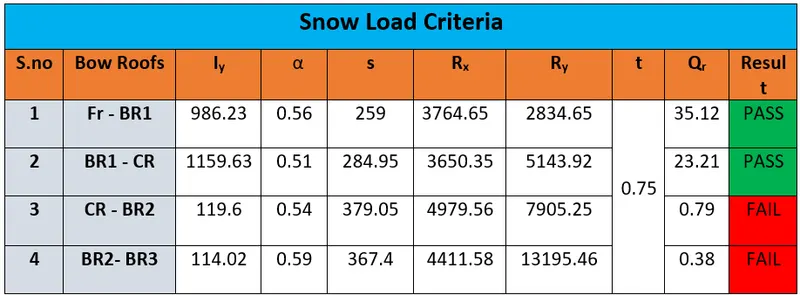
- From the above results last two cases were failed to satisfy the snow load criteria.
- Hence the strength and sttiffness over the roof from center roof rail to rear roof rail where Qr results were low.
- The embosses were created to increase the roofs strength and stiffness gradually.
Conclusion:
Hence on basis of Roof Styling, required flanges and reinforcements were developed and Draft Analysis were performed. The Curvature study on Roof was carried out for determining the position of Bow-roof rails during the Heat Distortion and Snow Load Criteria conditions by performing required calculations. Thus, the BIW roof of a car was designed and achieved a better result by applying embosses over the roof.