Project - Vehicular Crash safety Systems
"Revolutionizing the Automotive Industry: A Comprehensive Study of Tesla Electric Cars"
This case study examines the adoption and performance of Tesla electric cars in the global automotive market. It aims to assess the impact of Tesla's innovations on the industry and its long-term sustainability.
What are Electric Cars ?
Electric cars, often referred to as electric vehicles (EVs), are vehicles that use electricity as their primary source of power for propulsion, as opposed to traditional internal combustion engine (ICE) vehicles that rely on gasoline or diesel fuel. Electric cars utilize one or more electric motors and a large battery to store and deliver electricity for driving. Here are the five important components of electric cars, listed
- Battery Pack
- Electric Motor(s)
- Charging System
- Power Electronics and Inverter
- Electric Vehicle Control Unit (ECU)
-
Battery Pack: The battery pack is a critical component of an electric car. It stores electrical energy in the form of lithium-ion cells. The capacity and quality of the battery directly influence the car's driving range, performance, and longevity. Advancements in battery technology are continually increasing energy density and reducing costs.
-
Electric Motor(s): Electric cars are equipped with one or more electric motors responsible for converting electrical energy from the battery into mechanical energy to propel the vehicle. These motors are highly efficient and offer instant torque for acceleration.
-
Charging System: Electric cars require a charging system to replenish the energy in their battery packs. Charging can occur at home using a standard electrical outlet or a dedicated home charging station, at public charging stations, or at fast-charging stations for rapid charging. The charging infrastructure is essential for the practicality of electric cars.
-
Power Electronics and Inverter: Power electronics control the flow of electricity between the battery and the electric motor. The inverter is a critical component that converts DC (direct current) electricity from the battery into AC (alternating current) electricity required by the electric motor. These components ensure efficient power delivery and motor control.
-
Electric Vehicle Control Unit (ECU): The ECU is the brain of the electric car's control system. It manages and optimizes various vehicle functions, including battery management, regenerative braking, thermal management, and energy distribution. Advanced software in the ECU ensures the smooth operation of the electric car.
Advantages of Electric Vehicles:
-
Environmental Benefits: Zero Emissions: EVs produce no emissions, which helps reduce air pollution and greenhouse gas emissions, contributing to improved air quality and reducing climate change.
-
Energy Efficiency: EVs are more energy-efficient than ICE vehicles because electric motors convert a higher percentage of energy from the grid to power at the wheels.
-
Cost Savings: Lower Fuel Costs: Electricity is generally cheaper than gasoline or diesel, resulting in lower operating costs for EV owners.Reduced Maintenance: EVs have fewer moving parts, which means less maintenance is required, leading to potential long-term cost savings.
-
Quiet Operation: EVs are quieter than traditional vehicles because they lack noisy internal combustion engines. This can reduce noise pollution in urban areas.
-
Incentives: Many governments offer incentives such as tax credits, rebates, and HOV lane access to encourage the adoption of EVs, making them more financially appealing.
-
Regenerative Braking: EVs often feature regenerative braking systems that capture and store energy when the vehicle slows down or brakes, extending the range and improving energy efficiency.
-
Instant Torque: Electric motors provide instant torque, delivering quick acceleration and a smooth driving experience.
-
Home Charging: EV owners can charge their vehicles at home, providing convenience and reducing the need for trips to the gas station.
Disadvantages of Electric Vehicles:
-
Limited Range: Most EVs have a limited driving range compared to ICE vehicles. Range anxiety can be a concern, especially for long-distance travel.
-
Charging Infrastructure: The availability of charging stations can be inconsistent, particularly in rural or less developed areas, which may hinder long-distance travel.
-
Longer Refueling Times: Charging an EV typically takes longer than refueling a traditional vehicle with gasoline or diesel. Although fast-charging stations exist, they are not as widespread as gas stations.
-
Upfront Cost: EVs tend to have a higher initial purchase price compared to equivalent ICE vehicles, although this cost difference is decreasing as technology advances and economies of scale improve.
-
Limited Model Variety: While the selection of EV models is growing, there may be fewer options in terms of body styles, sizes, and features compared to ICE vehicles.
-
Battery Degradation: EV batteries degrade over time, affecting driving range. Replacement batteries can be expensive, although prices are decreasing.
-
Environmental Impact: While EVs produce no tailpipe emissions, the environmental impact of manufacturing their batteries and generating the electricity used to charge them can vary depending on the energy sources involved.
-
Charging Compatibility: Some EVs use different types of connectors and charging standards, making cross-compatibility with charging infrastructure a concern.
Electric Vehicles v/s Internal Combustion Engine
sr no. |
Category |
Electric Vehicles(EVs) | Internal Combustion Engine(ICE) |
| 1. | Power Source | EVs are powered by electricity stored in rechargeable batteries. They use an electric motor to drive the wheels. | ICE vehicles are powered by internal combustion engines that burn gasoline or diesel to generate power. |
| 2. | Emissions | EVs produce zero tailpipe emissions, resulting in lower air pollution and reduced greenhouse gas emissions if charged with clean energy sources. |
ICE vehicles emit pollutants such as carbon dioxide (CO2), nitrogen oxides (NOx), and particulate matter, contributing to air pollution and climate change. |
| 3. | Energy Efficiency | EVs are more energy-efficient as electric motors convert a higher percentage of energy from the grid to power at the wheels. | ICE vehicles are less energy-efficient because they waste energy as heat during combustion. |
| 4. | Fuel/Charging | EVs are charged using electricity from various sources, including home chargers, public charging stations, and fast chargers. | ICE vehicles require gasoline or diesel fuel from gas stations. |
| 5. | Range | EVs typically have a limited driving range on a single charge, though this is improving with advancements in battery technology. |
ICE vehicles generally have a longer range on a full tank of fuel. |
| 6 | Refueling/Charging Time | Charging an EV takes longer than refueling an ICE vehicle with gasoline or diesel. Fast-charging stations are available but not as widespread as gas stations. | Refueling an ICE vehicle is quick and widely available at gas stations. |
| 7. | Maintenance | EVs have fewer moving parts, reducing the need for maintenance. They typically require less frequent oil changes and have no exhaust systems or complex transmission. | ICE vehicles have more moving parts, necessitating regular maintenance, including oil changes, transmission service, and exhaust system repairs. |
| 8. | Noise | EVs are quieter due to the absence of an internal combustion engine. They offer a smoother and quieter ride. |
ICE vehicles generate noise from their engines and exhaust systems. |
| 9. | Upfront Cost | EVs often have a higher initial purchase price compared to ICE vehicles, although prices are decreasing as technology advances. | ICE vehicles generally have a lower initial purchase price. |
| 10. | Incentives |
Many governments offer incentives like tax credits, rebates, and HOV lane access to promote EV adoption. |
ICE vehicles typically do not come with such incentives. |
| 11. | Environmental Impact | EVs have a lower environmental impact when charged with clean energy sources, but the manufacturing of batteries can have environmental consequences. | ICE vehicles contribute to air and noise pollution and rely on fossil fuels, which have well-documented environmental impacts. |
| 12. | Infrastructure | Charging infrastructure is growing but can be less widespread, especially in rural areas. | Gasoline and diesel refueling infrastructure is well-established and widely available. |
INTRODUCTION
About Company
Tesla, Inc. is an American electric vehicle (EV) and clean energy company founded in 2003 by engineers Martin Eberhard and Marc Tarpenning. Elon Musk, JB Straubel, and Ian Wright joined the company shortly after its inception and played significant roles in its development. Tesla is known for its pioneering work in the electric vehicle industry and its ambitious goals to accelerate the world's transition to sustainable energy. It is an American multinational automotive and clean energy company headquartered in Austin, Texas. Tesla designs and manufactures electric vehicles, stationary battery energy storage devices from home to grid-scale, solar panels and solar shingles, and related products and services.
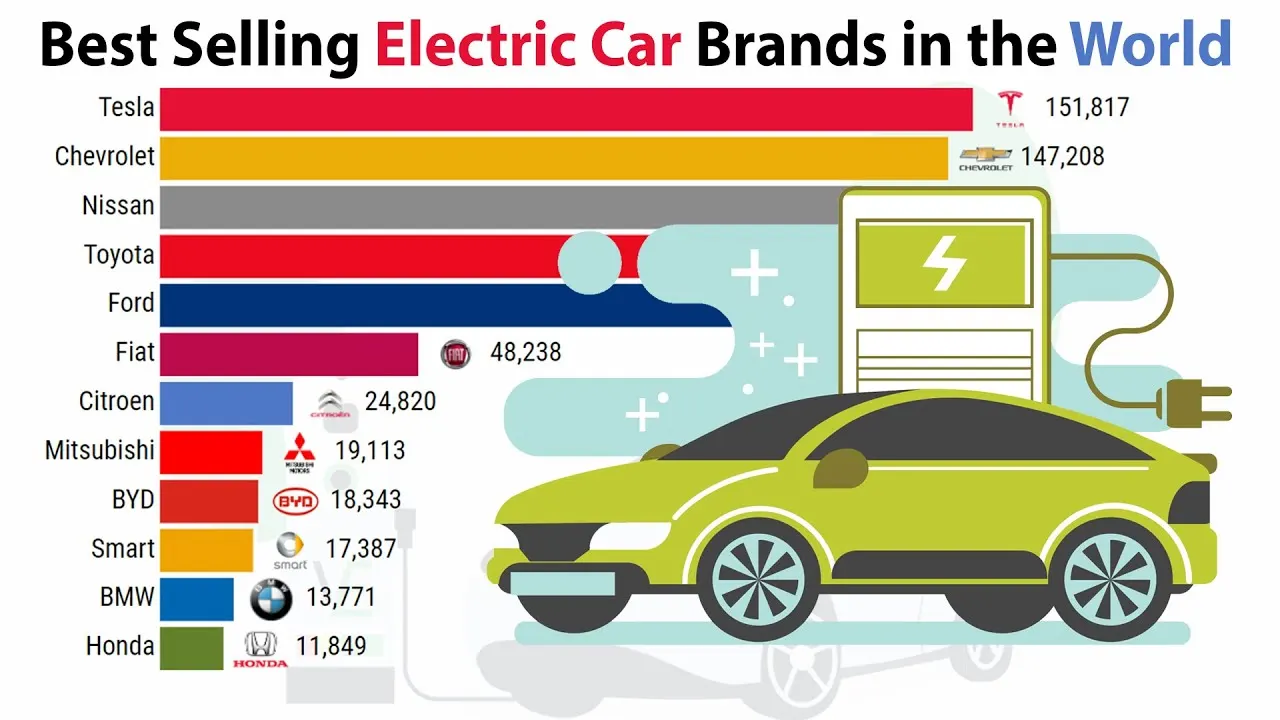
Timeline
Here is a timeline of significant events in the history of Tesla, Inc., from its founding in 2003 to 2021
2003:
- Founding: Tesla, Inc. is founded by engineers Martin Eberhard and Marc Tarpenning.
2004:
- Elon Musk's Investment: Elon Musk leads Tesla's initial round of investment and becomes chairman of the board.
2006:
- Tesla Roadster Unveiled: Tesla unveils its first production car, the Tesla Roadster, an all-electric sports car.
2008:
- Tesla Roadster Production Begins: Production of the Tesla Roadster commences.
- Tesla's First Delivery: Tesla delivers its first Roadster to a customer.
2010:
- Initial Public Offering (IPO): Tesla goes public and raises $226 million in its IPO.
2012:
- Model S Launch: Tesla launches the Model S, an all-electric luxury sedan.
2014:
- Supercharger Network: Tesla expands its Supercharger network, allowing for fast-charging capabilities for its vehicles.
2015:
- Model X Release: Tesla releases the Model X, an electric SUV.
- Autopilot Introduced: Tesla introduces its Autopilot feature, enabling semi-autonomous driving.
2016:
- Tesla Gigafactory: The Gigafactory in Nevada begins production of batteries to support Tesla's vehicle production.
2017:
- Model 3 Unveiled: Tesla unveils the Model 3, a more affordable electric sedan designed for mass production.
2018:
- Model 3 Production Ramp-Up: Tesla faces challenges with Model 3 production but eventually ramps up production to meet demand.
2019:
- Model Y Announcement: Tesla announces the Model Y, a compact electric SUV.
- Tesla Shanghai Gigafactory: The Gigafactory in Shanghai, China, begins production of Model 3 vehicles for the Chinese market.
2020:
- Record Deliveries: Despite the COVID-19 pandemic, Tesla achieves record vehicle deliveries.
- Battery Day: Tesla announces plans for advanced battery technology and a more affordable EV.
2021:
- Tesla Cybertruck: The highly anticipated Cybertruck is unveiled, with production expected in the future.
- Expansion in Austin and Berlin: Tesla breaks ground on new Gigafactories in Austin, Texas, and Berlin, Germany.
Please note that Tesla's timeline is continually evolving, with new product releases, technological advancements, and global expansion efforts.
Innovation and Technology
(https://www.linkedin.com/pulse/case-study-tesla-design-thinking-driving-electric-vehicle-muciri/)
In 2008, Tesla introduced its first production vehicle, the Roadster, showcasing the potential of electric sports cars using lithium-ion batteries.During this period, Tesla had to address skepticism about electric vehicles and their performance, extend the limited range of EVs, and improve battery technology to enhance range and longevity.
In 2012, Tesla launched the Model S, demonstrating that EVs could be practical, luxurious, and appealing to a broader market segment. Simultaneously, the Supercharger network was introduced to enable fast and convenient charging.Challenges included developing a more affordable EV for a wider consumer base while simultaneously building the charging infrastructure necessary for long-distance travel.
In 2015, Tesla expanded its lineup with the Model X, an electric SUV, and introduced Autopilot, showcasing advanced driver-assistance features on a wide scale.Challenges included meeting consumer demand for SUVs, advancing towards autonomous driving technology while addressing safety concerns and regulatory considerations.
In 2017, Tesla unveiled the Model 3, designed to make EVs more affordable and accessible to a broader audience. Simultaneously, the company expanded its network of Gigafactories to enable mass production of EVs.Challenges included scaling production to meet high demand and reducing the cost of EVs by leveraging economies of scale through larger production facilities.
In 2020, Tesla's Battery Day introduced plans for advanced battery technology. The company also announced the Tesla Semi, promising electric transportation solutions for the commercial sector.Challenges tackled include increasing the energy density of batteries, reducing their cost, and addressing emissions in the commercial transportation industry through the development of the Semi-Truck.
In recent years, Tesla has continued to develop Full Self-Driving (FSD) capabilities, prepare for Cybertruck production, and expand its network of Gigafactories worldwide.Ongoing challenges include achieving true autonomous driving capabilities while navigating regulatory complexities, successfully bringing the Cybertruck to market, and managing the company's global growth.
Battery
-
Battery Sourcing for the Roadster: Tesla's first production car, the Roadster (2008-2012), faced challenges with its lithium-ion battery technology. While Tesla did not rely on a single exclusive battery supplier, it sourced battery cells from various manufacturers, including Panasonic and Samsung SDI. This approach allowed Tesla to experiment with different suppliers' technologies and incorporate them into the Roadster.
-
Battery Limitations: The Roadster's battery had limitations in terms of range and charging time. Despite its high price tag, the vehicle could travel up to 244 miles on a single charge, which was impressive for its time. However, charging the Roadster from a standard wall outlet was slow, taking at least 24 hours for a full charge, highlighting the need for faster charging solutions.
-
Gigafactories and Battery Production: Tesla's collaboration with Panasonic on Gigafactories marked a significant shift in battery production. These large-scale facilities aimed to increase production capacity and reduce the cost of battery cells. This strategy was crucial for Tesla to secure a stable and cost-effective supply of batteries for its electric vehicles.
-
Supercharger Network: In 2012, Tesla pioneered the concept of Superchargers, high-powered charging stations designed to provide faster charge-ups for Tesla owners. These stations, eventually numbering around 1,000 worldwide, helped address the long charging times associated with standard outlets. Superchargers significantly improved the convenience and practicality of long-distance electric travel for Tesla owners.
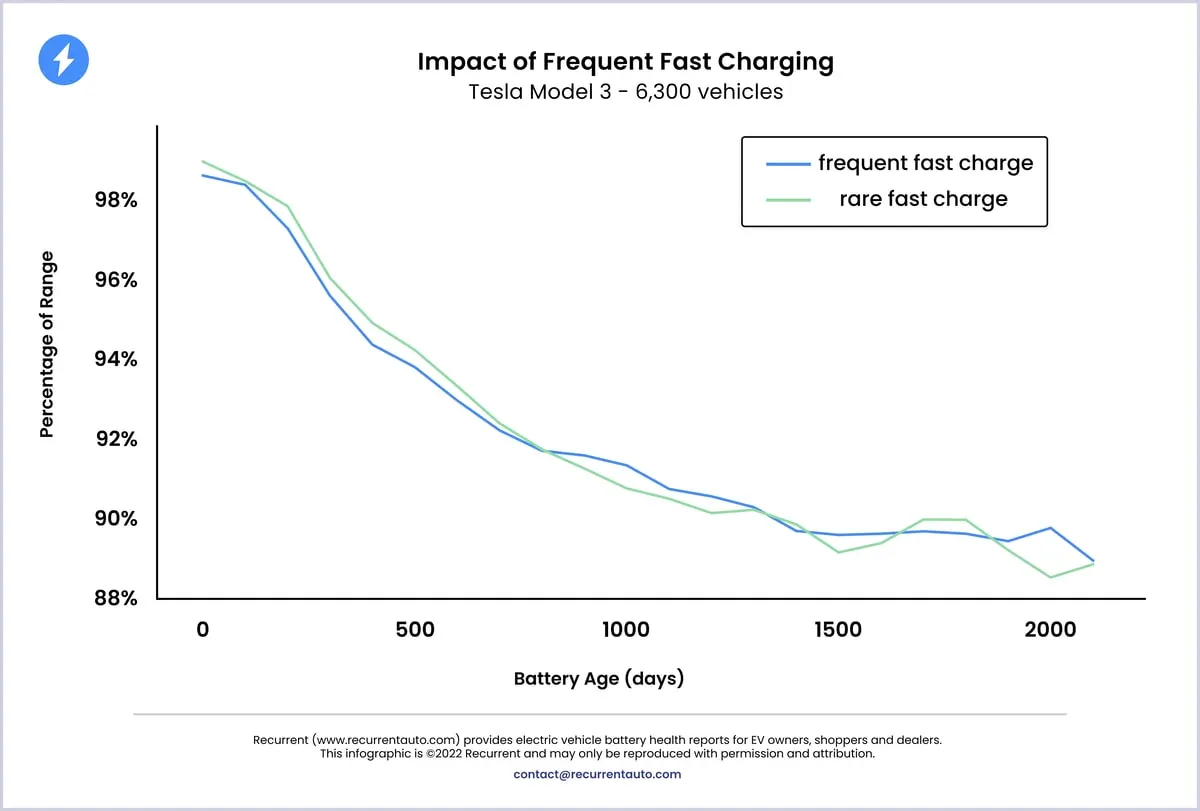
The above line graph shows the frequent DC fast charging Tesla or any EV is terrible for battery longevity. However, a new report from Recurrent, which analyzed data from over 12,500 Tesla vehicles in the US, clearly shows little to no difference in battery degradation between frequent and rare fast charging
Tesla specifically does an excellent job regulating power to and from the battery based on the temperature of the battery pack, its state of charge (charge percentage), and other environmental factors such as external temperature.
Sustainable Technology
researchgate.net/publication/366057251_Sustainable_and_Clean_Energy_The_Case_of_Tesla_Company
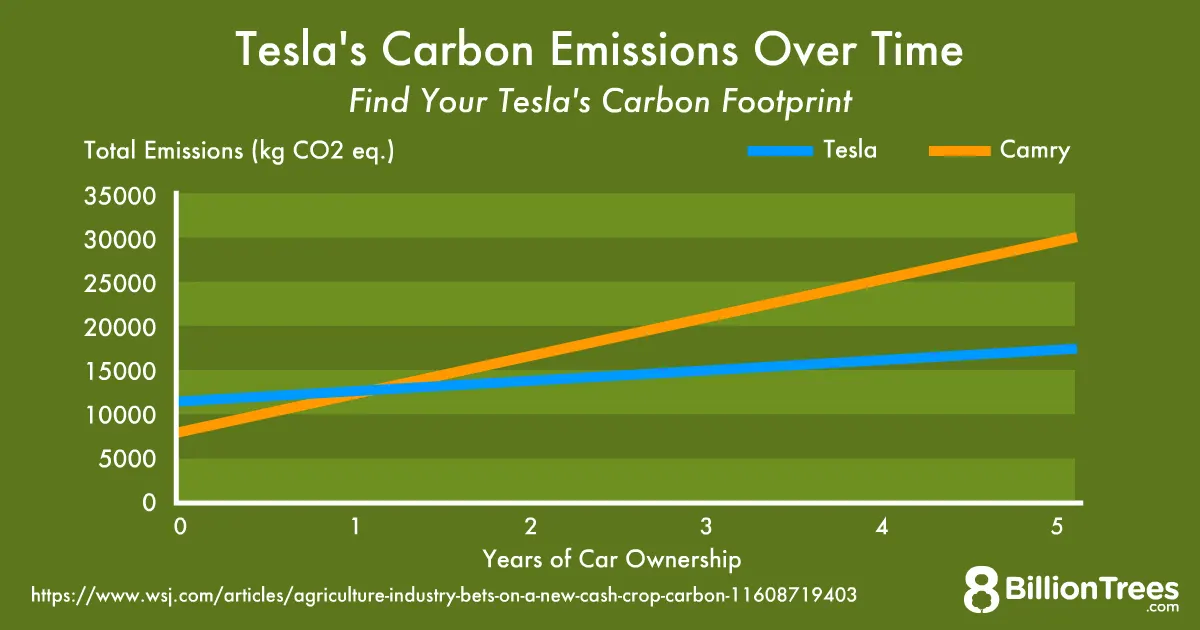
Tesla is using innovative technology to make transportation and energy production cleaner and more environmentally friendly. Their goal is to help reduce the impact of climate change by transitioning the world to sustainable and clean energy solutions.
The Supply Chain
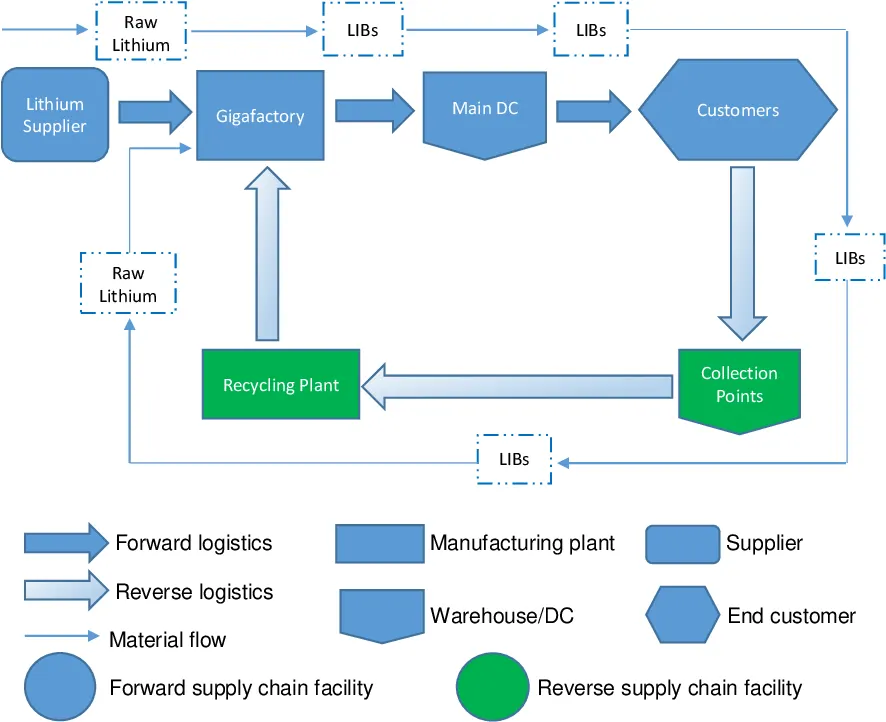
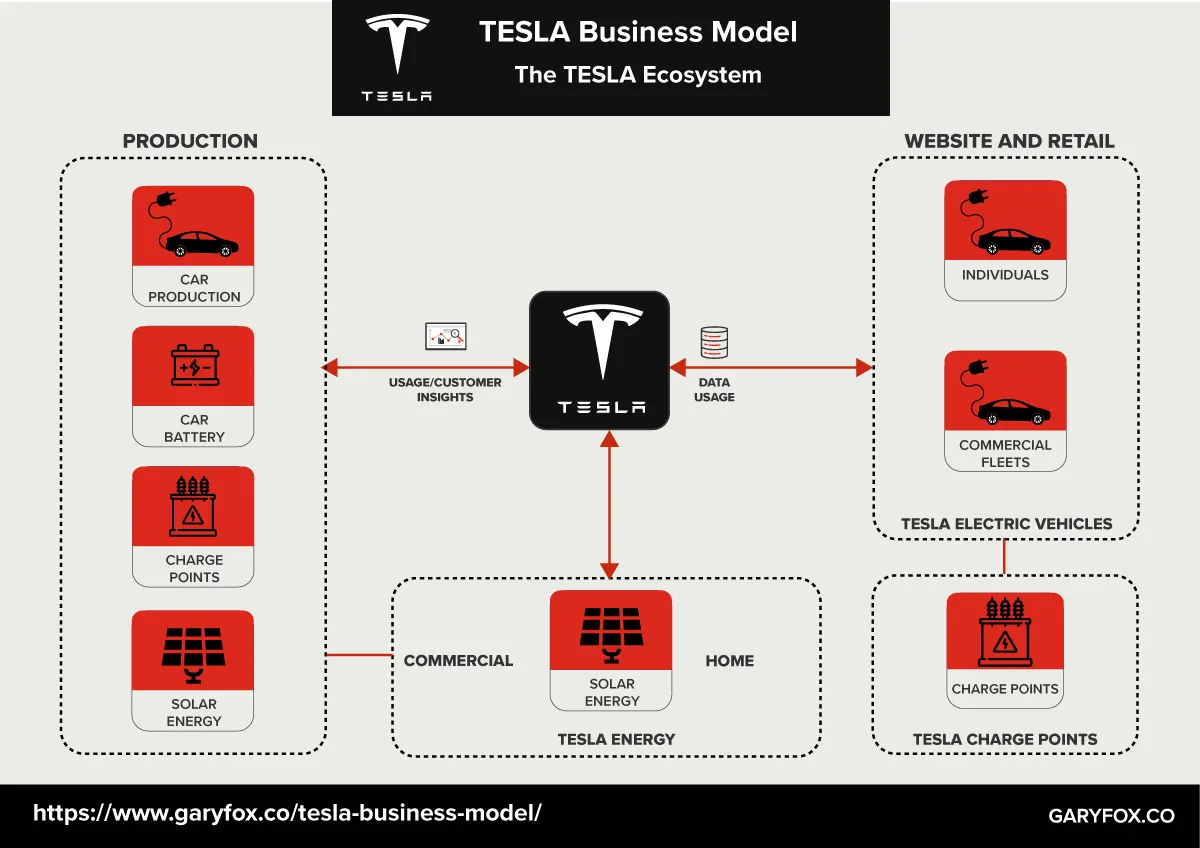
Tesla's supply chain timeline has evolved significantly since its inception in 2003. Initially facing challenges in sourcing components, Tesla relied on various suppliers for its Roadster electric sports car. However, the company gradually shifted towards vertical integration and secured strategic partnerships to strengthen its supply chain. Tesla's Gigafactories, starting with the one in Nevada, marked a turning point by enabling large-scale battery and vehicle production under one roof. These Gigafactories, along with international expansions like the one in Shanghai, have played a pivotal role in increasing production capacity and reducing costs. Tesla also emphasizes sustainability in its supply chain, striving to use local materials and suppliers to minimize environmental impact. Throughout its journey, Tesla's supply chain strategy has adapted to meet the growing demand for electric vehicles and clean energy products, shaping the company's success in the automotive and energy sectors.
Conclusion
Tesla, Inc. has not only revolutionized the automotive industry but has also become a major player in clean energy solutions. Its innovative products, strong market impact, and determination to overcome challenges have contributed to its success in accelerating the world's transition to sustainable transport and energy. However, the company continues to face both technical and regulatory hurdles as it strives to shape the future of mobility and environmental sustainability.It is not just a car company , it's trying to make the world cleaner and better. They've made cool cars, changed how people think about electric cars, and are solving problems along the way.
Tesla's journey is marked by innovation and technological advancements in electric vehicles (EVs). Tesla has continually tackled challenges, improved EV technology, and expanded its product line. The company's commitment to sustainability and clean energy remains at the forefront of its mission.
II. Electric Vehicle (EV) Advancements
A. Battery Technology
1. High-energy-density battery cells
2. Battery thermal management
3. Advancements in chemistry (e.g., lithium-ion)
B. Range and Performance
1. Extended electric range
2. Impressive acceleration and speed
C. Charging Infrastructure
1. Supercharger network
2. V3 Superchargers for faster charging
D. Sustainable Materials
1. Use of recycled and sustainable materials
2. Environmental impact reduction

III. Autonomous Driving and Safety
A. Autopilot and Full Self-Driving (FSD)
1. Advanced driver-assistance features
2. Roadmap toward autonomous driving
B. Safety Features
1. Collision avoidance systems
2. Active safety technologies
3. Enhanced structural integrity

IV. Over-the-Air (OTA) Updates
A. Continuous Improvement
B. Enhanced Features and Capabilities
C. Vehicle Security Updates

V. Manufacturing and Production Innovation
A. Gigafactories
1. Large-scale battery and vehicle production
2. Cost reduction and efficiency
B. Vertical Integration
1. In-house manufacturing of critical components
 2. Improved quality control

VI. Energy Products
A. Home Energy Solutions
1. Powerwall energy storage
2. Solar Roof technology
B. Grid Integration
1. Virtual power plants
2. Sustainable energy solutions

VII. Sustainability Initiatives
A. Environmental Impact
1. Carbon reduction goals
2. Sustainable practices in production
B. Recycling and Circular Economy
1. Battery recycling programs
2. Reuse of materials

VIII. Future Directions
A. Ongoing Innovation
B. Expansion of Product Line
C. Environmental and Technological Challenges