Project - Position control of mass spring damper system
A transfer function of a mass spring damper system with PID controller to adjust the force on mass so that its position follows a reference signal.
Take m = 3.6 kg
k = 400 N/m
c = 100Ns/m
simulink model is created using sum, pulse generator, gain, integrator, scope , derivative, clock, workspace blocks.
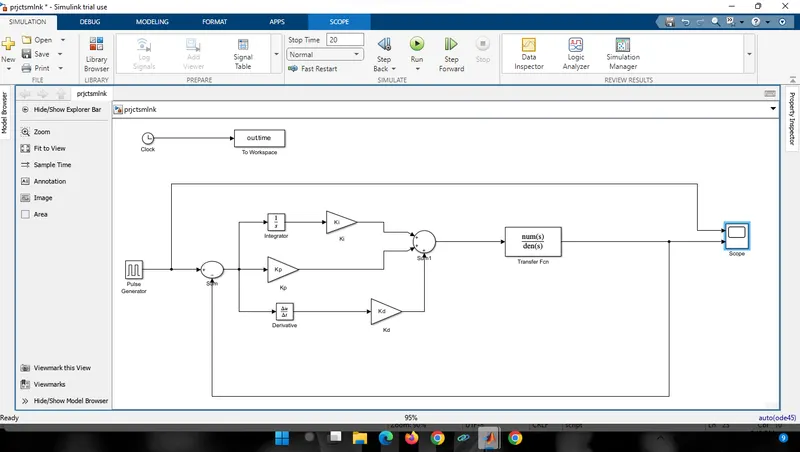
model settings are given as start time 0, stop time 20 sec, solver as odea 4 ( Runge-Kutta ) & variable type with step time as 0.01
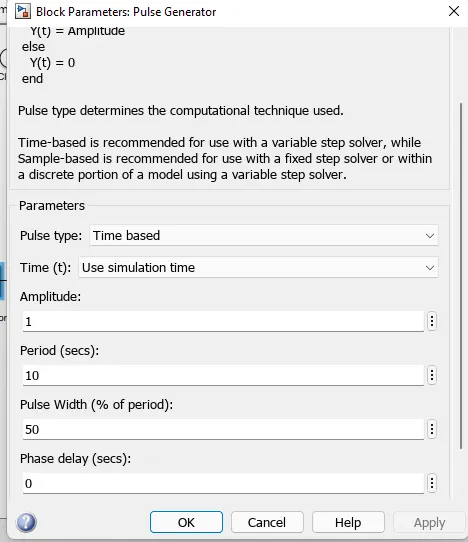
pulse generator is used and these values are given
amplitude = 1
period = 5
pulse width = 50%
these values are derived from the refernce signal provided in question
the transfer function for a spring mass damper system is 1 / ( m * s^2 + c * s + k )
where the value of mass (m) , damping coefficient (c) , spring constant (k)
m = 3.6 kg
k = 400 N/m
c = 100 Ns/m
these values of m , c , k are given in the denominator as the differential order ( high to low )
where numerator will be 1
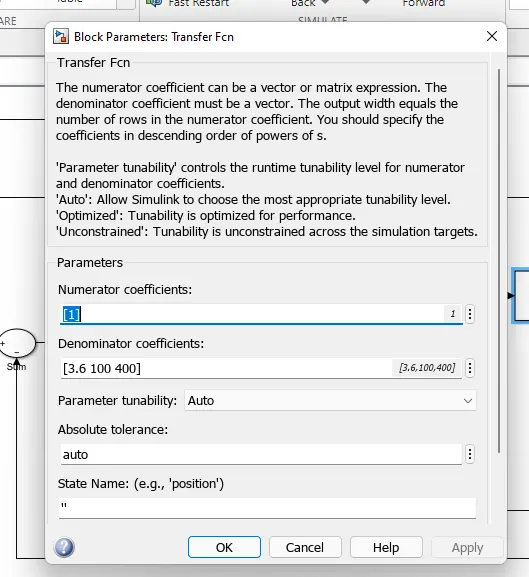
the transfer function for a spring mass damper system is 1 / ( m * s^2 + c * s + k )
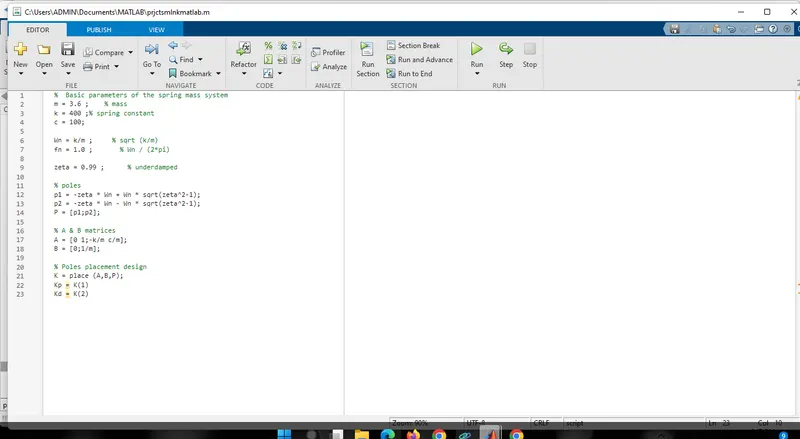
except for the value of Integral Gain ( Ki ) all other values remain same.
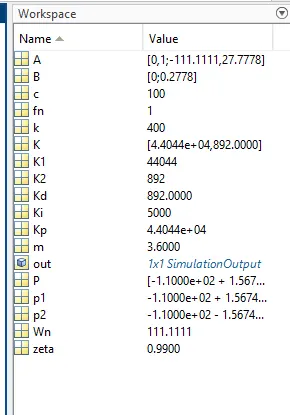
when Integral gain
Ki = 0
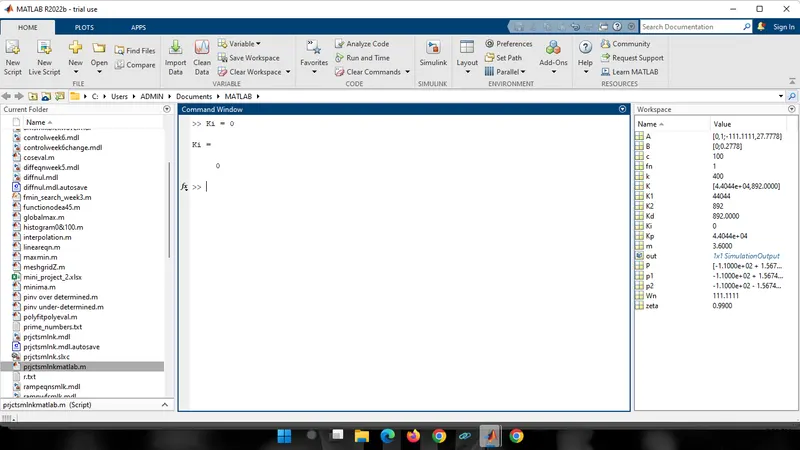
when Ki = 0
we can observe that there is a steady state error between the reference and simulated signal
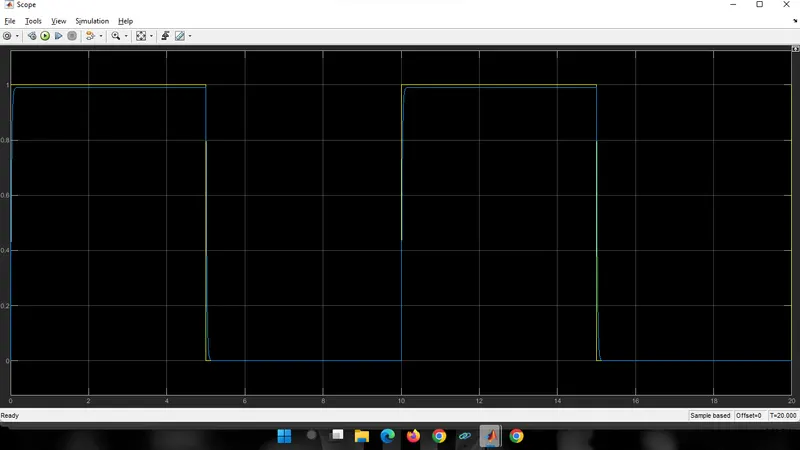
Ki = 5000
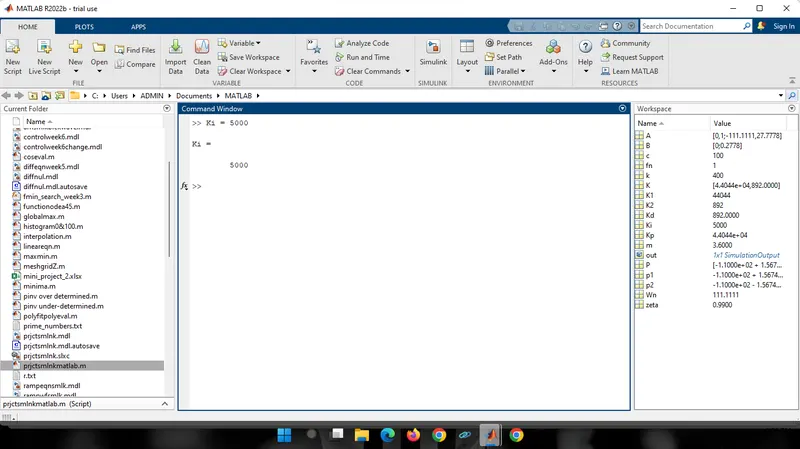
when Ki = 5000
we can verify that the steady state error is low when compared to Ki = 0
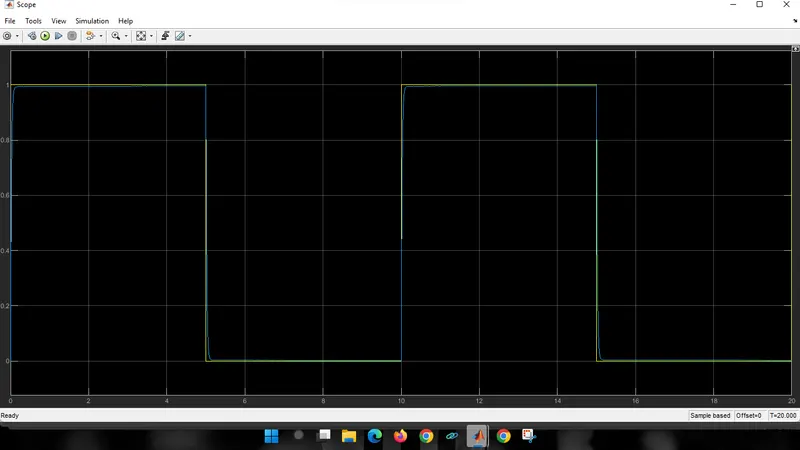
Ki = 10500
as the Integral Gain ( Ki ) increases the steady state error decreases
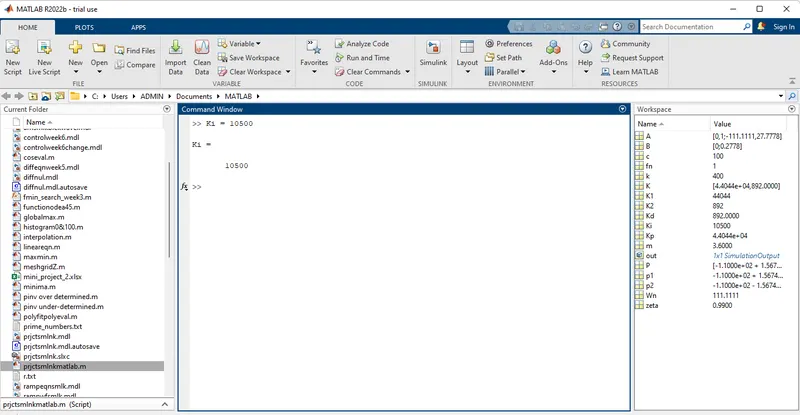
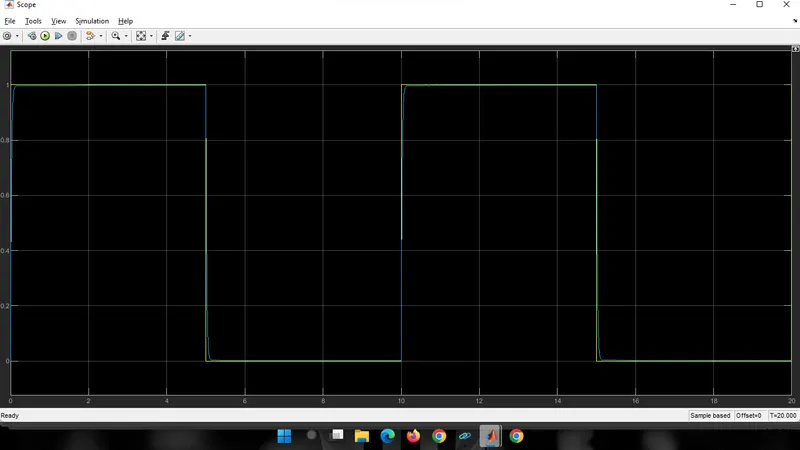
at Ki = 10500 we can verify that the steady state error is almost equals to 0.