Project
Aim - Prepare a technical report explaining the all-terrain vehicle properties.
Obective - To Carry out a system-level simulation of an all-terrain vehicle & Prepare a technical report explaining the all-terrain vehicle properties & comments on the results.
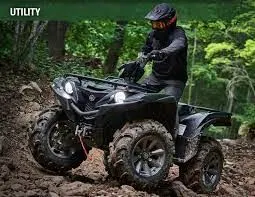
ATV( All-Terrain Vehicle) - An all-terrain vehicle (ATV) is defined as a motorized off-highway vehicle designed to travel on four low-pressure or non-pneumatic tires, having a seat designed to be straddled by the operator and handlebars for steering control.
Model -1
BAJA ATV MODEL -
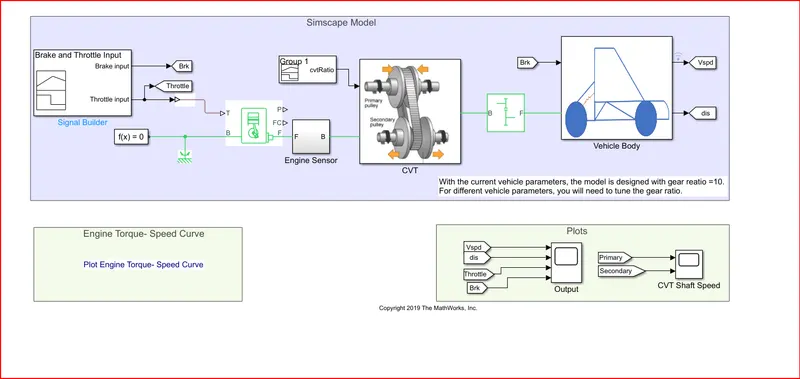
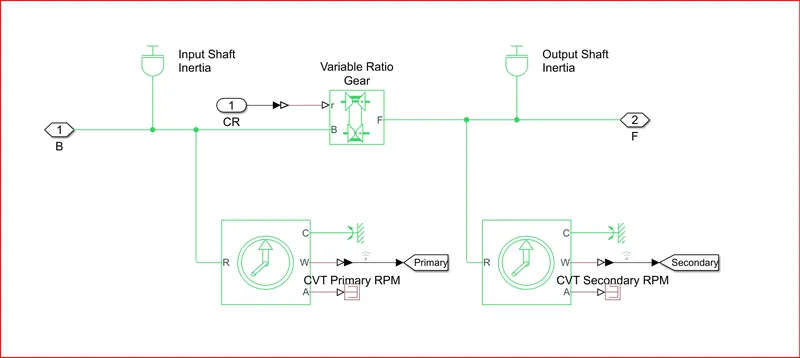
CVT ( Continuously Variable Transmission) - A CVT transmission, or continuously variable transmission, seamlessly changes through an unending range of effective gear ratios while you drive, whereas other kinds of mechanical transmissions offer a fixed number of gear ratios and have hard shifts between each.
CVT Block Model -
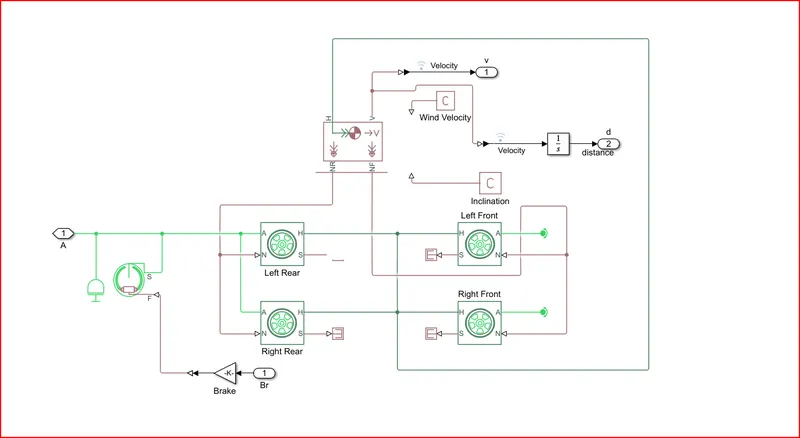
Vehicle Body - Vehicle body is designed for carry the goods (a truck) or for carriage of passengers (passenger car). There are some kinds of vehicle body which differ in: by purpose (trucks, passengers, cargo-passenger, special) and by construction (skeleton, half-skeleton, non-skeleton).
Vehicle body model -
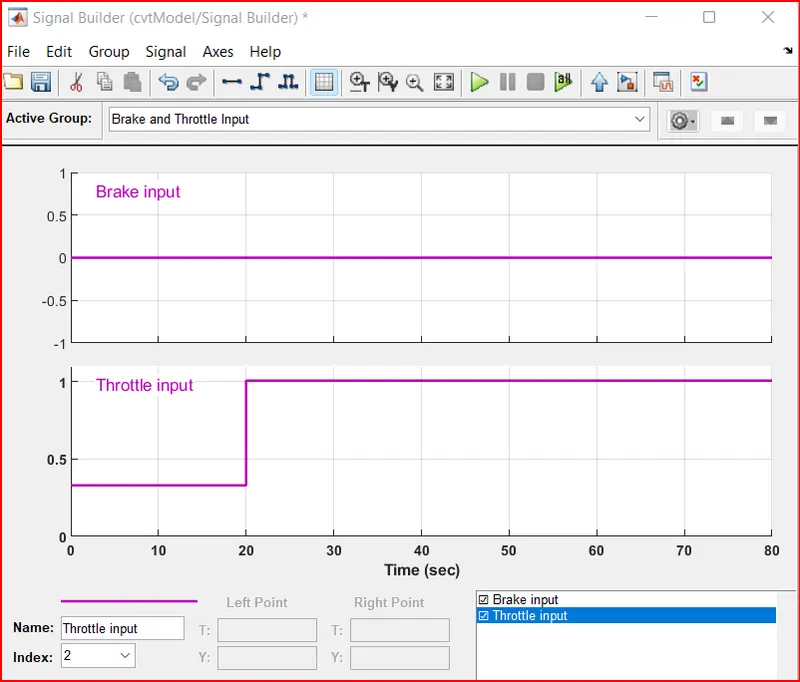
Brake and Throttle Input-
Generic Engine -
Represents a system-level model of spark-ignition and diesel engines suitable for use at initial stages of modeling when only the basic parameters are available. Optional idle speed and red line controllers are included.
The throttle input signal T lies between zero and one and specifies the torque demanded from the engine as a fraction of the maximum possible torque. If the engine speed falls below the Stall speed, the engine torque is blended to zero. If the engine speed exceeds the Maximum speed, the simulation stops and issues an error message.
Connections F and B are mechanical rotational conserving ports associated with the engine crankshaft and engine block, respectively. Connections P and FC are physical signal output ports through which engine power and fuel consumption rate are reported.
Variable Ratio Gear -
Represents a variable ratio gearbox such as implemented by mechanical belt CVT, electric, or hydraulic transmissions. The physical signal input r defines the ratio of input to output angular shaft velocities.
Connections B (base) and F (follower) are mechanical rotational conserving ports. Specify the relation between base and follower rotation directions with the Output shaft rotates parameter.
Ideal Rotational Motion Sensor -
This block measures angular velocity or angle in a mechanical rotational network. The sensor is ideal since it does not account for inertia, friction, delays, energy consumption, and so on.
The physical signal ports W and A report the angular velocity and angle, respectively, of port R relative to port C. The measured angular velocity is positive when the angular velocity at port R is greater than the angular velocity at port C.
Results-
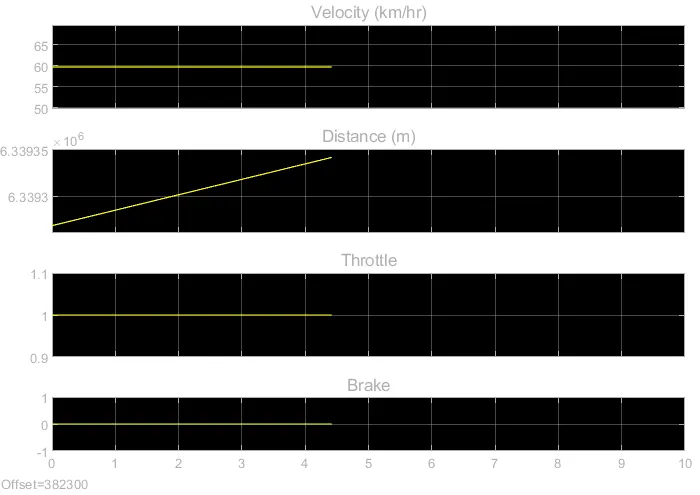
Plot-1 - Velocity,Distance,throttle and Brake output -
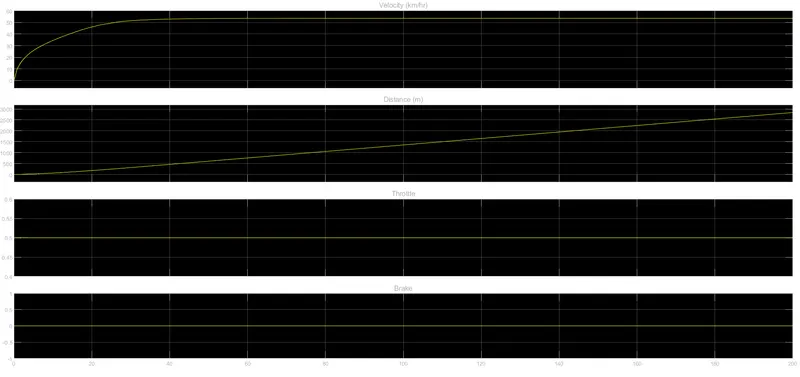
here we got the plot that showing change in values of Distance , throttle ,velocity , brake after the simulation.
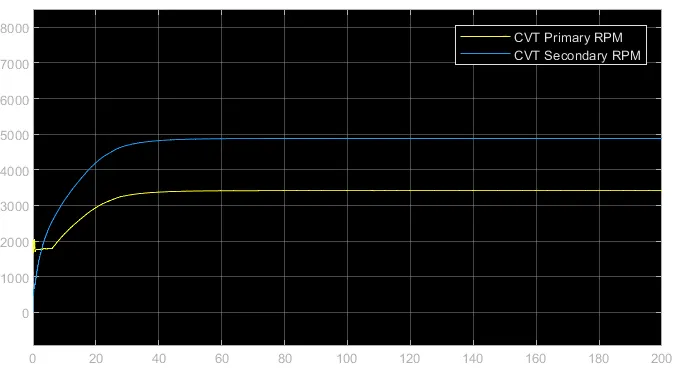
Plot-2 - CVT Shaft RPM
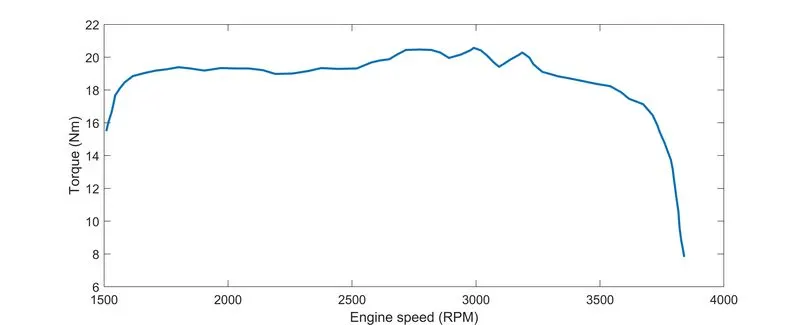
Plot-3 - Engine Speed
Model -2
Simulink Model for BAJA ATV with CVT Using Dashboard -
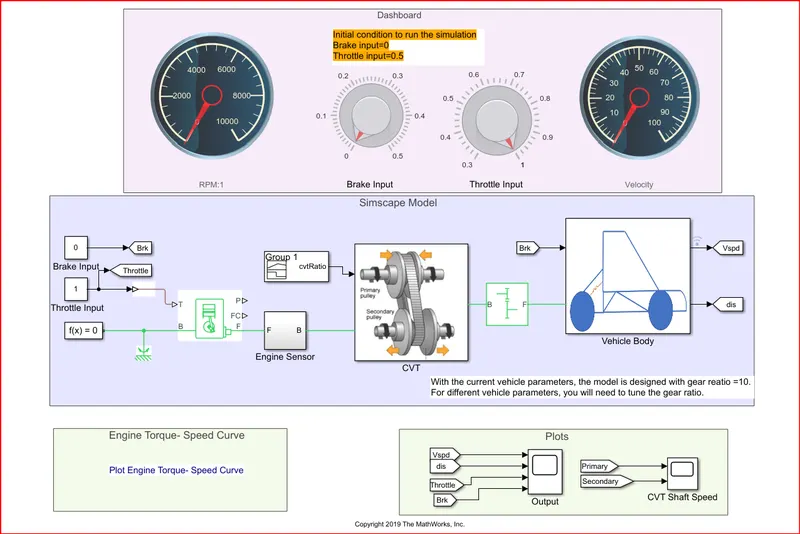
DashBoard -
You can use dashboard blocks to build an intuitive and interactive interface for your model. The control blocks, such as the Knob block, connect to variables or tunable parameters in your model and allow you to interactively modify the value of the connected element during simulation. The display blocks connect to signals in the model and display the signal value during simulation.
Signal Builder -
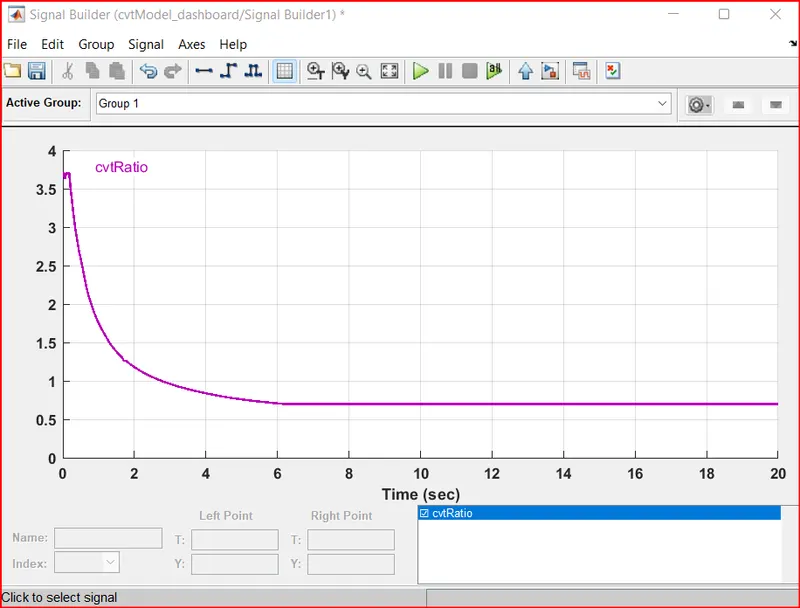
Vehicle Body -
CVT Model-
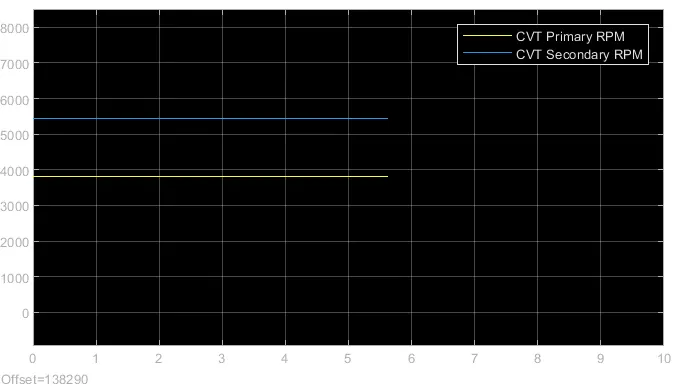
Results-
CVT SHAFT RPM -
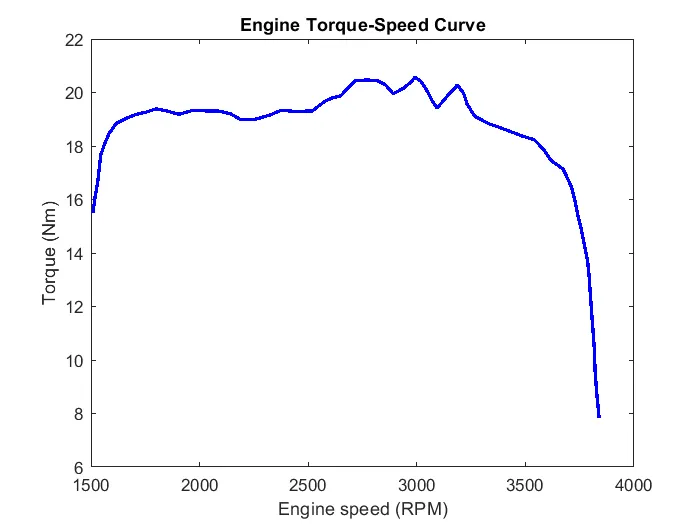
Engine-Torque Speed Curve-
PLOT - Throttle,Distance,Velocity & Brake Output-
Conclusion -
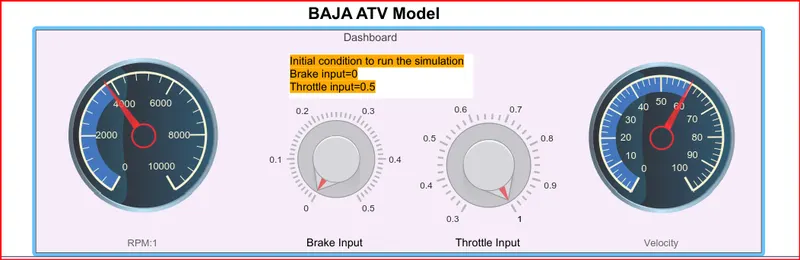
after providing initial inputs as Brake input & Throttle Input at max velocity of 60 and max rpm taken as below 4000.
so we got satisfied results.