Project
Aim- To Prepare a technical report on BAJA All Terrain model under different condition.
Objectives- Carry out a system label simulation of BAJA ATV under different models and prepare a technical report.
All-terrain vehicle-
An all terrain vehicle that travels on low-pressure tires, with a seat that is straddled by the operator, along with handlebars for steering control.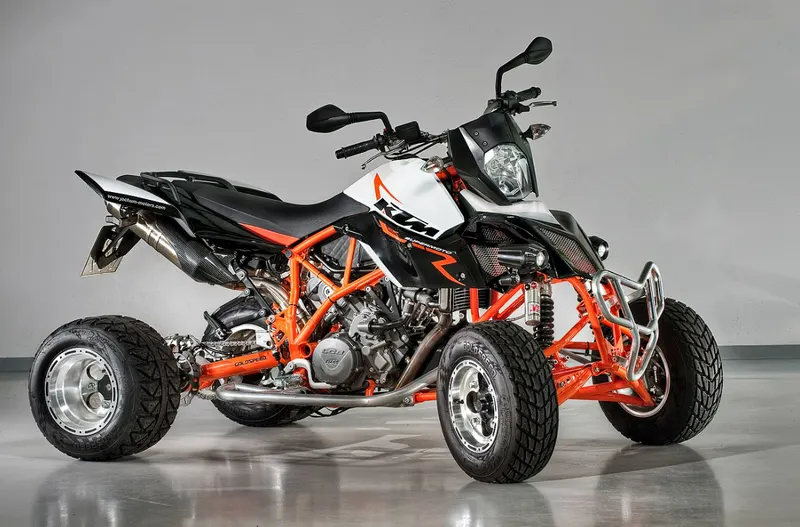
CVT-
A CVT, or continuously variable transmission, seamlessly changes through an unending range of effective gear ratios while you drive, whereas other kinds of mechanical transmissions offer a fixed number of gear ratios and have hard shifts between each as explained by Certified Transmission Repair. CVT transmission systems are also known as single-speed, shiftless, and stepless transmissions.
The shiftless nature of a CVT offers unparalleled flexibility that maintains constant angular velocity regardless of output speed. Additionally, a continuously variable transmission makes accelerating smooth and offers enhanced fuel economy.
Case-1:-Simulink model for BAJA ATV model without dashboard-
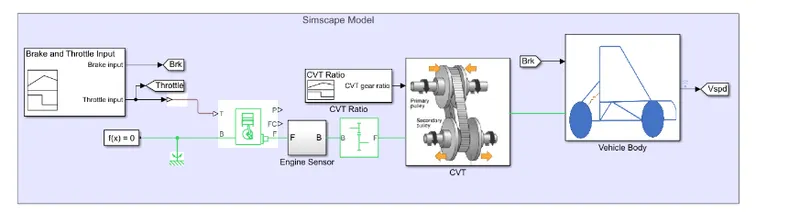
In this model ,we are using signal builder,generic engine,engine sensor,CVT,vehicle transmission,vehicle body,solver configuration etc.
CVT subsystem-
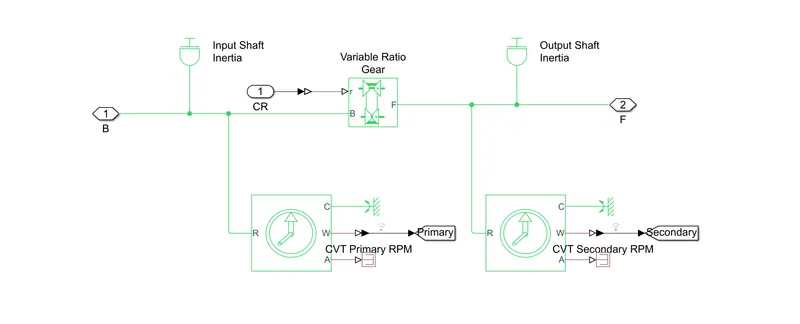
This includes transmission block,input and output shaft inertia and motion sensor.
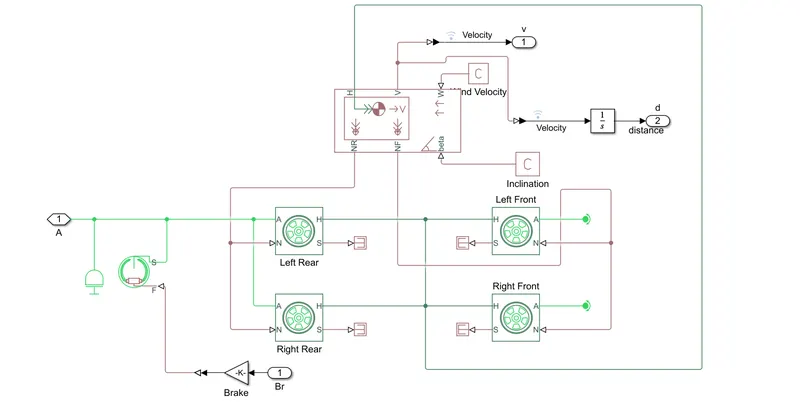
Vehicle Body subsystem-
Input Signal-
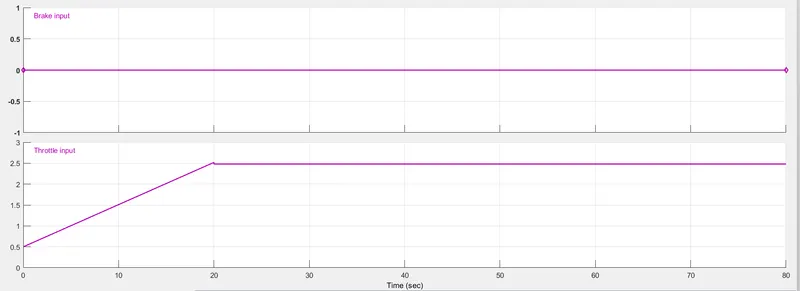
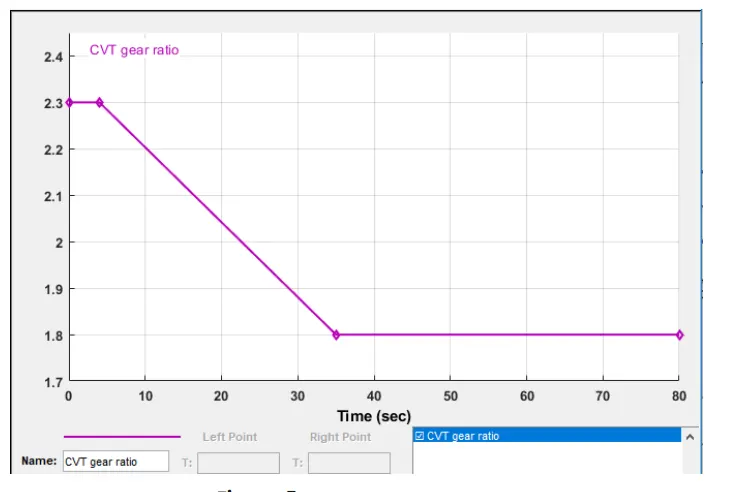
The signal builder is used to control the break,throttle and gear ratio. As brake value is contiououlsy 0 from starting to end.Throttle valve is 0.5 at starting and continuously increasing till 20sec and after that it is constant as 2.4.The Throttle valve control the amount of fuel flow to engine.As the throttle valve increases,the fuel flow rate in engine increases which increases the output power of engine.The CVT gear ratio is 2.3 for 5 sec and after that it linearly decreases to 1.8 and after that 1.8.
OUTPUT:-
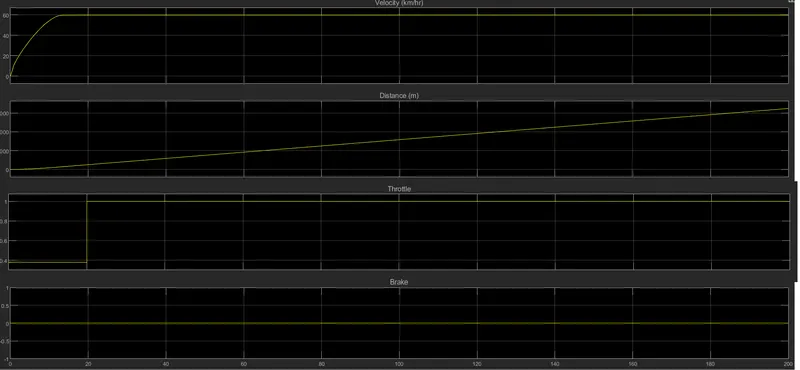
As in above figure,breake is maintained as zero ,as throttle value increase,the velosity curve increases and as throlle value goes constant the speed is also constant.So we can conclude that velosity is proportional to throttle value.
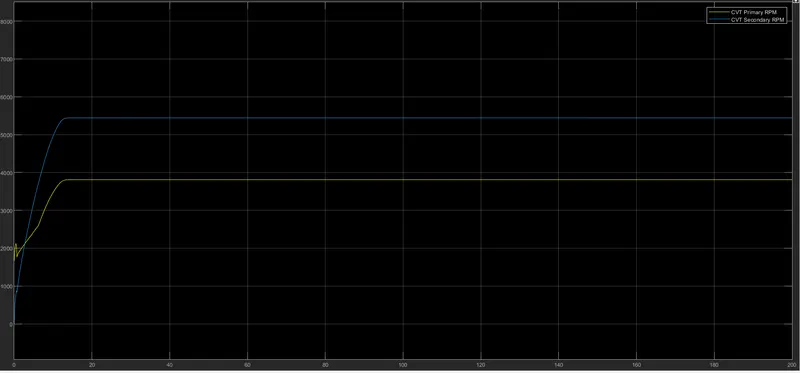
As from above figure,it shows the variation in angular velosity of input and output saft.The secondry saft value is lower than primary saft.
Case-2:-Simulink model for BAJA ATV model with dashboard-
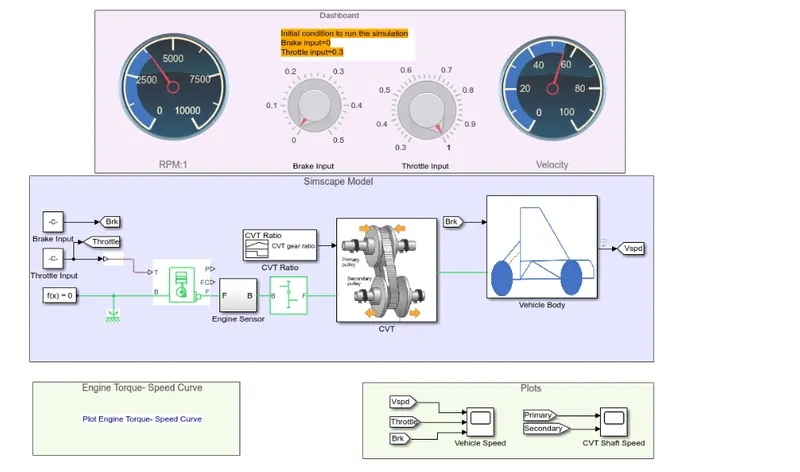
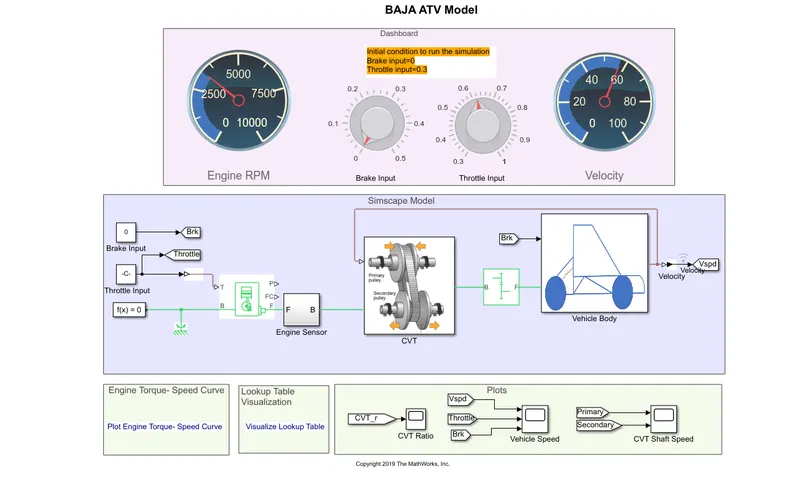
The above fig. shows the simulink model with dashboard.The above model consist brake input and throttle input in the dashboard instead of signal builder.With the help of this we can change value as real things happen means with different time different throttle valur or brake value can be changed.Rest are common with above model.
OUTPUT:-
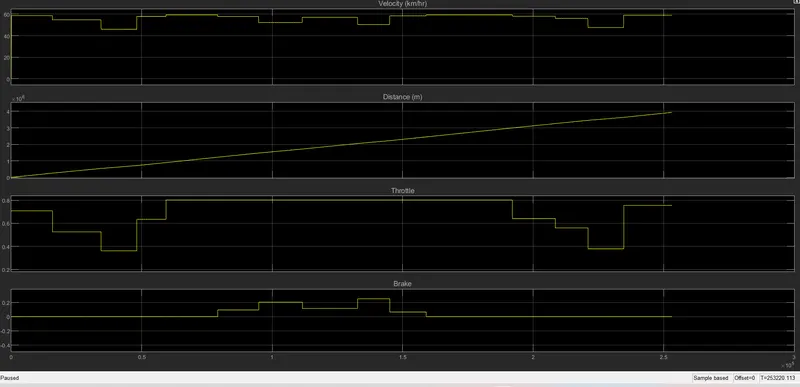
As from above output we can conclude that the variation on throttle and brake value ,the speed is also varing.As by keeping brake zero and increasing the throttle value ,speed is also increasing and by decreasing the throttle value speed is also decreasing.
CVT SAFT RPM :-
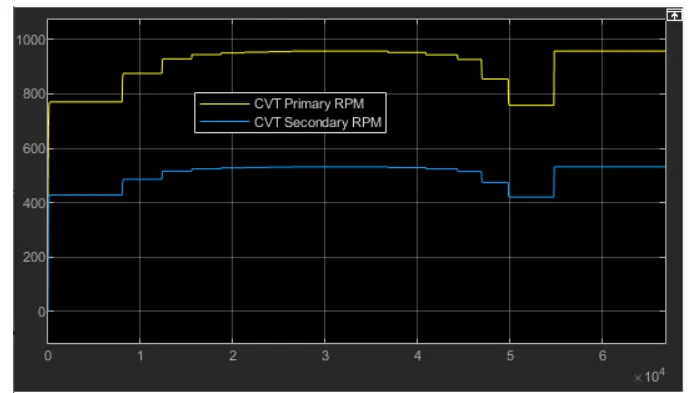
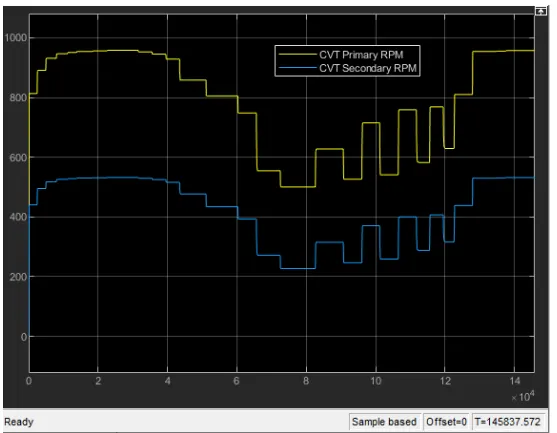
By increasing the throttle value ,the CVT primaryRPM increases and decreases with increasing the value of brake.
Case-3:-Simulink model for BAJA ATV model without dashboard using lookup table-
Simulink Block Diagram-
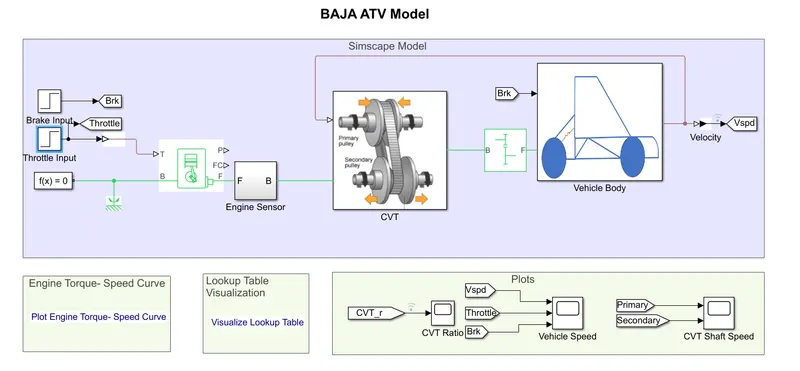
CVT Subsystem-
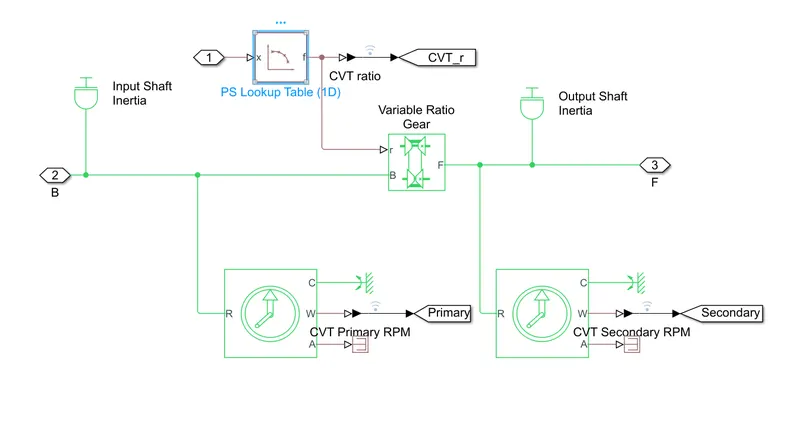
Every thing is common as BAJA ATV model without dashboard,only one thing is changed that we have given data by lookup table.
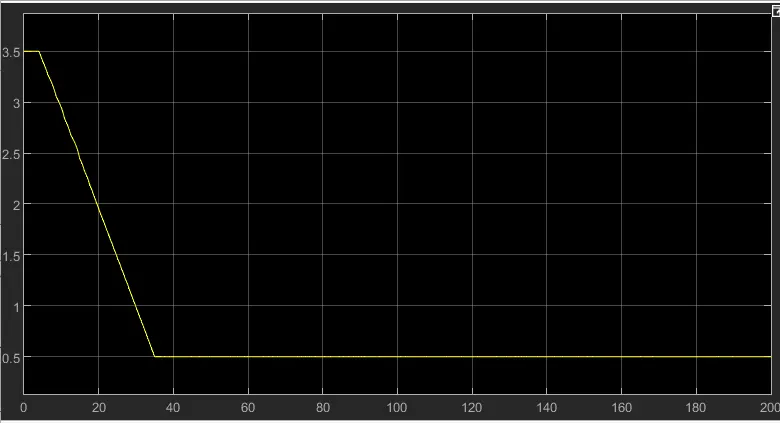
CVT ratio-
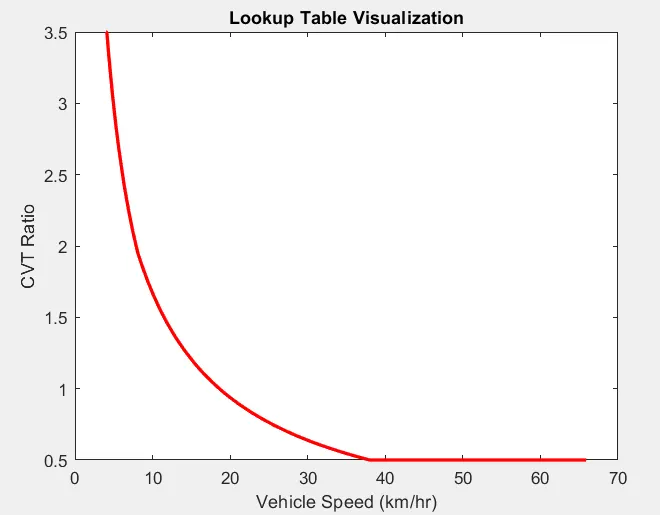
LOOKUP TABLE-
OUTPUT-
CVT GEAR RATIO-
Primary and secondry RPM-
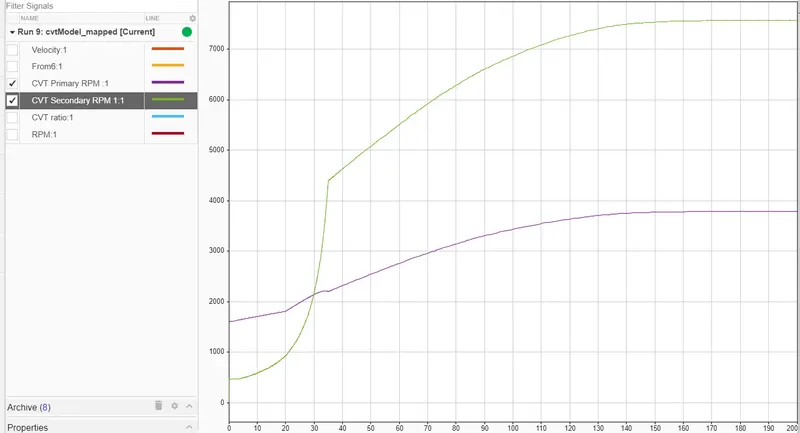
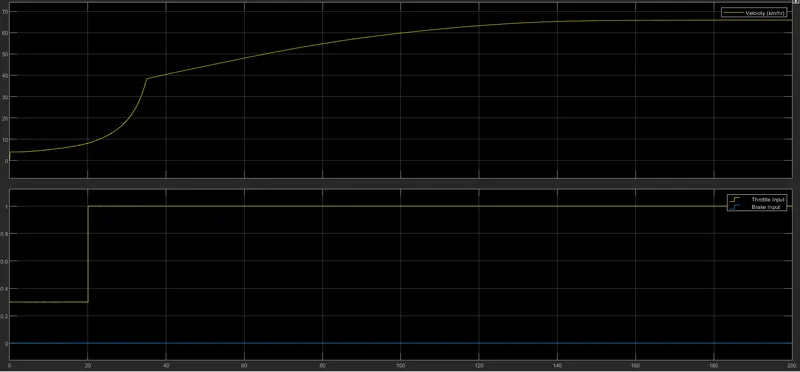
As by putting the brake value zero and by increasing throttle value ,the speed of vehicle also increases.
Case-4:-Simulink model for BAJA ATV model with dashboard using lookup table-
Simulink Block Diagram-
OUTPUT-
CVT SHAFT RPM-
VEHICLE OUTPUT-
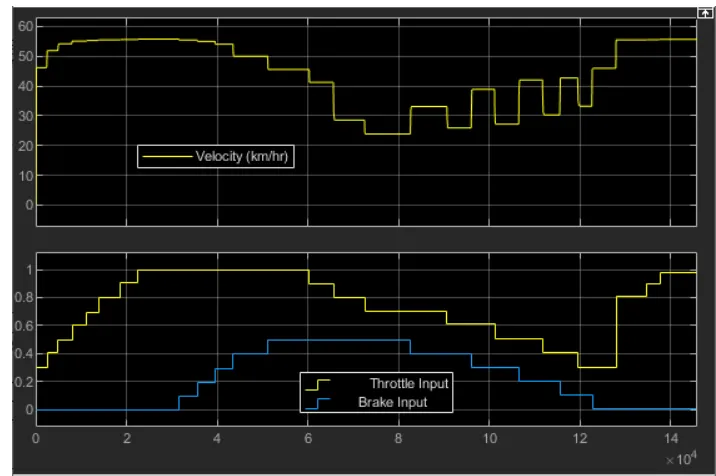
The result is similir CVT dashboard case.As the throttle value increases the speed of vehicle also increases and when decress ,speed also decress.When we apply brake the spped value goes down simultaneously CVT primary and secondry RPM also decress.