Week-4 Challenge WOT Condition Part-2
Note-This is EV LIVE BATCH 21.
Ans-1:-
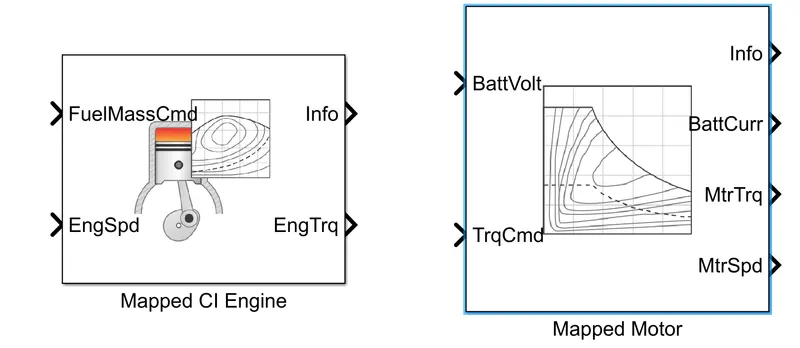
Mapped Engine-
- In mapped engine represent macro engine behaviour as a set of look up table(fuel flow,temperature,efficency,exhaust,temperature etc.)
- In mapped engine model ,it does not require any sub system.
- This type of model is very easy to analysis and design activity.
The screenshot of engine and motor model is as bellow-
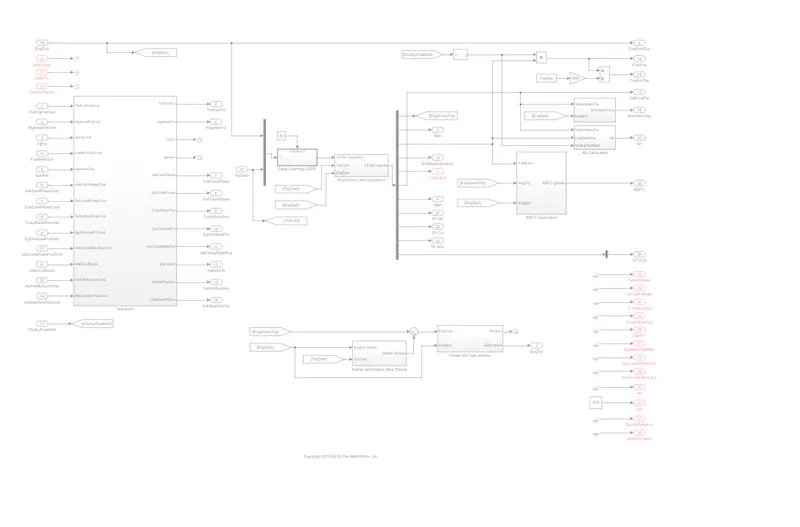
Dynamic Model-
- In dynamic model ,we study into individual component.It plays on subsystem label.
- With this ,we studied about sub system. Example as-engine torque system,engine speed,conytrol algorithm development.
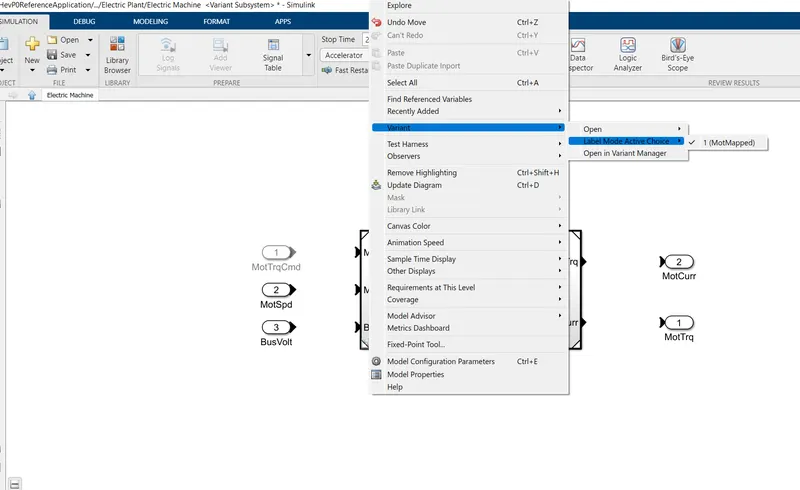
We can change model type as
by right click on mapped or dynamic model then click on varient then label mode active choice.And change as requirment.
Ans-2:-
The simulink model of HEV Reference application-
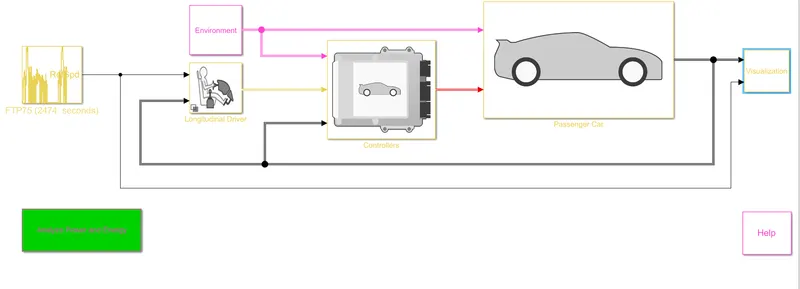
To open the performance calculation,open the visualization block then performance calculation -
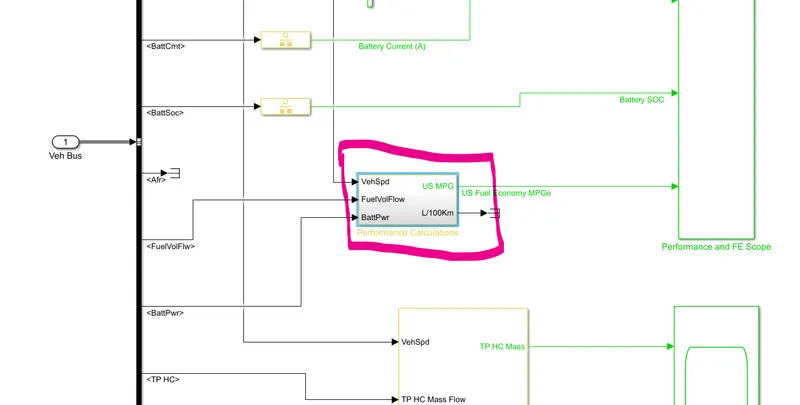
After opening performance calculation the following block will open-
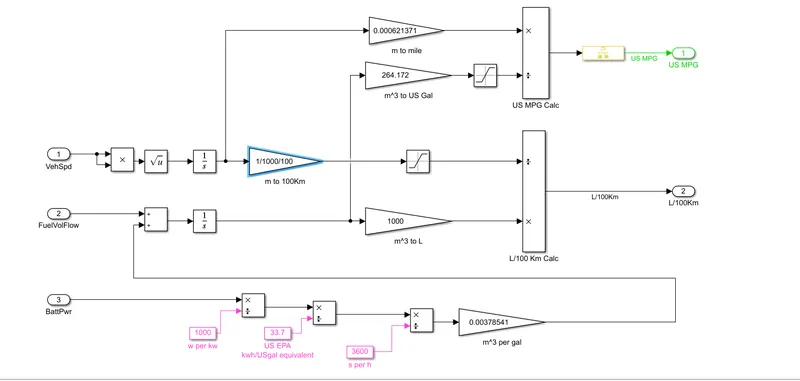
Here is three input which is consiser for calculation-
1>Vehical speed
2>Fuel Flow
3> Battery performance
Process is as below-
- Vehical Speed is in m/s,it is passes through an integrator that gives distance.The output of integrator is passed through m to mile block which have multiplying factor 0.000621371.After that it is converted into miles.
- Second fuel flow is in liter which is passed through integrator gives in volume then passed through m^3 to us gal block which have multiplying factor 264.172.After passing this result will be in gallon.
- Initially the power of is in Watt.It is divided with 1000 to convert in KWatt after that it is convrted in gallon equivalant by dividing 33.7(1gallon=33.7KWatt).
- And then again divided by 3600 to get the value per second And passing m^3 per gallon of multipling factor 0.00378541.The output of m^3 per gallon is in m^3/gallon.
Factor consider for fuel flow-
1-Speed of vehical
2-Vehical Fuel volume Flow
3-Battery power