Project
I AM A STUDENT OF LIVE BATCH-16
AIM:
Carry out a system-level simulation of an An all-terrain vehicle (ATV) is defined as a motorized off-highway vehicle designed to travel on four low-pressure or non-pneumatic tires, having a seat designed to be straddled by the operator and handlebars for steering control. ATVs are subdivided into two types as designated by the manufacturer. Type I ATVs are intended by the manufacturer for use by a single operator and no passenger. Type II ATVs are intended by the manufacturer for use by an operator and a passenger, and are equipped with a designated seating position behind the operator. Similarly, riders must also consider the various ATV sizes..
Download the model from the given link:
https://www.mathworks.com/matlabcentral/fileexchange/70576-baja-all-terrain-vehicle-atv-model
Prepare a technical report explaining the model properties & comments on the results.
SOLUTION:
THEORY :
All Terrain Vehicle:
- An all-terrain vehicle (ATV) is defined as a motorized off-highway vehicle designed to travel on four low-pressure or non-pneumatic tires, having a seat designed to be straddled by the operator and handlebars for steering control.
- ATVs are subdivided into two types as designated by the manufacturer.
- Type I ATVs are intended by the manufacturer for use by a single operator and no passenger.
- Type II ATVs are intended by the manufacturer for use by an operator and a passenger, and are equipped with a designated seating position behind the operator. Similarly, riders must also consider the various ATV sizes.
CONTINUOUSLY VARIABLE TRANSMISSSION (CVT):
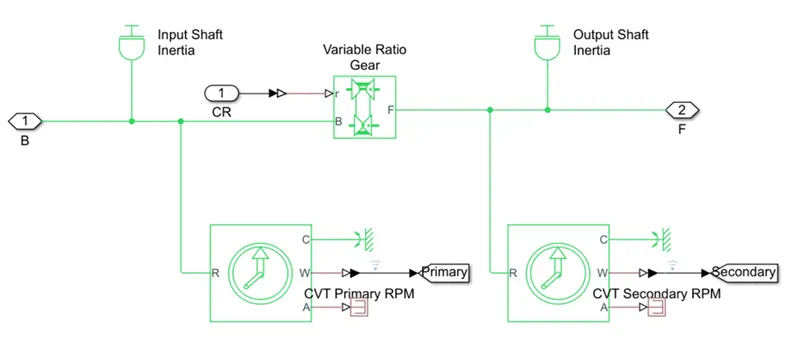
- A continuously variable transmission (CVT) is an automatic transmission that can change seamlessly through a continuous range of gear ratios.
- This contrasts with other transmissions that provide a limited number of gear ratios in fixed steps.
- The flexibility of a CVT with suitable control may allow the engine to operate at a constant RPM while the vehicle moves at varying speeds.
CVTs are used in automobiles, tractors, motor scooters, snowmobiles, bicycles and earthmoving equipment.
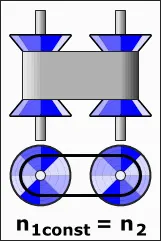
The most common type of CVT uses two pulleys connected by a belt or chain;as shown below however, several other designs have also been used at times.
STUDY1:
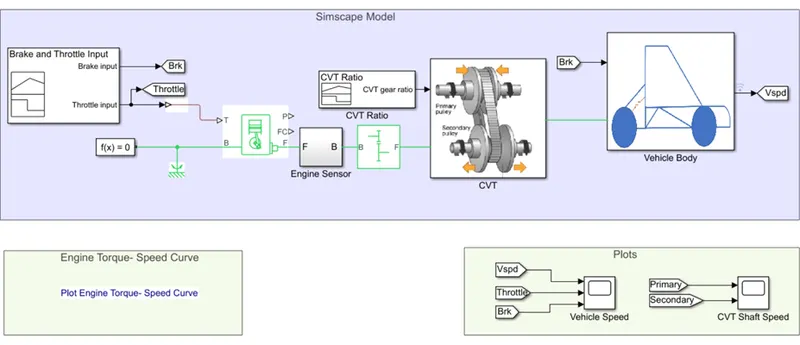
BAJA ATV MODEL WITHOUT DASHBOARD:
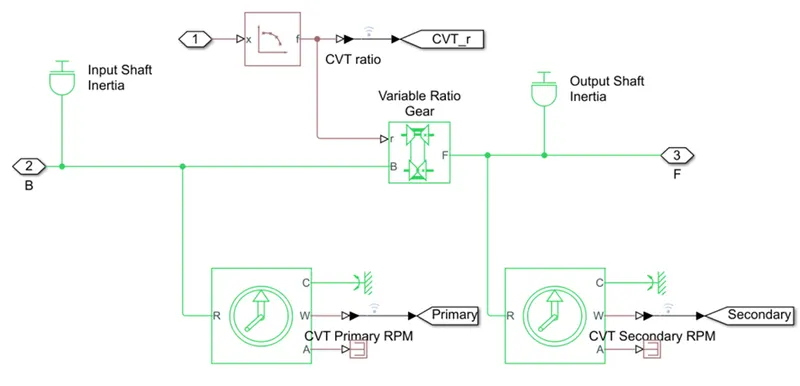
CVT SUBSYSTEM:
WORKING:
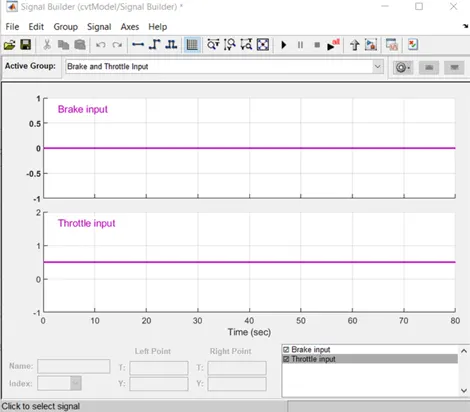
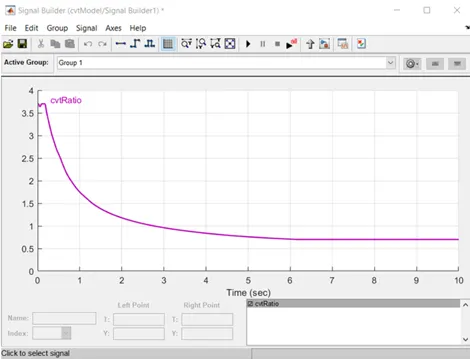
- Brake input, throttle input and CVT gear ration input are given from signal builder block
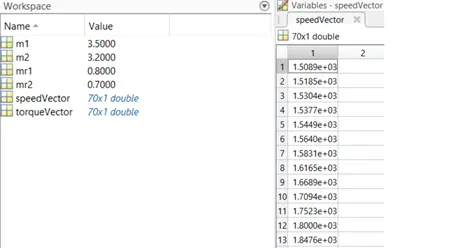
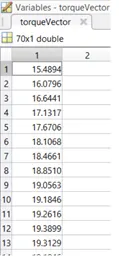
- From matlab workspace torque vector and speed vector input is given
- As the throttle input is given to the engine the engine parameters change accordingly
- Output from the generic engine is pass through the engine sensor block
- This engine sensor block records the rpm of engine and forwards the output from engine
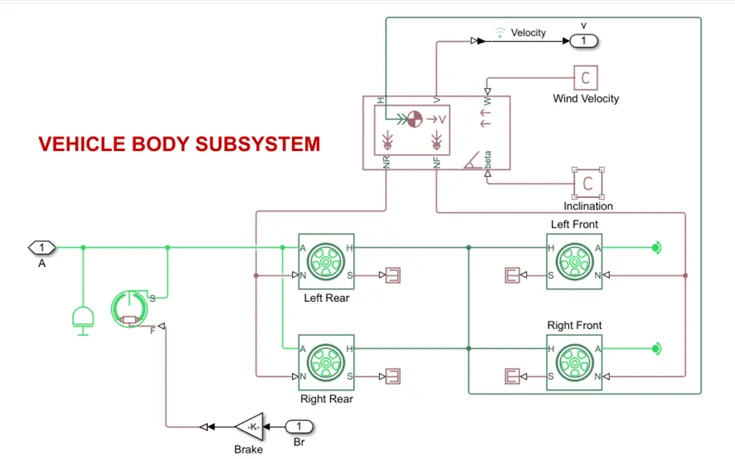
- The brake input is given to the double shoe brakes block via gain block and this output from brake is provided to tires
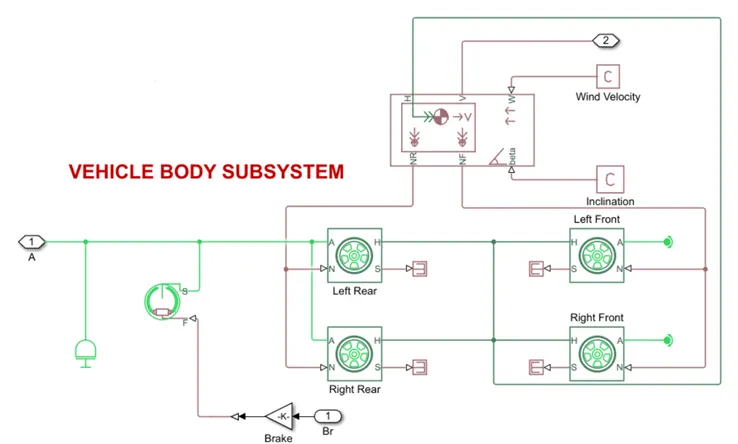
- The vehicle body block provides velocity for all tires and also output signal velocity and displacement using integrator
Signal Builder Block with Brake input & throttle input:
CVT Ratio:
MATLAB workspace:
speed vector Torque Vector
The simulation time=200 sec
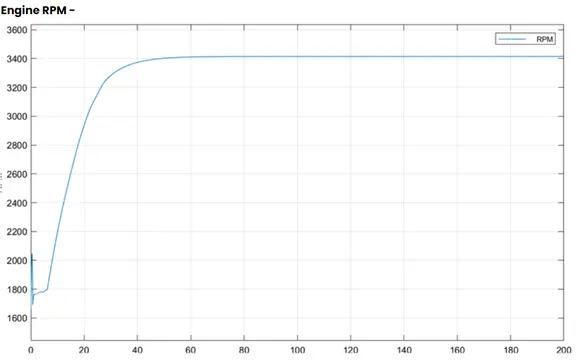
CVT SHAFT SPEED:
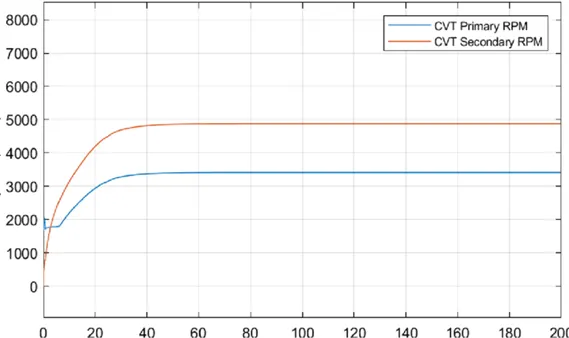
VELOCITY AND DISPLACEMENT:
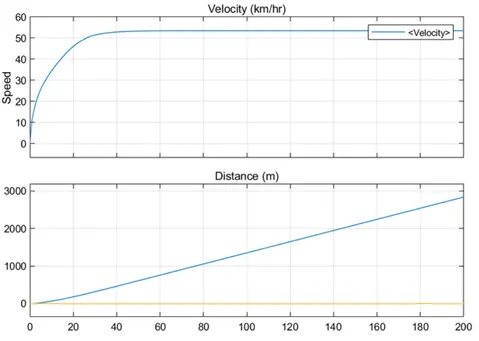
PLOT:
Variation of velocity and shaft speed:
STUDY 2:
BAJA ATV WITH DASHBOARD MODEL:
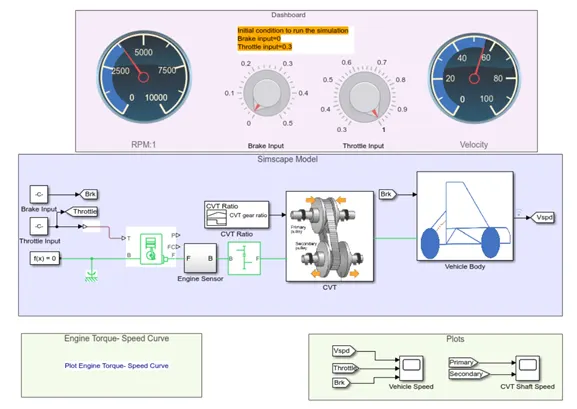
RESULT:
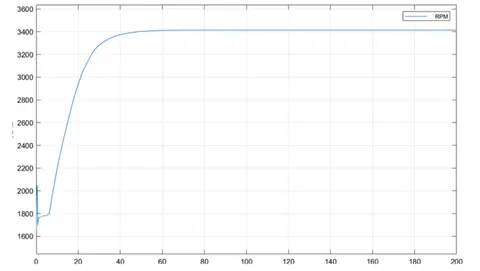
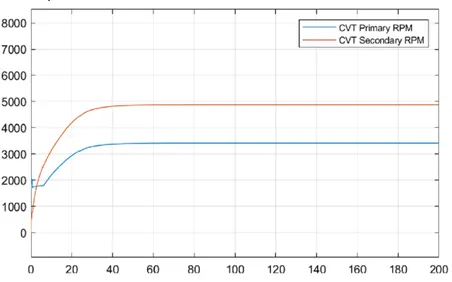
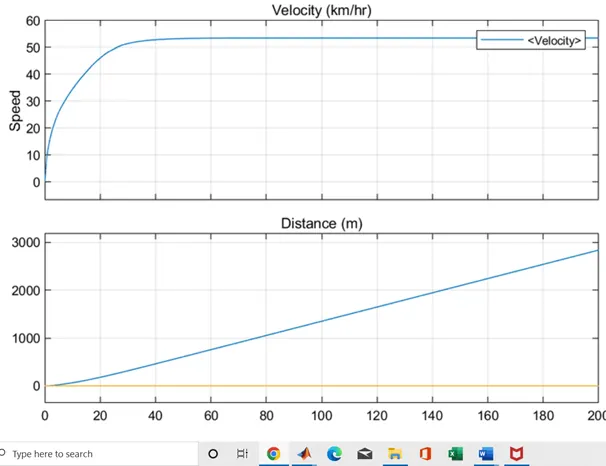
case1:
brake=0 and throttle=0.5
engine rpm
CVT shaft speed:
velocity and displacement:
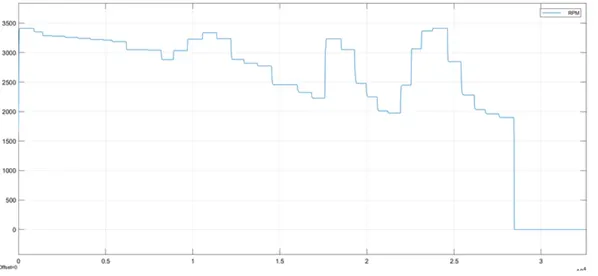
Case2:
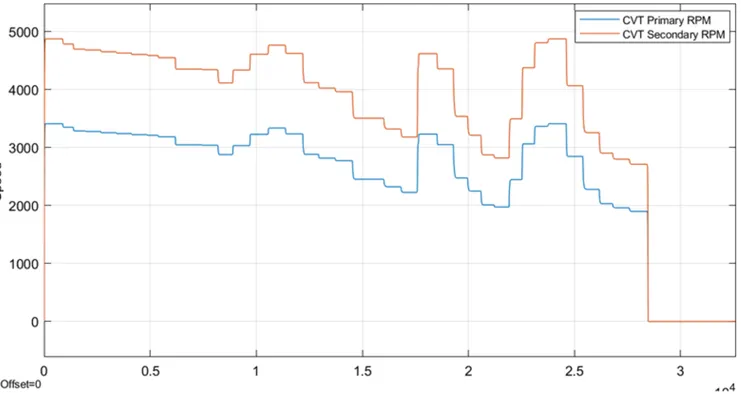
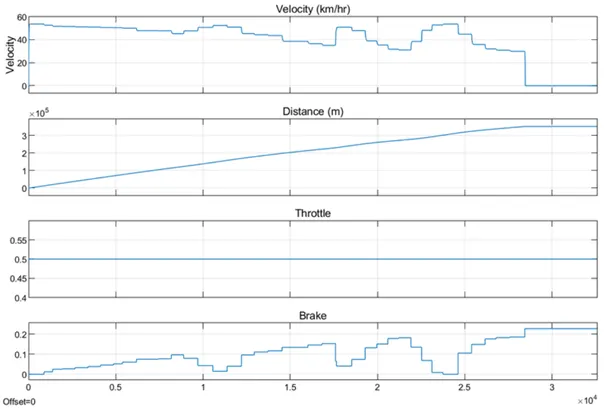
Brake=varyng and throttle=0.5
The simulation time is inf in this case
As throttle value is constant and brake value is varying.when the brake value exceeds 0.2 the rpm
Becomes 0. So the brake applied lies between 0 to 0.2
PLOT:
Engine rpm:
CVT Shaft speed:
Velocity and Displacement:
Case3:
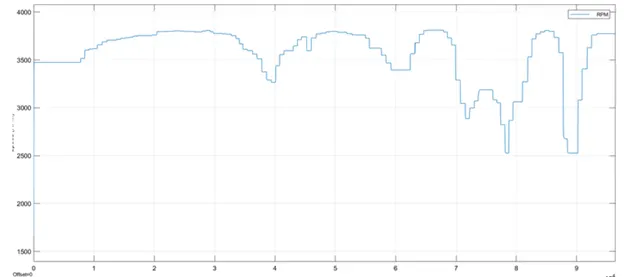
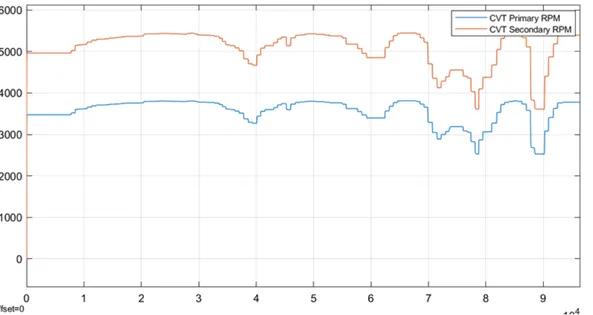
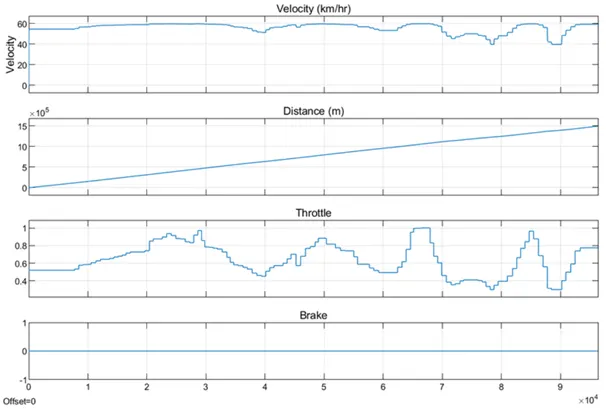
Brake=0 throttle=varying
The simulation time for this case is infinity
Engine rpm:
CVT Shaft speed:
Velocity and displacement:
STUDY 3:
BAJA ATV MODEL USING LOOKUP CHART:
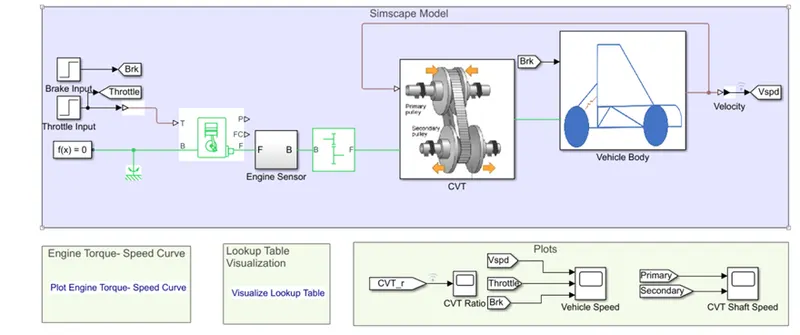
CVT SUBSYSTEM:
VEHICLE BODY SUBSYSTEM:
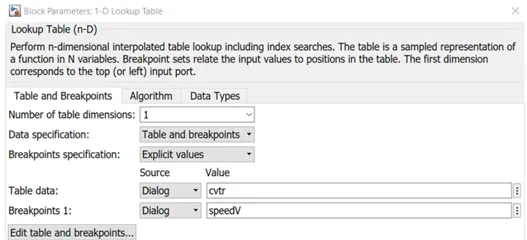
Lookup table parameter:
Result:
The simulation time =50sec
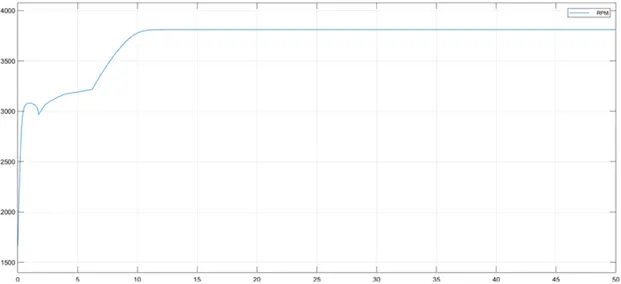
Engine rpm
Here output is also input for CVT gear ratio for CVT subsystem
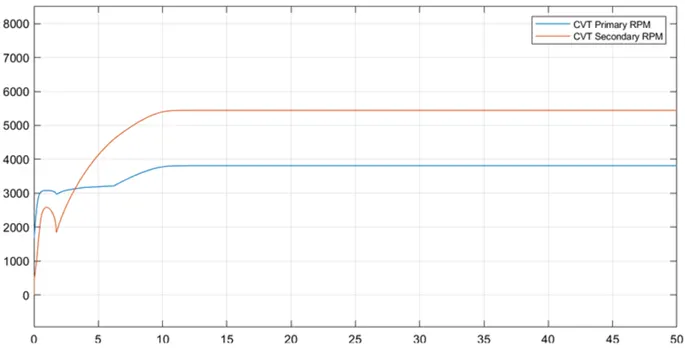
CVT Shaft speed:
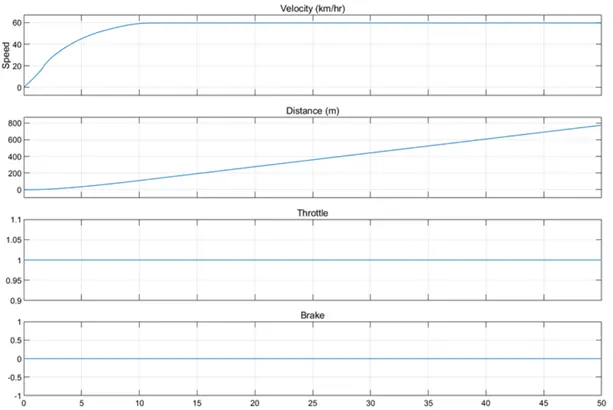
Output Plots:
STUDY 4:
BAJA ATV MODEL WITH DASHBOARD USING LOOKUP TABLE:
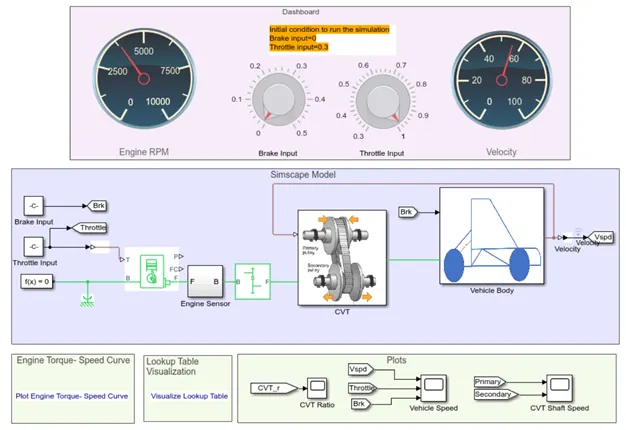
PLOT:
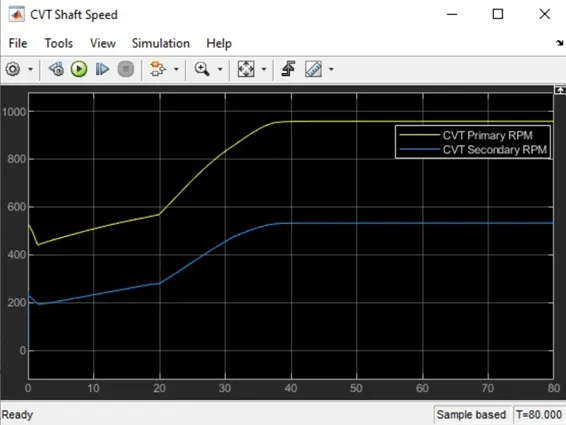
ENGINE RPM:
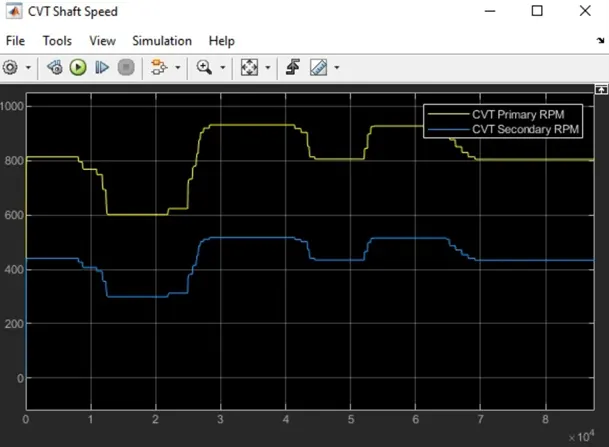
CVT shaft speed:
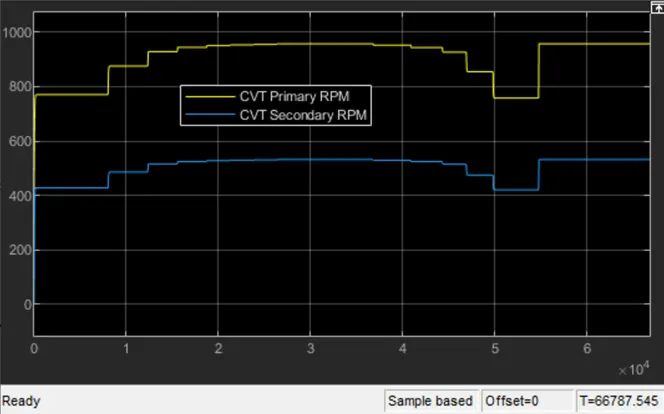
CONCLUSION:
thus we have sucessfully analysed 4 different models of BAJA ATV with CVT and recorded the outputs with respect to variation in throttle and brake input.