Project
AIM:- Carry out a system-level simulation of an all-terrain vehicle.
OBJECTIVES:-
- To prepare a technical report of the model and comment on the results.
- To explain the function of the subsystem and also blocks that are used in the model.
- Study a BAJA ATV model.
All-terrain vehicle(ATV):-
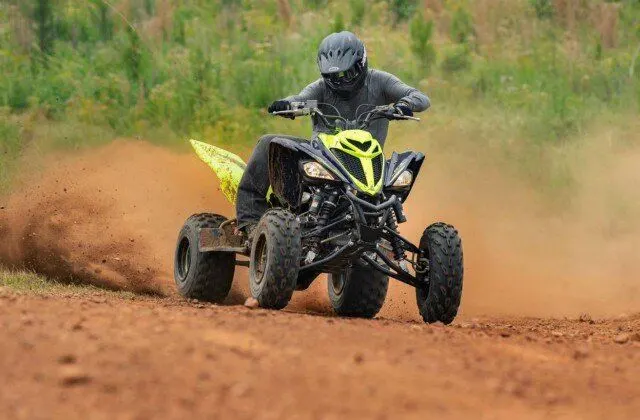
An all-terrain vehicle is defined as a motorized off-highway vehicle designed to travel on four low-pressure or non-pneumatic tires, having a seat designed to be straddled by the operator and handlebars for steering control.
Continuously variable transmission(CVT):-
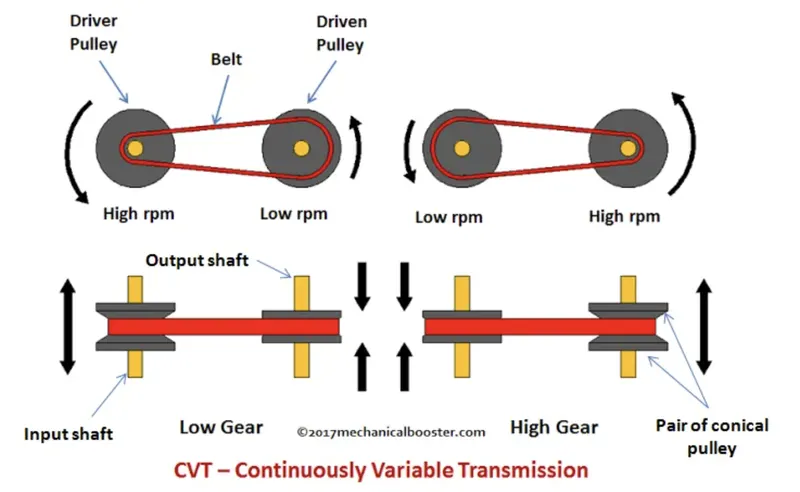
It is an automatic transmission that can change seamlessly through a continuous and wide range of gear ratios. The flexibility of a CVT with suitable control may allow the engine to operate at a constant RPM while the vehicle moves at varying speeds.
Mostly CVT’s are used in scooters and it has a primary pully, secondary pulley, v shape belt or a chain and variator.
Case 1:- Study the BAJA ATV model without a dashboard
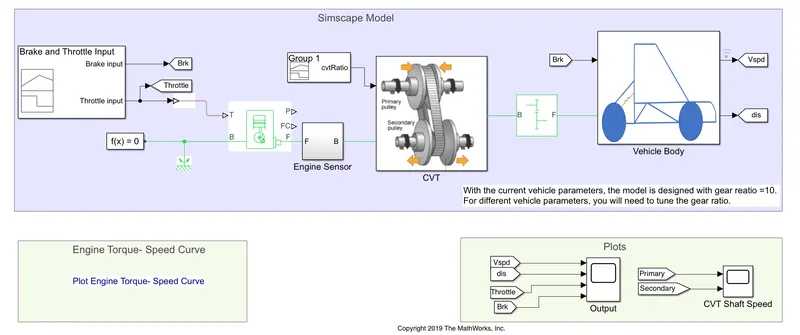
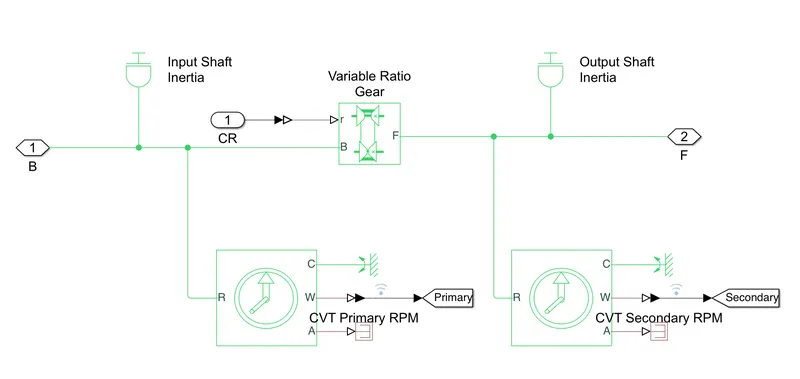
This model is consist of a signal builder, Generic engine, Vehicle transmission, Motion sensor, Vehicle body, tyres and solver configuration blocks etc., CVT subsystem which contains a transmission block, input and output shaft inertia and motion sensor and the vehicle body subsystem include vehicle body block, double drum brake and tyres.
As input initial engine speed is given as 2100 rpm, mechanical rotation for driven and driver pulley as 0.8 and 0.7 respectively. The weight of the vehicle is 250kg and 2 axles which connects 4 wheels accordingly.
BAJA ATV MODEL WITHOUT DASHBOARD:-
CVT SUBSYSTEM:-
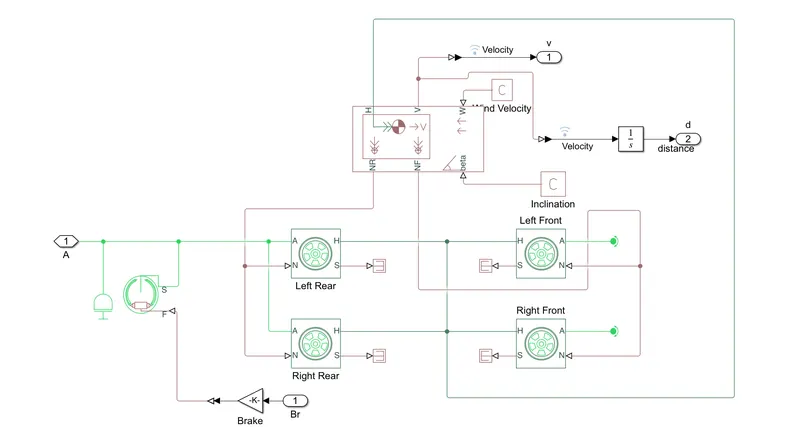
VEHICLE BODY SUBSYSTEM:-
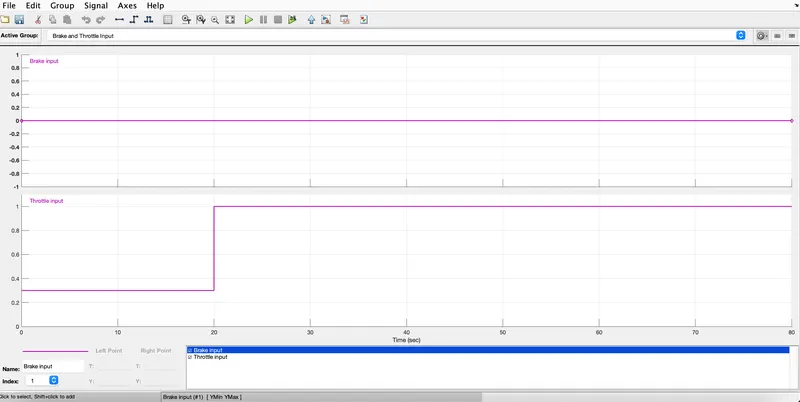
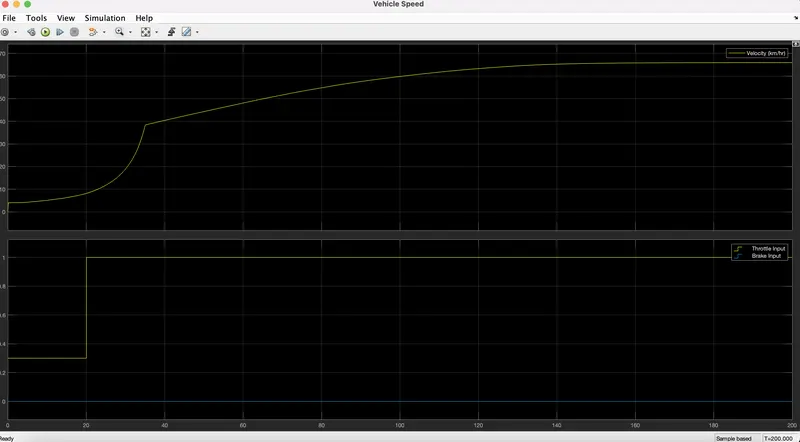
The signal builder block is used to set the brake, throttle input and gear ratio. We set brake input as 0 for the overall simulation. The throttle input is given as 0.3 for 20 seconds and then it is increased to 1 for the entire simulation. Here if the throttle value increases the flow of fuel consumption increases which then increases the power of the engine.
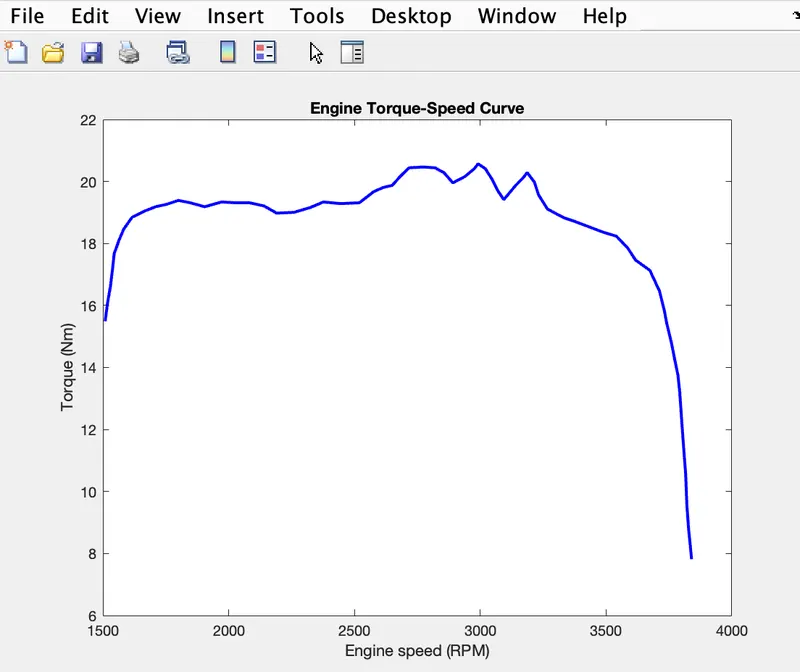
The vehicle speed depends on the CVT ratio. The data is extracted using the GRABBIT command which is available in the workspace. We have got the max velocity which is at 3839RPM.
Case 2:- Study the BAJA ATV model with dashboard
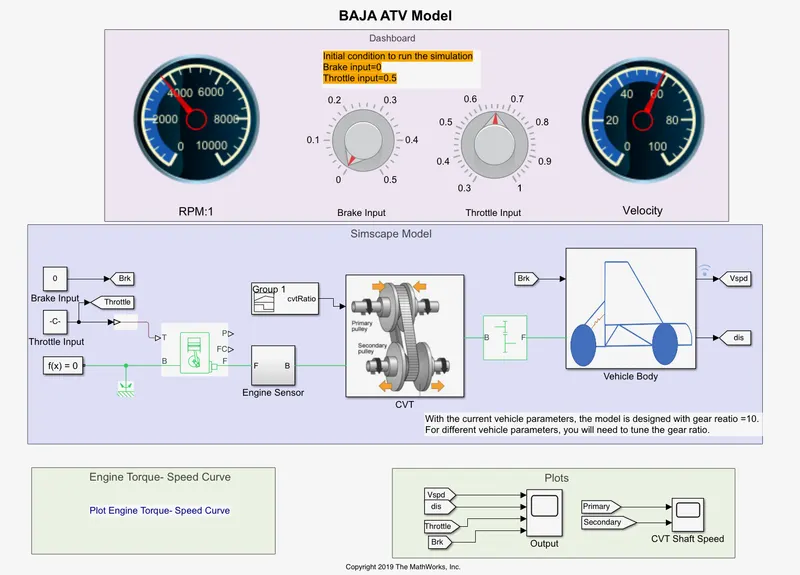
The above figure shows BAJA ATV with dashboard model which is made up of throttle meter and brake input instead of giving signal through signal builder block. The rest of the system is the same as the CVT model without a dashboard. The main purpose of using a dashboard is to study the result by varying the input of the brake and throttle which shows the velocity and speed of the engine.
Gear Ratio:-
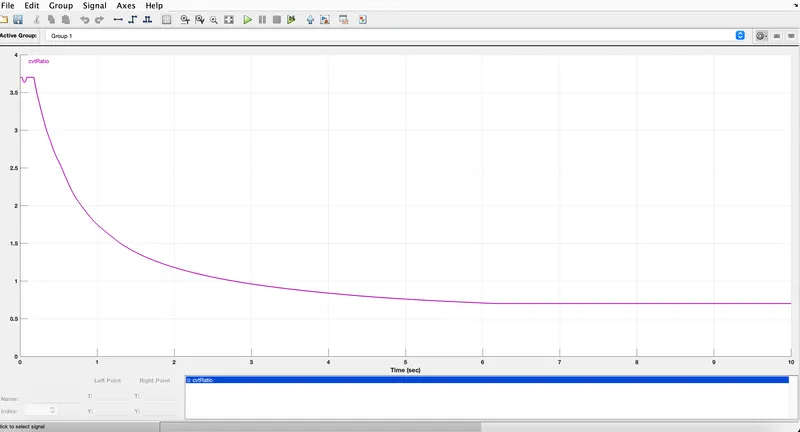
The gear ratio varies from 3.7 to o.7 and brake input varies from 0 to o.5.By increasing the throttle, the velocity and speed of the engine and shaft increase accordingly.
Case 3:- Study the BAJA ATV model with CVT using the lookup table:-
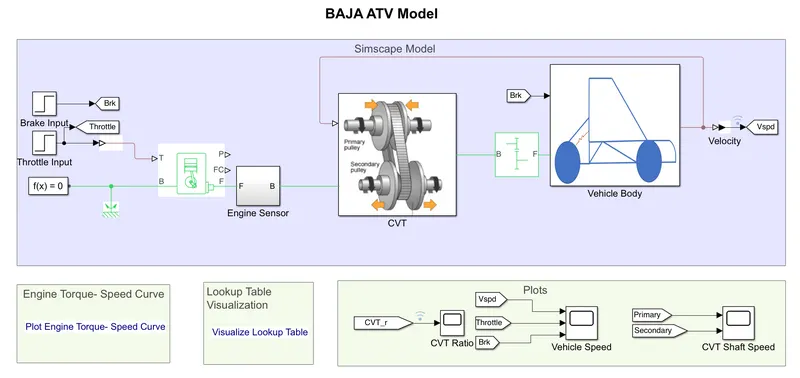
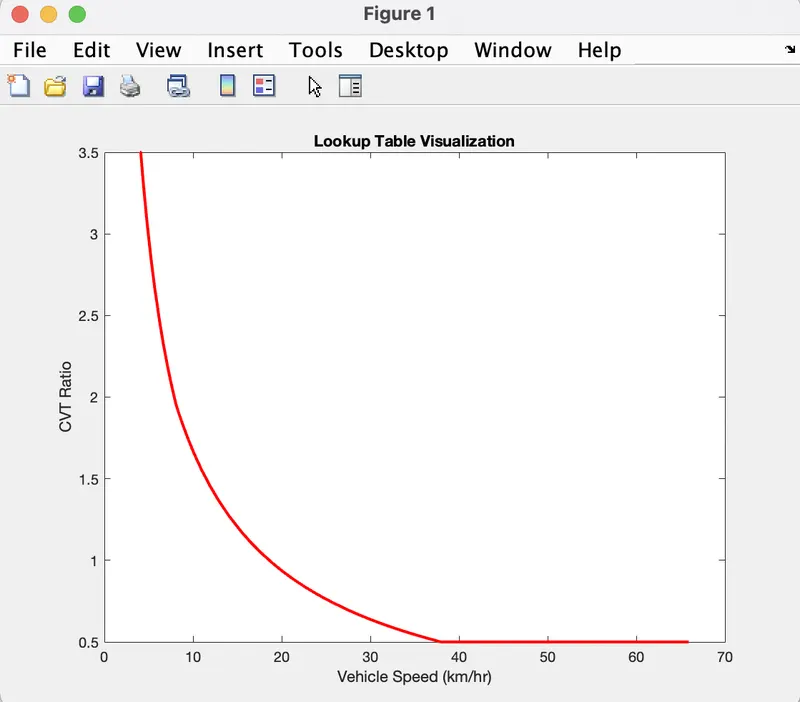
Simulink ATV model using lookup table is consist of step time, generic engine, Vehicle transmission, Motion sensor, Vehicle body, tyres and solver configuration blocks etc. The CVT subsystem includes a lookup table, transmission block, input and output shaft inertia and motion sensors. Here the initial engine speed is given as 2100 rpm, driver and driven pulley as 0.8 & 0.7 respectively. The mass of the vehicle is 250Kg.
-
In this model, the step signal block is used in the form of brake input and throttle input.
-
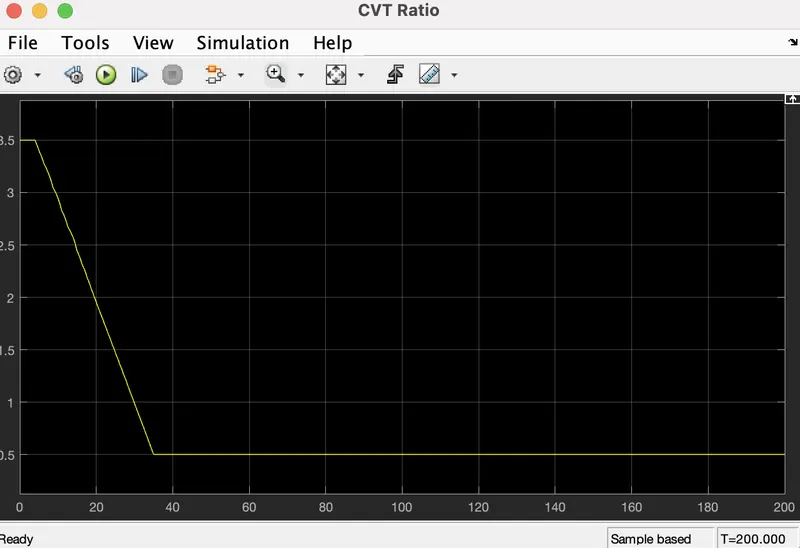
Then model simulates for 200 seconds to give us the output in the various plots.
-
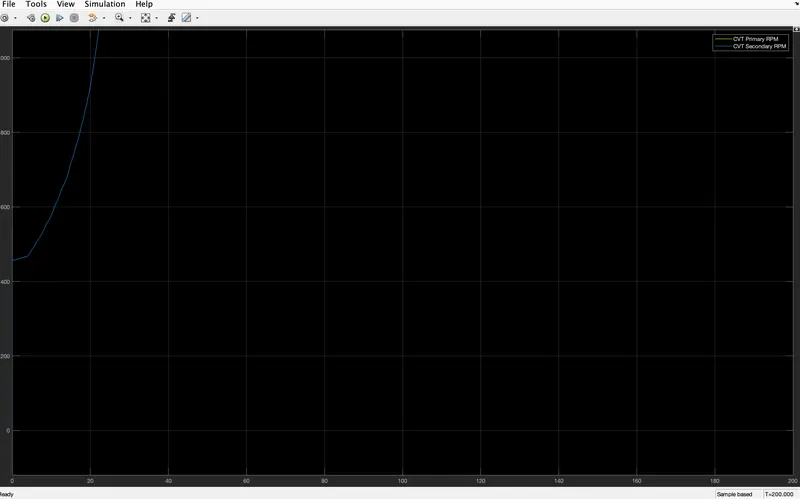
These outputs are Engine speed, Vehicle speed and CVT shaft speed.
Lookup Table:-
CVT Ratio:-
Vehicle Speed:-
CVT Shaft Speed:-
Case 4:- Study the BAJA ATV model with CVT and dashboard using the lookup table:-
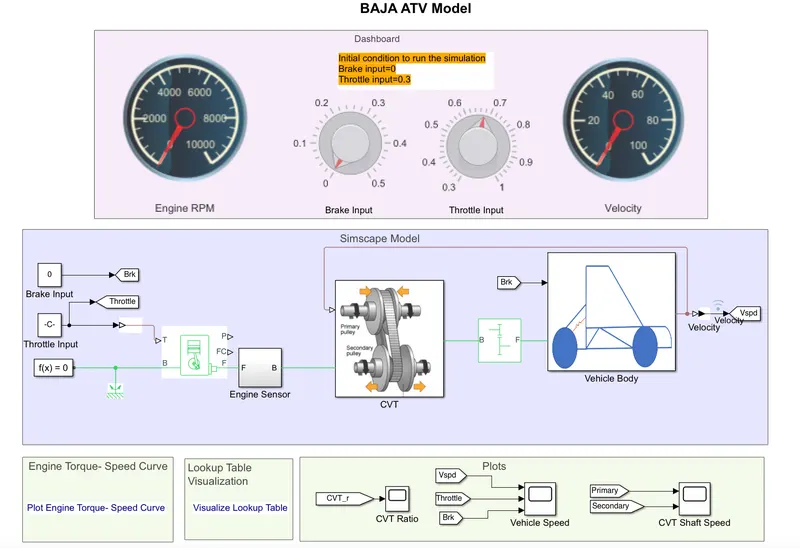
The above figure shows BAJA ATV model with CVT and dashboard using the lookup table which consists of throttle meter and brake input in the dashboard and indicated as a constant block. In this model rest of the subsystems are the same as BAJA ATV model with CVT using the lookup table in case 3.
-
Here the inputs are given using the knob on the dashboard. One input is for brake and another is for speed. The simultaneous changes will show us the impact on vehicle speed.
-
Here brake input =0 and throttle input can be increased or decreased in minimum and maximum order.
-
As the gear ratio changes, the torque also changes because the gear ratio is directly proportional to the torque, which increases with an increase in gear ratio.
-
At the maximum level of torque, the speed and velocity decreases.
CONCLUSION:-
Thus we have successfully simulated and analysed 4 different models of the BAJA ATV model and recorded the output and also understand the difference between all 4 models and blocks used in it which make them different from each other.
REFERENCES:-
https://in.mathworks.com/matlabcentral/fileexchange/70576-baja-all-terrain-vehicle-atv-model