System-level simulation of a BAJA All-Terrain Vehicle (ATV) Model
System-level simulation of a BAJA All-Terrain Vehicle (ATV) Model
AIM: Carry out a system-level simulation of a BAJA All-Terrain Vehicle (ATV) Model.
OBJECTIVES
- Analyse all the components of the model and understand the relationship and flow between the blocks.
- Benchmark the model, customize the parameters and understand the different ways to model a BAJA ATV model.
THEORY
All-Terrain Vehicle (ATV)
- The term ATV stands for All Terrain Vehicle. It is also known as a quad or quadricycle type vehicle. An All-Terrain motor vehicle could have three, four or even six wheels. Unlike a motorcycle, generally, the ATVs have more than two wheels. This vehicle runs on low-pressure tires. However, it has handlebars instead of wheel for controlling the steering
- As the name indicates, an ATV is designed to handle a broader variety of terrain than regular vehicles. In some countries it is a street-legal motor vehicle and licensed for use on public roads. However, it is not street-legal or roadworthy within some states, territories, and provinces of some countries.
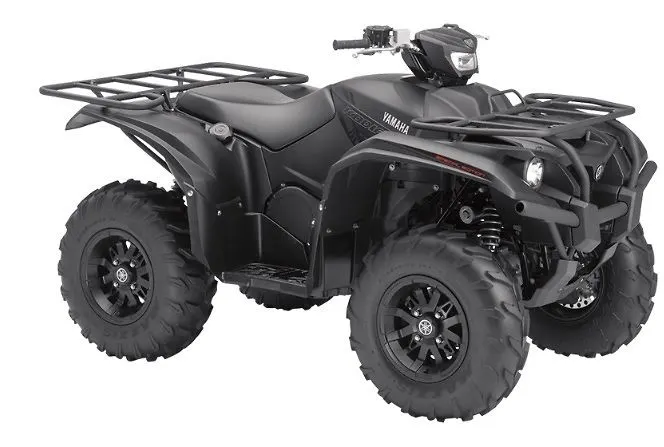
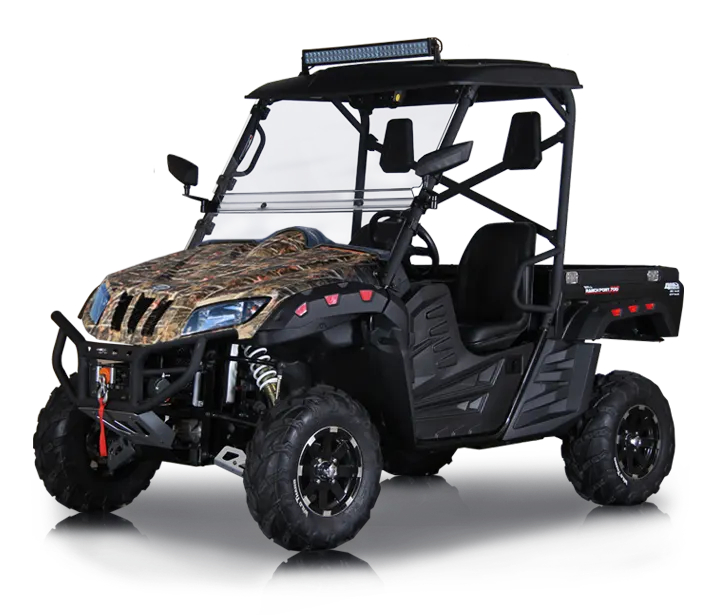
- There are many ATVs available in the Indian market from various manufacturers, but none of them are road legal. Which means you can only enjoy the fun-filled ATVs on private tracks and private properties but not ride or drive them on the public roads.
- Modern ATVs employ advance features such as liquid-cooled engine and Twin spark-plugs. Some also offer independent suspension, automatic transmission, and a 4-wheel drive system etc.
BAJA ATV MODELs - (Click Here)
- This submission contains a set of models created with Simulink, Simscape, and Simscape Driveline. More specifically, the file contained includes: BAJA ATV model with Continuously Variable Transmission (CVT).
- These models show how to build an ATV with CVT which is mostly used in BAJA competitions. Simscape and Simscape Driveline have been used to complete the system. The engine data used in the model is provided as an image which shows the Engine Speed (RPM) Vs Torque curve.
1_Models:
cvtModel: Contains Simscape model of BAJA ATV with Continuous Variable Transmission.
cvtModel_dashboard: The model is similar to, "cvtModel" with addition of dashboards.
2_Models_LookupTable:
cvtModel_cvtratio_rpm: Contains model based on cvt ratio and engine rpm lookup table.
cvtModel_mapped: Contains Simscape model of BAJA ATV with Continous Variable Transmission where the CVT ratio varies based on 1D lookup table.
cvtModel_dashboard_mapped: The model is similar to, "cvtModel_mapped" with addition of dashboards.
cvtModel_data: The model is used to log the CVT ratio and vehicle speed for the look table visualization
lookuptable_visualization: Script to load and run the model, "cvtModel_data".
- The models use the following MathWorks products, all from R2018b release: MATLAB, Simulink, Simscape, Simscape Driveline.
Continuously variable transmission (CVT)
- A continuously variable transmission (CVT) is an automatic transmission that can change seamlessly through a continuous range of gear ratios. This contrasts with other transmissions that provide a limited number of gear ratios in fixed steps.
- The flexibility of a CVT with suitable control may allow the engine to operate at a constant RPM while the vehicle moves at varying speeds.
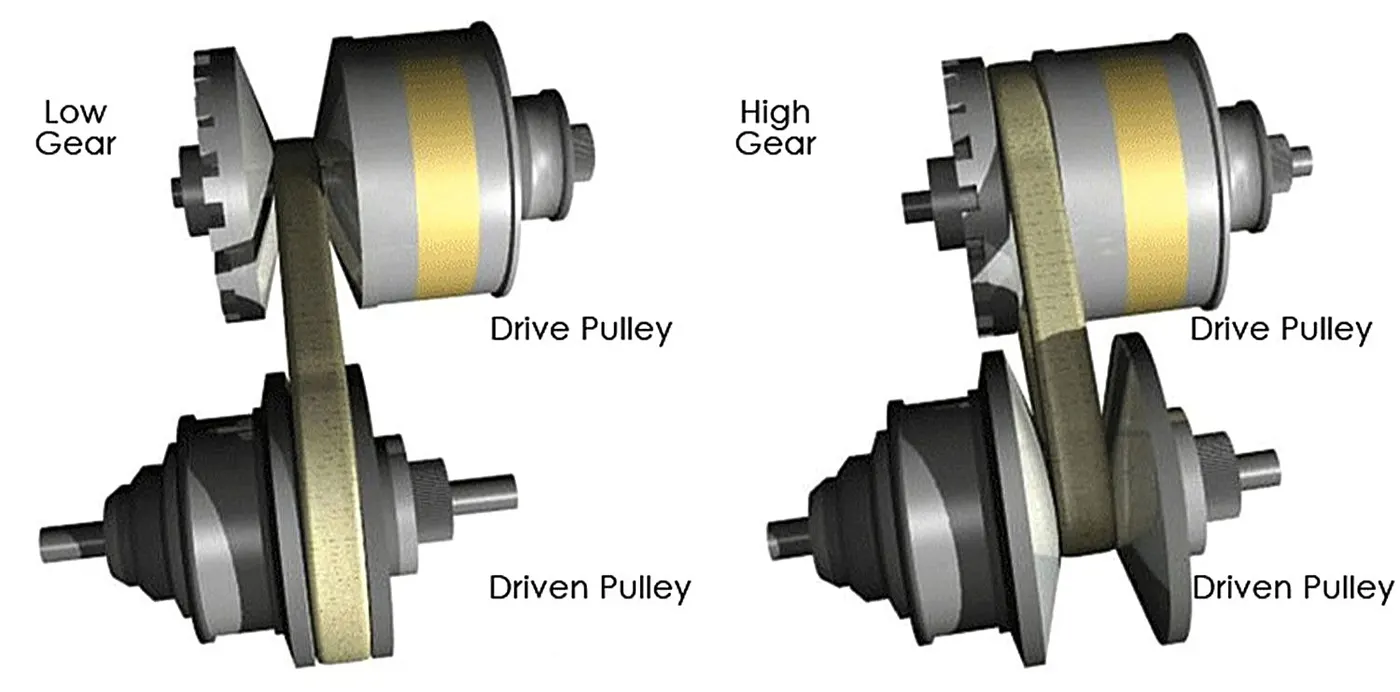
- The most common type of CVT uses a V-belt which runs between two variable-diameter pulleys.
- The pulleys consist of two cone-shaped halves that move together and apart. The V-belt runs between these two halves, so the effective diameter of the pulley is dependent on the distance between the two halves of the pulley.
- The V-shaped cross-section of the belt causes it to ride higher on one pulley and lower on the other; therefore, the gear ratio is adjusted by moving the two sheaves of one pulley closer together and the two sheaves of the other pulley farther apart.
MODEL
cvtModel: Contains Simscape model of BAJA ATV with Continuous Variable Transmission.
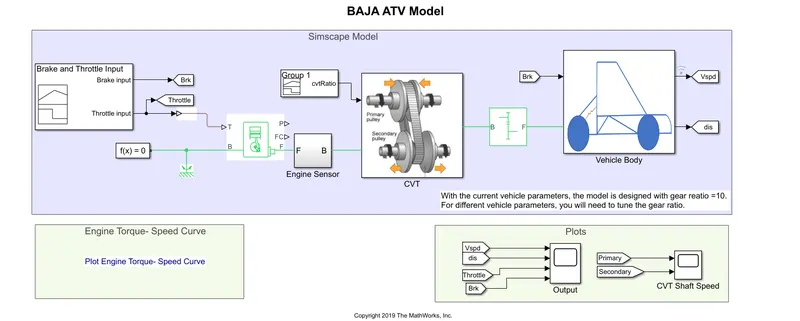
- This Simscape model of BAJA ATV has a generic engine block connected to the CVT subsystem block and the vehicle body subsystem block.
Engine Block:
- The torque input to the engine block is provided by a signal builder block. It provides throttle input signal and brake input signal.
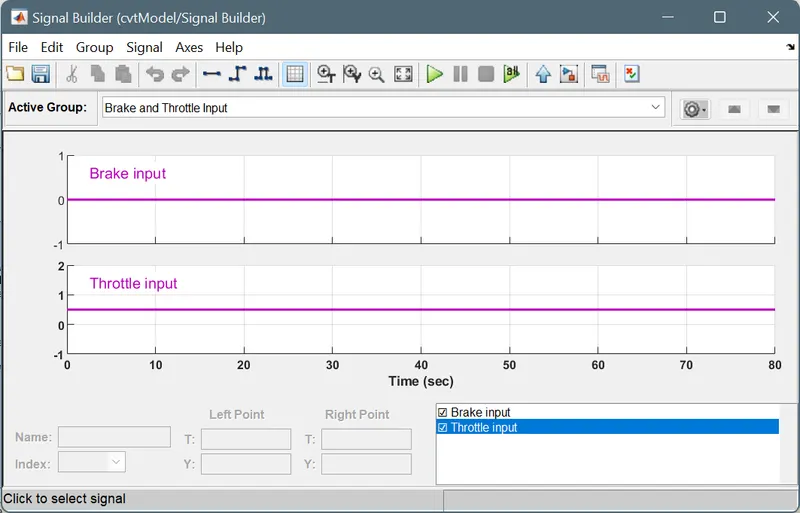
- Throttle input and brake inputs were kept constant throughout the simulation (trottle input = 0.5, Brake input = 0).
- Engine parameters are provided by BAJA engineers according to their engine specifications.
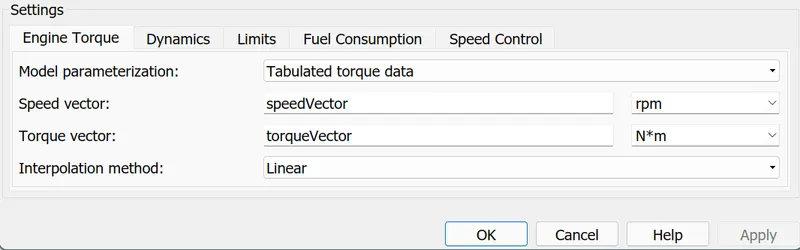
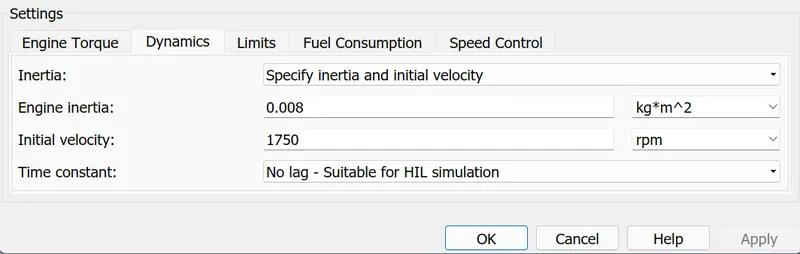
- The Speed Vector and Torque vectors are assigned from the workspace according to the Engine Torque - speed curve of BAJA Engine.
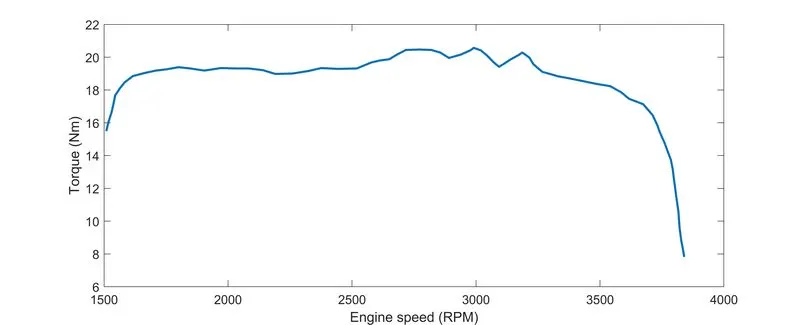
- The data points from the curve can be by using file extraction command GRABIT.
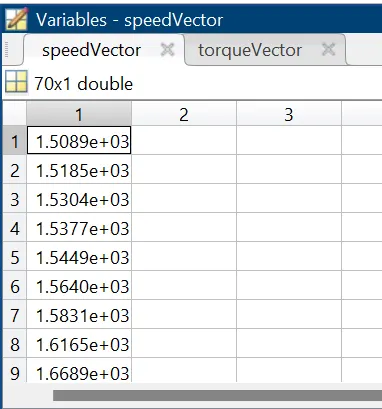
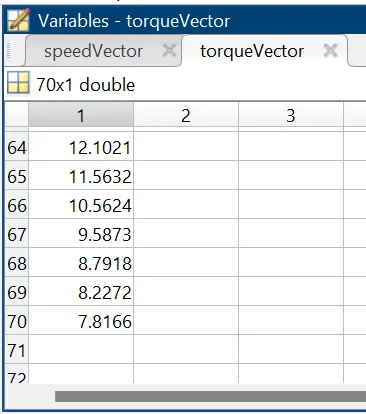
- Mechanical rotational port is connected with a mechanical rotational reference, and output Angular velocity is measured as RPM using an engine sensor sub-block consisting of a rotational sensor and a scope.
CVT Subsystem Block:
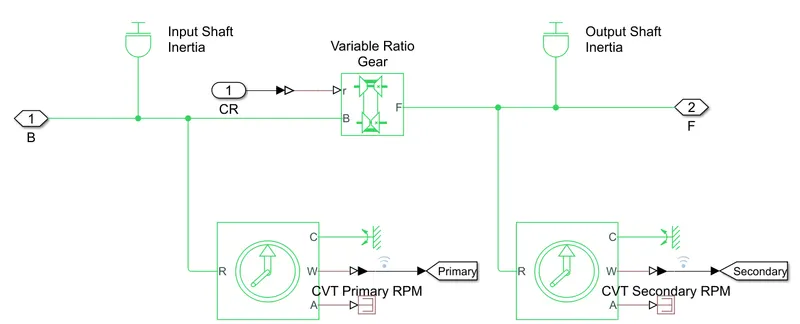
- The CVT block consists of 2 inertia blocks representing the pulleys and a variable ratio transmission gearbox between them. The angular velocities of the primary (pulley 1) and secondary (pulley 2) shafts are measured using mechanical rotational sensor blocks.
- The signal builder block of data points specified in the cvtratio.mat file provides the gear ratio to the variable gearbox.
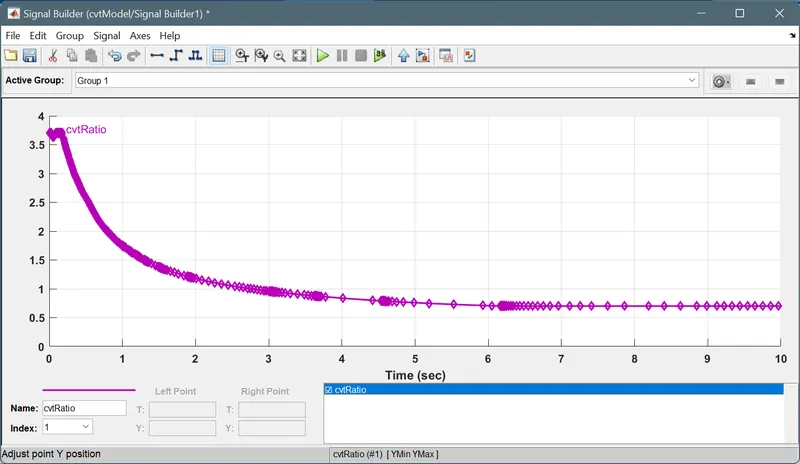
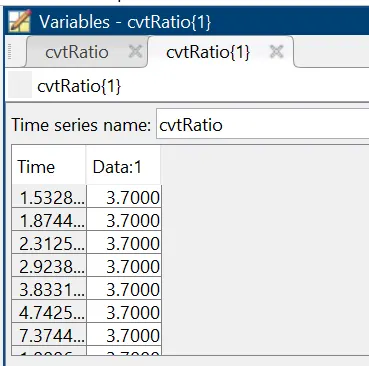
- A gear ratio must be ensured before transferring speed to the vehicle body bock. With the current vehicle parameters, the model is designed with gear ratio =10.
For different vehicle parameters, we can tune the gear ratio.
Vehicle Body Subsystem Block:
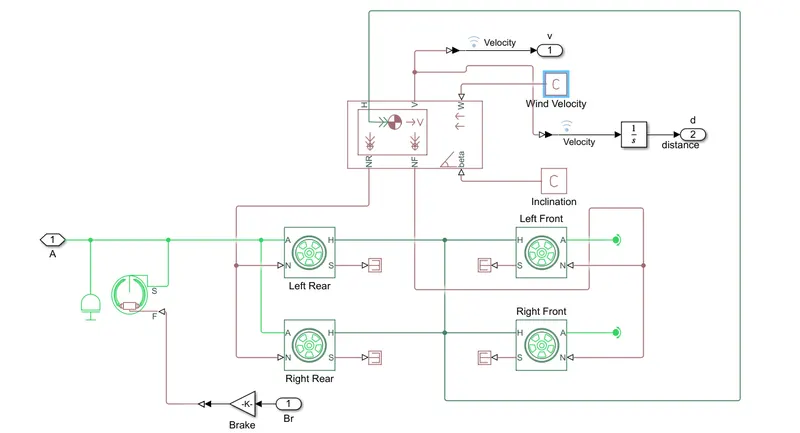
- The vehicle body subsystem consists of a vehicle body block, dual-shoe brake block and 4 tire (magic formula) blocks.
- Vehicle body block parameters are set to BAJA vehicle specifications, the parameters can be changed for our own vehicle model. The drag coefficient and frontal area can be set according to our specification.
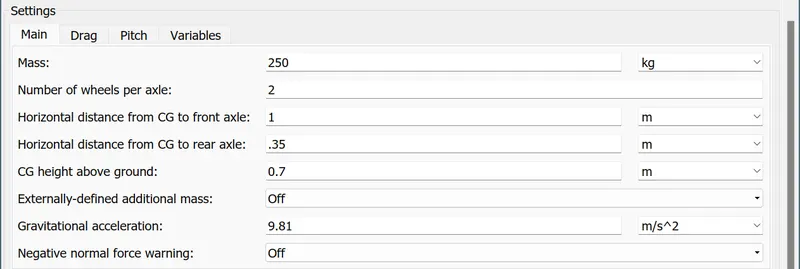
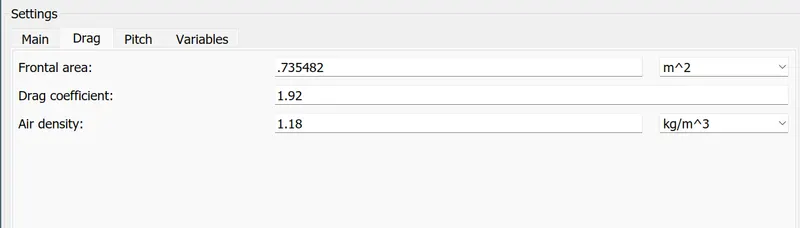
- In the vehicle body block, the wind speed and inclination are set to zero, the normal wheel forces are connected to the tires and the output signal velocity is set to the output, and we can calculate the displacement by integrating the velocity.
- The mechanical rotational power from the CVT is connected to the 4 tire blocks and to the mechanical translation conservation port of the vehicle body block with a double-shoe brake.
- The brake signal generated by the signal builder can be applied to the dual-shoe brake, which is reflected on the tires and vehicle body.
- Finally, the throttle input, brake input, vehicle velocity and vehicle displacement can be plotted in a scope block to visualize the character of the model.
- Additionally, we can examine how CVT works by plotting primary and secondary shaft speeds.
RESULTS
Stop time = 80
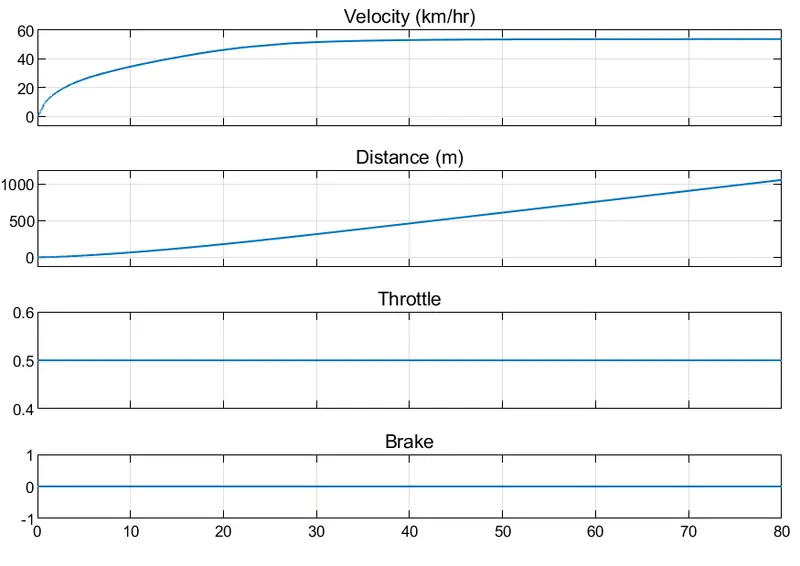
- With a constant 0.5 throttle input and zero brake input, the velocity gradually increases to a certain point and then remains the same.
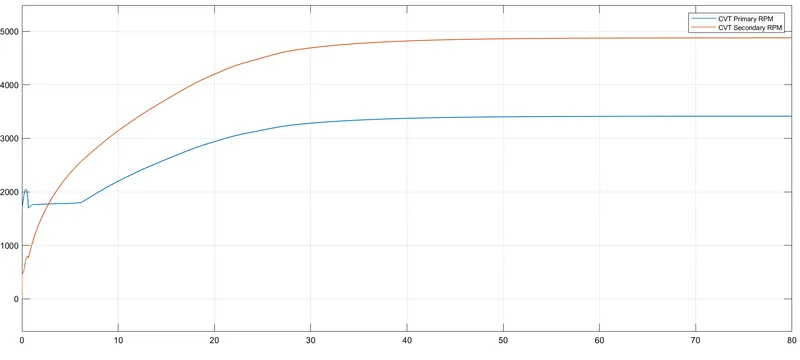
- With a fluctuating engine RPM, the CVT maintains smooth transmission and the secondary RPM gradually increases and then remains the same.
cvtModel_dashboard: The model is similar to, "cvtModel" with addition of dashboards
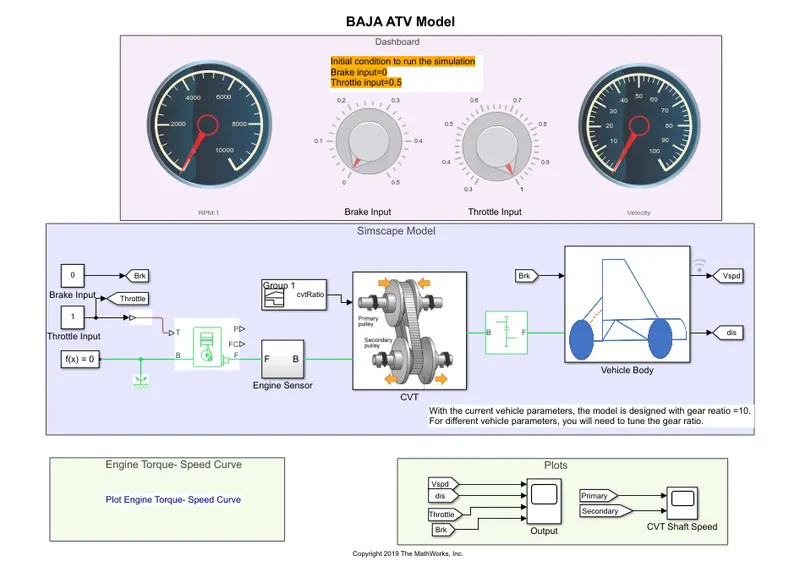
- The dashboard has 2 knob throttle input and brake input and 2 circular gauges indicating vehicle speed and rpm.
- This model is similar to the previous model, the only difference being that we can provide throttle input and brake input using the knobs while the simulation is Running.
- Initial condition to run the simulation are Brake input=0 and Throttle input=0.5
RESULTS
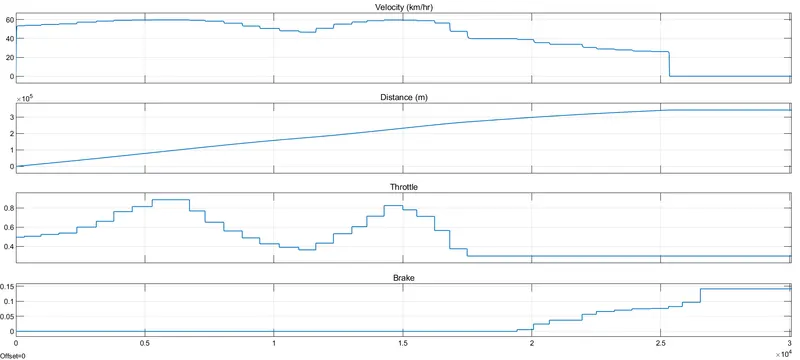
- Here we can give the throttle input and brake input using the knobs while the simulation is Running and can see how the vehicle is performing.
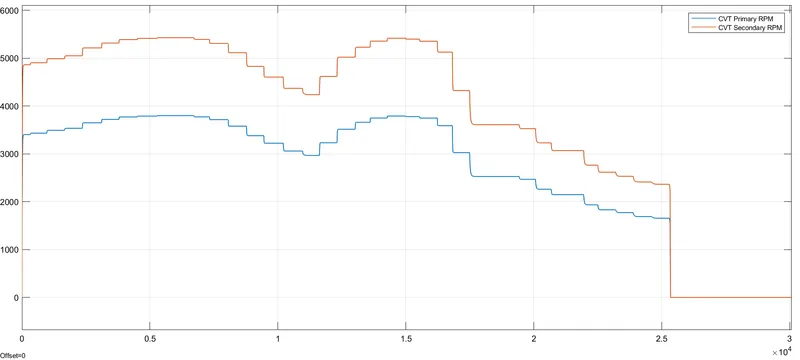
- The CVT managed to transmit rpm according to the gear ratio.
cvtModel_cvtratio_rpm: Contains model based on cvt ratio and engine rpm lookup table.
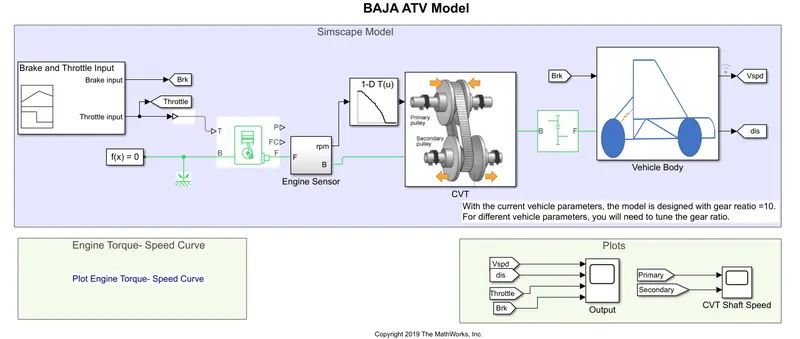
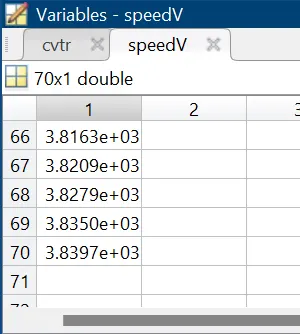
- Here the model is the same at all component levels, the only difference being that it includes a lookup table that takes the engine rpm and looks up at a table and gives the correct CVT ratio to the variable ratio gearbox according to the lookup table data.
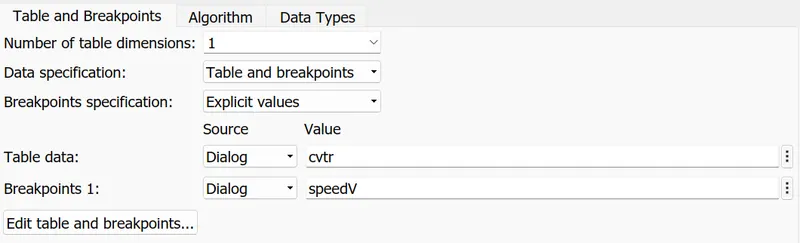
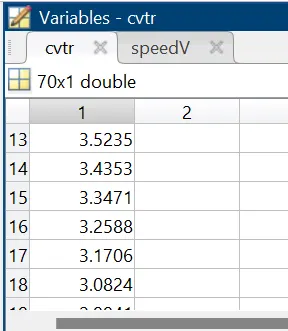
- The data for the 'cvtr' and 'speedV' of the lookup table are provided from the workspace. (Enter as .mat file)
RESULTS
Stop time = 80
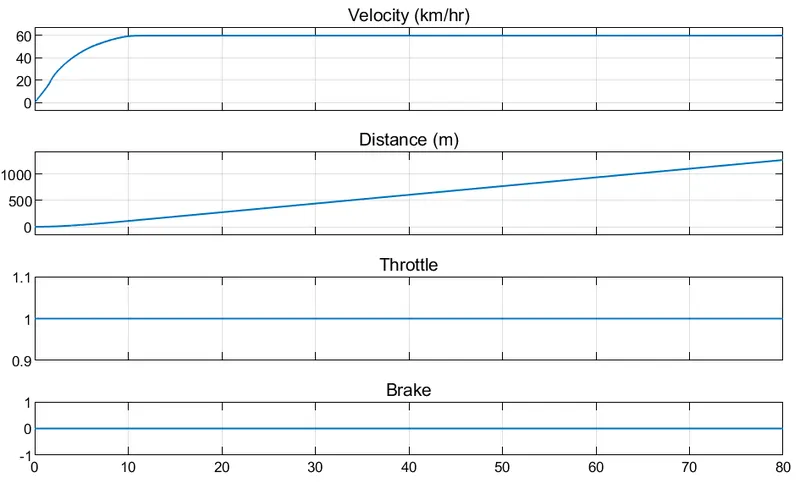
- Here, With a constant 1 throttle input and zero brake input, the velocity gradually increases to a certain point and then remains the same.
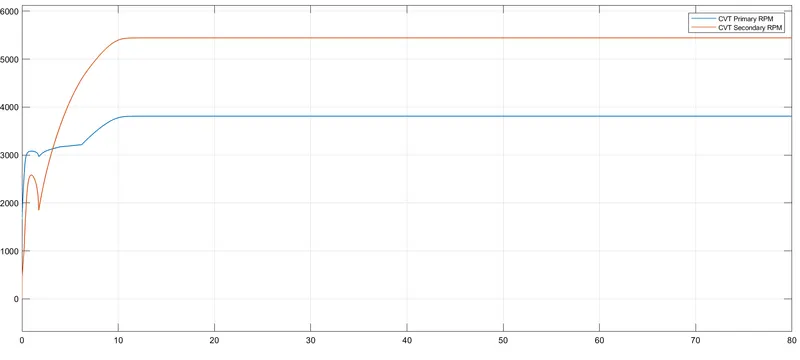
- RPM is better transmitted from the primary shaft to the secondary shaft using interpolated values of gear ratios from the lookup table data.
cvtModel_mapped: Contains Simscape model of BAJA ATV with Continuous Variable Transmission where the CVT ratio varies based on 1D lookup table.
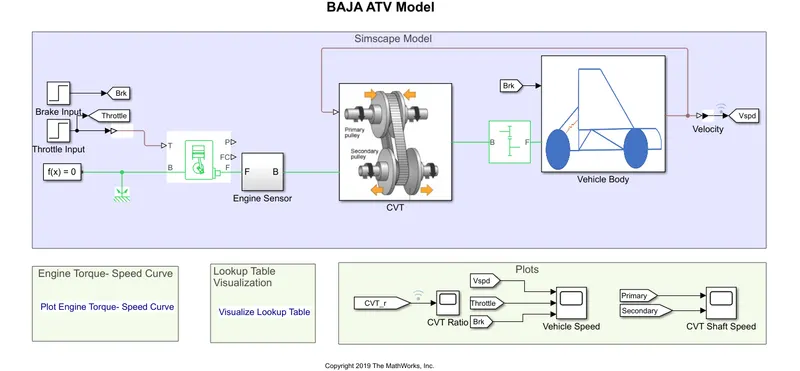
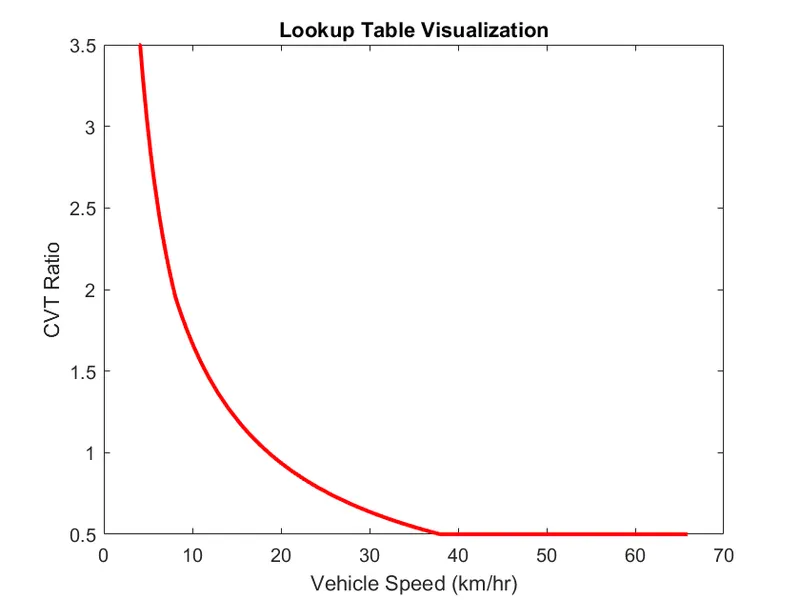
- Here, the cvt ratio on the model varies based on the 1D lookup table, which compares to the speed of the vehicle and gives the correct CVT ratio.
1D Lookup Table:
RESULTS
Stop time = 200
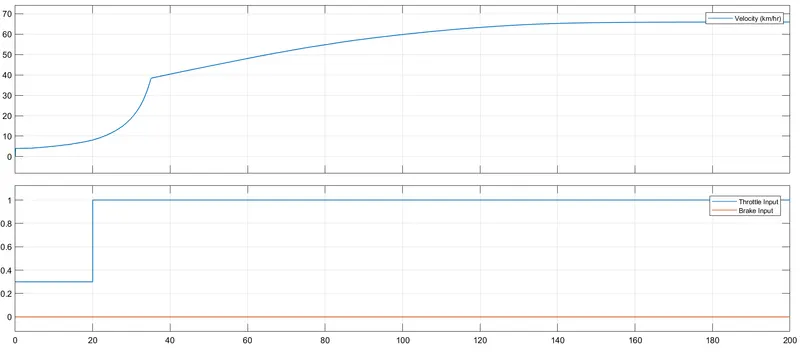
- Throttle input is 0.3 for 20 seconds, rises to 1 after 20 seconds.
- The velocity gradually increases for the first 20 seconds and then rises smoothly to the maximum speed of the vehicle
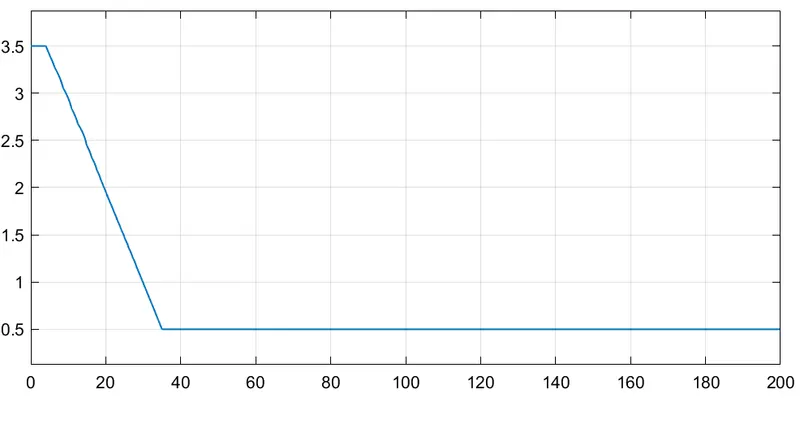
- The CVT ratio provided by the !D look up table is given above.
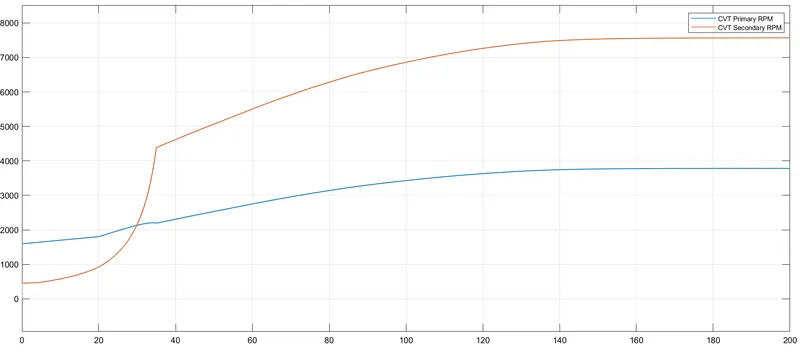
- Transmission is much smoother throughout the simulation
cvtModel_dashboard_mapped: The model is similar to, "cvtModel_mapped" with addition of dashboards
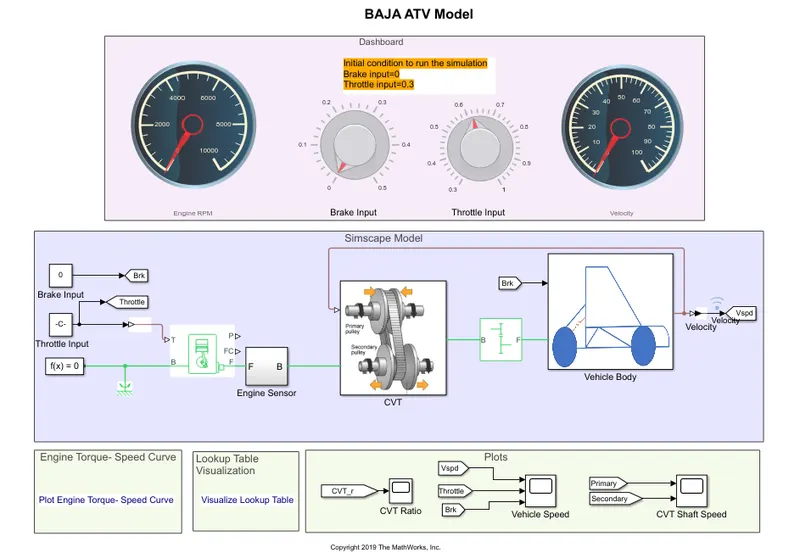
- The model is similar to the previous model, comparing the speed of the vehicle with the 1D lookup table data to give the suitable CVT ratio.
- Here the throttle input and the brake input can be given simultaneously while the simulation is running using the knobs on the dashboard.
RESULTS
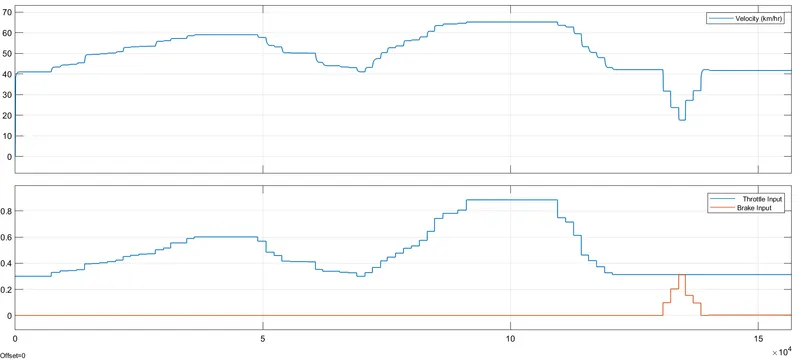
- Initial conditions for running the simulation are throttle input = 0.3 & Brake input = 0.
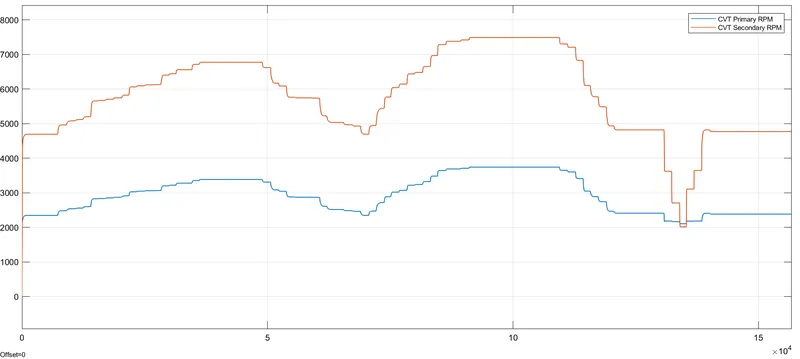
- The vehicle works well according to the throttle and brake input on the dashboard.
- The Transmission is maintained well throughout the simulation.
CONCLUSION
- Thus, we performed a system-level simulation of 4 models of the BAJA All-Terrain Vehicle (ATV) model and successfully tested the results (Vehicle velocity and CVT shaft rpm) with respect to the variation of input throttle and brake.
- All models are fully focused on CVT, and this project will be able to show the effect of CVT on the vehicle behaviour of different models of ATVs.
REFFERENCES
1. https://www.mathworks.com/baja-all-terrain-vehicle-atv-model
2. https://en.wikipedia.org/wiki/All-terrain_vehicle
3. https://en.wikipedia.org/wiki/Continuously_variable_transmission