Project
- AIM:To Prepare a Technical report on BAJA ATV Vehicle models.
- Description:The Baja all-terrain vehicle (ATV) is a specialized off-road vehicle designed for rugged terrain and extreme conditions. These vehicles are typically used in off-road competitions, such as the Baja SAE (Society of Automotive Engineers) series, where teams of university students design, build, and race their own ATVs.
- The working of a Baja ATV involves several key components:
- Chassis: The chassis serves as the frame of the vehicle, providing structural support and housing for the engine, suspension, and other components. It is designed to withstand the stresses and impacts encountered during off-road racing.
- Engine: Baja ATVs are usually powered by small but powerful engines, often ranging from 250cc to 450cc. These engines are typically single-cylinder, four-stroke designs, chosen for their reliability, power output, and fuel efficiency.
- Transmission: Most Baja ATVs are equipped with manual transmissions, allowing the driver to manually shift gears to adapt to varying terrain and driving conditions. Some models may also feature automatic or semi-automatic transmissions.
- Suspension: The suspension system of a Baja ATV is crucial for handling rough terrain and maintaining control at high speeds. It typically consists of independent front and rear suspension with long-travel shocks, providing ample wheel travel to absorb impacts and maintain traction.
- Wheels and Tires: Baja ATVs are equipped with large, knobby tires designed to grip uneven surfaces and provide traction in mud, sand, gravel, and other off-road conditions. The wheels are often reinforced to withstand the rigors of off-road racing.
- Safety Features: Safety is paramount in off-road racing, so Baja ATVs are equipped with features such as roll cages, safety harnesses, and fire suppression systems to protect the driver in the event of a rollover or crash.
- Driver Controls: The driver controls the Baja ATV using a steering wheel, throttle, brake pedal, and clutch (if equipped with a manual transmission). They must possess skill and finesse to navigate challenging terrain and obstacles while maintaining control of the vehicle.
- Overall, the working of a Baja ATV involves a combination of power, agility, and durability to conquer the toughest off-road environments and compete in high-stakes racing events
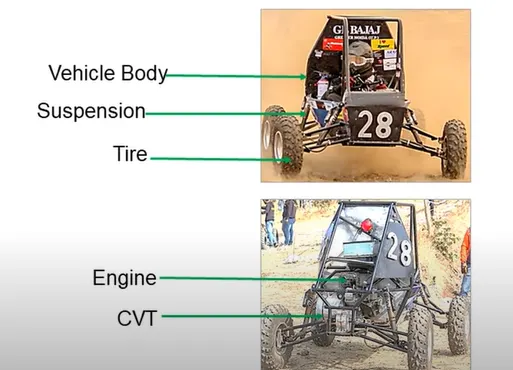
Components : The Bajaj all-terrain vehicle (ATV) is designed to navigate diverse off-road terrains while providing stability, power, and control to the rider. Here's how its various components work together:
-
Frame: The frame serves as the ATV's structural foundation, supporting all other components while maintaining stability and durability.
-
Engine: The engine, likely a robust four-stroke single-cylinder powerplant, generates the necessary torque and horsepower to propel the ATV through challenging terrain. It converts fuel into mechanical energy, which is transmitted to the transmission system.
-
Transmission: The transmission system, which could be a continuously variable transmission (CVT) or a manual gearbox, transfers power from the engine to the wheels. It allows the rider to select appropriate gear ratios for optimal performance based on speed and terrain conditions.
-
Suspension System: The ATV's suspension system absorbs shocks and vibrations encountered while traversing uneven terrain. It consists of shock absorbers and springs, possibly with independent setups for each wheel, providing better stability and ride comfort.
-
Wheels and Tires: The ATV's wheels and tires are designed for off-road use, with aggressive treads for enhanced traction on various surfaces like mud, gravel, or rocks. The tires' grip allows the ATV to maintain traction and maneuverability in challenging conditions.
-
Braking System: The braking system, likely equipped with disc brakes on all wheels, allows the rider to slow down or stop the ATV safely. It provides responsive braking performance, even in slippery or uneven terrain, ensuring control and stability.
-
Electrical System: The electrical system includes essential components such as a battery, wiring harness, and lighting. The battery powers the ATV's electrical components, while the wiring harness ensures proper connectivity. Lighting elements like headlights, taillights, and indicators improve visibility for safe operation, especially in low-light conditions.
-
Body Panels: Durable body panels made from high-strength plastics or composites protect the ATV's internal components from debris and impacts. They also contribute to the ATV's aerodynamics and aesthetics, enhancing its overall design.
-
Seating: The ATV's ergonomic seating provides comfort and support for the rider and potentially a passenger. It's designed to accommodate various body types while ensuring stability and control during off-road riding.
-
Accessories: Optional accessories like racks, winches, and protective guards allow riders to customize their ATV according to their preferences and specific needs. These accessories enhance functionality and versatility, making the ATV suitable for a wide range of applications.
By integrating these components, the Bajaj ATV delivers a capable and reliable off-road riding experience, empowering riders to explore challenging terrain with confidence and control.
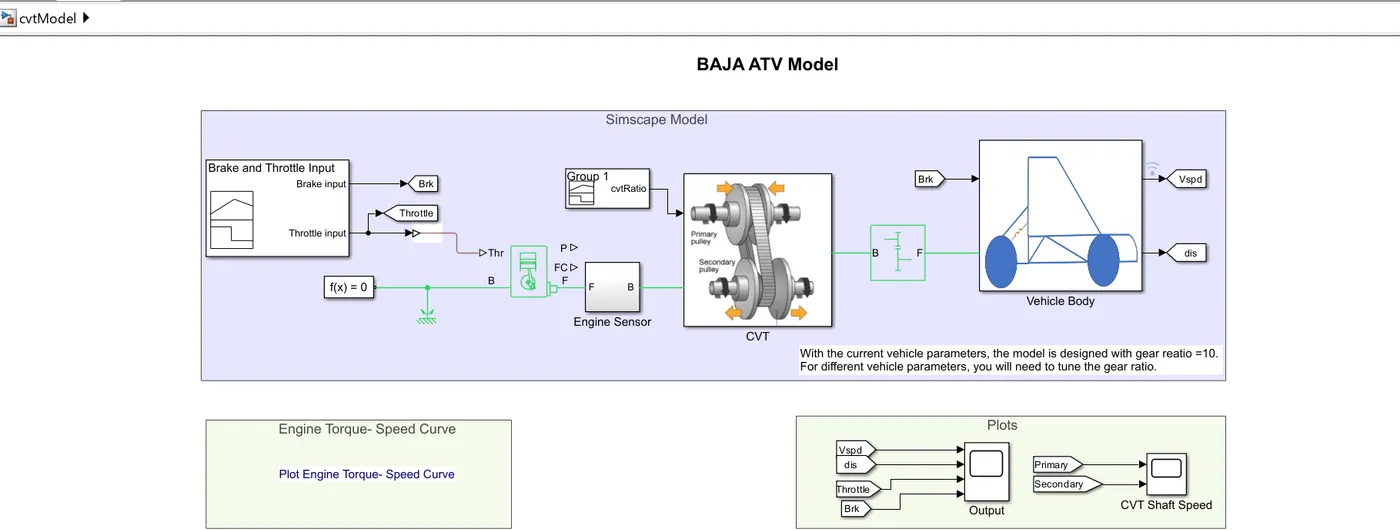
Now we access the BAJA ATV simulink cvt model :
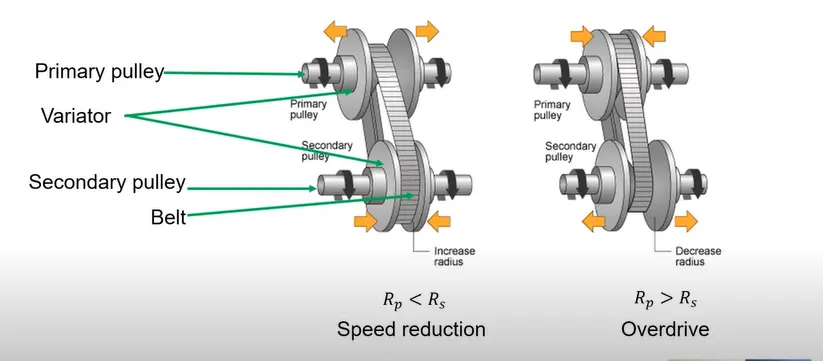
Continuously Variable Transmission (CVT): In an all-terrain vehicle (ATV), the “continuously variable transmission” (CVT) is a critical component that enables smooth power delivery and optimal performance across diverse terrains. CVT offers an infinite number of gear ratios within its operational range Unlike traditional transmissions with fixed gear ratios, hence providing seamless acceleration and efficiency.
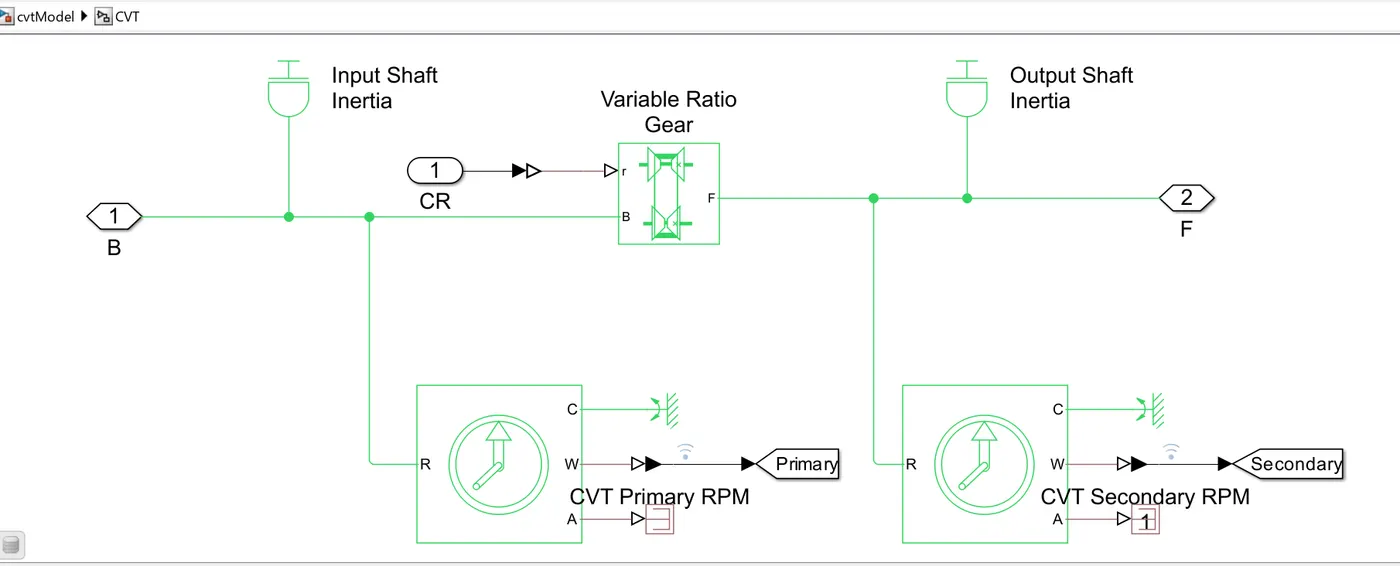
Two pulleys are connected by a belt/chain at the heart of a CVT system. Each pulley consists of two halves that can move closer together or farther apart. One pulley is connected to the engine output shaft, while the other is connected to the ATV's wheels. The belt wraps around these pulleys, and as the distance between their halves changes, the effective diameter of the pulleys also changes, altering the gear ratio
The CVT subsystem model block diagram is as follows:
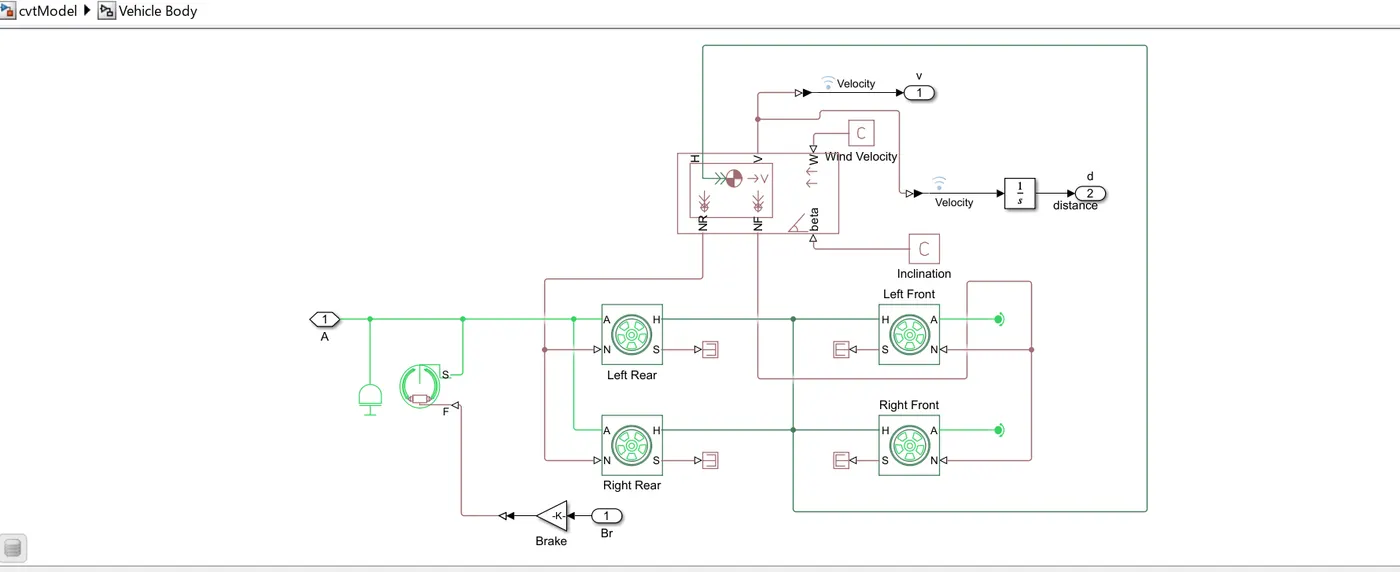
The Engine subsystem model block diagram is as follows:
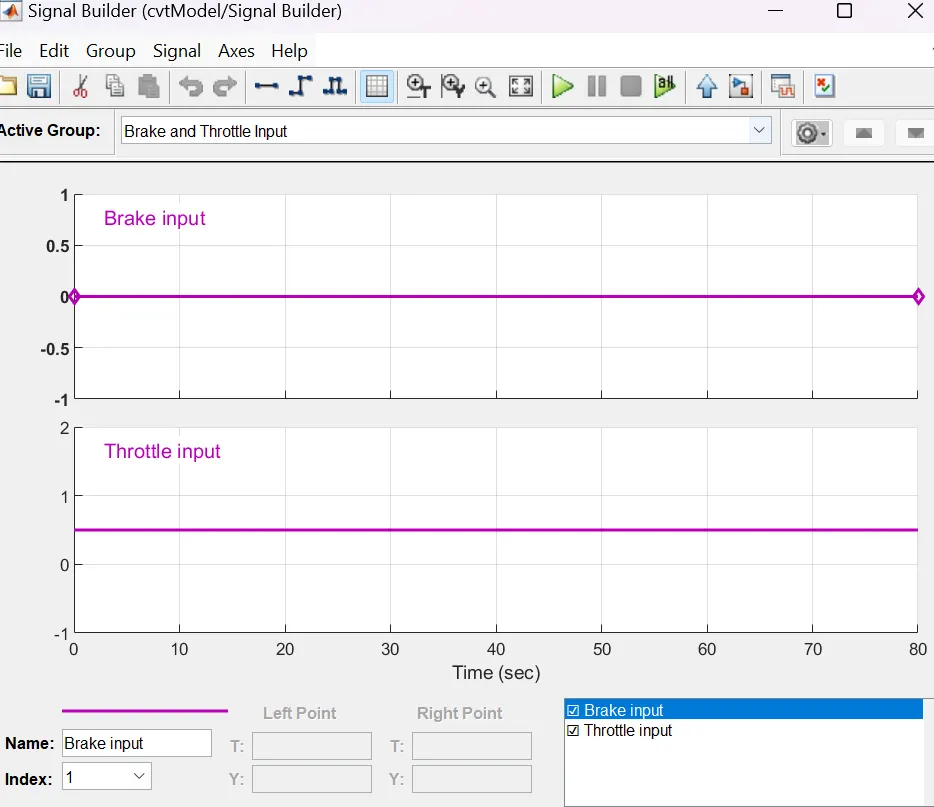
Now we run the cvt model simulation in the Simulink interface, where brake input value is zero and throttle has a constant value of 0.5, for its operation cycle. We manually adjust the values from the Signal Builder block which has its input value from a lookup data table.
Note: The model is designed with gear ratio =10 for different vehicle parameters.
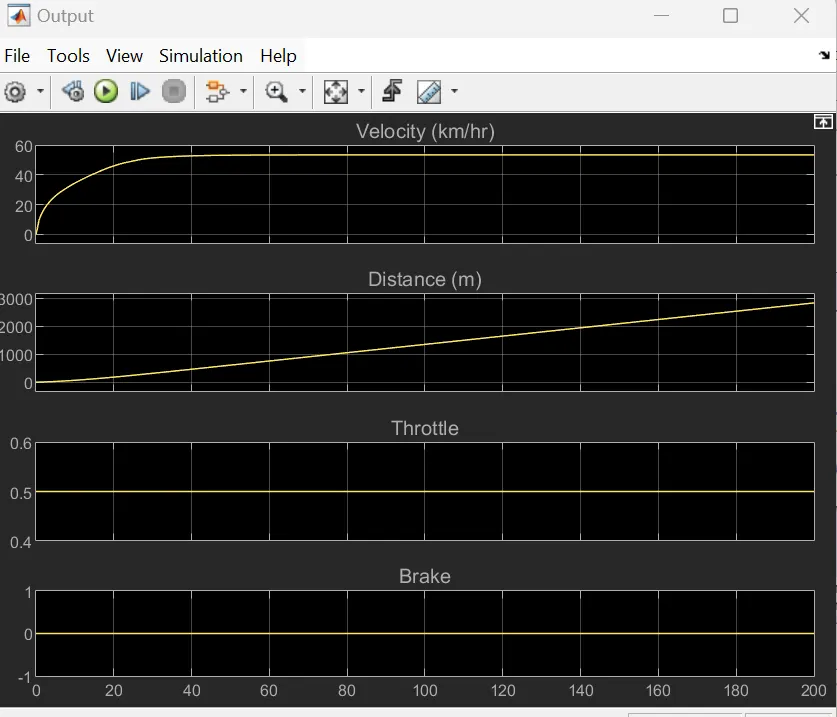
Now we check the output from the SCOPE block. We can observe that due to throttling the velocity of ATV is increasing exponentially to a maximum value and remains constant for the driving time.
STEP 2: Now we manually change the brake input to 0.5 unit and its throttle value increases for its operation cycle from 0.5 to 1(as shown below) . We manually adjust the values from the Signal Builder block which has its input value from a lookup data table.
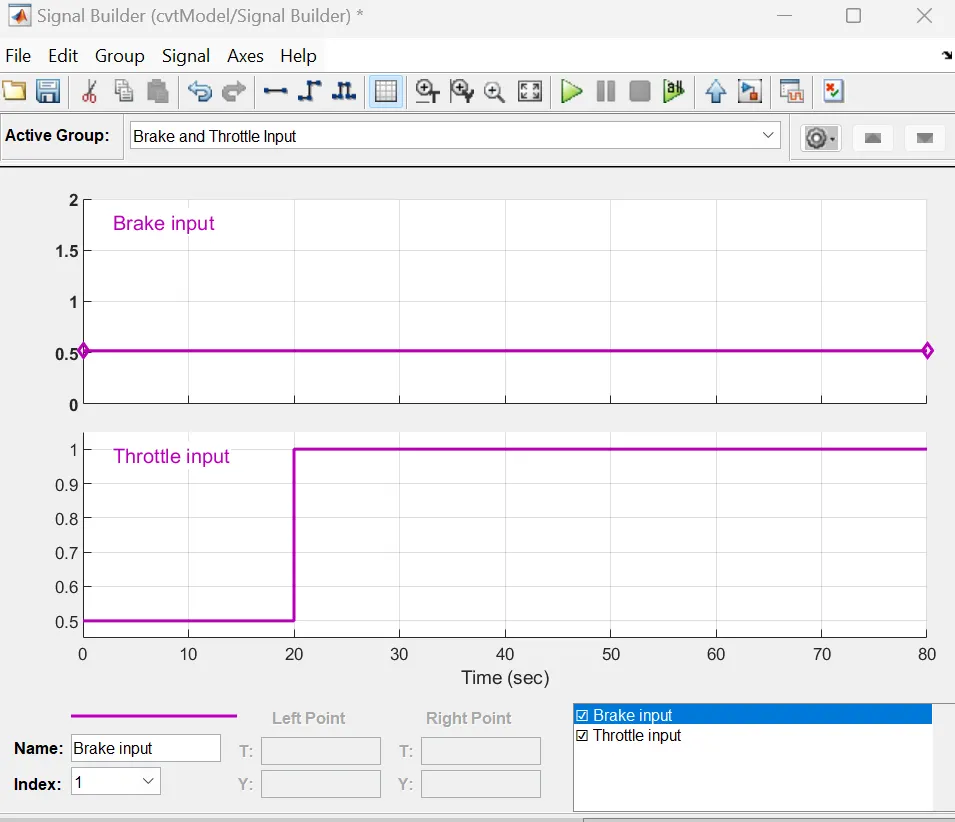
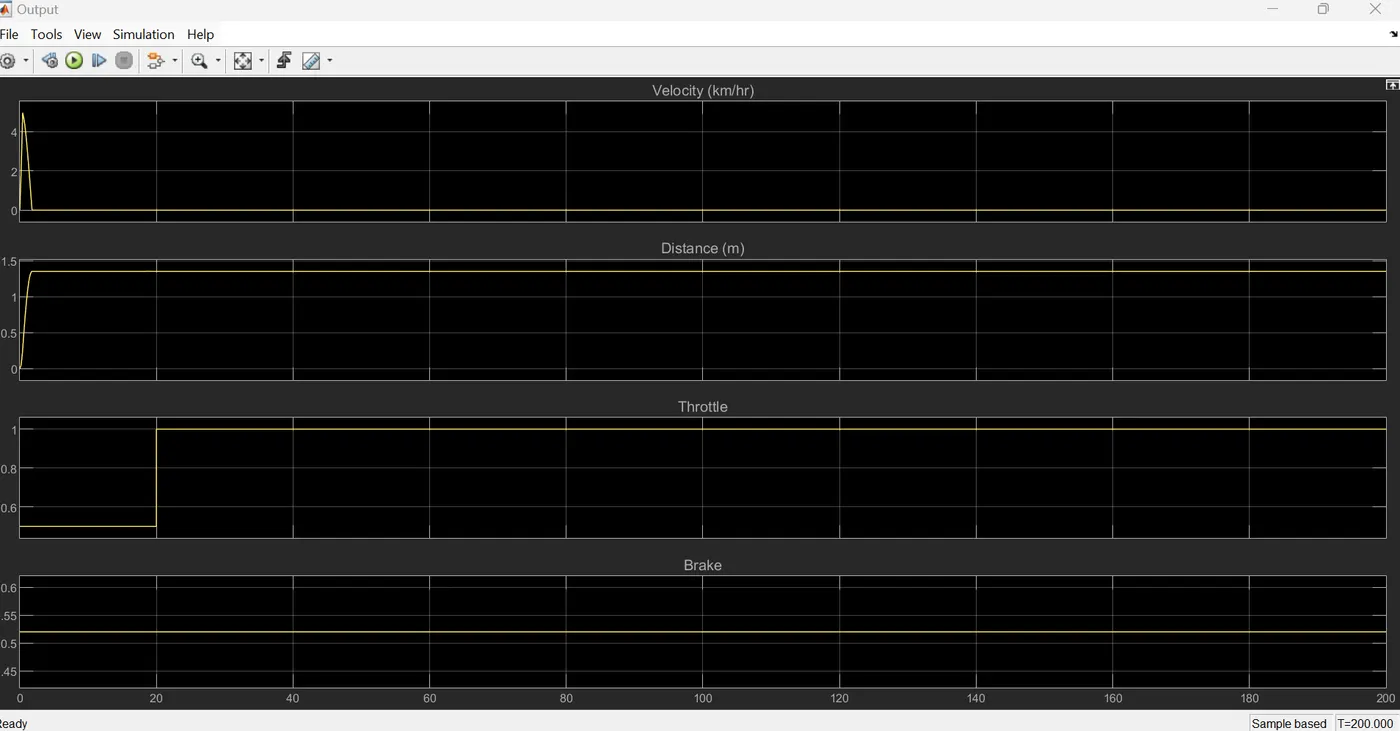
We can observe velcoity of the vehicle increased due to throttle but due to break input, the velocity decreases sharply to a minimum value and remains the same for driving operation.
Step 3: We open the 'cvt model dashboard' Simulink model. Here we provide input the brake (zero) and throttle (1.0) input via KNOB block.
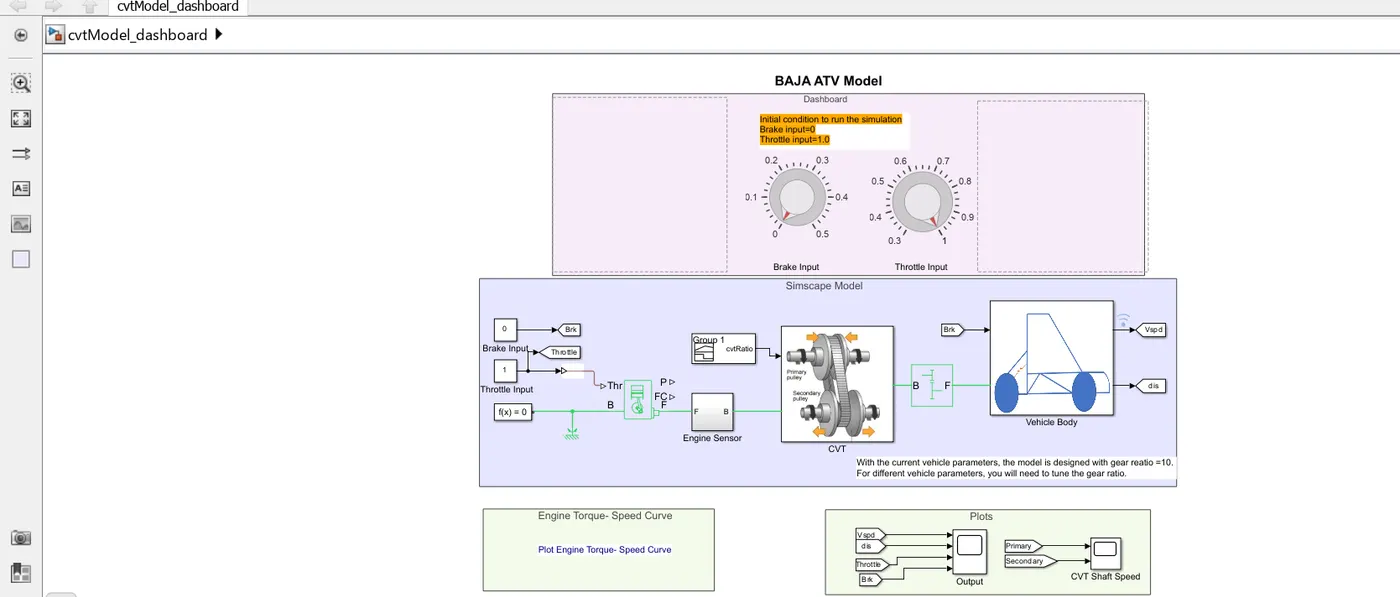
Now we run the simulation and observe the velocity profile of the vehicle.
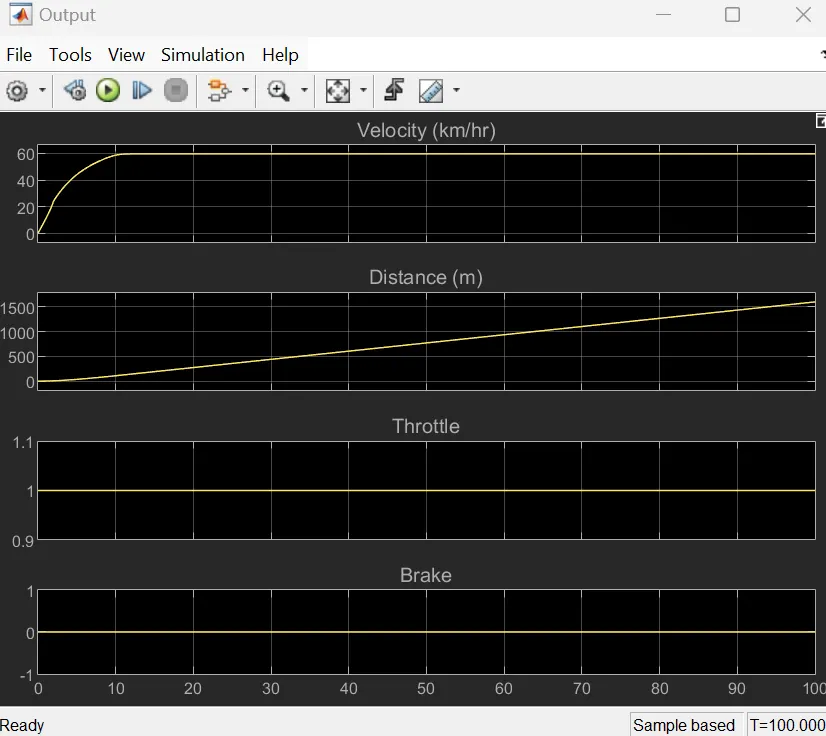
We can observe that velocity of ATV increases due to throttling and no breaking.
Step 4: Now we provide input the brake (0.2) and throttle (1.0)input via KNOB block.
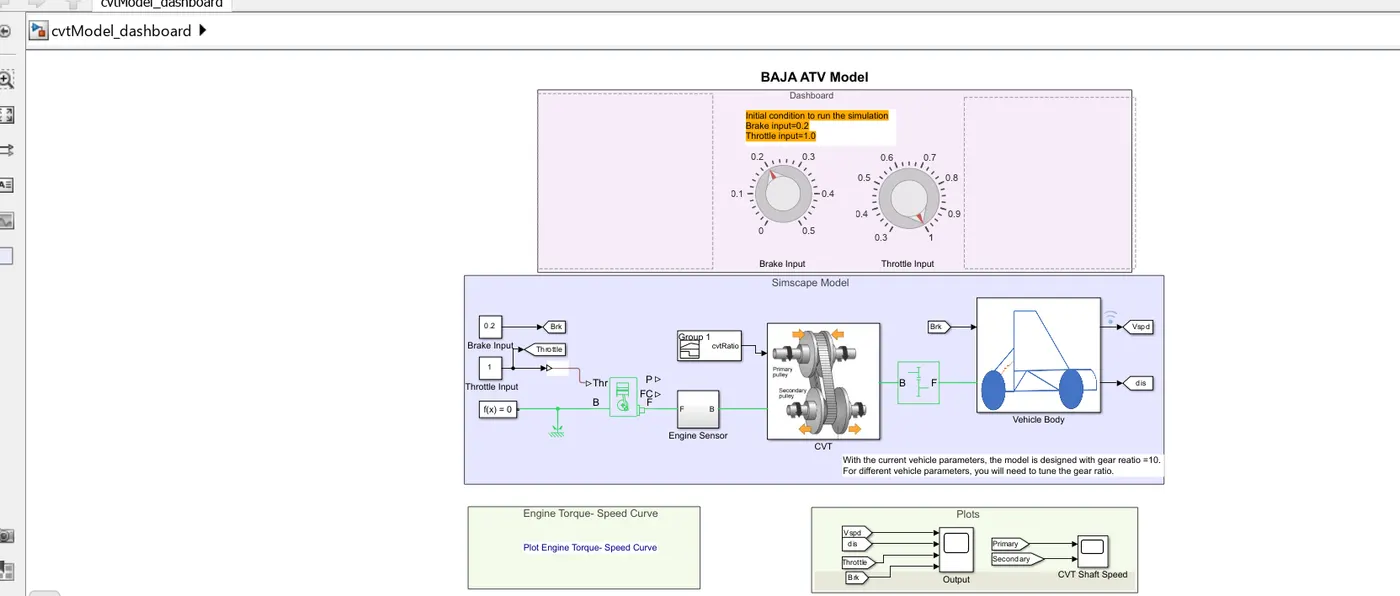
We run the Simulation and observe the SCOPE block for velocity characteristic of ATV in this condition.
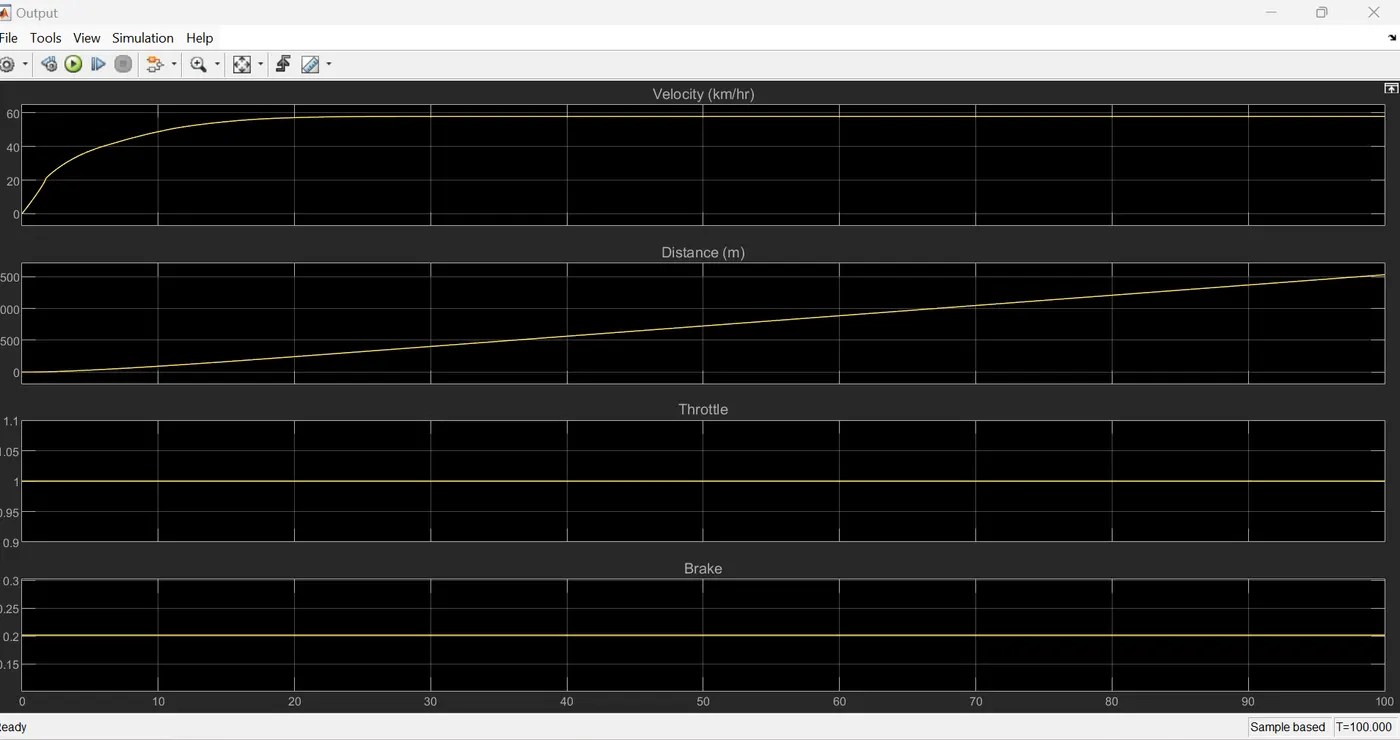
Result : We observe that Velocity of vehicle peaks to maximum value and remains constant throughout the driving. Unlike previous case(open loop system), the velocity does not decreases abruptly here as we are applying brake and Throttle input via KNOB (more accurate and pinpoint readings rather than changing input values from lookup table).
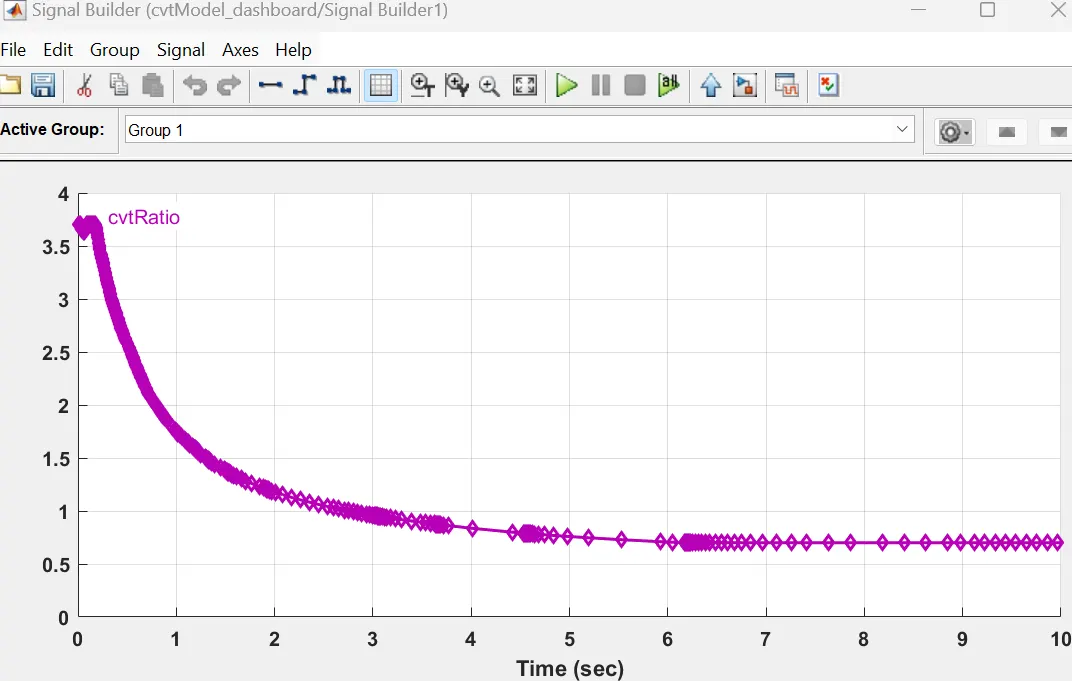
Here the CVT ratio changes as per Throttle and Brake input which changes the velocity of ATV. (fluctuation of velocity) Then the value of CVT changes gradually at constant rate which allows the velocity of ATV to remian constant even after inputs.
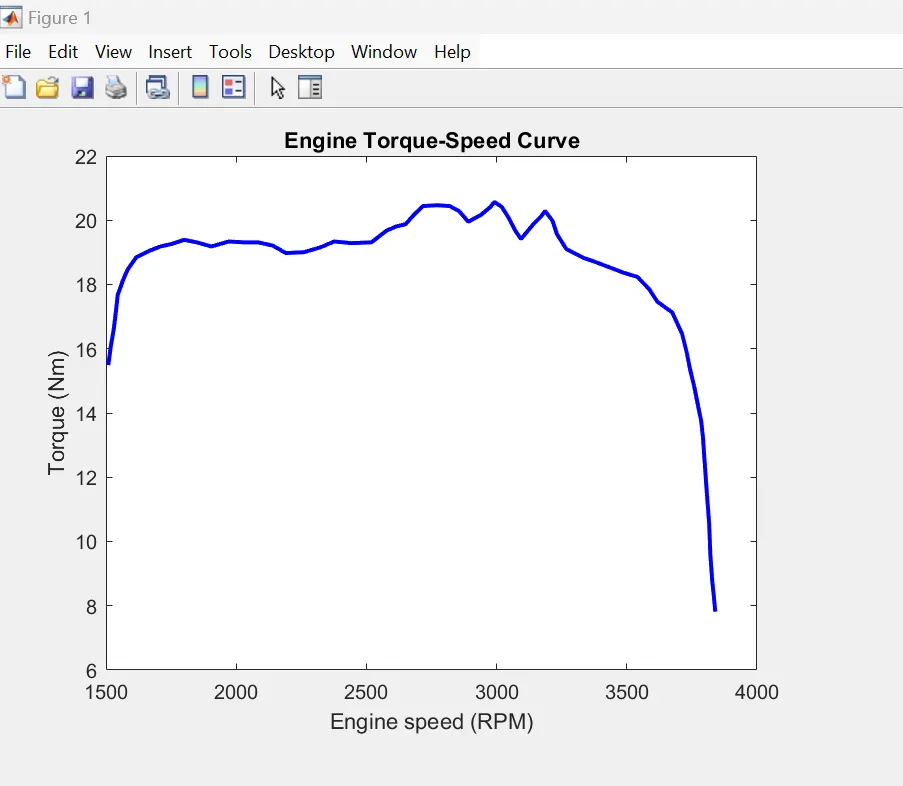
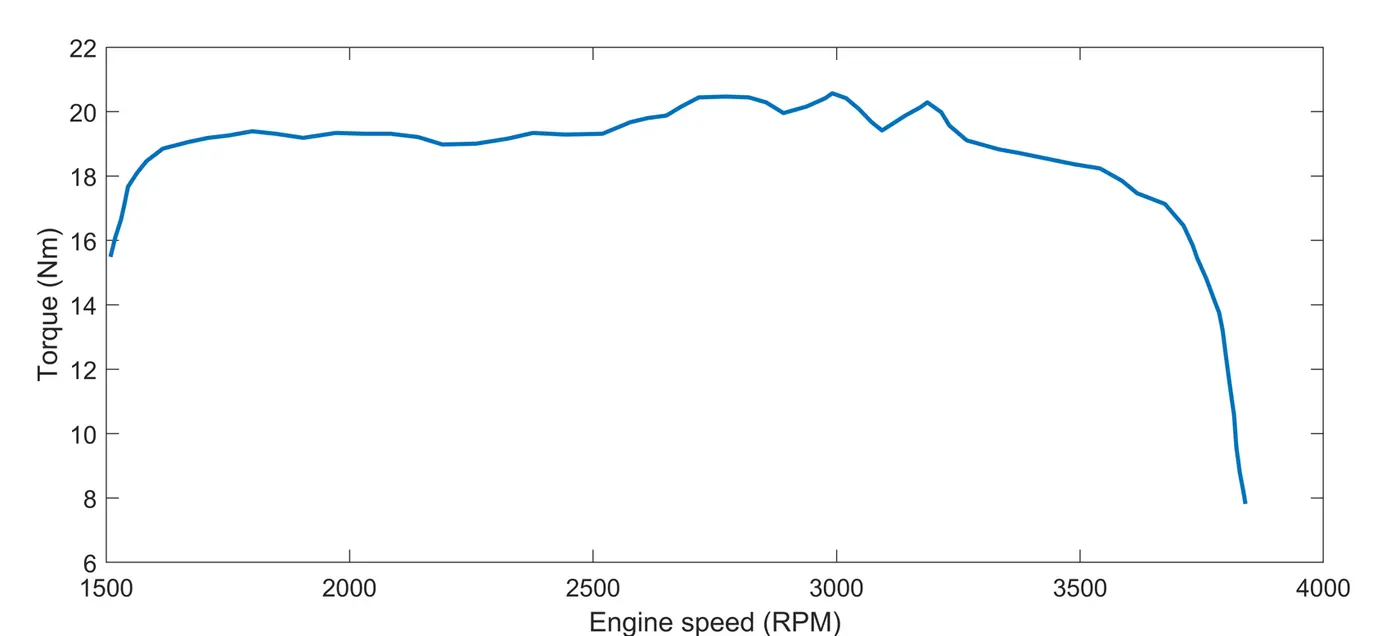
The Engine Torque versus Speed curve of the open loop CVT model (without feedback) is:
Step 5: We run the 'Cvt model dashboard-mapped' in simulink. Here the Signal Builder block of CVT is removed there is a feedback input from velocity to the CVT block.
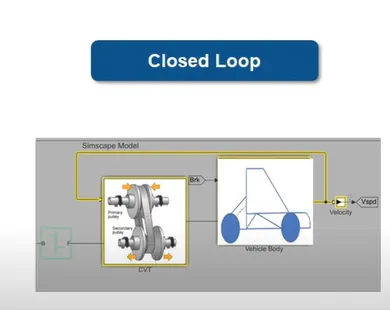
Step 6: Here we provide input the brake (0.2) and throttle (1.0)input via KNOB block.
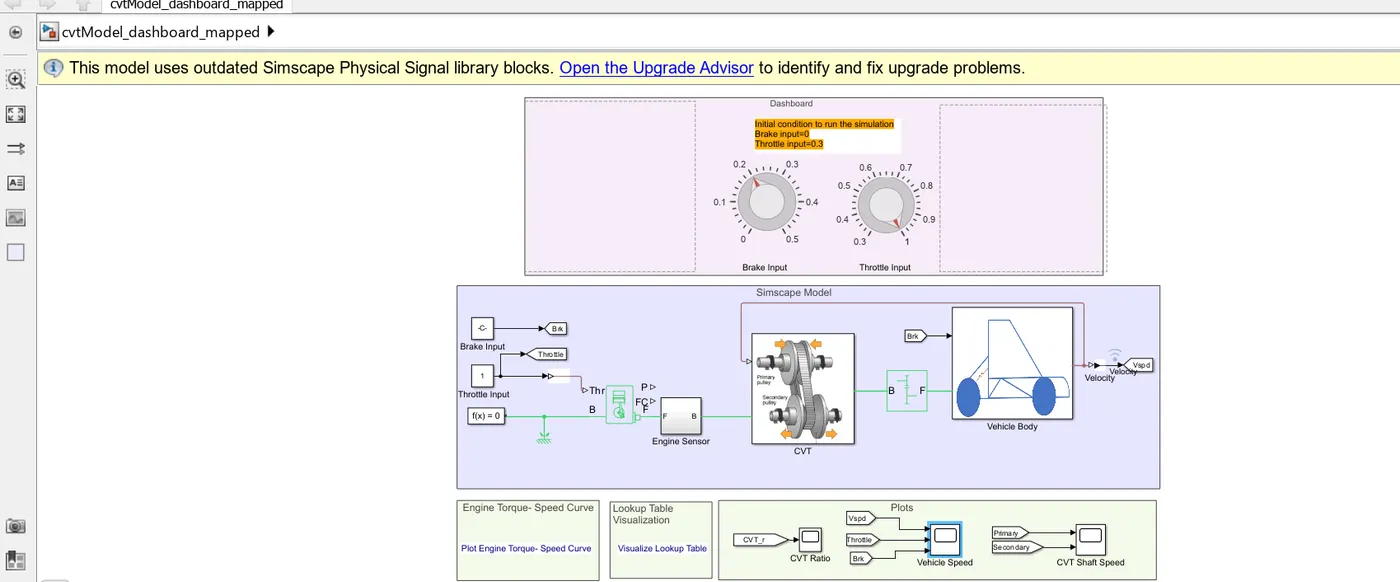
We run the simulation for the model and observe the SCOPE block to view Velocity characteristics of the vehicle.
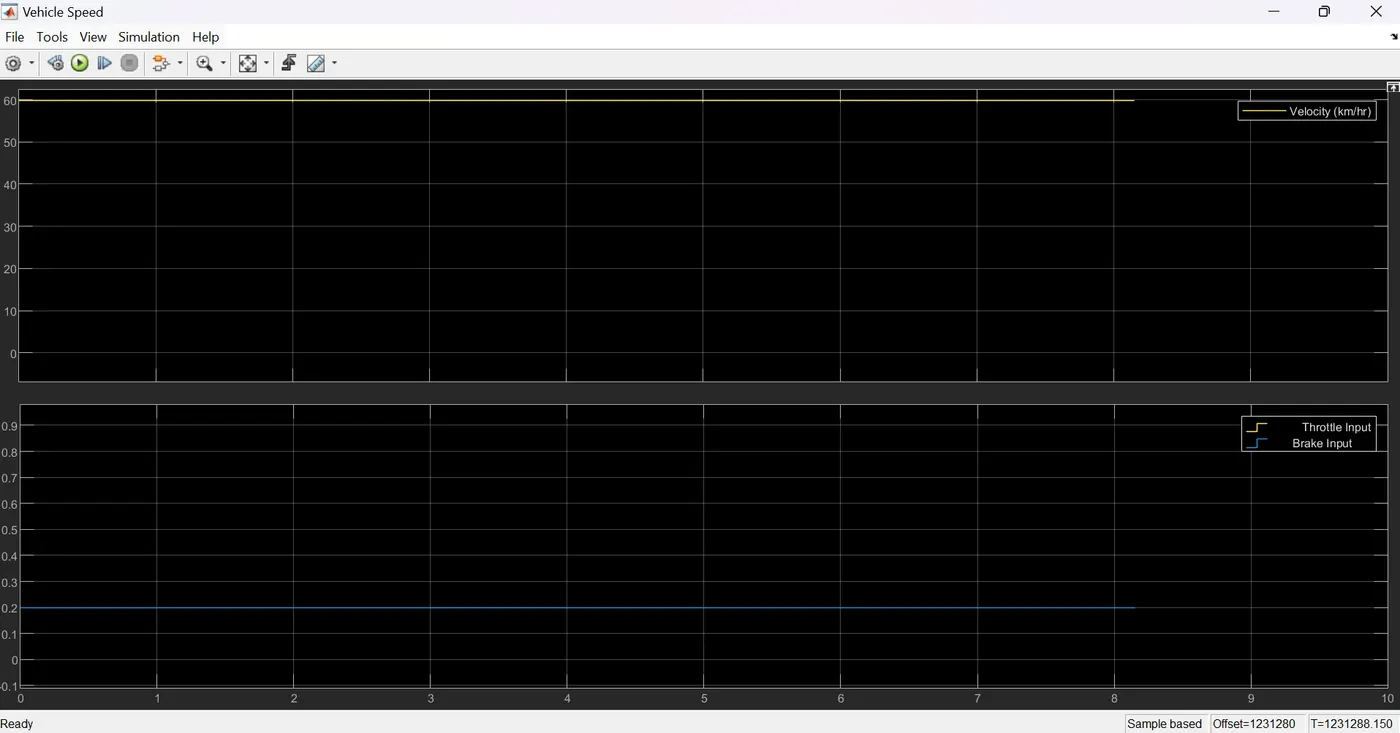
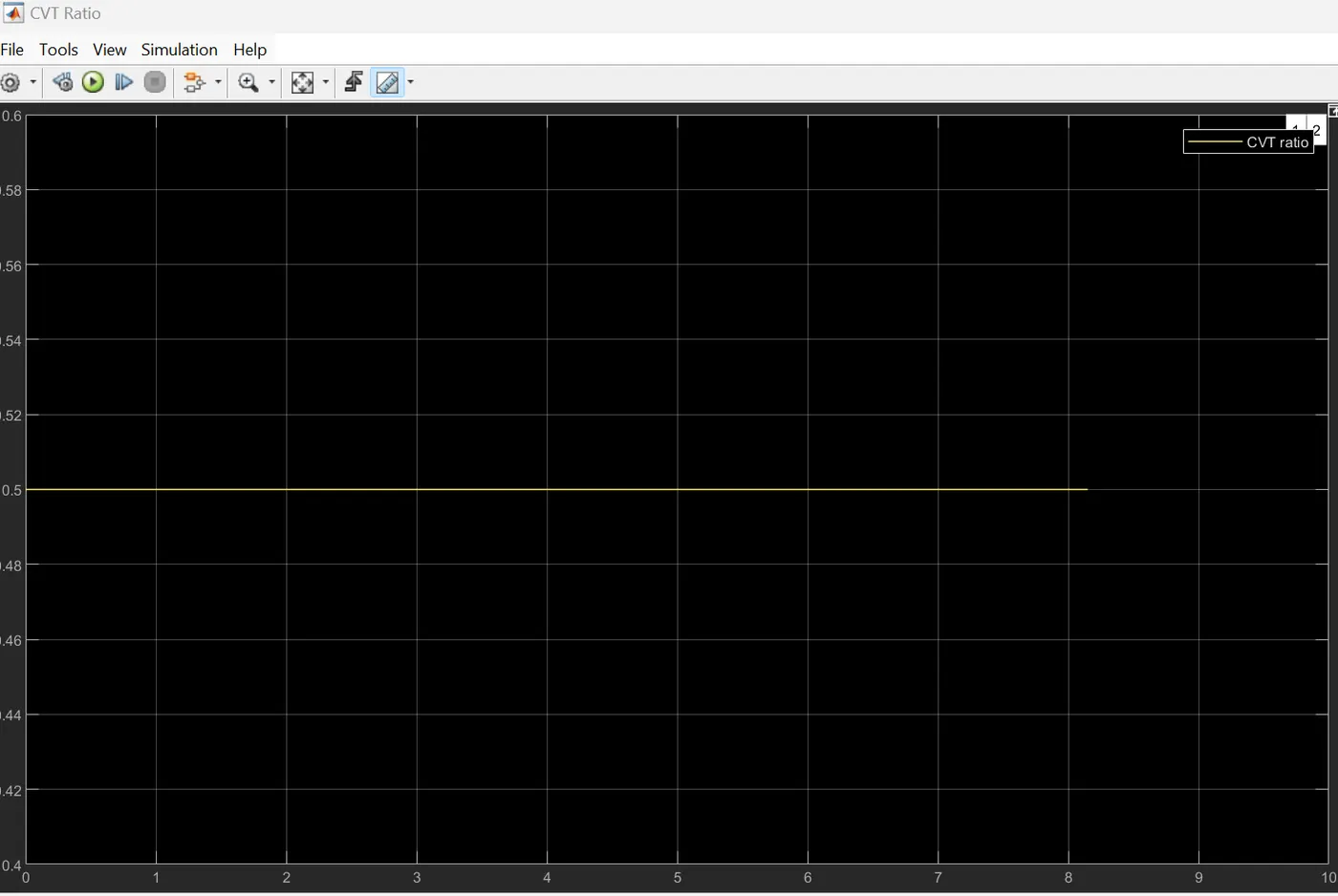
Result: We can observe, even though there is a braking input the velocity of ATV is constant and does not change during the throttle . It occurs because the CVT ratio get the feedback and remains constant for the given throttle and braking inputs.
Note: Due to feedback from velocity block , the CVT value remains constant throughout the operation hence the output Velocity remains constant during the operation.
Step 7: Now , We provide input the brake (0.5) and throttle (1.0) input via KNOB block.
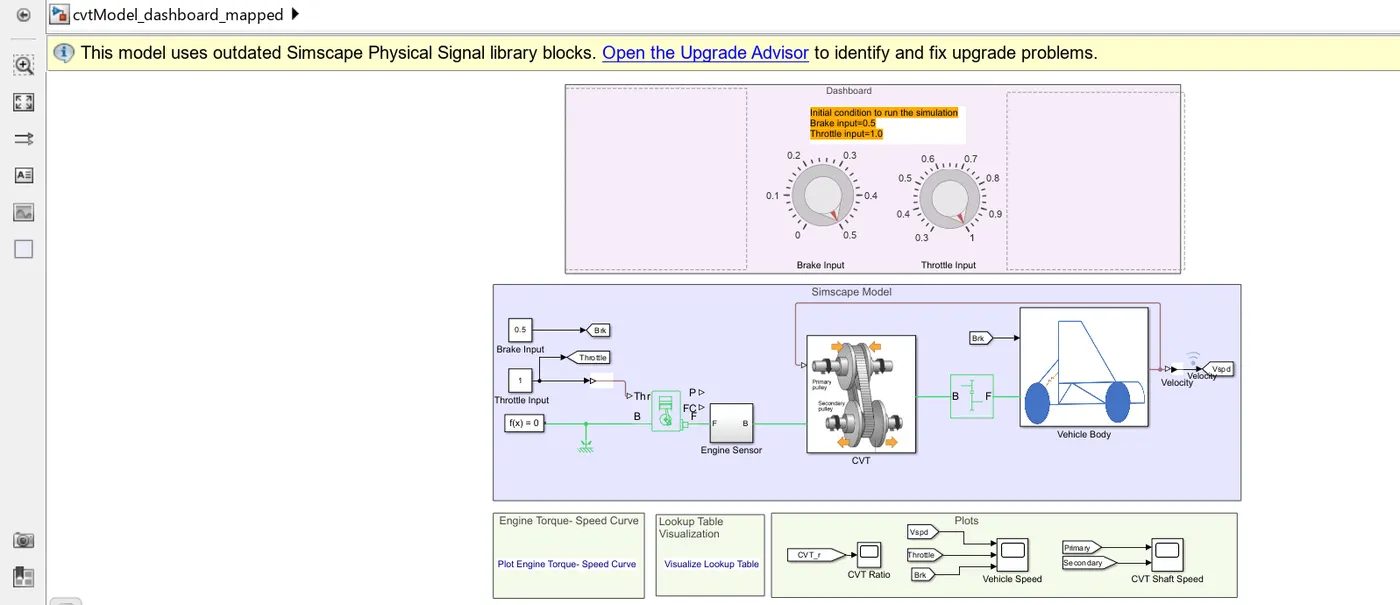
We run the simulation for the closed loop model, and observe the SCOPE block for velocity charactersitics of ATV.
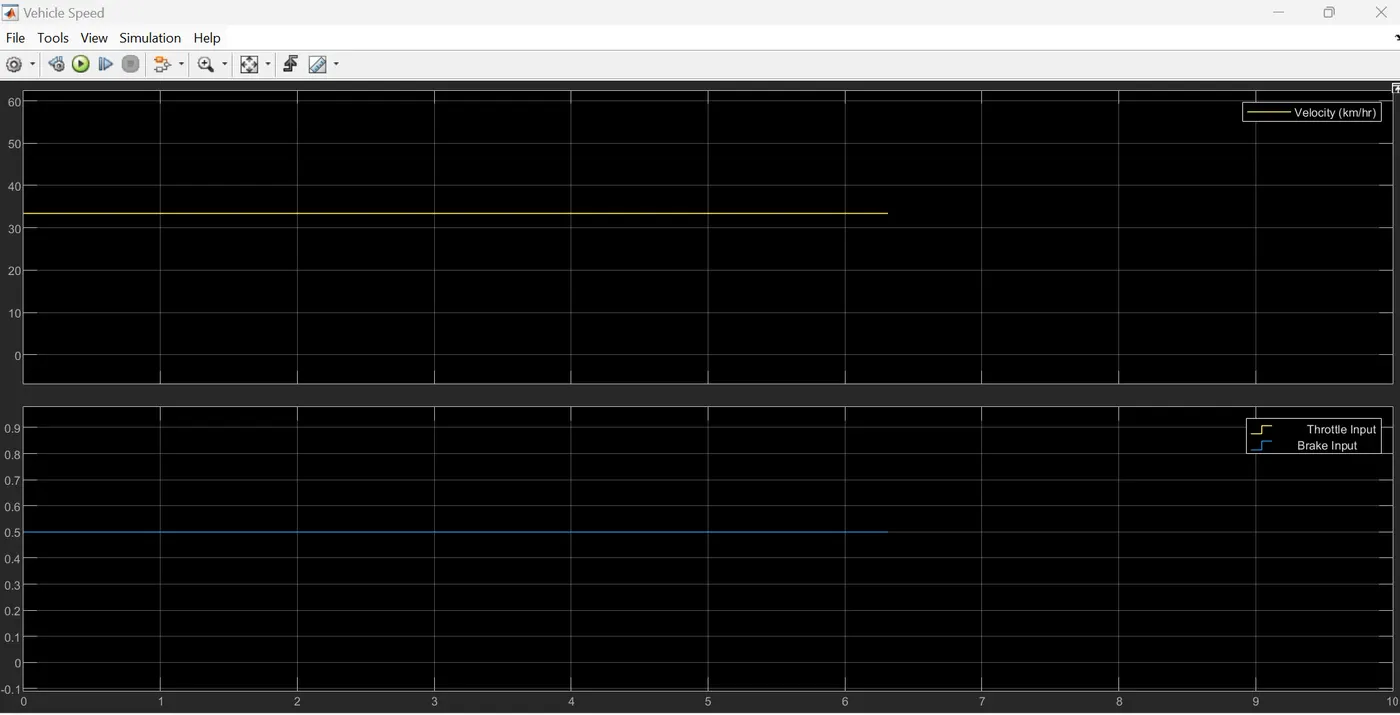
We can observe , due to increased braking input the velocity of the vehicle has decreased but it remains constant due to constant CVT ratio based on the feedback of closed model system.
The Engine Torque versus Speed curve of the closed loop CVT model is as follows: