Project 4
Motor ratings given: 1200Wh,65V
current withdrawn by motor : P=V*I
I = 1200/65 =18.4A
Assuming current loss to be 5$% : 18.4*1.05 = 19.32A
So, motor current (Inew)= 19.3A
Now, the power required at max. speed = V*I new = 65*19.3 = 1256W
Travel factor = total range/ total speed = 225/60 = 3.75
Power required based on travel factor: 1200*3.75 = 4.5kW
Battery pack efficiency can be taken as 85% = 4.5k*0.85 = 5.3kW
Battery pack efficiency based on motor efficiency= 5.3K*0.85 = 6.22KW
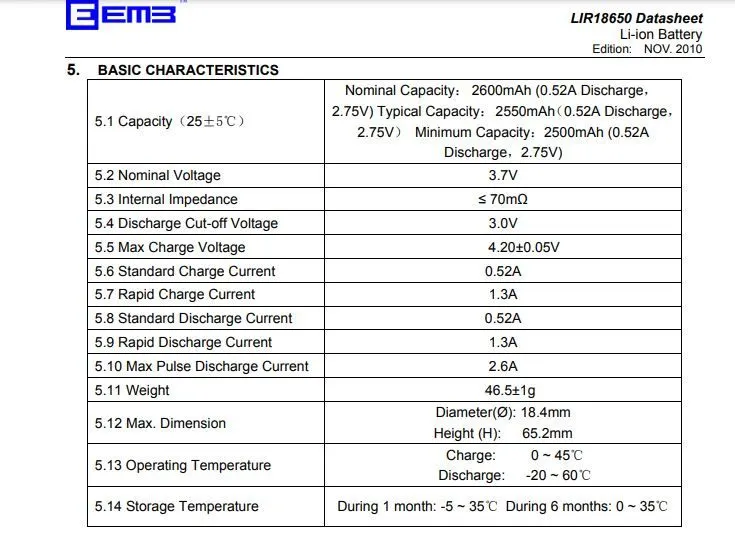
From the battery datasheet:
For no. of series cell , Nominal voltage of cell = 3.7A and motor voltage = 65V
hence, No. of series cell = 65/3.7 = 18 cells
Current required by motor: 18.2A and cell nominal current = 1.3A
hence, no. of parallel connecting cells: 18.2/1.3= 15
Collecting raw materials:Batteries require eight key raw materials including manganese , nickel , cobalt, copper , aluminium , graphite and titanium. Manufacturing of anode and cathode,Two important parts of any cell are the anode and the cathode.The cathode is a metal that is combined, naturally or in the laboratory, with oxygen,the combination is called an oxide.The third substance into which the anode and the cathode are placed is called an electrolyte. In many cases this material is a chemical combination that has the property of being alkaline. Thus, an alkaline battery is one that makes use of an alkaline electrolyte.
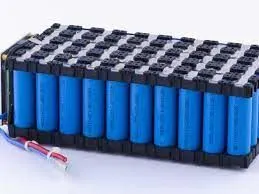
Assembling the battery module. Usually all electrodes except cathode is assembled first,then power coating process is followed by assembling of cathode and anode. Because exposure to air or water may affect capacity of battery when being used later.Positive electrode plate, negative electrode plate, separator and plastic backing late from a sealed cavity without any contact with outside atmosphere which can maintain sufficient voltage when installed later. After batteries are heat sealed, ifneeded, electrical test devices can be connected to electric terminals. Then pressurized gas charging starts. Pressure must reach twice as much as pressure during normal working process while charging time must not exceed 30 hours or cycle life of battery will decrease rapidly. Charging pressure depends on kind of materials used in electrode products but there’s no explicit regulation about it in official standards so that manufactures tend to use lower than its standard pressure when making Lithium-Ion batteries.cell testing,after assembling the cell the cell undergoes varies testing method to assure its performance examples of cell testing are life cycle test,capacity fade test,calender test,dynamic load testStep6:Assembling the battery pack,In this a battery pack is assembled by using inter connected cells as shown in below figure and connecting terminals are made in the battery pack. BMS is provoided in battery systems,battery management system monitors,protects and allow the user to use the battery pack in a safe manner,BMs implemented in printed circuit board mounted with the batterypack