Project 3: Roof Modeling
Objective:
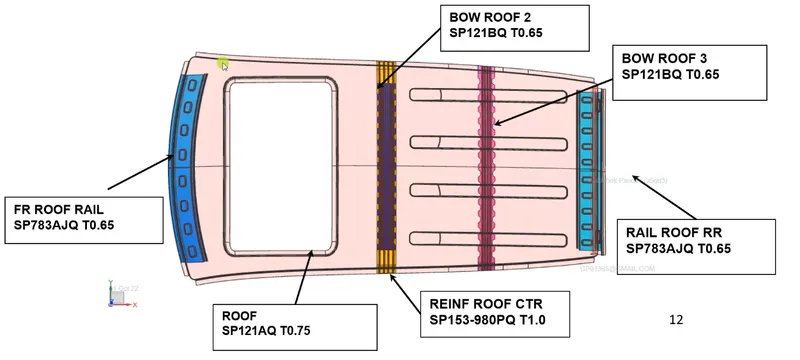
Design the roof main body along with all the rails, reinforcement centre and bow roofs according to the given master sections.
Roof Introduction:
The component of an automobile that lies above the passenger compartment and protects the occupants from the sun, wind, rain, and other external elements is known as the roof or car top.
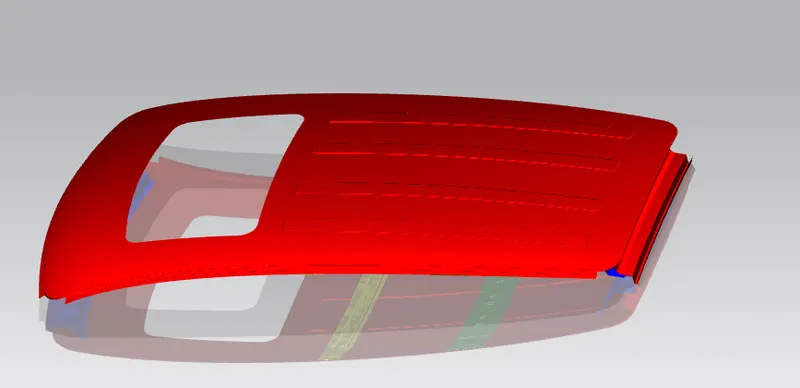
Typical Sections:
Every roof has four typical sections in most of the models:
- Front Rails
- Rear Rails
- Reinforcement centre
- Bow roofs
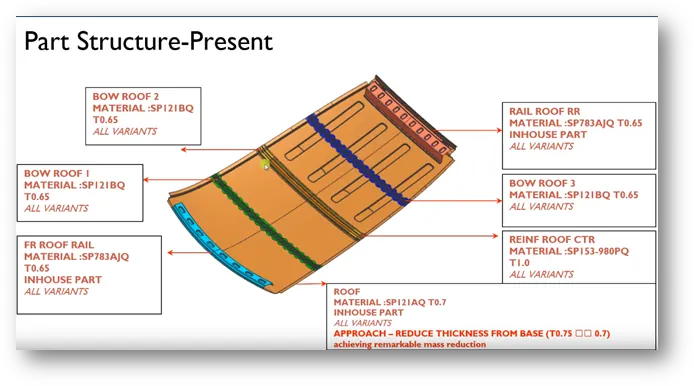
About Roof Components:
- The roof has an outer panel, which is the styling part.
- Strengthening parts are present below an outer panel of a roof, which are the front roof rail, bow roof, centre roof rail, and rear roof rail.
- The front roof rail provides provision for the windshield glasses. Visibility criteria and headroom clearance have to be followed while designing the front roof rail. Provision for windshield mounting and an inside rear-view mirror is provided on the front roof rail.
- The rear roof rail has hinge mounting for the back door. It is attached at the portion where the back door meets the roof.
- Bow roofs are provided in between the front roof rail and centre roof rail, as well as the rear roof rail and centre roof rail. They are provided to enhance the localised strength of the roof and are attached directly to the bottom of the roof with either spot welding or with the help of mastics.
- The reinforcement centre, also known as the centre roof rail, serves as a cross member between the left and right body sides.
- Both the front and rear roof rails are provided with the master section for the roof.
Roof Design Methodlogies:
- Collecting Information from the styling team
- Extracting informmation from the master section
- Creating the ditch area for the roof
- designing the front roof rail
- Designing bow roof rail 1
- Designing centre roof rail
- designing bow roof rail 2
- Desinging rear roof rail
- Analyzing the model
- Doing curvature studies: (a)Heat Distortion Criteria and (b) Snow Load Condition
- Doing section modulus study in 0-Y direction
- Analyzing and increasing the result of the roof rails.
Roof Design and Functional Requirements:
The following considerations must be made when designing a roof.
- Visibility Criteria
- Head clearance
- Curvature Study
- Head Distortion and snow load criteria
Joining Methods of Sheets:
Spot Welding:
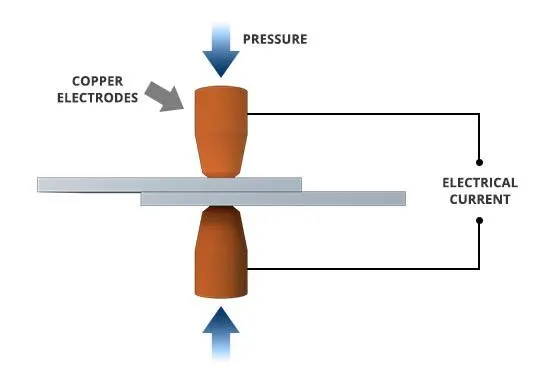
Spot welding (also known as resistance spot welding) is a resistance welding process. This welding process is used primarily for welding two or more metal sheets together by applying pressure and heat from an electric current to the weld area.

2Mastic Sealent of the Roof:
Mastics are introduced between the roof outer panel and the reinforcements for joining. The strength improves dramatically wherever the mastic is introduced.
Roof Rails:
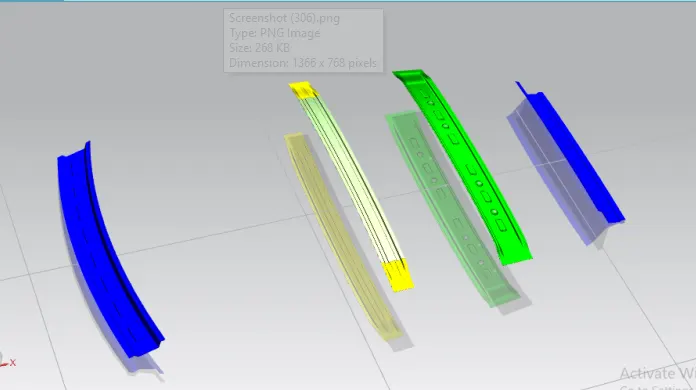
Front Roof Rail:
The front roof rail is there to support the roof in the event of external forces acting on it during an accident. Higher front roof rails are good for strength but are not good for the driver as they block the visibility of the road.
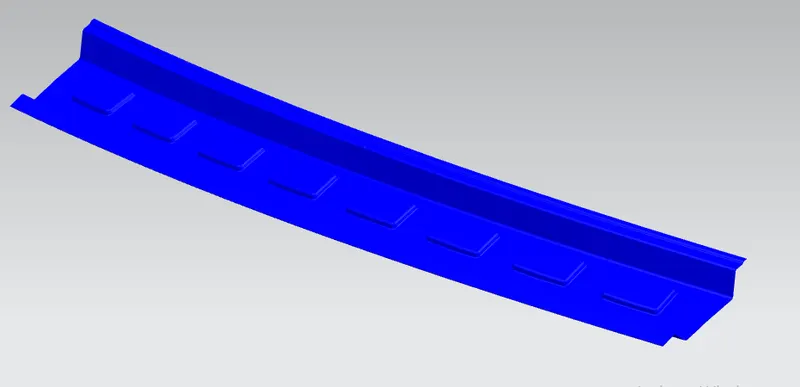
Given the roof rail parameter of length 60-80 mm, a proper draught angle is given to them, as well as embosses for strength.
The front section of the front roof rail is spot welded to the front ditch area, and the other end is fixed with the help of mastic sealants.
Thickness(t)= 0.75mm
Emboss Height= 2<3t
Flange Length=13.2>3t+R
Radius= (3mm or 5mm)>t
Front Roof Rail Section Diagram:
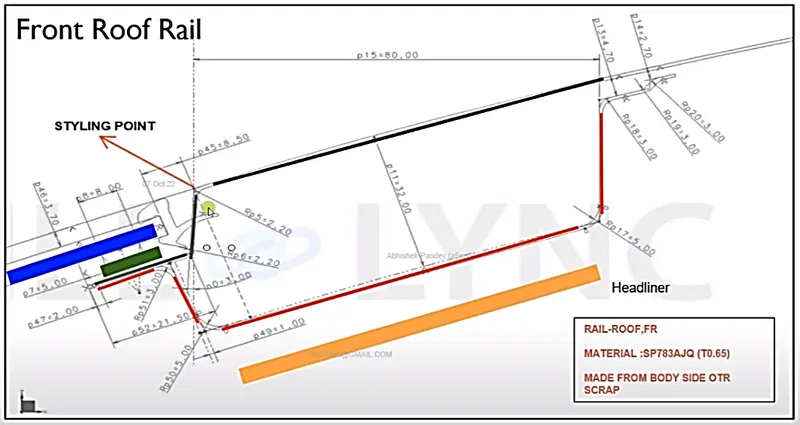
- It is being manufactured in-house and is made from bodyside outer scrap.
- In the above figure, in half black and half white, we have a styling.
- We have to create the front flanges first. Then there's the red front roof rail.
- We have various other roof sections in blue, and we have a windshield.
- In green colour we have a rubber part between windshield and roof flange.
- In orange, we have headliner, which is a soft material and usually 10 mm thick. The glass and steel parts should not be in contact.
- For spot welding, we need a minimum 15mm length for the styling flange and front roof rail to be spot welded together.
- And the gap between front rail roof and headliner should be 5mm.
Rear Roof Rail:
The rear roof rail adjusts to a length of 80–100 mm with the correct draught angle. Specify embossing on the sheet metal to ensure sufficient strength to hold the roof structure.
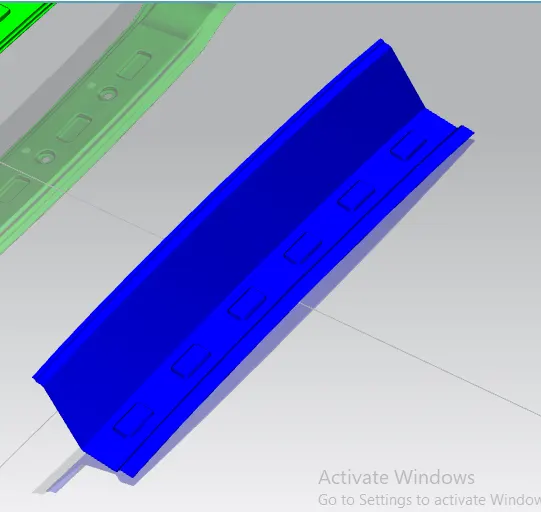
To make the design properly, we take into account all the parameters, such as length, width, sealant, rubber material, and windshield.
Here,
Head Roo Clearance=120mm
Thickness(t)=0.75mm
Emboss Height=2<3t
Radius=(3mm or 5mm)>t
Rear Roof Rail Section:
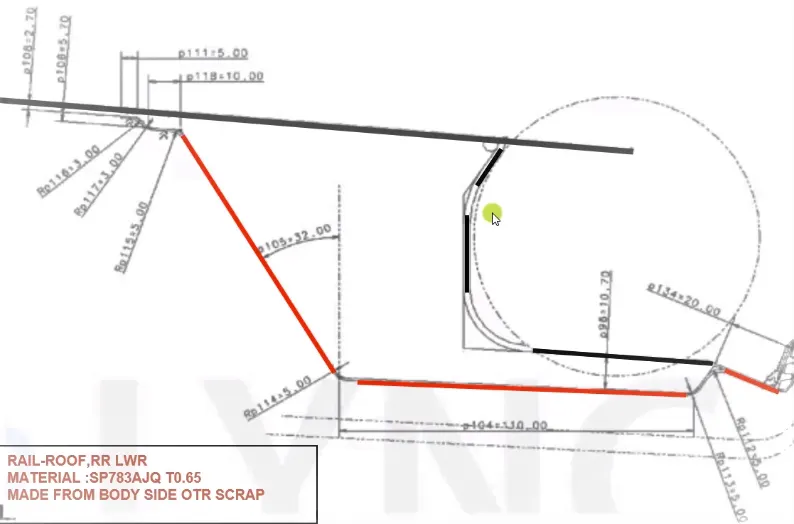
- In black and white, there are the rear flanges of the roof.
- In red and white, there is a rear rail.
- The circle is the trajectory of the rear hinges and hinge axis of the door.
- Here, the green colour shows the outermost flanges of the door.
- By following the path of the trajectory, we design the rear flange.
- The flange and rail are spot welded together at the flange's end point.
Approach:
-
- Here, the approach is going to be to increase the strength.
- Effective material usage
- Furthermore, the smooth area connection with Pillar Rear Roof Inner (PLR RR INR) is connected to the back side.
Bow Roofs:
The bow roof helps improve the torsional stiffness and load-bearing capacity of the roof structure.
The dimensions of the roof are determined by the number of bow roofs. The larger the roof area, the more bow roof is required for the structure.
The position of the bow roof is determined by the curvature studies. Heat distortion (thermal strain) and snow load criteria are checked to analyse the canopy position according to the different conditions.
The bow roofs were provided with mastic points since the joining process will be done using the mastic sealants.
Spot welds are also possible, but they will damage the aesthetic appearance of the car roof.
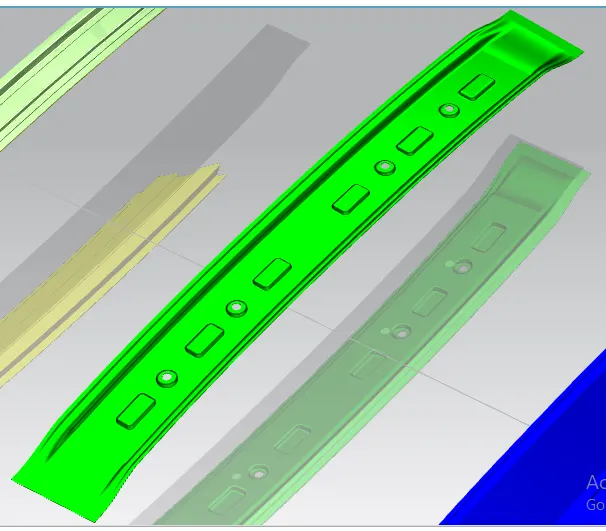
Embosses were also provided all over the bow roofs to increase the stiffness rapidly.
Here
Thickness(t)=0.75
Bow Roofs Master Section Diagram:
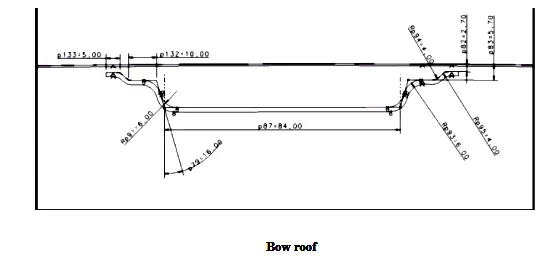
The above bow roof is made of high tensile strength material
- We only use high tensile strength material because this bow roof design has simple cross section.
- Its depth can be decided by headliner
Reinforcement Centre:
The roof rail in the middle of the stiffeners effectively supports the structure roof's flat area. Because the central part of the roof is fragile under load, Roof rail bars are typically mounted centrally on the roof, connected to the B-Pillar support structure, and used for rollover testing.
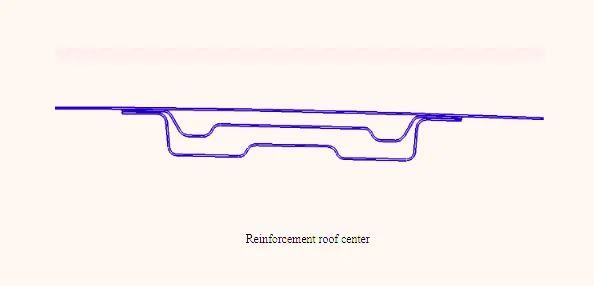
The centre roof rail was designed to have a reinforcement roof rail, which helps the roof of a car increase the efficiency of its curvature study.
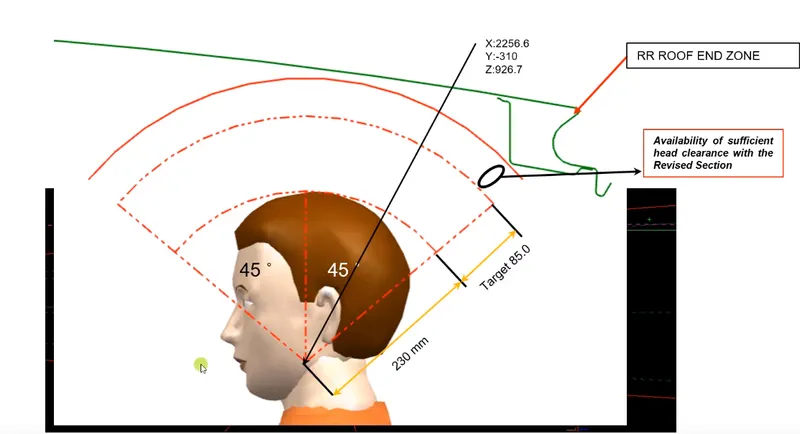
For creating the mastic points and embosses on the centre roof rail, again, the headroom clearance must be taken into account.
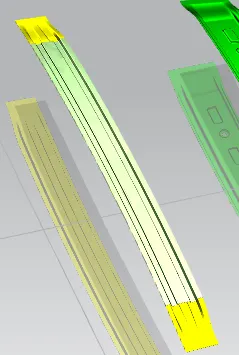
The reinforcement provided will increase the geometric MOI of the part drastically.
Reinforcement Roof Centre Master Secion Diagram:
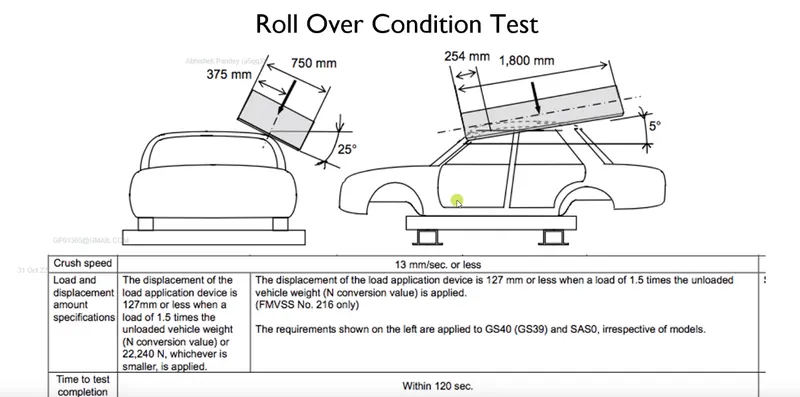
Roof Rollover Test
The Insurance Institute of Highway Safety administers the rollover test (IIHS).
Following the analysis of several accidents, the IIHS has established certain guidelines for conducting the test.
The IIHS rating is based on how quickly a car can return to its former shape after a rollover and how deep the protrusion is.
The goal of this test is to reduce the roof's protrusion.
This test must be carried out under two conditions. The first is to correctly lock all of the car's doors, and the second is to close all of the car's windows.
Furthermore, the chassis must be fixed horizontally on the firm lever surface.
Head Room Clearance:
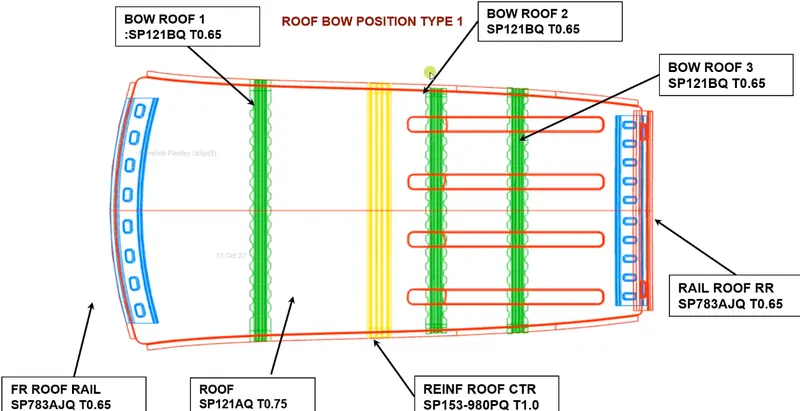
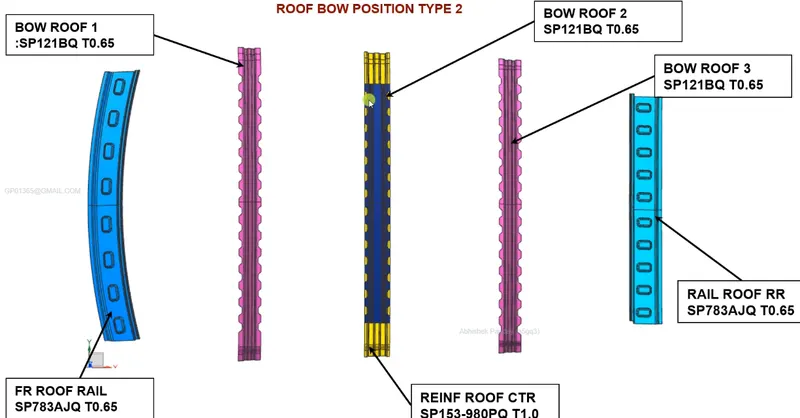
Types of Bow Roofs:
Based on the no.of bow roof and the positions the bow is classified into following types as shown below in diagram:
Type 1:
Type 2:
Type 3:
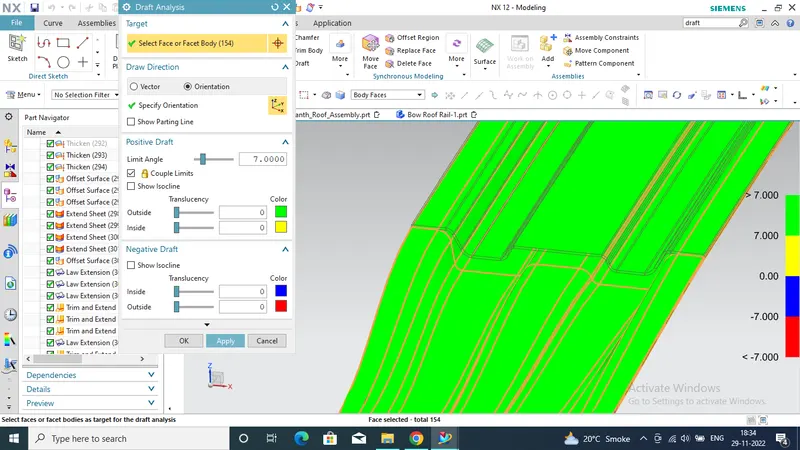
Draft Analysis:
Front Roof Rail:
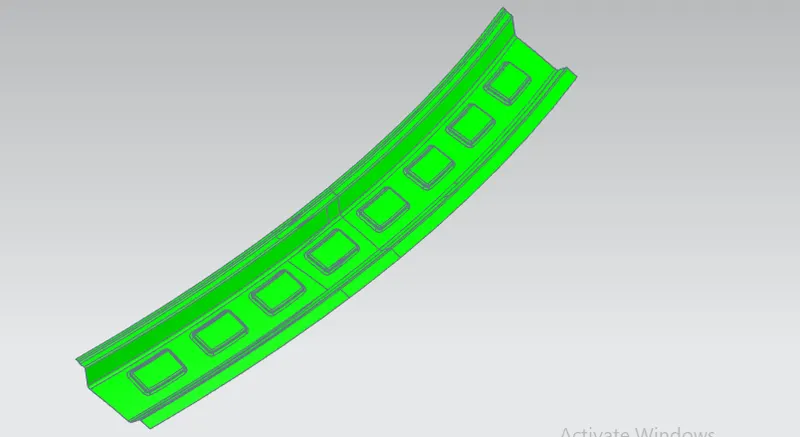
All the faces of Front Roof Rail have successfully cleared the draft analysis with the minimum draft angle of 7 degrees.
Bow Roof 1:
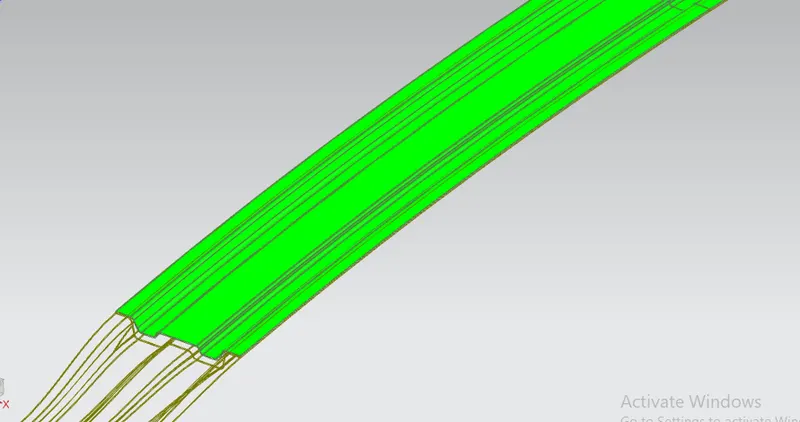
All the faces of Bow Roof 1 have successfully cleared the draft analysis with the minimum draft angle of 7 degrees.
Centre Reinforcement:
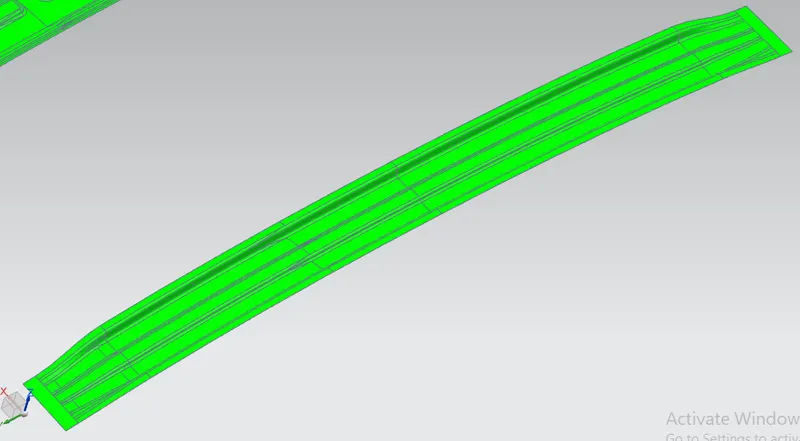
All the faces of Centre Reinforcement have successfully cleared the draft analysis with the minimum draft angle of 7 degrees.
Bow Roof 2:
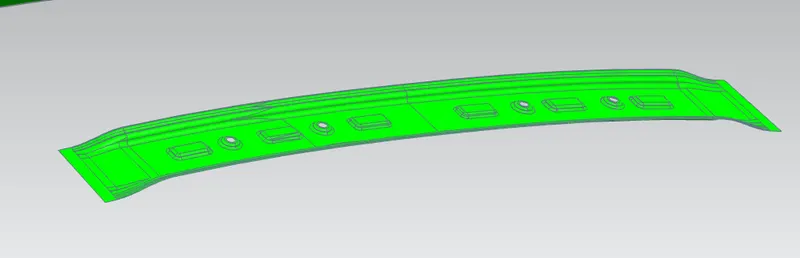
All the faces of Bow Roof 2 have successfully cleared the draft analysis with the minimum draft angle of 7 degrees.
Rear Roof Rail:
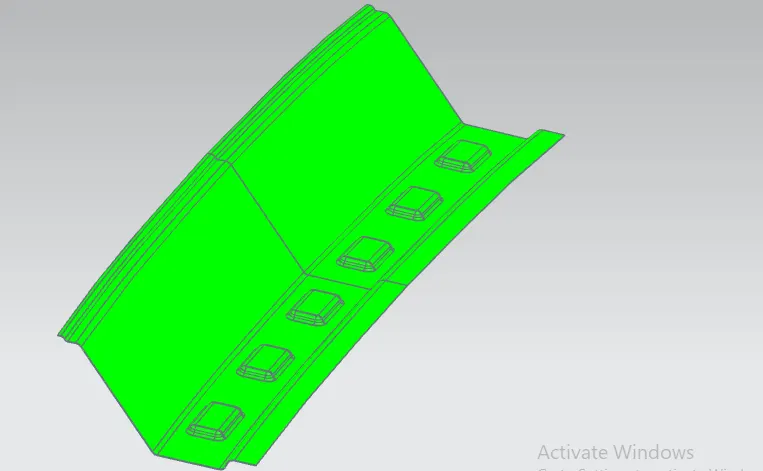
All the faces of Rear Roof Rail have successfully cleared the draft analysis with the minimum draft angle of 7 degrees.
section modulus report on the 0-Y section:
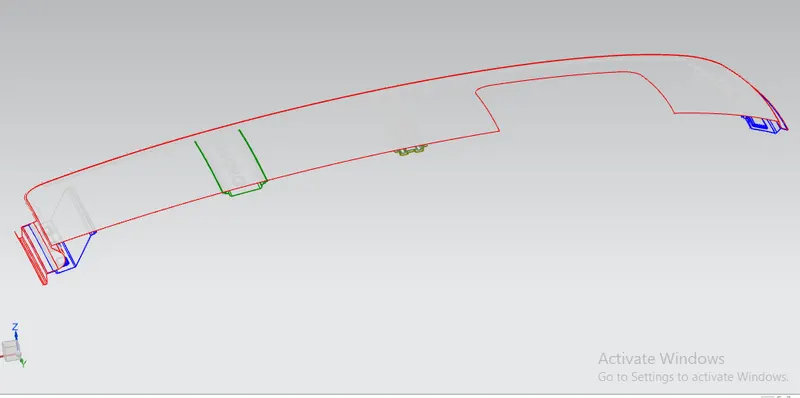
Clip Section Diagram
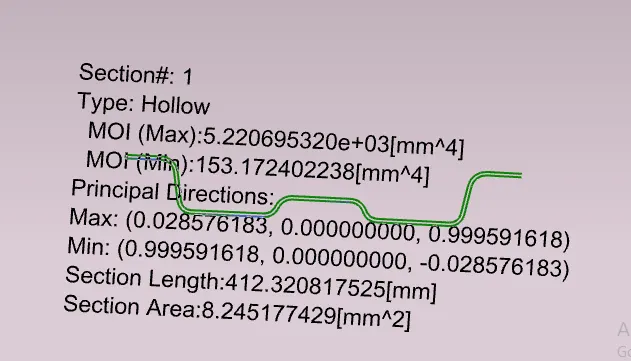
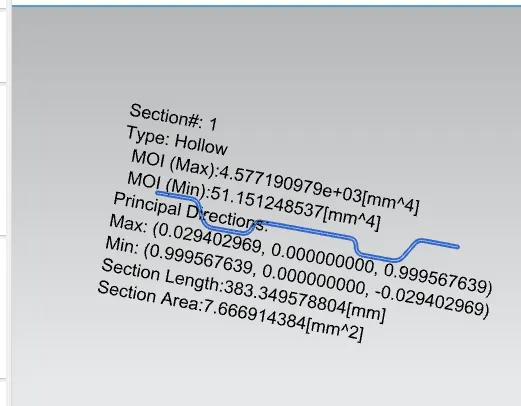
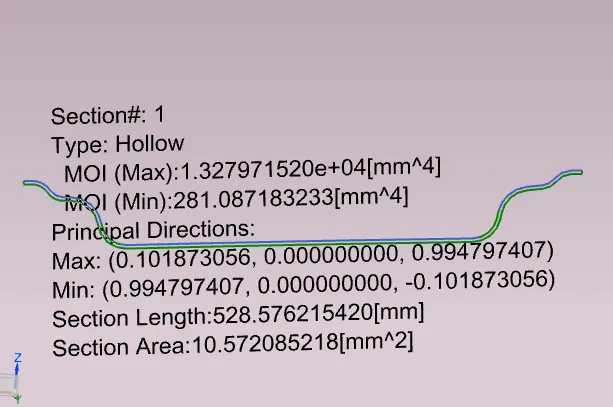
Moment of Inertia of Sections are as follows:
A.Bow Roof 1:
B.Centre Reinforcement:
C.Bow Roof 2:
Bow Roof Curvature Study:
Bow Roof Position Calculation Criteria
There are two ways of calculating the bow roof position:
- Heat Distortion Criteria
- Snow Load Condition Criteria
Analysis of Heat Distortion:
- The strength of the roof panel is significantly influenced by heat distortion analysis.
- Above this temperature, a material cannot be used for structural purposes.
- When exposed to a fixed load at an increasing rate, the material begins to soften.
- When exposed to a fixed load at an increasing rate, the material begins to soften at a certain temperature, and this study is used to forecast the heat distortion temperature at which this happens.
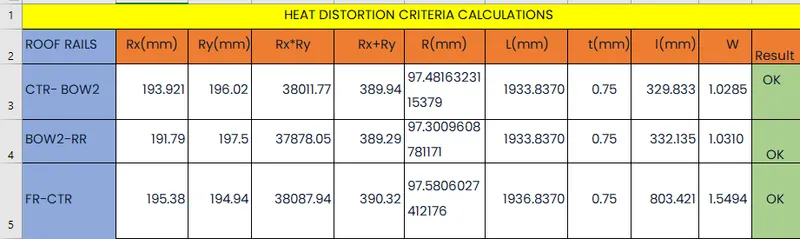
- By altering the position of bow roofs, the heat distortion temperature can be recalculated using the trial-and-error method to prevent any bending or damage to the roof. This allows it to fall within the range that is depicted below.
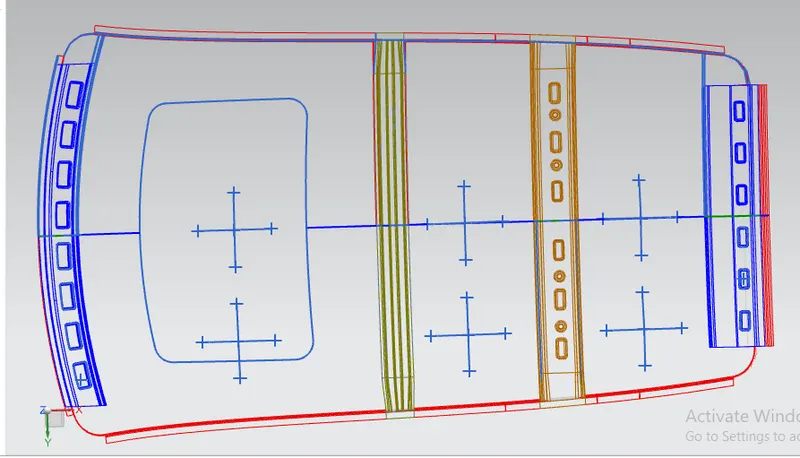
Bow–roof prediction Formula:
- Heat Distortion:-
W = [1.73 x 10^(-3) x L] + [1.85 x 10^(-8) x (R^2)/t] + [ 1.10x10^(-3) x l] - 2.68
Judgement Condition : OK<2
Where
L = Roof Length in X-Direction[mm](Roof dimension in 0-Y)
R = Roof curvature
R = 2(Rx*Ry)/(Rx+Ry)
Rx = X curvature
Ry = Y curvature
t = Roof plate thickness [mm]
l = Bow Roof Span [mm]
2. Snowload Analysis:
- The purpose behind this analysis is to check the strength of the roof when snow is present on it acting as a load.
- A roof should be designed in such a way that it should rebound to its original shape after the removal of snow.
Snow load Prediction formula:
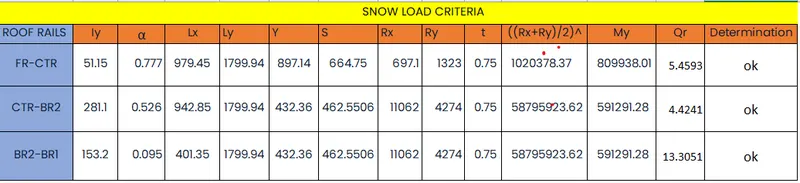
Qr = [Iy x t^2] / [α x S x [(Rx + Ry)/2]2 x 10-8]
Note: The Qr value given over here is correct. There was a typo error in the formula given in the video.
Where
α = My x Lx2 x 10^-12 , My = Y(Ly-Y)
Judgement condition = Qr ≥ 3.1
250 ≤ s ≤ 380
t = Roof plate thickness [mm]
Ly = Distance between the front and rear roof Rails on the Vehicle along with 0Y[mm]
Length of Roof panel with the centre point between Roof rail Front /Rear as the reference point of the front and the rear.
Lx = Distance between the Left and Right end of the roof on the Roof BOW [mm]
Width of the roof panel exposed on the surface.
Y = Distance front Front Roof Rail to Roof BOW[mm]
s = Distance for which Roof BOW bears divided load [mm]
s = L1/2 + L2/2
Iy = Geometrical moment of inertia of Roof BOW (Y cross-section )[mm4]
Rx = Lateral direction curvature radius of roof panel Y cross-section on Roof BOW [mm]
Roof panel curvature Radius of the Length Lx in Front view
Ry = Longitudinal Direction curvature radius of the Roof panel X cross-section on Roof BOW [mm]
Roof panel X curvature radius of length s in Side view
Results:
- Essential flanges and reinforcing cement have been designed.
- All the parts have successfully cleared the draft analysis.
- Data for the section modulus at the 0-Y section has been generated.
- The proposed roof design has successfully cleared the heat distortion analysis.
- The proposed roof design has successfully cleared the snowload analysis.
Conclusion:
The roof was successfully designed while taking into account all of the design rules, master sections, manufacturing feasibility, draught analysis, heat distortion criteria, and snowload analysis.