Project 2 Fender
Fender and Its Functions
- Fender is the part of automobile body that frames a wheel well.
- Its primary function is to prevent sand, mud, rocks, liquids, and other road spray from being thrown into the air by the rotating tyres.
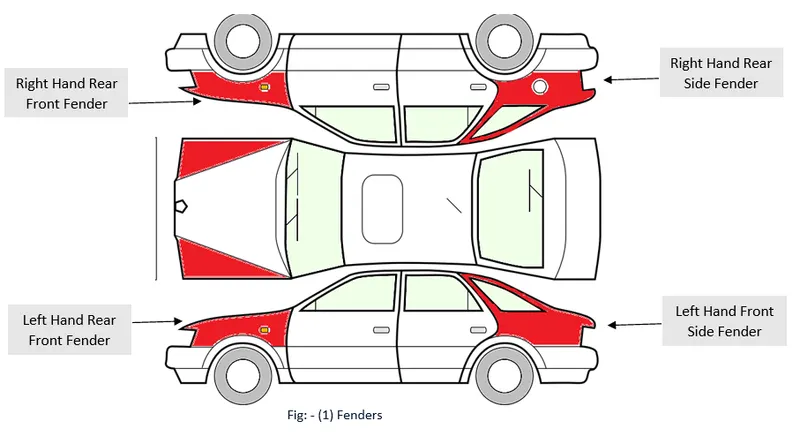
Fig: - (1) Fenders
Mud and other sticky substances may stick to the smooth outer tyre surface, while stones and other similarly smooth loose objects may momentarily become embedded in the tread grooves.
- As the tyre rolls over the ground. This material can be ejected from the surface of the tyre at high velocity as the tyre imparts kinetic energy to the attached objects.
- For a vehicle moving forward, the top of the tyre is rotating upward and forward and can throw objects into the air at other vehicles or pedestrians in front of the vehicles.
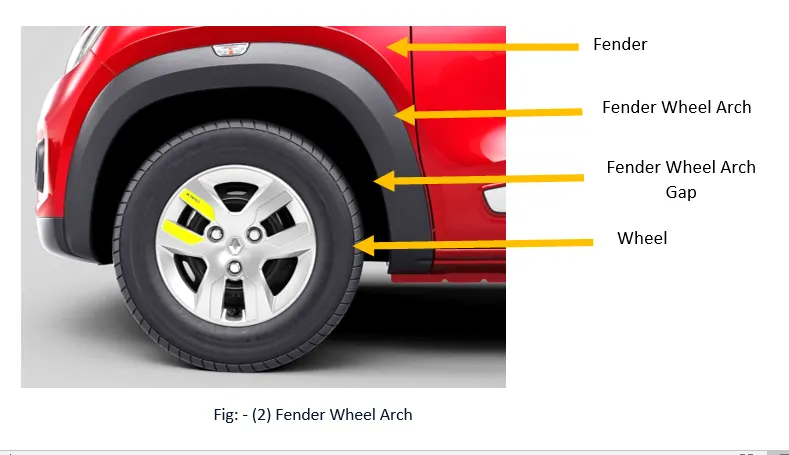
Fender Wheel Arch:
- The semi-circular portion of the fender located above the vehicle's wheel is known as the Wheel Arch.
- The wheel arch of the fender should be designed to shield the wheels and keep passengers and pedestrians safe from stones, mud, and other foreign objects.
- Typically, the wheel arch area of the fender serves as a cover or shield around the tire to prevent stones or other small broken particles of rocks or mud from entering the vehicle.
- The wheel arch of the fenders of the vehicle must meet the standards and regulations of each country for it to have a permit in those countries.
- Different countries have different wheel arch regulations
Types of car fender design:
There are three types of fender design
- Fender Skirt
- Cycle Fenders
- Fender Flares and Pontoons
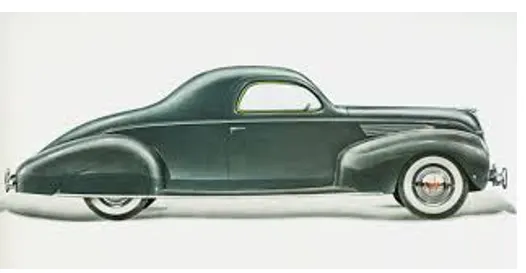
Fender skirt:
- The idea of a fender skirt is to give a car more flow, to make it seem as if it were floating across the ground as it drives—that, and they have slightly better aerodynamics
- Fender skirts are implemented for both aesthetic and aerodynamic reasons. Rather than air flowing into and being trapped in the rear wheel well, it flows smoothly over the bodywork.
- They are generally detachable to allow for tire changes and installation of snow chains.
Cycle Fenders:
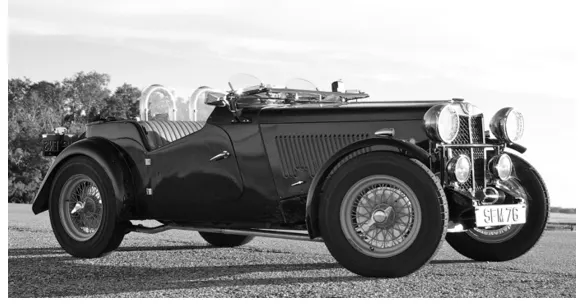
Certain types of cars with narrow bodies, such as the Lotus and later Caterham Seven , use what are called cycle fenders in the US or cycle wings in Britain, for their resemblance to those used on bicycles. They are attached to the wheel suspension and remain at a fixed distance from the tire regardless of wheel motion, and can therefore be much closer to the tire than fixed wheel wells. This was popular on early Classic Trials cars because the fenders were lightweight and allowed for a thin streamlined body. They persist on cars wanting a "vintage" look.
Fender Flares and Pontoons:
Fender flare design:
Fender flares are an added accessory that is fitted on the guards of the vehicle in order to gain additional guard size to allow for overhanging wheels and tyres. Each flare is moulded accordingly to the shape of the vehicle guard to assure precision fitment. Fender flares are designed to also enhance the look of your vehicle, which gives your 4WD a tougher / aggressive look, as it adds to the width of your vehicle’s existing fender. Most flares are used when offset of the wheels are low, causing the wheel & tyre to protrude beyond the guard line. Flares compensate for the low offset wheels by hanging over the wheels & tyres to cover them and to comply with regulations.
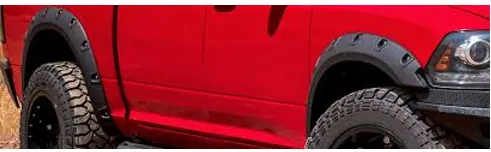
Pontoon fender design:
Ponton or pontoon styling is an automotive design genre that spanned roughly from the 1930s-1960s, he integrated fenders of an automobile with ponton styling may additionally be called Pontoon fenders, and therefore the overall trend might also be referred to as envelope styling. .

Aim: To design a front fender from the given skin data and the master section provided with Drip mounting, A-pillar, Sill, Bumper, C mounting and Splash mountings.
- In this project, working is on designing the front fender of a Sport Utility Vehicle and develop the outer flange from the styling.
- Design the Bumper, Sill, A-Pillar, and Body-side mounts. Also designing the drip area (Engine compartment mount) based on the given master section:
- Finally, design the cladding and fender protector from the wheel arch styling and design mounts on the fender, for the same
- Ensure that the CAD output satisfies all the tolerances and requirements for the deep drawing process.
The given styling is as follows:
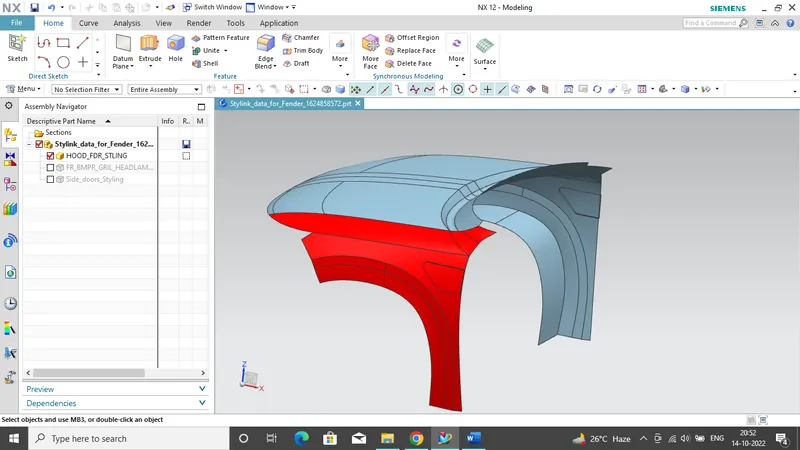
The various steps involved in fender designing are as follows:
- First of all, hide the bumper mount and fender protector from the given styling data.
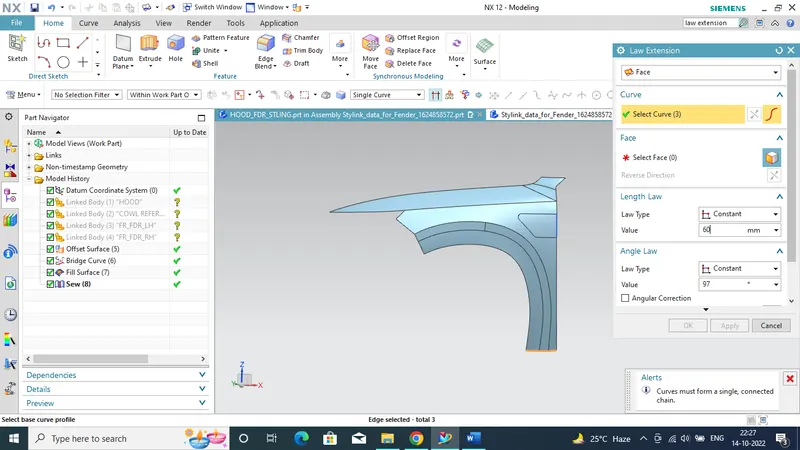
- Now first step in designing is to design flanges all around the perimeter of fenders in offset part.
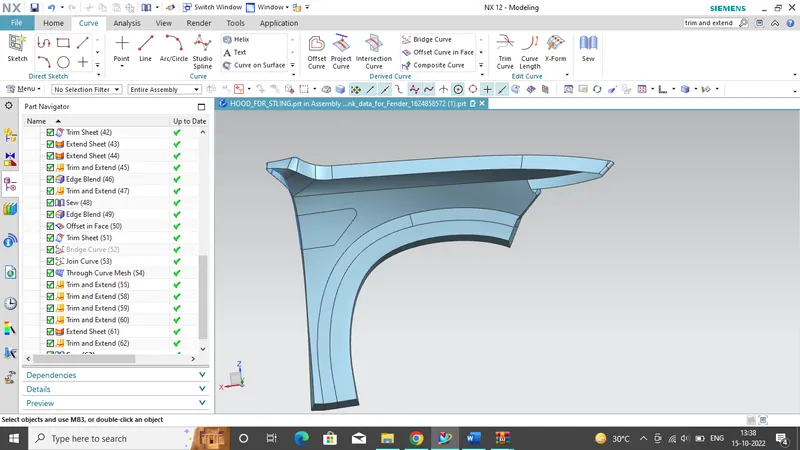
- Then trim and cut in initial mounting
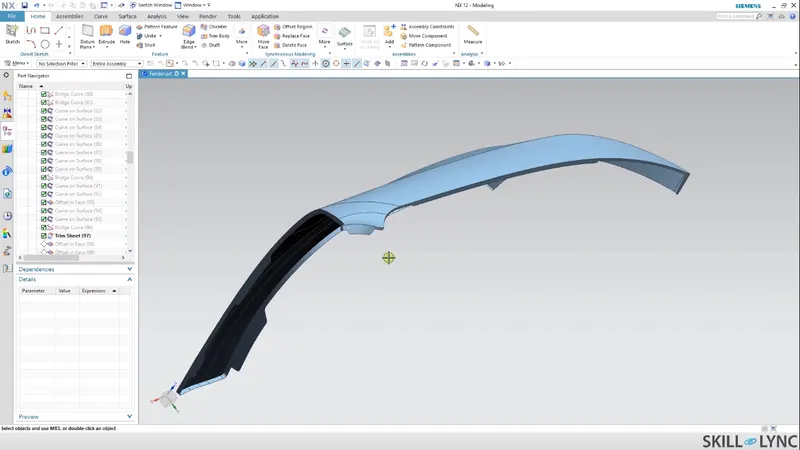
- Then move on to design the fender drip area based on the master section that received.
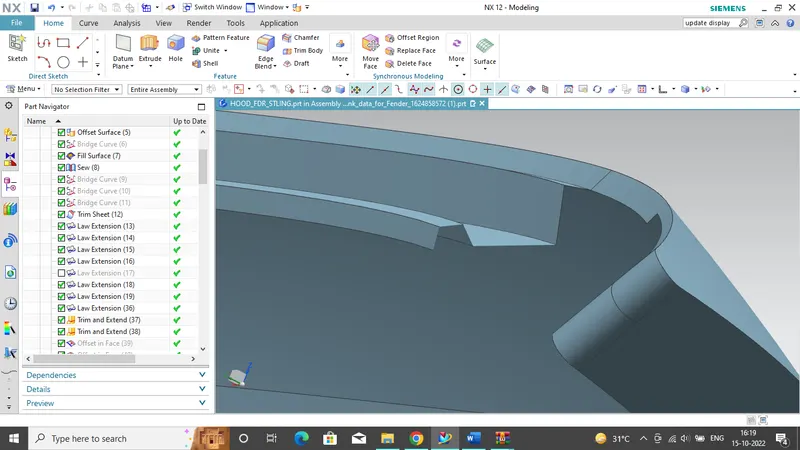
- Then design body side and sill mounting
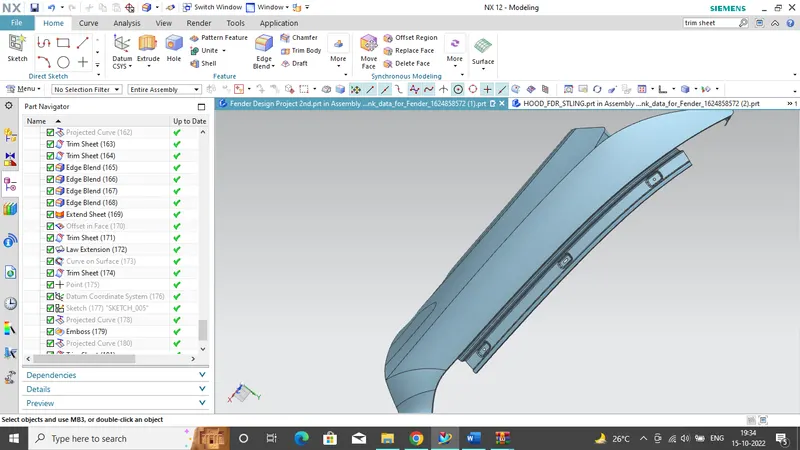
- After that design the mountings points and the holes for the fender protector mount
- Then design the bumper mount and embosses as well as.
- Finally design the A Pillar mount.
- After all this mounting point, create the fender protector and also holes on it.
- Then at last create the cladding.