Designing and development of Back Door/ Tail gate of SUV
Back Door Design
Objective:
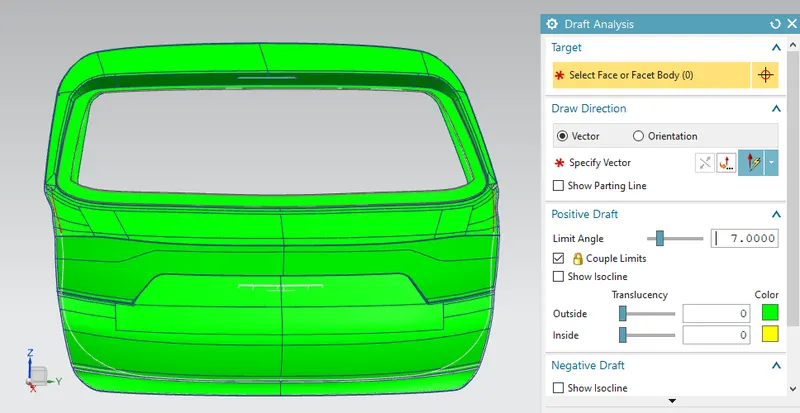
Create a back door design using the surface styling that is provided,follow the proper design principles, and add the required reinforcements and embosses also draft Analysis should be carried out in the tooling direction, and the report should include the snapshot.
Introduction:
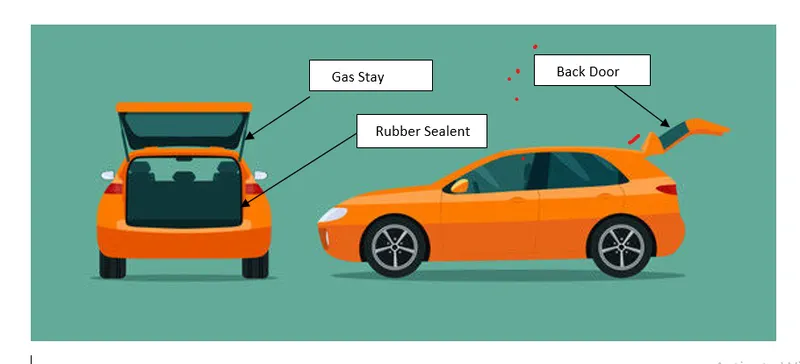
Backdoors are a type of vehicle door that is located next to the passenger seat and provides access to the luggage compartment. The majority of cars have these back doors operated by a gas stay, which reduces the effort required to lift the door.
Here below, we have an exploded isometric view of the rear door:-
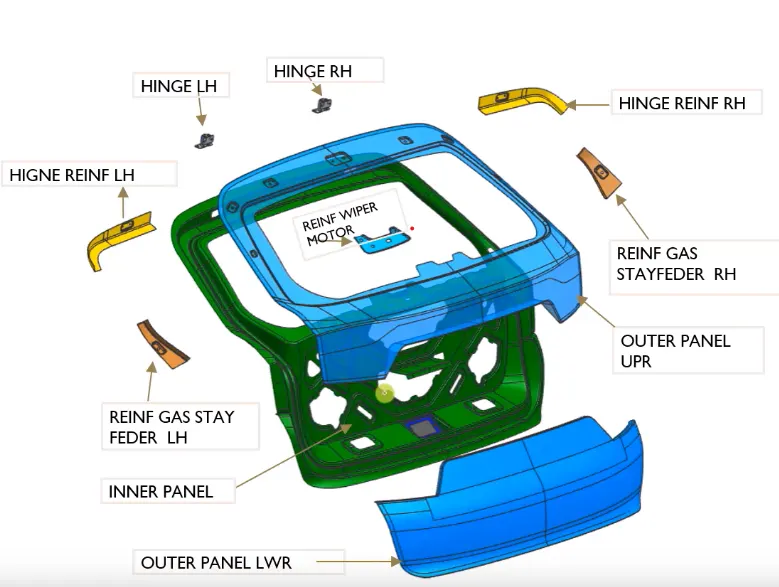
You can see the upper, the outer lower, the inner panel, and various reinforcements similar to the hood. So, as we've seen, the back door isn't just one piece of sheet metal or one component put together; it has several components, and we'll also look at two different approaches to the back door, namely the steel approach and the aluminium approach.
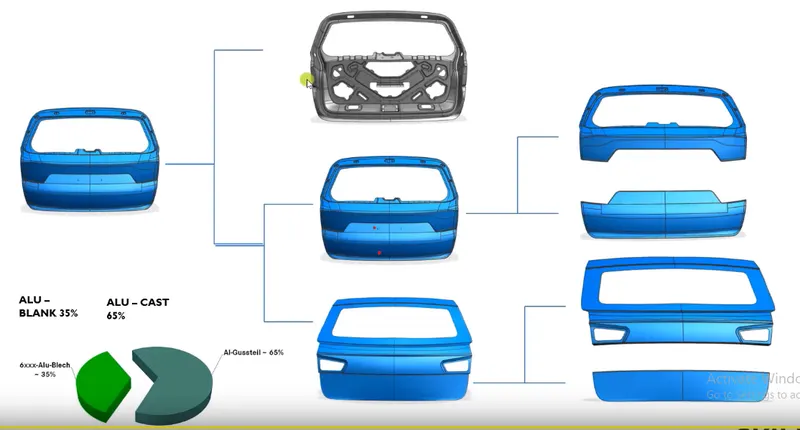
The interior panel is shown in green, and as can be seen, it is made up of just one piece. We also have the outside panel, which is intresting because it is divided into two separate pieces rather than being in a single piece. Since this would be done based on two considerations, separation of the outer panel becomes one of the main concerns. One is the location of the headlamps, thus in this case we also have the location of the airlamps and the number plate because the number plate is often a flat component and cannot be put on a curved surface.so that's why the surface need to be flat and the outer panel will be split into two parts based on this. We also have a lot of reinforcement, including reinforcement for the hinges and gas spring, as well as latch and striker and reinforcement for the wiper motor.
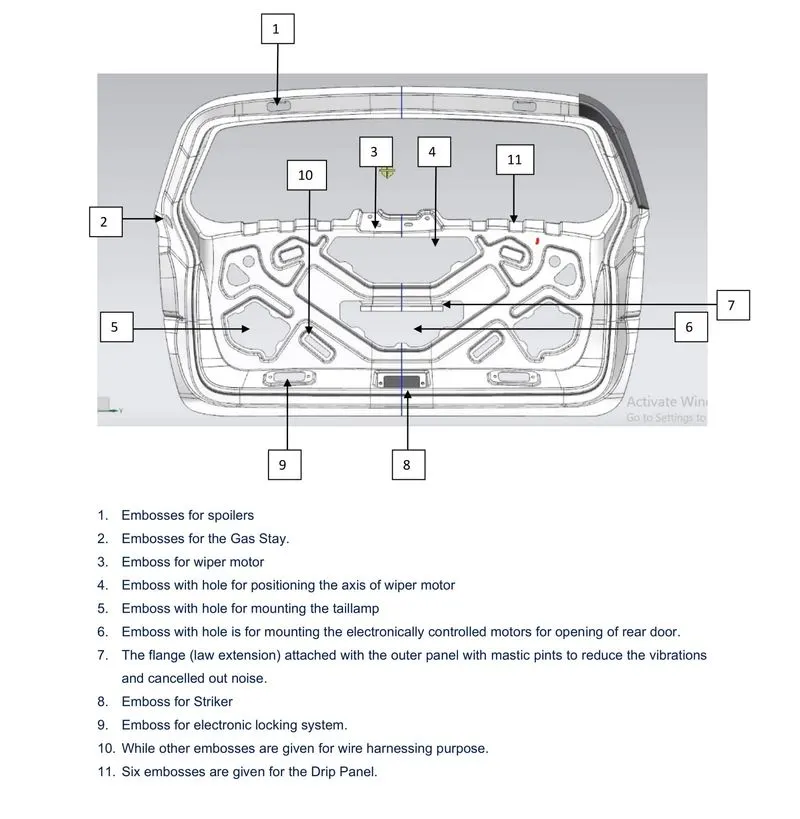
As we see, there are a lot of embosses here on the outer panel; this is because the outer panel is a styling component and not a muscle of the entire component.
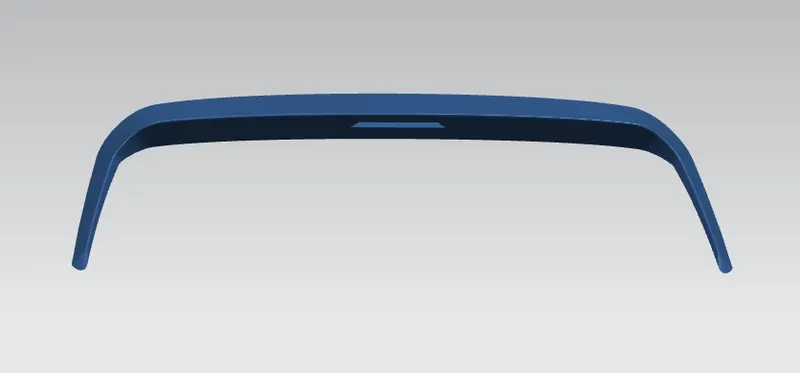
Also, we have a spoiler, and in order to mount that spoiler, we have embosses here.The spoilers are snap fitted to this outer panel; that's why we have a lot of holes in the embosses.
Now, coming to the inner panel, we know that there are a lot of embosses and reinforcements. Similar to the hood, the tailgate is also opened and closed many times. So for that purpose, we have the hinge, latch, and striker. Also here, we are going to do the same trajectory circle. We were going to maintain the perpendicularity with respect to the latch and striker as well.
Let's start with the specific shapes; why do we have these on the inner panel?
Types Of Back Door
- Top-mounted back door
- side-mounted back door and
- bottom-mounted back door.
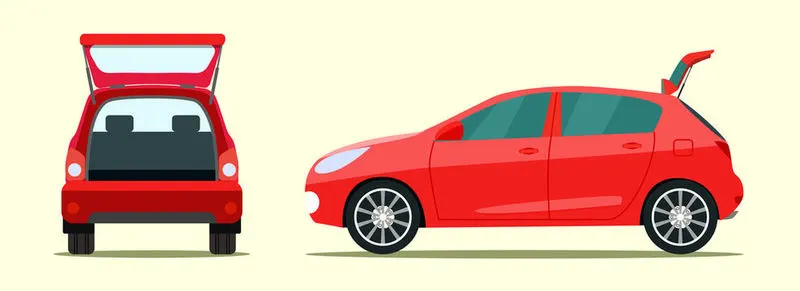
Fig.4 Top Mounted Car Back Door
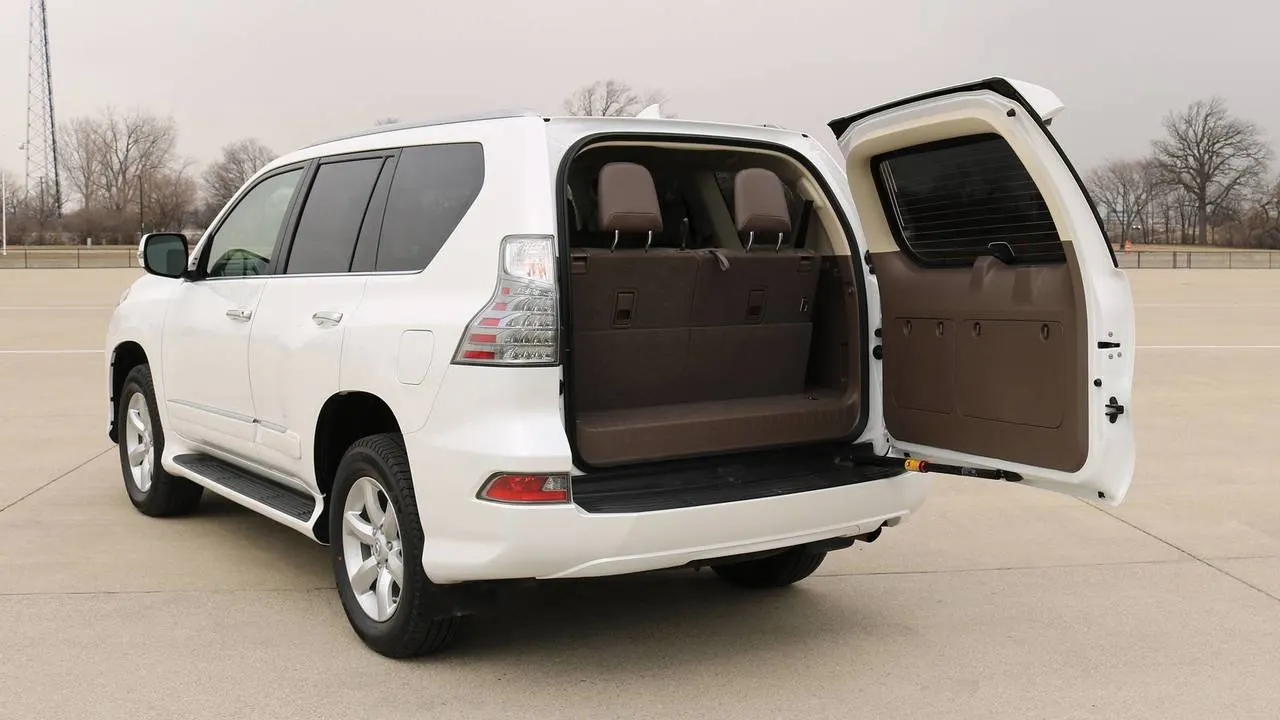
Fig.5 Side Mounted Car Back Door
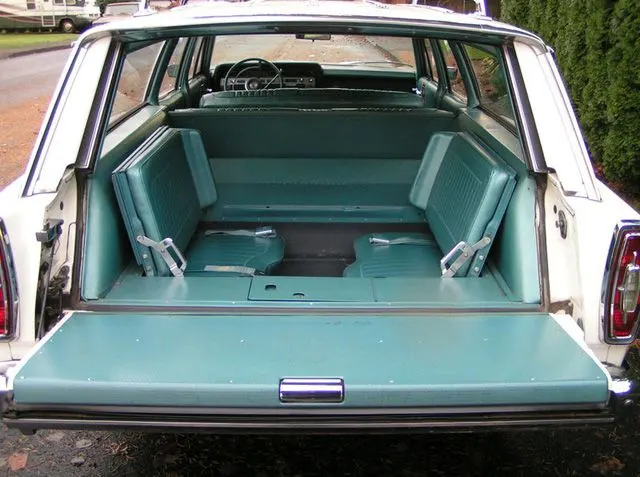
Fig.6 Bottom Mounted Car Back Door
Working Mechanism-Based Types:
- Gas Stays type and
- Electronically Lift system
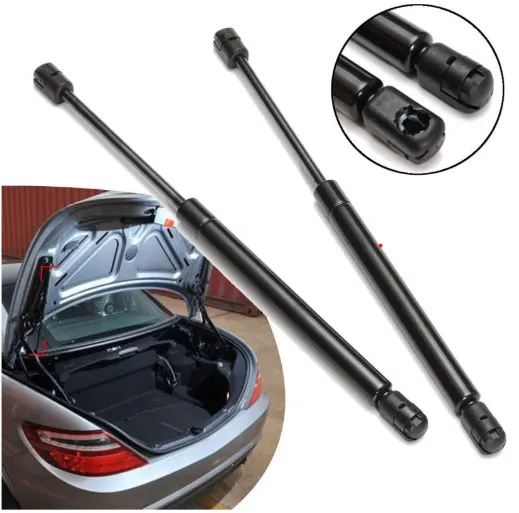
Fig.7 Gas Stays type Car Back Door
Gas-stay backdoors are a popular tailgate mechanism in vehicles ranging in price from entry-level to luxury. person must exert effort to lift it while holding some bags in both their hands. It looks like what's shown below in the image.

Fig.8 Gas Stays type Car Back Door
While Another sophisticated way to have a liftgate opening mechanism that opens and closes the backdoor and releases the latch with the touch of a button is an electronically controlled lift system. A power latch, anti-pinch switch, PTG assy, and PTG main switch comprise the electronically controlled lift system. When the switch is pressed inside or outside the compartment, the power latch releases and the entire backdoor opens. The anti-pinch switch is installed to prevent accidental hand insertion while operating the door.
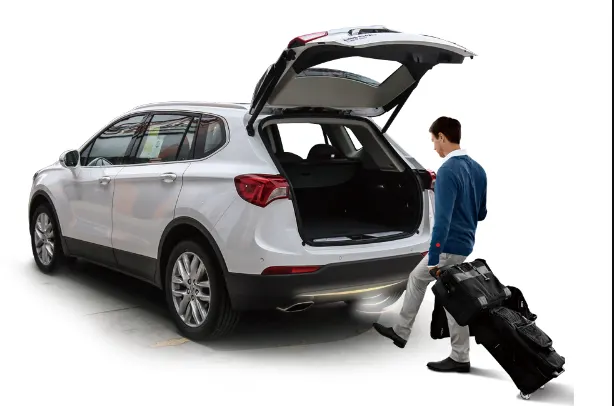
Fig.9 Electronically controlled Car Back Door
Materials Used in Manuacturing of Automotive:
Iron, aluminium, plastic steel, glass, rubber, petroleum products, copper, steel, and other materials are used extensively in the automobile industry. These parts are used to make everything from the small things we don't notice, like dashboard needles and wiring, to the big things, like the engine block and transmission gears.
On modern cars, most of the weight comes from steel. In 2007, for example, the average car contained 2,400 pounds (1,090 kilograms) of steel, and the average pickup truck or SUV used nearly 3,000 pounds (1,360 kilograms). Consider that most cars now weigh around 3,000 pounds, and most SUVs weigh around 4,000 pounds (1,810 kilograms) -- that's a lot of steel!
In the world of auto manufacturing, aluminum is kind of the new kid on the block. It's being used increasingly in the car world for its lightweight but tough nature. In 2009, aluminum components made up about 9 percent of the weight in most modern vehicles, compared with about 5 percent in 1990 and just 2 percent in 1970 [source: Aluminum Association].
Aluminum can be used in automotive manufacturing to create body panels for a lighter, more performance-oriented vehicle.
Selection of Material for Rear Door Manufacturing
Converting an aluminum cast part to a steel deep drawn part does not imply that aluminum cannot be deep drawn. The inner panel is going to be made of aluminum and is going to be cast. The outer panel can be made of aluminum but can also be deep drawn because the outer panel is relatively simple when compared to the inner panel. Because the inner panel has complex curves, intricate patterns, and is embossed, we use casting for it.
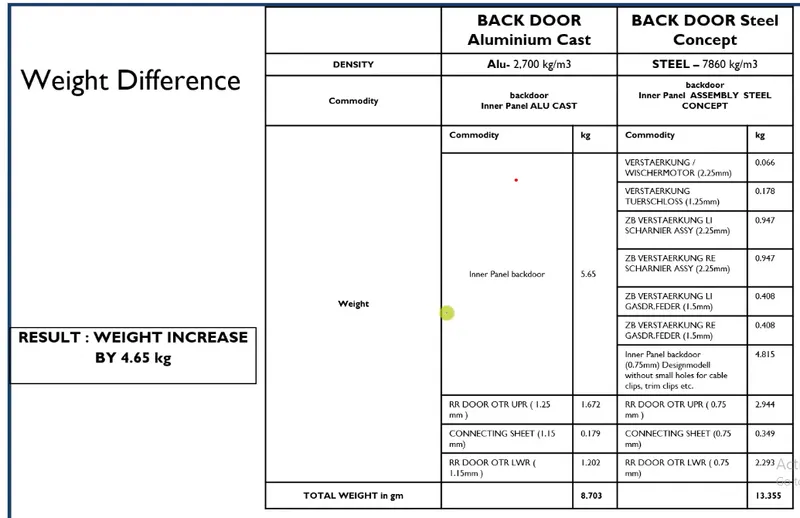
The material chosen has a significant impact on the overall weight of the back door. Steel and aluminium are the most commonly used materials. Steel has a higher density than aluminium, which adds weight to the door. The material used in the manufacture of the backdoor is determined by the car's budget; most low-cost vehicles use steel because it is less expensive than aluminium
When we cast aluminum, we can vary a lot of the thickness, which means we can use fewer parts. When we cast steel, the number of parts is higher because there are a lot of reinforcements and embosses. When we cast aluminum, we only have one piece, so we ignore all the reinforcements. So that's why aluminum can be easly cast.
Lets see the weight difference between the two materials:
Various Load Test Cases and Results
There are various tests that are going to be carried out for the rear door that we design. Only when it passes the test will it be considered a success in design.
The various tests are:
- Torsion and bending Test
- Abuse Tests
- Dent Tests
- Assembly Tests and
- Endurance Tests
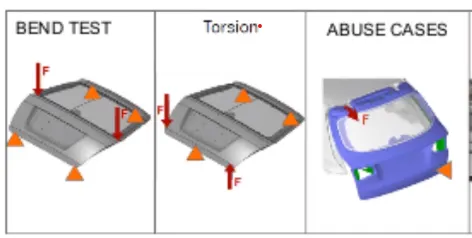
- In the bend test, forces act perpendicularly along the same direction at both ends, as shown in fig. above.
Target: Maximum Bending Displacement < 1.5 mm
- In the torsion test, the forces act opposite each other along the end of the door
Target:Maximum Bending Displacement < 9 mm
- In the abuse test, the rear door is fixed at one end and force is applied in the opposite direction; this will be repeated vice versa.
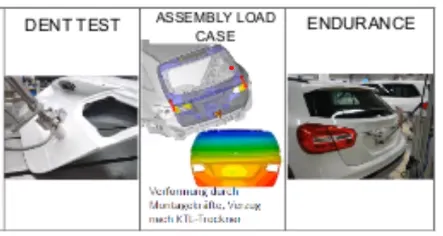
- A dent test is used to analyse the durability of a door at a particular location. After removing force at some place over the door, if the actual face of the door comes up, then it passes the test.
- While assembling the rear, there are a lot of forces that are going to be exerted over the door. If the load is too much, this is going to be analysed here in this test.
- Endurance means that something happens for a long period of time. Will it be able to withstand the force for an extended period of time? these analysis are carried out.
Main force Distribution Direction
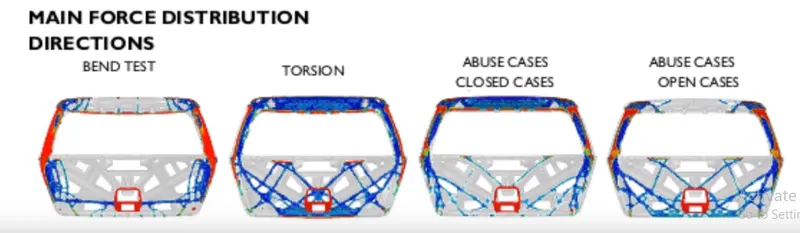
This demonstrates how forces are resolved in various directions in all of the cases, namely the bend test, torsion test, and abuse close and open case. There is a common area where all four things have too much force, namely the latch and striker reinforcement, as well as the emboss region. So, in this region, this will be attacked, and this will be the focal point where all forces will be concentrated. The plan is to resolve the forces before spreading them to the end or toward the other flanges and outside the body of the rear doors. The CAE team will determine whether or not to modify the embosses.
Joining Methods of sheets:
1.Heaming (sheet metal forming process)
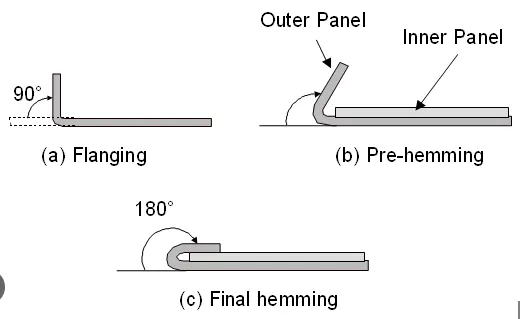
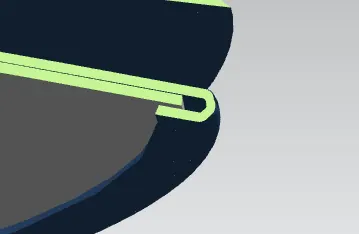
Hemming is a forming operation in which the edges of the sheet are folded or folded over another part in order to achieve a tight fit. Normally hemming operations are used to connect parts together, to improve the appearance of a part and to reinforce part edges.
In car part production, hemming is used in assembly as a secondary operation after deep drawing, trimming and flanging operations to join two sheet metal parts (outer and inner) together. Typical parts for this type of assembly are hoods, doors, trunk lids and fenders.
There are various types of hemming operations:
- Conventional die hemming:In conventional die hemming, the flange is folded over the entire length with a hemming tool.
- Roll hemming:In roll hemming, the hemming roller is guided by an industrial robot to form the flange.
2.Spot Welding:
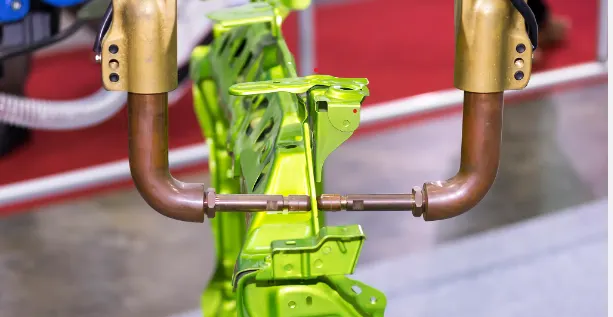
Resistance Spot welding (often just called "spot welding") is a cost-effective joining technology that continues to be very popular in the automotive industry, where high reproducibility and automation are essential criteria. An additional advantage is that, with a suitable choice of parameters, a high quality of joints can be obtained without being dependent on a welder’s ability.
Resistance Spot welding is a pressure welding process. The sheets are pressed together locally using fitted copper electrode welding guns that are then current-powered. As a result, joule heating locally melts the joining partners at the junction, resulting in a cohesive composite once the joint has solidified
3.Laser Brazing: Laser brazing is a thermal joining technique used to join steel and aluminium. A filler metal is placed at or between the facing surfaces of the metals to be joined in laser brazing, and heat is applied using a laser beam to melt the filler metal but not the parent metals. Capillary action causes the liquid filler metal to flow and fill the gap between the facing surfaces. As the filler metal cools, solidifies, and forms a diffusion bond at its interfaces with the parent materials, the joint forms.
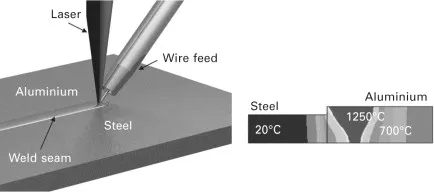
The strength of a brazed joint depends on the selection of the filler material, the clearance between the mating surfaces (which is typically between 0.025 and 0.25 mm), and the cleanliness of the surfaces. To improve cleanliness and the wetting of the filler material, a flux is applied first on the metal surfaces to be joined. As the temperature is raised, the flux melts, wets the metal surfaces, and dissolves the contaminant film (surface oxide film) on them. In the case of brazing aluminium and steel or aluminium and aluminum, the filler material used is an Al–Si filler alloy with 7%–12% Si and melting points in the range of 500°C–610°C. Aluminum flux is a mixture of alkali and alkaline earth fluorides, as well as chloride organic salts.
In general, the strength of brazed joints is lower than that of resistance spot-welded joints. During laser brazing of steel with aluminum, the aluminum-based filler material welds on the aluminium side of the assembly but creates a diffusion-bonded brazed joint on the steel side. A very thin layer of brittle IMC is still formed during brazing of steel with aluminum, but its effect on the joint strength is not very significant.
Assembly Sequence - Aluminum
______________________________________________________________________________
Automotive Metal Forming Technologies:
One of the most important things about metal is that it can undergo plastic deformation.
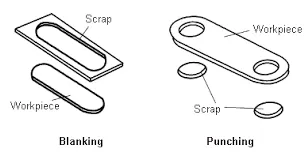
The process of deformation begins with a blank, a quantity of metal in some basic form that will undergo the change in shape. The blank becomes the workpiece -- the piece of metal to be reshaped -- in the metal forming process. For automotive metal forming, the blank is often made of sheet metal, which can be stamped, cut or bent into a shape needed for an automobile's body. Alternatively, it can be a solid block of metal in a cubical or lens-like shape. Here are some ways that a metal workpiece can be deformed during the automotive manufacturing process:
1.Blanking:Blanking is a sheet metal forming process that involves cutting a flat piece of metal into a desired shape. This operation is typically carried out using a punch and die set, where the punch creates the desired shape by shearing the metal against the die. The excess metal is then discarded as scrap.
2.Punching:Punching is a sheet metal forming process that involves creating holes or other shapes in a piece of metal using a punch and a die. The punch pushes through the metal and into the die to create the desired shape. This process can be done manually or with a machine, and can create a variety of shapes and sizes depending on the punch and die used. Punching is commonly used in the production of small metal components, such as bolts and screws, and in the automotive industry to create holes in car body parts for assembly.
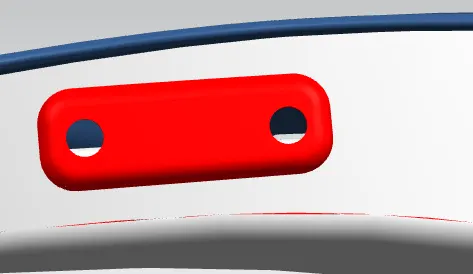
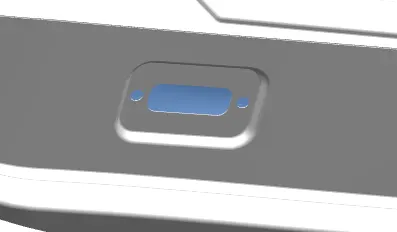
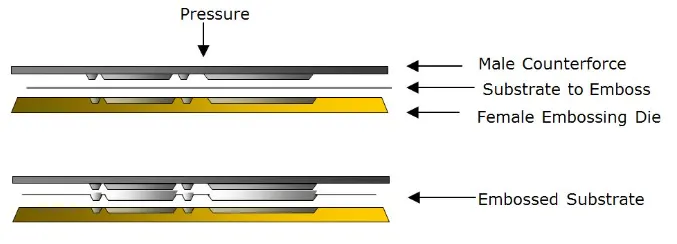
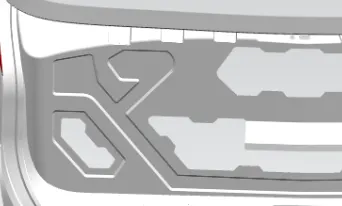
3.Embossing:Embossing is another sheet metal forming method that involves creating a raised design on a metal sheet. It is achieved by placing a metal sheet between a die and a punch, and applying pressure to the punch, causing the sheet to deform and take on the shape of the die. Embossing can be used to create decorative patterns or text on sheet metal products such as signage, nameplates, or packaging. It is also commonly used in the automotive industry for creating decorative features on car parts such as hoods, fenders, and doors. The process can be done using hydraulic or mechanical presses.
4.Hemming: As described above in metal joining process
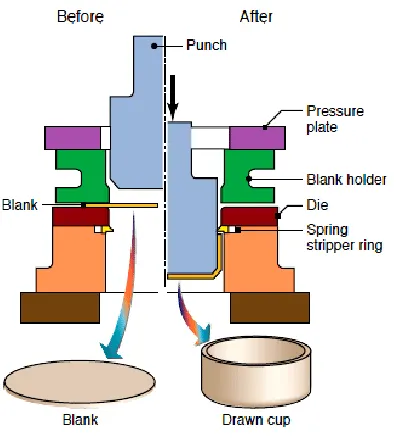
5.Drawing:In drawing, the sheet metal is forced against a die that has been cut into the three-dimensional, often curved shape that the sheet metal is to take on.This technique can produce relatively complex shapes. Once again, pressure is applied to the workpiece using a hydraulically or mechanically operated punch.This method is commonly used to make auto body parts and fuel tanks.
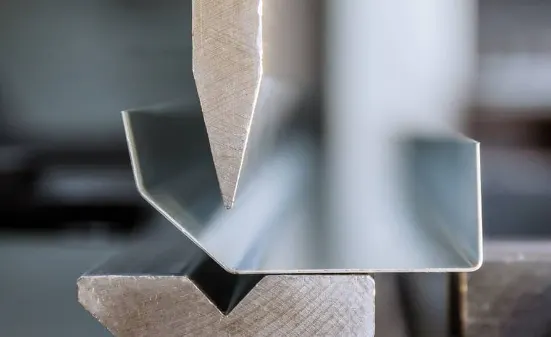
6.Bending:In bending, force is applied to a sheet metal workpiece to produce a curvature of the surface. Bending is generally used to produce simple curved surfaces rather than complex ones. A mechanically operated press drives a punch against sheet metal, forcing it into a simple die with enough pressure to produce a permanent change in the metal's shape. The amount of pressure is important. If not enough pressure is applied, the metal can simply spring back into its original shape. If too much is applied, it can break.
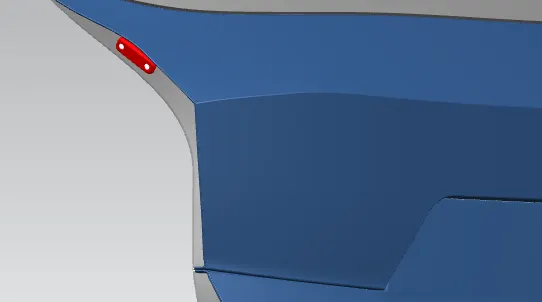
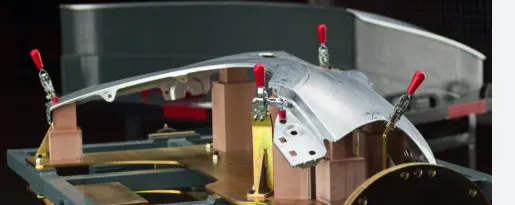
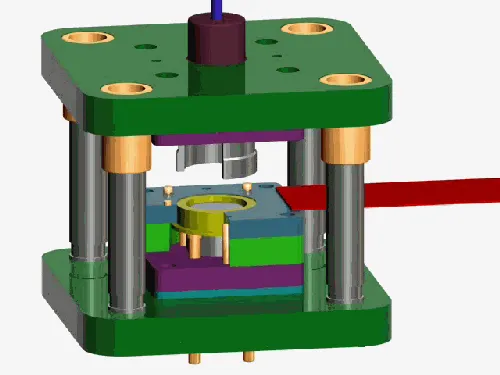
7.Stamping:A tool called a stamping press and a number of dies are used in the process of stamping to cut and shape metal into different shapes. This is frequently used to create automobile components like fenders and hubcaps.
_____________________________________________________________________________
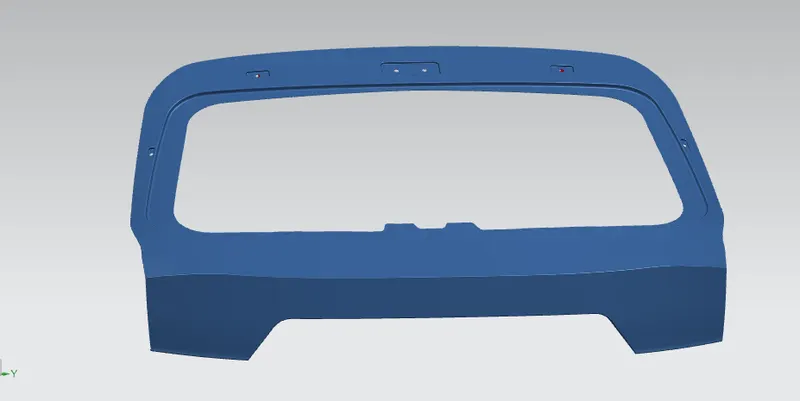
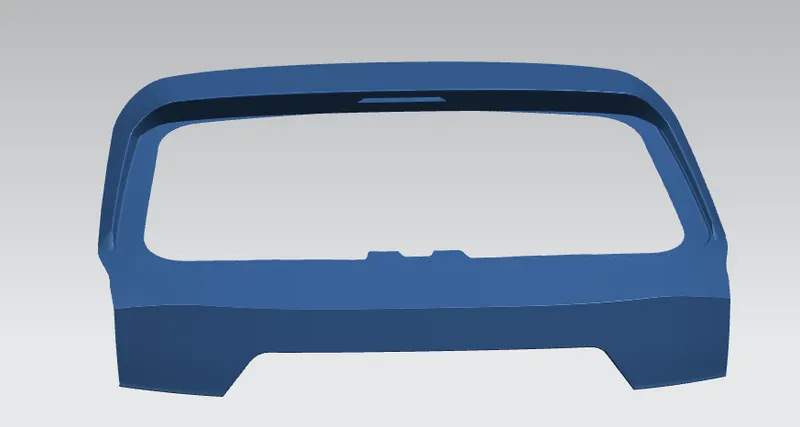
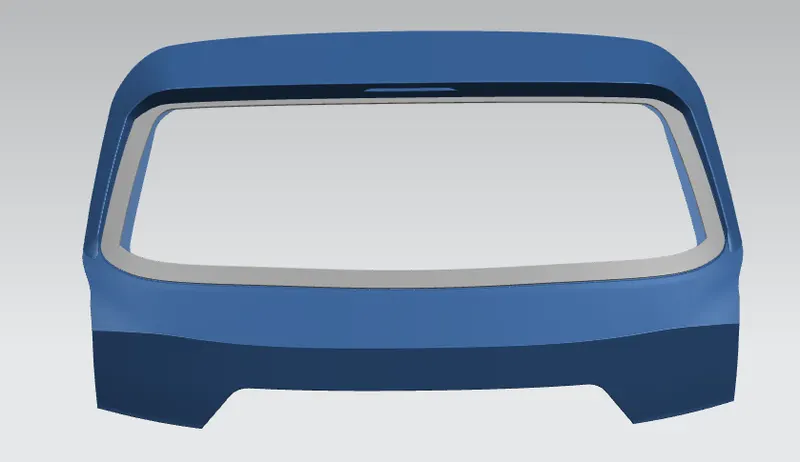
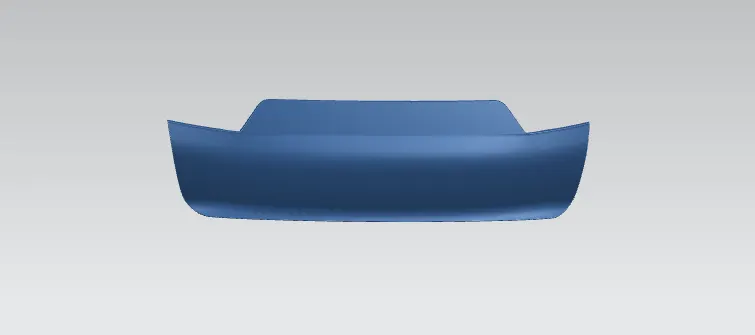
Below are the snapshot of the required design as per data given:
Outer Upper Panel:
Outer Upper Panel with Spoiler:
Outer Upper Panel with Spoiler and Windshield:
Outer Lower Panel:
Spoiler:
Inner Panel:
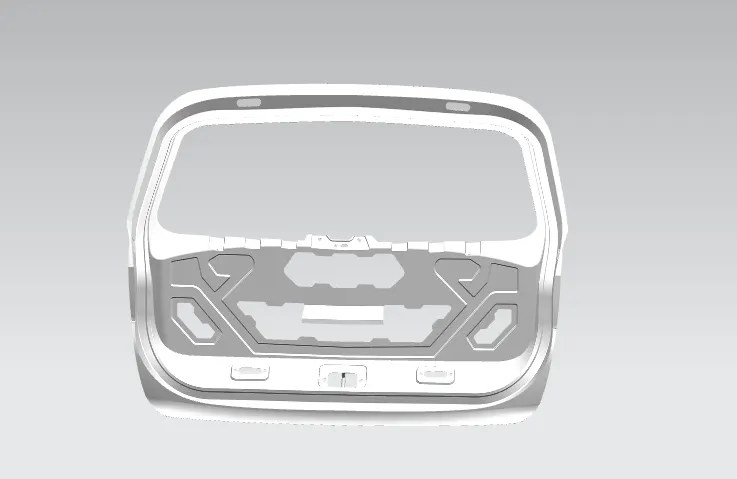
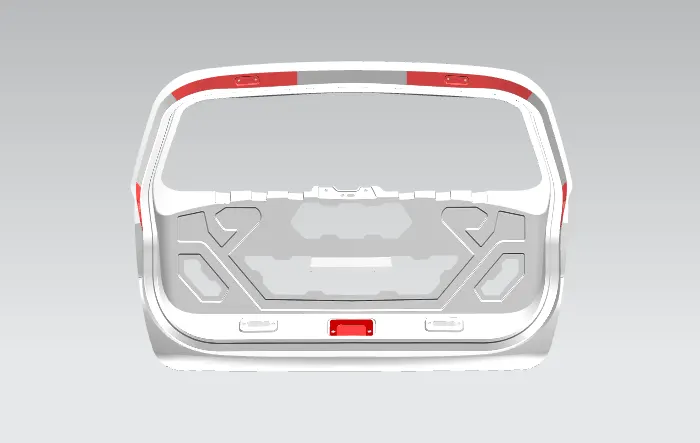
Inner Panel with reinforecements:
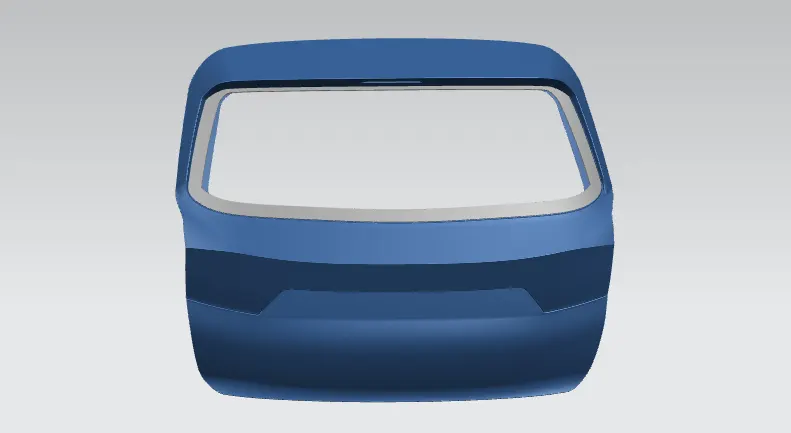
Outer Panel:
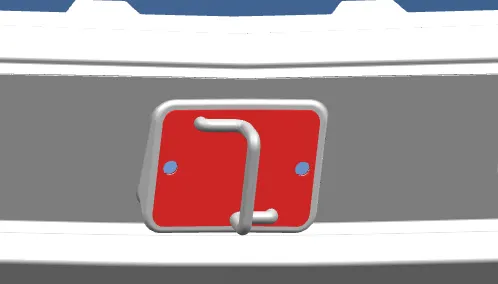
Striker:
Gas Stay Reinforcement:
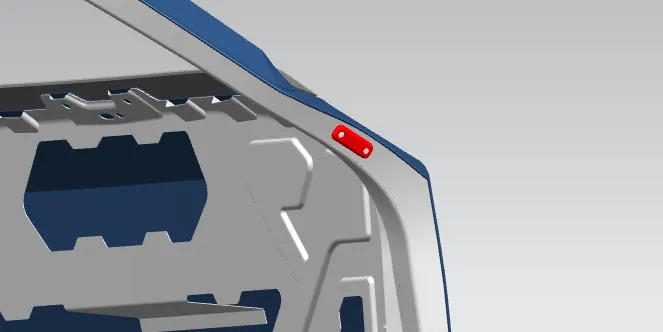
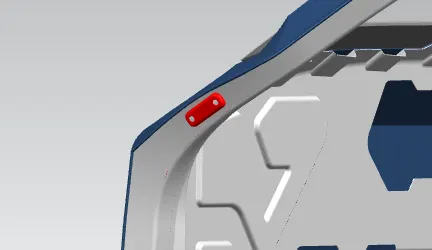
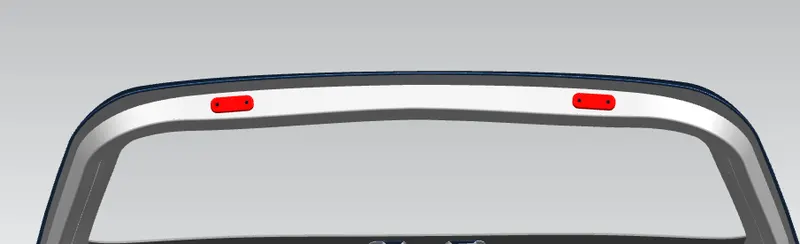
Hinge Axis Reinforcement:
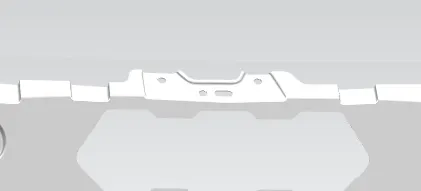
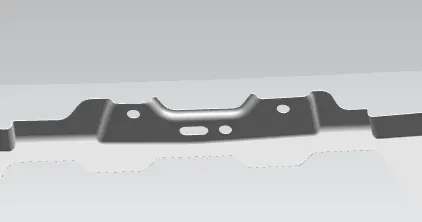
Wiper Motor Mounting Region:
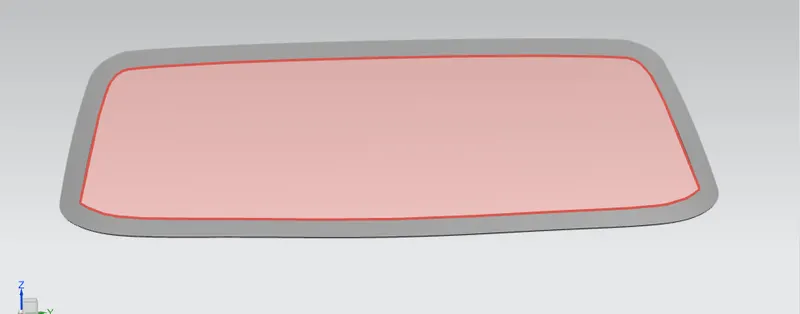
Windshield:
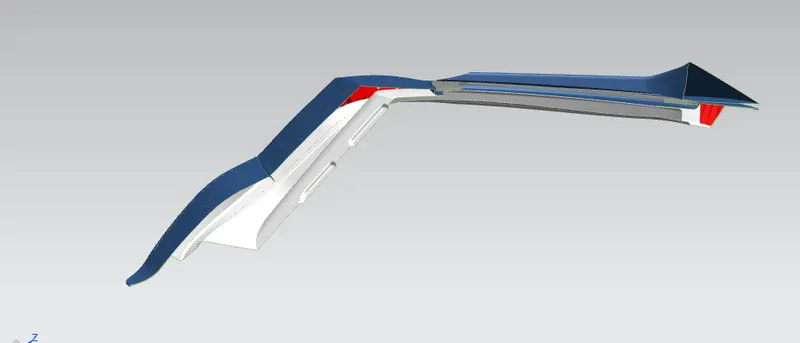
Hemming:

Cross Section View:
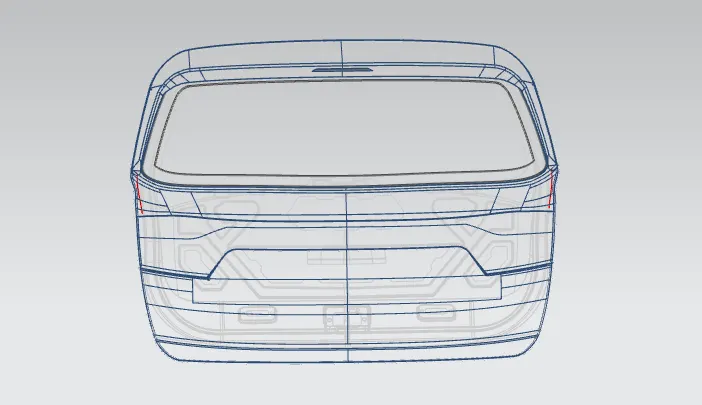
Skelton Diagram:
Draft Analysis:
In this project I considered the sheet as steel and used 7 degrees as draft angle and direction is choosen as tooling direction of deep drawn.
______________________________________________________________________________
Conclusion:
As a result, I applied proper design techniques and created the necessary reinforcements and embosses for the provided stylistic surface of a rear door design.As a result, I created a back door.
______________________________________________________________________________