Project 3: Roof Modeling
Car Roof Design
Objective
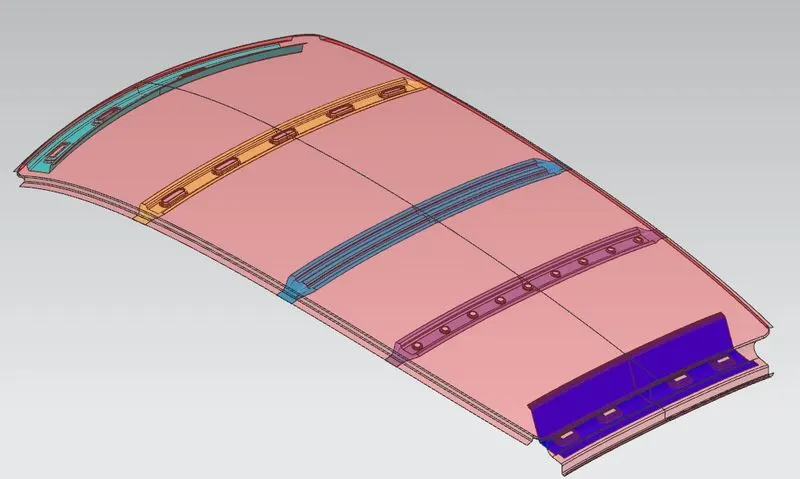
- For the given Car Roof styling, design and develop the essential flanges and reinforcements, namely the Ditch Area, Front Roof Rail, Rear Roof Rail, Centre Roof Rail and Bow-Roofs.
- Do a curvature study on the roof and perform calculations for Heat Distortion and Snow load criterion to determine and justify the position of the Bow-roofs.
- Do a Section inertia analysis for the Master sections created for the Front Roof Rail, Rear Roof Rail, Bow Roof Rails and Centre Roof Rail
- Perform a Draft Analysis of each reinforcement.
Software Used
Siemens NX
Introduction
An automobile roof is the portion of an automobile that sits above the passenger compartment, protecting the vehicle occupants from sun, wind, rain, and other external elements.
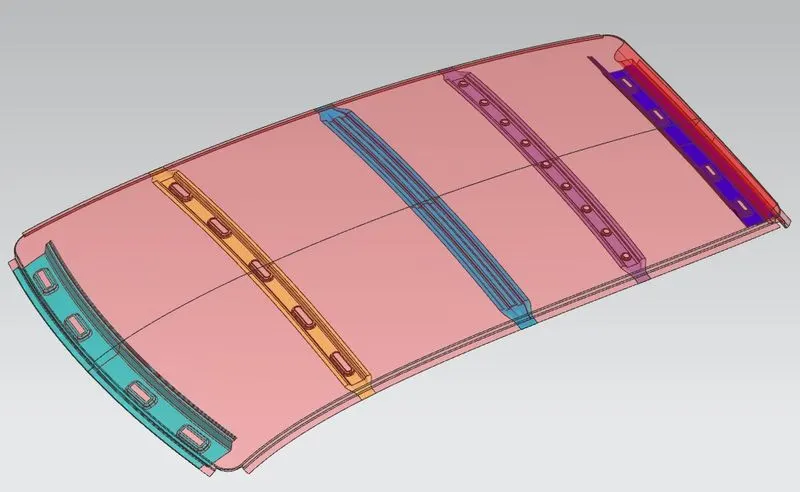
Under the styling surface that is seen on the outside, many other structures under the roof contribute to its strength and stability. The number of such structures/supports differ for the size of the vehicle. They are primarily installed on flatter areas of the roof to enhance strength. These are the Front Roof Rail, Rear Roof Rail, Centre Roof Rail and Bow Roofs and they are joined to the roof by the Ditch Area.
Reinforcements and Design
Ditch Area
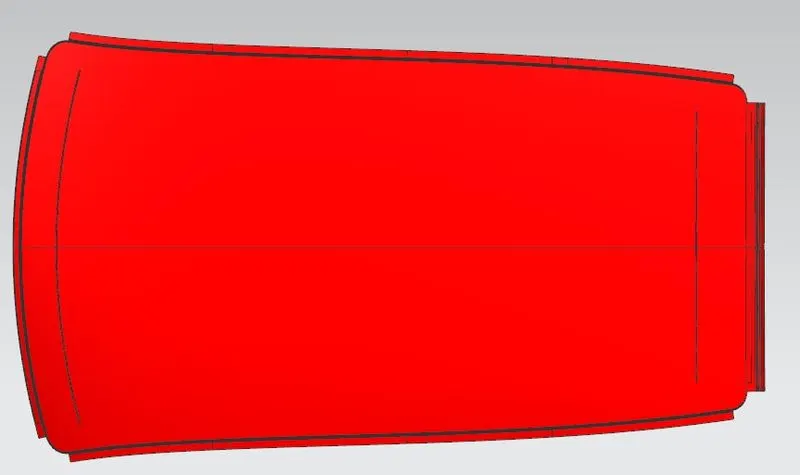
The Ditch Area is the extended portion of the main Roof concealed by other BiW panels. The rail supports of the roof are attached to the Ditch Area using Spot welds since it is not a styling surface and remains concealed. Headroom Clearance, visibility criteria, clearance for Windshield and Back door are some of the factors to be considered while designing the Ditch Area. It is given a thickness of 0.75 mm.
Front Roof Rail
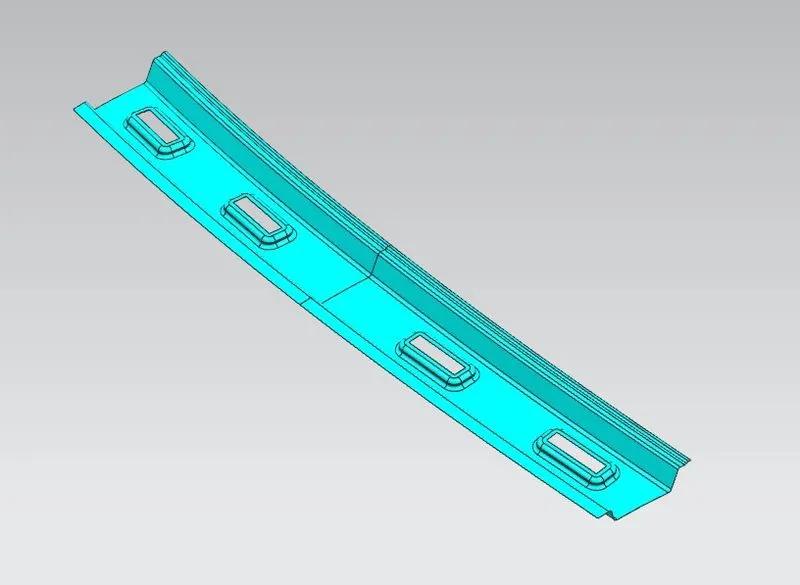
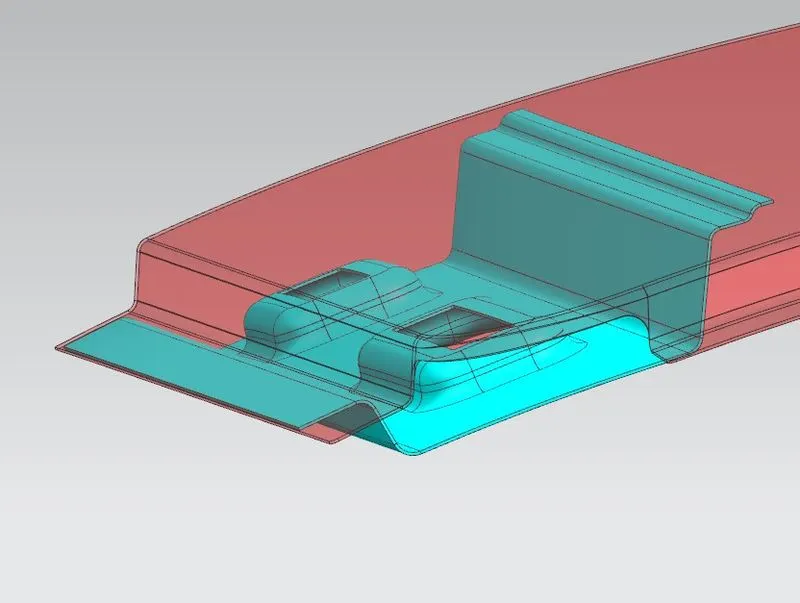
It is the support that is joined with the Wind Shield Glass, Body Side Outer and the inner panels. It is usually made from Body Side Outer scrap and therefore the thickness of the rail is 0.75 mm. A draft angle of 3-5 degrees is provided keeping in mind the deep-drawing operation. The Wind Shield end flange is the exact offset of the roof surface. The bottommost flange is decided after taking into consideration the visibility criteria and the Headroom Clearance of the passenger. Spot Welds are applied at the Windshield end of the rail and the other end is joined with the roof using Mastic Sealants which also contributes to increased strength.
Rear Roof Rail
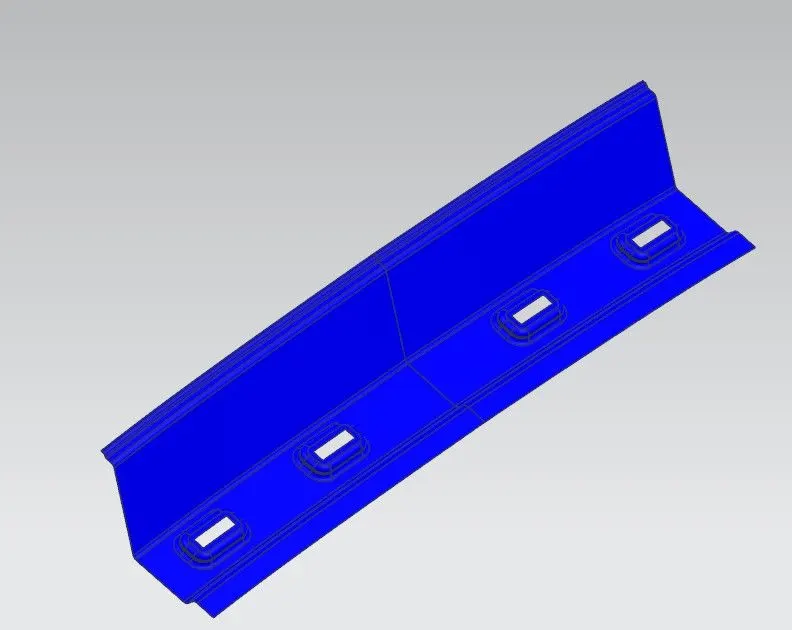
It is the support that is joined to the Back Door, the Body Side Outer and the inner panels. It is also usually made from Body Side Outer scrap and therefore the thickness of the rail is 0.75 mm. Similar to the Front Roof Rail design, we have to take into consideration the rear Headroom Clearance and the rear visibility criteria while designing the Rear Roof Rail. Inputs from the backdoor design are also taken to accommodate the required clearance. Spot Welds are applied at the Back door end of the rail and the other end is joined with the roof using Mastic Sealants.
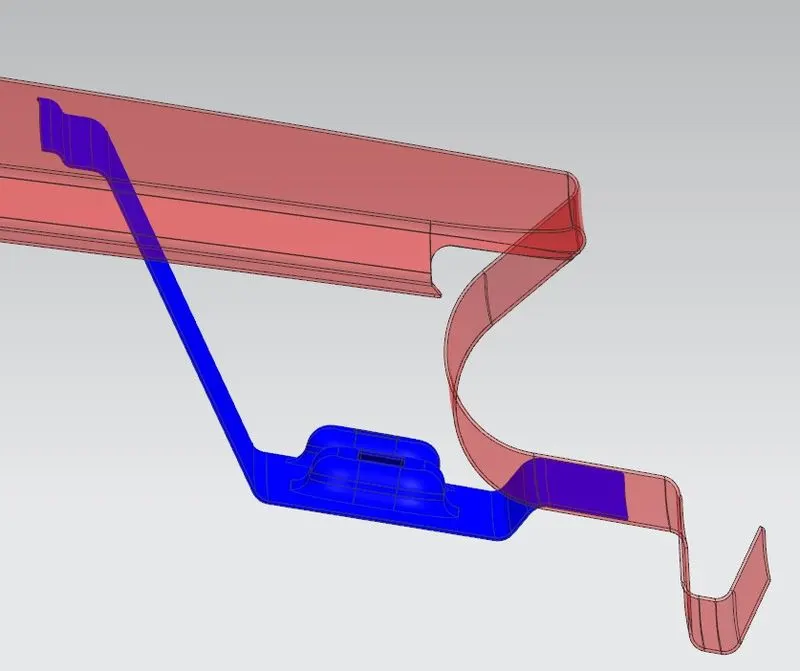
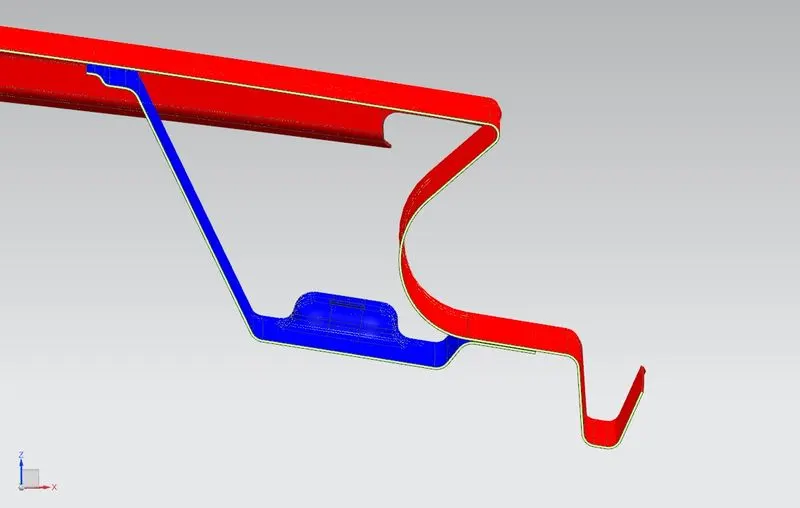
Rubber Sealant mounting flange at the rear ens of the outer roof (red) which will be spot welded with the Body Side outer's flange
Centre Roof Rail and Bow Roofs
Similar to other Rails designs, we have to take into consideration the Headroom Clearance and the visibility criteria while designing the Centre Roof Rail and Bow Roofs. But unlike the Front and Rear Roof Rails, Spot Welds are not applied for joining these rails to the roof. Instead, Mastic sealants are introduced at both ends since Centre Roof Rail and Bow Roofs are fully positioned under the Styling surface of the Roof. For increasing the strength of the rails, embossing is done. To reduce the weight of the material used, a different styling has been followed with a thickness of 1 mm.
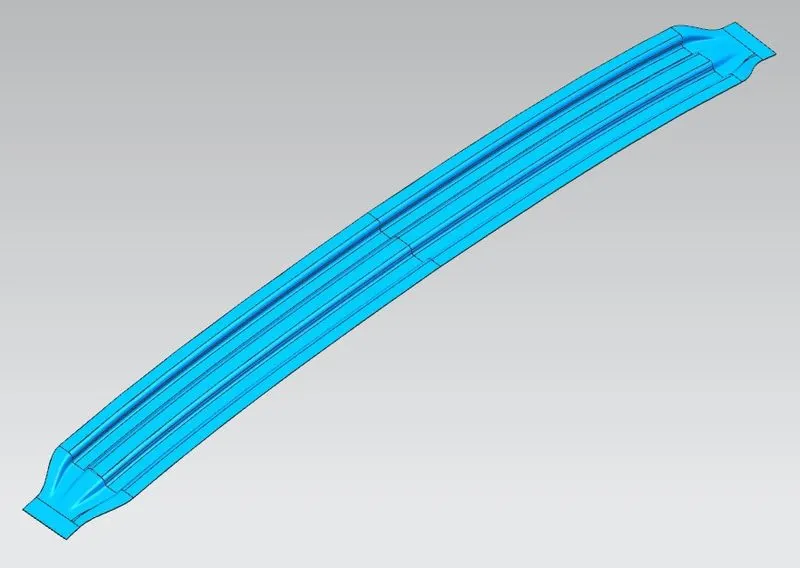
Centre Roof Rail
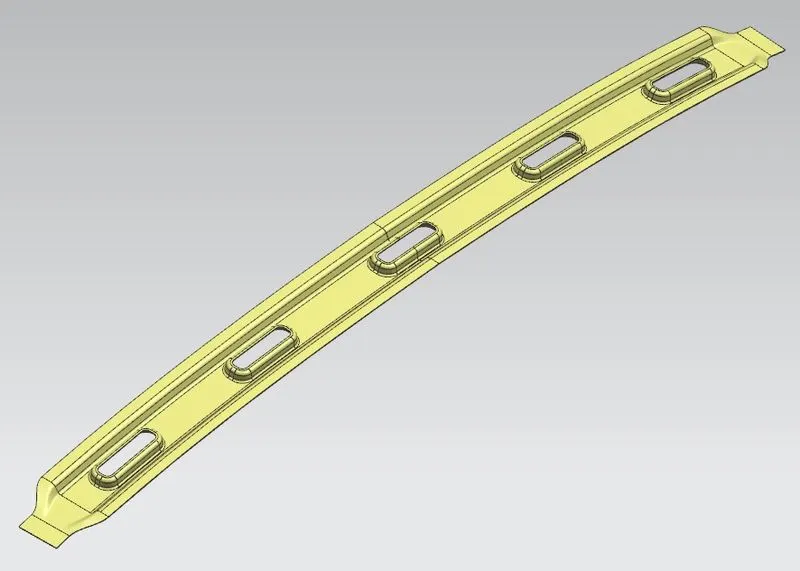
Bow Roof 1
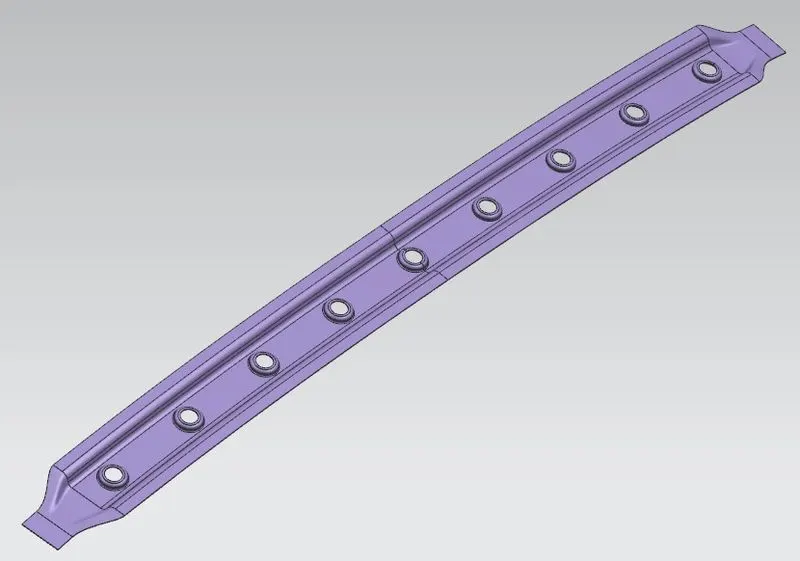
Bow Roof 2
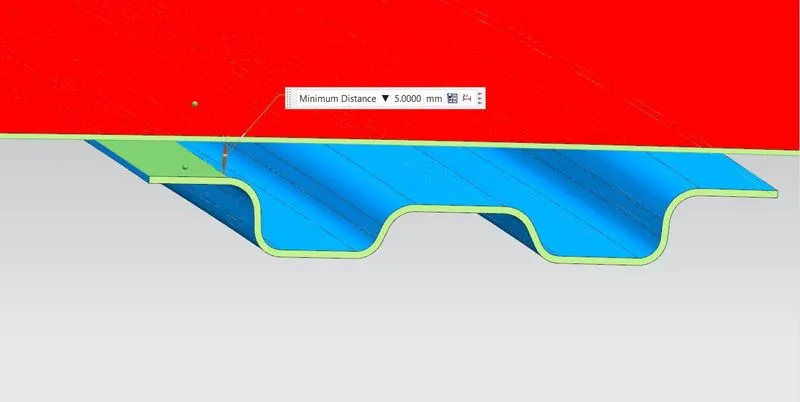
5mm Gap for applying Mastics between the outer roof and the bow roofs (since this portion is visible from the outside)

Bow Roofs are spot welded with the Ditch area (since this portion is not visible from the outside)
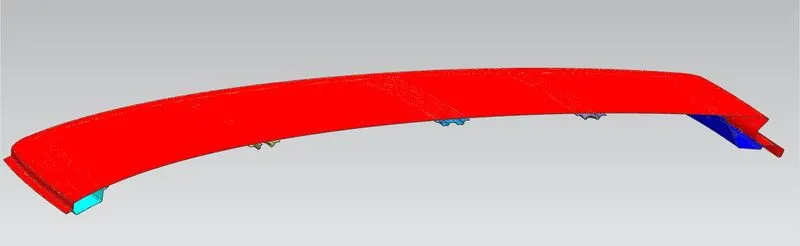
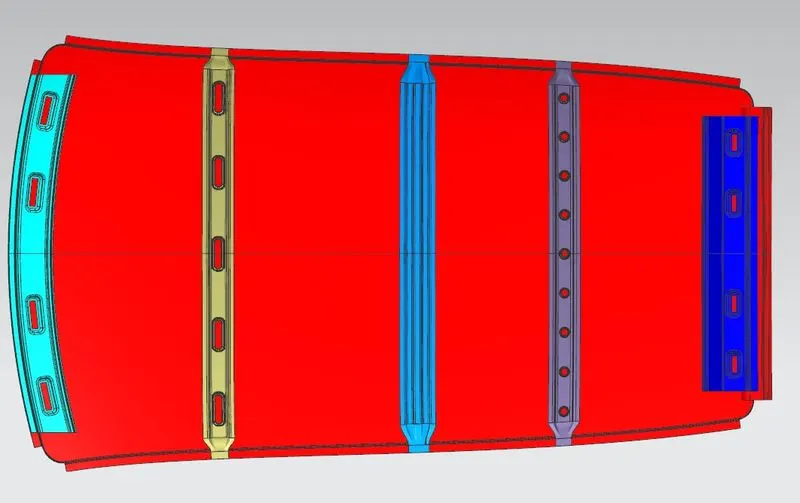
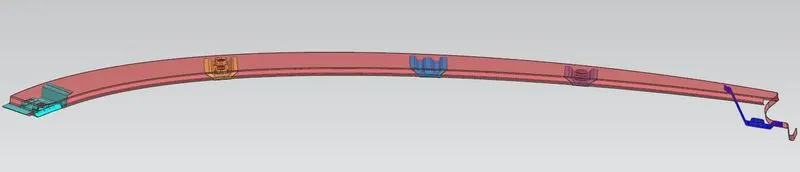
Roof Assembly with outer roof and reinforcements
Analysis
It is done to justify the positioning of the Bow Roofs. There are mainly three criteria to fulfil
- Roof Crush test
- Heat Distortion Criteria
- Snow Load Criteria
Roof Crush Testing is done only after the part or prototype is manufactured in physical conditions.
1. Heat Distortion Criteria
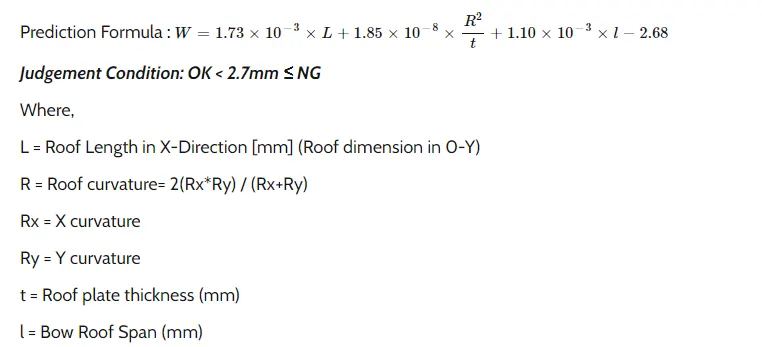
When applying the corresponding measurements into the formula, the criterion is met for all the reinforcements.
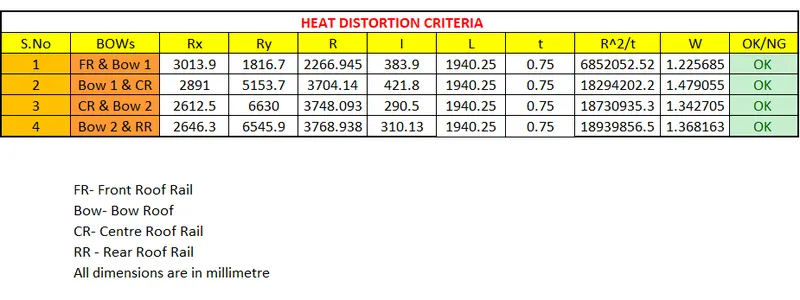
Table 1- Heat Distortion criterion calculation
2. Snow Load Criteria
Snow load criteria study is done to check the ability of the roof to withstand snowfall and bounce back to its original shape without any permanent deformation once the load is removed.
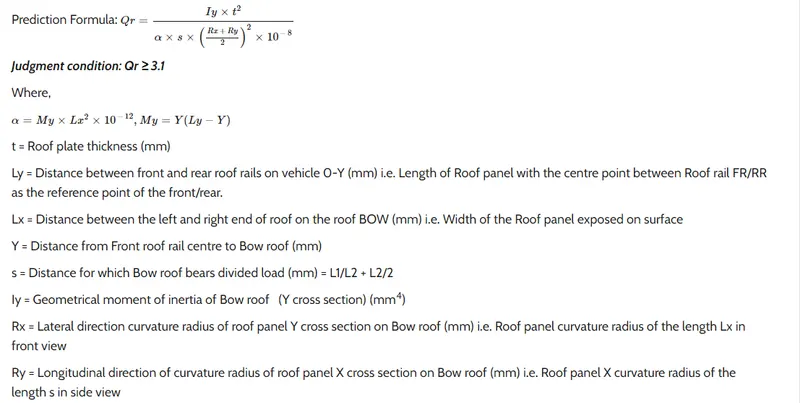
When applying the corresponding measurements into the formula, the criterion is met for all the reinforcements.
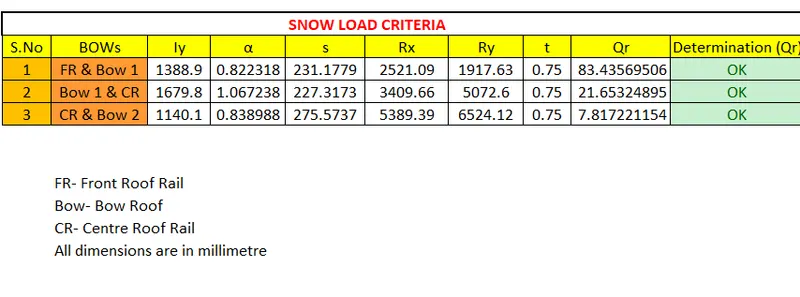
Table 2- Snow Load criterion calculation
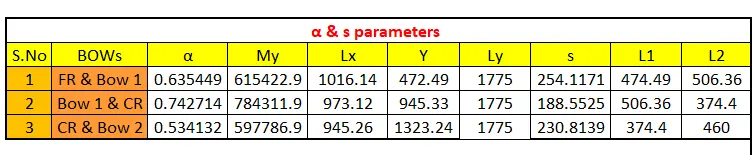
Table 2.1- Calculation of αα & s parameters
In cases where the criterion is not met even after changing the positions of the Bow roofs, changes to the curvature are proposed.
The addition of local embosses on the main roof also increases its strength, apart from enhancing its physical appearance.
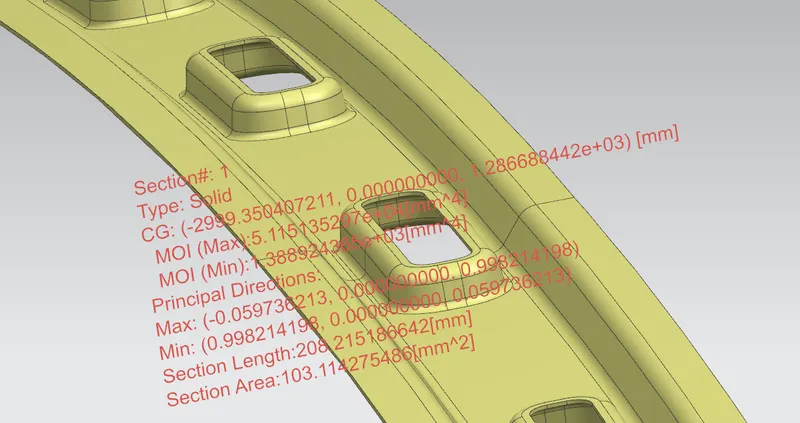
Section inertia analysis for Bow Roof 1
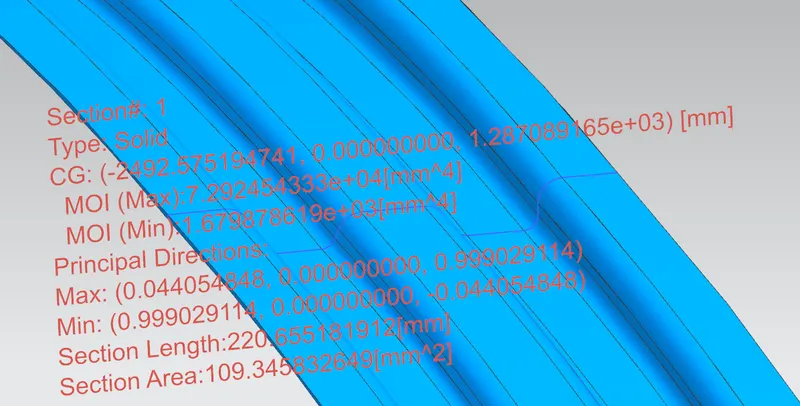
Section inertia analysis for Centre Roof Rail
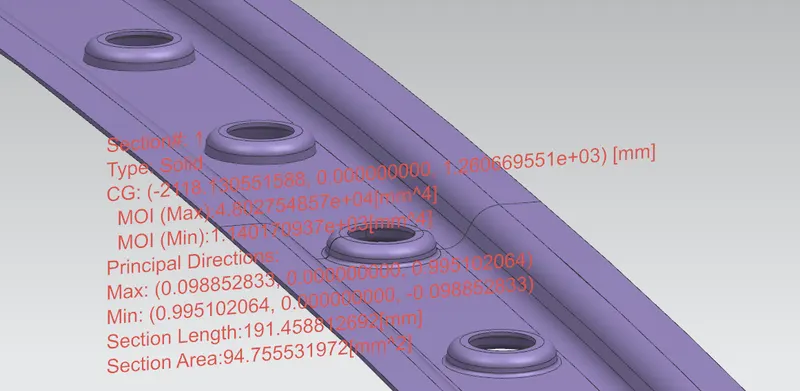
Section inertia analysis for Bow Roof 2
Draft Analysis
Draft Analysis is done to analyze the draft angle. This allows us to verify whether the product will be easily removed from the tool.
When designing a product they need to be angled slightly so that the tool can be pulled away from the object easily, without deformation or damage. This slight angle is called a draft.
Ditch Area
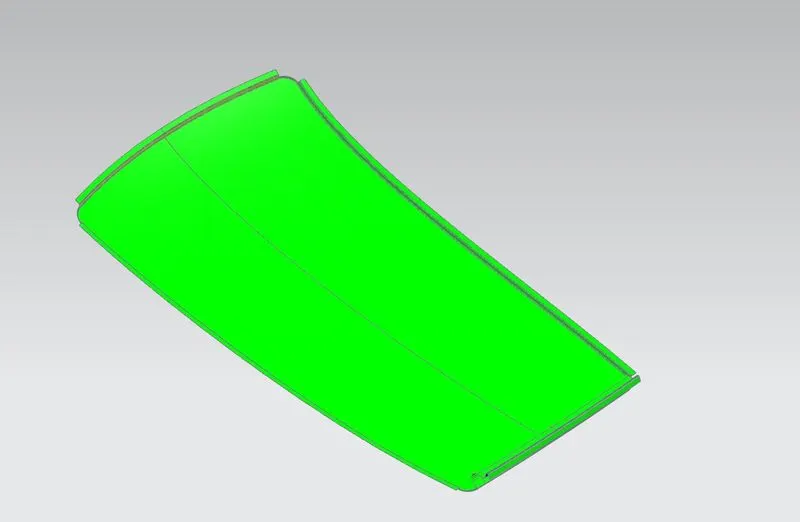
Front Roof Rail
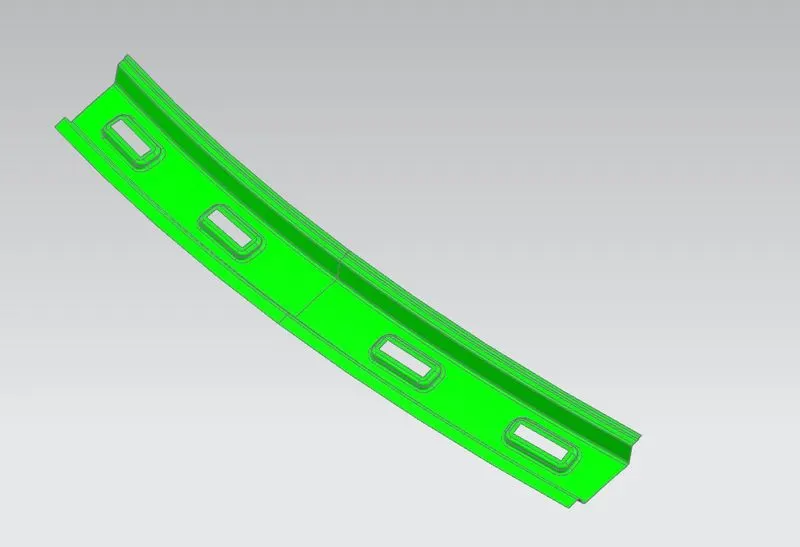
Rear Roof Rail
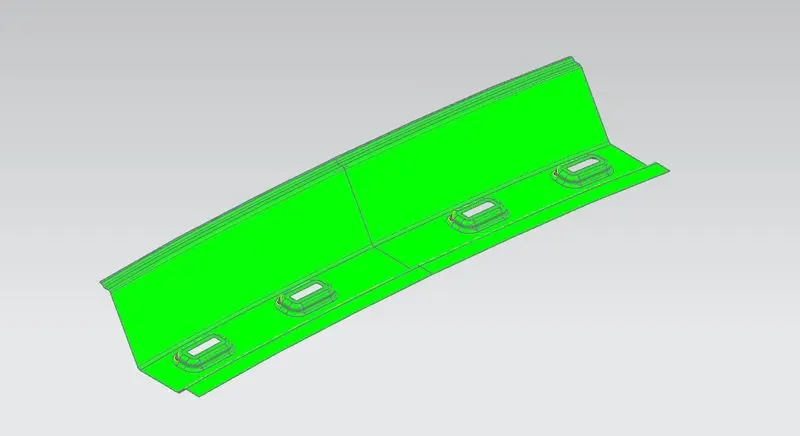
Centre Roof Rail
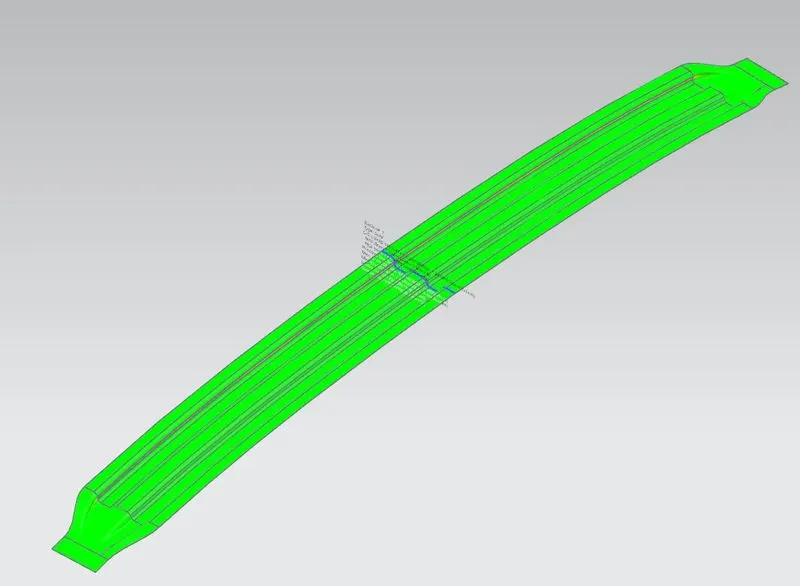
Bow Roof 1
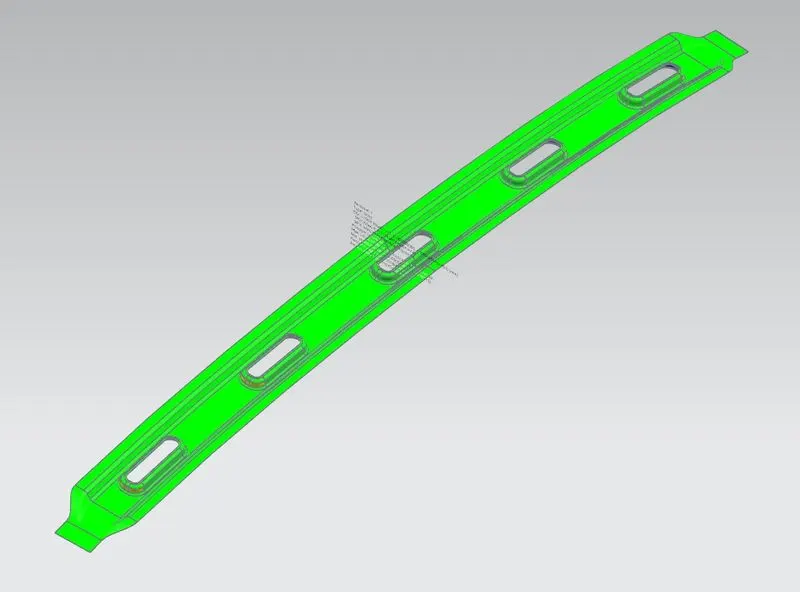
Bow Roof 2
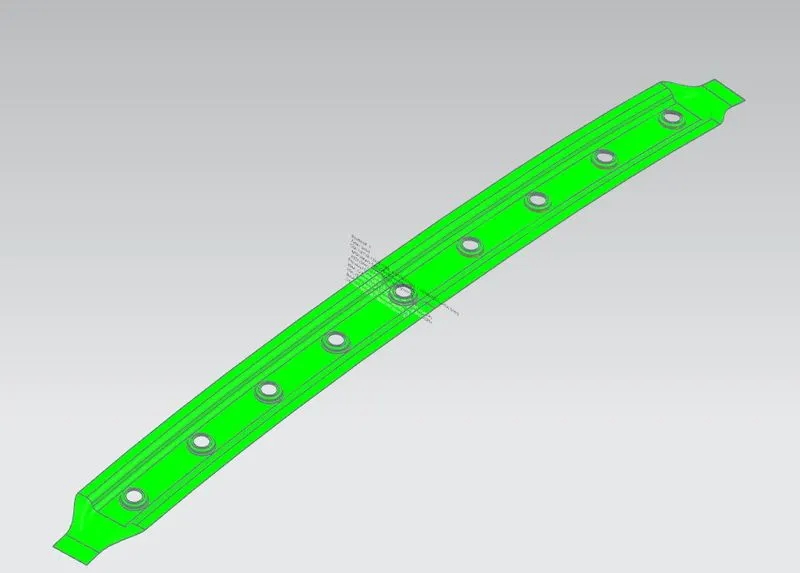
Conclusion
Thus the required reinforcements and Ditch Area for the Roof were designed and developed from the given styling. The curvature study was done after performing calculations for the Heat Distortion and Snow load conditions with the position criterion met for all reinforcements.
Further, the Section Inertia study was conducted and a Draft Analysis was done for each reinforcement successfully.