Project 3 - Design and Development of Disposable Syringe (Medical Technology)
Project 3
Disposable syringe
1.Market analysis
The global disposable syringe market amounts to 13.45 billion USD in 2021 and is expected to grow at a rate of 6.12% from 2022 to 2030. The revenue is expected at 22.81 billion USD.
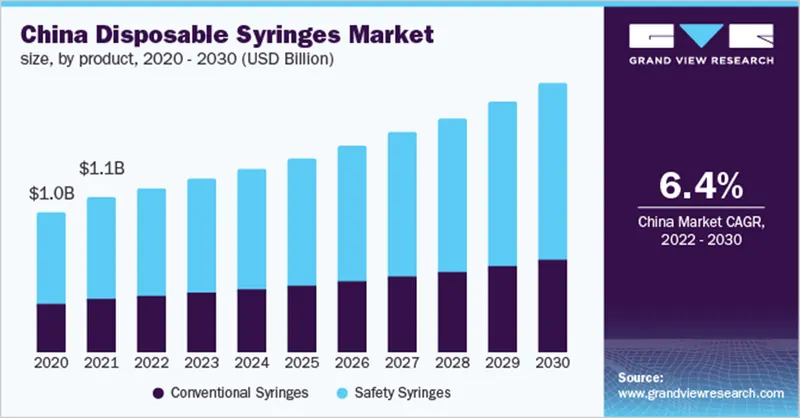
North America is the major market for disposable syringes.
Key companies
- Medtronic (covidien)
- Nipro corporation
- Fresenius kabi AG
- Baxter international, Inc
- Braun Melsungen AG
Customers
- Hospitals
- Diagnostic laboratories
- Blood banks
- Pharmaceutical industry
- Veterinary purposes
History
1949: Charles Rothauser, Australian inventor created first plastic, disposable hypodermic syringe
1951: He produced first injection-moulded syringes made of polypropylene
1956: Colin Murdoch was granted Australian patents for a disposable plastic syringe.
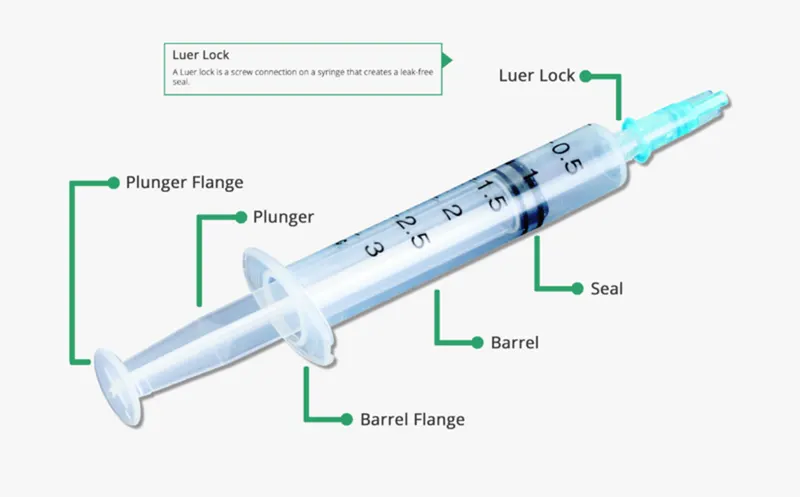
State-of-the art
- Safety features: To prevent accidental needlestick injuries safety features like retractable needles, sheaths and shields covering needle
- Luer-lock system: standardized connector that ensures a secure fit between syringe and the needle
- Low dead space: retains less medication in the hub and needle after injection.
- Graduated markings: clear and accurate graduated markings
- Advanced materials: materials with greater strength, flexibility and resistance to breakage.
Potential improvements
- Needle retraction mechanism: it prevents accidental needle sticks
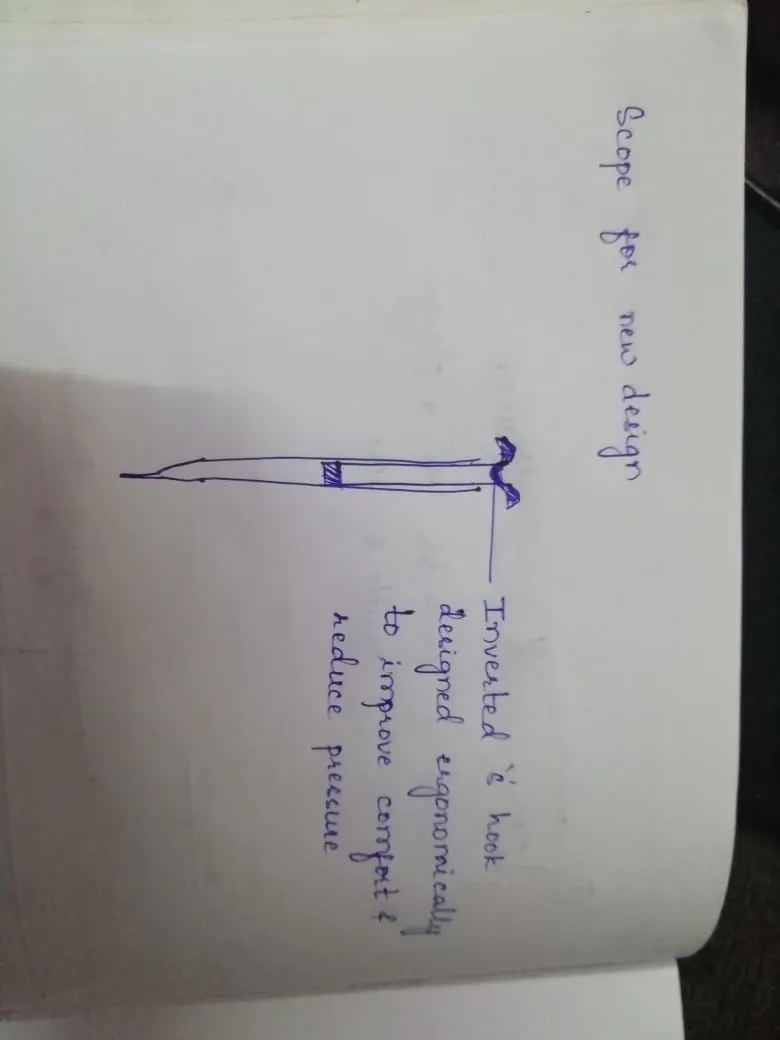
- Ergonomic design: increase the comfort and ease of use
- Sustainable materials: biodegradable and eco-friendly materials
- Digital tracking: it ca track usage and reduce waste
- Cost reduction: Developing a low-cost version can make it affordable and reach widely
- Product planning and concept generation
Customer needs
|
S.No |
Customer needs |
Needs turned to specifications |
|
1. |
Minimal risk of contamination or infection |
Safety |
|
2. |
Correct dosage is delivered |
Accuracy |
|
3. |
Easy to handle |
Ease of use |
|
4. |
Smooth plunger action with minimal force |
Comfort and ergonomic |
|
5. |
Availability |
Availability |
|
6. |
Graduated markings should be vigilant |
Transparent and improved graduated markings |
|
7. |
Less environmental impact |
Use biodegradable materials or eco-friendly materials |
Value proposition (Nipro)
- Smoother plunger motion along the entire length of the barrel
- Sterilizable methods: EtO and gamma
- Available in centric and eccentric tip
Mission statement (Nipro)
Caring to improve patient outcomes and quality for all. Live longer and live better.
Product roadmap
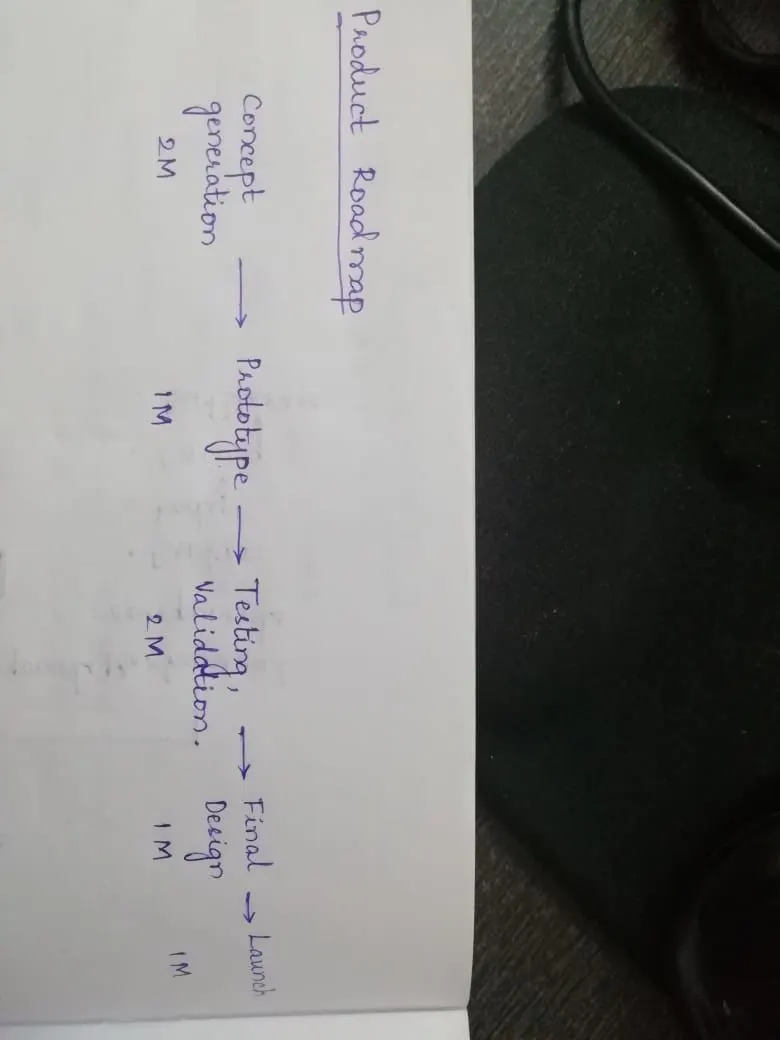
Firstly, concept generation and idea validation would take around 2 months. First design and product prototype will take 1 month. Testing, validation and design modification is going to take around 2 months. After the design is finalized, prototype generation takes maximum one month.
Resource allocation
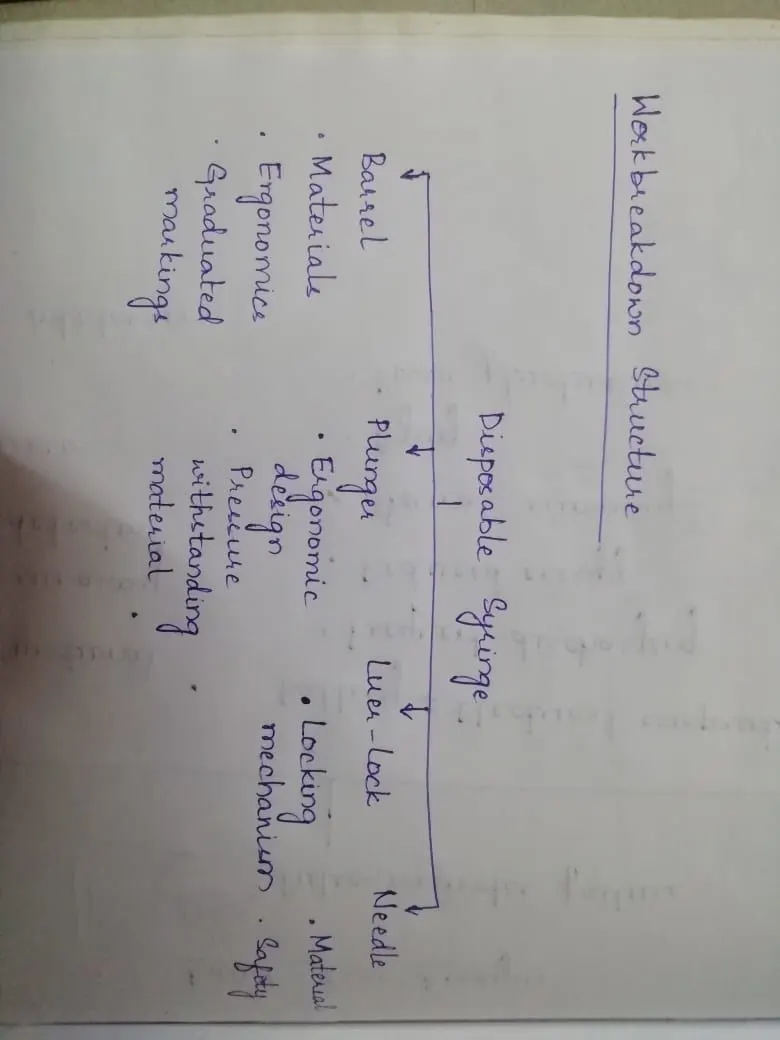
- Raw materials for barrel, plunger, needle and tip
- Manpower – Skilled and unskilled labour, technical officers, marketing personnel
- Machinery- Appliances, equipment, electricity, water and maintenance cost
- Preliminary design and development phase
ConOps document for disposable syringe
Functional specifications
- Volume or the capacity is specified
- Specified use to inject materials or other liquids into the body
Technical specifications
- Material of barrel and plunger: Polypropylene
- Size: 2ml to 50 ml
- Single use syringes
Operational specifications
- Sterilized packaging
- Packed having high puncture and water resistance
Stakeholder’s roles and responsibilities
Stakeholders include customers, manufacturers and developers or designers.
Customers are responsible in providing the feedback required for improvements. Manufacturers are involved throughout the product development. Their inputs in terms of mass production abilities, financial resources and marketing are essential. Developers are focused on improving the designs based on customer’s feedback.
WBS
Product verification and validation plan
- Integrity testing: Syringes should deliver an accurate amount of content and it should be accurately displayed through markings. This can be tested using integrity tests using dyes
- Requirements testing: specifications for syringe’s dimensions, material and packaging
- Compatibility testing: syringe’s compatibility with different medications
- Validation: syringe’s performance under various conditions such as temperature and pressure, biocompatibility and sterilization methods
Product architecture
Modular architecture is preferred as we can assemble parts simply and it reduces cost.
Interfaces
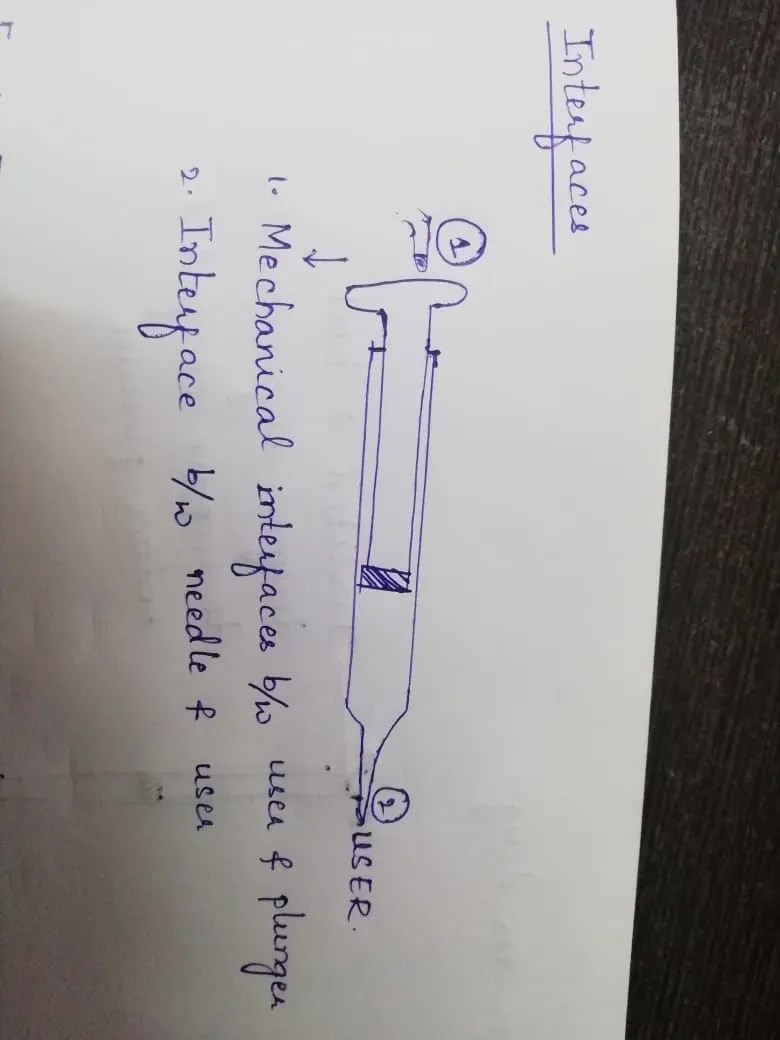
Mechanical interfaces: The pressure application point on the top of plunger; interface between barrel and plunger.
Electrical interfaces: Nil
Industrial design
Simplification of the design:
- Reducing the number of components
- Minimizing size and weight
- Optimizing the user interface
User experience can be made more intuitive by improving the graduated markings, the clarity and transparency. Aesthetics can be improved by simplifying the design and ergonomics has a scope to improve plunger or the pressure point.
4.Solidworks
Dimensions
- Size: 3 mL
- Length:8.9 cm
- Barrel length: 5-6 cm
- Barrel diameter: 1.1 cm
- Plunger length: 6 to 7 cm
- Plunger diameter: 0.6 cm
- Needle length: 1.6 to 4.4 cm
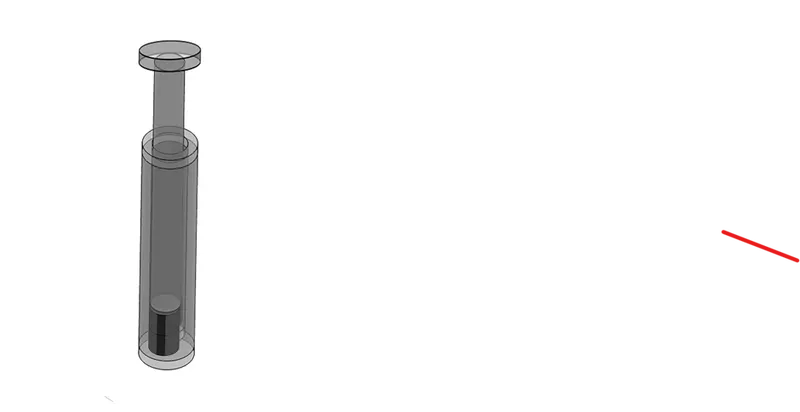
Links for all parts and assembly: https://drive.google.com/file/d/18MSbdCmQVXe-3upYtNOK1hdu3bgK_ZUY/view?usp=sharing , https://drive.google.com/file/d/1SyKxBnbG9XMegPfTBqd9DIkS6mbgQ8Lb/view?usp=sharing , https://drive.google.com/file/d/1XRIp6zgs30vcEVWncslwdWkEWj5OzFQQ/view?usp=sharing , https://drive.google.com/file/d/1e2vUh3uan2aB58II9cwjZL9QT9ny2yNP/view?usp=sharing , https://drive.google.com/file/d/1wkKVEWKMGQT-MLmjuiZaRtwnKdLwXFJX/view?usp=sharing
5.Safety and reliability study
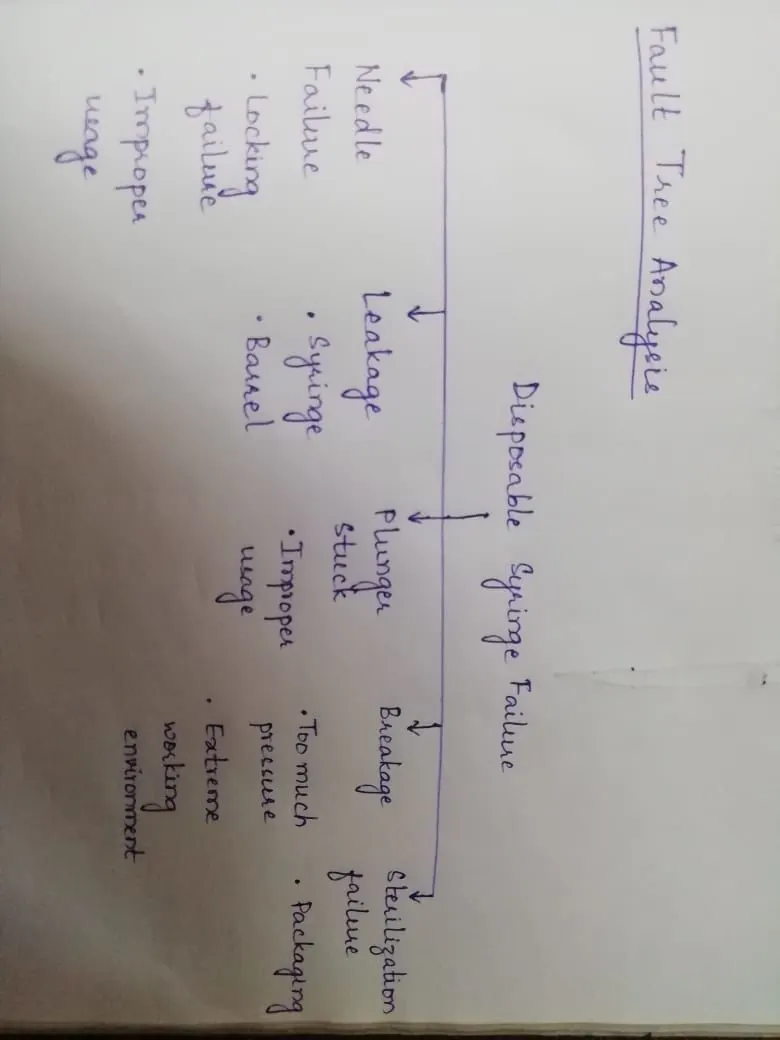
FMEA-Failure mode and Effect analysis of disposable syringes
|
Part/ components |
Failure mode |
Effect |
Sev |
Cause |
Occ |
Detection method |
DET |
RPN |
|
Needle |
Needle detachment |
Injury or contamination |
7 |
Improper handling; manufacturing defect in the needle or luer-lock |
6 |
Visual inspection |
2 |
84 |
|
Syringe |
Leakage |
Improper dosing delivered |
7 |
Faulty seal between needle and syringe |
6 |
Inspection |
3 |
126 |
|
Plunger |
Stuck |
Impossible or difficult to administer medication |
5 |
Build-up of debris or damage during transportation |
5 |
Inspection or usage |
2 |
50 |
|
Barrel |
Breakage |
Injury or contamination |
8 |
Excessive force during usage, damage caused during transportation |
5 |
Inspection |
3 |
120 |
|
Luer-lock |
Failure |
Needle detachment or syringe leakage |
5 |
Manufacturing defect or improper usage or handling of the syringe |
4 |
Inspection |
3 |
60 |
|
Sterilization failure |
Sterilization failure |
Contamination and harm to patient |
3 |
Incorrect sterilization techniques or insufficient time or temperature |
3 |
Biological indicators, chemical indicators |
7 |
63 |
Fault tree analysis
- DFMA and DFES
DFMA methodology for disposable syringes
- Injection molding: Disposable syringes are manufactured using injection molding. Design considerations include draft angles and wall thickness.
- Minimize part count: in order to minimize time for assembly and manufacturing costs, reduce the number of parts.
- Modular design: It reduces cost and simplifies assembly
- Standardization: standardizing the components like size of barrel, diameters of plunger and barrels will reduce tooling costs
- Design for automation: automation can reduce manufacturing costs, save time, improve quality. Standardization of components would enable automation of components.
- Design for safety: user safety will be considered.
DFES for disposable syringes
- Material selection: Bio-degradable plastics, and recyclable plastics should be used for disposable syringes
- Minimal packaging: packaging should be kept minimum to reduce the waste
- Reducing energy consumption: energy-efficient manufacturing process should be implemented.
- Recycling: disposable syringes should be designed for easy disassembly.
- Durability: high-quality and durable materials should be used to increase the lifespan of syringes thus reducing frequent replacements.
- Project management
|
Tasks or process |
A |
B |
C |
D |
E |
F |
G |
H |
||
|
A. Raw materials procurement |
A |
|||||||||
|
B. Injection molding barrel |
X |
B |
||||||||
|
C. Injection molding-plunger |
X |
C |
||||||||
|
D. Needle production |
X |
D |
||||||||
|
E. Assembly |
X |
X |
X |
E |
||||||
|
F. Final product |
X |
F |
||||||||
|
G. Testing |
X |
X |
X |
X |
G |
|||||
|
H. Quality control |
X |
X |
H |
|||||||
|
I. Sterilization |
X |
X |
I |
|||||||
|
J. Packaging |
X |
X |
J |
PERT
The critical path involves raw material procurement, manufacturing and assembling.
Accelerating the critical path will include manufacturing components simultaneously instead of sequential tasks.
- Patents on disposable syringes
- US Patent No 3055335-Year 1962: Becton Dickinson & company filed a disposable hypodermic syringe patent. It describes a disposable syringe with a plastic barrel, plunger and a removable needle.
- US Patent No 4203442-Year 1980: Terumo Corporation filed a patent for disposable syringe. It describes a disposable syringe with a two-part plunger and a locking mechanism to prevent accidental detachment of needle
- US Patent No 9107551-Year 2015: A patent filed by Retractable Technologies, Inc described a disposable syringe with a retractable needle that will automatically retract after the use.
- Product development trend
AI can be incorporated for generative design, material selection
Injection molding- as-a-service: This is a major part for manufacturing. If it could be provided as a service, it would reduce maintenance costs and manufacturing costs.