Project 2
Project 2
Robotic surgery procedure to remove a healthy kidney from donor using AI guided robot
Robotic surgery is a robot assisted surgery that allows doctors to perform intricate procedures with more precision, flexibility and control. It is a minimally invasive surgery
Live donor nephrectomy (LDN) is a surgical procedure where a healthy kidney is acquired from a live donor.
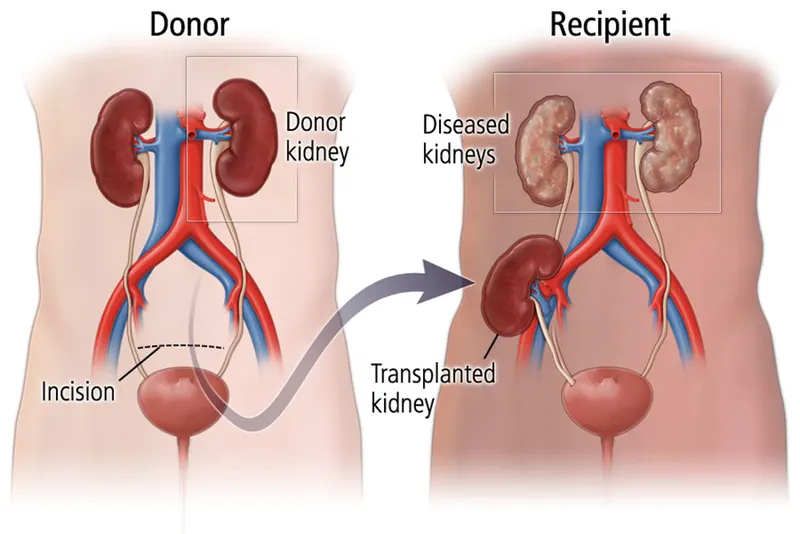
1.Patient Specific requirements for Kidney transplant using robot
- Obesity: Determined by patient BMI (Body Mass Index)
- If the patient has BMI < 30 kg/m2 -open surgical approach
- If the patient has BMI > 30 kg/m2 robotic assisted surgery is performed
- Average age: Between 18 to 60 years (In India)
- Free from diabetes, hypertension, cancer, kidney or heart disease
- Compatibility test: Determines the immunology specific tests like rejection by patient
Reference: https://doi.org/10.1007/s40472-015-0051-z
- Surgical robot used and its features
The surgical robot used is da Vinci surgical system.
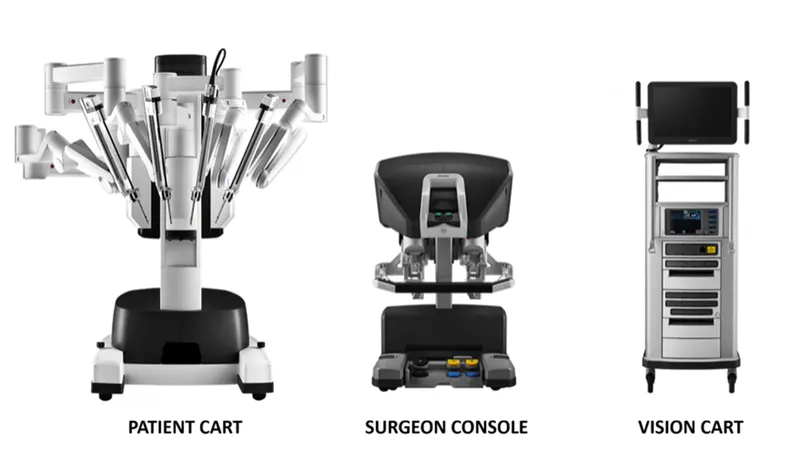
The parts can be broadly classified into-patient cart, surgeon console and vision cart
- Patient cart is where patient is positioned during surgery. It supports instrument arms and camera arm.
- Surgeon console is the workplace of surgeon comprises master controllers, footswitch panels
- Vision cart has image processing equipment of system
The major components are described below:
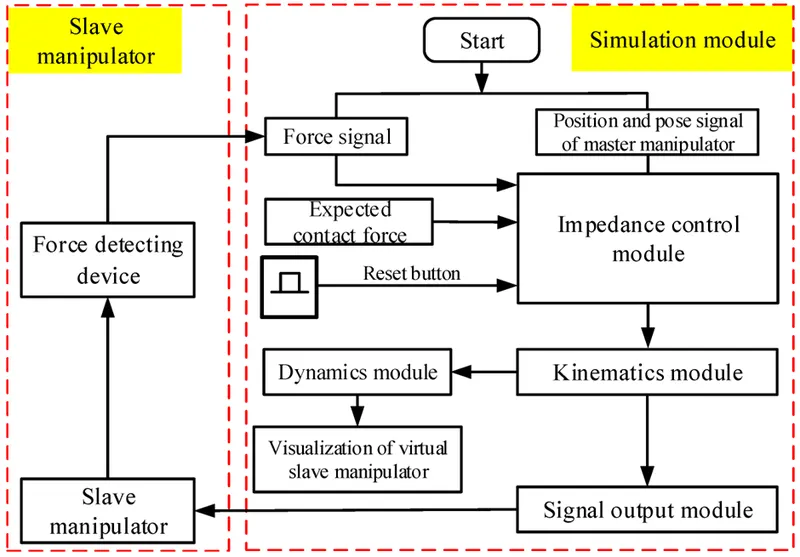
- Slave design
- Master control
- Control unit and motion mapping between slave and master
- Force and haptic feedback
- Dual master control and simulator
- Technical critical analysis
- Surgical critical analysis
Slave station- It comprises of 4 independent arms. The movement of each arm relies on remote centre of motion. The actuated arms have manipulator arms with 3 active degrees of freedom and end-effector have additional 3 degrees of freedom with an optional grip.
Master control- It has two independent arms that are manipulated by surgeon
Control unit- it has power supply, computer, 3D image processor and diathermy circuitry.
Force and haptic feedback- The feedback mechanism is based on force and touch. Depending upon the force exerted by surgeon and the touch the desired output is achieved.
Reference: https://entokey.com/the-da-vinci-system-technology-and-surgical-analysis/
Features of da Vinci system
Company: Intuitive surgical
- Flow chart of procedure of Living Donor Nephrectomy
Step 1: Patient positioning and port placement
- After general anaesthesia, patient is placed in right 70 lateral decubitus for left nephrectomy or in left 70 lateral decubitus for right kidney nephrectomy
- For right LDN, additional trocar is placed for liver retraction
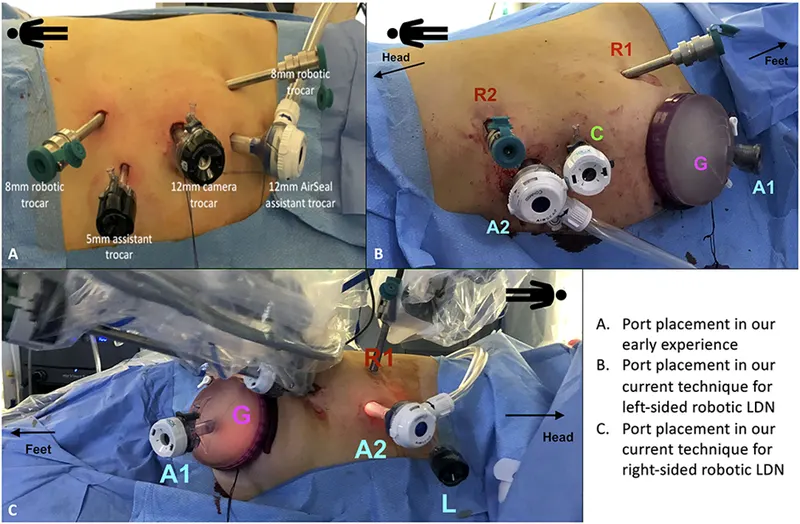
Step 2: identification of retroperitoneal anatomic landmarks for dissection
- It begins with medialization of colon. Then, classical retroperitoneal landmarks were identified. The landmarks are psoas muscle, ureter and gonadal vein.
- Then ureter was lateralized and freed from surroundings. After gonadal vein, renal hilum is identified
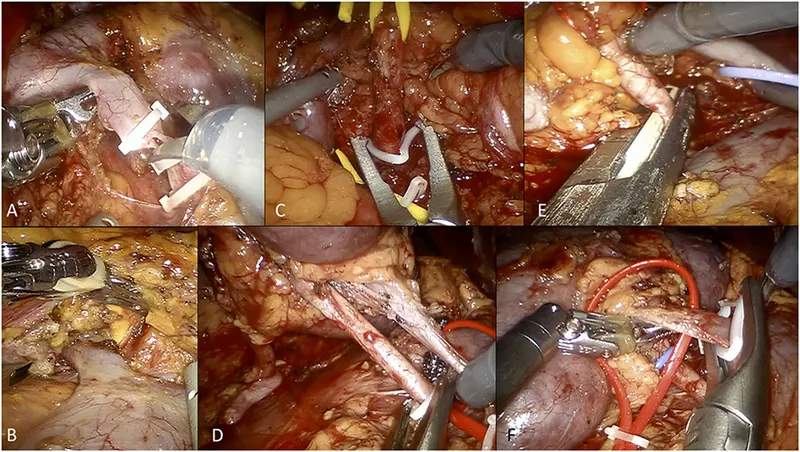
FIGURE 2. Overview of selected steps of robotic living donor nephrectomy according to the University of Florence technique. (A) Dissection and control of the left gonadal vein. (B) Isolation and dissection of the left adrenal vein. (C) Control of the left renal artery using Hem-o-Lok clips (at the beginning of our experience). (D) Control of the right renal artery using Hem-o-Lok clips (at the beginning of our experience). (E) Control of the right renal artery using a EndoGIA vascular stapler (current technique). (F) Control of the right renal vein using Hem-o-Lok clips (for the right renal vein, we currently prefer using the EndoGIA vascular stapler).
Step 3: Isolation and dissection of renal hilum and Kidney
- Once the hilum is identified, renal vein and artery are isolated.
- On left side, adrenal vein is dissected and ligated with Hem-o-Lok clips.
- On right side, renal vein is shorter but generally, there is no need to control adrenal, gonadal and lumbar vein
- After hilum dissection, kidney is entirely mobilized and isolated from perirenal fat tissue.
Step 4: Management of renal vessels
- Once the kidney is isolated, two Hem-o-lok clips are placed at level of distal ureter
- Renal vein is ligated using vascular stapler
Reference: https://doi.org/10.3389/fsurg.2020.588215
- Tasks performed by AI used in robotic kidney transplantation
AI to diagnose Kidney Transplant patients
AI models for diagnostic purposes in kidney transplant patients. It is employed in early diagnosis of chronic active antibody rejection in kidney transplant patients.
AI to predict Kidney transplantation
Algorithms are used to predict survival of graft tissue, rejection and delayed graft function. They predict the critical clinical decisions.
AI as prescription tool in kidney transplantation
AI is used in managing appropriate dosage of immunosuppressants and other medications.
Reference: http://dx.doi.org/10.3233/SHTI220448
- Preoperative, perioperative and postoperative steps
Pre-operative instructions
- Stop smoking or drinking
- Lose excess weight
- Regular exercise
- Vaccinations as advised
- Dialysis before transplant
- Necessary lab tests for hypertension
Perioperative management
Anesthesia for LDN
- Donors are at moderate risk for development of venous thromboembolism and they should receive prophylactic low-molecular-weight heparin.
- Combination of local and regional anaesthesia using epidural, paravertebral block, transverse abdominal pain block
- Avoid vasoconstrictions
- Keep renal perfusion pressures
- Management includes venous access for blood loss
Post-operative management
Enhanced recovery after surgery pathway for Live donor nephrectomy includes
- Early patient monitoring by anaesthetist for 4-6 hrs with early removal of nasogastric tube at the end of surgery
- Use of low-molecular-weight heparin subcutaneously on post-operative day1 to prevent deep vein thrombosis
- Removal of surgical drain on post-operative day1
- Early patient mobilization
- Management of post-operative pain with intravenous drugs and oral analgesic
Reference: https://doi.org/10.1093/bjaceaccp/mks040
- 6. Ethical considerations; Machine classifications and IEC60601 standards application to equipment
Ethical considerations and regulations for Kidney transplant
- Safety-Safety of the surgical removal of kidney from healthy donor and long-term consequences
- Donor’s motivation-The important ethical issue is motivation of donor. It could be because of moral duty or perception
- Recipient’s feelings- Experience has shown that recipient’s have greater feelings of guilt than donors if donors and recipients have close relation
- Donor consent and evaluation- evaluation should be made to ensure that the offer is genuine and free from coercion and is made of free-choice
- Autonomy of donor and transplant team-It is sole right of donor yet with the decision of transplant surgeon of donor and recipient
- Commercialization of organ donation: The shortage of cadaveric organs has led to this. To overcome the commercialization, there are certain laws and acts that make purchase of organs illegal and heinous act
Machine classification
- da Vinci surgical system: class 2 device
- Product classification: System, surgical and computer-controlled system
IEC 60601 standards
|
Immunity test |
IEC 60601 Test Level |
Compliance level |
Electromagnetic Environment guidance |
|
Electrostatic discharge (ESD) IEC 61000-4-2 |
±6 kV contact ± kV air |
±6 kV contact ± kV air |
Flooring is wooden, concrete or ceramic. If flooring is covered with synthetic material, relative humidity should be 30% |
|
Electric fast transient/ burst IEC 61000-4-4 |
±2 kV for power supply lines ±1 kV for input/output lines |
±2 kV for power supply lines ±1 kV for input/output lines |
Mains power quality should be that of a US commercial or hospital environment with highly reliable service |
|
Surge IEC 61000-4-5 |
±1 kV differential mode ±2 kV common mode |
±1 kV differential mode ±2 kV common mode |
Mains power quality should be that of a US commercial or hospital environment with highly reliable service |
|
Voltage dips, short interruptions and voltage variations on power supply input lines IEC 61000-4-11 |
<5 UT (>95% dip in UT) for 0.5 cycle |
<5 UT (>95% dip in UT) for 0.5 cycle |
If user requires continued operation during power mains interruptions, it is recommended that user use uninterruptible power supply |
|
Power frequency (50/60 Hz)magnetic field IEC 61000-4-8 |
3A/m |
3A/m |
Magnetic fields should be at levels characteristic of location |