Project
AIM OF THE PROJECT: To carryout a system-level simulation of CVT with BAJA-All terrain vehicle.
Main Objectives:
- To build a model of Continous variable transmission (CVT) with BAJA All-Terrain vehicle (ATV).
- To study and analyse the BAJA ATV model with and without dashboard.
- To prepare a detailed report on BAJA ATV.
THEORY:
1)CONTINOUS VARIABLE TRANSIMISSION:
What is CTV and how does it works?
- CVT! Most of you would have heard of this term when you wanted to buy a gearless scooter or an automatic car.
- It stands for Continuous Variable Transmission, one of the forms of automatic transmission on a two-wheeler and four-wheelers as well.
- A Continously variable transmission is an automatic transmission that varies ratio depending on vehicle speed engine RPM and load.
- Engines have an RPM range where they deliver the best power at best effieciency.
- The purpose of CVT system is to allow the engine to operate at optimal for varying vehicle driving conditions.
- A basic pulley consists of two conical pulleys and a steel belt.
Components of CVT:
- A basic pulley consists of two conical pulleys and a steel belt.
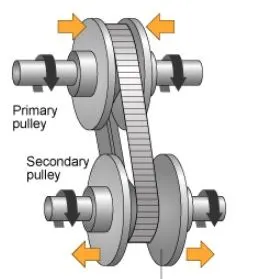
Basic model of CVT
A brief history of the CVT:
- You be surprised to know that it was the great inventor and artist, Leonardo Da Vinci, who first drafted the first ever sketch of a device which would be the CVT's earliest model, in 1490.
- Fast forward to 450 years and the first time CVTs were seen on DAF cars in the 1950s.
- It was only 2000s when CVT came to fore in cars and gearless scooters.
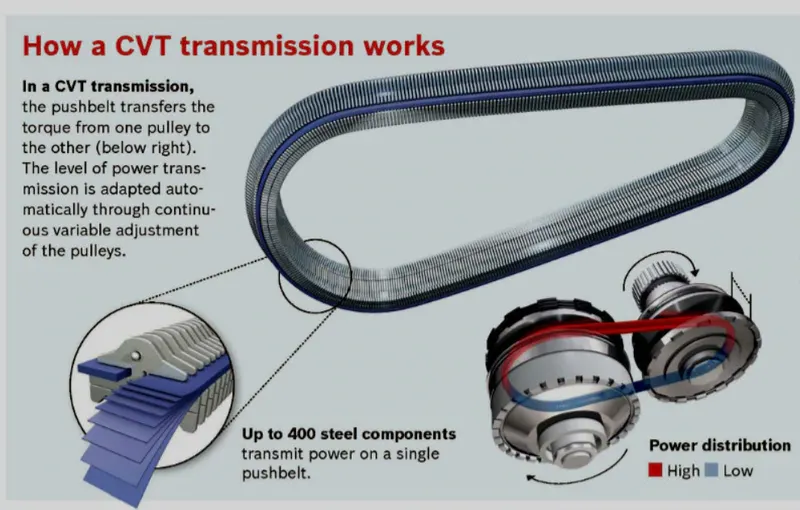
How does CVT works?
- Unlike a conventional automatic transmission system, the CVT does not make use of gears.
- Instead, it has two pulleys, whose diameters are variable and are connected by a belt or a chain.
- One end is connected to the engine and the other one is linked to the wheels, where the power is delivered.
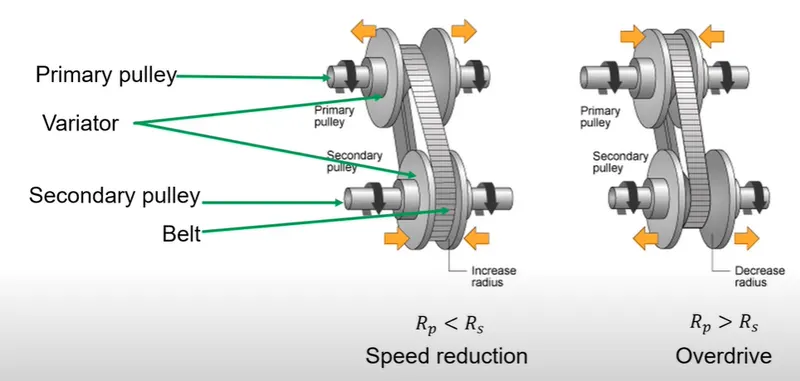
APPLICATIONS OF CVT:
- Automobiles
- Tractors
- Earthmoving equipment
- Powersports vehicles such as scooters, snow mobiles, the Can-Am Spyder, and so forth.
Advantages of CVT :
- Outstanding fuel efficiency is a major advantage for your Bloomfield and Troy commutes.
- CVTs are always adjusting, so they keep engine RPMs low and consistent, avoiding the high engine speeds that suck down gasoline.
- CVTs also have lower production costs because they have fewer moving parts than traditional automatics.
- This is another appealing factor to car manufacturers, and thus to car buyers as well.
- CVTs deliver a smooth ride because the transmission doesn’t have to constantly switch gears.
- The flexibility of a CVT with suitable control may allow the engine to operate at a constant RPM while the vehicle moves at varying speeds.
Disadvantages of CVT :
- You may feel a delay when you step on the accelerator. That’s because, compared to a regular automatic transmission, there’s a slight pause as the CVT band adjusts.
- CVTs can be hard to get used to because they just don’t feel the same way a traditional automatic does.
- The engine sound is monotonous, and you don’t feel a connection with the car like you do when you can tell a gear has shifted.
- In spite of the low initial costs of a CVT, repairs can be more expensive because the parts are more costly to replace.
- Because technicians need special training, it may be harder to find someone that can make the repair. This has become less of an issue as CVTs have become more common.
- The pulleys are movable and as they come closer to each other, the belt or the chain rides higher making the diameters of the pulleys larger and vice-versa.
- When the Input Pulley is becomes smaller and the output pulley becomes larger translates into a lower ratio (which is the number of times the shaft spins for every revolution of the engine, hence a ratio).
- While the car gathers momentum and accelerates, the pulleys keep varying their diameters and lower the engine speed (RPMs) for relaxed cruising or climbing up the revs for quick overtaking.
2) ALL-TERRAIN VEHICLE:
- An All-terrain vehicle(ATV) also known as light utility vehicle(LUV), a quad bike, or simply a quad, as defined bythe American National standard institute(ANSI).
- Royal enfield built and sold the first powered quadracycle in 1893.
- An All-terrain may have three,four or six wheels.
- It is a vehicle that travels on low-pressure tires, with a seat that is straddled by the operator, along with handlbars for steering control.
- As the name implies, it is designed to handle a wider variety of terrain than most other vehicles.
- The riders ride an ATV by sitting on it simply like motor cycle. But it doesn't much effort to balance it because of extra wheels.
- They are designed to off-road use and operated by a single person only.
COMPONENTS OF BAJA All-Terrain vehicle:
- Vehicle body
- Suspension
- Tire
- Engine
- CVT
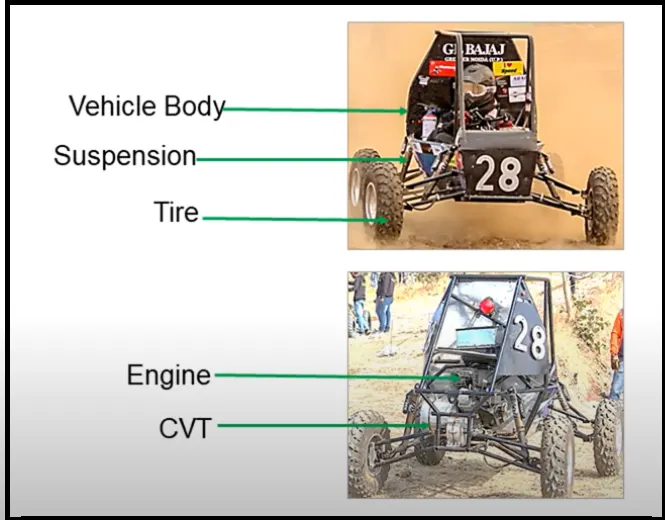
Applications of ATV:
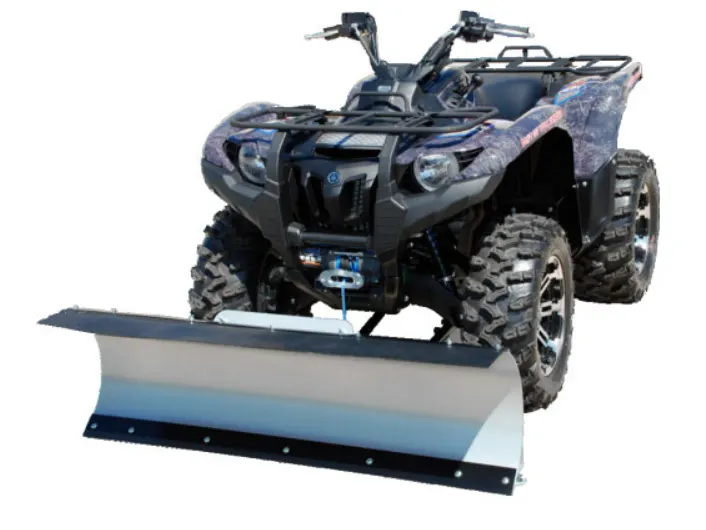
Snow plowing: you can get rid of all that snow in your driveway with a heavy duty ATV snow plow.
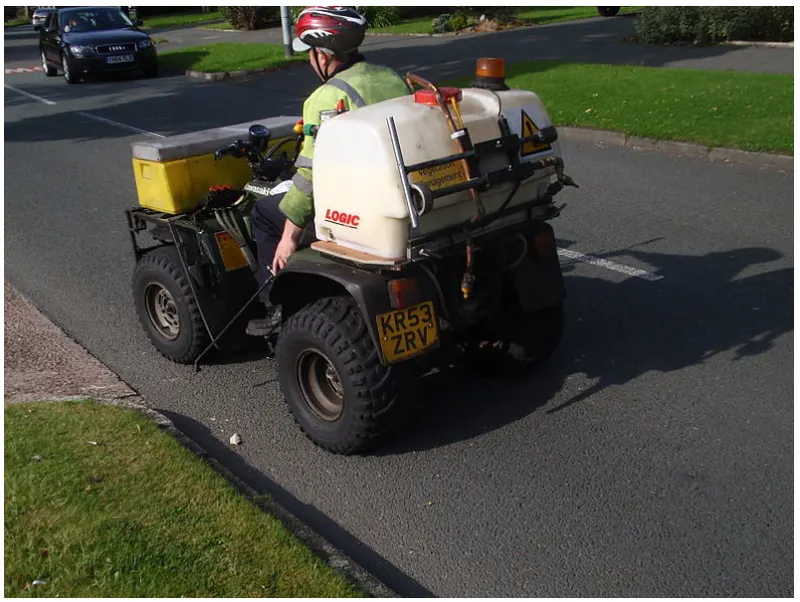
Killing weeds:
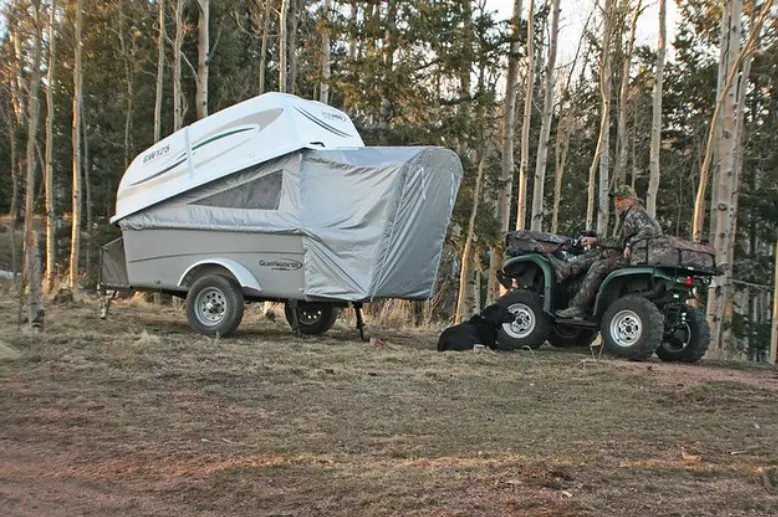
Camping: Carry up to 800 pounds of camping gear and supplies with an ATV trailer. You can haul all the supplies you’ll need on your next ATV camping trip.
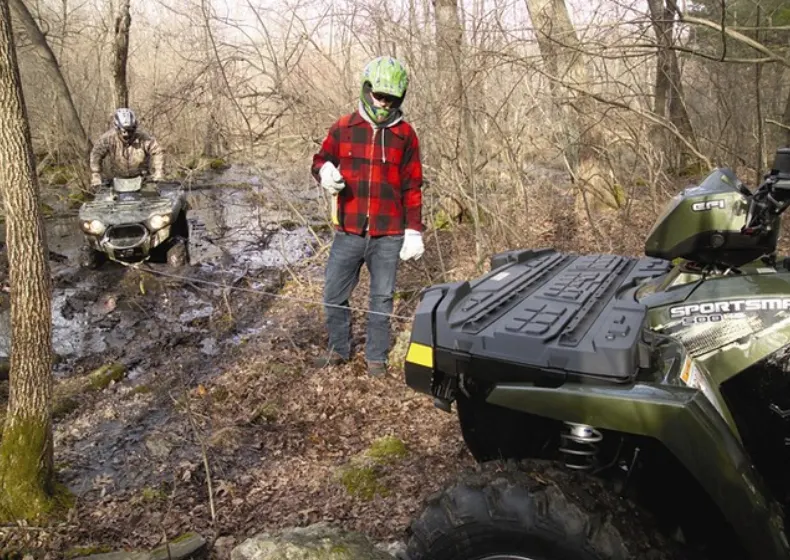
Winching:
This powerful tool can help you pull, haul and drag heavy equipment, and it's the ultimate recovery solution in case one of your ATV buddies gets stuck in deep mud while you’re riding.
Hunting:
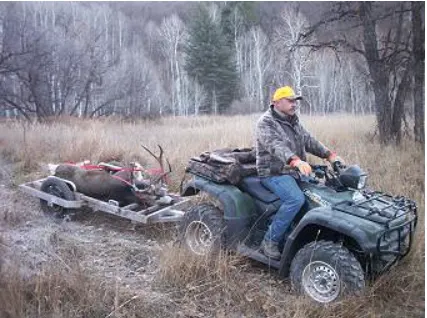
- ATVs are becoming increasingly popular for hunting as they make transporting equipment and game both easy and efficient.
- However, many in the hunting community regard ATV-use as unjust as it disregards the principles of "fair chase" (hunting prey on foot). In fact, it is illegal to hunt from your ATV in many states.
- This includes chasing game down with the ATV, shooting game from the vehicle and dragging it out of the bush with the vehicle, and is only appropriate for certain people with disabilities.
Rules to remember when hunting with an ATV:
- Be legal and safe.
- Don’t shoot from an ATV. Instead, use ATVs to access hunting areas or, where permitted, pack out your kill.
- Never chase wildlife with your ATV. It’s illegal and irresponsible.
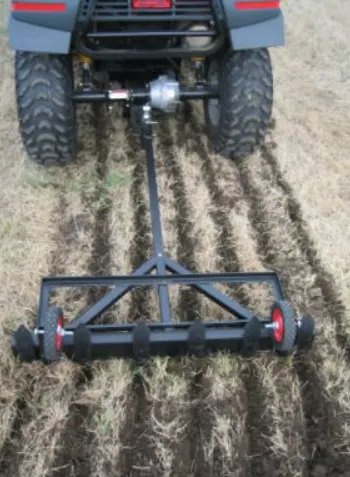
Field Plowing: Great for gardens, food plots and more, farmers can use this tough and rugged pull behind rake and tiller for tough field plowing jobs.
Lawn/Field mowing:
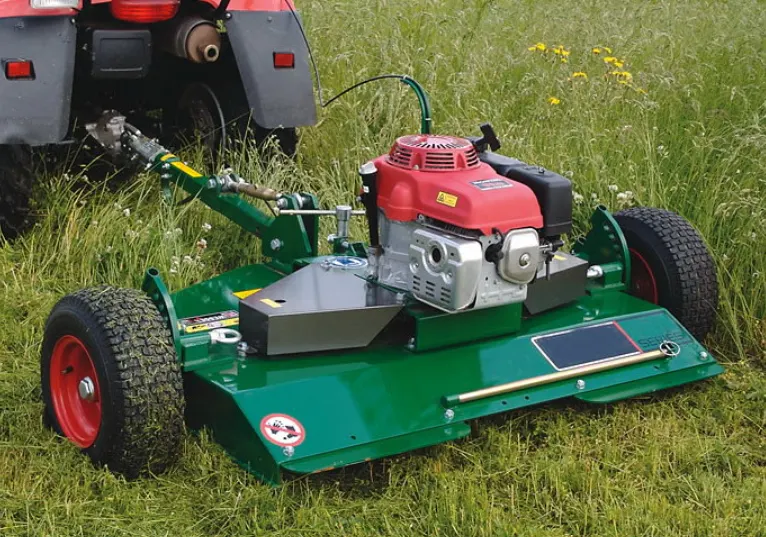
Landowners can find all sorts of interesting uses for their ATVs. In fact, ATVs have been replacing some of our more common lawn care equipment such as riding mowers and tractors.
Seed/salt/Rock spreading:
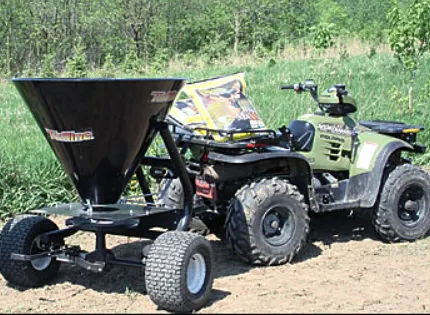
With a spreader hooked on to your quad, you can disperse your seeds, salt or rocks evenly and reduce waste.
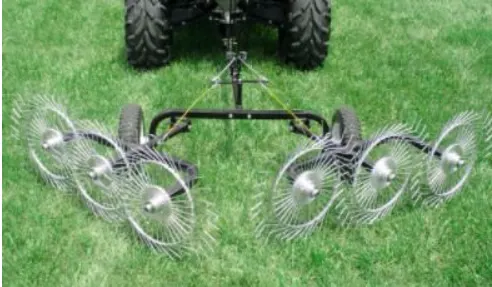
Lawn Raking:
With no fuel needed, this lawn raker has wheels that power themselves when they make contact with the ground, needing only your ATV to pull the rake over the area you want cleared.
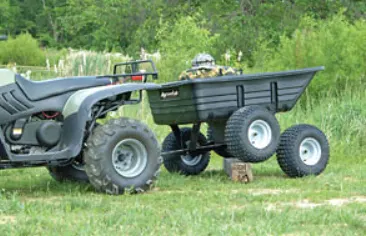
Transportig materials:
Perfect for hauling wood, dirt, sand, concrete blocks, or just about anything you can imagine, a tough little trailer for the 4 wheeler can carry heavy loads without tipping.
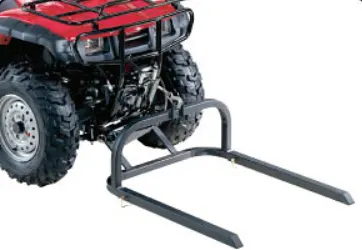
Mounting:
With a universal mounting system, you can attach just about anything from lifting forks to sweepers.
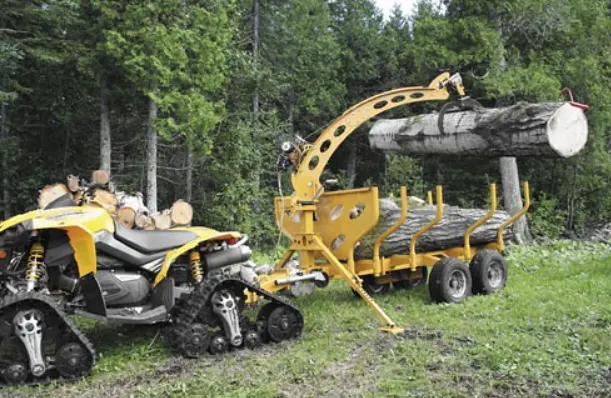
Loading logs:
Forestry workers will find the electric log loader an ingenious device for loading and transporting logs.
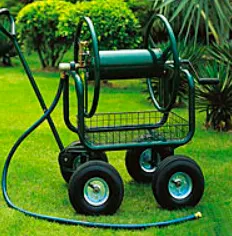
Hosing your garden:
MODELING OF CVT with BAJA All-Terrain vehicle:
The modelling of CVT can be categorized as
1.OPEN LOOP SYSTEM:
- BAJA ATV model without dashboard
- BAJA ATV with dashboard
2.CLOSED LOOP SYSTEM:
- BAJA ATV model using lookup table with dashbaord
- BAJA ATV model using lookup table without dashbaord
BLOCKS USED IN MODELING OF CVT:
- Signal builder: To give break and throttle inputs to the system.
- Solver configuration block: To initiate solver parameters before starting of simulation.
- Generic engine: The values of speed and torque are given to this block.
- Simulink to PS converter: It converts the simulink signal into PS(simscape).
- Rotational motion sensor:It is used to sense rotational RPM from engine and give output as RPM.
- Mechanical rotational reference: To connect all the mechanical componenst to the ground.
- PS terminator:It is used as terminator for unconnected signal.
- Simple gear: It is used to adjust the speed of engine.
- Ideal rotational motion sensor:It sense engine rpm.
- Go to and from block: To connect signals
- Vehicle body: It is used as a body of the vehicle.
- Variable ratio gear:A gearbox that transfers motion and torque between the two connected shaft axes, base and follower.
- Inertia blocks: It is used to give ideal mechanical translational inertia.
- Scope: It used to analyze the output.
1) OPEN LOOP SYSTEM:
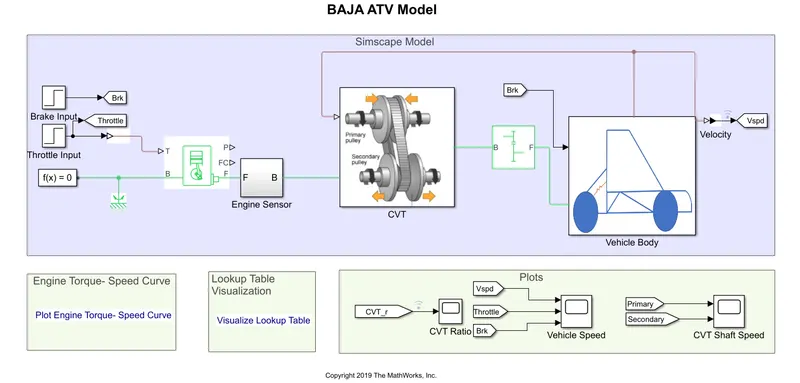
i) BAJA ATV MODEL WITHOUT DASH BOARD:
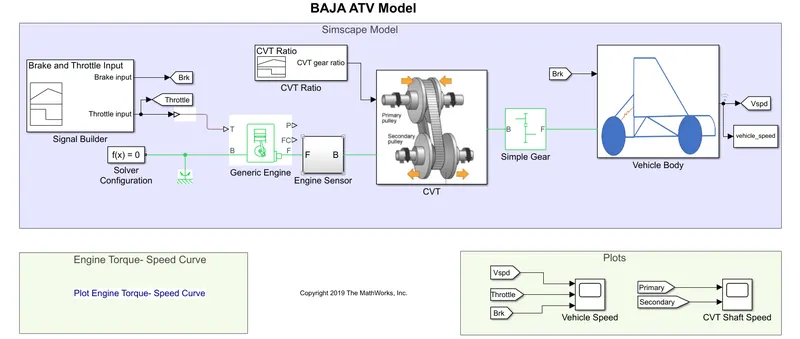
- In this model, we use signal builder for break and throttle inputs and for CVT ratio and simulated at default conditions.
- The model is shown as below and resutlts are shown.
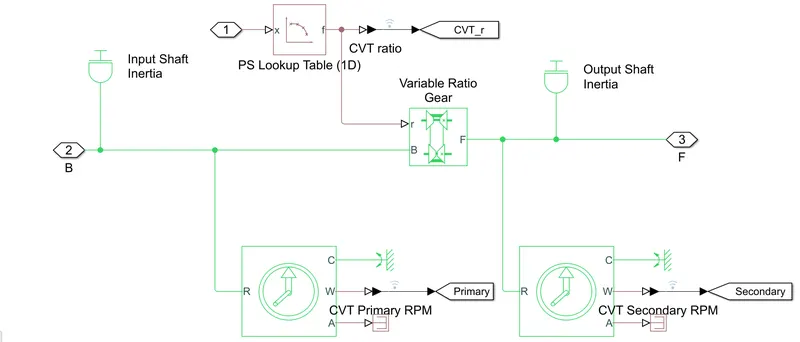
CVT BLOCK:
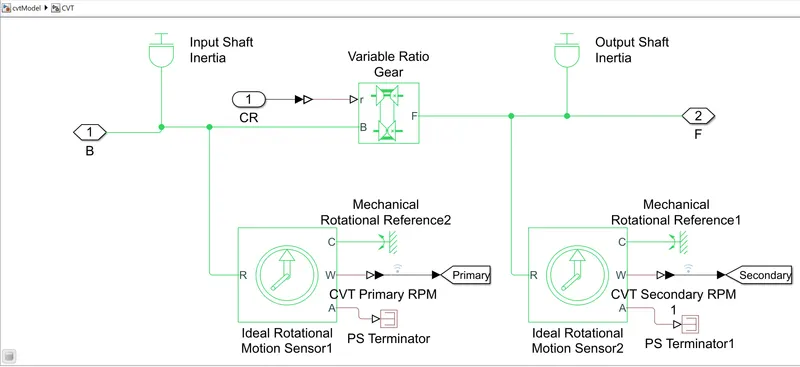
- This block is a subsystem block and it is used for giving CVT gear ratio and to sense the primary and secondary shaft rpm.
- In this block we use input and output shaft inertia block (represents primary and secondary pulley), mechanical motion sensors( to read rpm) and a variable gear ratio block.
CVT ENGINE SENSOR:
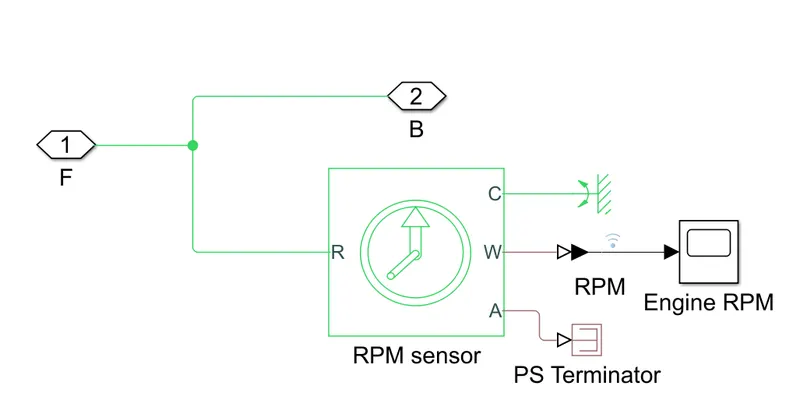
- This block is used to read output data from engine block(RPM) and that data is given to CVT block.
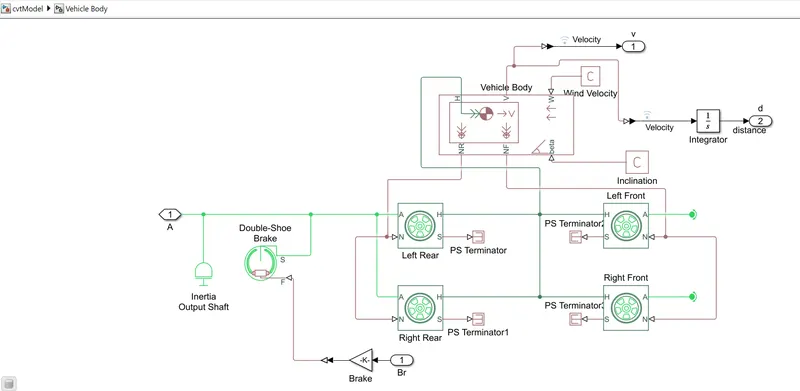
CVT VEHICLEBODY:
- A vehicle body looks like a car, which contains tyres, vehicle body.
- In vehcile body, we can give data about car weight, number of tyres and some external conditions which may effect the speed of the vehicle.
EXPLANATION:
- As given in the waveform, we gave zero break input and throttle input of 0.5 using signal builder block.
- This input is connected to engine.
- The engine will give output as RPM, this output is given to ideal rotational motion sensor to sense RPM.
- Then this output is given to CVT.
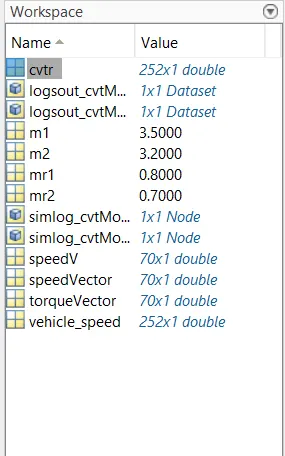
Variables in workspace:
TORQUE-SPEED CURVE:
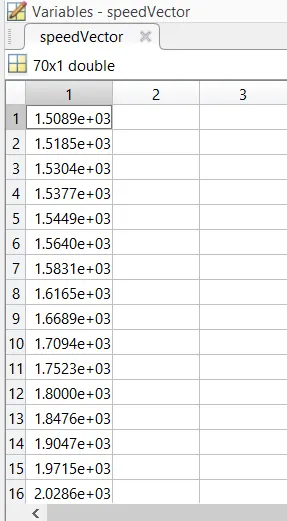
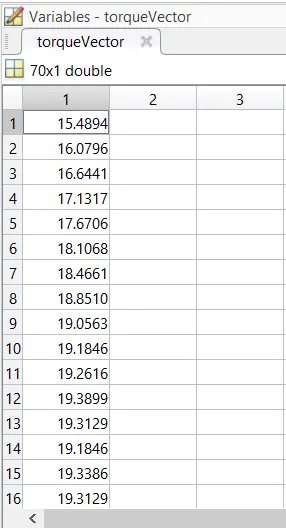
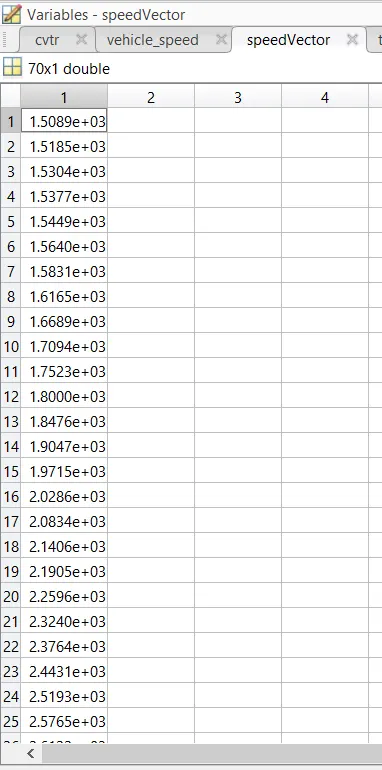
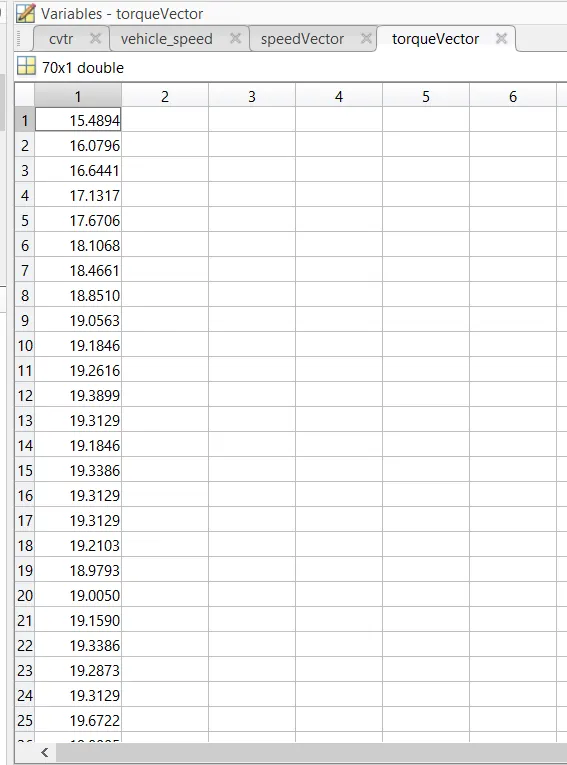
- The curve is the graph between torque and speed vector, and this data is given to engine block using "GRAB" option in fileexchange.
- The values of speed vector and torque vector are shown below.
Speed vector:
Torque vector:
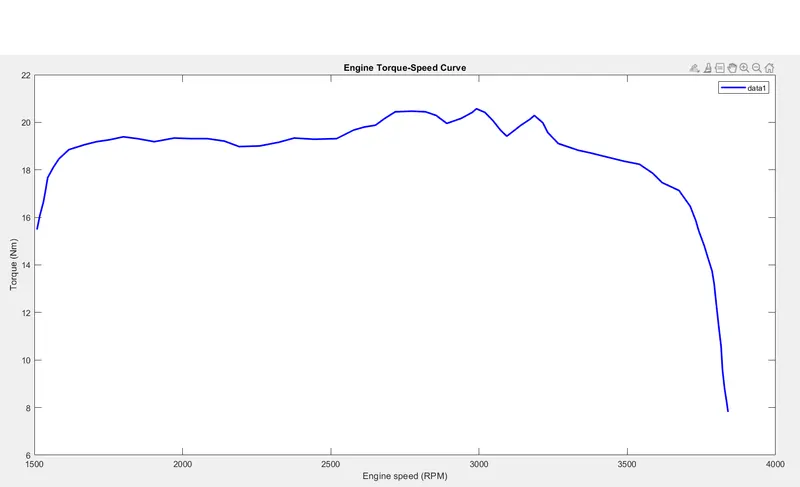
Speed-Torque curve
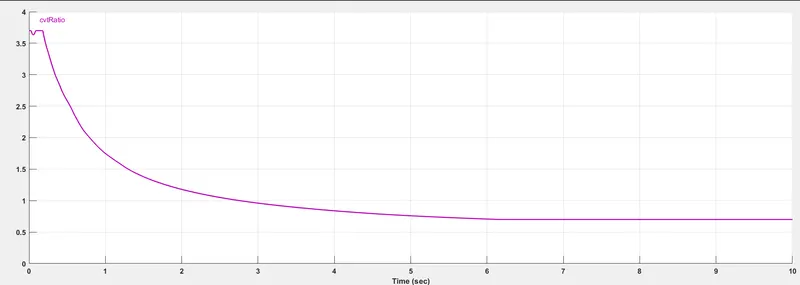
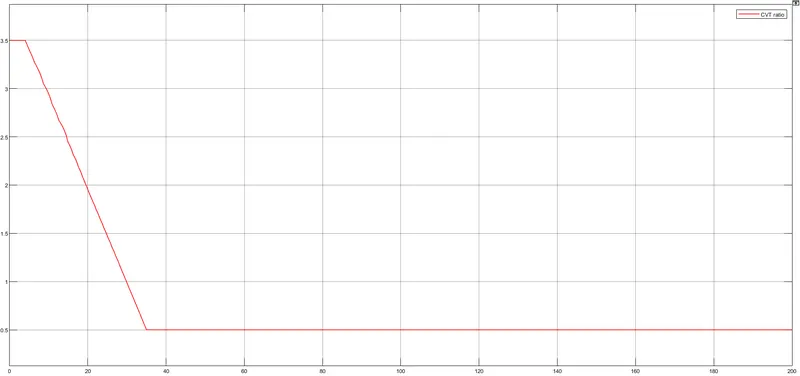
CVT RATIO SIGNAL:
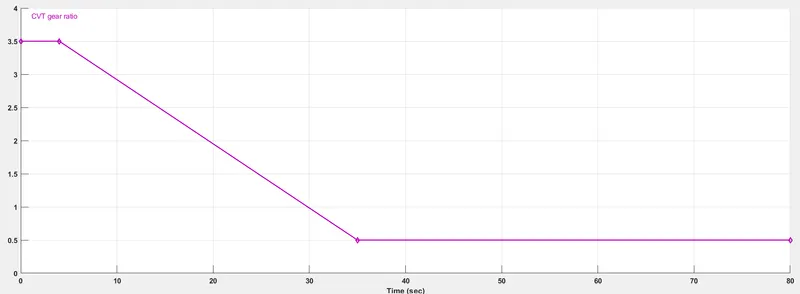
- This graph shows CVT ratio using signal builder block.
- From the graph below,
CVT ratio= 3.5 upto (4 seconds).
CVT ratio= decrases to 0.5 (from 4 to 35 seconds).
CVT ratio =0.5 (from 35 to 80 seconds).
OUTPUT WAVEFROMS:
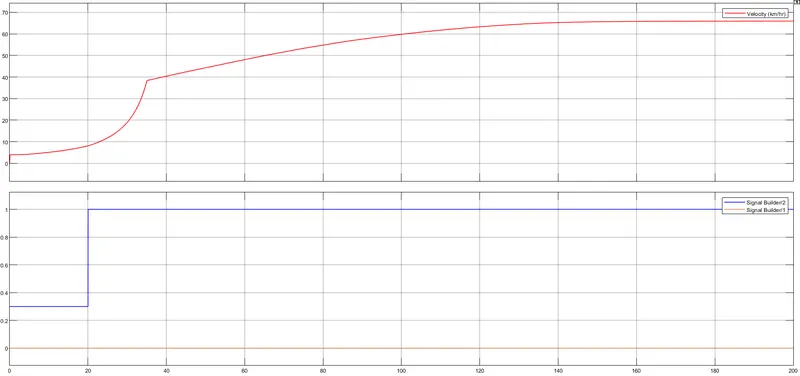
a) Vehicle speed:
- From the waveform, the vehicle speed increases upto nearly 65 kmph at 140 seconds and then maintained constant.
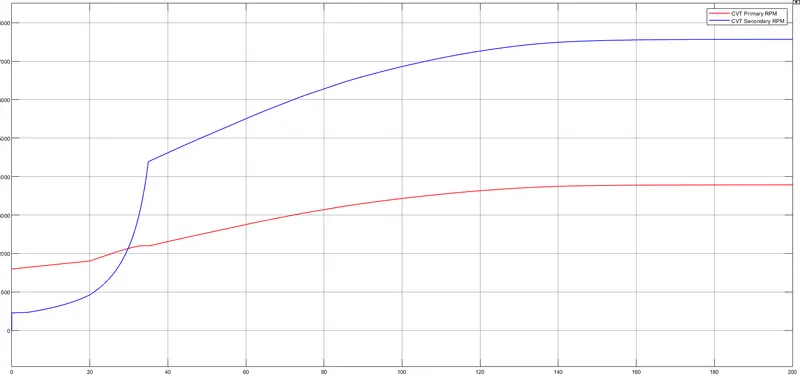
b)CVT Shaft speed:
c) Engine RPM:
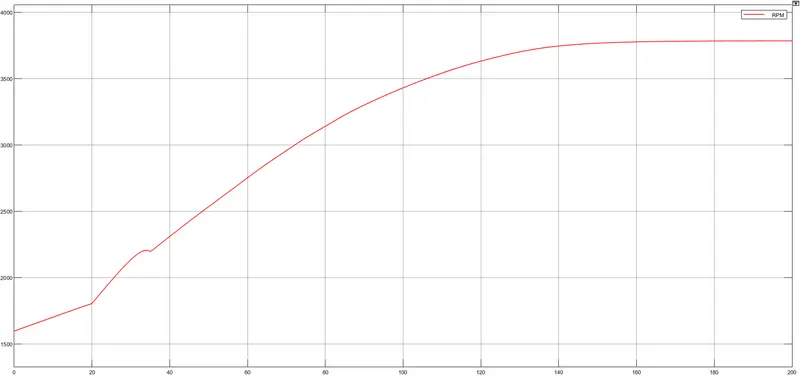
- From the waveform, the engine RPM increases to 3800 RPM at 140 sec and maintained constant.
ii) BAJA ATV MODEL WITH DASHBOARD:
- This model is similar to BAJA ATV model without dashboard, the only difference is that we control the throttle and break inputs manually using knob.
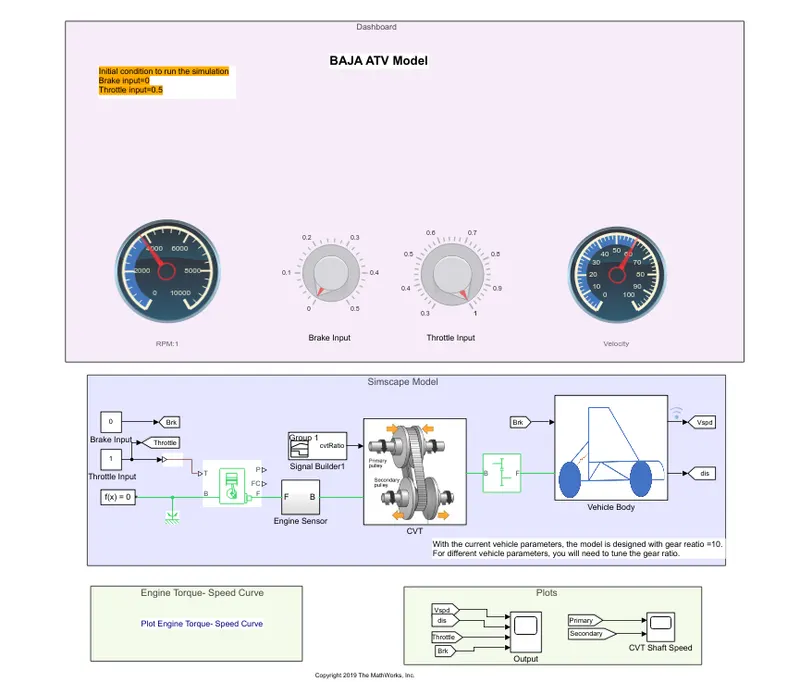
NOTE: All blocks are same as previous model. only change is that dashboard and cvt ratio signal.
EXPLANATION:
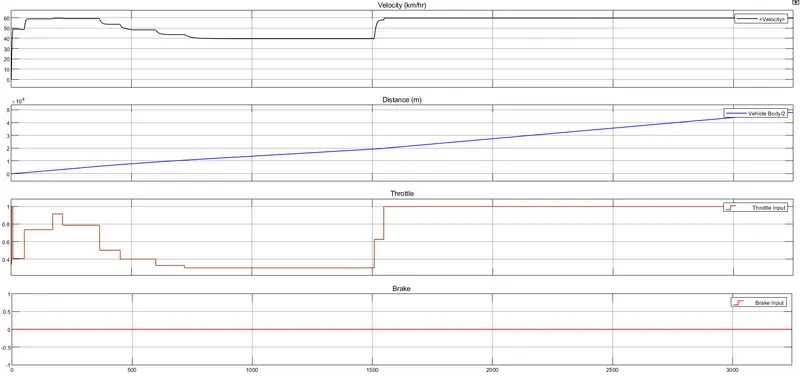
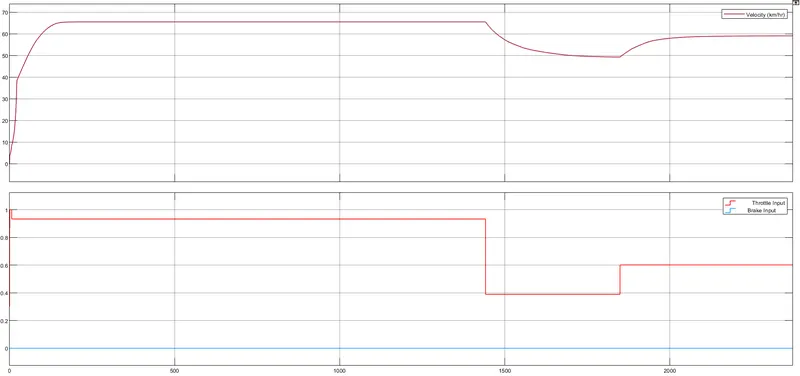
- As given in the waveform, we gave zero break input and a variable throttle input by using knob in dashboard.
- This input is connected to engine.
- The engine will give output as RPM, this output is given to ideal rotational motion sensor to sense RPM.
- Then this output is given to CVT.
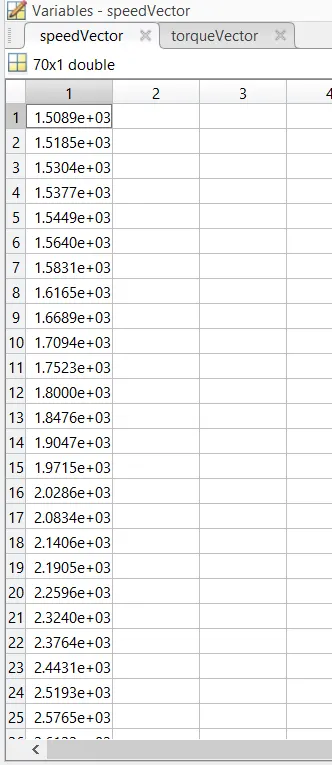
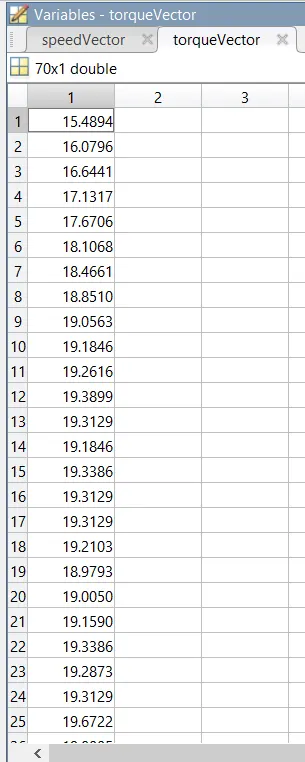
Variables in workspace:
Speed-Torque curve:
Speed vector:
Torque vector:
CVT ratio input:
OUTPUT WAVEFORMS:
a) Vehicle speed:
- From the graph below, the vehicle speed is increases, when throttle input increases and decreases when throttle input decrases kepping break constant.
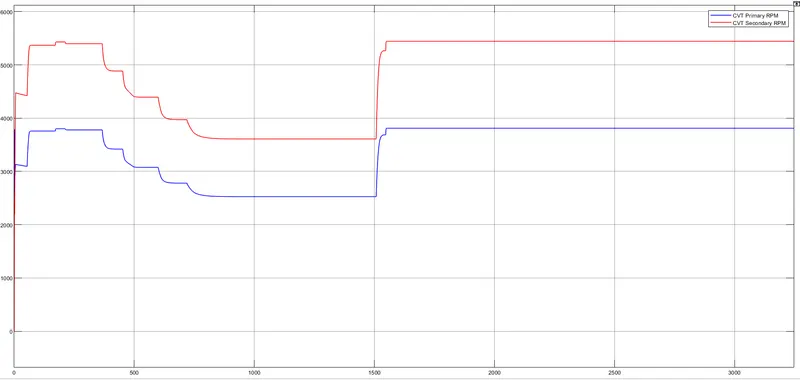
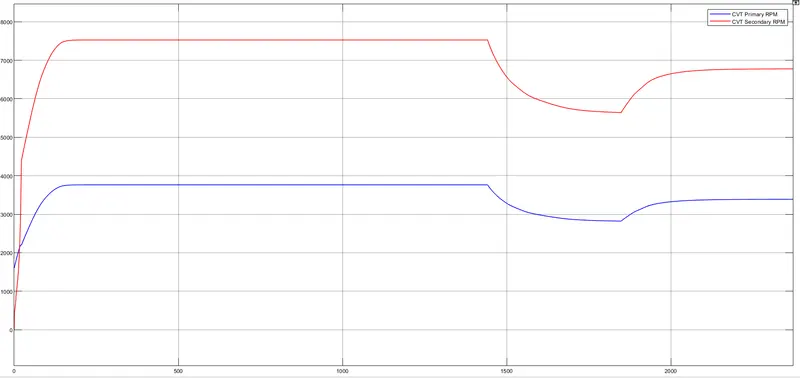
b)CVT Shaft speed:
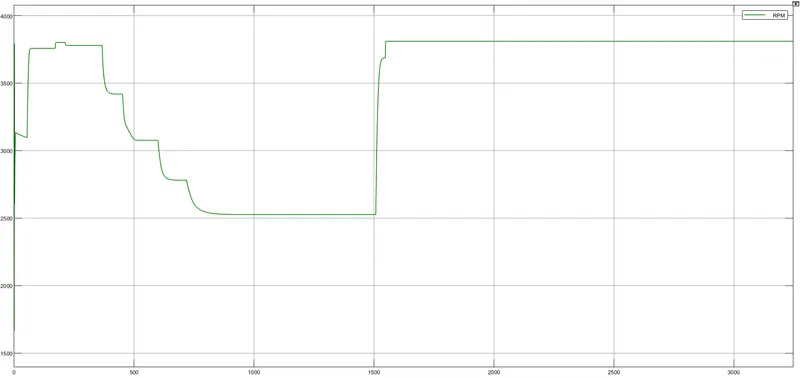
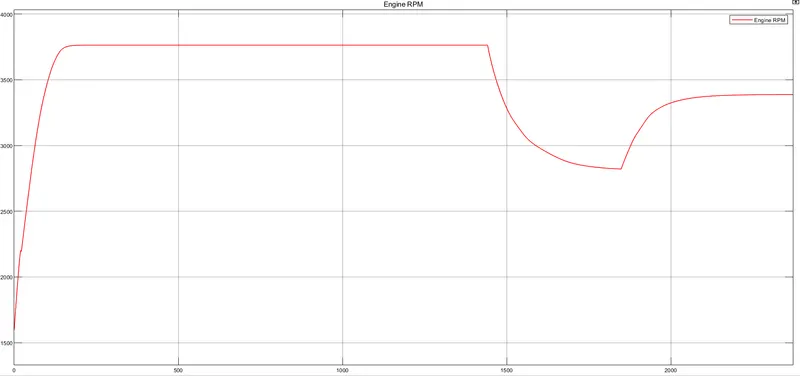
c) Engine RPM:
2) CLOSED LOOP SYSTEM:
i) BAJA ATV MODEL USING LOOKUPTABLE WITHOUT DASHBOARD:
CVT BLOCK:
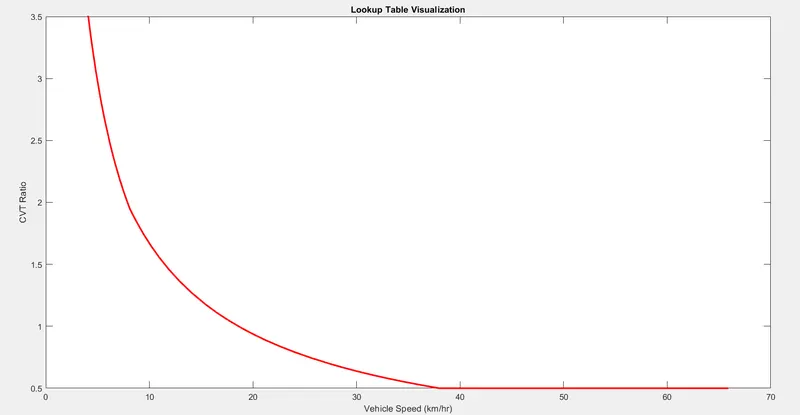
- In this model, we use lookup table for giving CVT ratio inplace of signalbuilder block.
LOOKUP TABLE DATA:
- This is the table containing vehicle speed(kmph) and CVT ratio.
- CVT ratio data and vehicle speed data in work space are given below:
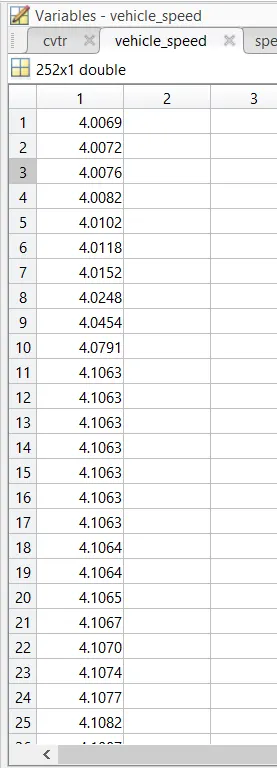
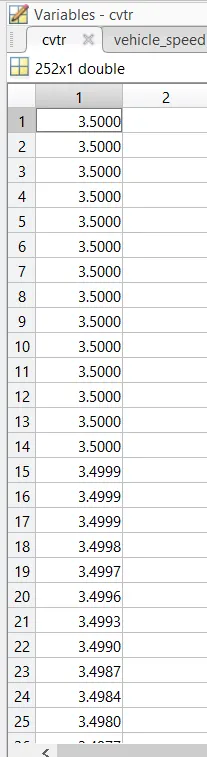
- This data is given to variable ratio gear block.
LOOKUP TABLE VISUALIZATION:
CVT ratio:
Variables in workspace:
1. Speed Vector:
2. Torque vector:
Speed-Torque curve:
OUTPUT WAVEFORMS:
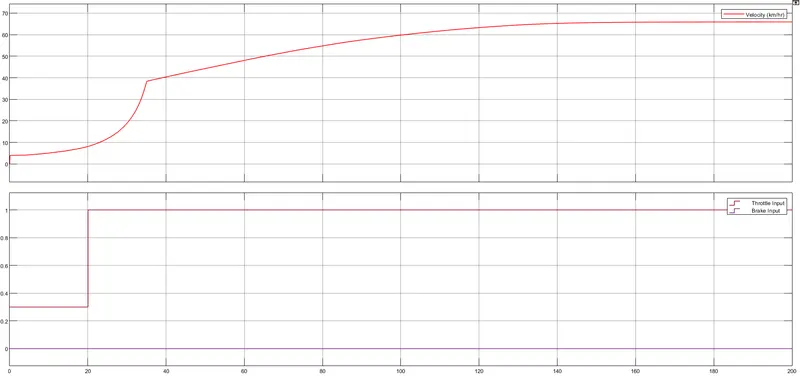
a) Vehicle speed
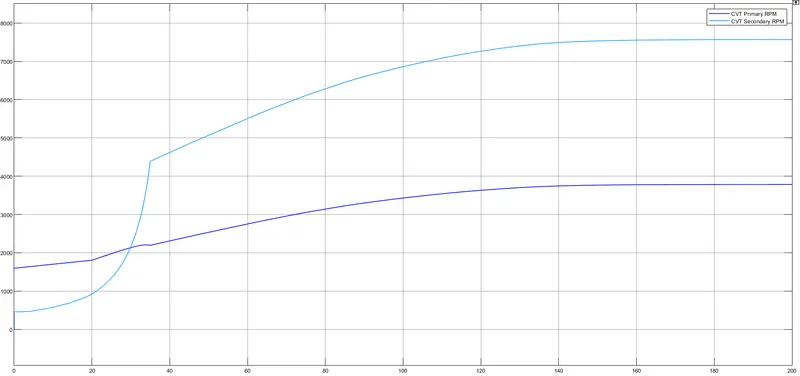
b)CVT Shaft speed
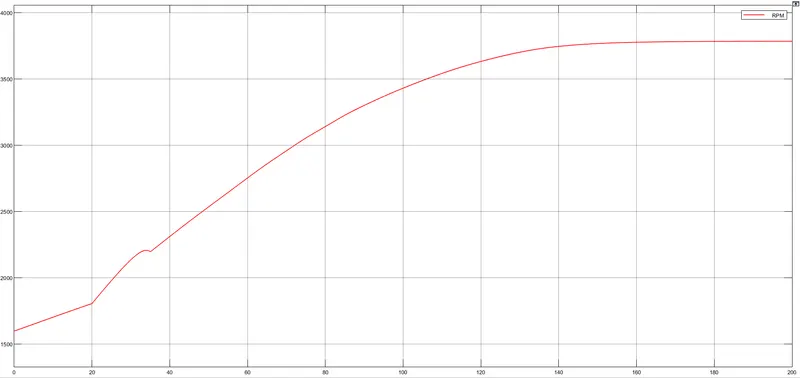
c) Engine RPM:
ii) BAJA ATV MODEL USING LOOKUPTABLE WITH DASHBOARD:
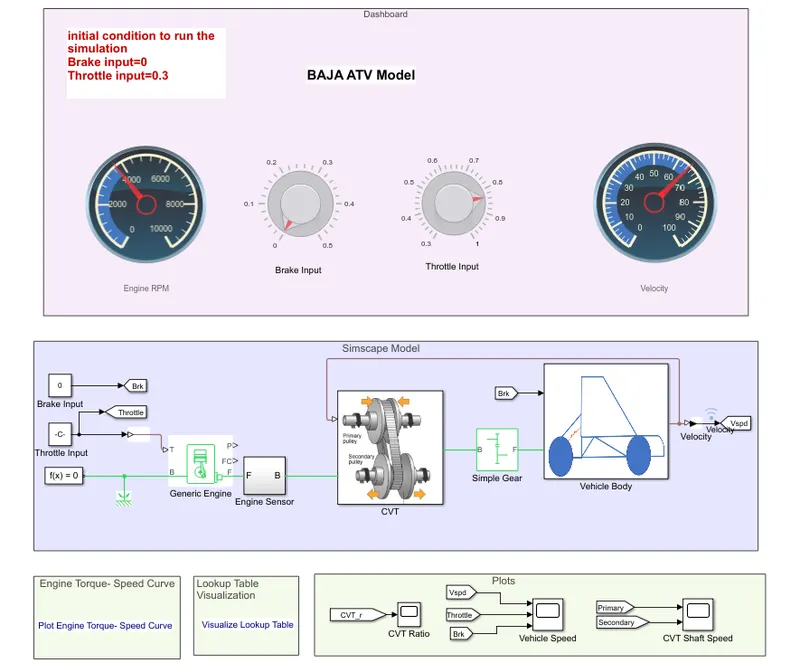
NOTE: All blocks are same as previous model. only change is that dashboard and cvt ratio signal.
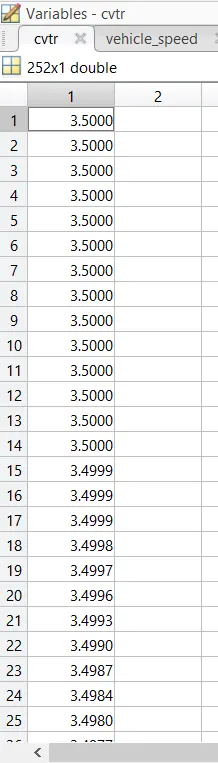
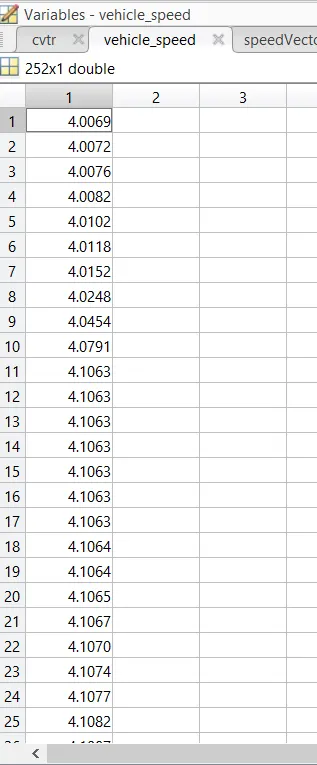
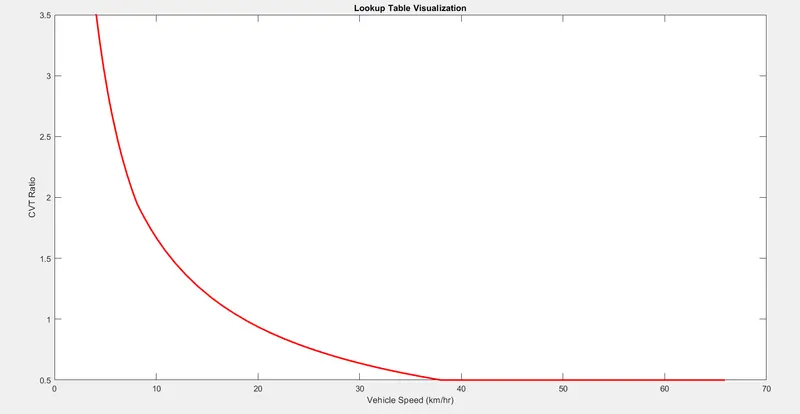
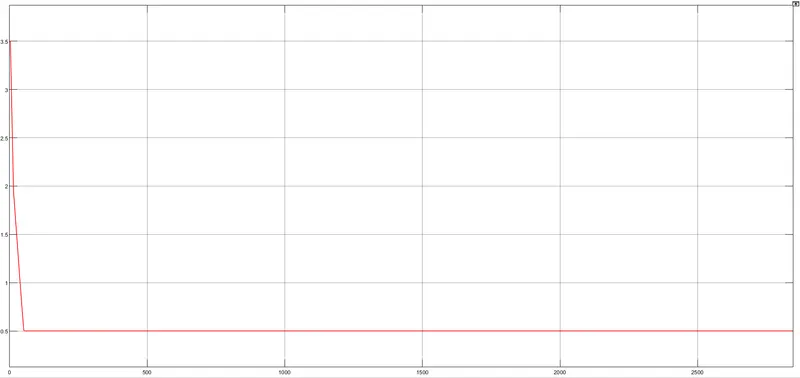
LOOKUP TABLE DATA:
- This is the table containing vehicle speed(kmph) and CVT ratio.
- CVT ratio data and vehicle speed data in work space are given below:
VISUALIZED LOOKUP TABLE:
CVT Ratio:
Variables in workspace:
1. Speed vector:
2.Torque vector:
Speed-Torque vector:
OUTPUT WAVEFORMS:
a) Vehicle speed:
b)CVT Shaft speed:
c) Engine RPM:
CONCLUSION: Therefore, the given BAJA ATV model was modelled and simulated sucessfully and from the results shown above, we can conclude that:
- CVT ratio is proportional to the torque and inversely proportional to the throttle input.
- CVT primary speed is greater than secondary speed as they are proportional to their shaft radius or diameter.
- CVT shaft speed,Velocity and Engine RPM are proportional to throttle input and inversely proportional to the brakeinput.
REFERENCES:
- https://www.mathworks.com/matlabcentral/fileexchange/70576-baja-all-terrain-vehicle-atv-model
- https://github.com/mathworks/BAJA-All-Terrain-Vehicle-Model
- https://www.carandbike.com/news/what-is-a-continuous-variable-transmission-and-how-does-it-work-1449575
- https://www.tamaroffhonda.com/cvt-pros-and-cons/
- https://www.atvcourse.com/blog/2011/06/13-surprising-uses-for-atvs/