Project
Aim:
To prepare a technical report by carrying out a system level simulation of a BAJA ATV model.
All Terrain Model (ATV):
An all-terrain vehicle (ATV), also known as a light utility vehicle (LUV), a quad bike, or simply a quad, as defined by the American National Standards Institute (ANSI); is a vehicle that travels on low-pressure tires, with a seat that is straddled by the operator, along with handlebars for steering control. As the name implies, it is designed to handle a wider variety of terrain than most other vehicles.
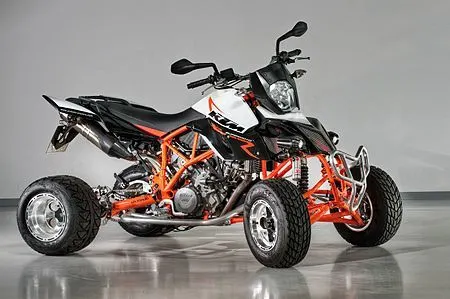
Baja SAE is an Collegiate Design Series competition run by the Society of Automotive Engineers International (SAE International). Teams of students from universities all over the world design and build small off-road cars. The cars all have engines of the same specifications.
The model we are studying today is a prototype model created by MATLAB to help the students design better.
Model used:
Two different models have been used to carry out the studies. Let us discuss them one by one:
Model 1:
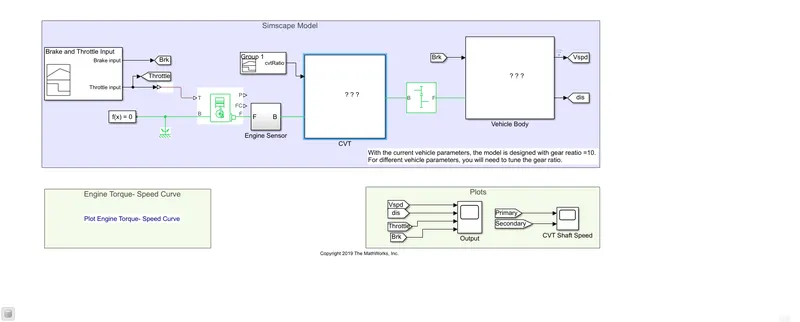
The various components used in this model are:
CVT:
A continuously variable transmission (CVT) is an automatic transmission that can change seamlessly through a continuous range of gear ratios. This contrasts with other transmissions that provide a limited number of gear ratios in fixed steps. The flexibility of a CVT with suitable control may allow the engine to operate at a constant RPM while the vehicle moves at varying speeds.
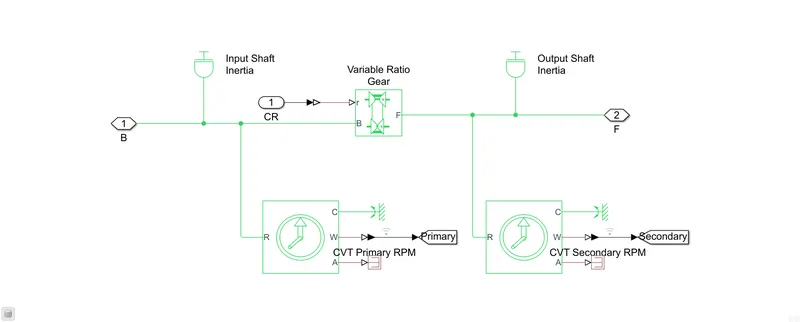
The CVT ratio was provided by a signal generator as follows:
Engine:
A generic model of diesel engine with spark ignition was used.
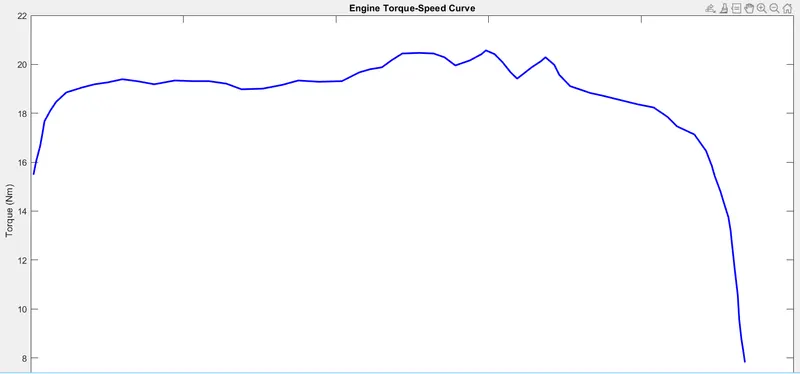
The speed torque curve of the engine is as follows:
Vehicle body:
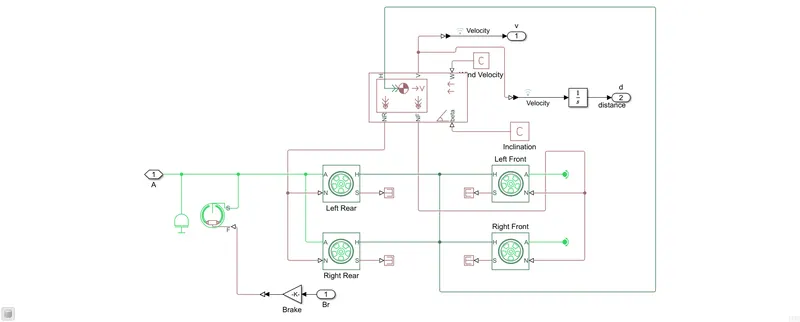
A two axle vehicle body with longitudinal motion was used. It was connected with four wheels and also brake unit.
Input brake and Throttle was provided using a signal generator:
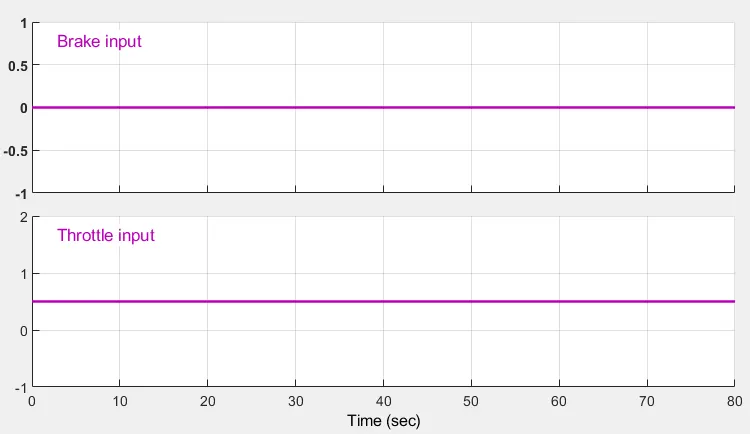
The throttle was fixed at 0.5 and the brake was 0 throughtout.
Output:
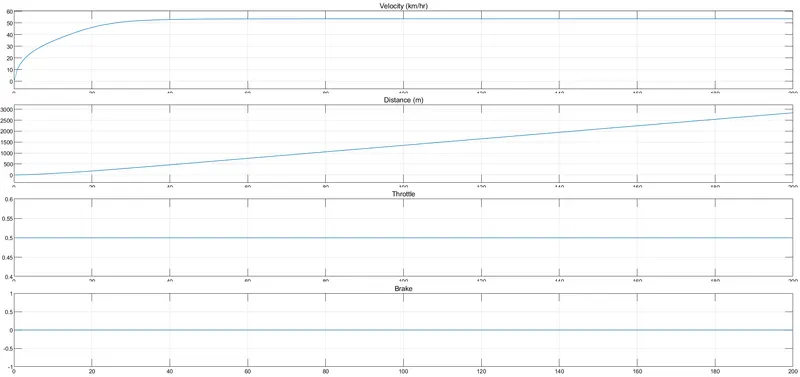
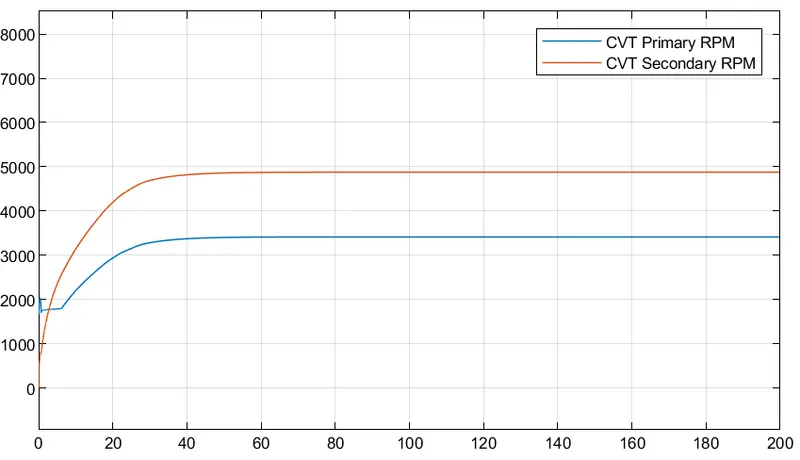
Inference:
It can be observed that the ATV takes nearly 30 sec to reach its top speed of approx 53Kmph with 0.5 throttle. The CVT primary and secondary rpm is changing according the gear ratio.
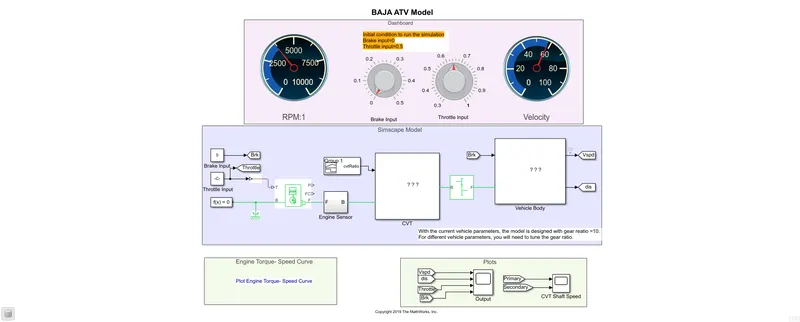
The same model was also simulated using a dashboard as follows where Throttle and break could be changed realtime in simulation.
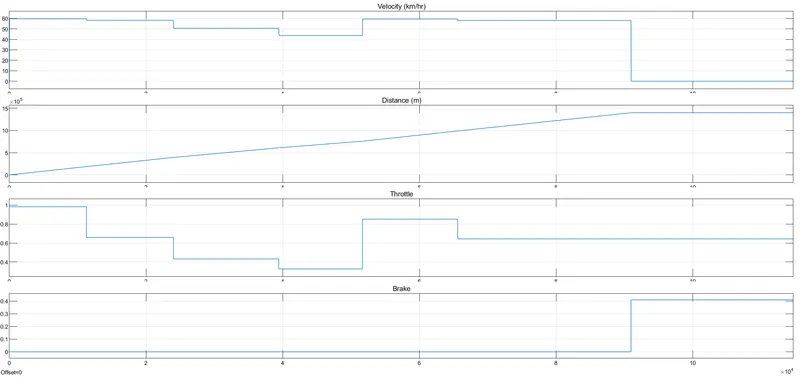
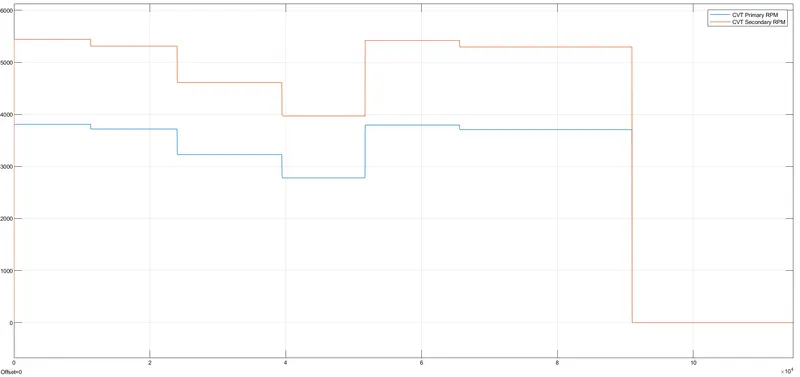
The output when the input was continously changed is as follows:
Inference:
We see the speed changing continuously as the throttle value is changed and the ATV comes to halt when the break is given as 0.4 at t=90000sec.
Model 2:
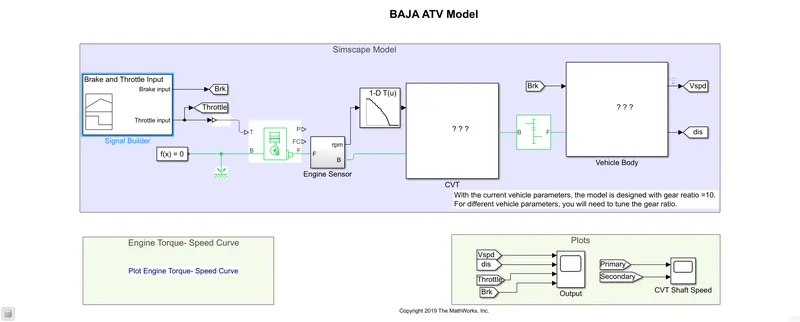
In this study the Gear ratio was given using a lookup table using rpm input from engine sensor and the brake and throttle input was as follows:
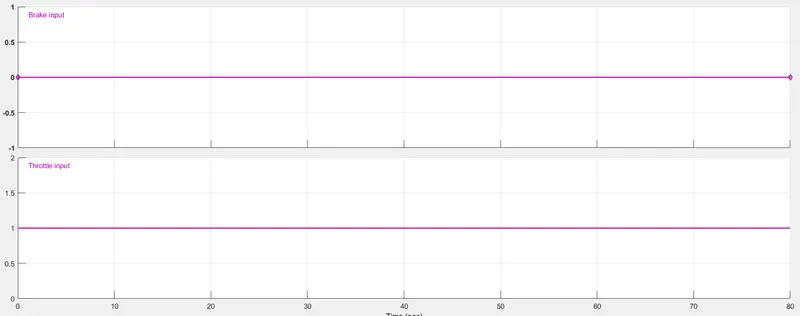
Result:
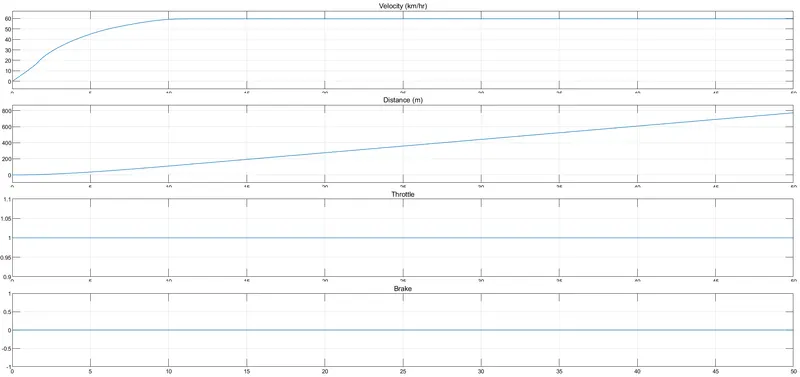
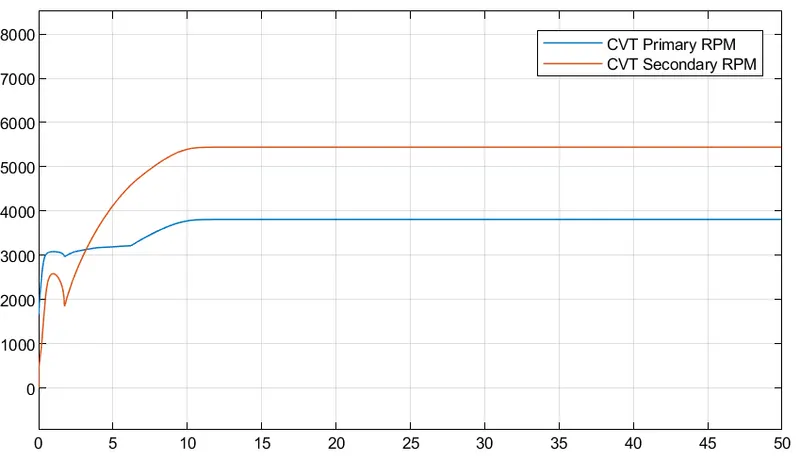
Inferernce:
With throttle value as 1 the top speed of 60kmph is reached in 10 sec.
Model 3:
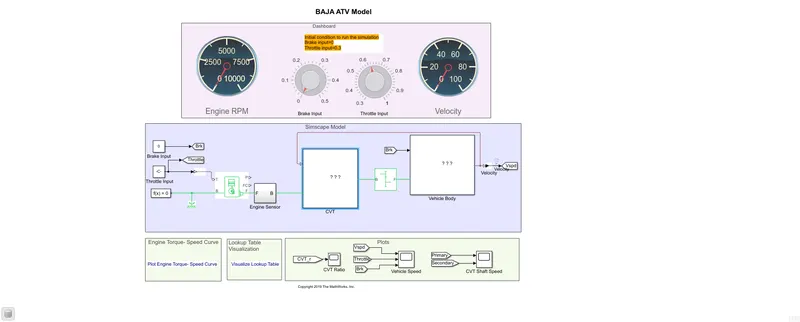
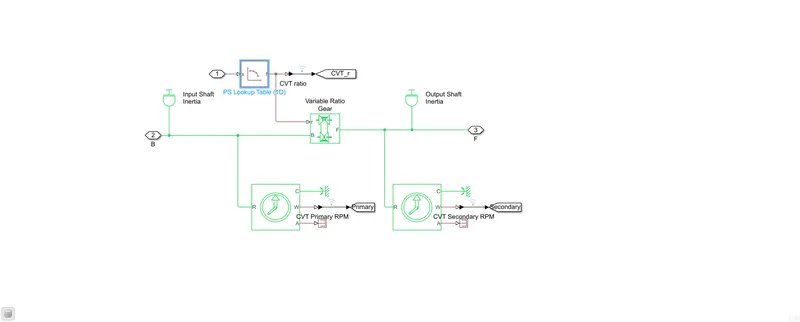
This model has the gear ratio based on a look up table and also feedback recieved of the velocity of vehicle which is closest to real life scenario. The throttle and break is given realtime using a dashboard.
Output:
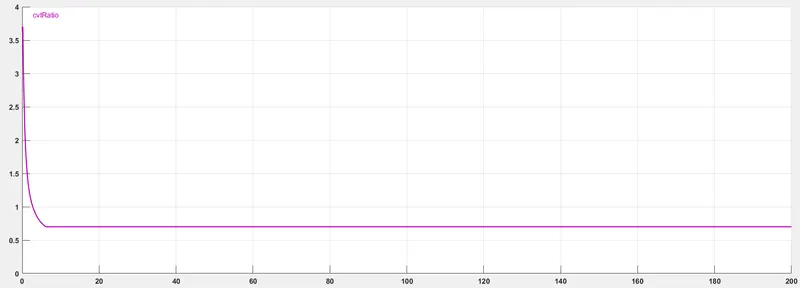
The CVT ratio was as follows:
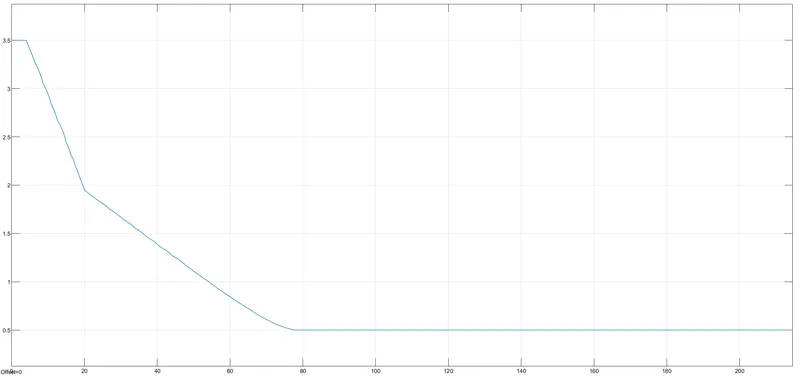
We can see it jumps to 3.5 at start and then stabilizes to 0.5 for the rest of simulation.
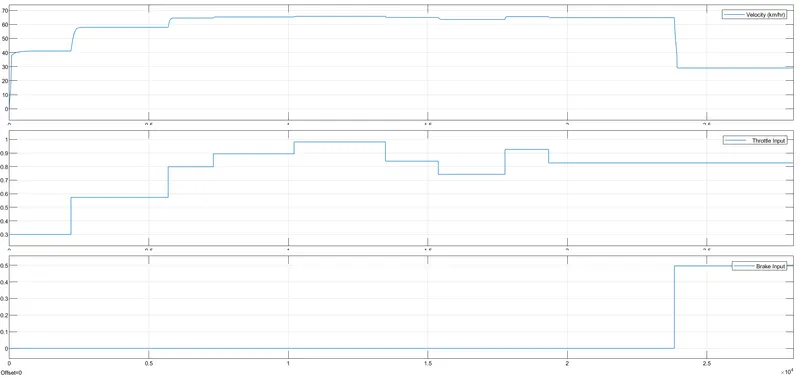
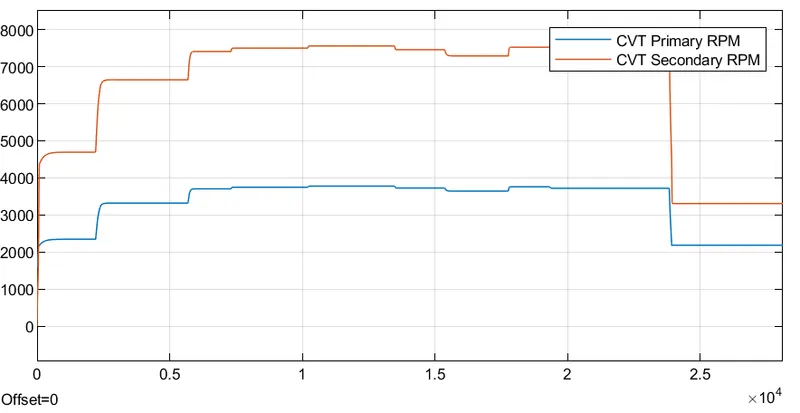
Inference:
We notice here that the secondary CVT rpm is always greater than primary here. Also when the brake is given at 0.5, the vehicle speed rests at 30kmph.