Project 2 Thermal modeling of battery pack
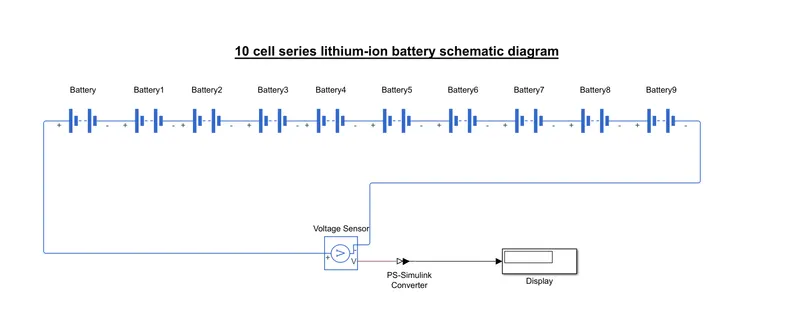
For a 10 cell series lithium ion battery model, simulate the thermal effects and compare life cycle performance at various temperatures, charge & discharge rates using MATLAB.
BATTERY TABLE BASED:
he Battery (Table-Based) block represents a high-fidelity battery model. The block calculates open-circuit voltage as a function of charge level and optional temperature using lookup tables and includes several modeling options:
-
Self-discharge
-
Battery fade
-
Charge dynamics
-
Calendar aging
TEMPERATURE SENSOR:

The Temperature Sensor block represents an ideal temperature sensor, that is, a device that measures either the absolute temperature at a node, or the temperature difference between two nodes, without drawing any heat. Connections A and B are thermal conserving ports that connect to the two points where temperature is being monitored. Port T is a physical signal port that outputs the temperature difference value. The block positive direction is from port A to port B. The measured temperature is determined as T = TA – TB. To measure the absolute temperature at a node, set the set the Measurement reference parameter to Absolute and connect port A to the node being measured.
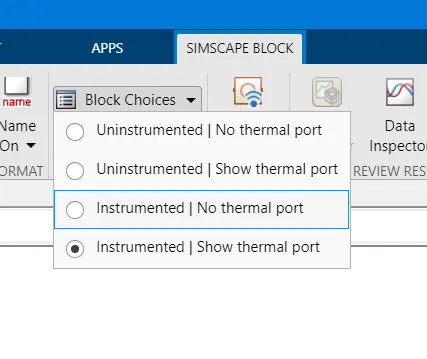
to activate the SoC and Thermal Property Click on the battery block then this SIMSCAPE BLOCK will appear then go to simscape block >> Block Choice>> instrumented | Show thermal port
CONVECTIVE HEAT TRANSFER:

The Convective Heat Transfer block represents heat transfer by convection between two bodies by means of fluid motion.
REFERNCES-(THERMAL AND ELECTRICAL):

The Thermal Reference block represents a thermal reference point, that is, a point with an absolute zero temperature, with respect to which all the temperatures in the system are determined.

The Electrical Reference block represents an electrical ground. Electrical conserving ports of all the blocks that are directly connected to ground must be connected to an Electrical Reference block. A model with electrical elements must contain at least one Electrical Reference block.
SOLVER CONFIGURATION:

Each physical network represented by a connected Simscape™ block diagram requires solver settings information for simulation. The Solver Configuration block specifies the solver parameters that your model needs before you can begin simulation. Each topologically distinct Simscape block diagram requires exactly one Solver Configuration block to be connected to it.
SCOPE:

The Simulink Scope block and DSP System ToolboX Time Scope block display time domain signals.
TEMPERATURE SOURCE:

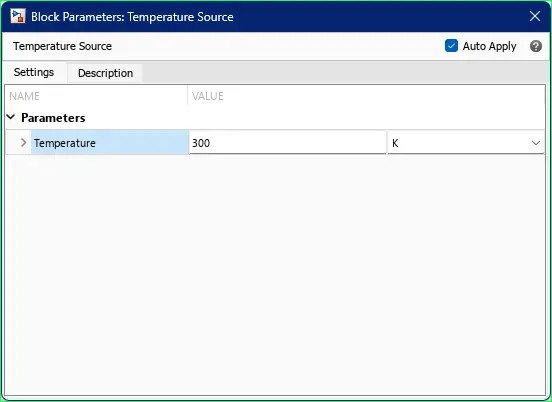
The Temperature Source block represents an ideal source of thermal energy that is powerful enough to maintain specified temperature at its outlet regardless of the heat flow consumed by the system.
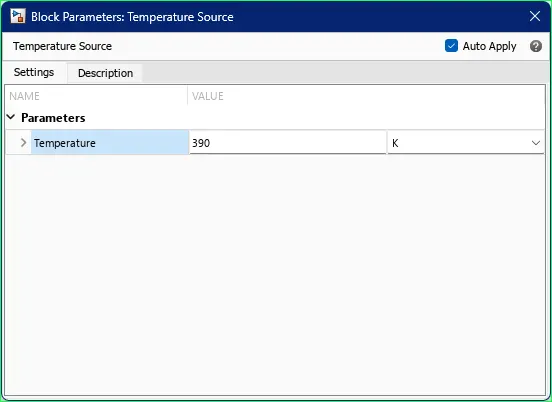
The source generates constant absolute temperature, defined by the Temperature parameter value.
SIMULINK MODEL:
CONSTRUCTION:
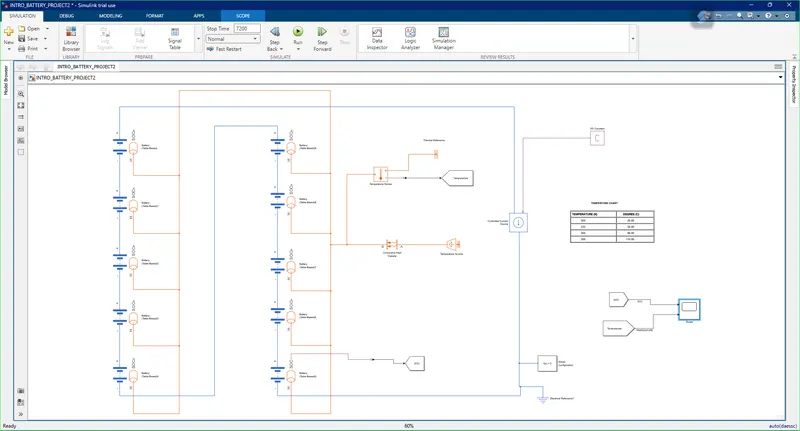
- first we need to select table based battery and enable sco port and temperature port. for the new version it included inside the parameters box.
- take a copy of the battery upto 10 modules. import the controlled voltage source within the workspace and ps constant for giving constant current to the battery.
- the thermal ports are sonnected as per the diagram given and the take output at the end of the battery by using ps-simulink converter. This will provided to the goto block and named as Temeperture.make it globally to get from tag.
- the positive side of the battery is connected to the neagative side of the Controlled current source and negative of the battery port is conneted to positive side.Connect the Solver confiuguration and electrical reference to this line.
- The Temperature source and sensor connected as per the diagram. the convective heat transfer block is connected between the battery thrmal port and the heat source.The temperature sensor there is 3 ports. one port is connected to thermal reference and second one is connected with goto block and the third one is connected to the convective heat source. Here we are define the convection heat area.
- the output goto blocks are connected to the Scope block.
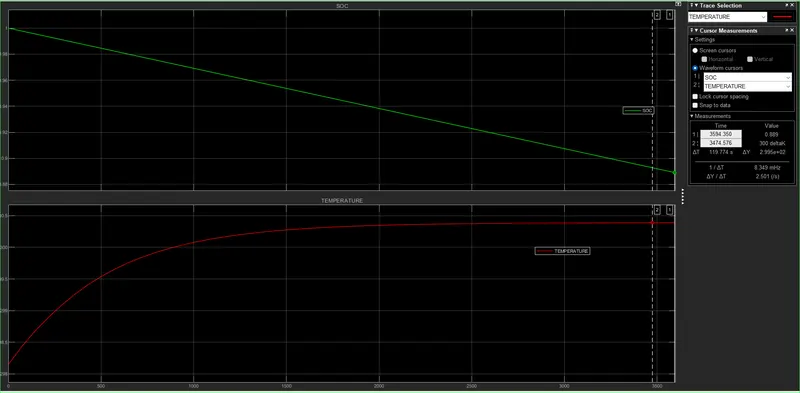
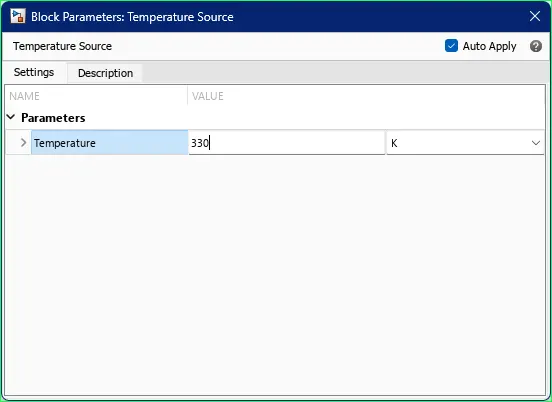
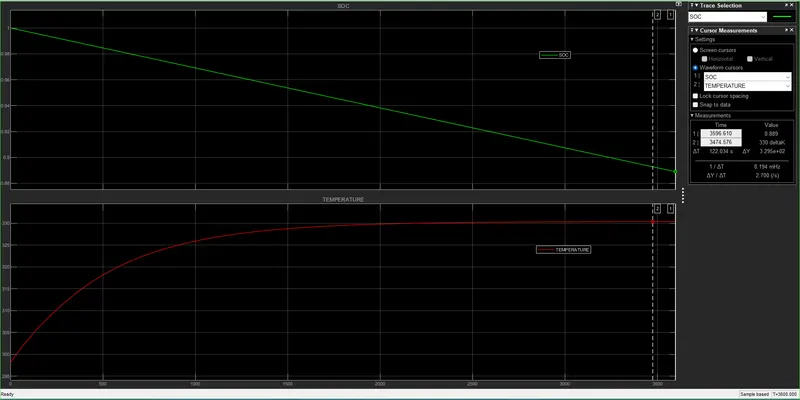
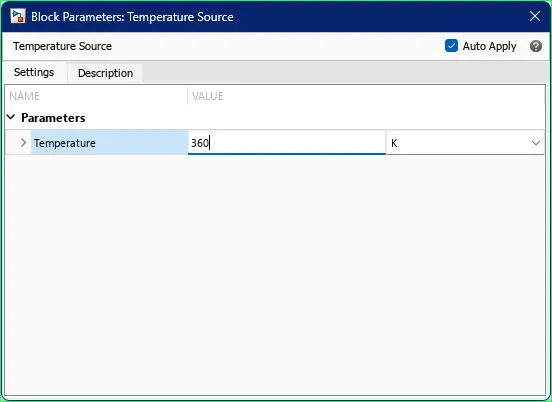
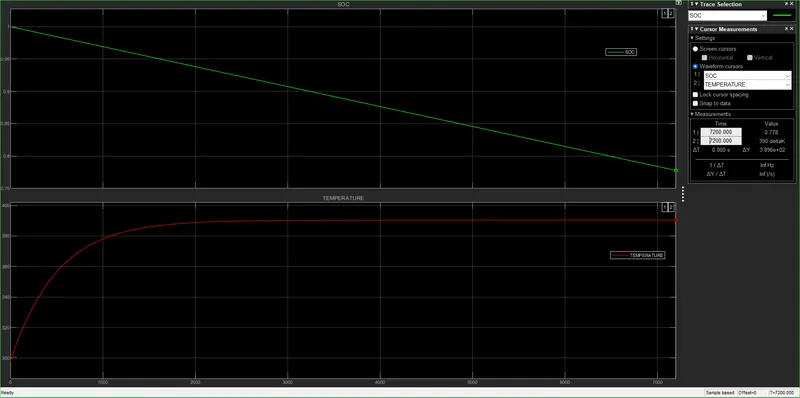
- In the Temperature Source block we adjust the Source as [300 330 360 390]k values to check the soc of the battery. The running time of the module is 3600 to 7200 seconds and the Standard dischage current is 3A (from ps constant block).
| TEMPERATURE (K) | DEGREE CELCIUS | SOC (AFTER ONE HOUR) |
| 300 | 26.85 | 88% |
| 330 | 56.85 | 82% |
| 360 | 86.85 | 76% |
| 390 | 116.85 | 69% |
TEMPERATURE EFFECT IN 300K HEAT SOURCE
SCOPE OUTPUT:
TEMPERATURE EFFECT IN 330K HEAT SOURCE:
SCOPE OUTPUT:
TEMPERATURE EFFECT IN 360K HEAT SOURCE:
SCOPE OUTPUT:
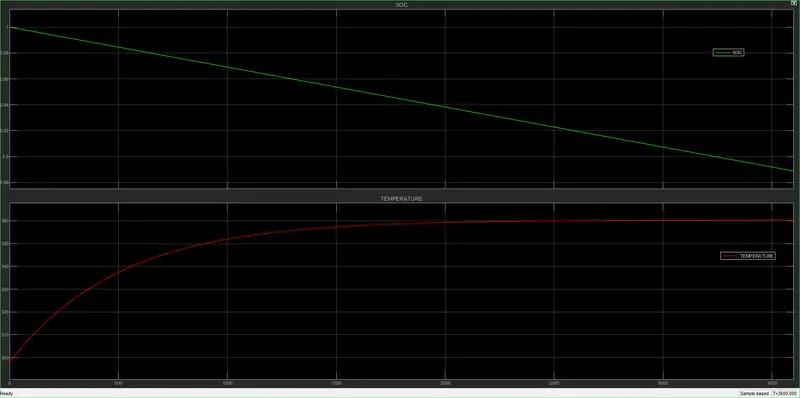
TEMPERATURE EFFECT IN 390K HEAT SOURCE:
SCOPE OUTPUT:
CONCLUSION: