Project 2 Thermal modeling of battery pack
Aim: To study the life cycle performance of a series Lithium-ion battery at various temperatures, charge and discharge rates.
Live Batch - EV 20
Objective of the project:
- Construct the model depending on the requriements (10 cell in series).
- Explain the construction of the model.
- Vary the temperature and charge and discharge rates.
- Explain the differences in the results.
- Explain the faulty cell behaviour and effects on the performance of the battery pack.
Content of body:
- Model:
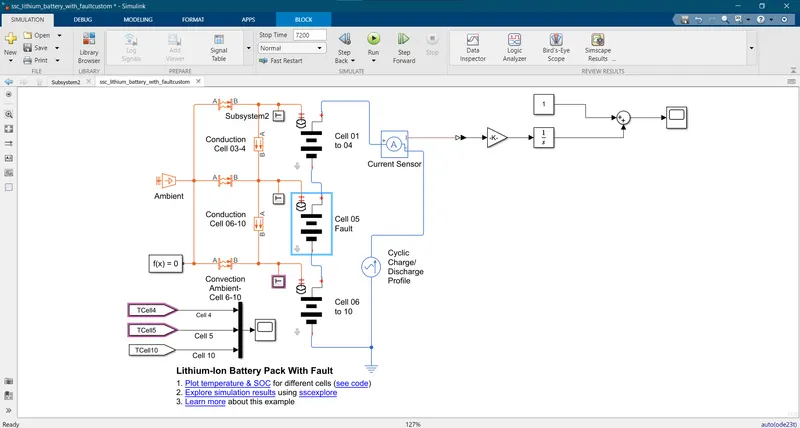
- The above mdel represents the 10 cells in series with one faulty cell (positive end of one cell connected to the negative end of another cell).
- Here the cells in series are represented by equivalent cell with terminal voltage added up.
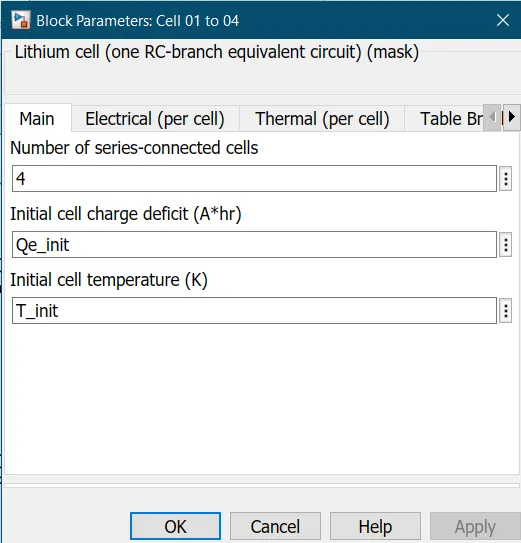
- The Lithium ion (1RC branch equivalent circuit) is used for the construction.
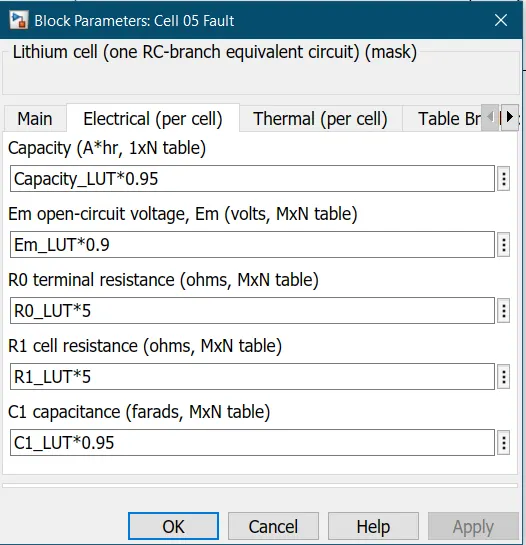
- The cell 5 is is a faulty cell.
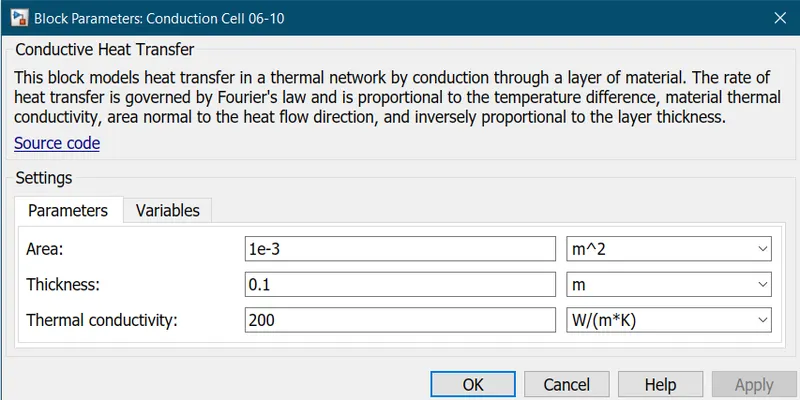
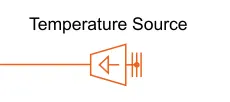
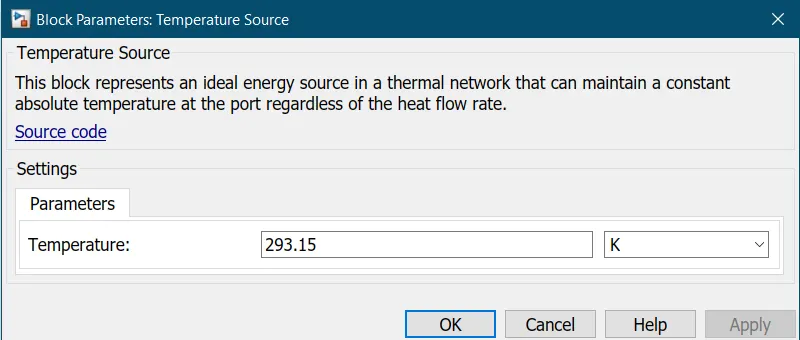
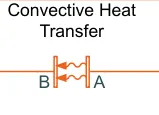
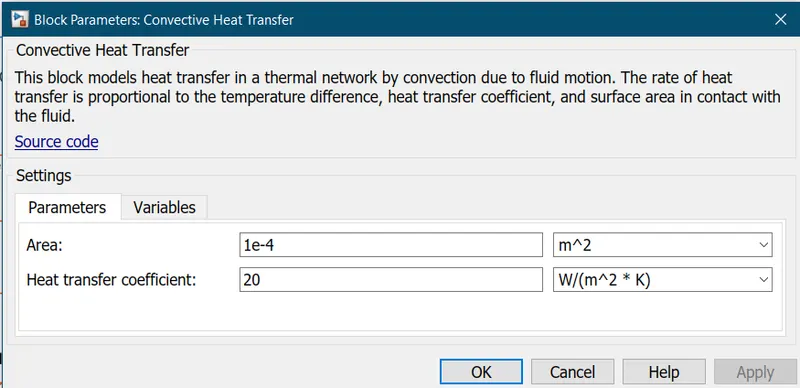
- The temperature source is set to ambient temperature with convection and conduction.
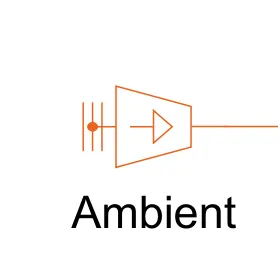
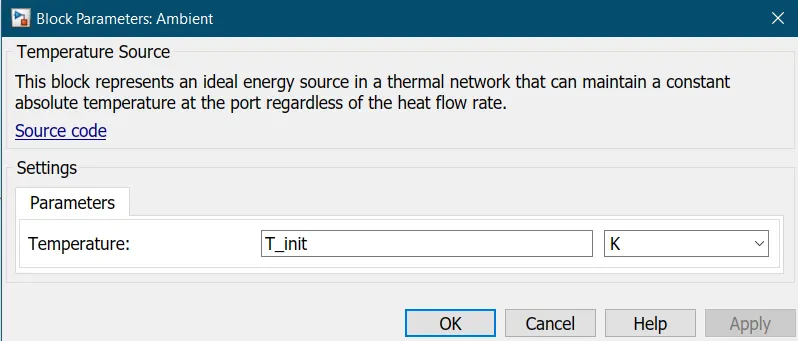
- Defined in the base workspace.
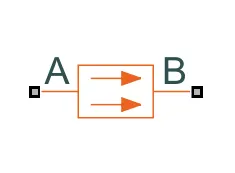
- Conduction:
- Convection:

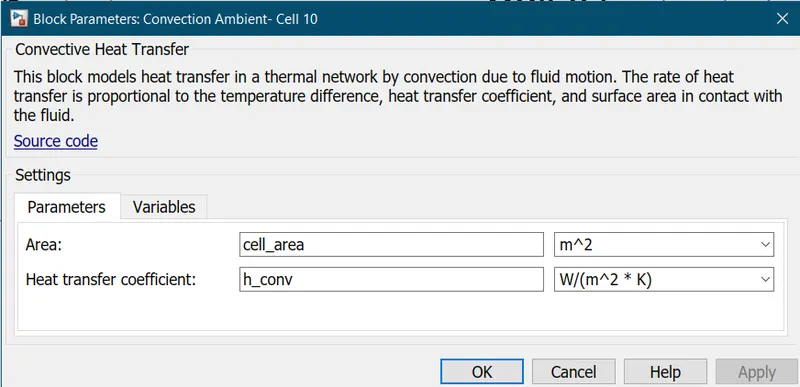
- The single temperature source is concceted to the all cells as shown above.
- The temperature sensor are used to measure the temperature of the cells.
- Temperature sensor:
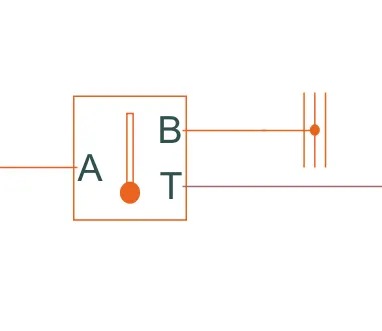
- The temperature sensor measures the difference in temperature at point A and B and outputs at port T.
- Temperature sensor:
- Goto blocks are used to output the signal to from block connected to scope.
- The State of charge is estimated by the coulomb count method.
- The circuit represents the model to estimate the SOC of the cells.
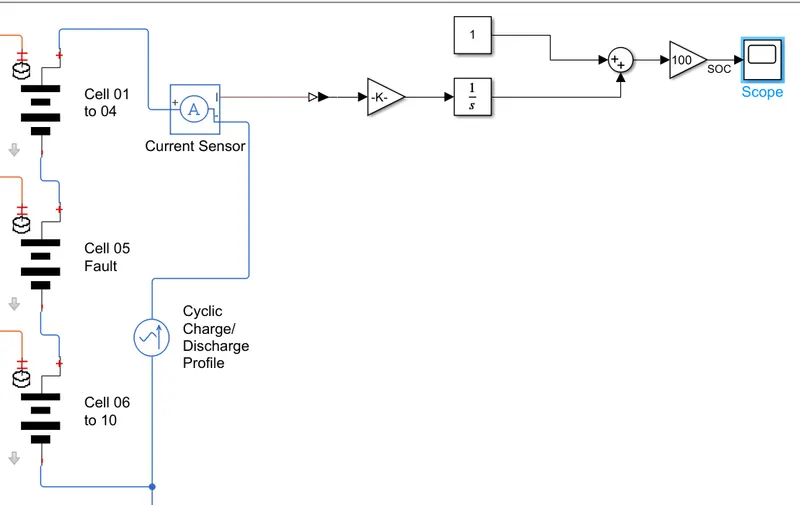
- Here the current discharge is intergrated with the integrator block with gain block characteristics proportional to the peak amplitude of the charge and discharge current and added to constant, then gained by 100 to obtain the output in percentage of State of Charge (SOC).
- The faulty cell can be modelled by reducing the capacity and voltage and increasing the internal resistance.
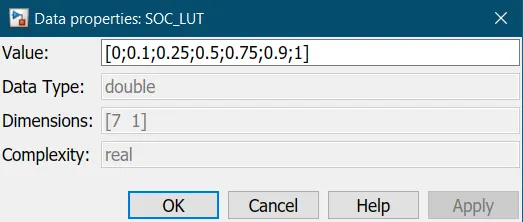
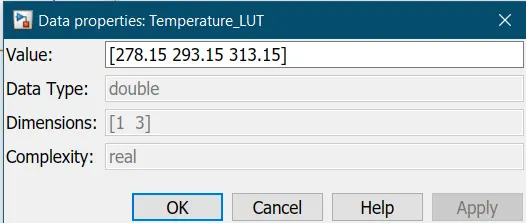
- The output of the cells depends on the SOC and temperature of the cell refered from the table (varies as i = C*dv/dt) added in the base workspace.
- SOC:
- Temperature dependency:
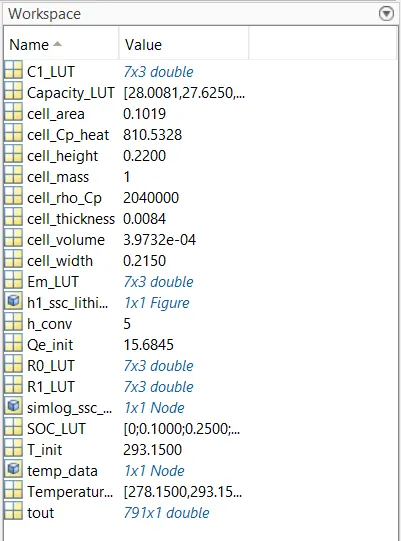
- SOC:
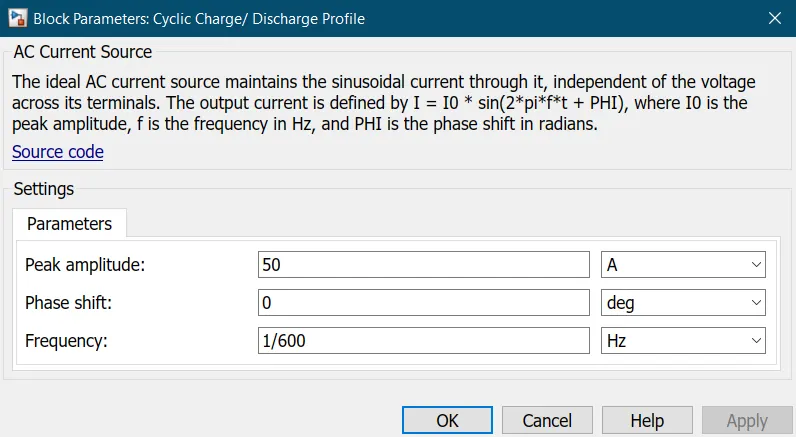
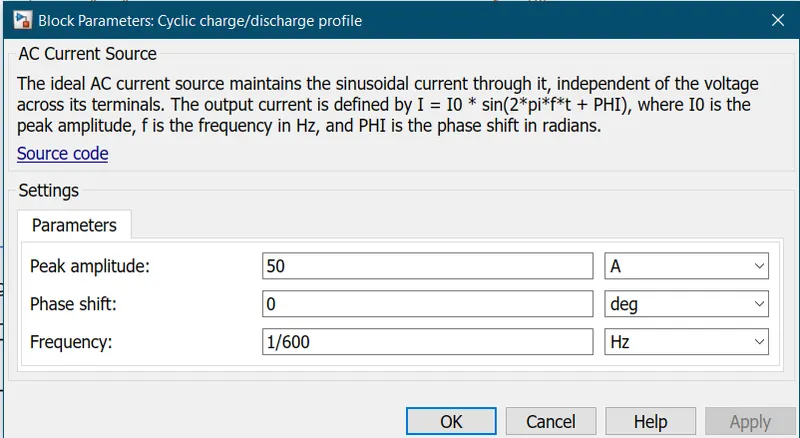
- Teh cyclic/discharge profile is used to simulate the charge and discharge cycles.
- The cyclic charge and discharge cycles are use to load the circuit and parameters are set as shown:
- Parameters:
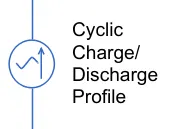
- Parameters:
Model-2:
- The below is the model without a faulty cell with 10 cells in series and a temperature source.
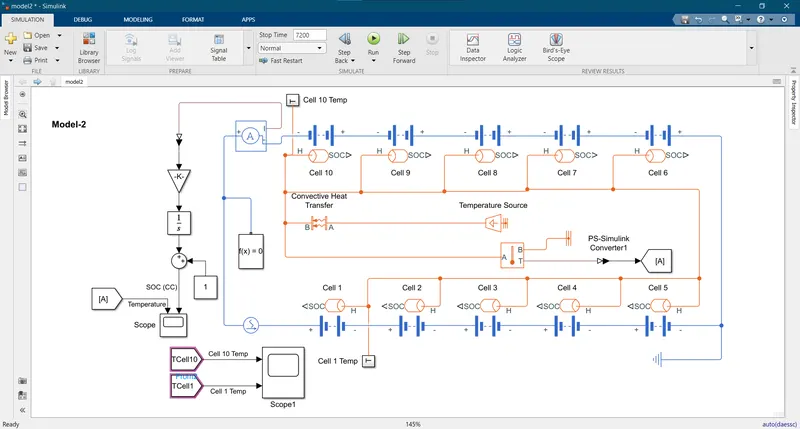
- Here 10 cells ar connected in series and the cyclic charge and discharge is simulated by an AC current source for 7200 seconds(2hours)
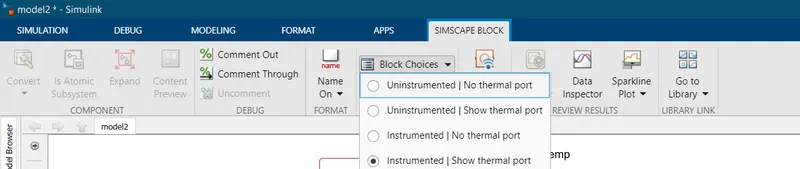
- The cell used is modified to Instrumented and show the thermal port for the thermal characteristics evaluation .
- Blocks used are:
- Battery (Table based).
- Temperature source.
- Temperature measurment.
- Convective heat transfer.
- Current measurment.
- Gain.
- Integrator.
- Sum.
- Constant.
- Goto.
- From.
- Scope.
- Thermal Reference.
- Solver Configuration.
- Temperature source:
- Convective heat transfer:
- Here the charge estimation is done by Coulumb count method.
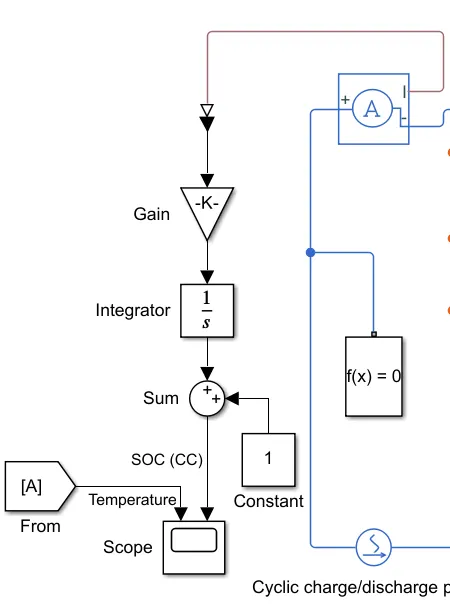
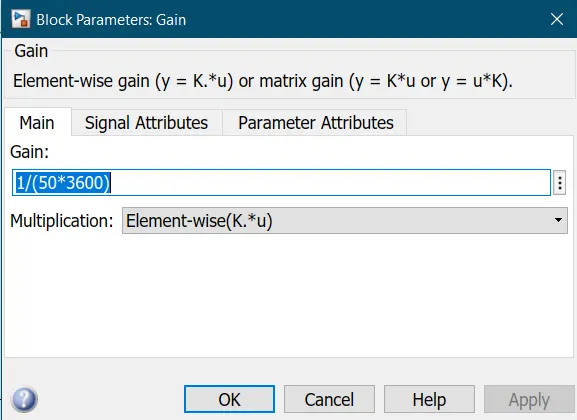
- The above image represents the parameters set for the gain block as AC current has peak amplitude of 50 Amps.
- Temperature source is connected to the cells with the temperature measurment sensor to measure the temperature of the battery as shown below:
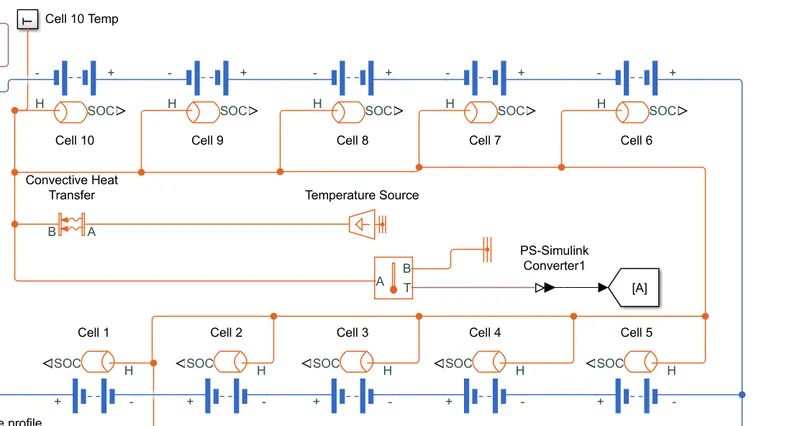
- Here the Goto block is used to output the measured temperature signal to From block viewed in scope.
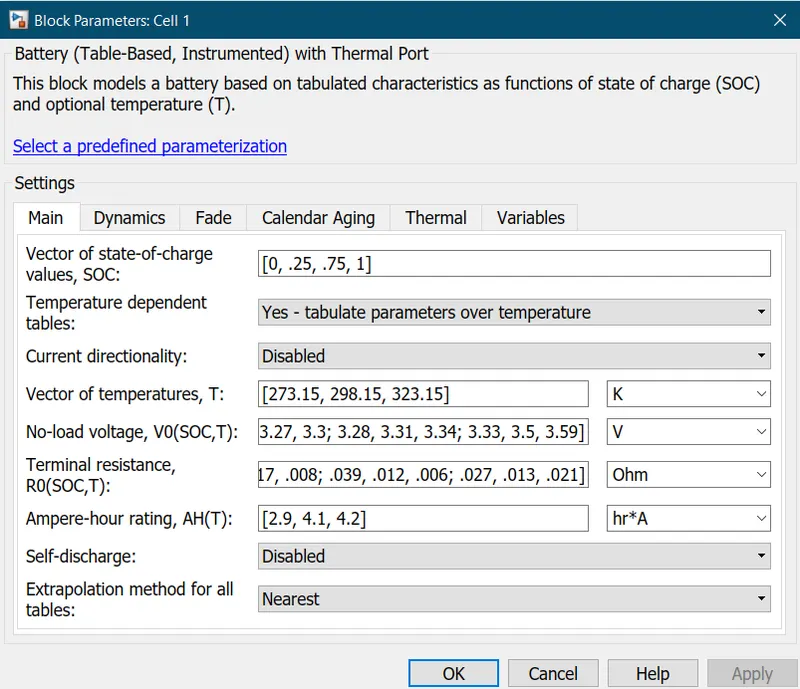
- The parameters of the cells are set to default:
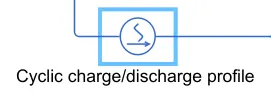
- Cyclic charge and discharge (AC current source):
Results:
- Model-1
- First the ambient temperature is set to 293.15k (peak amplitude - 50 A):
- Temperature of cells:
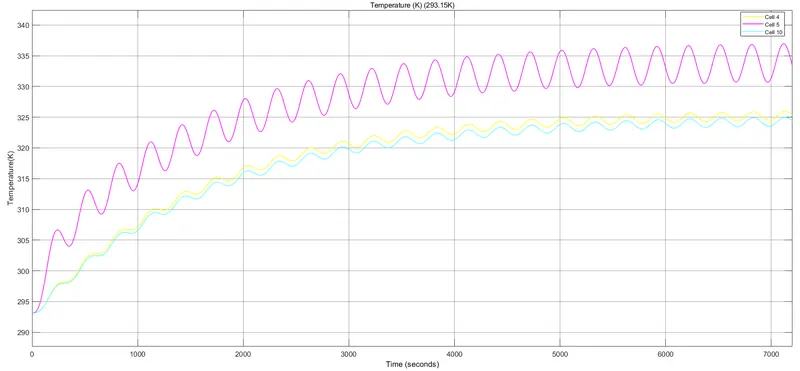
- It is clear from the graph that the faulty cell 5 shows the higher temperature at 336k.
- Other cell4 and cell10 temperature are lower than the cell 5 i.e. 326 k and 325 k.
- State of Chargre (SOC) of cells:
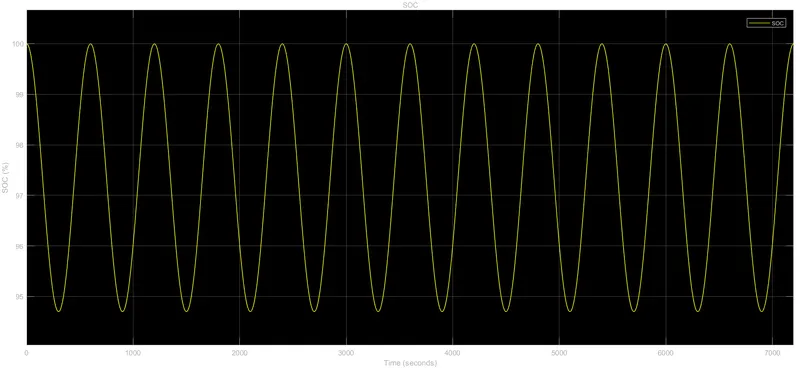
- The graph shows the SOC of the cell pack.
- Initially SOC is at 100% and depletes to 94% for every cycle.
- Temperature of cells:
- For the second case study the temperature was increased to 303.15k (peak amplitude - 50 A).
- Temperature of cells.
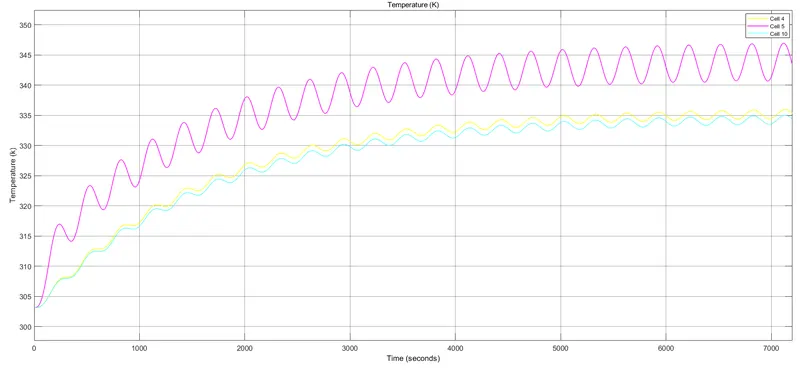
- The temperature of normal (cell 1- 4) and faulty cell (cell 5) are 336 and 347 k respectively.
- State of charge of cells:
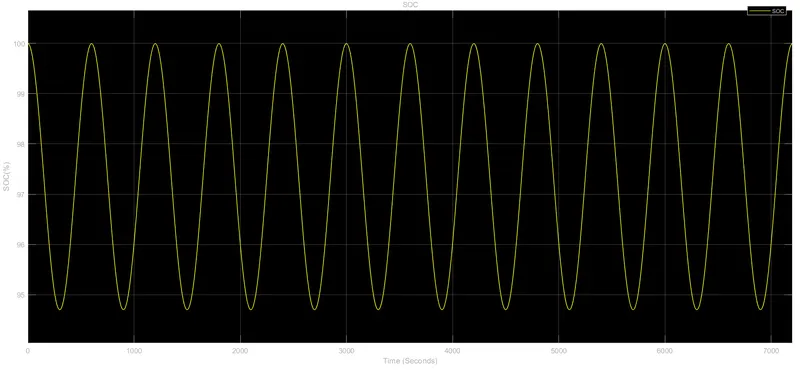
- The SOC of the battery is reduced to 94% from 100%.
- Temperature of cells.
- For the third case the temperature is 293.15 k and the peak amplitude is reduced to 25A.
- Temperature of cells:
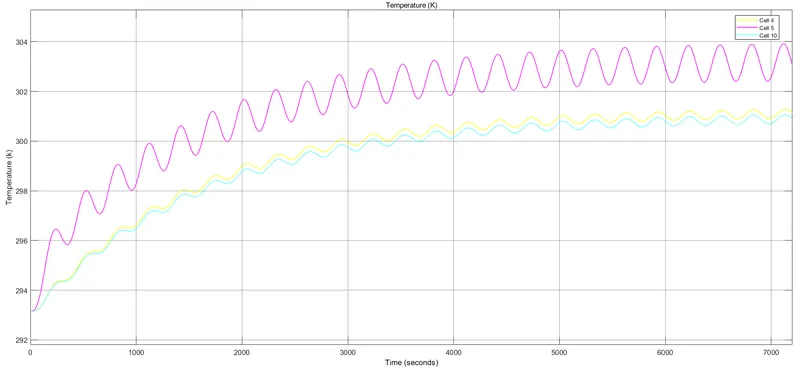
- The temperature of normal (cell 1- 4) and faulty cell are 301 and 304 k respectively.
- State of charge:
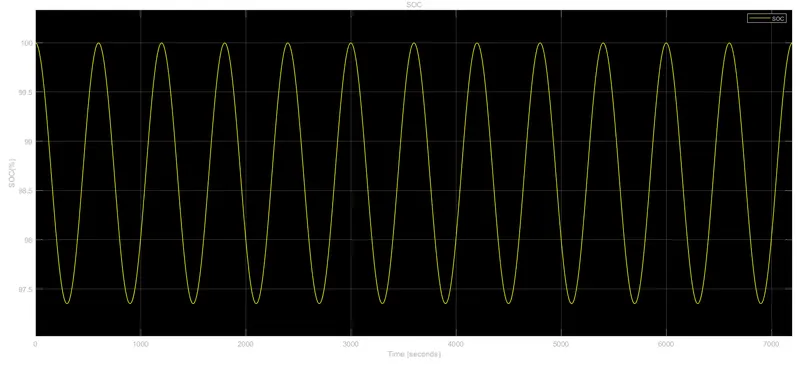
- The SOC of the battery is rediced to 97.5% from 100%
- Temperature of cells:
- For the fourth case the temperature is 303.15 k and peak amplitude is reduced to 25 A.
- Temperature of cells:
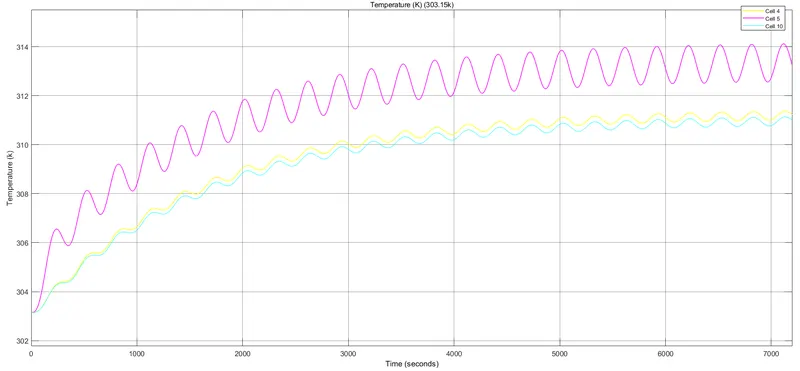
- The temperature of normal (cell 1- 4) and faulty cell (cell5) are 311 and 314 k respectively
- State of charge:
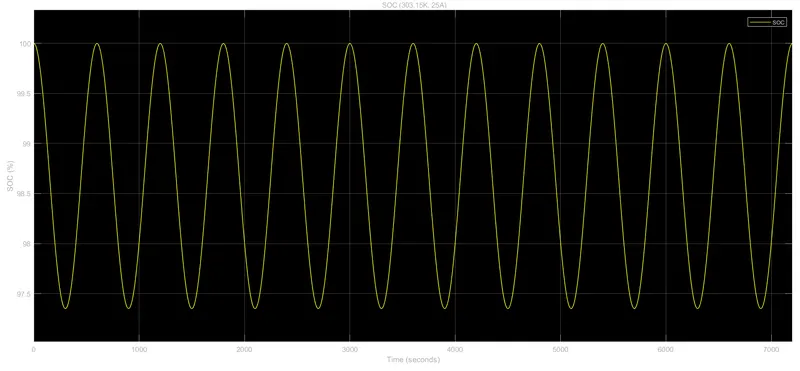
- The SOC of the battery is rediced to 97.5%.
- Temperature of cells:
- First the ambient temperature is set to 293.15k (peak amplitude - 50 A):
- Model-2:
- Temperature is 293.15k.
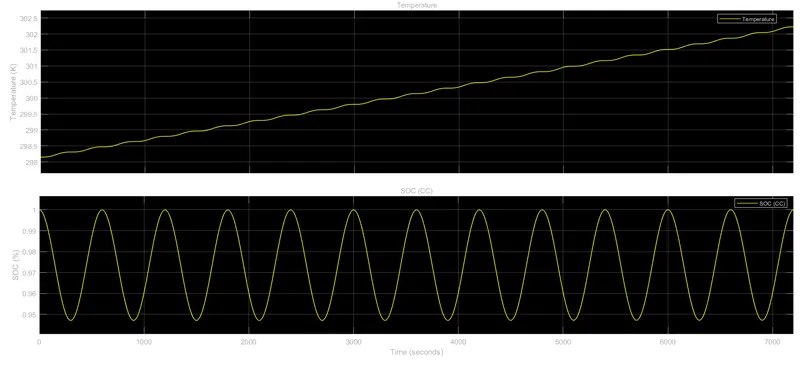
- Temperature and SOC of the cells:
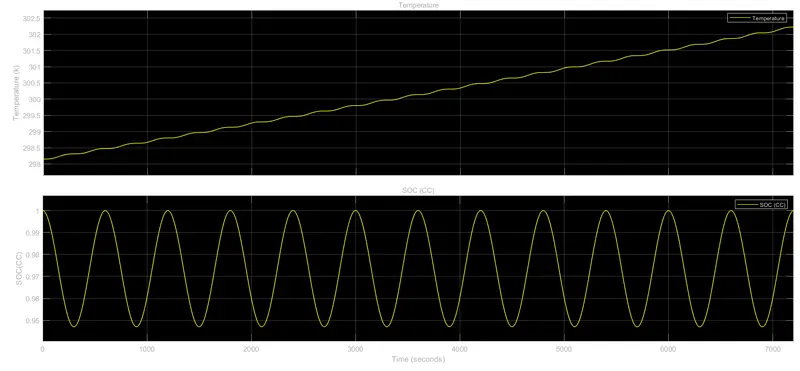
- It can be clearly seeen that for the cyclic charge and discharge of the batteries the temperature increases (302.2k).
- Temperature and SOC of the cells:
- Temperature is 303.15k.
- Temperature and SOC of the cells:
- Temperature and SOC of the cells:
- Temperature is 293.15k.
Conclusions:
- It is clear from the above tests that faulty cells causes the temperature to rise and underpower the whole battery pack, at this state the faulty cell may cause harm to the system and even become hazardus.
- As the ambient temperature is increased the cell temperature also increase.
- During the charge and discharge cycles the temperature of the cells must be maintained to optimum level as charging and discharging results in the temperature rise of the cells at different rates.