Project 2 Thermal modeling of battery pack
AIM: For a 10 cell series lithium ion battery model, simulate the thermal effects and compare life cycle performance at various temperatures, charge & discharge rates using MATLAB.
Simulink Model:
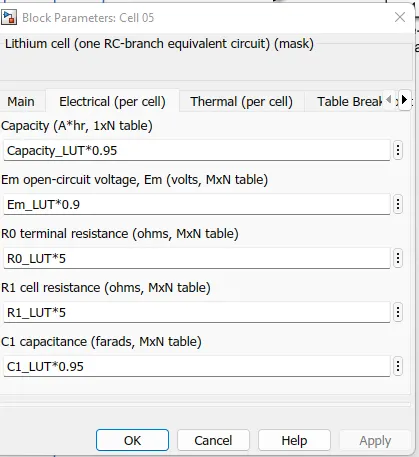
- This example shows how to simulate a battery pack consisting of multiple series-connected cells in an efficient manner. It also shows how a fault can be introduced into one of the cells to see the impact on battery performance and cell temperatures. For efficiency, identical series-connected cells are not just simply modeled by connecting cell models in series. Instead a single cell is used, and the terminal voltage scaled up by the number of cells. The fault is represented by changing the parameters for the Cell 10 Fault subsystem, reducing both capacity and open-circuit voltage, and increasing the resistance values
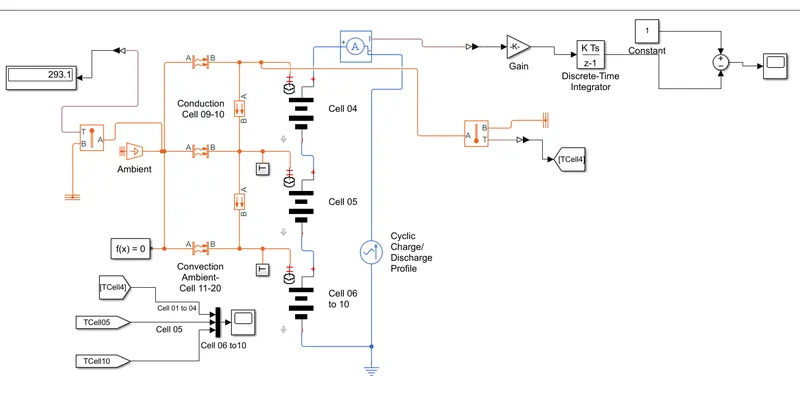
Cell 01 to 10 Subsystems:
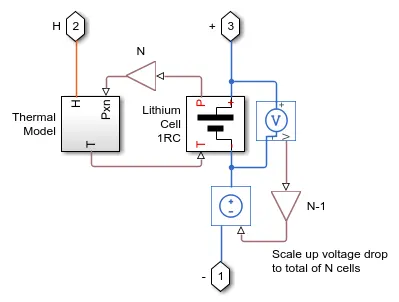
Lithium Cell 1RC Subsystem:
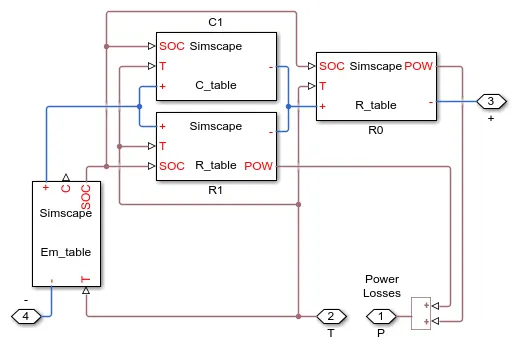
The three subsystems used in this model for the respective cells pack are as below.
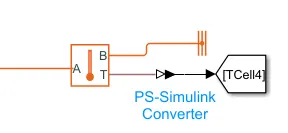
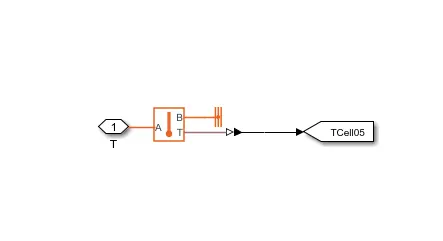
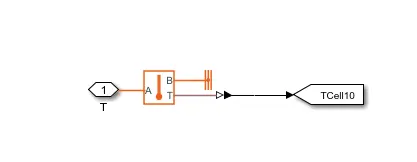
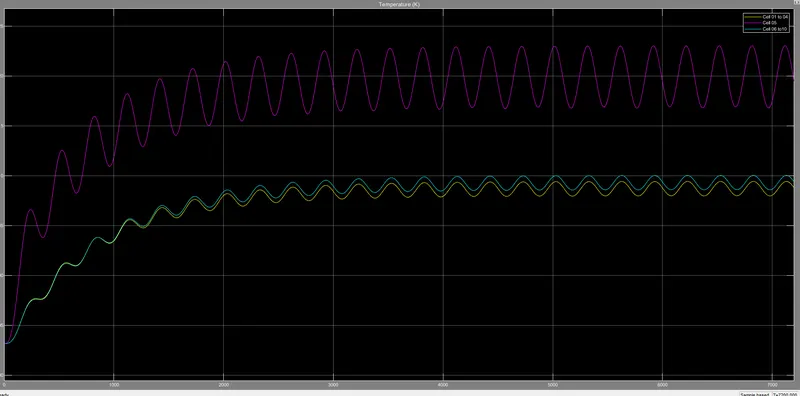
They are all named T and the output of all the subsystem are given to the goto tags which will show the temperature curves using a scope.
Model parameters:
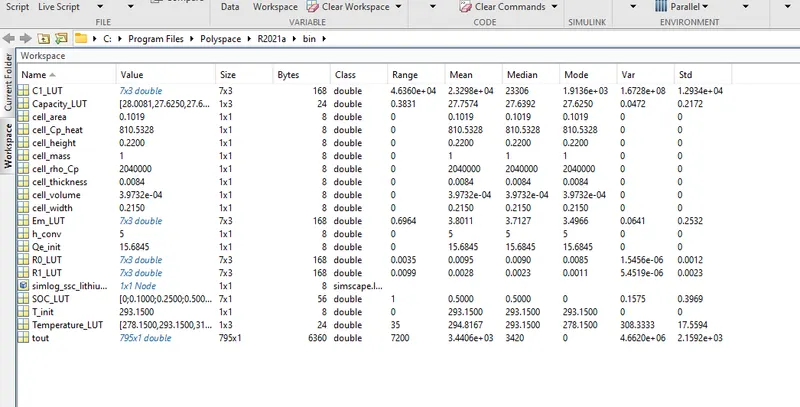
From WorksPace:
AC current Source:
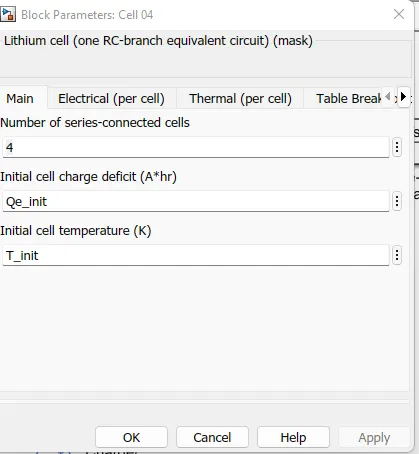
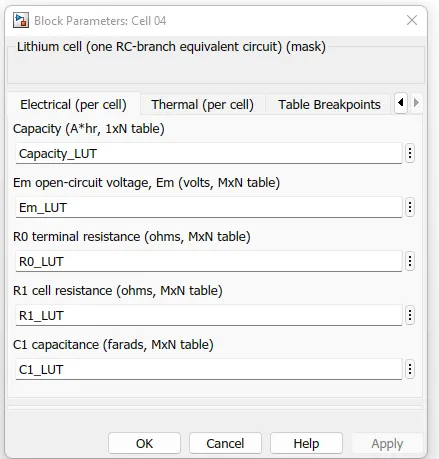
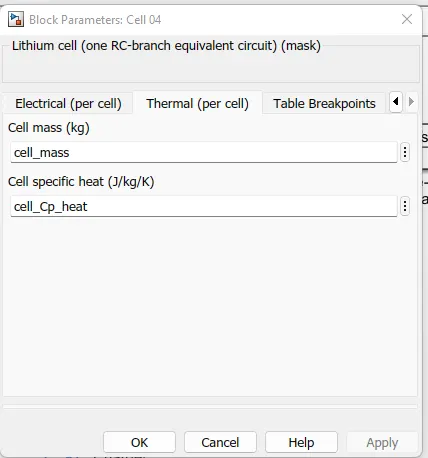
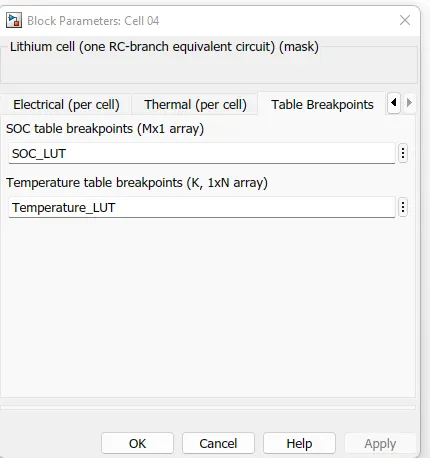
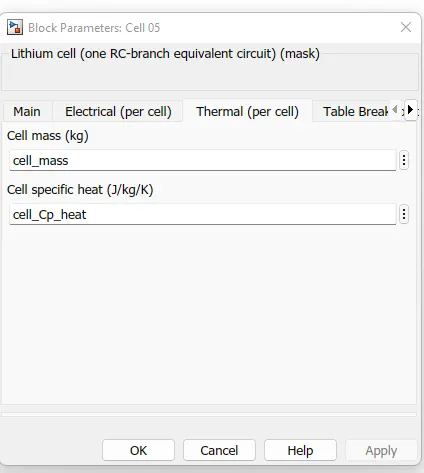
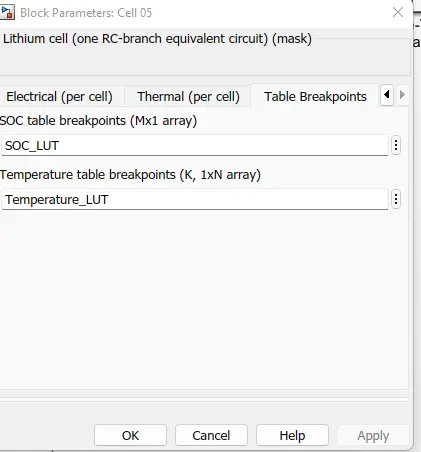
For Cell 5:
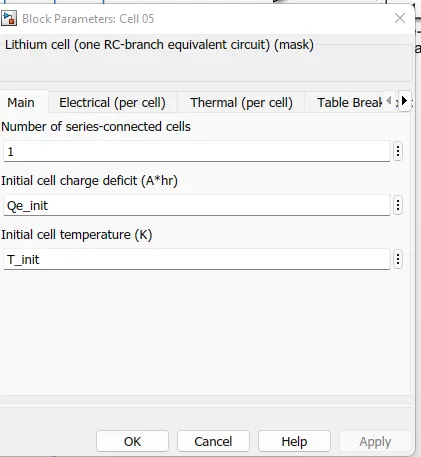
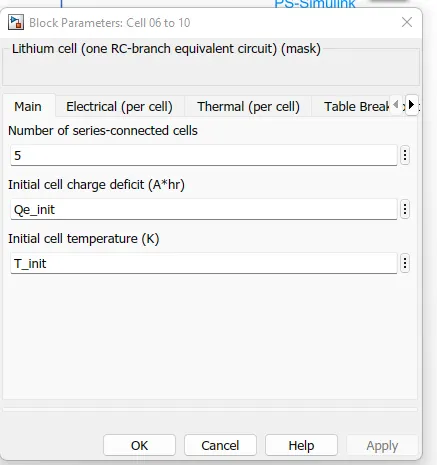
For Cell 6 to 10:
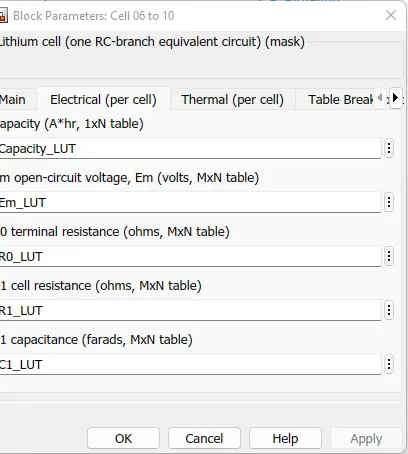
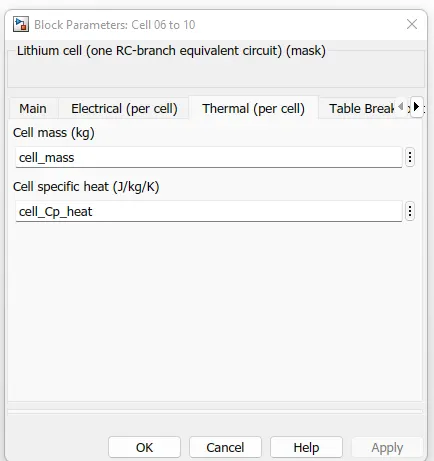
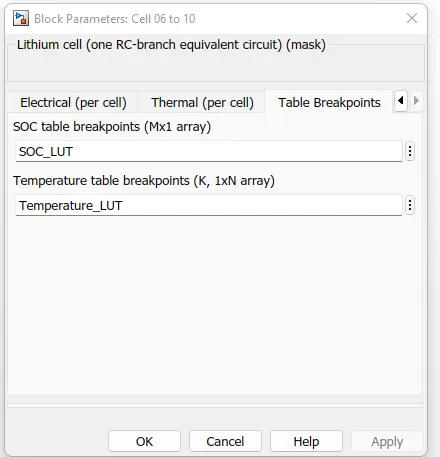
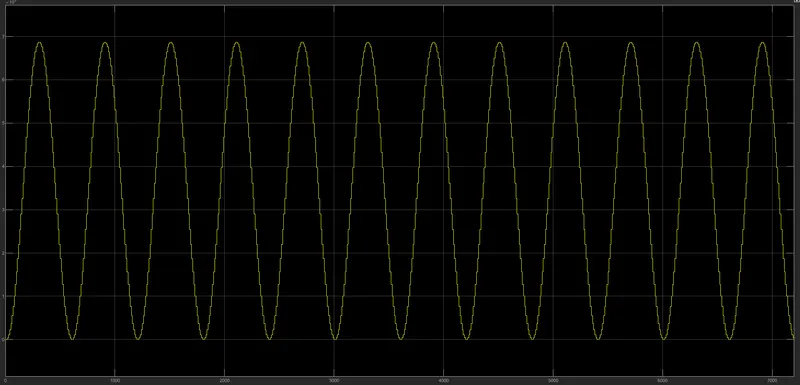
SOC Block:
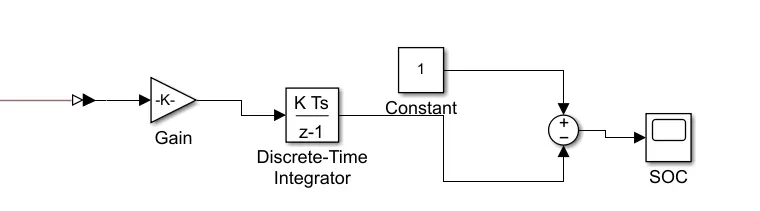
Results:
After running the simulation for 7200 secs we get the following results
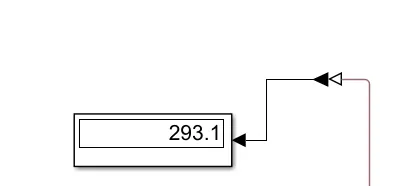
Ambient Tempetature:
Cells Temperature:
SOC:
- The Ambient Temperature provided by the temperature Source is 293.15k
- The Cell pack 1-4 reaches the maximu temperature of 360k Cell pack 5 which is the faulty cell reaches the maximum temperature of 337k.and the cell pack 6-10 reaches the maximum temperature of 325k
- The SOC of the model starts From 0 and goes up to 0.95 in 300 secs and again discharges to 0 in 300 secs and the cycle keeps on repeating.
- The Life cycle of the battery pack is 6 cycles per hour.