AIM:-
For a 10 cell series lithium ion battery model, simulate the thermal effects and compare life cycle performance at various temperatures, charge & discharge rates using MATLAB.
ANSWER:-
Introduction:
When temperatures increase this affects the chemical reactions that occur inside a battery. As the temperature of the battery increases the chemical reactions inside the battery also quicken. At higher temperatures one of the effects on lithium-ion batteries is greater performance and increased storage capacity of the battery. A study by Scientific Reports found that an increase in temperature from 77 degrees Fahrenheit to 113 degrees Fahrenheit led to a 20% increase in maximum storage capacity. However there is a side effect to this increased performance, the lifecycle of the battery is decreased over time. In that same study, it was found that when the battery is charged at 113 degrees versus 77 the lifecycle degradation was much more significant at the higher temperature. For the first 200 cycles the battery performance only degraded 3.3% at 77 degrees; at 113 degrees the performance decreased by 6.7%. That's more than double the amount of degradation! Based on the greater degradation at higher temperatures, the battery lifecycle can be severely diminished due to consistent exposure to extreme heat. While heat exposure does temporarily increase battery capacity the damage that it does to the lifecycle can cause long term problems and prolonged heat exposure should be avoided.
Problem Statement:
01. Model the lithium ion battery pack of 10 cells in series.
02. Simulate the thermal effects and compare life cycle performance at various temperatures, charge & discharge rates.
SOLUTION:-
01:- Model the lithium ion battery pack of 10 cells in series.
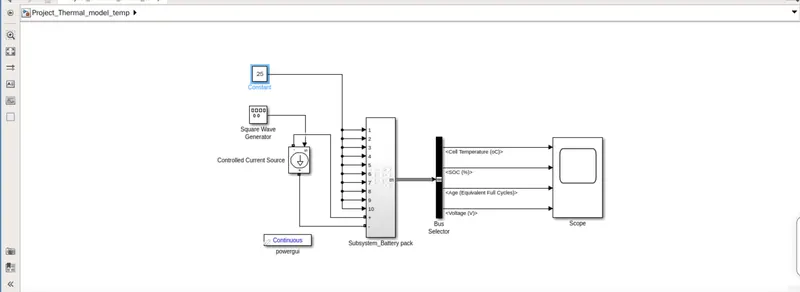
Fig0l: Interface of thermal modeling of a battery pack.
Model consists of following blocks:-
-Constant block: To define the value of the temperature.
-Square Wave Generator: To obtain the input signal according to which the 'Controlled Current Source
block' will fetch the current from the battery.
-Controlled Current Source block: To fetch the current from the battery as defined at input to the
Controlled Current Source block.
-Battery block: To define the source of current and voltage of the system.
-Inuput block: To define the input.
-Output block: To define the output.
-PMC_port block: To define input/output of the subsystem.
-Terminator block: To terminate the connection of the block.
-Bus Selector: To outputs the elements you select from the input bus. The block can output the selected
elements separately or in a new virtual bus.
-Scope: To study and anlyze the results of the simulation of the model.
-Powergui: To support the simulation.
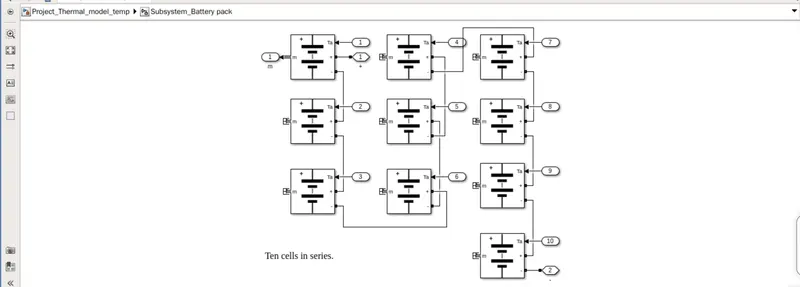
Fig02: Subsystem- Interface of an arrangement of cells in series to form a battery pack.
Making of the Battery pack:
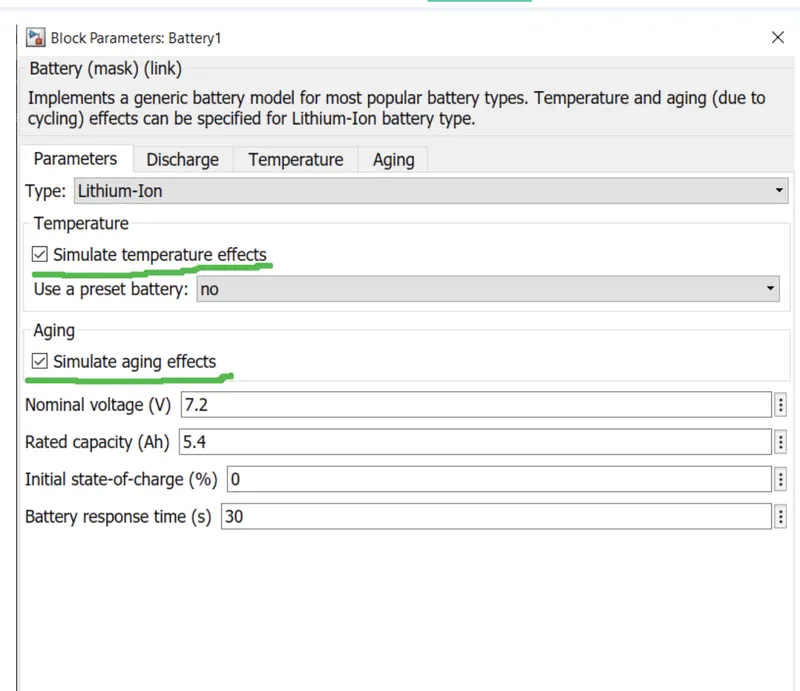
In order to get the simulate the battery for thermal effects and aging effects in the simulation, the blocks
are ticked as shown below in figure03.
Ten cells of 7.2 (V) 5.4 (Ah) are selected and connected in series to form a batterry pack of the 72 (V) and
5.4 (Ah) capacity.
By using the
'PMC-port blocks' this subsystem of a battery pack is connected to the 'Controlled Current
Source'
The last cell in the series (represents the whole battery pack's output) is connected to the
'Bus Selector'by using the 'Output block' to get the required output. Output of the remaining nine cells are terminated.
In order to define the temperature of each cell, each cell is provided with the 'Input block' which receives
the signal directly from the 'Constant block' defining the temperature input.
Fig03: Simulating temperature and aging effects foe selected battery cells.
The basic parameters of each battery cell of the battery pack are kept as shown above in figure03.
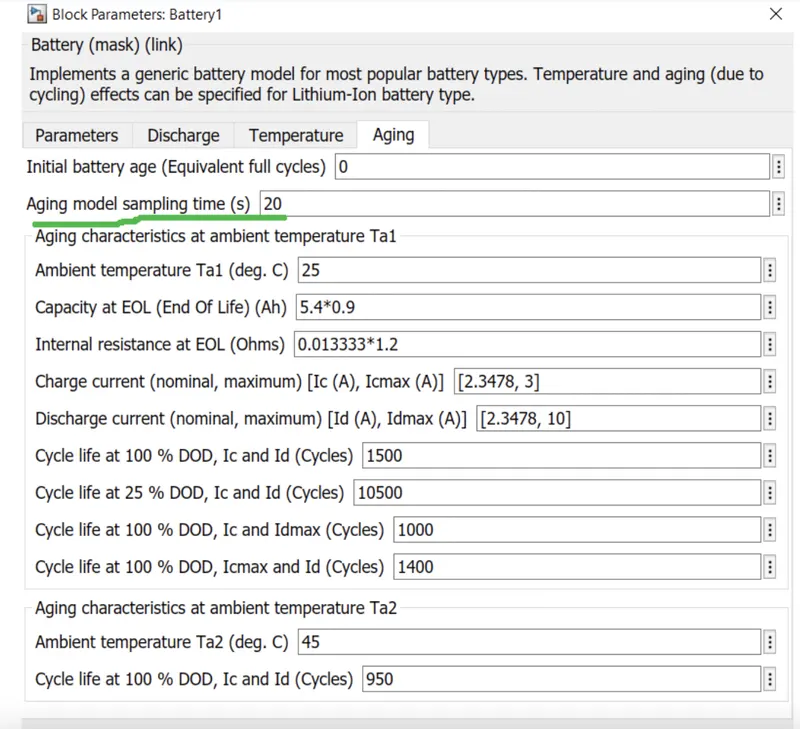
Fig04: Setting aging model sampling time as 20 seconds.
The'Aging model sampling time'of each battery cell of the battery pack is set as 20 seconds as shown above in figure04.
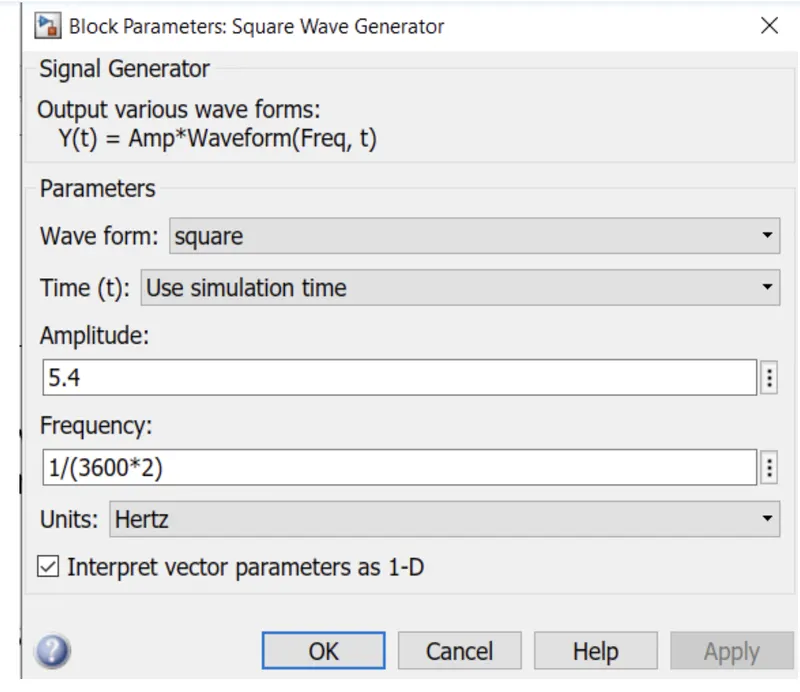
Fig05: Setting up basic paras of the square wave generator block.
The parameters for the 'Square Wave Generator' block are set as shown above in figure05.
Amplitude of the square wave defines the charging and discharging rates of the battery.
That means at 5.4 C-rating the battery will get charged within an hour and also it will get discharged within
an hour.
Therefore the frequency of the 'Square Wave Generator' is kept as (1/3600*2).
02.
Simulate the thermal effects and compare life cycle performance at various temperatures, charge & discharge rates.
a. Simulating the thermal effects and comparing life cycle performance at various temperatures:
Case-I: Temperature is 77 degrees Fahrenheit i.e. 25 degrees Celsius.
For simulation:
-In order to get the simulate the battery for thermal effects and aging effects in the simulation, the
blocks are ticked.
-The 'Aging model sampling time' of each battery cell of the battery pack is set as 20 seconds,
-Input value of the 'Constant block' is set as 25 (degrees Celcius)
-That means at 5.4 C-rating the battery will get charged within an hour and also it will get discharged
within an hour.
- The frequency of the 'Square Wave Generator' is kept as (1/3600*2)
-Since one battery cycle is, one charge and one discharge of a battery. We selected simulation time as
(7200*10) i.e. ten battery cycles.
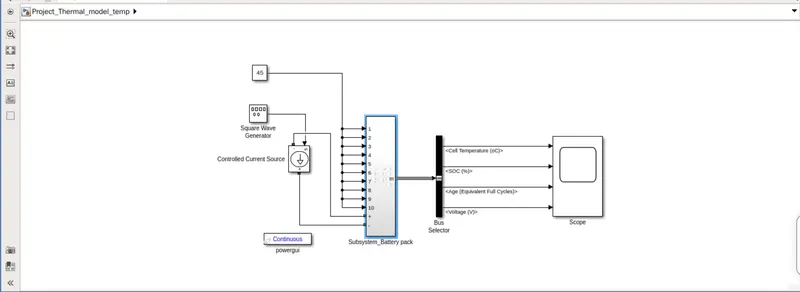
Fig06: Model interface for Case-I.
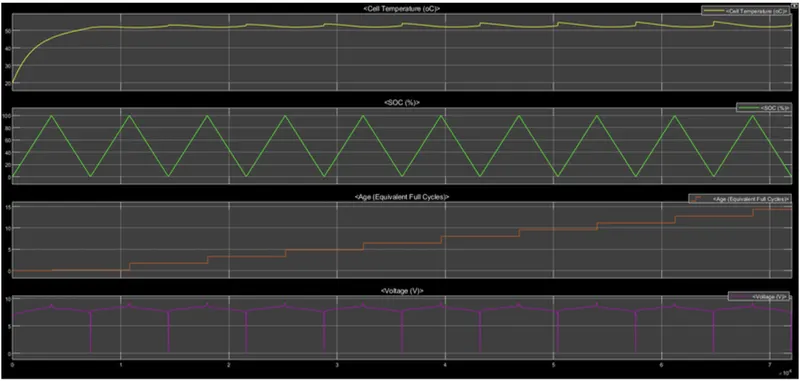
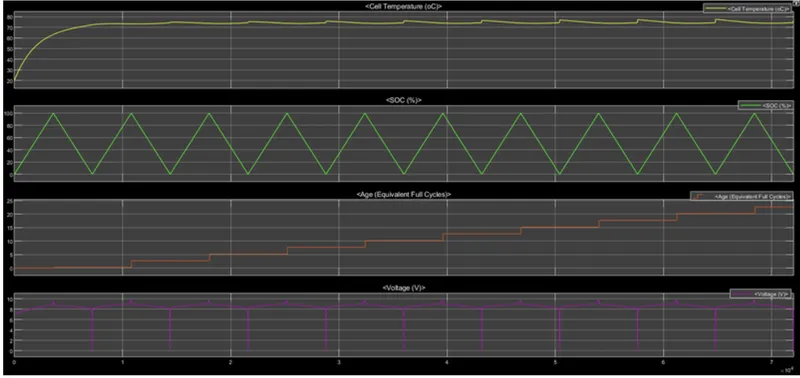
Fig07: Results for Case-I.
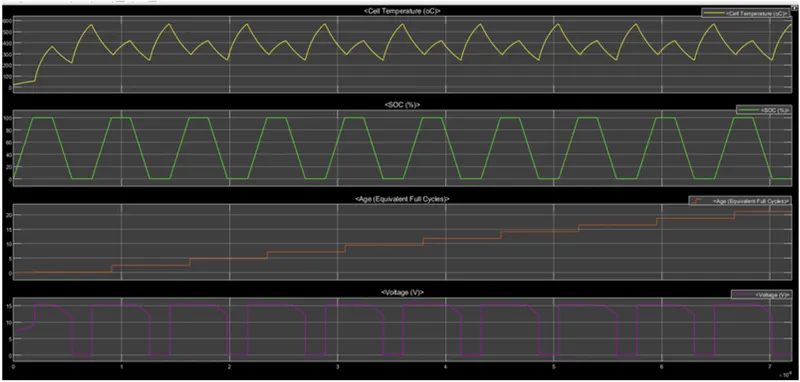
Since the number of cells used to configure the battery are ten, the average temperature of the battery pack increases nearly about 52 degrees celcius.
It can also be seen that temperature rises during charging of the battery whereas it decrees during the
discharge of the battery.
The maximum value of the voltage attained by the battery is 9 Volts.
After ten complete cycles of the battery pack the battery capacity degrades and reaches to 86% of it's rated capacity and aging effect reaches to 14 equivalent full cycles.
Case-II: Temperature is 113 degrees Fahrenheit i.e. 45 degrees Celsius.
For simulation:
-In order to get the simulate the battery for thermal effects and aging effects in the simulation, the
blocks are ticked.
-The 'Aging model sampling time' of each battery cell of the battery pack is set as 20 seconds
-Input value of the 'Constant block' is set as 45 (degrees Celcius).
-That means at 5.4 C-rating the battery will get charged within an hour and also it will get discharged
within an hour.
-The frequency of the 'Square Wave Generator' is kept as (1/3600*2)
-Since one battery cycle is, one charge and one discharge of a battery. We selected simulation time as
(7200*10) i.e. ten battery cycles.
Fig08: Model interface for Case-II.
Fig09: Results for Case-II.
Since the number of cells used to configure the battery are ten, the average temperature of the battery pack increases nearly about 75 degrees celcius.
It can also be seen that temperature rises during charging of the battery whereas it decrees during the
discharge of the battery.
The maximum value of the voltage attained by the battery is almost 10 Volts.
After ten complete cycles of the battery pack the battery capacity degrades and reaches to 78% of it's rated capacity and aging effect reaches to 22 equivalent full cycles.
COMPARISION OF THE RESULT:-
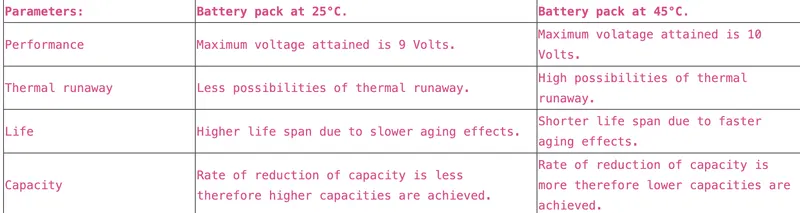
Table01: Comparision of results of different temperatures of the battery pack.
b. Simulating the aging effects and at various charge and discharge rates:
Case-I: Charge/Discharge rate is 0.5C(2.7) of rated capacity.
For simulation:
• In order to get the simulate the battery for thermal effects and aging effects in the simulation, the
blocks are ticked.
• The 'Aging model sampling time' of each battery cell of the battery pack is set as 20 seconds,
• Input value of the 'Constant block' is set as 25 (degrees Celcius).
• That means at 2.7 C-rating the battery will get charged within every two hours and also it will get
discharged within every two hours or only half of the battery will get charged within an hour.
• The frequency of the 'Square Wave Generator' is kept as (1/3600*2).
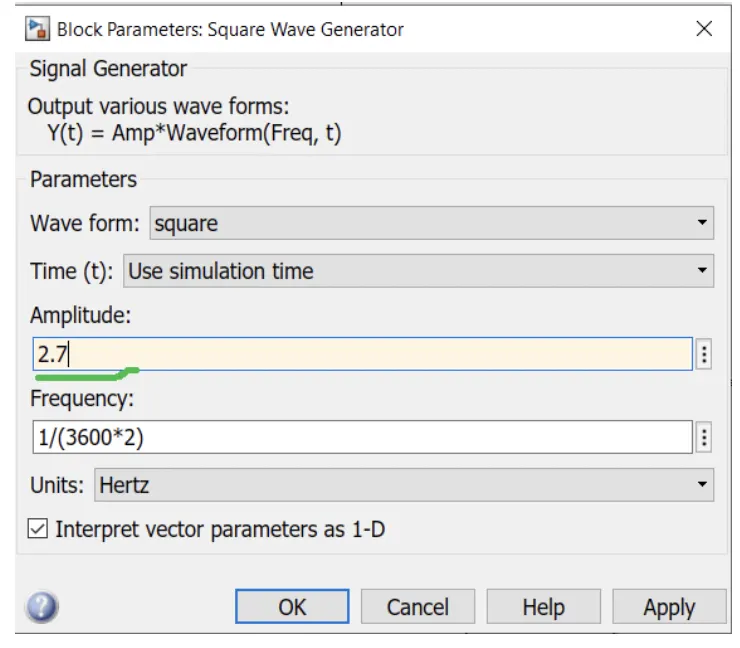 Fig10: Amplitude as 0.5C (2.7 A).
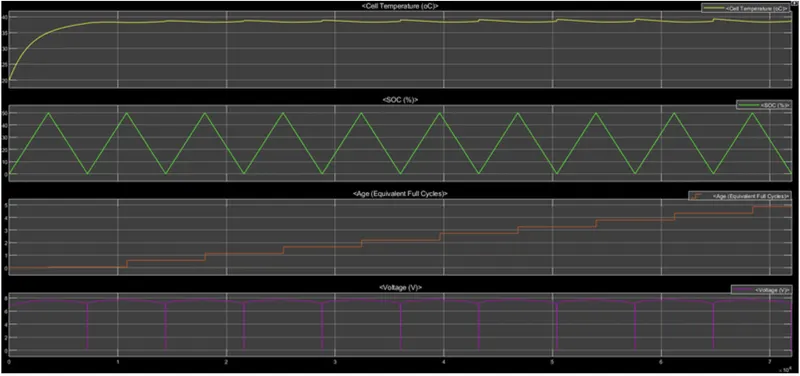
Fig11: Results for 0.5C rating battery pack.
Since the number of cells used to configure the battery are ten, the average temperature of the battery pack increases nearly about 39 degrees celcius.
Only half of the battery is charged and discharged at 0.5C (2.7A) rate within an hour.
After five complete cycles of the battery pack the battery capacity degrades and reaches to 95% of it's rated capacity and aging effect reaches to 5 equivalent full cycles.
The maximum value of the voltage attained by the battery is almost 7.9 Volts.
Case-II: Charge/Discharge rate is 2C(10.8) of rated capacity.
For simulation:
-In order to get the simulate the battery for thermal effects and aging effects in the simulation, the
blocks are ticked.
-The 'Aging model sampling time' of each battery cell of the battery pack is set as 20 seconds
-Input value of the 'Constant block' is set as 25 (degrees Celcius).
-That means at 10.8 C-rating the battery will get charged within every half of hour and also it will get
discharged within every half of hour.
-The frequency of the 'Square Wave Generator' is kept as (1/3600*2).
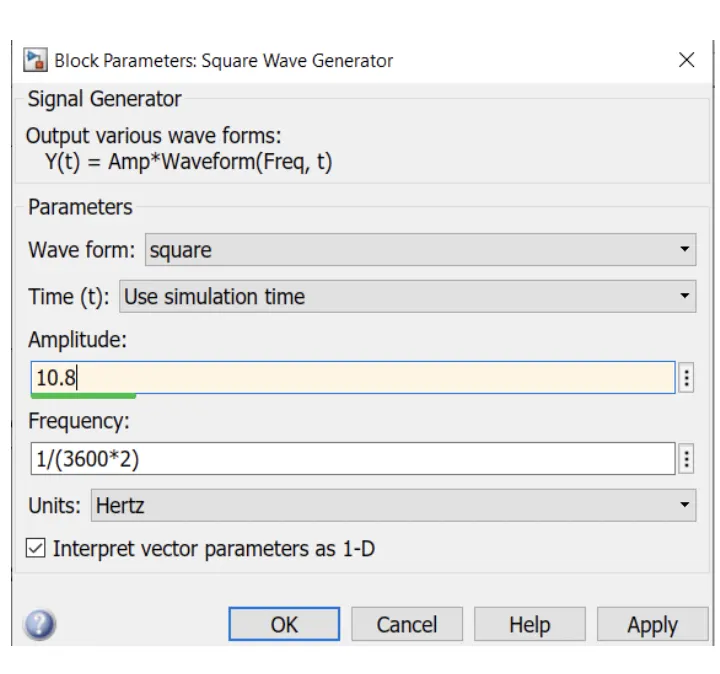 Fig12: Amplitude as 2C (10.8 A)
Fig13: Results for 20 rating battery pack.
At 2C (10.8A) rate charging and discharging takes place for more than required time, i.e. cells are over-
charged and over-discharged after every battery cycle.
Therefore after ten complete cycles of the battery pack the battery capacity degrades and reaches to 78% of it's rated capacity and aging effect reaches to 22 equivalent full cycles.
The maximum value of the voltage attained by the battery is almost 16 Volts.
Conclusion:-
In this study we learnt the thermal effects, aging effects of the battery pack and their effects on the
performance of the battery pack over a period of time.
We also learnt the effects of different charge and discharge rates on the battery pack and it's performance.
We conclude that increase in temperature increases in maximum storage capacity. However there is a side effect to this increased performance, the lifecycle of the battery is decreased over time.