Project - 2 - Meshing on the suspension Assembly
Aim:
- To mesh the given Rear Suspension Assemble model based on quality
Abstract:
- In this project, I have taken a half section of a car rear suspension system where I will perform meshing on different components with 3D, 2D & 1D elements. Also, I will implement the connections to the areas required.
- The components with a uniform thickness of less than 5 mm are captured by the mid-surface technique (2D-elements), spring with 1D elements, and the excess are captured using 3D elements(Tetra elements)
Procedure:
Import geometry & Topological cleanup
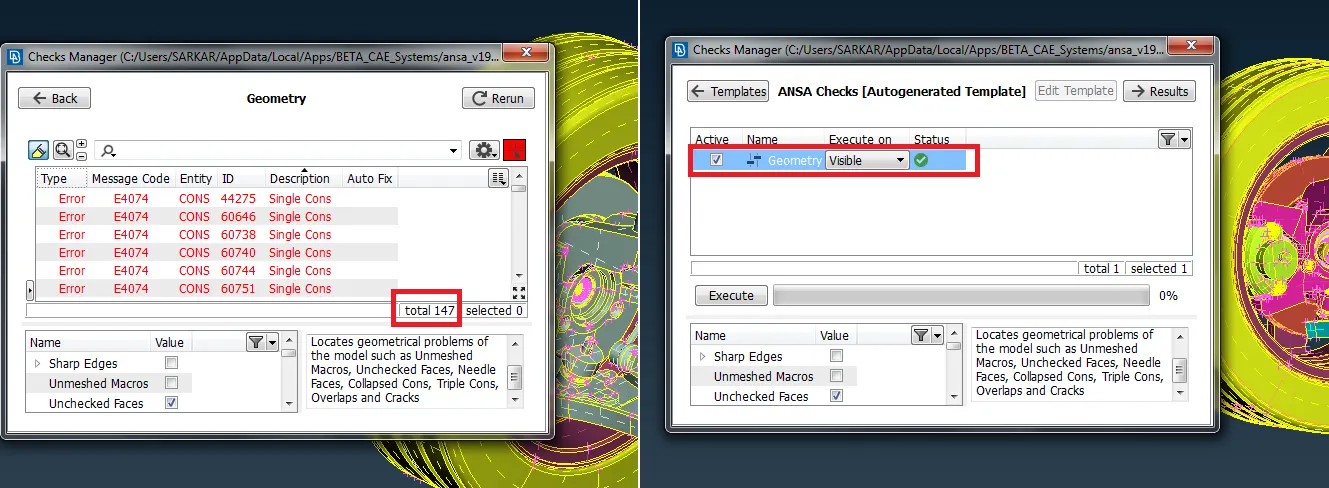
- First of all, we need to import the CAD model into the ANSA interface. Once we are done loading the file do a TOPO over the full geometry. Then go for a geometry check and fix all the topological errors to proceed to the next step
Mid-Surface (Thickness 5mm)
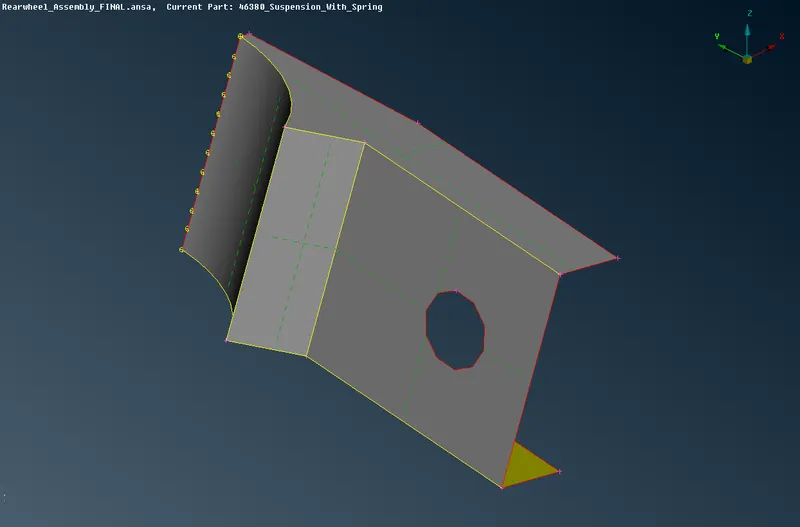
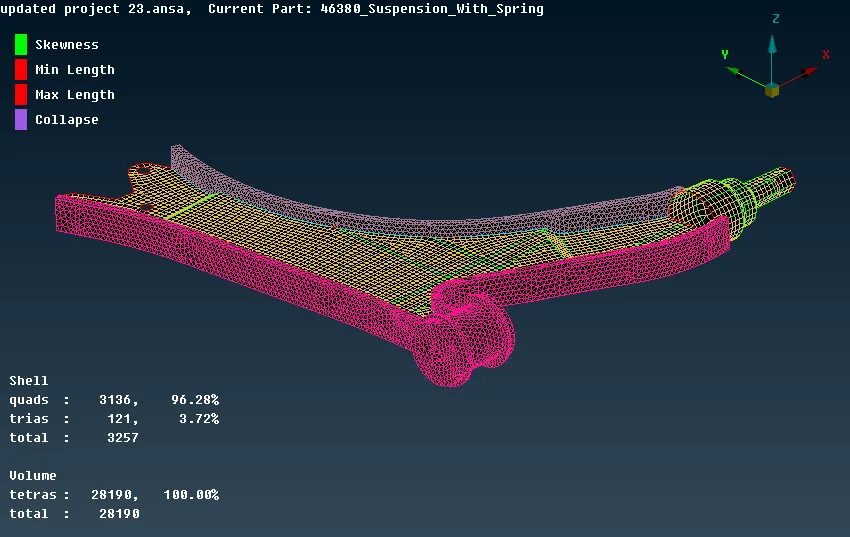
- After completed the Geometry clean-up, the Model should proceed with Mid-Surface if the part has a uniform thickness that should not exceed 5mm. In Mid-Surface, it can be done with Auto or Manual. Auto midsurface can be done using the Casting & Skin option which should have a uniform thickness
- Auto mid-surface will not work due to some complex features and irregular thickness present in the model so Manual Midsurface is suggested. Manual midsurface can be done by measure the thickness of the part and perform the offset option, some symmetry feature middle option can be used
Shell Meshing
Structured Meshing
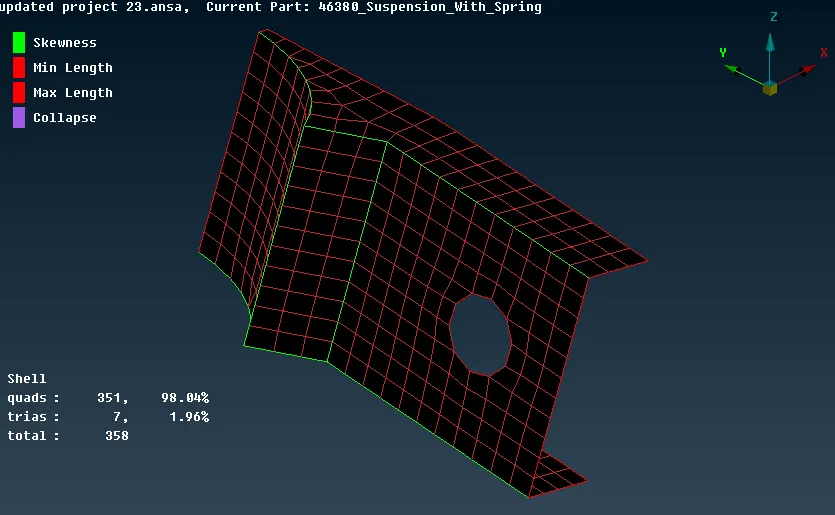
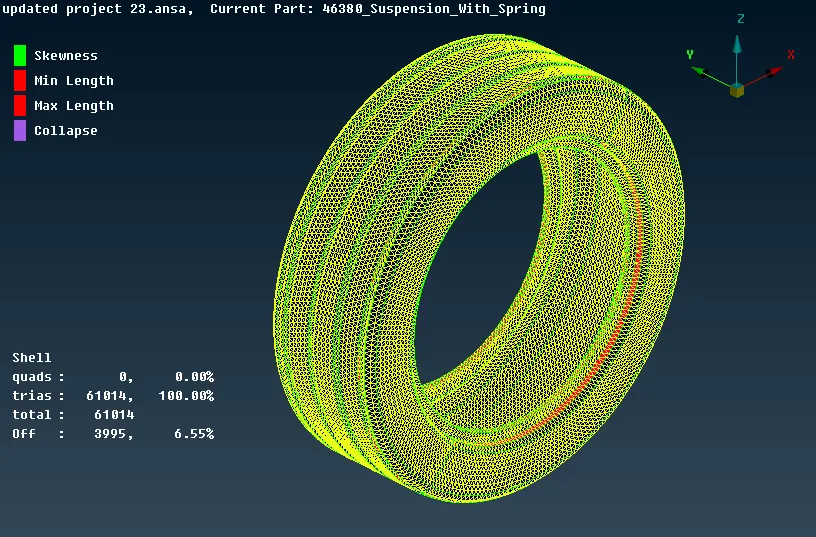
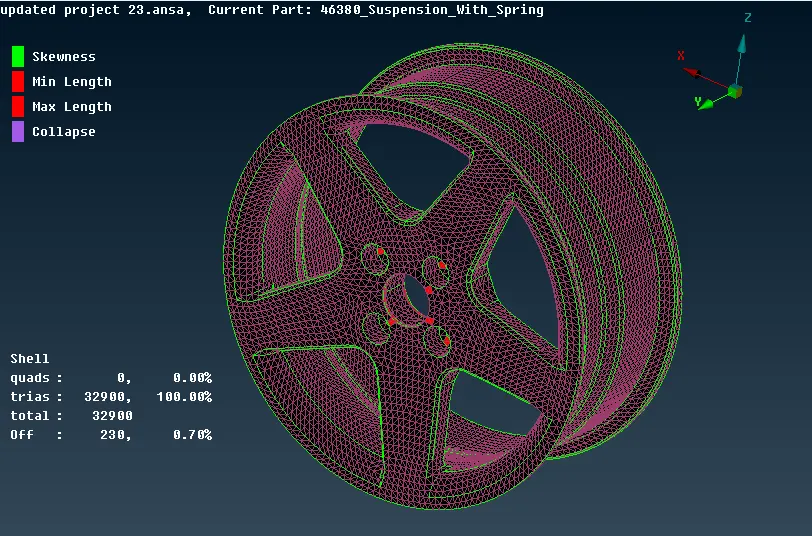
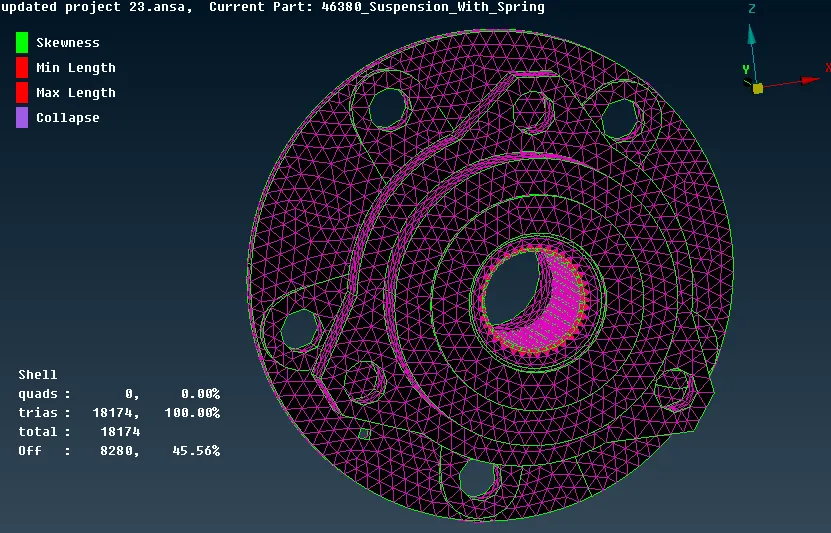
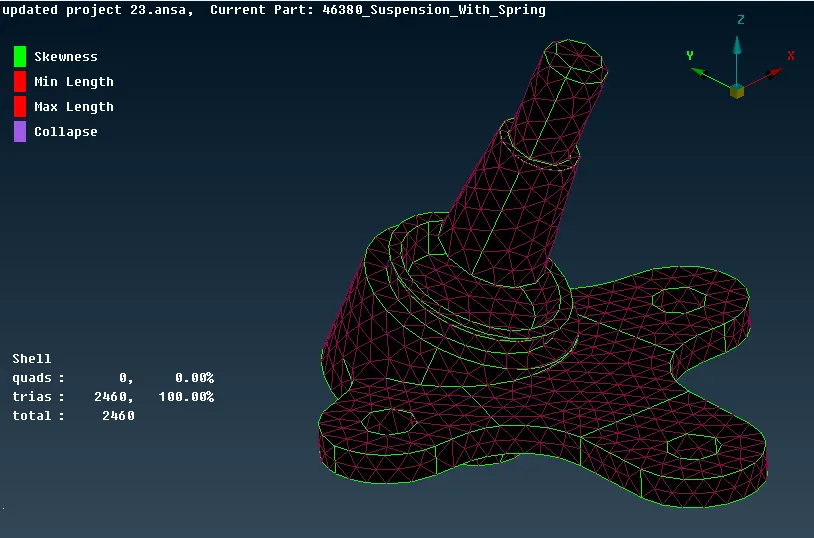
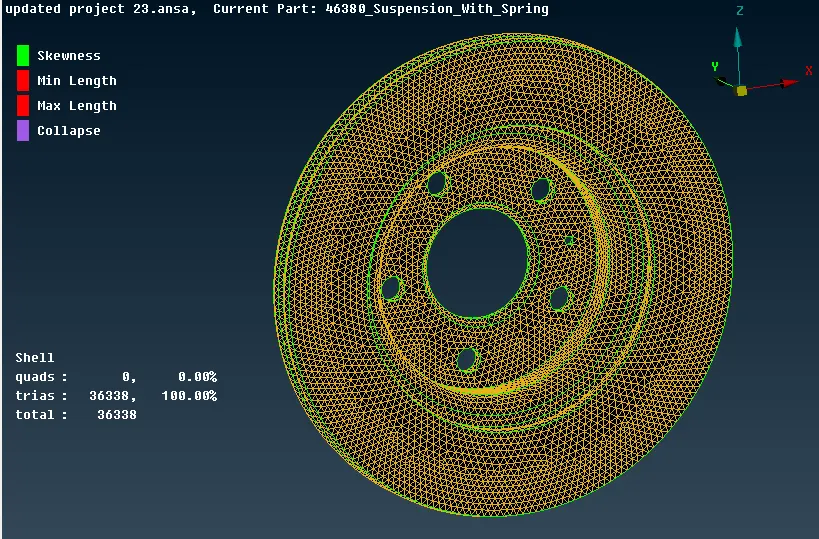
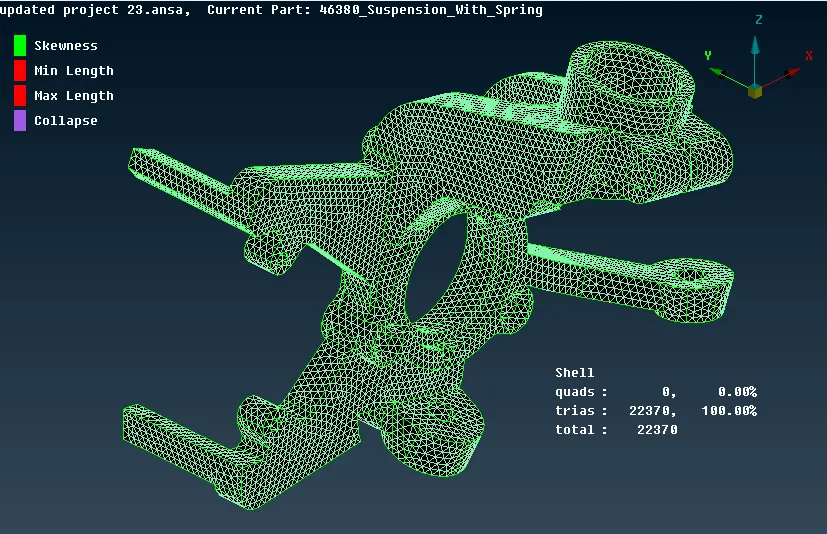
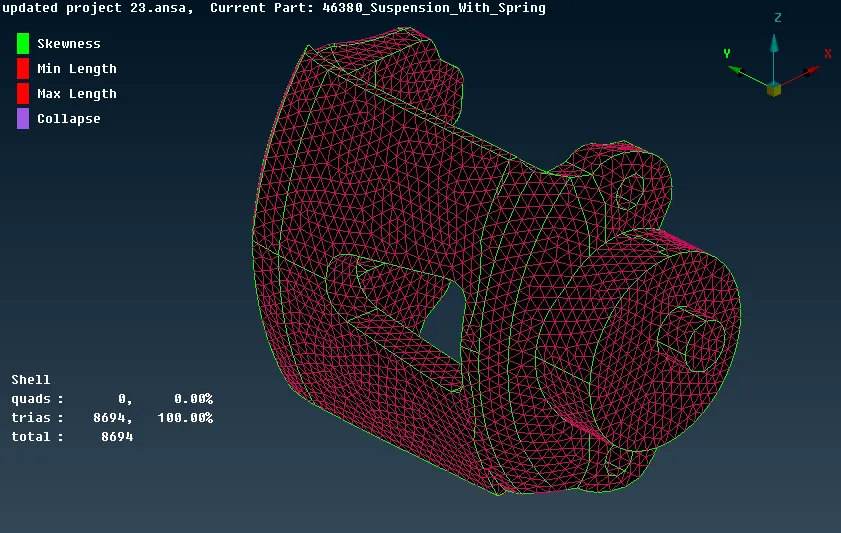
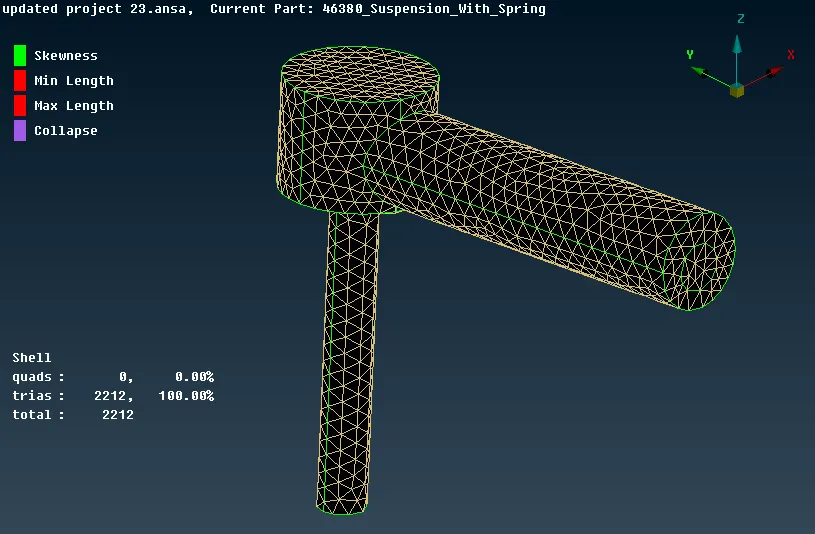
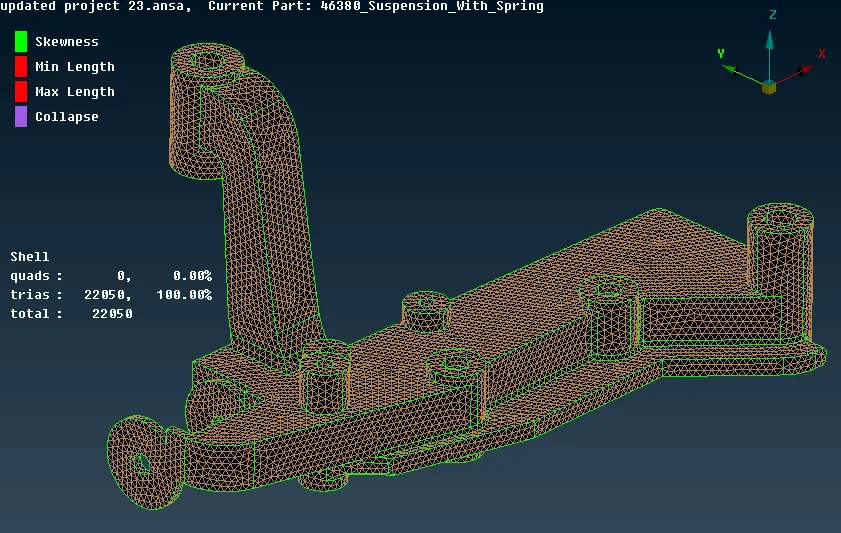
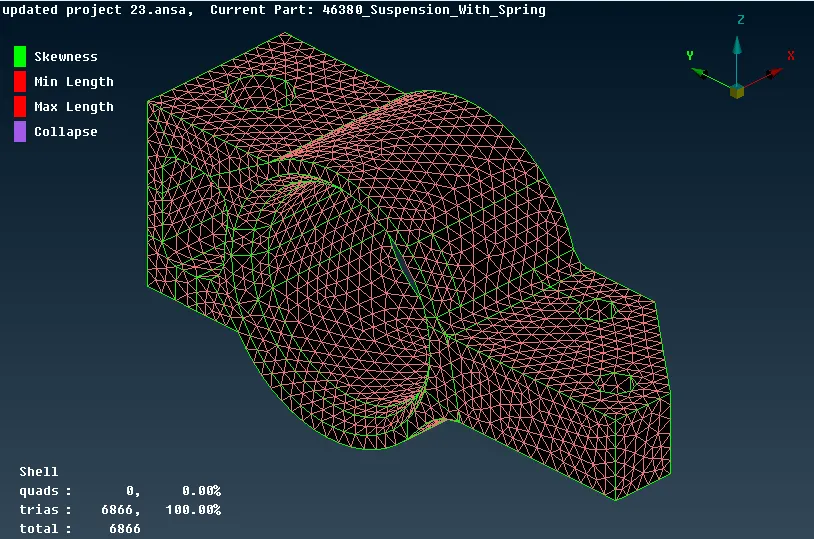
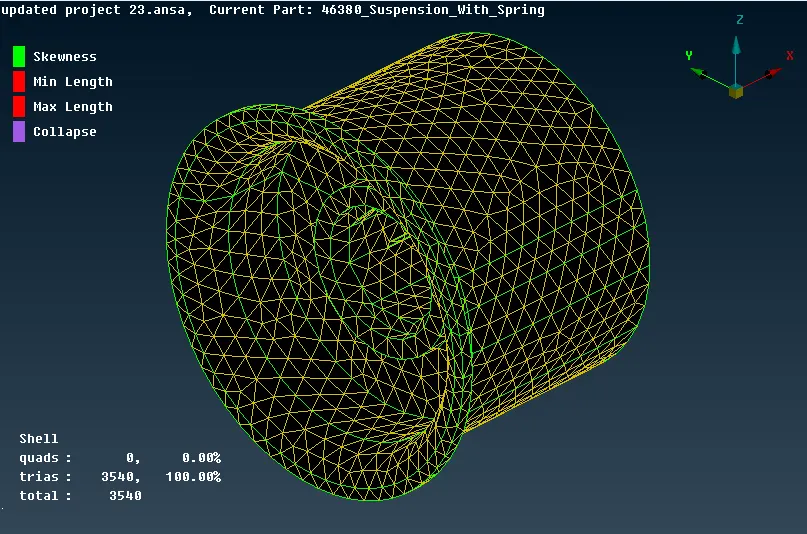
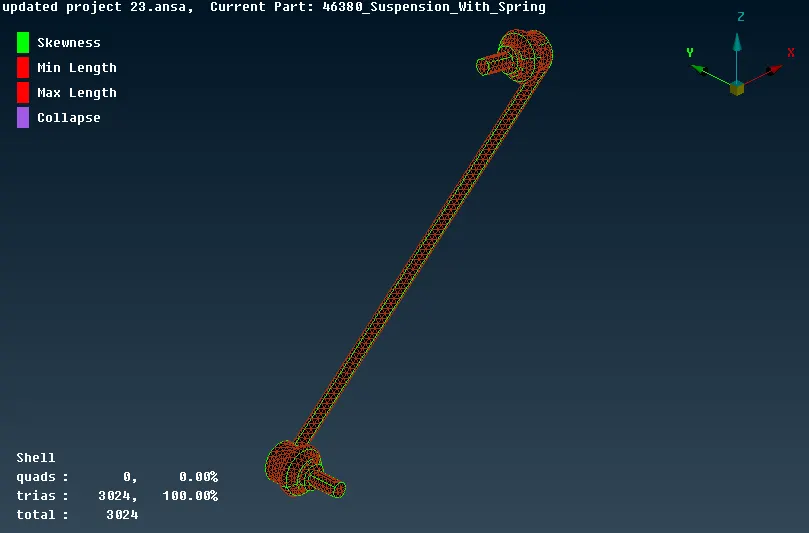
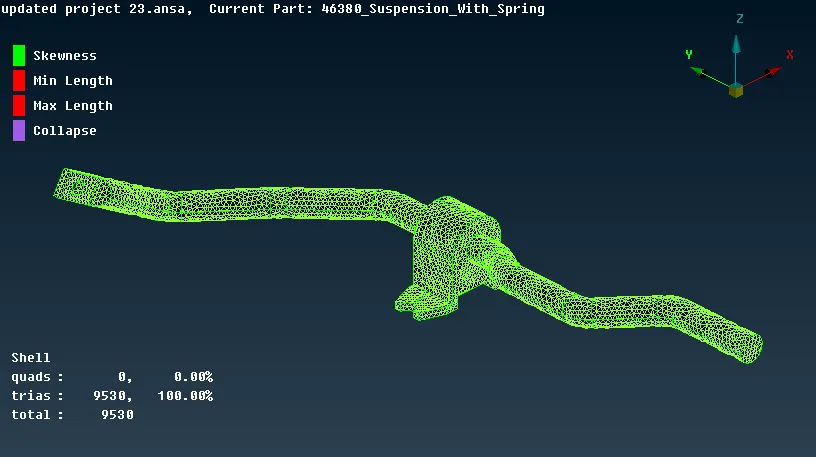
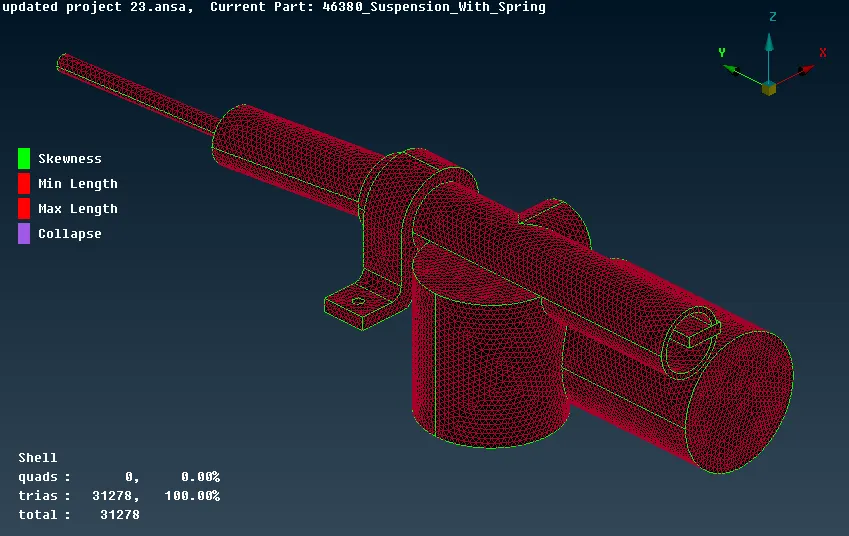
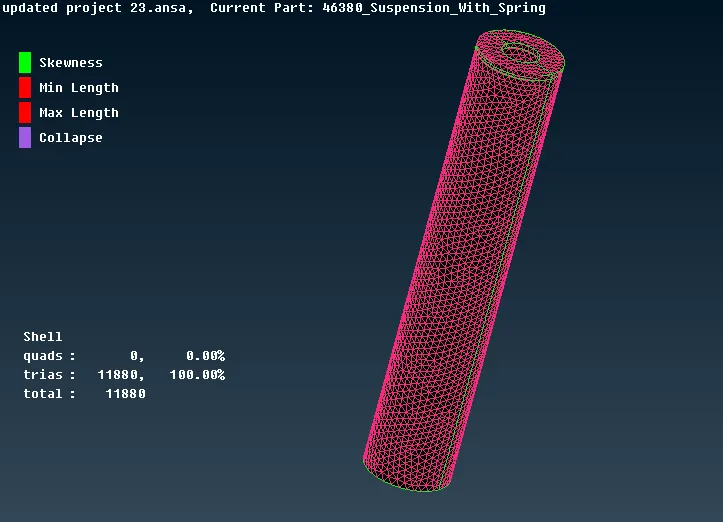
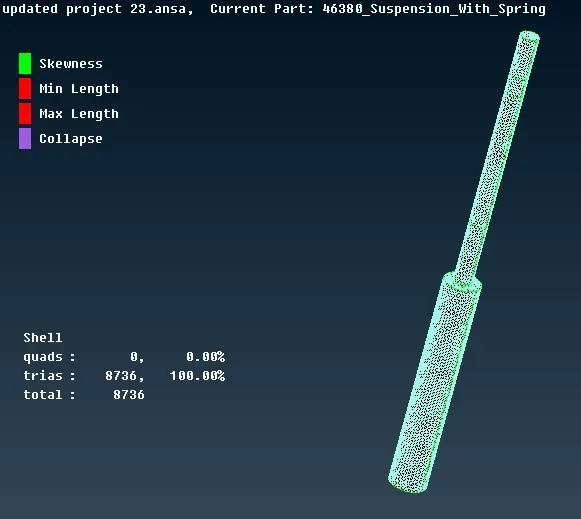
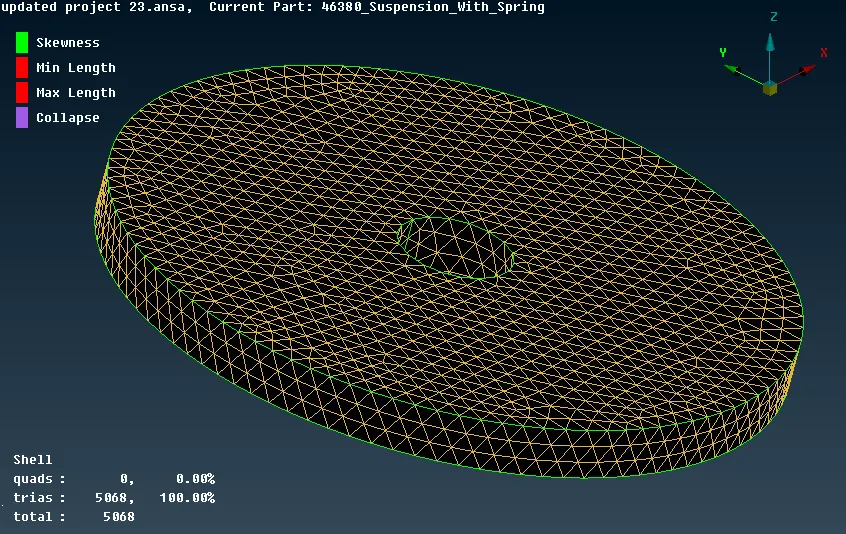
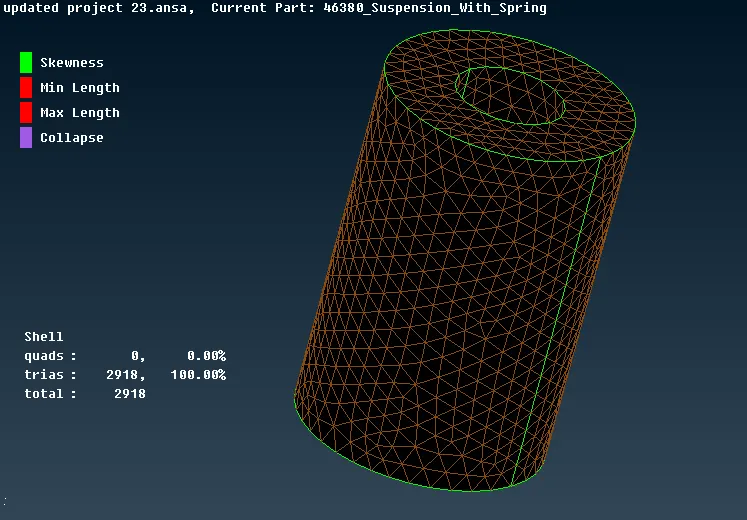
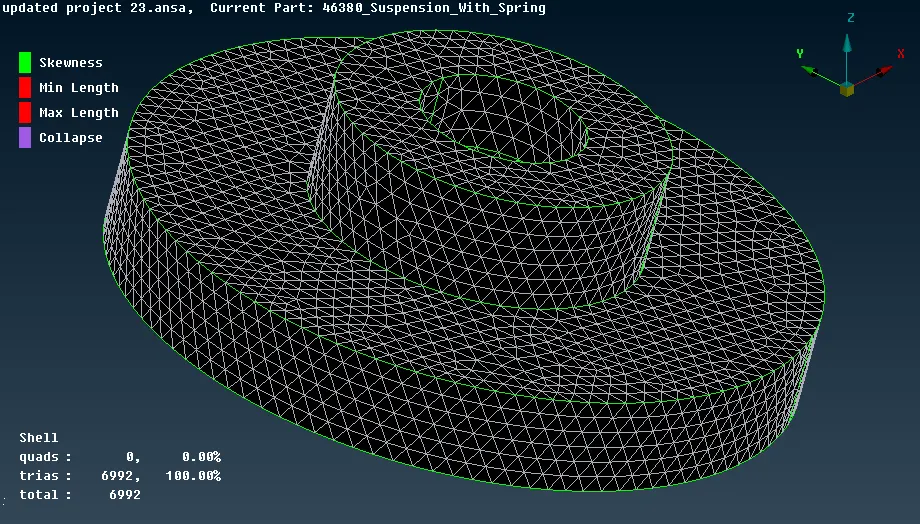
- A structured mesh is defined as a mesh where the inner nodes have the same number of elements around them. Another possible interpretation of a structured mesh is that it follows a given topological pattern that is reproduced in all directions of space. Here, Ortho Tria mesh is applied on the curved surfaces and Tria mesh is applied for the plane surfaces as per the quality criteria. For this model tria, Ortho tria, and mixed element are used based on the quality criteria. There are a few off - elements present in some parts because of the small area and the intersection of neighboring nodes
Connections
The way that some parts of an assembly are connected with each other can be a great factor of influence on the models’ behavior. For this reason, an optimization of the connection type or pattern offers an important improvement to specific model characteristics
Different types of connectors such as:
- Two Nodes RBE2
- Cluster RBE2
- RBE2-CBUSH-RBE2
- RBE2-HEXA-RBE2
- Nut and Bolt representation
- Seam weld data representation
Different operations such as:
- Converting and Realizing operations
- Connection Manager operations
- Assigning mass to a node
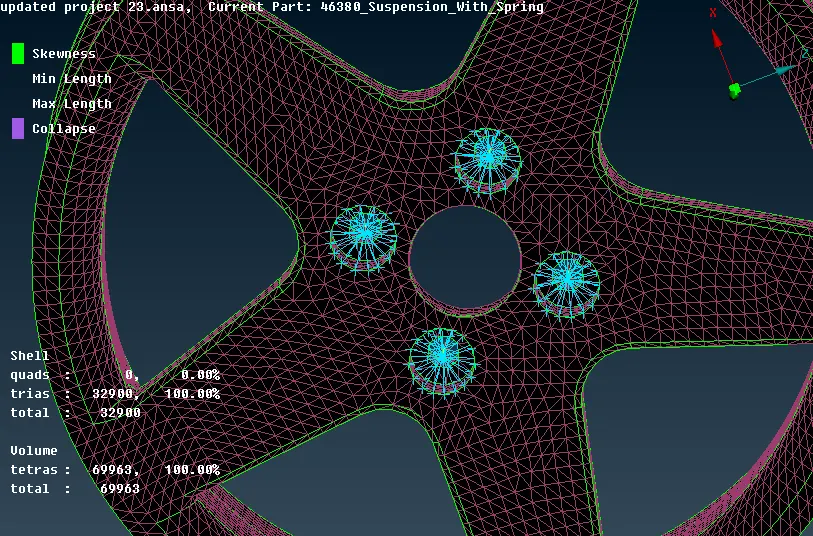
In this Rear Suspension Assemble model the connections have been done as Cluster RBE2, Two Nodes RBE2, Seam weld, and C_bar (1D)
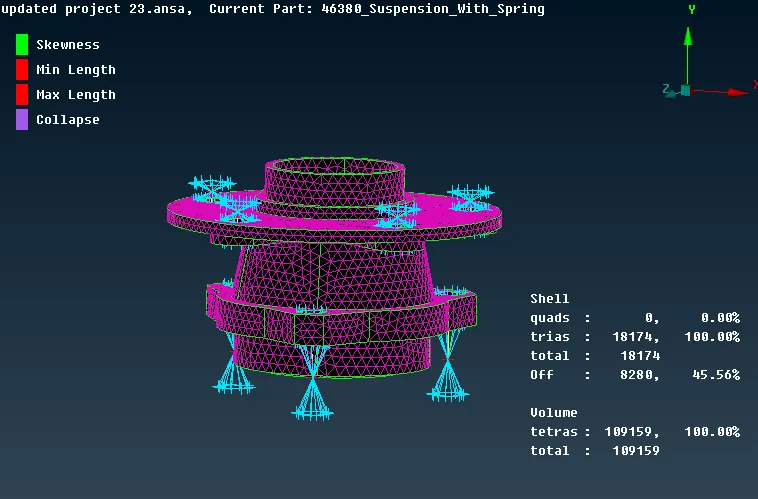
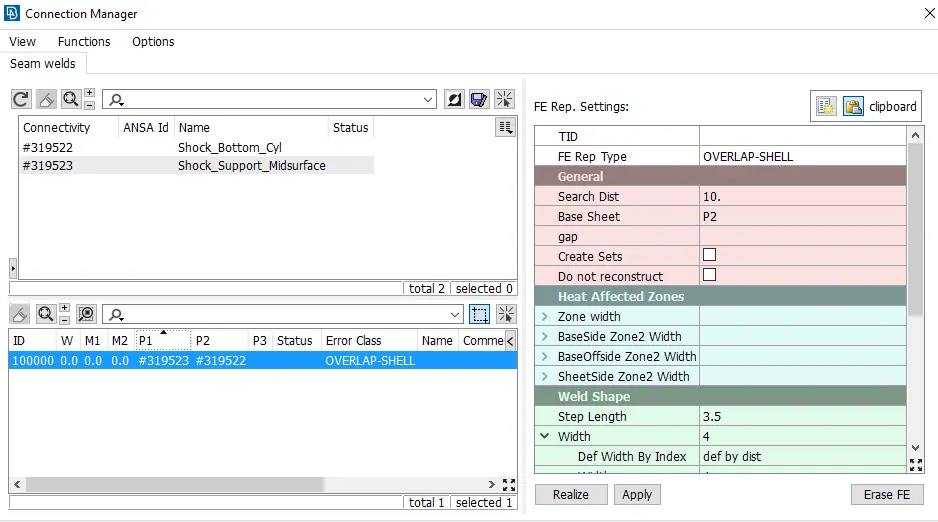
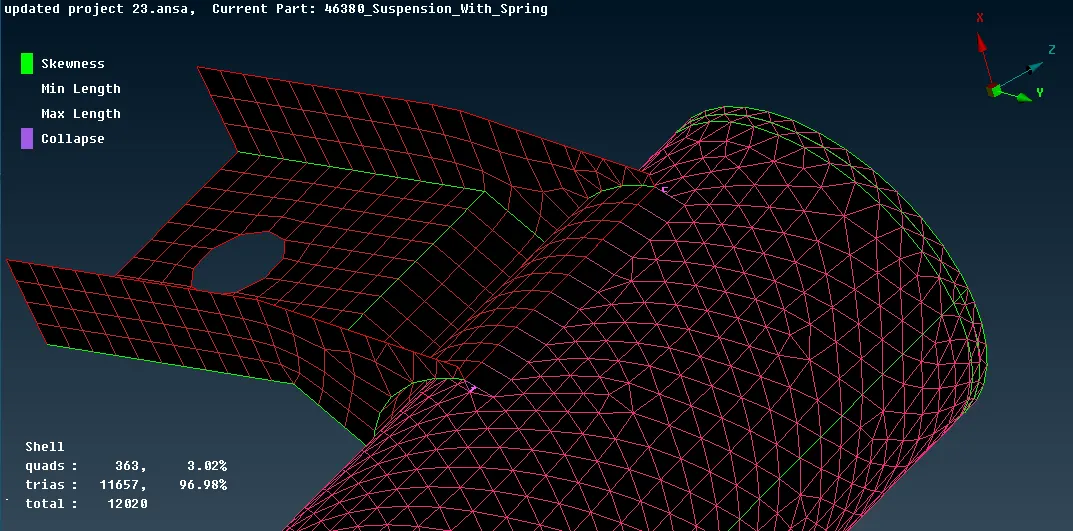
3). Seam_Weld: Initially the cons should be converted to curve and assign that curve to the Seam line. By using connection manager, assign the parts to be weld and the type of weld. Here, Overlap_shell is used because of parallel parts. The two parts selected as Shock_side_support (P1) and Shock_bottom_cyl (P2) which is also assigned as the base part
C_bar:
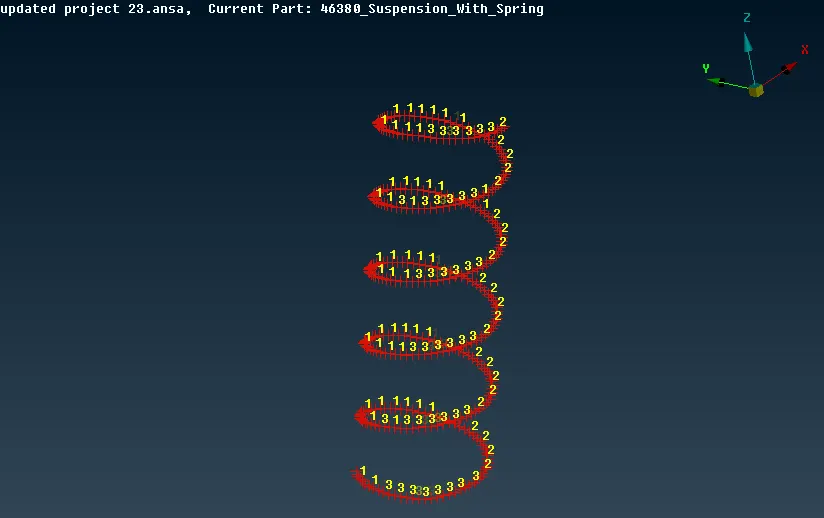
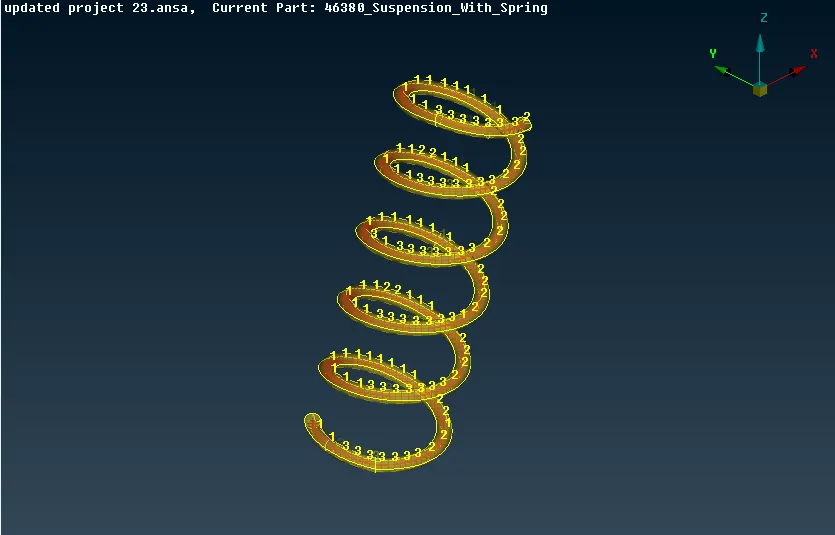
- By converting the 2D coil spring into a 1D spring, the whole surface area of the spring is taken to the curve middle and assigns that whole curve in C_bar and gives the particular target length. In the dialog box, the radius should be assigned so that it will automatically calculate the area of the spring and when we assign the line thickness as the shell it became a 2D spring
Mirror
CONCLUSION:
- In the Rear Suspension Assemble model, checked for geometry clean up by part wise using PID region and created as separate Part ID. Meshing has been done by measuring the thickness of each part as per the quality criteria
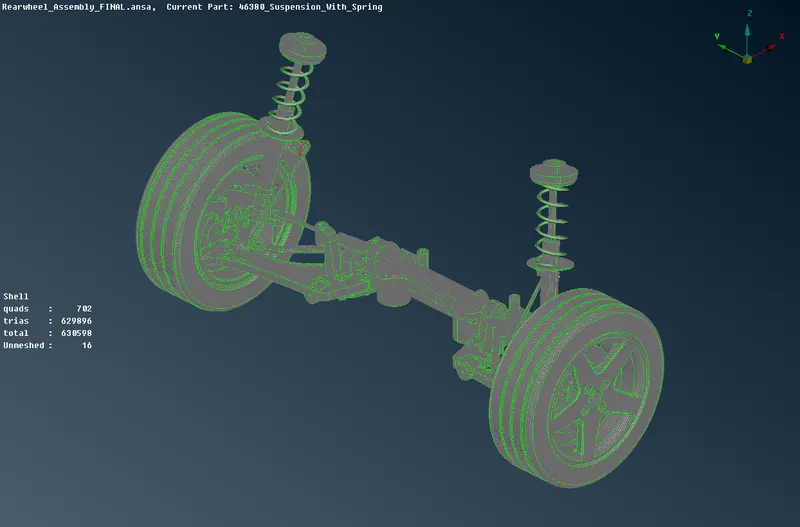
- If the thickness is <5mm, Midsurface is to be done otherwise tria mesh is to perform for that part. After meshing all the parts, the model was selected for symmetry and shown in the result