Project - 2 - Meshing on the suspension Assembly
AIM
Meshing 2D elements and volumetric parts with tetra elements with the given quality criteria.
PROCEDURE
We have to check all the surfaces are stitched properly and all parts should define a volume
After doing go to check if any geometry errors happen, no triple con errors should ne present. Don’t give topo for the model, it may form triple cons in the edge of the parts together.
here this feature will fail for the length so i deleted the top face and create a new plain surfaces.
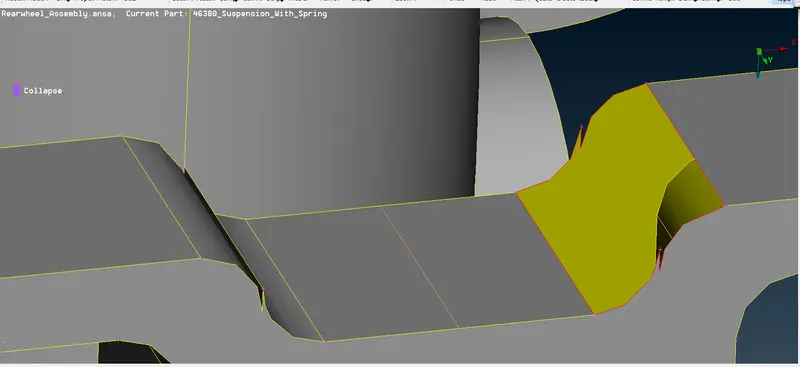
Now isolate every part and set every part in a new PID.
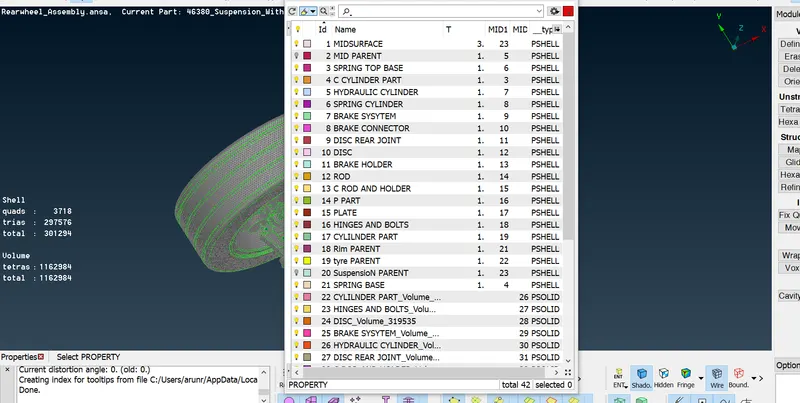
Mesh every surface that according to the trias, ortho trias elements.
Where ever the fillet areas have some features that may use an ortho tria for the better surface capturing.
In this model most of the places I didn’t use ortho tria because ortho will fail in some cases. So, I choose to do tria mesh here.
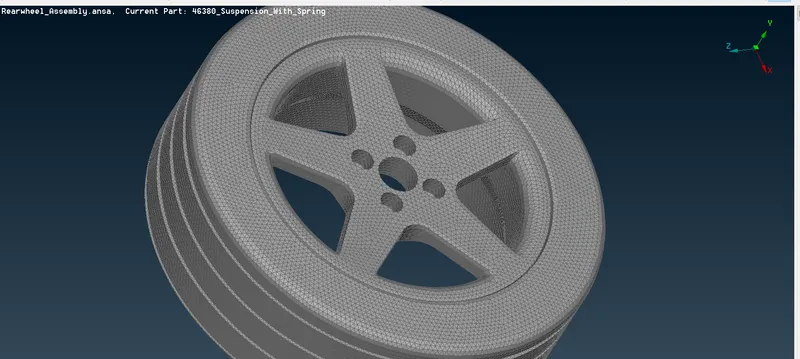
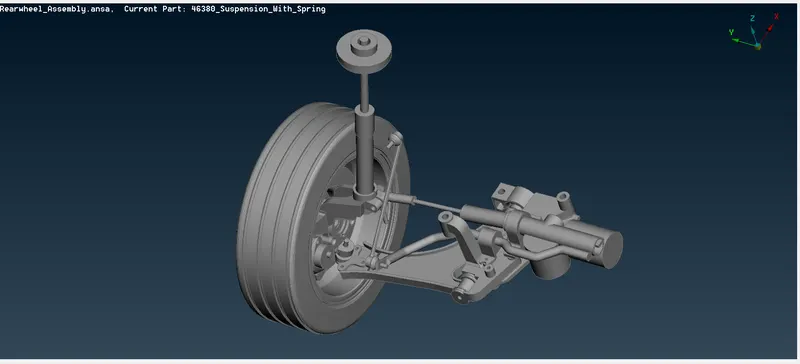
In this model I just defeaturing the fillet areas in some places because it may fail for the min length. And I suppressed unnecessary con in the flat areas.
this image is shown for 2d surfaces in this model.
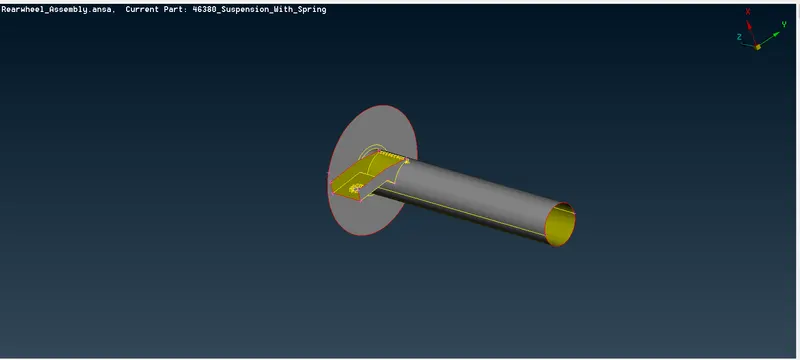
After meshing all the parts with ortho and trias now we need to define it as a volume.
for the spring area we need to make curve along with the surface of the spring and make it as 1D element.
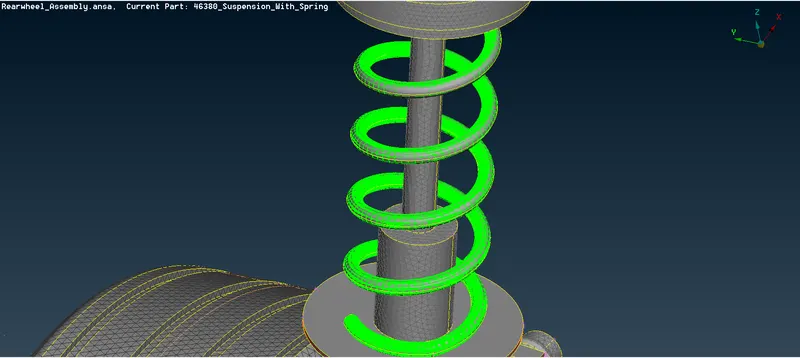
Go to volume deck; in volume define<manual.
By here take parts from the pid and define it in a new volume.
After go the list of the volume , do the tetra mesh using tetrafem in the box and click ok. It will generate a volume in the tetra elements in the part volume.
Check for the raised edges or kinks are on the surface.
And give tet collapse values in the quality and also check the quality issues.
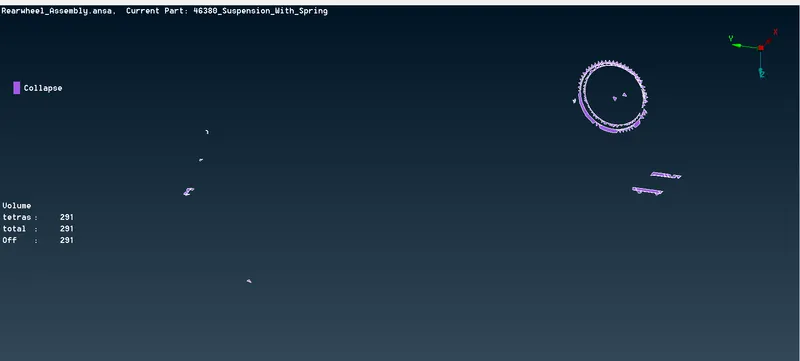
Now we need to do connection for every parts. For the 2d meshed parts only need to be welded together. All the remaining parts will be connected using RBE2 and 2node RBE. All the connection used are shown in the figure.
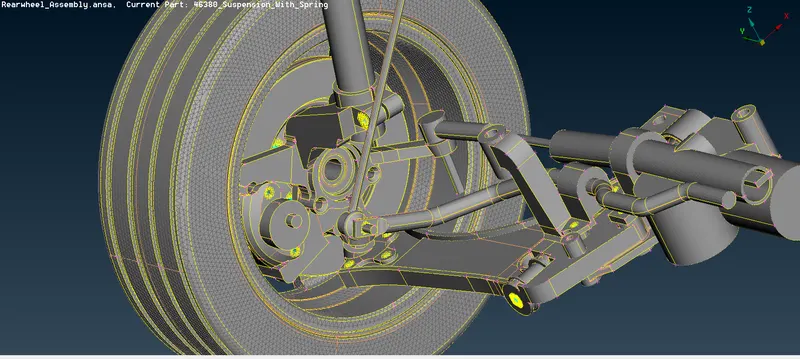
LEARNING OUTCOMES
- Volume defining these types of bigger assembly is new and I learned about these new things.
- Connection for these large assembly is new method with tetra elements.
- Learned how to defeature the fillet while doing volumetric surface meshing.
CONCLUSION
Surface meshing, 2d meshing, and volume meshing for these assembly and deploying connections are easily done with respect the quality criteria.
https://drive.google.com/file/d/1Vd1nJjMVsFXgBcdSHTgjInGj_j-ReDiY/view?usp=sharing