Project 2
Dialysis Machine:
Design and Development of Dialysis Machine:
- Dialysis is a medical procedure used to treat kidney failure.
- It involves filtering the blood to remove harmful substances and wastes, including excess fluid.
- Dialysis machines are devices that are used to perform this procedure.
Design:
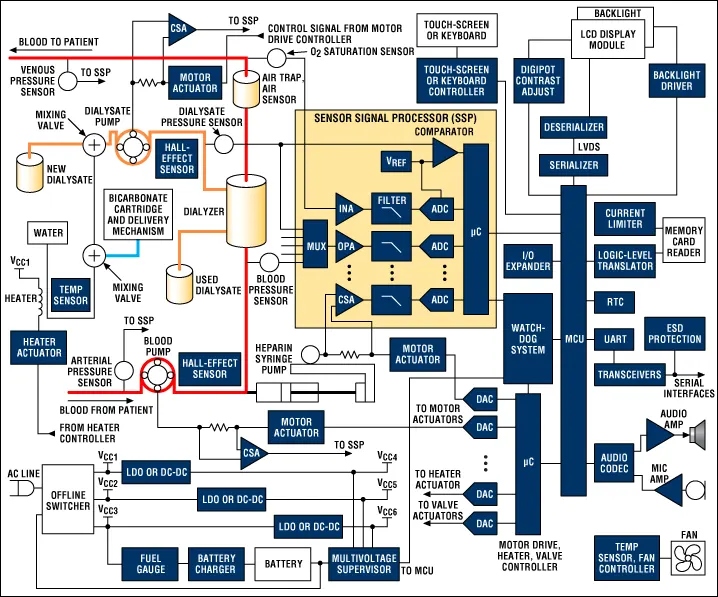
- The design of a dialysis machine has to incorporate multiple components into a single device.
- The main components include a blood pump, a dialysate pump, a membrane separator, a monitor, a control system, and various valves and sensors.
- The blood pump is used to move the patient’s blood through the dialysis machine.
- The dialysate pump is used to circulate the dialysate (the solution used to filter the blood).
- The membrane separator is a filter that separates the blood from the dialysate. The monitor is used to track parameters such as blood pressure, temperature, and other vital signs.
- The control system is used to regulate the operation of the machine.
- Finally, the various valves and sensors are used to monitor and adjust the flow of the blood and dialysate.
Development:
- The development of a dialysis machine requires expertise in both engineering and medicine.
- Engineers must design the physical components of the machine, while medical professionals must provide guidance on the operation of the device.
- The first step in developing a dialysis machine is to create a prototype. This prototype must be tested to ensure that it functions properly.
- The design must also be tested to ensure that it meets safety standards. After the prototype has been tested and approved, the machine can be manufactured.
- The development process of a dialysis machine is ongoing. As new technology becomes available, improvements can be made to the design and operation of the machine.
- This allows dialysis machines to remain up-to-date and effective.
Marketing and Sales Of Dialysis Machine:
- Marketing and sales of dialysis machines require a thorough understanding of the different types of machines and their uses.
- The first step is to identify the target market and create a strategy to reach them. Companies may choose to market their dialysis machines directly to consumers, to healthcare providers, or to both.
- When marketing to consumers, companies should have a comprehensive online presence that includes an informative website, social media accounts, and other online tools.
- Companies should also consider attending health fairs and other events to spread awareness and answer any questions.
- When marketing to healthcare providers, companies should build relationships with doctors and other medical professionals.
- Companies should research the key decision makers in the healthcare provider’s offices and develop a strategy to reach them.
- Companies should also consider hosting educational seminars, providing samples, and offering discounts or other incentives.
- The sales process for dialysis machines should begin with establishing need. Companies should use the marketing strategy to identify potential customers and then assess their needs based on the type of machine, size, budget, and other criteria.
- Once a need is established, companies should provide customers with detailed information about the dialysis machine, including features, benefits, pricing, and any guarantees.
- Finally, after the customer has made their decision, the company should provide ongoing customer service with maintenance and repairs, as well as educational or informational materials.
- Companies should also track customer feedback and use it to improve products and strengthen customer relationships.
Purchase of raw materials and Services:
Raw materials and services for the purchase of a dialysis machine may vary depending on the type and model of the machine being purchased. Generally, you will need to purchase:
• Dialysis Machine
• Tubing, needles, and probes
• Dialysate solution
• Disposable filters
• Water treatment system
• Dialyzer reprocessing instrument
• Dialyzer reprocessing chemicals
• Dialysis chair
• Wastewater treatment system
• Equipment to monitor dialysis
• Dialysis technician services
Additionally, you may need to factor in the cost of installation, maintenance, and repairs. The cost of purchasing and maintaining a dialysis machine can be expensive, but it can be well worth it for those needing dialysis treatments.
Manufacturing (may include interim steps as fabrication, welding, assembly etc.) of Dialysis Machine:
Manufacturing of a Dialysis Machine
- Dialysis is a life-saving treatment for patients suffering from kidney failure.
- Dialysis machines are used to aid in this process, and must be manufactured with the utmost precision and care.
- Here is a step-by-step guide on how to manufacture a dialysis machine:
Step 1: Gather Materials
- Before you can begin manufacturing, you will need to make sure you have all the necessary materials.
- This includes aluminum, stainless steel, thermoplastic, and vacuum tubing.
- Depending on the type of dialysis machine you are creating, you may need additional materials as well.
Step 2: Fabrication
- The first step in manufacturing a dialysis machine is fabrication.
- This is the process of cutting and shaping the material into the necessary components.
- A variety of tools can be used for cutting, including saws and power tools.
Step 3: Welding
- Once the components of the dialysis machine are cut, the next step is welding.
- This is the process of joining the components together.
- It is important to ensure that the components are properly aligned before welding them together.
Step 4: Assembly
- The next step involves assembling the components of the dialysis machine. This process involves connecting the components together and ensuring they are properly aligned and functioning.
- Assembly also involves testing the components to make sure they are working correctly.
Step 5: Testing
- The final step in manufacturing a dialysis machine is testing.
- This involves running tests on the machine to make sure it is functioning properly.
- This process may include electrical testing, water testing, and airflow testing.
Packing and Packaging of Dialysis Machines
- Dialysis machines are an important part of the medical industry, allowing people with kidney-related illnesses to live a healthier and longer life.
- As such, there must be proper packing and packaging of these machines to ensure that they arrive in good condition and are able to perform their intended task.
Here are some tips on how to properly package and transport a dialysis machine:
1. Choose the Right Packaging Materials
- When packaging a dialysis machine, it’s important to choose the right materials.
- Packing materials like cardboard boxes, bubble wrap, and foam pieces should be used to protect the machine from shocks and vibrations.
- Additionally, desiccant and corrosion-inhibiting materials should be added to the package to protect the machine from moisture and corrosion.
2. Secure the Dialysis Machine Properly
- The dialysis machine must be secured in the package through the use of straps and other materials.
- Straps should be used to keep the machine in place and to prevent it from shifting during transit.
- Additionally, any loose parts like hoses and wires should be secured with zip ties and foam to prevent them from becoming disconnected.
3. Label the Package
- Before shipping, the package should be clearly labeled with the recipient’s name and address, as well as any other applicable information.
- The label should state the contents, the weight, and the intended destination.
- Additionally, any special instructions should be included on the label.
4. Choose the Right Shipping Method
- Finally, it is important to choose the right shipping method to ensure that the dialysis machine arrives in good condition.
- Packages should be shipped via express mail or with a company that specializes in medical equipment shipping.
- By following these steps, you can ensure that your dialysis machine is packed and shipped safely and securely.
Step-by-Step Process for Packing and Packaging of Dialysis Machine
Dialysis is a complex medical process that requires careful and meticulous packaging and handling.
To ensure that the dialysis machine is safely transported and stored, the following steps should be followed:
1. Start by making sure that all components are in working order. This includes checking the power supply, tubing, and other components for any signs of wear and tear.
2. Place the machine in a properly sized box. This should be large enough to fit all of the components of the dialysis machine.
3. Wrap the machine with protective material. Bubble wrap or other foam-like material is ideal for this purpose.
4. Place the machine into the box and secure with packaging tape.
5. Add all other necessary components, such as tubing, power supply, and any other materials.
6. Seal the box with packaging tape and clearly label it as “Dialysis Machine” or “Medical Device.”
7. Make sure the box is marked with the correct shipping address.
Transporting of Dialysis Machine:
- When it comes to the transportation of dialysis machines, there are a few important considerations to be aware of.
- First, dialysis machines are usually large, heavy, and delicate pieces of equipment, and it is important to ensure that the machine's components remain undamaged during transport.
- This means that the machine should be properly packaged and carefully handled at all times.
- The packaging of a dialysis machine is generally done in two stages: the packing of individual components and the assembly of the machine.
- Individual components, such as the dialyzer, should be placed into airtight containers and labeled to prevent any damages.
- The assembly of the machine is best done by a professional who is familiar with the device.
- They will be able to check the connections and seals to make sure that the machine is securely and safely put together for transportation.
- Once the packaging of the machine is complete, the next step is to choose the appropriate transport method.
- It is best to use a specialized carrier that is experienced in handling of medical equipment.
- This person or company should be able to provide the correct handling procedures and ensure a safe delivery.
- It is also important to inspect the machine regularly to check for any potential damages or malfunctions during transit.
- Transporting a dialysis machine requires a lot of care and attention, and it is essential to ensure that all safety protocols are followed.
- With proper preparation and the help of a qualified professional, you can ensure that your machine arrives in its best condition.
Step-by-Step Guide
- A dialysis machine is a delicate medical device that requires careful handling when being transported.
- This guide will walk you through the different stages of transporting a dialysis machine, from preparation to delivery.
Preparation
- Before beginning the transport of a dialysis machine, the necessary preparations should be made.
- Make sure that all the necessary documents are gathered and that the appropriate personnel (such as a doctor, nurse, and technician) are present.
- Additionally, make sure that the dialysis machine has been tested and is functioning properly.
Packaging
- The dialysis machine should be properly packaged to protect it during transport.
- It is important to use a box or case that is large enough to accommodate the machine and any other parts that need to be transported, such as tubes and filters.
- Additionally, make sure to use packing material, such as foam or bubble wrap, to cushion the machine and avoid any jarring.
Loading
- Once the dialysis machine is properly packaged, it is time to load it into the vehicle. Make sure to use appropriate equipment to safely lift and move the machine.
- Additionally, be aware of any sharp objects or surfaces that could potentially damage the machine.
Delivery
- When the dialysis machine arrives at its destination, it is important to unload it carefully.
- Make sure to use the same equipment and techniques that were used to load the machine.
- Additionally, check the machine for any signs of damage and make sure that all the necessary parts are present.
- Once all the necessary precautions have been taken, the dialysis machine is ready for use.
- Following these steps will help ensure that the machine is transported safely and arrives in a condition that allows it to be used immediately.
Installation of Dialysis Machine:
- Installing a dialysis machine can be a complex process, but it is essential for providing life-saving treatments to those with kidney failure.
- This guide will provide a step-by-step overview of the installation process.
Step 1: Choosing the Right Machine
- Before beginning the installation process, it is essential to select the right type of dialysis machine for the individual patient.
- Consider the patient's medical needs, the space available for the machine, and any other unique considerations.
Step 2: Preparing the Space
- The space in which the dialysis machine will be installed should be properly prepared.
- Make sure the walls and floor can support the machine, provide enough electrical power, and are free from any hazardous materials.
Step 3: Connecting the Machine
- Connect the machine to the power source and connect the water source, ensuring that all connections are secure and watertight.
- Install any necessary filters or other components as directed by the manufacturer.
Step 4: Testing the Machine
- Verify that all connections are secure and that the machine is functioning properly.
- This may include running a water test and performing any necessary maintenance activities.
Step 5: Providing Patient Training
- Once the machine is installed, it is important to provide the patient with detailed information about how to use the machine.
- This includes safety protocols, cleaning procedures, and any other necessary instructions.
Step 6: Ongoing Maintenance
- Finally, it is essential to provide ongoing maintenance for the dialysis machine in order to ensure its proper function.
- This includes regularly checking for any signs of malfunction, replacing parts as needed, and performing any other necessary maintenance activities.
Periodic Maintenance of a Dialysis Machine
- Periodic maintenance of a dialysis machine is a critical step to ensure that it continues to work at its optimal level and to avoid any potential problems.
- It is important to keep the dialysis machine clean, disinfected, and free of dirt and debris.
The recommended schedule for maintenance of a dialysis machine usually includes the following steps:
1. Cleaning:
- The machine should be cleaned regularly with a soft cloth or sponge and a mild detergent or cleaning solution.
- Any dirt, debris, or other contaminants should be removed from the surface and machine components.
2. Inspections:
- Inspections should be done regularly to check for any signs of wear or damage.
- This includes checking the tubing, dialyzer, water pump, and other components for leaks, cracks, or other issues.
3. Disinfection:
- After completing the cleaning process, the machine should be disinfected with a specialized disinfectant.
- This will help to reduce the risk of infection and ensure that the machine is safe to use.
4. Calibration:
- Regular calibration is necessary to ensure that the machine is properly calibrated and functioning correctly.
- This may include checking the water levels and other settings to ensure they are correctly set.
5. Testing:
- After completing the maintenance process, it is important to test the machine and ensure that it is still functioning correctly.
- This may include testing the water and dialysate flow as well as the pressure levels and other settings.
- Performing regular maintenance on a dialysis machine is an important part of ensuring that it continues to work at its optimal level and that it is safe to use.
- Proper maintenance will help to extend the life of the machine and reduce the risk of potential problems.
6.Break down maintenance
- Dialysis machines are complex pieces of medical equipment that require regular maintenance and servicing in order to ensure that they continue to operate correctly and safely.
- The most important part of maintenance is to ensure that the machine is free from any dirt or debris that could cause damage or breakdown.
- This can be done by regularly dusting the machine and checking for any signs of wear and tear.
- Additionally, it is important to check the filters and the tubing systems to make sure that they are all clean and in good working order.
- Oil and lubricants should be checked and changed as necessary to ensure optimal performance.
- Finally, the dialysis machine should be tested regularly to ensure that it is operating correctly and at the right levels.
Guide to Maintaining a Dialysis Machine
1. Inspect the Machine: Before starting any maintenance procedure, it is important to inspect the machine for any visible damages. Check for any broken parts that may need to be replaced.
2. Clean the Machine: Use a soft cloth and mild detergent to clean the exterior of the dialysis machine. Pay close attention to the dials and knobs, as dust and dirt can accumulate there.
3. Hoses and Filter: Check the hoses and filter for any cracks or tears. Replace any hoses that are in poor condition.
4. Check the Output Settings: Make sure the output settings of the machine are correct. Make sure the machine is set to the correct volume levels, pressure settings, and other settings.
5. Test the Machine: Turn on the machine and test it to make sure it is working properly. Make sure it is producing the correct output.
6. Check the Safety Settings: Make sure the safety settings of the machine are set correctly. The safety settings should always be set to the lowest possible level.
7. Clean and Disinfect the Tubing: Clean and disinfect the tubing to prevent contamination. Make sure to thoroughly rinse the tubing after cleaning.
8. Check the Tubing for Leaks: Make sure there are no leaks in the tubing. Replace any tubing that has been damaged or is not working properly.
9. Check the Power Supply: Make sure the power supply is working properly. Check the voltage levels and power cords to make sure they are not frayed or damaged.
10. Perform Regular Maintenance: It is important to perform regular maintenance on the dialysis machine in order to ensure it is running properly. This includes checking the tubing, filter, and power supply regularly.
Disposal
- Proper disposal of dialysis machines is important for safety and environmental reasons.
- [1] Used dialysis tubing and dialyzers should be placed in a sealed plastic bag and thrown out with household garbage.
- [2] Dialysis machines should be disassembled, allowing for the recycling of various materials and components including bulbs, plastics and circuit boards.
- [3] PD solution should be sealed in a plastic bag before being placed in the household garbage, while PD fluid waste should be treated like other body fluids and disposed of in the toilet, with extra precaution taken by those at risk of HIV or hepatitis B, including adding bleach to the mixture.
The Risk Assessment of Dialysis Machine:
Probability and Impact of Dialysis Machine: