Project 2
Introduction
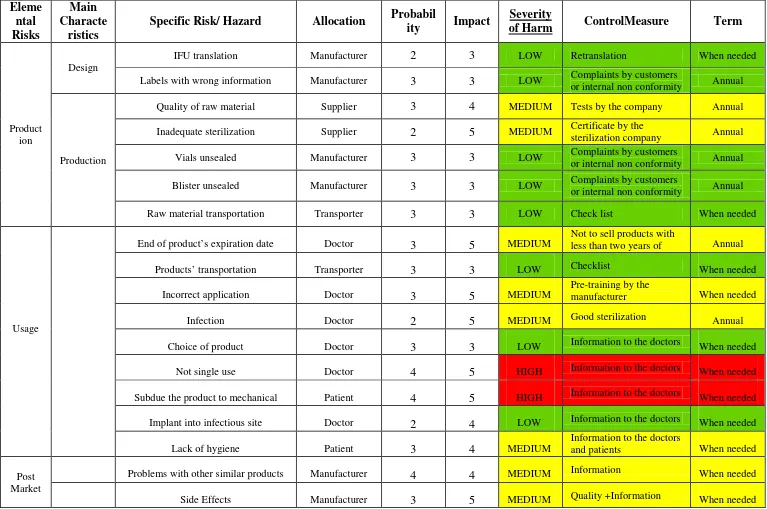
The delicate nature of orthopaedic and dental implants makes it all the more important to implement a thorough risk management strategy during production. The primary purpose of this study is to investigate the feasibility of implementing an ISO 14971-based risk management system at orthopaedic medical device manufacturer Medbone Medical Devices. The framework for risk analysis and management used to ensure that the accumulated knowledge and expertise are present throughout the process is the Whole Life Cycle Risk Management model. With a top-down strategy, we identified two broad categories of danger: global threats and fundamental hazards. According to ISO 14971, the fundamental dangers associated with manufacturing and using the product have been singled out. It is possible to see how various hazards are distributed within an organisation using a "Risk Matrix." Damage Likelihood, Resulting Effects, and Exposure to Danger. According to the results of the investigation, the following risks provide a Very High Risk of Very Serious Injury or Death:
- Removed from the purview of the State
- Departing from the Manufacturer's Duty to Comply with Inflation, Governmental Desire, and Regulatory Agency Licenses and Approval
- Changes in cost, reimbursement from the doctor for more than one use, and pressure from the customer to accept a single use all subject the product to a variety of mechanical stresses.
Next, we gave some thought to and implemented several measures to reduce the company's exposure to risk. Risks associated with the product's handling and use by the patient can be reduced or eliminated by careful management, allowing the product to more effectively treat the patient and improve their quality of life. In the healthcare industry, generic risk plans are the norm, but they might fail to account for some of the most significant threats across the whole value chain. Additionally, doctor input is essential during the development and launch of new products. There has been an increase in the incidence of bone fractures due to trauma and degenerative bone disorders, which has prompted researchers to focus on the hazards associated with the production, use, and disposal of orthopaedic and dental implants and other medical devices. Compared to natural bone, these products are absorbed by the body and offer benefits such reduced cost, lower danger of disease transmission, and preservation for five years without refrigeration. "the manufacturer shall establish, document, and maintain throughout the lifecycle an on-going process for identifying hazards associated with a medical device, estimating and evaluating associated risks, controlling these risks, and monitoring the effectiveness of controls and shall include: risk analysis, risk evaluation, risk control, and production and post production information," as stated in ISO 14971 Medical devices - Application of risk management to medical devices.
Methods
Analysis of risk consists of three stages: spotting potential threats, rating them, and putting a value on them.
- Identifying hazards and validating their sources is what we call "risk identification." It generates a detailed list of risks, splitting them into two categories: global (those that influence the market as a whole) and elemental (those that are unique to the project or business).
- Probability and impact of certain events are estimated through risk assessment.
- Successful risk management requires a well-defined plan of action. It identifies potential threats and then chooses and employs measures to mitigate them.
After these steps are complete, we get risk allocation matrices for both global and elemental risks. Severity of harm, as measured by probability and impact, and steps taken to mitigate it. Analysis of control options, implementation of those options, determination of residual risk, and verification of completeness of risk control are all components of risk mitigation/control.
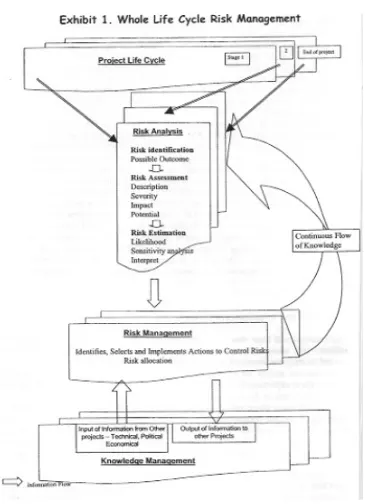
Whole Life Cycle Risk Management of Medbone Medical Devices - Case Study
The Portuguese company Medbone Medical Devices Ltd began operations in 2008 with the goal of producing cutting-edge, high-quality implants and giving doctors the resources they need to enhance their patients' quality of life. Orthopaedic and dental implant surgeries benefit from their utilisation of cutting-edge technology, and their absorbable biomaterial implants are in demand around the world. Unique characteristics make them comparable to normal bone, improving patients' quality of life. Medbone sells adbone TCP and adbone BCP granules, cylinders, and wedges, all of which are intended to treat bone gaps or flaws. "adbone TCP" refers to a synthetic ceramic made up of 99.9% tricalcium phosphate and has a porous structure (TCP). As a result of its macroporosity and linked porosity, the product has both excellent osteointegration and complete vascularization of the implant. This product has a high bioactivity, and as new bone grows in its place, the implant is no longer necessary. As with adbone, adbone BCP is a synthetic ceramic containing calcium phosphate and has a porous structure. TCP and hydroxyapatite are both components (Hap). This biphasic composition improves the ceramic resorption, as TCP is more soluble than Hap, and so permits an optimal resorption rate consistent with the physiology of the bone cells.
Products Life Cycle
- Conception and develpment - As such, it lays out the foundational scientific concepts upon which a technology operates. The greater the complexity of the technology, the higher the chance of user mistake, therefore it's important to have scientific professionals look over the idea and make sure it's been built and tested properly so it doesn't pose any unnecessary hazards.
- Manufacture - A clean room class 6 is used for the manufacturing and packaging of adbone BCP and adbone TCP. The room is separated into three sections: production, packaging, and clothing.
- Packaging and labelling - The substance is packaged into separate bags as part of this process. Granules are first measured in weight. The blisters have been pre-marked with indicators of the presence of gamma rays. These identifiers are initially yellow and turn red when exposed to gamma radiation. The correct sterilisation of the product can be tracked with this identifier. Patient-specific labels and product instructions are packaged alongside the blister packs (IFU). To aid in the quality control of the sterilisation procedure, a larger label is used to close the box, and a marker for the presence of gamma rays is placed inside.
- Sterlization - The finished product is packaged and sent to a UK-based company for sterilisation. Once the packaging has been sterilised, it is checked for signs of damage or improper sterilisation. Medbone" uses gamma radiation at a minimum dose of 25 kGy to sterilise their items in their double-wrapping.
- Distributing, Advertising and Sale - The qualified distributers buy the products from Medbone in order to sell them to orthopaedic doctors, dentists or veterinaries
- Usage - The people who use medical equipment have a significant impact on the devices' reliability and efficiency. Even in the absence of any inherent design or manufacturing problems, device failure might occur as a result of the user's unfamiliarity with the technology or operating procedure, or the product's use for clinical indications outside the scope of those mentioned in the labelling. Contrary to manufacturer recommendations, reusing disposable devices without enough oversight or safety measures might be harmful. The safety and efficacy of medical equipment can be compromised by improper calibration and maintenance.
- Disposal - There should be strict and clear guidelines for the disposal of certain electronic gadgets.
Results
Table 1: Severity of Harm for Risk Matrix
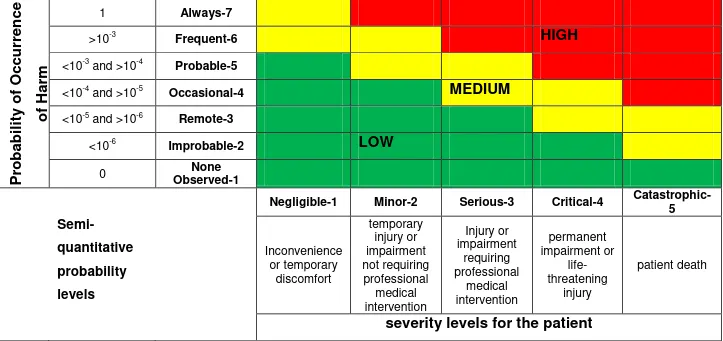
Table 2: Global Risks Matrix
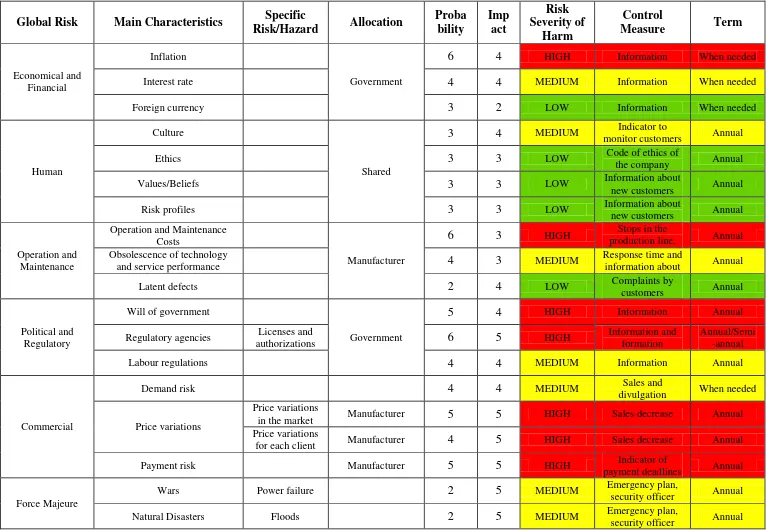
Table 3: Elemental Risks Matrix
Refrences