Project 1
Answer:
A patient's many physiological parameters benefit from the use of a multi-parameter physiological monitoring system. With this information, technicians can better grasp their patients' conditions. All multi-parameter physiological monitoring systems have the following basic parameters:
a. ECG: An electrocardiogram, or ECG, is a medical test that measures the electrical activity of the heart while it contracts. It is used to diagnose cardiac (heart) problems. Stick-on electrodes are used, and the gadget is attached to the wires given along the cable to measure it.
b. Noninvasive blood pressure measurement (NIBP): This method does not require any invasive ways to measure a person's blood pressure. A pressured cuff worn around the arm or leg is used to take non-invasive blood pressure readings (NIBP). The machine updates the data at predetermined times.
c. SPO2: Pulse oximeters, which employ cold light to illuminate the fingertip, are used in SPO2 parameter testing. The fingertip illuminated by the pulse oximeters produces an orange coloration when used in SPO2 testing. The device is able to detect the proportion of oxygen in the red blood cell by measuring the light from the light source that travels through the finger.
d. Heart Rate: A green bar at the top of the screen indicates your heart rate. A "HR" or "PR" (pulse rate) will appear beside or slightly above the number, and the value will be displayed in beats per minute (bpm). The resting heart rate of a healthy adult is between 60 and 100 beats per minute.
e. Respiration Rate: It is the amount of breaths a person takes per minute that determines their respiration rate. Counting the number of times the chest rises for one minute is all it takes to determine a person's heart rate when they are lying still. Using the pulse oximeter, this can be be measured, as well.
a. ECG: An electrocardiogram, or ECG, is a medical test that measures the electrical activity of the heart while it contracts. It is used to diagnose cardiac (heart) problems. Stick-on electrodes are used, and the gadget is attached to the wires given along the cable to measure it.
b. Noninvasive blood pressure measurement (NIBP): This method does not require any invasive ways to measure a person's blood pressure. A pressured cuff worn around the arm or leg is used to take non-invasive blood pressure readings (NIBP). The machine updates the data at predetermined times.
c. SPO2: Pulse oximeters, which employ cold light to illuminate the fingertip, are used in SPO2 parameter testing. The fingertip illuminated by the pulse oximeters produces an orange coloration when used in SPO2 testing. The device is able to detect the proportion of oxygen in the red blood cell by measuring the light from the light source that travels through the finger.
d. Heart Rate: A green bar at the top of the screen indicates your heart rate. A "HR" or "PR" (pulse rate) will appear beside or slightly above the number, and the value will be displayed in beats per minute (bpm). The resting heart rate of a healthy adult is between 60 and 100 beats per minute.
e. Respiration Rate: It is the amount of breaths a person takes per minute that determines their respiration rate. Counting the number of times the chest rises for one minute is all it takes to determine a person's heart rate when they are lying still. Using the pulse oximeter, this can be be measured, as well.
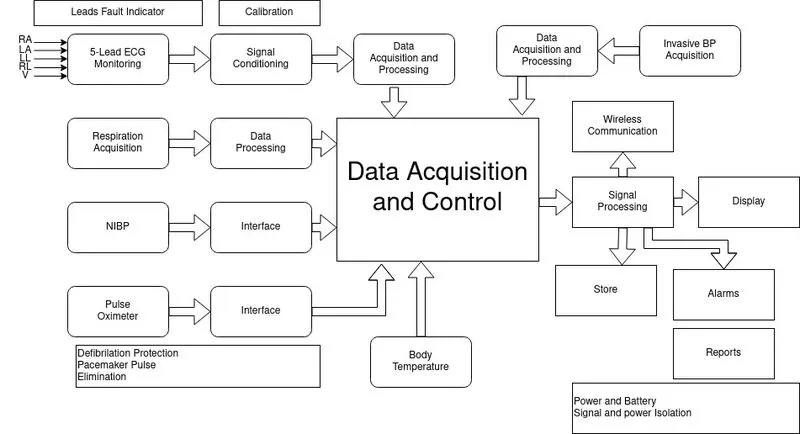
A multi-parameter patient monitor necessitates the use of many processing levels. Each monitor function necessitates a distinct processing method. It is necessary to first condition the ECG data before sending it through the processing to create a digital signal. The graphic representation of the respiration data must be converted to digital form before it can be displayed. Blood pressure data is also collected in graphical form. Using a data collection and processing circuit, this analogue data can be transformed into digital form. Many safety measures are taken into account when determining if a patient monitor can be used. The power cable sockets and the power circuit are checked to see if they will last for a long time. In order for the alarm system to function properly in the event of an emergency, it must be in perfect operating order. It is also checked to see if the ports are durable and whether or not they reject the probe if it is used incorrectly. A low battery or disconnected probe/electrode alarm should be provided by the monitor to ensure the patient's safety. It should also reject attachments that have been damaged in any way. The gadget will be considered certified if it adheres to all of the aforementioned protocols. Every manufacturer has a different calibration proposal for the gadget. A Philips monitor requires annual calibration; however, a Nihon Kohden monitor does not require calibration after the product has been shipped from the factory.
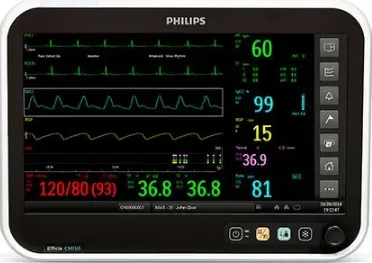
There are a number of items that can be seen on the patient monitor's front panel, or rather, the information that the technician wants to see for the patient. For example, the technician can choose to display the patient's continuous heart rate. Eight digital values, such as SPO2 readings and blood pressure (BP), can be displayed in addition to five graphic pictures. In the event that the technician wishes to alter the arrangement, they can do so as well. All monitors can be connected to a single server so that the data can be accessed from any location with the help of a unique code that was issued to the registrant. If the hospital has other locations throughout the world, the data can be accessed in this manner from any location. The data is sent to the server via a monitoring system that is centrally located. Any systems we want to have data access to can have the central monitoring system installed, so that it can be accessed at any time by those who need it. Ethernet links the central nursing system with the monitors. The monitors are linked to the central nursing system, which is available 24 hours a day, seven days a week, and alerts the nurse promptly if any of the monitors exhibit any abnormal behaviour. Each monitor is assigned a unique number based on the patient's identification number. The same approach can be used to contact a doctor in the event of a catastrophic emergency. There must be a server room provided by the firm implementing the central nursing system if remote monitoring is going to be used. This server room will be used to send an SOS message via text message or a google alert to those who are linked to the system in case of a severe emergency. The alerts on this gadget must be treated seriously because it is also utilised in the intensive care unit. As soon as a patient is taken off of monitoring, the equipment should alert the caregivers about the patient's condition. The device has severity levels that indicate the seriousness of the condition. Patient care is improved because of this. Nursing professionals are required to respond swiftly and with extreme caution in cases when the patient has stopped breathing. It's just like when a battery dies or the electricity goes out, you get a blue alert since they're the least important issues. A yellow alert is issued when something urgent but non-life-threatening has to be addressed. If the gadget is connected to the central nursing system, the alarm will be displayed on the nurses' monitors as well. Many other alerts, such as a low SPO2 or low blood pressure cuff, have been added to the monitors. Inserting a USB pen drive into the USB port of the device and selecting "record" will allow you to capture real-time data from the gadget. A hospital policy may permit retrieval of previously saved information from the CNS, which is accessible via cloud storage as well as a hard drive. For the most part, the information is saved in.dat file type.