Project 2
Design a robotic surgery procedure to remove a healthy kidney from the donor using an AI guided robot.
The idea of robotic kidney transplantation surgery is that a healthy kidney is removed from a donor using a surgical robot.
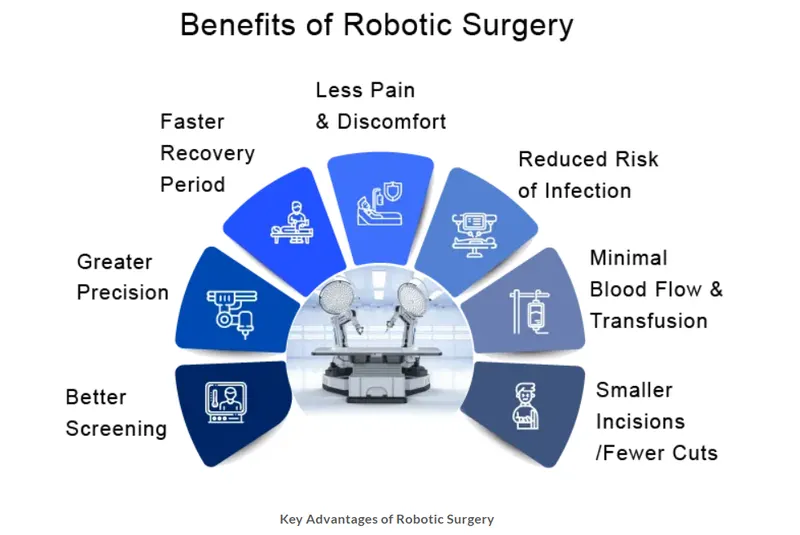
What are the Major Advantages of Robotic Surgery?
Due to its advantages over traditional open and laparoscopic surgery over the past few years, robotic surgery has experienced tremendous growth. One of the key benefits of robotic surgery is that it is minimally intrusive, which results in less pain and a quicker recovery for the patient. In addition, there is a notable reduction in the likelihood of bleeding and infection.
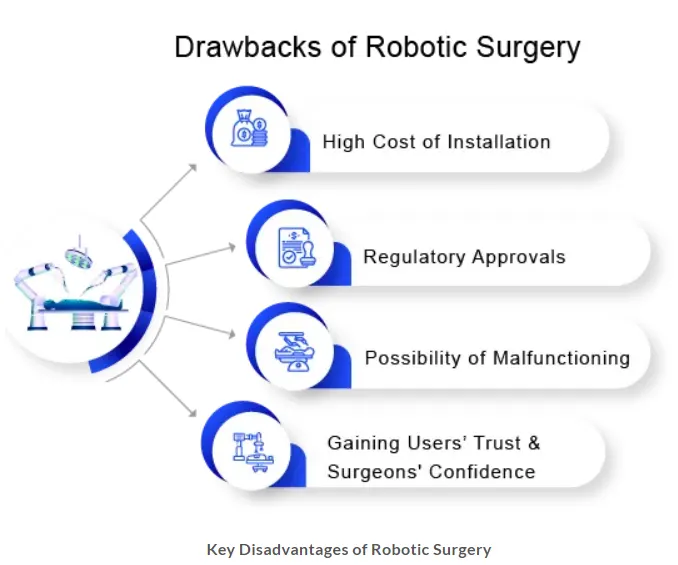
What are the Major Disadvantages of Robotic Surgery?
Like every coin has two faces, surgical robots have several disadvantages associated with them. Mechanical failure is one of the major risk factors. Although the chances of malfunction are quite rare, but it can’t be neglected at any point in time. It may lead to possible injuries, cuts, or tears to surrounding organs and nerve damage in some cases. Some of the surgeries, such as neurological procedures, require additional safety and accuracy; any small error may lead to permanent damage to the complicated organ and even death in some cases.
- Requirements for robotic kidney transplantation:
-
Improved precision and accuracy: Robotic surgery can potentially reduce the risk of complications and improve the outcomes of kidney transplantation by enabling the surgeon to make precise and accurate movements during the procedure.
-
Reduced surgical time: Robotic surgery can potentially shorten the duration of the procedure, which may be beneficial for both the donor and recipient.
-
Reduced pain and scarring: Robotic surgery can potentially reduce the amount of pain and scarring experienced by the donor, as the incisions made by the robotic instruments are smaller and more precise than those made by a human hand.
-
Enhanced visualization: Robotic surgery can provide the surgeon with enhanced visualization of the surgical site through the use of high-definition cameras and other imaging technologies.
- Surgical robot used for kidney transplantation:
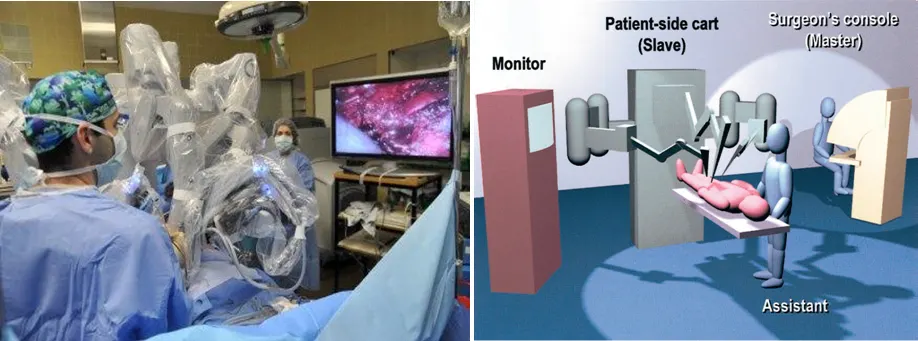
One example of a surgical robot that can be used for kidney transplantation is the da Vinci Surgical System, developed by Intuitive Surgical. This robot consists of a console where the surgeon sits and controls the movements of the robotic instruments, as well as a patient-side cart that houses the robotic arms and instruments. The da Vinci Surgical System is equipped with high-definition cameras and 3D visualization capabilities, as well as a range of instruments with a wide range of motion and dexterity.
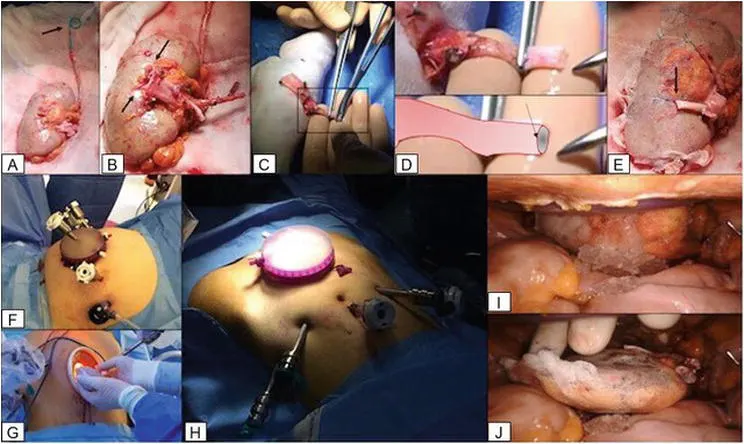
>Flow chart of the procedure:
Workflow diagram for this analysis that shows each stage of robotic surgery. The steps taken throughout each phase are given in a normal working order and are shown with each phase. Tasks peculiar to robots are underlined in grey boxes.

>>Tasks performed by AI in robotic kidney transplantation:
-
Image analysis: The AI system may be used to analyze images of the surgical site and provide the surgeon with real-time feedback and guidance on the procedure.
-
Data analysis: The AI system may analyze data from the patient's medical records and other sources to provide the surgeon with relevant information and recommendations during the procedure.
-
Predictive analytics: The AI system may use predictive analytics to anticipate potential problems or complications during the procedure and provide the surgeon with recommendations on how to address them.
>>Preoperative, perioperative, and postoperative steps:
-
Preoperative steps:
- The donor and recipient undergo thorough medical evaluations to ensure they are suitable candidates for the surgery.
- The donor and recipient undergo a series of tests to determine the compatibility of their blood and tissues.
- The donor and recipient undergo psychological counseling to prepare them for the procedure and its potential risks and benefits.
-
Perioperative steps:
- The donor is placed under general anesthesia.
- The surgeon makes small incisions in the donor's abdomen and attaches the robotic instruments to the patient-side cart.
- The surgeon controls the movements of the robotic instruments to carefully remove the kidney from the donor.
- The surgeon prepares the kidney for transplantation into the recipient.
- The donor's incisions are closed.
- The recipient is prepared for the transplant surgery.
- The surgeon implants the healthy kidney into the recipient.
- The recipient's incisions are closed.
-
Postoperative steps:
- The donor and recipient are closely monitored for any complications or adverse reactions to the surgery.
- The donor and recipient receive pain management and other medications as needed.
- The donor and recipient participate in physical therapy and rehabilitation to help them recover from the surgery.
- The donor and recipient follow a special diet and take medications to help prevent rejection of the transplanted kidney.
>>Ethical concerns and regulations:
-
Informed consent: It is important to ensure that the donor and recipient fully understand the risks and benefits of the procedure and give their informed consent before proceeding with the surgery.
-
Confidentiality: The privacy and confidentiality of the donor and recipient must be protected throughout the process.
-
Machine classifications: The surgical robot and other equipment used in the procedure should meet the appropriate machine classifications and IEC 60601 standards for medical devices.
-
Resource allocation: The allocation of resources for kidney transplantation, including the availability of organs, must be done in an ethical and fair manner.
Reference
Robot-assisted kidney transplantation – pilot study. Available at https://www.guysandstthomas.nhs.uk/resources/patient-information/kidney/robotic-assisted-kidney-transplantation.pdf. Accessed on March 28, 2018
Breda A, Territo A, Gausa A, et al. Robot-assisted Kidney Transplantation: The European Experience. European urology. 2018; 73: 273– 281.
https://www.frontiersin.org/articles/10.3389/fsurg.2020.588215/full
https://fortisbangalore.com/speciality/robotic-donor-nephrectomy