Project 2
WIRING HARNESS ROUTING ON CAR BACKDOOR ASSEMBLY
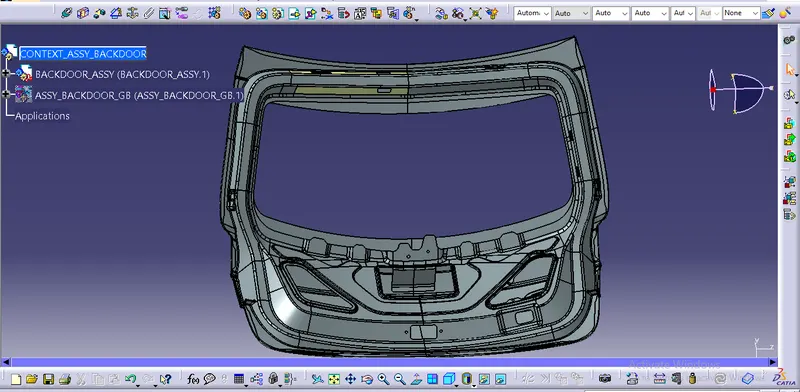
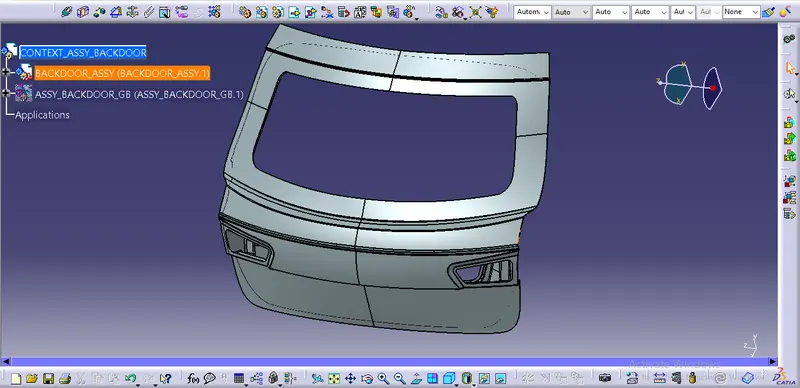
AIM: Route the Wiring harness around given context environment of a car backdoor/tailgate assembly.
OBJECTIVE:
- Route the wiring harness bundle around the car backdoor assembly.
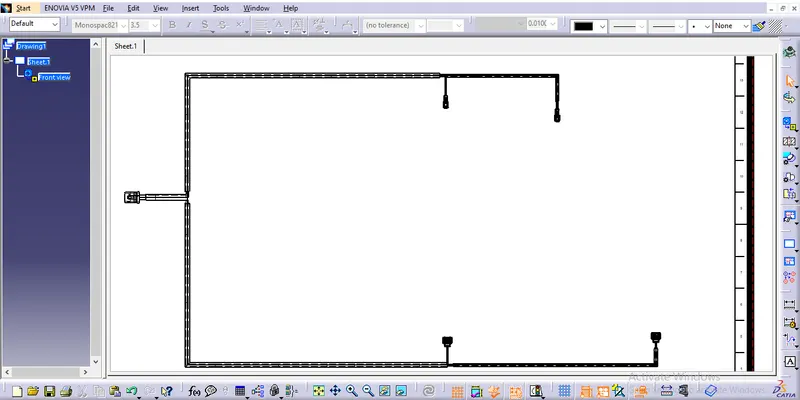
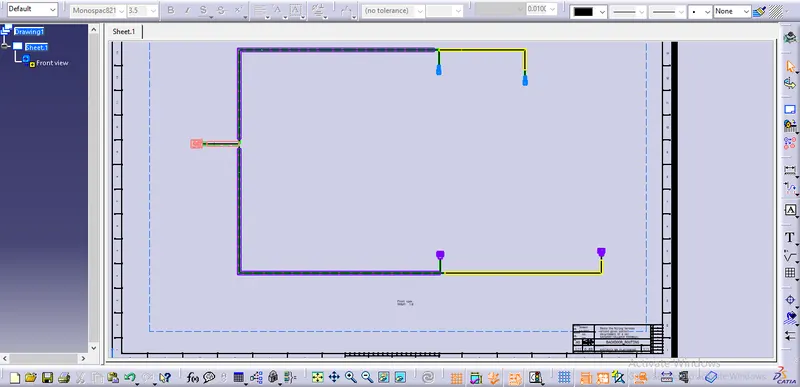
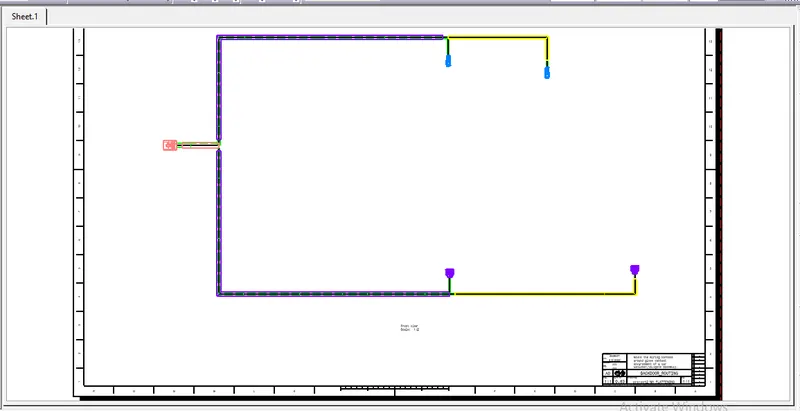
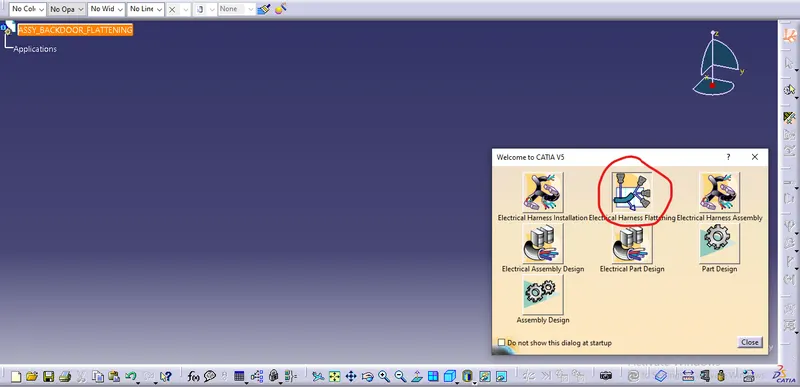
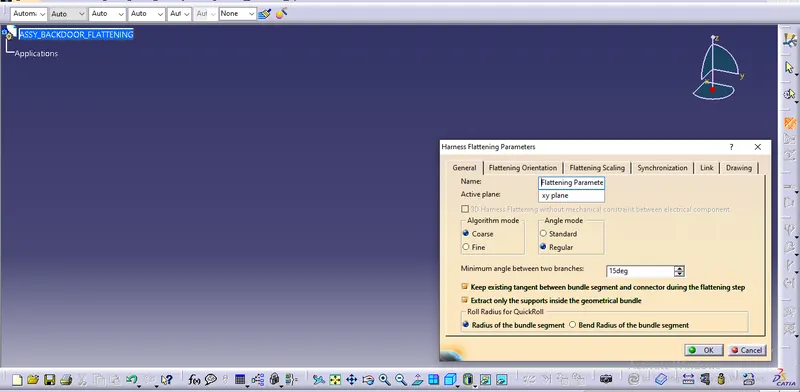
- Flatten the Geometrical bundle in Wiring Harness Flattening workbench and prepare the drawing of the flattened view in drawing workbench.
- Follow and apply the proper designing and packaging rules and industry best practices.
- Apply protection covering as per requirement.
- Providing all necessary details like clearance, clipping/clamping selection, Harness fixing requirements , Harness continuity, Assumptions if required.
DESIGN CRITERIA AND PACKAGING RULES AND ASSUMPTIONS:
- Wiring harness routing shall provide ease in manufacturing, accessibility, easy removal, and easy maintenance of attached equipment and wiring harness.
- Routing shall offer protection against possible damage through common misuses such as being handhold and temporary support for test equipment.
- Avoid the harness routing and clipping in the Blind Zone of the operator during harness assembly or in service.
- Routing through small structural holes and openings shall be avoided, minimize chaffing and handling of the wiring harness during installation.
- Avoid routing over bolts, near to the bolted joints. It may damage the harness or puncture the bundle. Keep harness away from panel mounting screws.
- Avoid harness routing near sharp edges, if not possible provide protection to the harness. The maximum distance between two clips on a straight branch is 200mm.
- Provide clips and clamps if the harness is going to bend at multiple locations. The use of too many sheet-metal brackets should be avoided.
- The branch length should be more than 50mm.
- Minimum distance between clips and branching point should be 25mm.
- Minimum distance between two branch breakouts should be 50mm.
- Provide additional slack to the harness according to the surroundings and harness bending requirements.
- Ensure the routing meets the clearance requirements with different surrounding parts.
- Provide bracket for interconnection connector parking.
- Limit the number of branches from single braching point to 4.
- Provide guide channel if required.
- Use available holes for clamps and clip mounting.
- Use rubber grommet which provide proper sealing, protect harness from sharp edges, provide protection against vibration and even act as calmp.
BACKDOOR/TAILGATE ASSEMBLY:
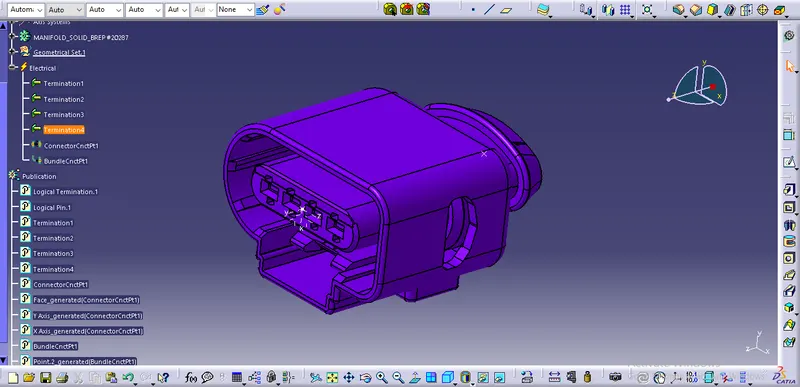
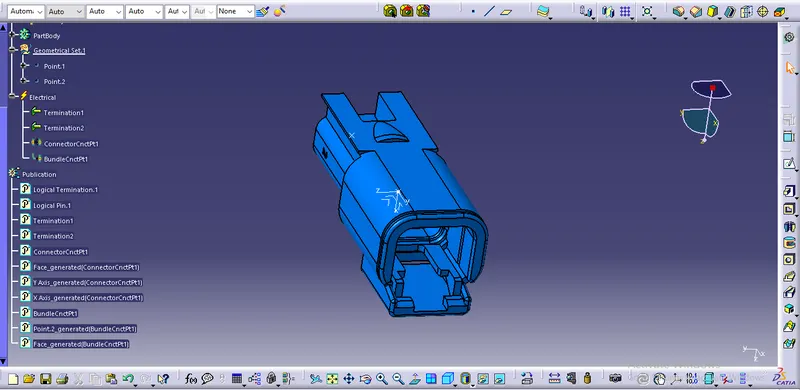
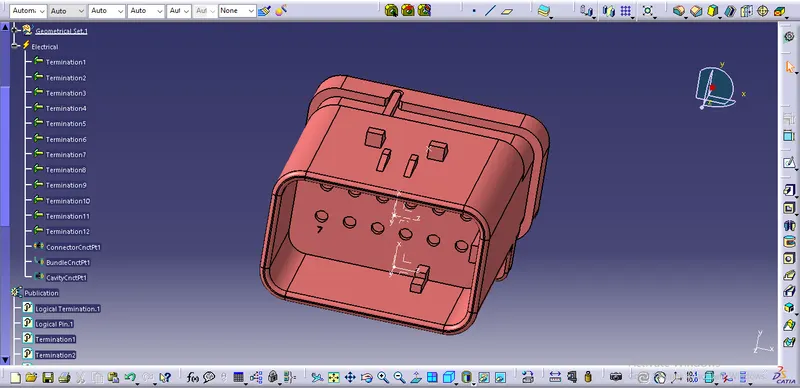
DEFINING ELECTRICAL DEVICES:
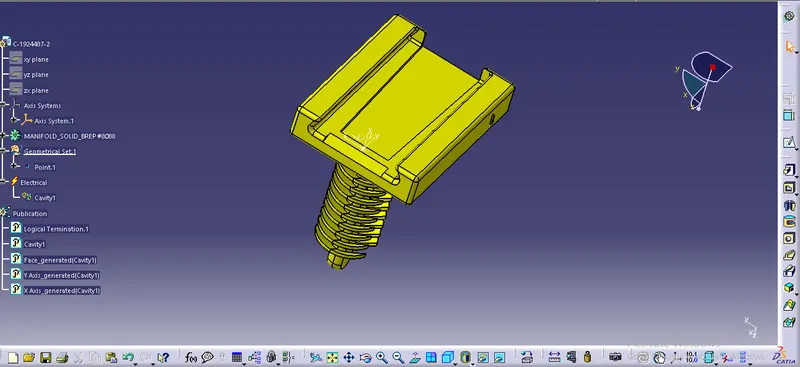
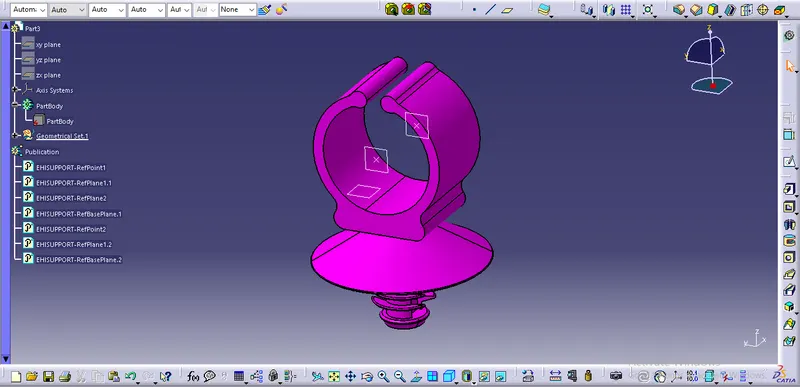
CONNECTOR AND CLIP PLACEMENTS:
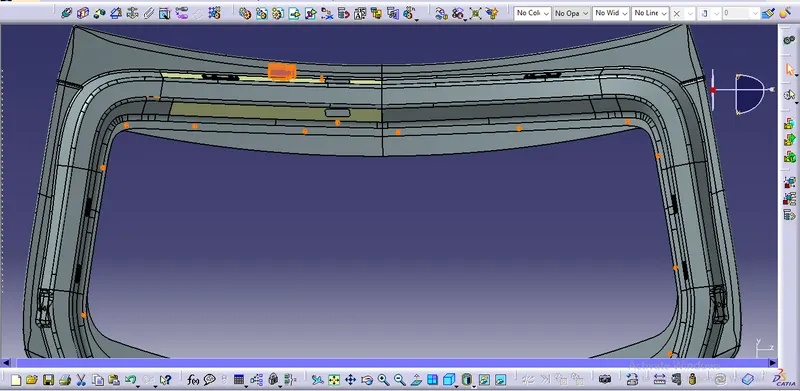
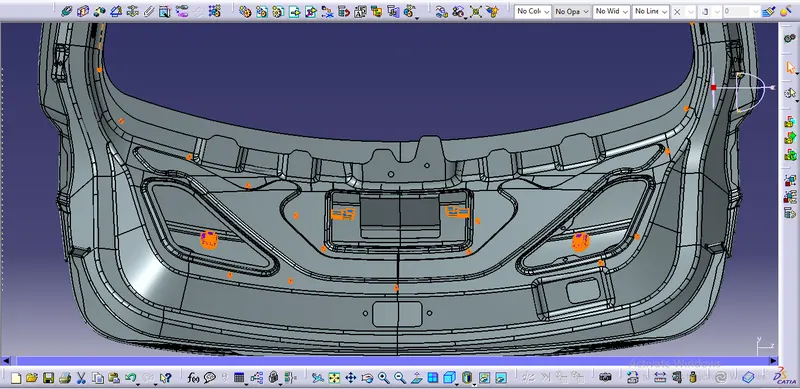
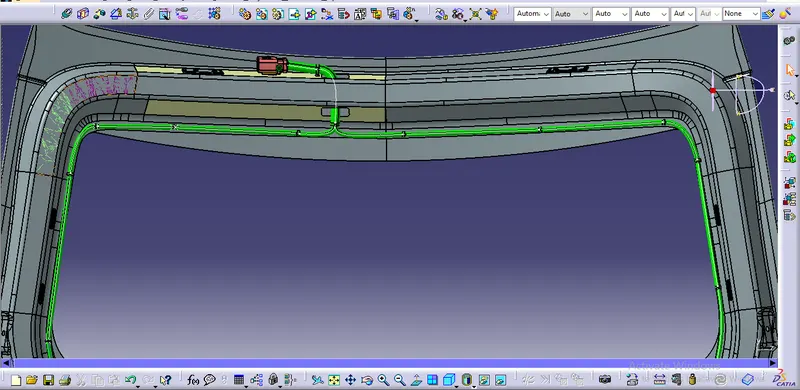
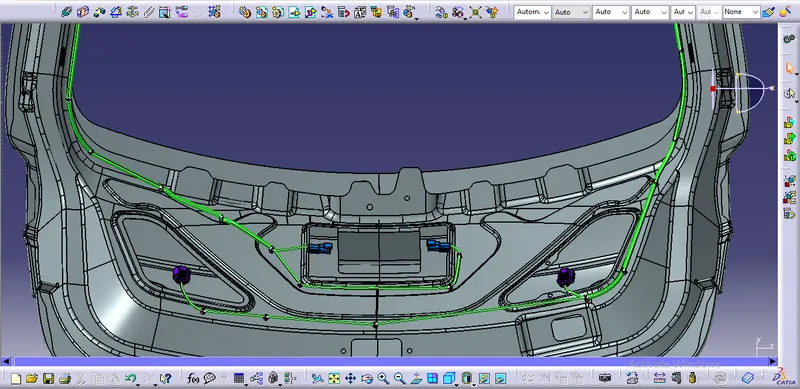
BUNDLE ROUTING:
PROTECTIVE COVERING:
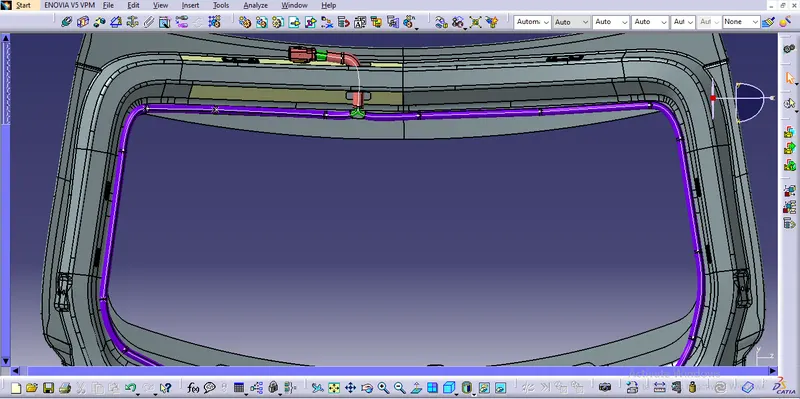
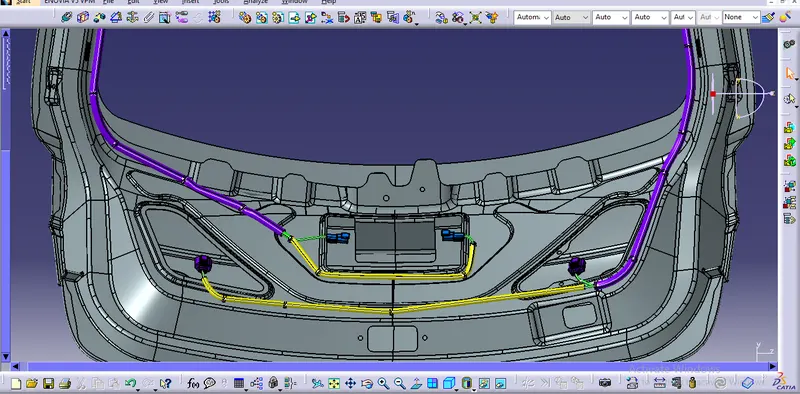
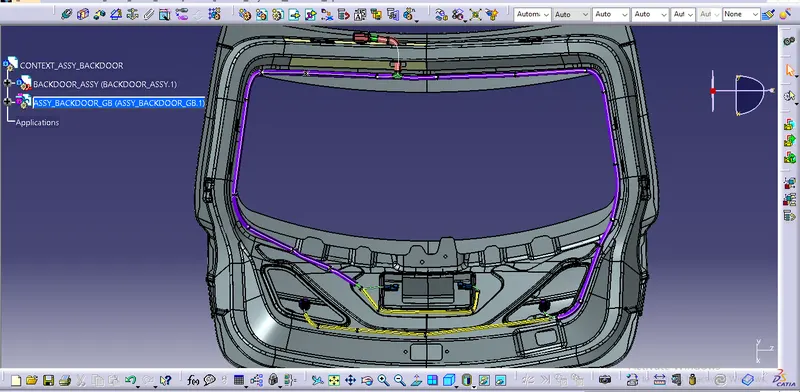
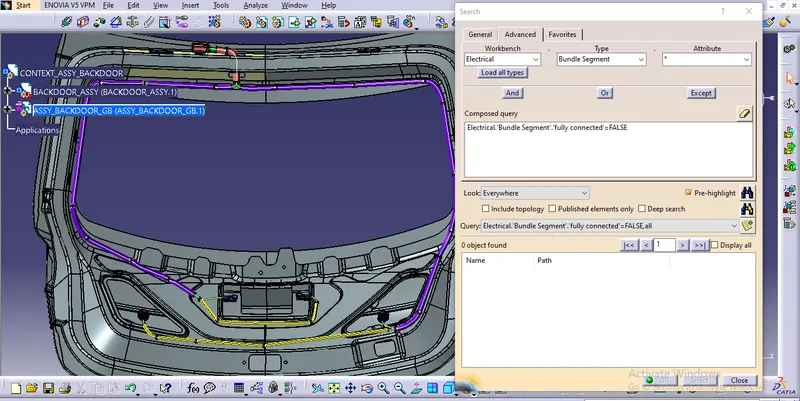
CHECKING BUNDLE CONTINUITY:
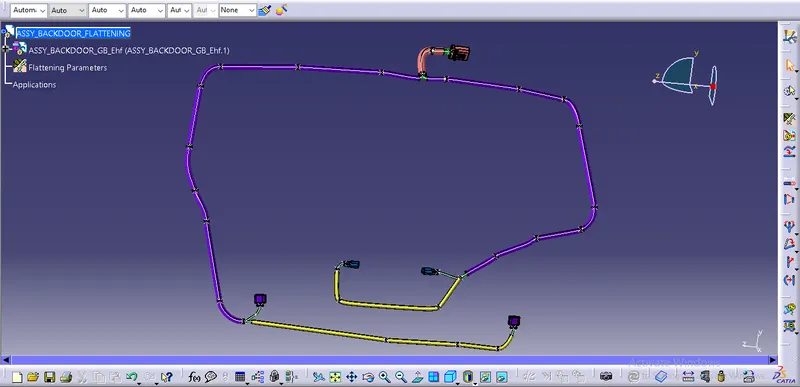
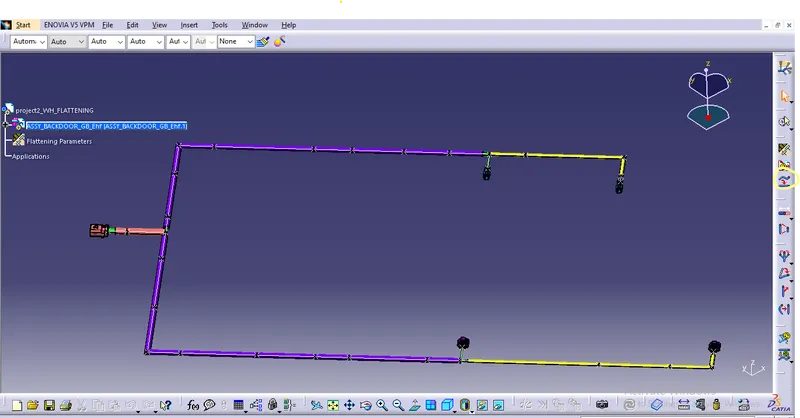
WIRING HARNESS FLATTENING:
DRAWING: