Project - 2
Additive manufactured in Human Orthopedic Implants
Abstract
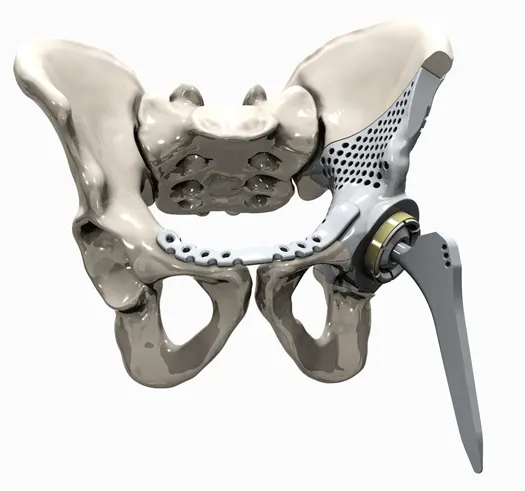
The applications of Additive Manufacturing (AM) have increased extensively in the area of orthopaedics. The AM applications are for making anatomic models, surgical instruments & tool design, splints, implants and prosthesis. A brief review of various research articles shows that patient-specific orthopaedic procedures provide multiple applications areas and provide directions for future developments. The purpose of this paper is to identify the best possible usage of additive manufacturing applications in orthopaedics field. It also presents the steps used to prepare a 3D printed model by using this technology and details applications in the field of orthopaedics. AM gives a flexible solution in orthopaedics area, where customised implants can be formed as per the required shape and size and can help substitution with customised products. A 3D model created by this technology gain an accurate perception of patient's anatomy which is used to perform mock surgeries and is helpful for highly complex surgical pathologies. It makes surgeon's job accessible and increases the success rate of the operation. AM provides a perfect fit implant for the specific patient by unlimited geometric freedom. Various scanning technologies capture the status of bone defects, and printing of the model is done with the help of this technology. It gives an exact generation of a physical model which is also helpful for medical education, surgical planning and training. This technology can help to solve present-day challenges as data of every patient is different from another.
Introduction
In recent years, there has been a significant improvement in additive manufacturing technologies, and researchers have explored its applications in various fields of engineering and medicine. It creates a physical model from the digital 3D model without any requirement of process planning, physical tools and dies. This technology has great capability to fabricate complex shape prototypes with a variety of materials such as nylon, polymers and even metals. It produces implants of biocompatible materials that meet structural requirements.1,2
Additive manufacturing is a type of manufacturing technology in which materials like powder, plastic or metal are deposited layer by layer to fabricate the 3D model from Computer Aided Design (CAD) model. This method is different from traditional manufacturing technology because rather than removing of material; it adds materials layer by layer. In surgical applications, this technology is used to create a model which gives a better understanding of complex pathology and anatomy of the patient. It easily produces specific custom implants and patient-specific instruments which help surgeon during the surgery of the patient.3,4
In biomedical engineering, orthopaedics is surgical discipline applied through various disciplines such as joint arthroplasty, ranging from trauma surgery to tumour surgery for correction of the deformity. Orthopaedic applications provide a detailed analysis of the musculoskeletal system and craniomaxillofacial surgery.5,1
Applications of additive manufacturing give a flexible solution with quick and cost-effective production of implants and also surgical instruments with high-quality of patient-specific. AM offers multiple benefits as compared to conventional implant production methods. By 3D CAD data, patient-specific parts are produced without using any tool along with required medically compatible materials and with a high quality of accuracy and precision. It makes surgeon job easier and optimise patient's treatment with minimum unpleasant side effects. AM methods can produce individual instrument and easily manufacture various medical devices. This technology is recasting in orthopaedic care that rapidly fabricates implantable devices by the use of bioactive materials and polymer.6,2
In orthopaedics, AM has extensive benefit for bone ingrowths capabilities. It enables to fabricate complex metal parts of the different shape, size and design. Regarding improving lives, it has a dramatic effect on the human condition. This is helpful for both clinical environment and manufacturing method. It creates implant of spinal devices, standard knee and helpful in the development of orthopaedic implant.6,7
Orthopedic implants are medical devices used to replace or support damaged or diseased bones and joints. There are various types of orthopedic implants, including:
-
Joint replacement implants: These are artificial joints used to replace damaged joints such as the hip, knee, shoulder, and elbow.
-
Plates and screws: These are used to fix broken bones and hold them in place while they heal.
-
Rods and nails: These are used to stabilize and align fractured bones, particularly in the limbs.
-
Bone grafts: These are used to fill gaps in bones that have been damaged or removed due to injury or disease.
-
Spinal implants: These are used to stabilize and support the spine, including rods, screws, and cages.
-
Prosthetic limbs: These are artificial limbs used to replace limbs that have been amputated due to injury or disease.
-
Dental implants: These are artificial tooth roots used to replace missing teeth.
-
Craniofacial implants: These are used to support and reshape bones in the skull and face, including plates, screws, and bone grafts.
-
Orthopedic staples: These are used to hold incisions closed after surgery.
Each type of orthopedic implant is designed for a specific purpose and can be customized to meet the patient's individual needs.
Orthopedic Implant: I choose to focus on a knee replacement implant as it is a common procedure and can greatly improve the quality of life for patients suffering from knee pain or osteoarthritis.
Implant Model: I will focus on the Zimmer Biomet Persona Knee System, which is a popular knee replacement implant that provides personalized fit and function for patients.
AM Method and Material: I would choose Direct Metal Laser Sintering (DMLS) as the AM method for creating the implant, and use Titanium Alloy (Ti-6Al-4V) as the material due to its excellent biocompatibility, strength, and corrosion resistance.
Powder/Wire Testing: I would conduct the following tests on the 3D printed implant:
-
Tensile testing: to measure the implant's mechanical strength and ensure that it meets the required standards.
-
Microstructure analysis: to evaluate the internal structure of the implant and ensure that there are no defects or irregularities.
-
Corrosion testing: to assess the implant's resistance to corrosion in simulated body fluids.
-
Wear testing: to evaluate the implant's wear resistance and determine its lifespan in vivo.
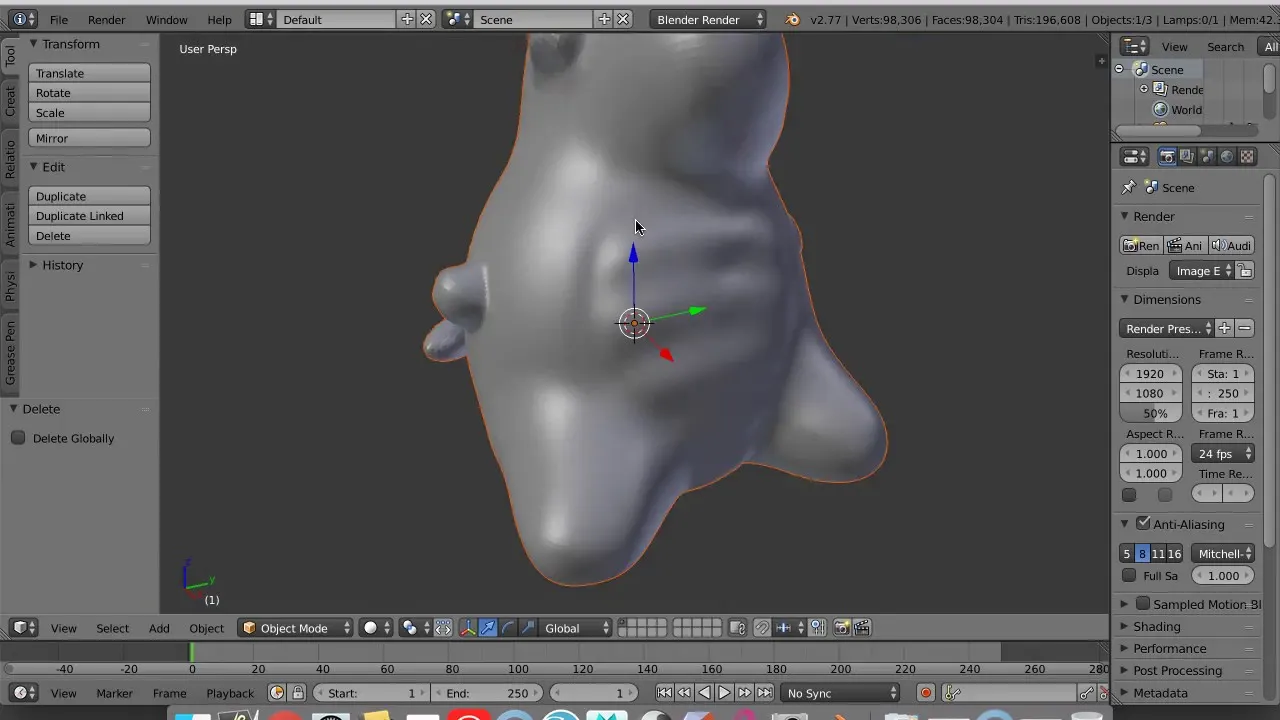
3D Model: Here is a 3D model of the Zimmer Biomet Persona Knee System that has been converted into an STL file
In orthopaedic the patient-specific analysis is essential to obtain an accurate medical imaging data of the individual patient. Magnetic resonance imaging (MRI), modern multi-row detector Computer Tomography (MDCT), Computer tomography (CT) scan, X-rays and 3D scanners provide an accurate, fast, high-resolution data and easily prepare a 3D view of patient's anatomy. AM convert the digital medical image into a 3D physical model. This conversion takes place in three steps discussed in Table 1.
The Applications of additive manufacturing in orthopaedics
Additive manufacturing provides tremendous development in manufacturing field and now explore its applications in various medical fields. The 3D printed model's first goal is to resemble the cases in the clinic and give a detailed overview to the surgeon. The principal application of this model is for the testing procedure in advance as it provides a feeling of the mechanical response of real bone to the surgeon. The operation can also be performed on the 3D model to examine and visualise
Discussion
Additive manufacturing easily develops personalised prostheses and implants which is more valuable in the field of orthopaedics. This technology can rapidly fabricate implants of any desired shape and also used for the production of size-controllable micro-pore structures. For research and development of orthopaedic implants, it is promising. Its applications are enhanced in medical and solve various problems regarding this field. 3D printed physical model can help surgeons to have a visual and
Limitations and future scope
The cost of additive manufacturing technology is very high that includes software, hardware, skilled human resources for operating, maintaining as well as the cost of printing materials. AM creates implants with high cost and also required a high cost of designing. Another limitation of this technology is the timescale physical model production. It is variable that depends on the complexity and size of the model. Image acquisition and data processing take time. Then for the fabrication of
Conclusion
Additive manufacturing is a type of manufacturing process that produces a 3D object from the digital model. Based on CT and MRI, the bone 3D image can be reconstructed, and then obtains a bone prototype by layer by layer technique and play an effective role in medical as well as in orthopaedic surgery. This is helpful for surgical design, teaching and presentation of complex surgeries. By using reverse engineering technique of AM, a missing part of the bone is created. The popularity and