Project
SIMULATION OF BAJA ALL-TERRAIN VEHICLE
AIM:
To study and analyze the BAJ All-Terrain Vehicle(ATV) using simulink models.
OBJECTIVE:
To prepare a technical report explaining the model properties & comments on the results.
THEORY:
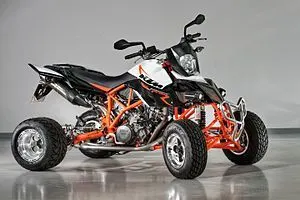
All-Terrain Vehicle
An all-terrain vehicle (ATV), also known as a light utility vehicle (LUV) a quad bike, or simply a quad, as defined by the American National Standards Institute(ANSI) is a vehicle that travels on low-pressure tires, with a seat that is straddled by the operator, along with handlebars for steering control. As the name implies, it is designed to handle a wider variety of terrain than most other vehicles. Although it is a street-legal vehicle in some countries, it is not street-legal within most states, territories, and provinces of Australia, the United States or Canada.By the current ANSI definition, ATVs are intended for use by a single operator, although some companies have developed ATVs intended for use by the operator and one passenger.
MAJOR COMPONENTS USED:
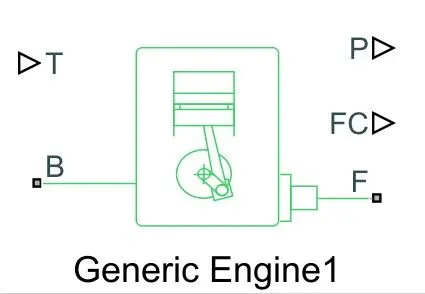
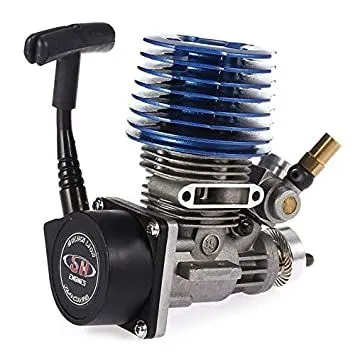
Generic Engine:
The Generic Engine block represents a general internal combustion engine. This block is a suitable generic engine for spark-ignition and diesel. Speed-power and speed-torque parameterizations are provided. A throttle physical signal input specifies the normalized engine torque.
Ports:
- B-Mechanical rotational conserving port associated with the engine block.This is the base port.
- F-Mechanical rotational conserving port associated with the engine crankshaft. This is the follower port of the engine.
- T-Engine torque demand as a fraction of maximum possible torque.
- P-Power produced by the engine, in W.
- Fc-Fuel consumed by the engine, in kg/s.
Simple Gear:
The simple Gear block represents a gearbox that constrains the connected driveline axes of the base gear, B, and the follower gear, F, to corotate with a fixed ratio that you specify.You choose whether the follower axis rotates in the same or opposite direction as the base axis. If they rotate in the same direction, the angular velocity of the follower, ωF, and the angular velocity of the base, ωB, have the same sign. If they rotate in opposite directions, ωF and ωB have opposite signs.
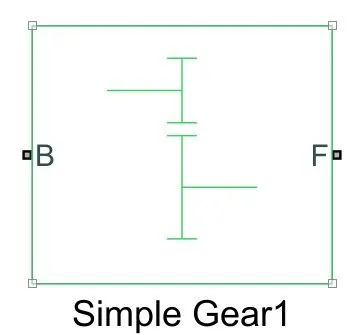
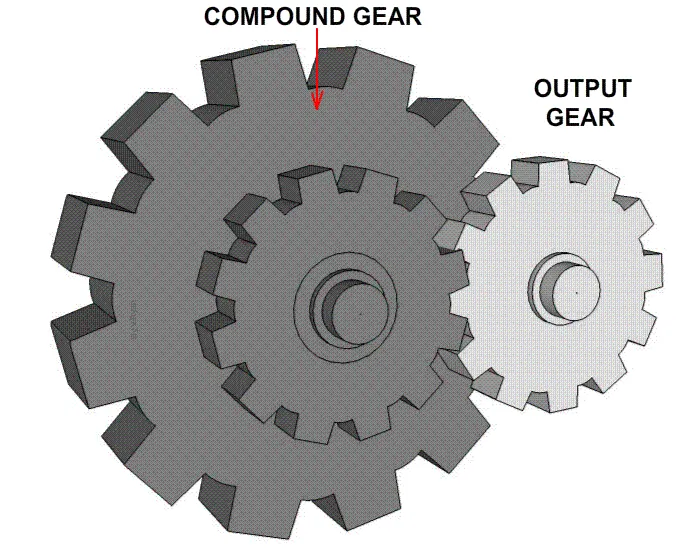
B- Base Gear.
F- Follower Gear.
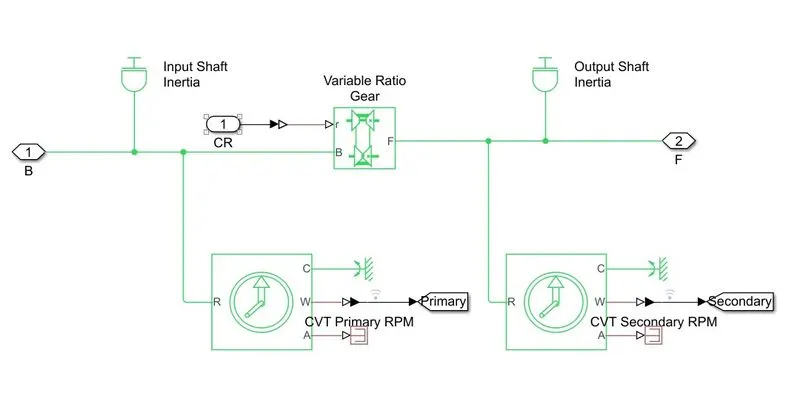
CVT-Transmission:
A continuously variable transmission (CVT) is an automatic transmission that can change seamlessly through a continuous range of gear ratios. This contrasts with other transmissions that provide a limited number of gear ratios in fixed steps. The flexibility of a CVT with suitable control may allow the engine to operate at a constant RPM while the vehicle moves at varying speeds.
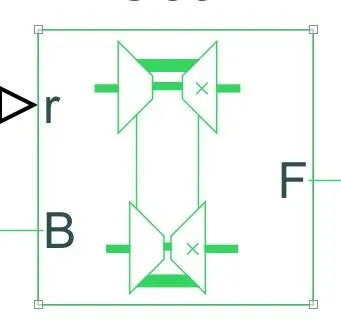
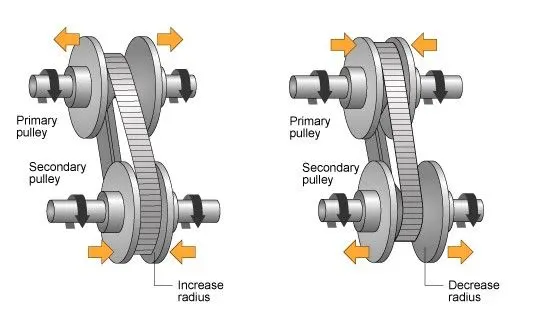
B - Base Pulley
F - Follower Pulley
R - Variable Transmission Ratio
Vehicle Body:
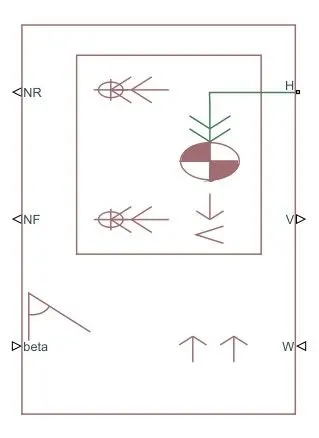
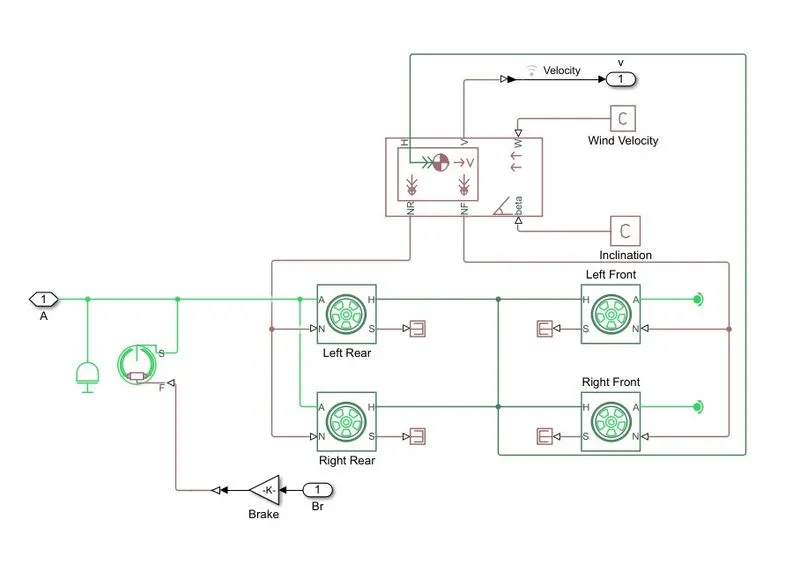
The Vehicle Body block represents a two-axle vehicle body in longitudinal motion. The vehicle can have the same or a different number of wheels on each axle. For example, two wheels on the front axle and one wheel on the rear axle. The vehicle wheels are assumed identical in size. The vehicle can also have a center of gravity (CG) that is at or below the plane of travel.
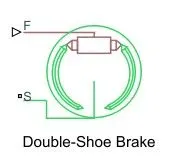
Double Shoe Brake:
The Double-Shoe Brake block represents a frictional brake with two pivoted rigid shoes that press against a rotating drum to produce a braking action. The rigid shoes sit inside or outside the rotating drum in a diametrically opposed configuration. A positive actuating force causes the rigid shoes to press against the rotating drum. Viscous and contact friction between the drum and the rigid shoe surfaces cause the rotating drum to decelerate.
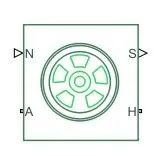
Tire:
The Vehicle body is connected to 4tires eac per axle to move the vehicle according to the power input to the axle.
BAJA ATV MODEL WITHOUT DASHBOARD:
Main model:
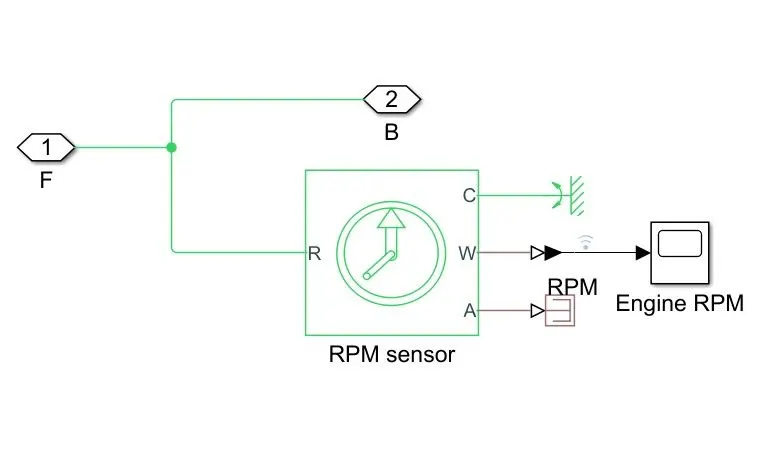
Engine Sensor:
CVT System:
Vehicle Body:
PROCESS:
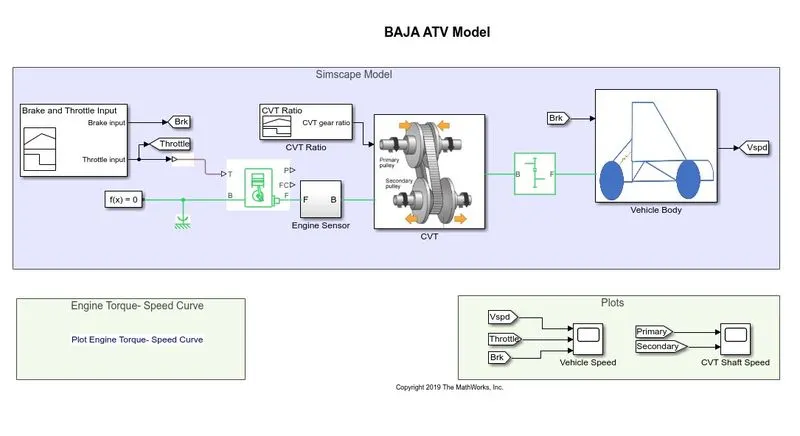
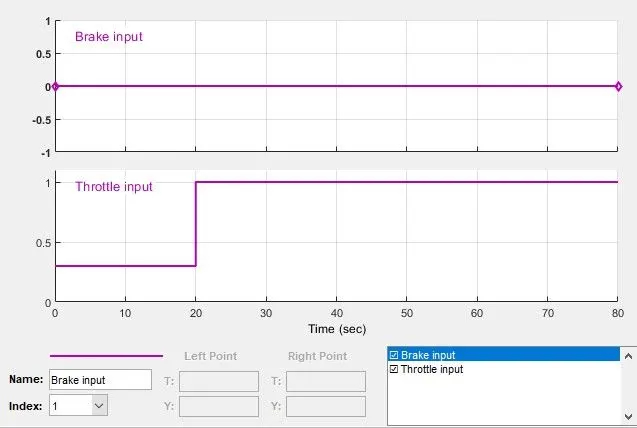
- The Throttle input signal is generated by the signal builder block and it is connected to the engine.
- And the brake input signal is also generated by the signal builder block and its input to the vehicle axle.
- The speed vector and torque vector input is given in the matlab Workspace.
- The engine will generate the output rpm which can be taken from the crankshaft output. This speed will be given to the ideal rotational motion sensor to sense the output rpm.
- Then the output speed of the engine is given to CVT to reduce the speed.
- The CVT ratio is provided to the variable ratio transmission CVT block through signal builder.
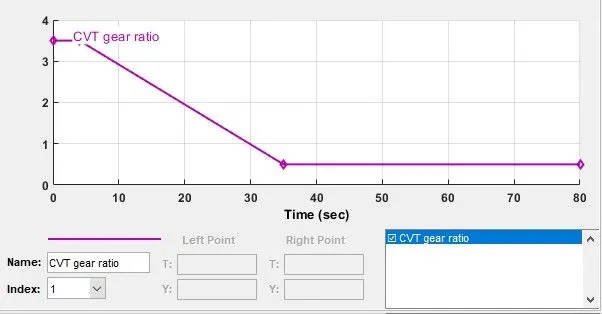
- The speed is controlled by the CVT ratio and the controlled output speed is input to the simple gear.
- And the simple gear output is given to the vehicle axle body to accelerate according to the speed.
- Then the velocity is taken as output from the vehicle body for further analysis.
RESULTS:
Torque-speed Plot:
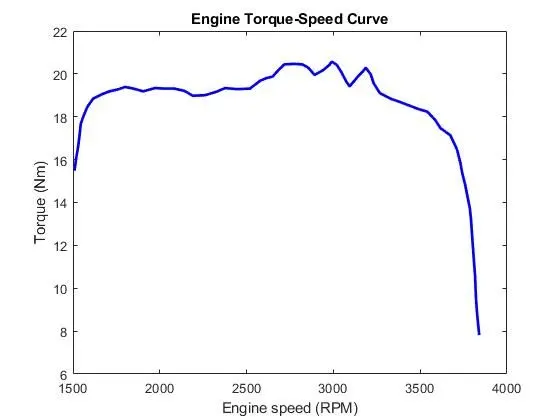
The torque and speed are input from the MATLAB workspace window to the generic block to generate the output rpm. This plot is common for all the cases because it's a default input to the engine.
Vehicle Speed Plot:
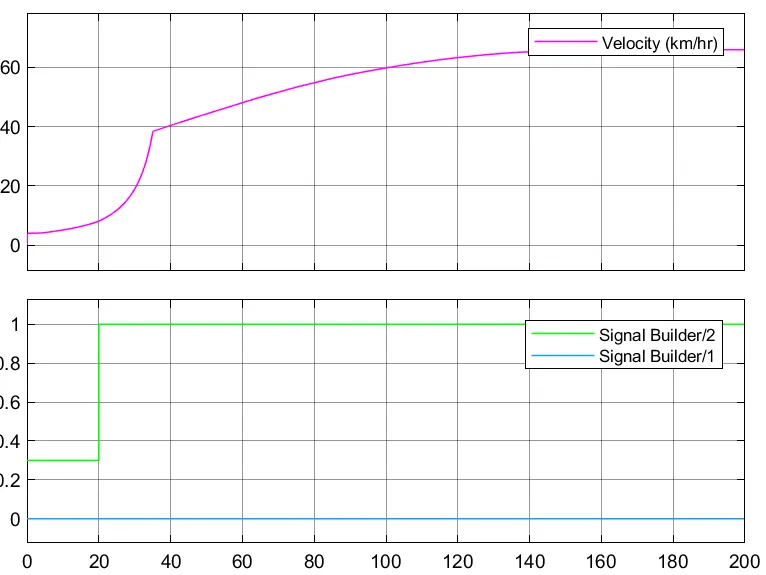
In this plot the brake value is not given and the throttle value is constant in 0.3 till 20 sec and after increase into 0.3 to 1 at after 20 sec. And the velocity of the vehicle is increased gradually for the input of the throttle.
CVT shaft Speed Plot:
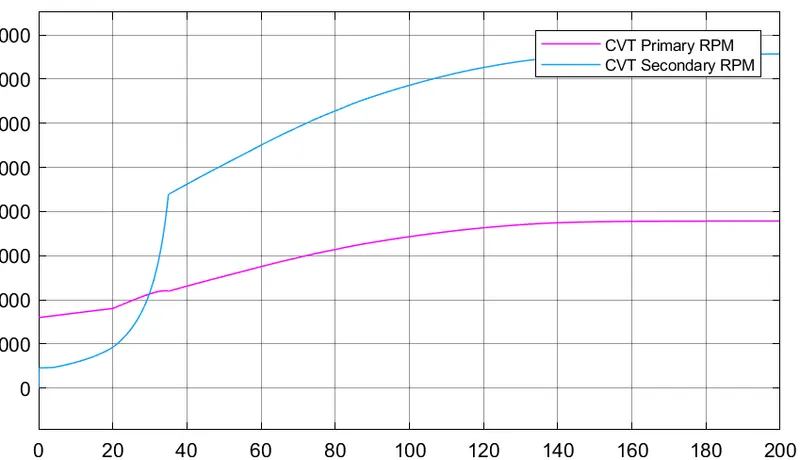
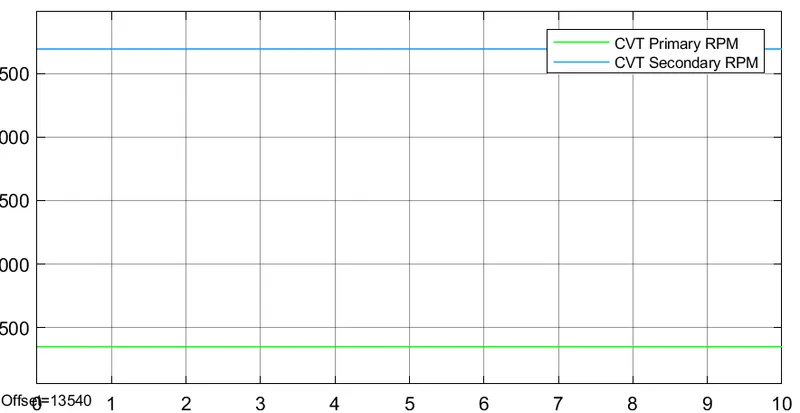
In this plot we have two result one is CVT primary RPM and another one is CVT secondary RPM. in the CVT primary RPM is the input of the CVT itr as high RPM above 7000 rpm and secondary RPM is used to reduce the rpm speed as per the gear ratio.
Maximum RPM = 7400 RPM
CVT ratio = 1:1.8
WKT,
`>= arratio = Drive n/d river`
`1/1.8 = Drive n/7400`
`Driven = 7400/1.8`
`Driven = 4111.1 RPM`
The Reduced maximum RPM is 4111.1 Rpm
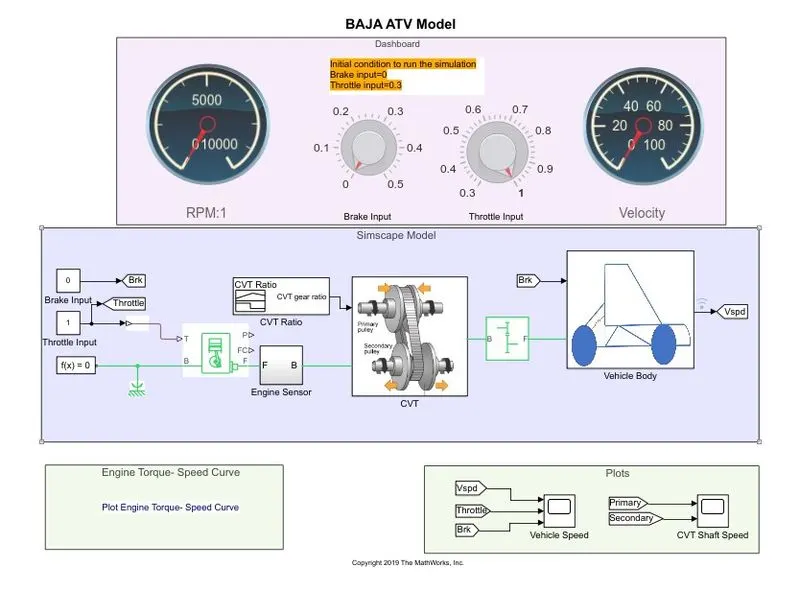
BAJA ATV MODEL WITH DASHBOARD:
Main Model:
DashBoard:
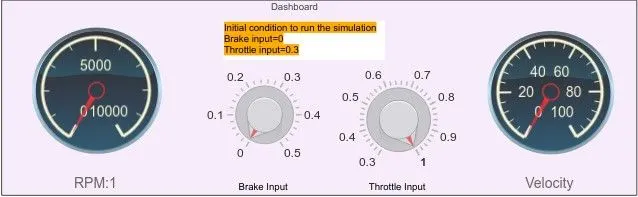
FLOW PROCESS:
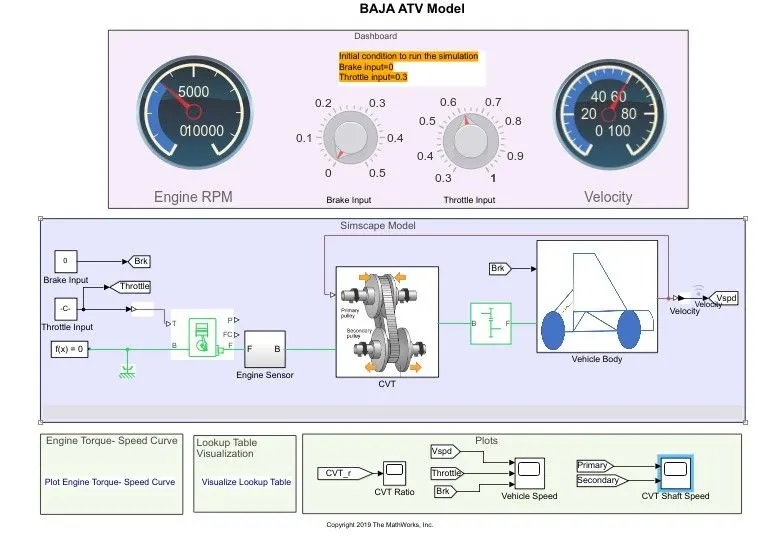
The model workflow process is the same as the process of the BAJA ATV model without a dashboard but the throttle and brake inputs are controlled by the user with the knob.
RESULT:
CVT speed Reduction Plot:
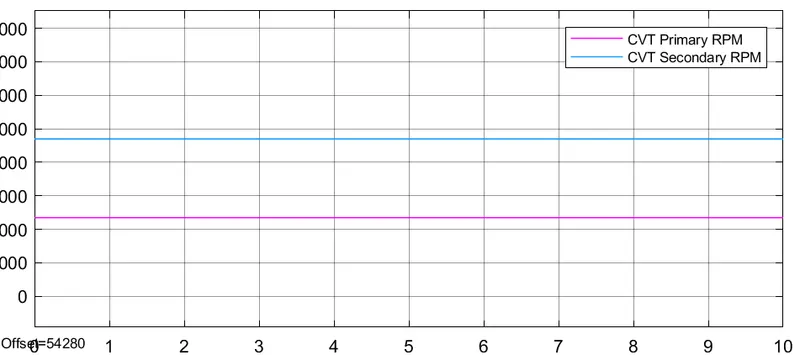
The engine reduced speed is controlled by various CVT ratios.
Velocity:
From the graph we can infer that the vehicle is accelerating while throttle is applied (Step Up) and decelerated while break is applied (Step Down).
BAJA ATV model Lookup table Extraction:
Main Model:
FLOW PROCESS:
The model workflow process is the same as the process of BAJA ATV model without a dashboard. The small addition here the CVT ratio and vehicle speed data are extracted using to workspace.
RESULT:
The results are the same as the BAJA ATV model without dashboard but an additional output is the CVT ratio and vehicle velocity to the workspace.
BAJA ATV model Mapped Lookup table dashboard:
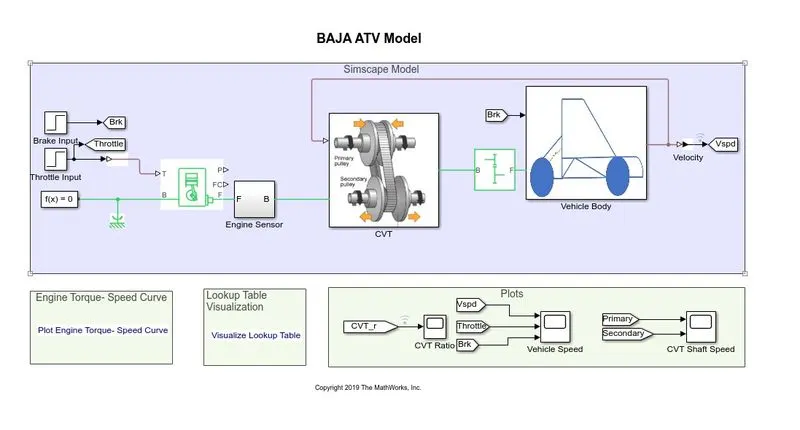
Main Model:
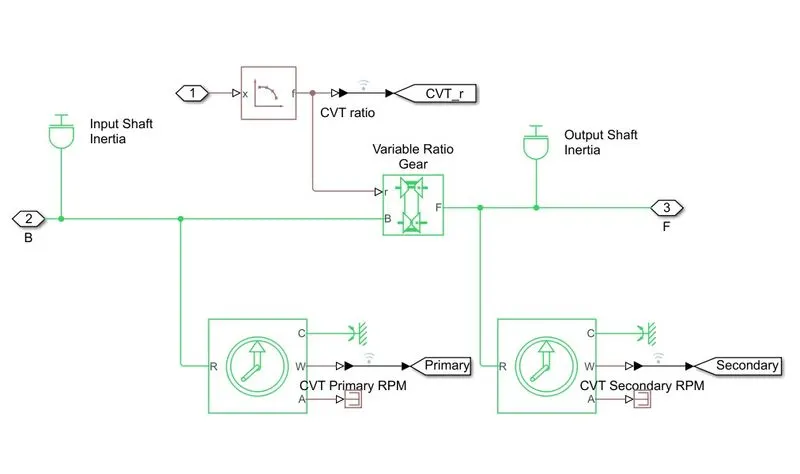
CVT Block:
PROCESS:
- The model workflow is the same as the process of the BAJA ATV model without a dashboard.
- Instead of signal builder blocks for brake and throttle input the step blocks are used. At 35 sec the brake input will take a step of value 0.
- The throttle input is 20sec throttle will increase from 0.3-1 then remains constant throughout.
- And instead of signal builder block for CVT ratio the 2-D lookup table is used. The interpolation and extrapolation methods are set to linear.
- At last the vehicle speed output is given as feedback to the 2-D lookup table so that we can verify that the velocity of the vehicle is changing perfectly when the CVT ratio changes. The vehicle's speed is converted to m/s from kmph.
RESULTS:
CVT Ratio vs Vehicle Speed:
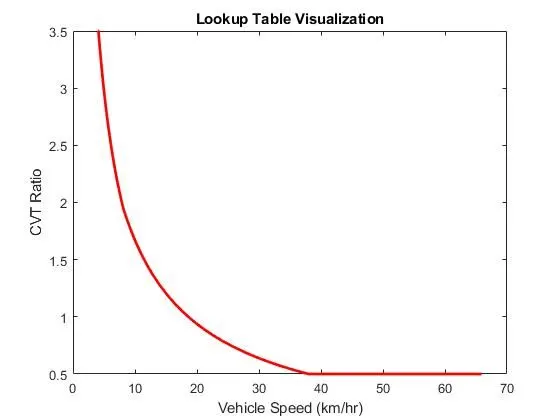
In the above plot is a value of the lookup table visualization.
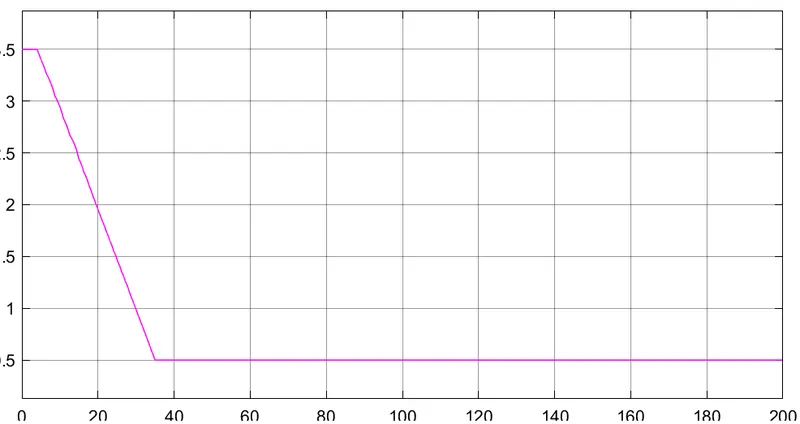
i. 0 to 5km/hr, the CVT ratio is constant at 3.5.
ii. 5 to 35 km/hr, the CVT ratio drops down to 0.5.
iii. 35km/hr onwards, the CVT ratio is constant at 0.5.
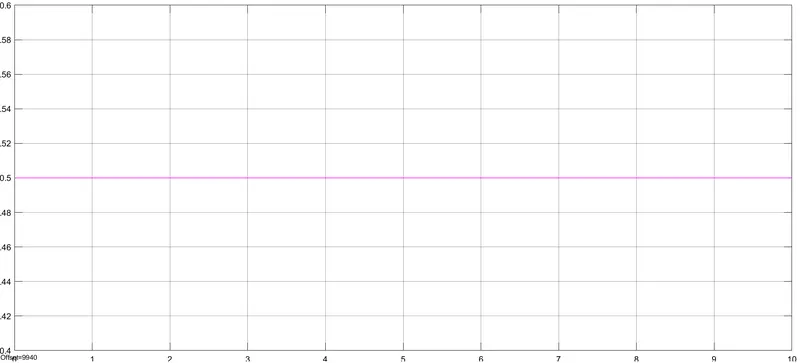
Hence, we can conclude that the vehicle accelerates, decelerates and remains constant when the CVT ratio is being varied.
CVT Shaft Speed:
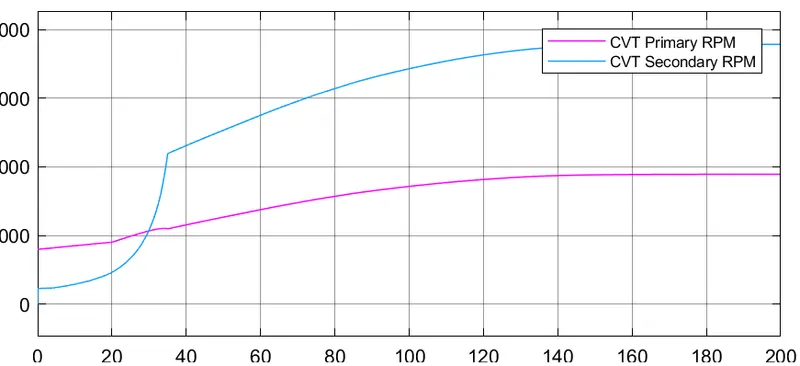
The output shaft speed follows the CVT ratio discussed before.
Speed vs Throttle Plot:
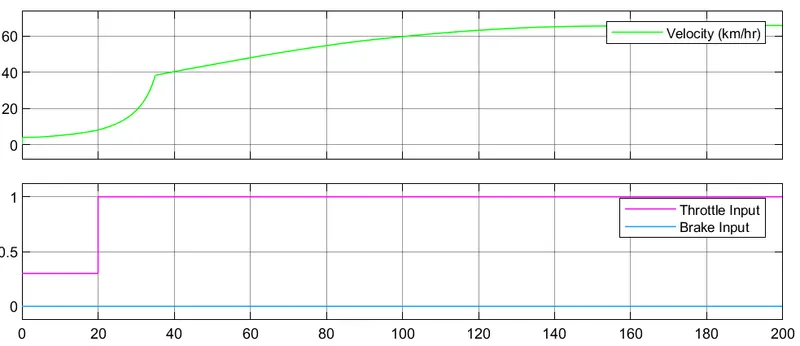
It shows the same result as the first model.
BAJA ATV model Mapped Lookup table with Dashboard:
Main Model:
FLOW PROCESS:
The model workflow process is the same as the process of BAJA ATV model- mapped lookup table with dashboard but the throttle and brake inputs are controlled by the user with the knob followed by the vehicle speed is given as feedback to the CVT ratio lookup table.
RESULTS:
CVT ratio:
CVT Shaft Speed:
SIMULINK MODEL LINK:
https://www.mathworks.com/matlabcentral/fileexchange/70576-baja-all-terrain-vehicle-atv-model