Project
Aim: To carry out a system level simulation of an All Terrain Vehicle (ATV) model and find its properties
All terrain Vehicle
The term ATV stands for All Terrain Vehicle. It is also known as a quad or quadricycle type vehicle. An All-Terrain motor vehicle could have three, four or even six wheels. Unlike a motorcycle, generally, the ATVs have more than two wheels. This vehicle runs on low-pressure tires. However, it has handlebars instead of wheel for controlling the steering.
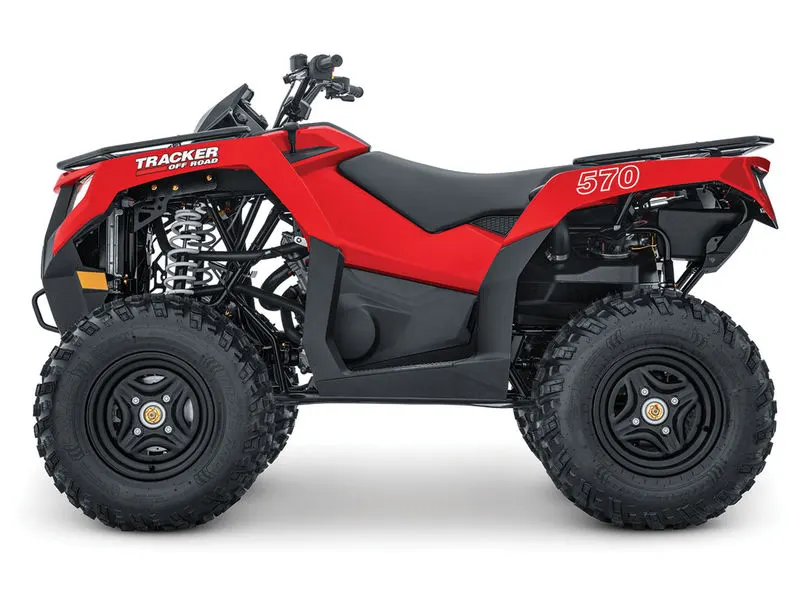
As the name indicates, an ATV is designed to handle a broader variety of terrain than regular vehicles. In some countries it is a street-legal motor vehicle and licensed for use on public roads. However, it is not street-legal or roadworthy within some states, territories, and provinces of some countries.
The ATV in our model uses Continuous Variable Transmission or CVT.
CVT:
In order to see how a CVT works,we need to understand a manual and a traditional automatic. A manual has a set number of gears, and the driver determines what gear ratio they need. An automatic also has a set number of gears, but it uses a hydraulic system that responds to pressure created by the conditions to determine the gear needed without any input from the driver.
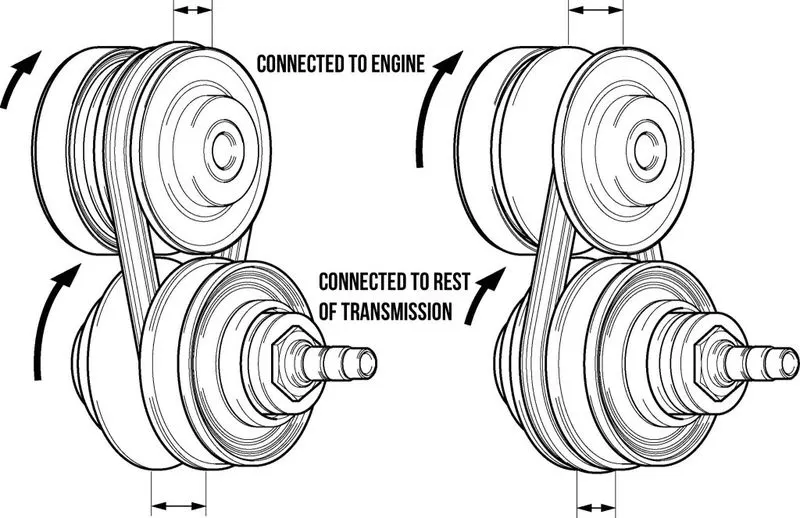
A CVT is similar to an automatic in that it doesn't use any input from the driver, but that is where the similarities end. A CVT doesn't have any gears. Instead, it has two pulleys. One pulley connects to the engine, and the other connects to the wheels. A flexible belt connects the two pulleys.The width of the pulleys changes depending on how much power the vehicle needs. When one pulley gets larger, the other one gets smaller. Since neither the pulleys or the belt are fixed, they can provide an infinite number of gear ratios, unlike the automatic, which has a set number of gears.
Not all CVTs are created the same. The most common type is the pulley-based, but some other types include the Toroidal CVT, which uses rotating discs along with power rollers to produce the same result as the pulleys. The hydrostatic CVT uses pumps to control fluid flow, which then produces a rotational motion.
BAJA ATV model without Lookup table:
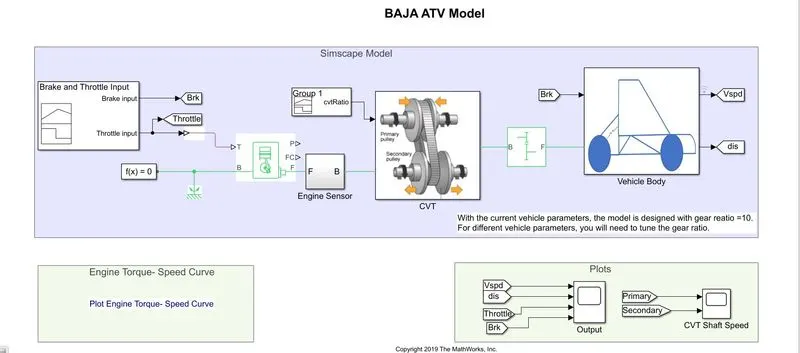
The model consists of the following blocks:
Brake and throttle input:
The brake and throttle input is basically a "Signal Builder".The Signal Builder block allows us to create interchangeable groups of piecewise linear signal sources and use them in a model.
Generic Engine:
The Generic Engine block represents a general internal combustion engine. Engine types include spark-ignition and diesel. Speed-power and speed-torque parameterizations are provided. A throttle physical signal input specifies the normalized engine torque. Optional dynamic parameters include crankshaft inertia and response time lag. A physical signal port outputs engine fuel consumption rate based on choice of fuel consumption model. Optional speed and redline controllers prevent engine stall and enable cruise control.
CVT Subsystem:
The engine sensor is connected to a CVT subsystem.
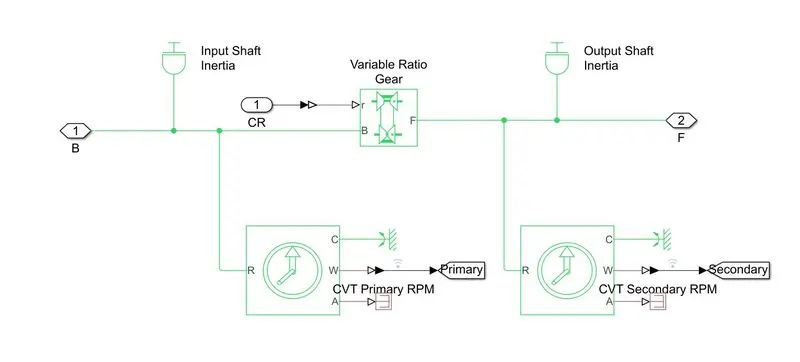
The CVT subsystem consists of the following blocks:
- Inertia
- Variable Ratio Transmission
- Ideal Rotational Motion Sensor
Variable Ratio Transmission: It represents a gearbox that dynamically transfers motion and torque between the two connected driveshaft axes, base and follower.
Engine Sensor Subsystem:
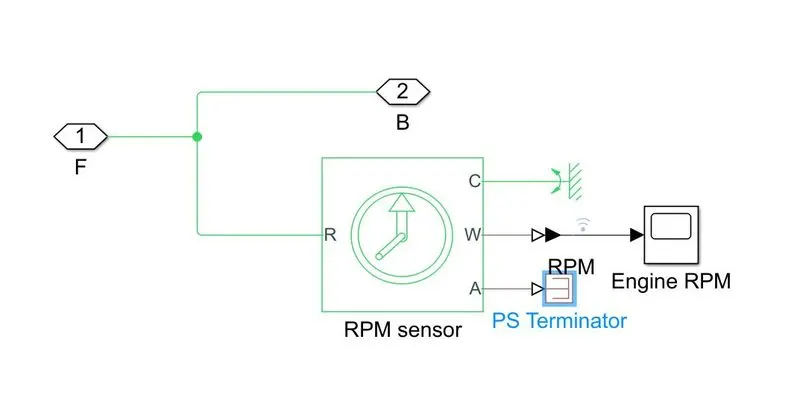
It is basically used to obtain the RPM of the generic engine.
The CVT and the vehicle body is connected with a simple gear.
The Vehicle body Subsystem:
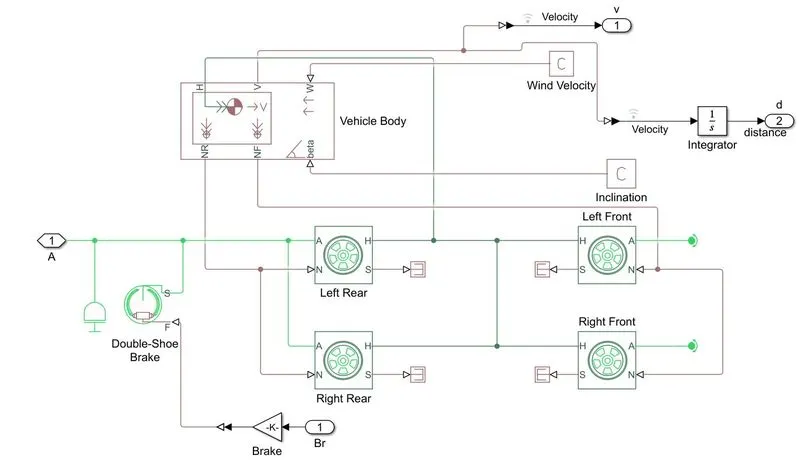
The Vehicle body subsystem consists of the following blocks:
- Vehicle Body
- Tire
- Double Shoe Brake
- PS Constant (Inclination and Wind Velocity)
- Integrator
Simulation Input and Output:
Throttle and Brake input:
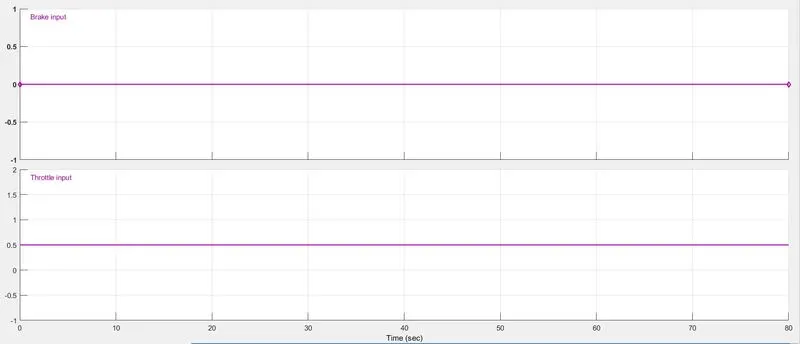
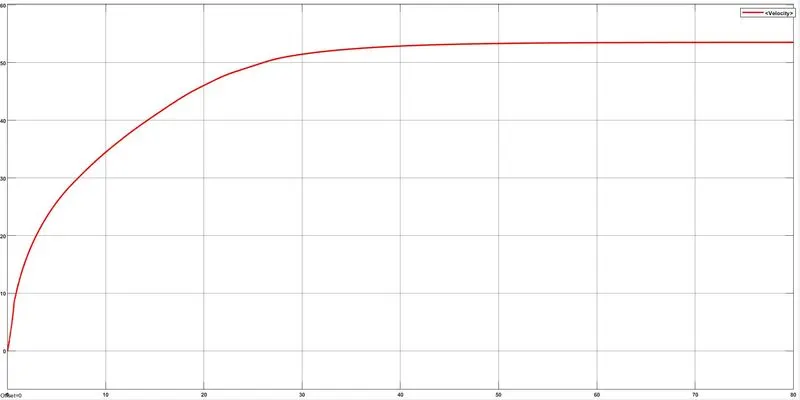
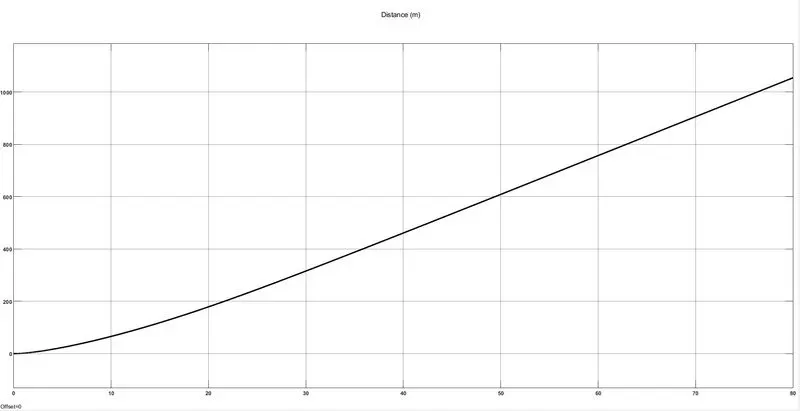
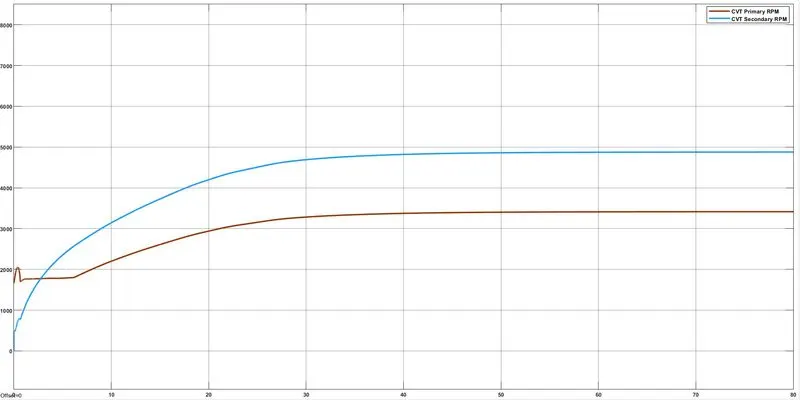
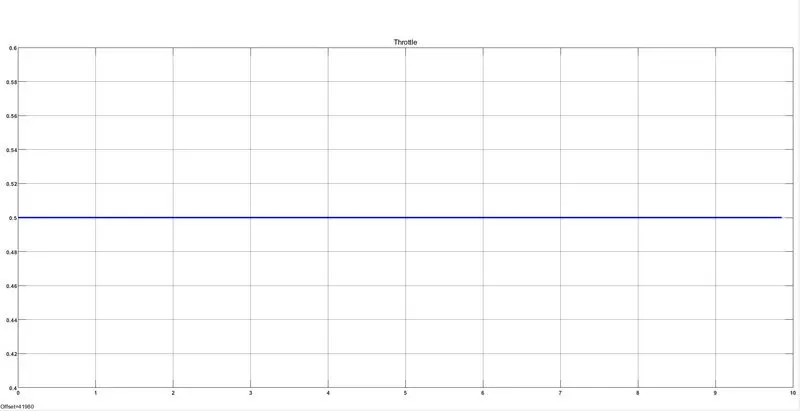
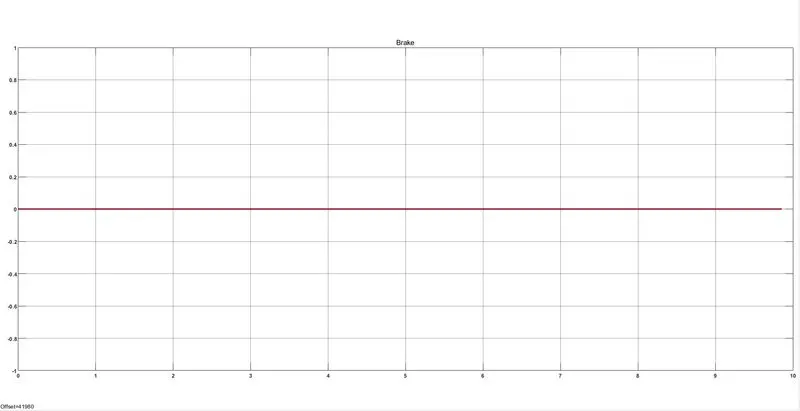
Using Signal builder, The brake input is given as zero for all time period (80 s) and the Throttle input is given as 0.5 for the entire time period(80s)
CVT ratio:
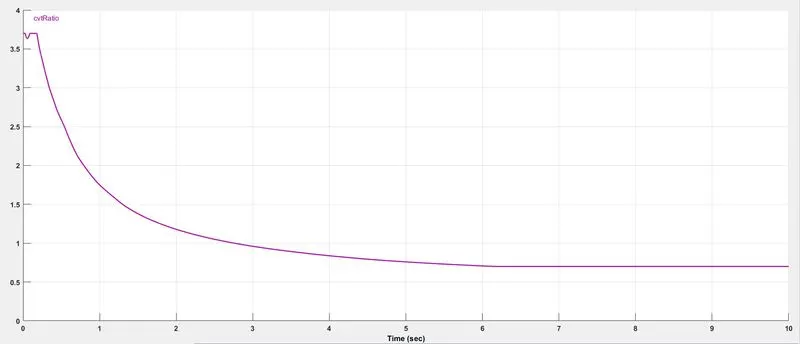
Output for the corresponding Throttle and brake input
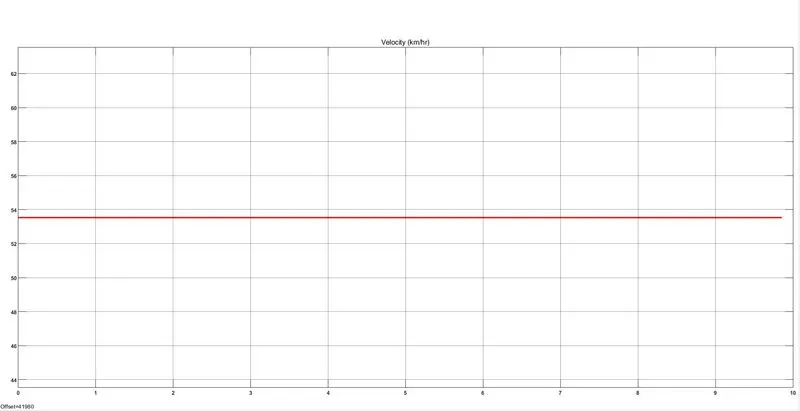
1.Velocity
2.Distance:
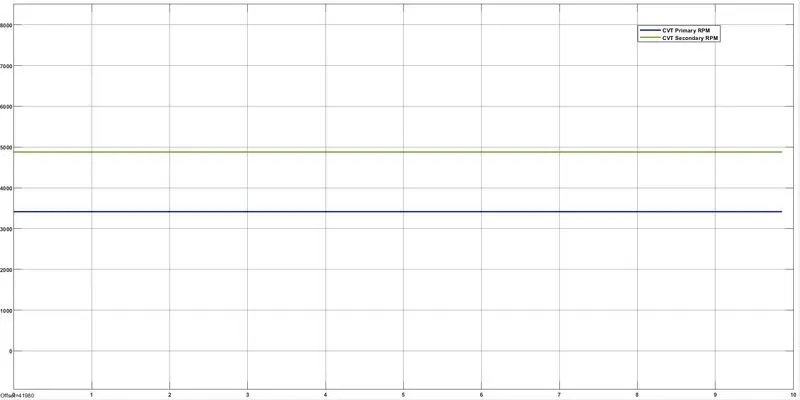
CVT Shaft speed:
ATV model with dashboard(No lookup table)
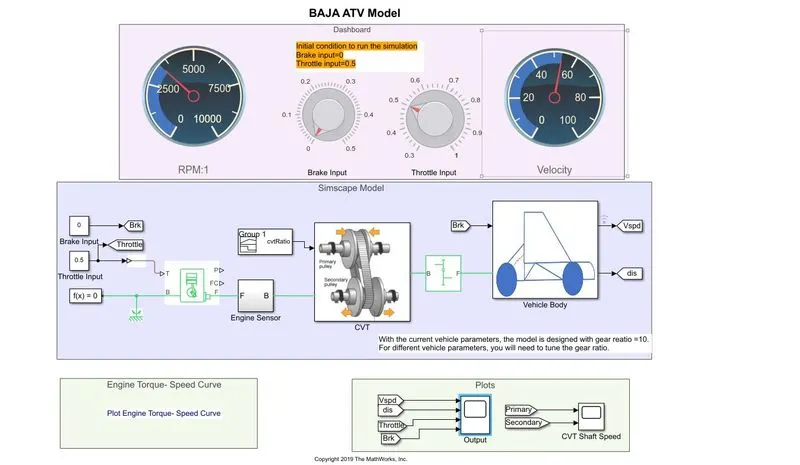
Initial conditions to run the simulation:
Brake input: 0
Throttle input: 0.5
Throttle input
Brake Input
Velocity output
Distance output
CVT Shaft speed:
ATV Model with Lookup Table
Lookup Table: It is an array of data that maps input values to output values and thereby approximating a mathematical function. Given a set of input values, a lookup operation retrieves the corresponding output values from the table. If the lookup table does not explicitly define the input values, Simulink can estimate an output value using interpolation,extrapolation or rounding.
- Interpolation: It is the process for estimating values that lie between known data points
- Extrapolation: It is the process for estimating values that lie beyond the range of known data points.
- Rounding: It is the process of approximating a value by altering its digits according to a known rule.
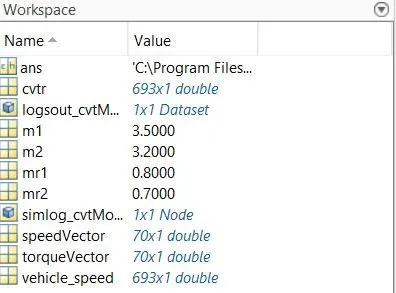
Before proceesing to the simulation, the lookup table(.mat file) has to be loaded on to the workspace. This can be done in the command window as
load('Lookuptable_data.mat')The workspace is shown as
1. Without dashboard:
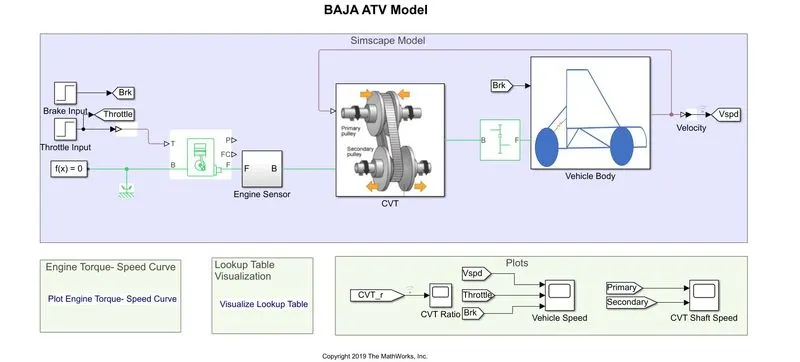
We can see from the model that the output velocity is fedback to one of the ports of the CVT subsystem.
Also, the follower to base teeth ratio is given as 4.
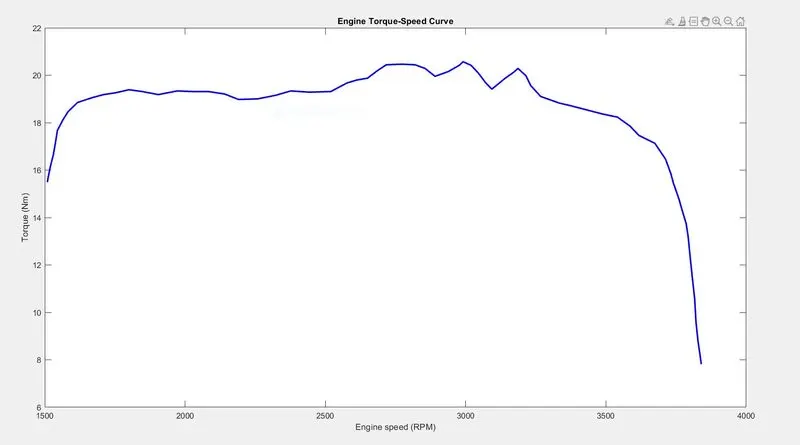
Torque-Speed Charac:
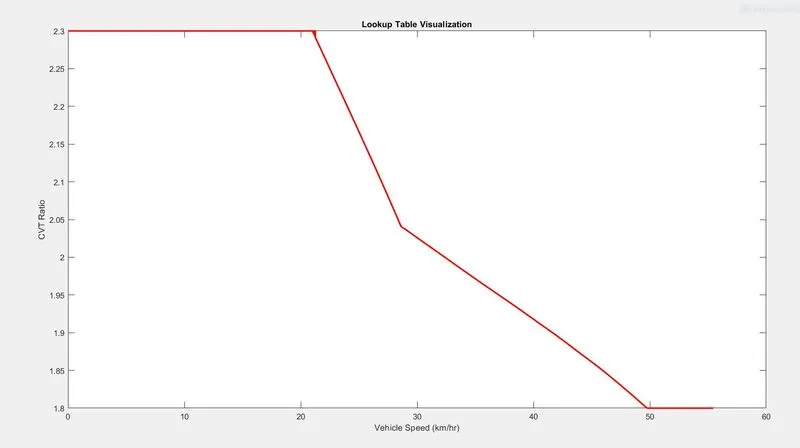
Lookup table Visualisation:
CVT subsystem:
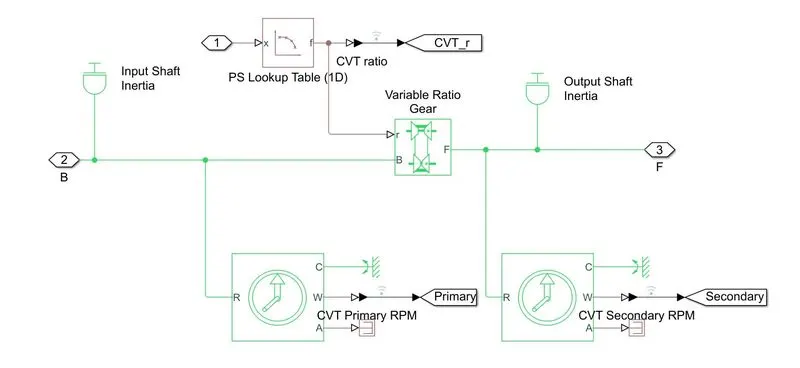
Hence, we could see that the feedback is given to the lookup table which then decides the Variable Gear Ratio.
The simulation is run and the following results are obtained:
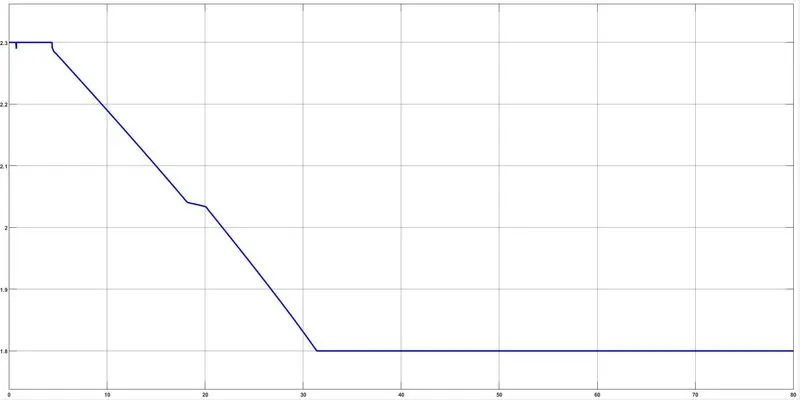
CVT ratio:
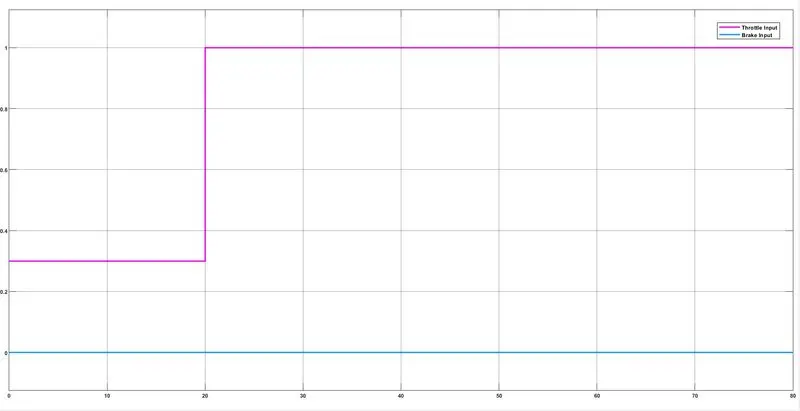
Brake and throttle input:
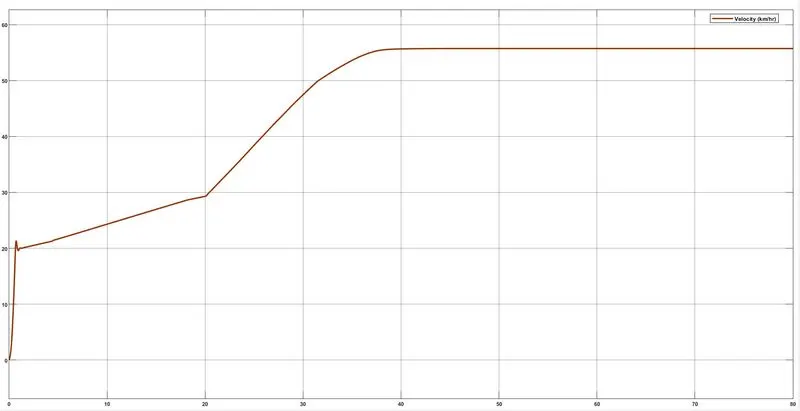
Vehicle speed:
CVT shaft speed:
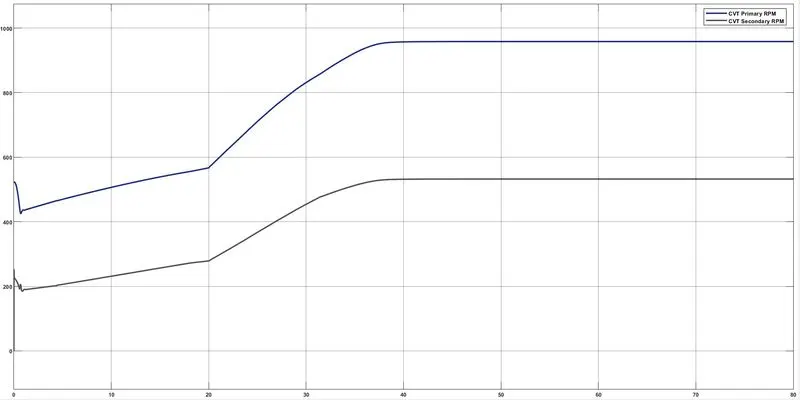
2. With dashboard:
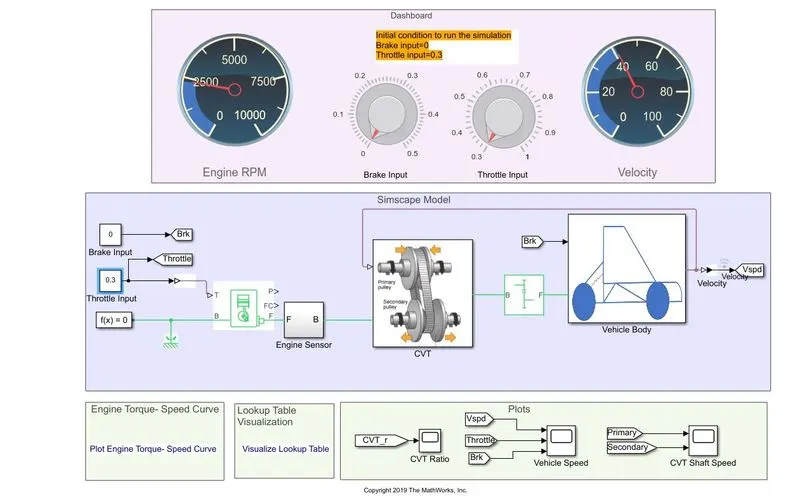
In this model, a dashboard is given for a better user interface. It consists of two knobs namely "Brake input" and "Throttle Input" and two custom gauges which shows Engine RPM and the velocity.
Initial parameters:
The follower to base teeth ratio is given as 12.
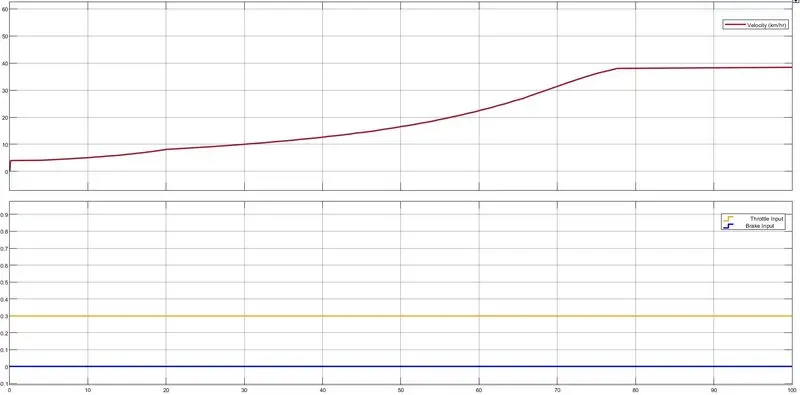
Throtte input=0.3
Brake input=0
The simulation is run and the following observations are made:
Vehicle Speed:
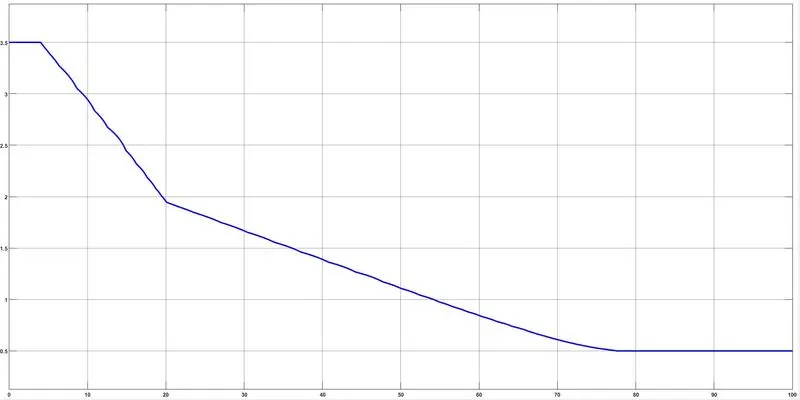
CVT Ratio:
Conclusion
Thus the BAJA ATV simulink model is analysed and we can conclude that
- Velocity and CVT shaft speed are directly proportional to the Throttle input and inversely proportional to the Brake input.
- CVT ratio is inversely proportional to the throttle input.